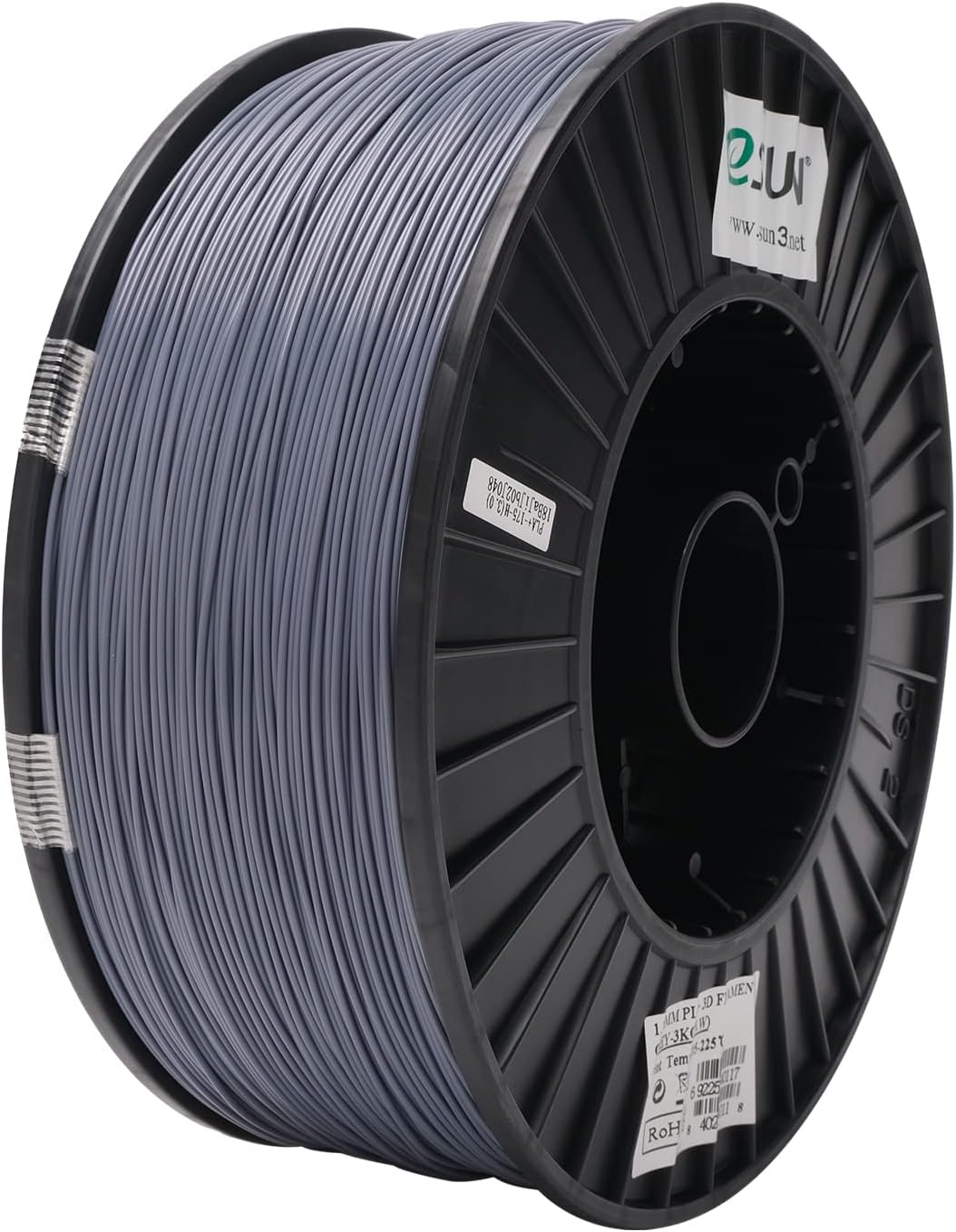
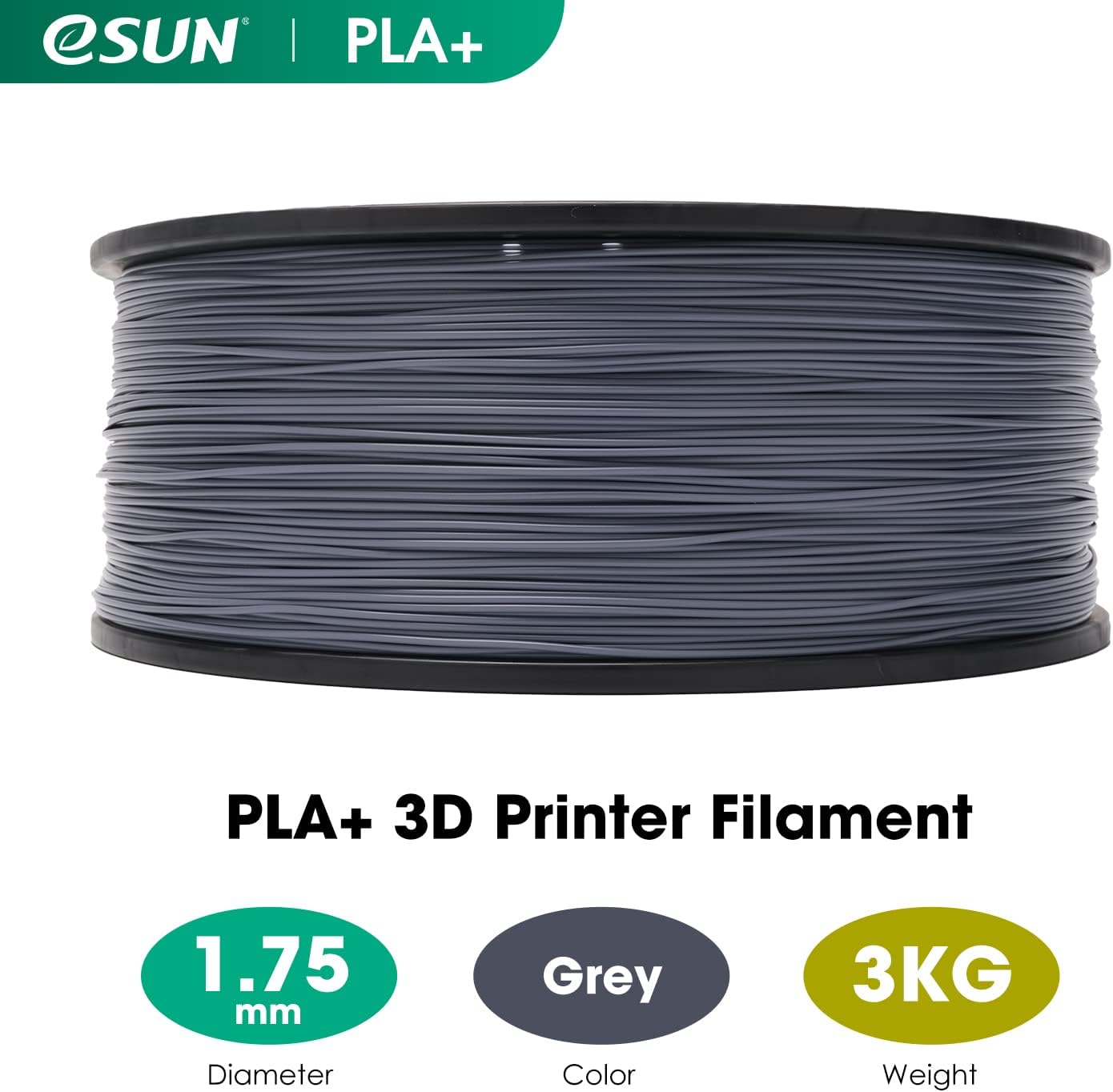
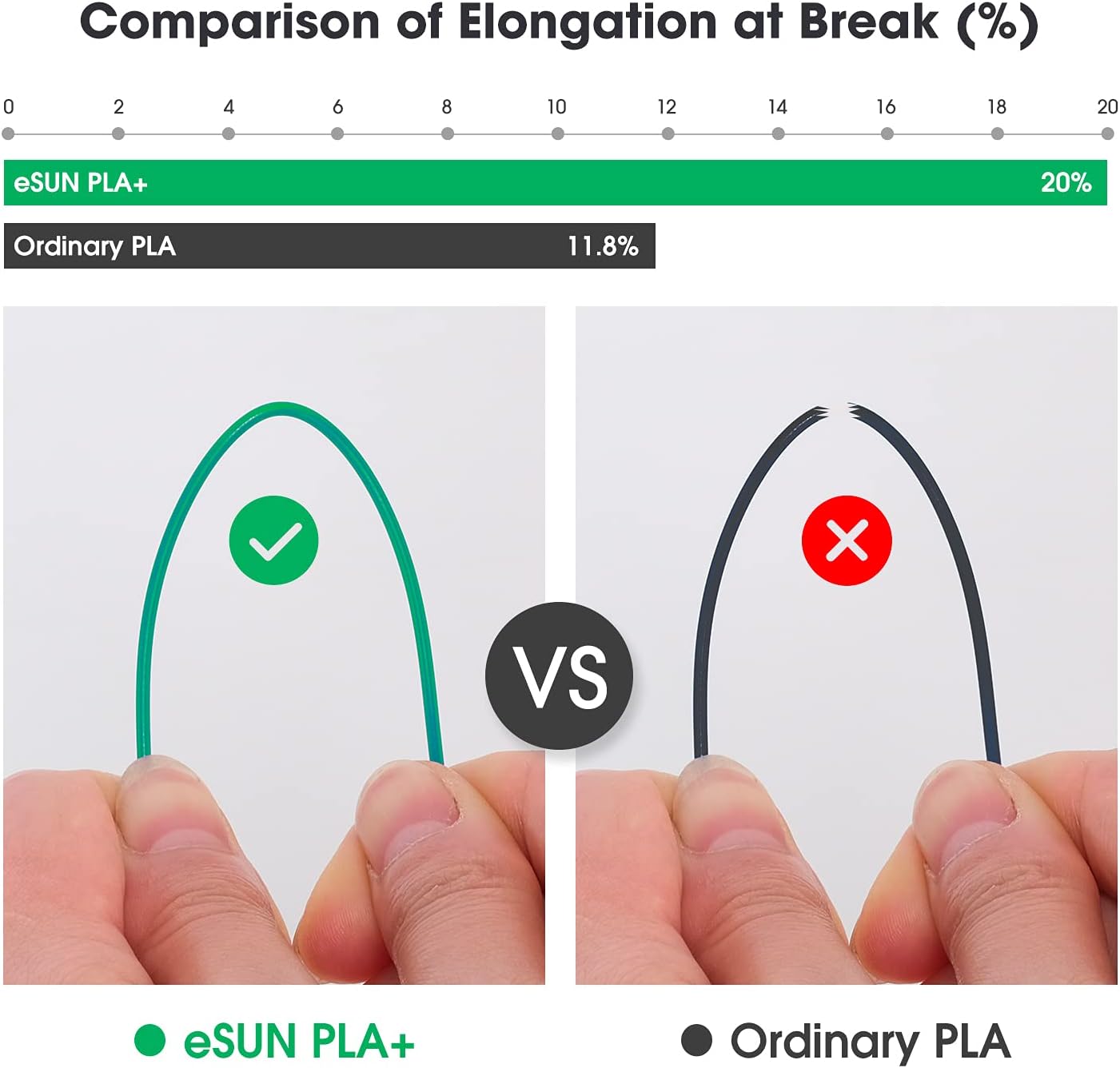
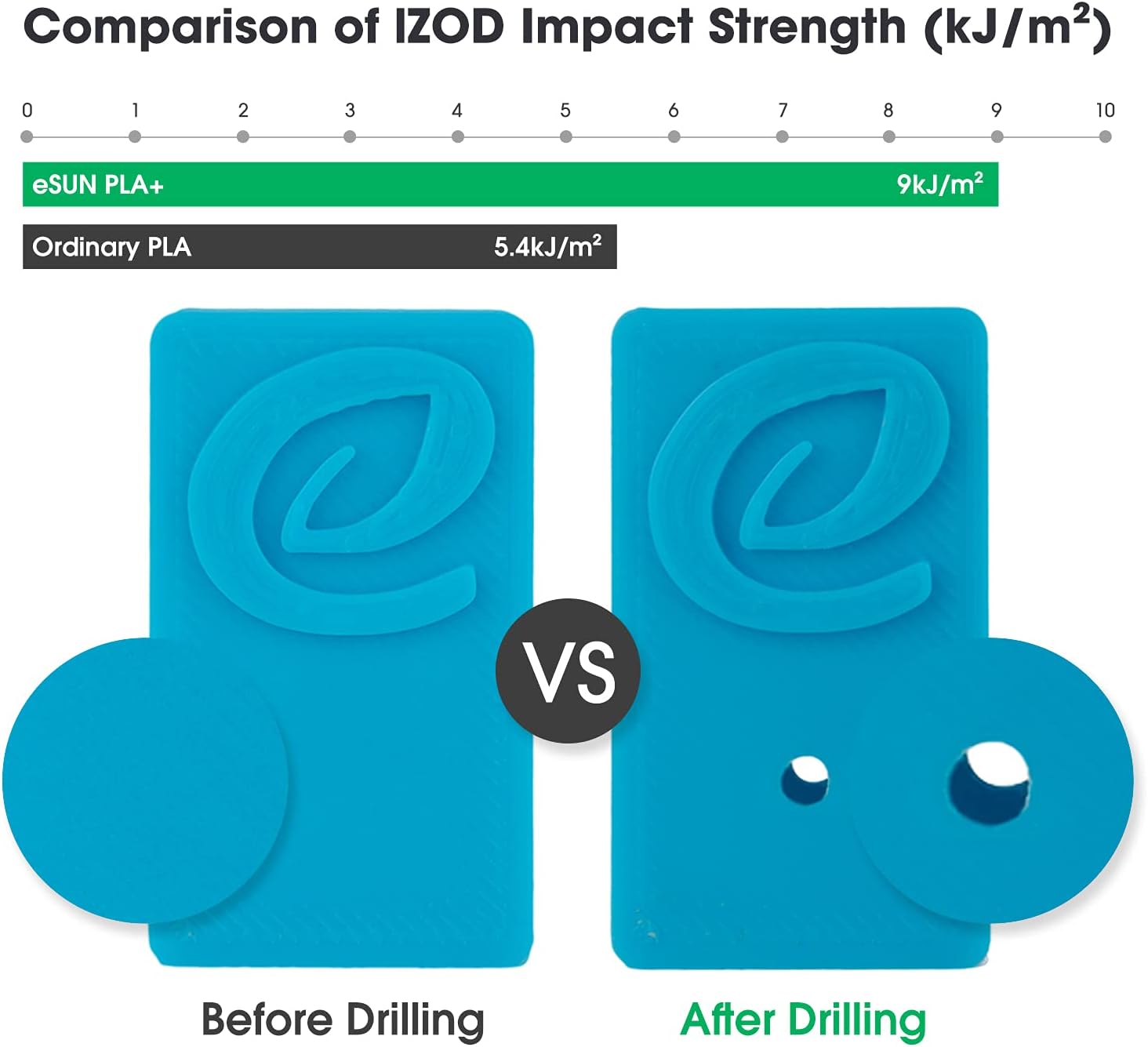
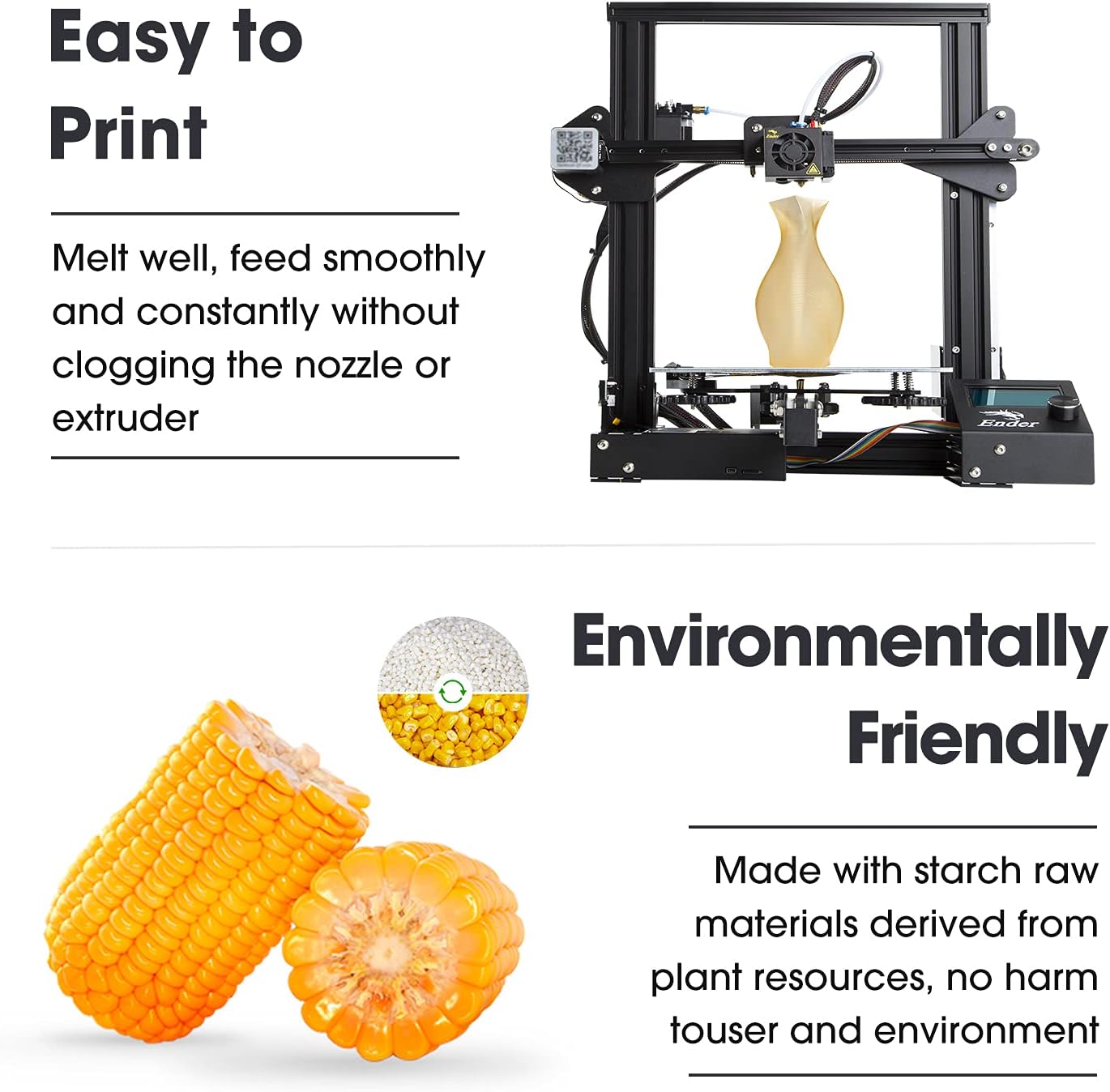
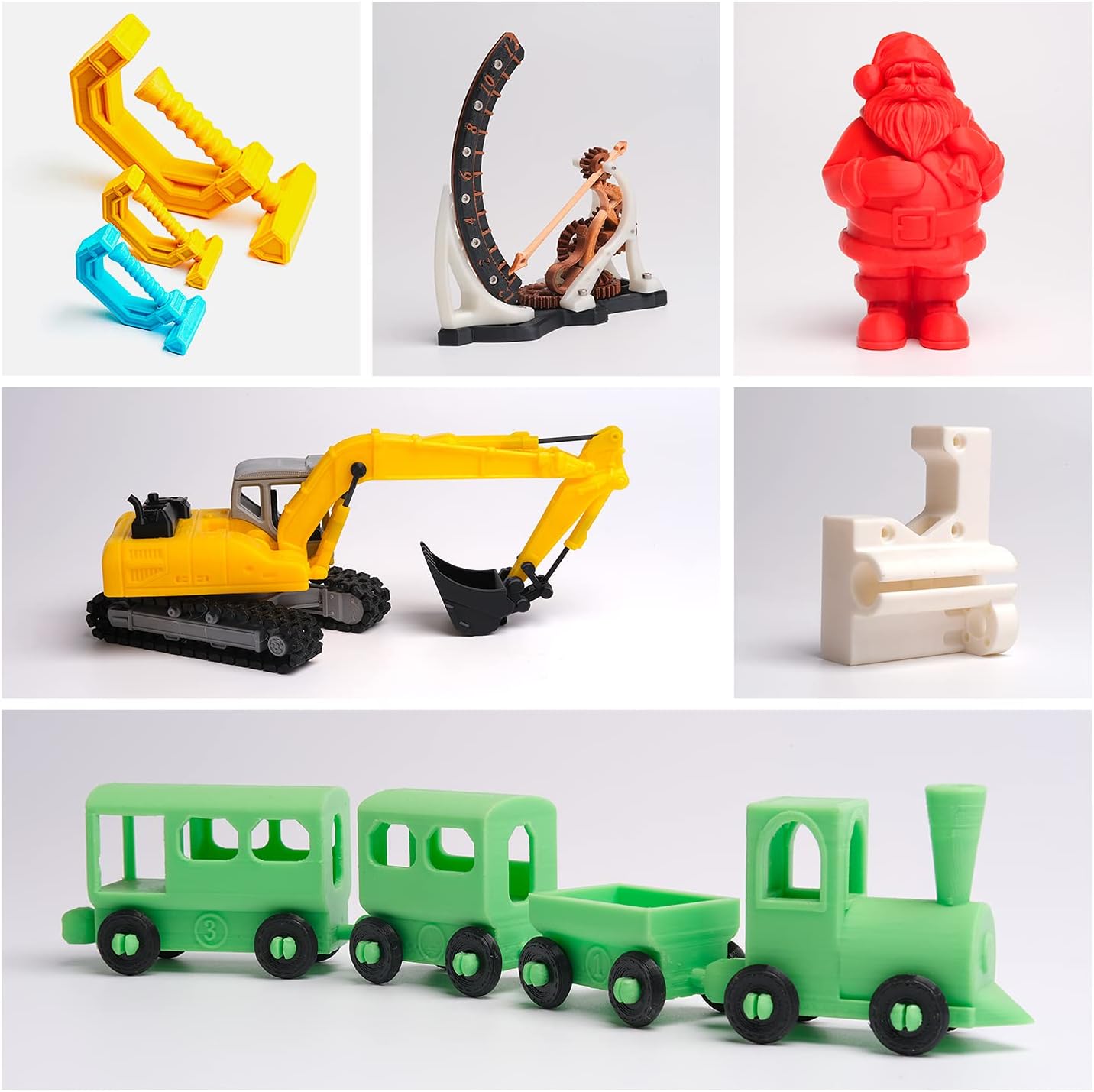
What it is and what it aims to solve\nThe eSUN PLA+ filament is a tougher variant of standard PLA, designed for users who want higher strength and better impact resistance from a PLA-based material. It is sourced from renewable plant-derived starches and is presented as eco-friendly and non-toxic, aligning with general expectations for home 3D printing materials. On the paper, it combines the ease of printing associated with PLA with enhanced durability, making it a sensible option for functional parts, prototypes and cosmetic components where a bit more resilience would matter.\n\n## How it performs in practice\nPLA+ is marketed as a fast-printing option that retains low shrinkage, minimal warping and good layer bonding. The claim of good dimensional accuracy of +/- 0.03mm suggests tight control over diameter tolerance, which should help feed stability and consistent surface finish across prints. Practically, this translates to reliable prints on a wide range of FDM printers, with less risk of sudden nozzle clogging or inconsistent extrusion caused by diameter variances.\n\n## What stands out\n- Enhanced toughness beyond standard PLA, aiming to reduce brittleness in functional parts.\n- Claimed high-speed print compatibility, which can save time on larger or more intricate objects.\n- Precise dimensional tolerance and well-wound 3KG spool design to minimise tangling and fed extrusion issues.\n- Broad compatibility with most FDM printers, offering flexibility if you already own or plan to buy a common platform.\n\n## Considerations and limits\nNo material is perfect. While PLA+ is tougher than vanilla PLA, it is still a thermoplastic that may not suit high-temperature environments or heavy-duty mechanical loads like ABS or PETG. If your project involves sustained heat or continuous heavy stress, you might want to evaluate alternative materials or test prints first. Availability on a 3KG spool is convenient for hobbyists and small workshops, though the sheer weight may be unwieldy for some desk setups.\n\n## Ideal users\n- Makers seeking stronger PLA-based prints for functional parts, models with moving joints or display items with a bit more resilience.\n- Enthusiasts who value easy printing, good surface finish and a reliable feed without frequent jams.\n- Users with a compatible FDM printer looking for a versatile, mid-range material that balances ease and durability.\n\n## When it might not be the best fit\nIf your priority is the utmost heat resistance or rigid stiffness, a different family of materials (e.g., specialised engineering plastics) may be more suitable. If you primarily print tiny, delicate structures where precision edge quality is paramount, you may want to test a few samples to confirm it meets your expectations.\n\n## What to check before buying\n- Printer compatibility and hotend temperature range for PLA+.\n- Whether you need the 3KG spool size and the weight/space implications on your workstation.\n- Surface finish and post-processing needs to decide if the slightly enhanced toughness aligns with your project goals.\n\n## Practical use case: a quick scenario\nThink of a light-duty gear or a functional bracket that benefits from a little extra toughness without stepping up to PETG or more exotic materials. You print it once, test fit, and appreciate fewer breakages when assembling with other components.\n\n## Quick comparison in stance you’ll notice in use\nCompared with standard PLA, PLA+ generally feels more forgiving during handling and assembly of printed parts, with a marginally better chance of surviving minor impacts or bends. It isn’t a direct substitute for tougher heat-resistant plastics, but it slots in well for everyday functional prints where user‑level durability matters.\n\n## Is it worth it? Final thoughts\nIf you prioritise straightforward printing, good surface finish and a bit more toughness than classic PLA, this PLA+ on a 3KG spool is a solid option to consider. It’s not the ultimate solution for high-stress or high‑temperature environments, but for many hobbyists and light production tasks, it offers tangible value without complex processing.\n\n## What’s included (in the box)\nIn this listing, you get a 3KG spool of 1.75mm grey PLA+ filament designed for broad printer compatibility and smooth feeding.\n\n## FAQ (practical answers based on available data)\n- Q: Is this good for high-speed printing? A: It’s marketed to meet high-speed printing demands while maintaining performance.\n- Q: How precise is the diameter? A: Claimed tolerance is +/- 0.03mm, which should support consistent feeding.\n- Q: Will it work with most FDM printers? A: Yes, it’s described as broadly compatible with many common models.\n