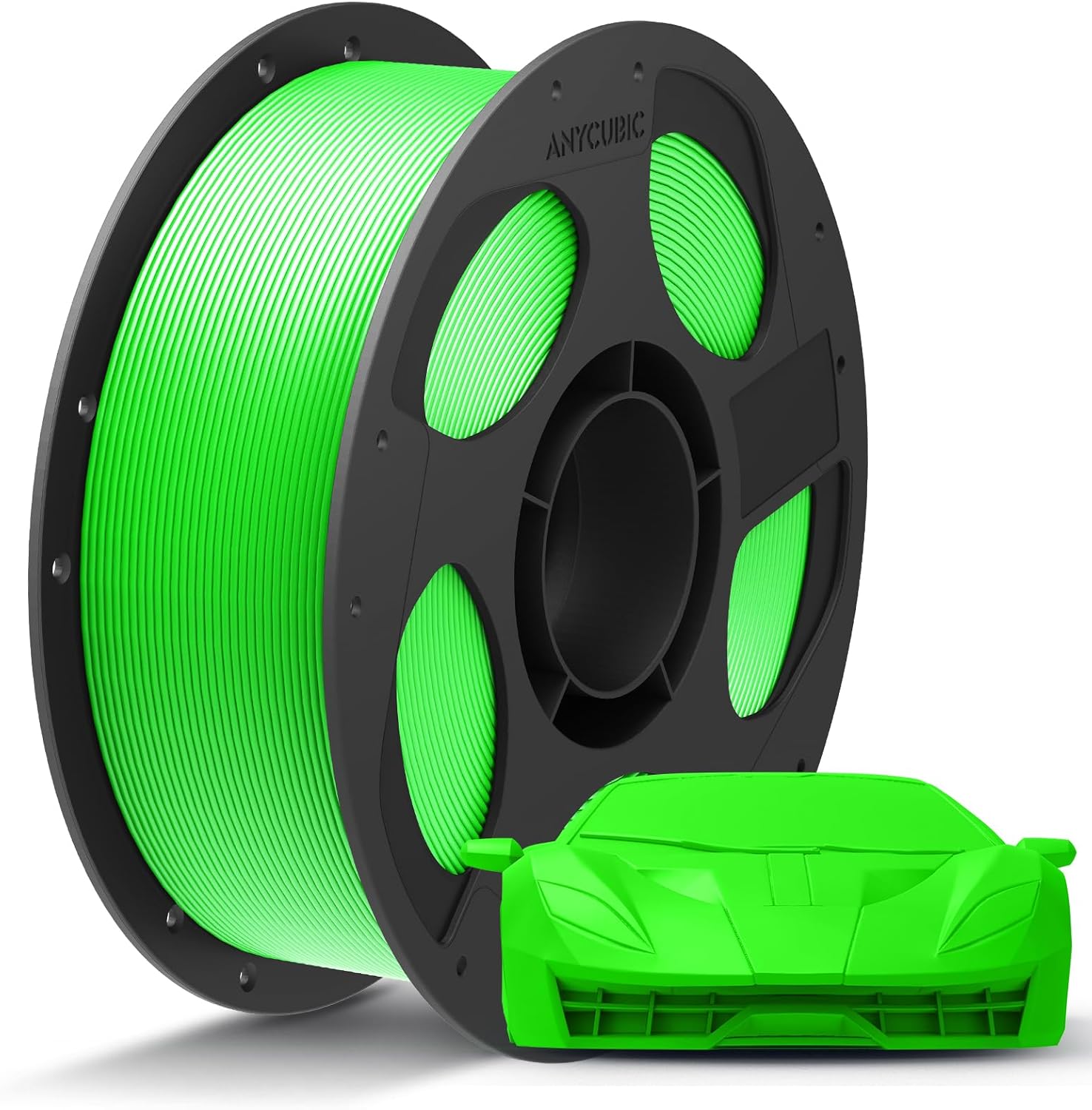
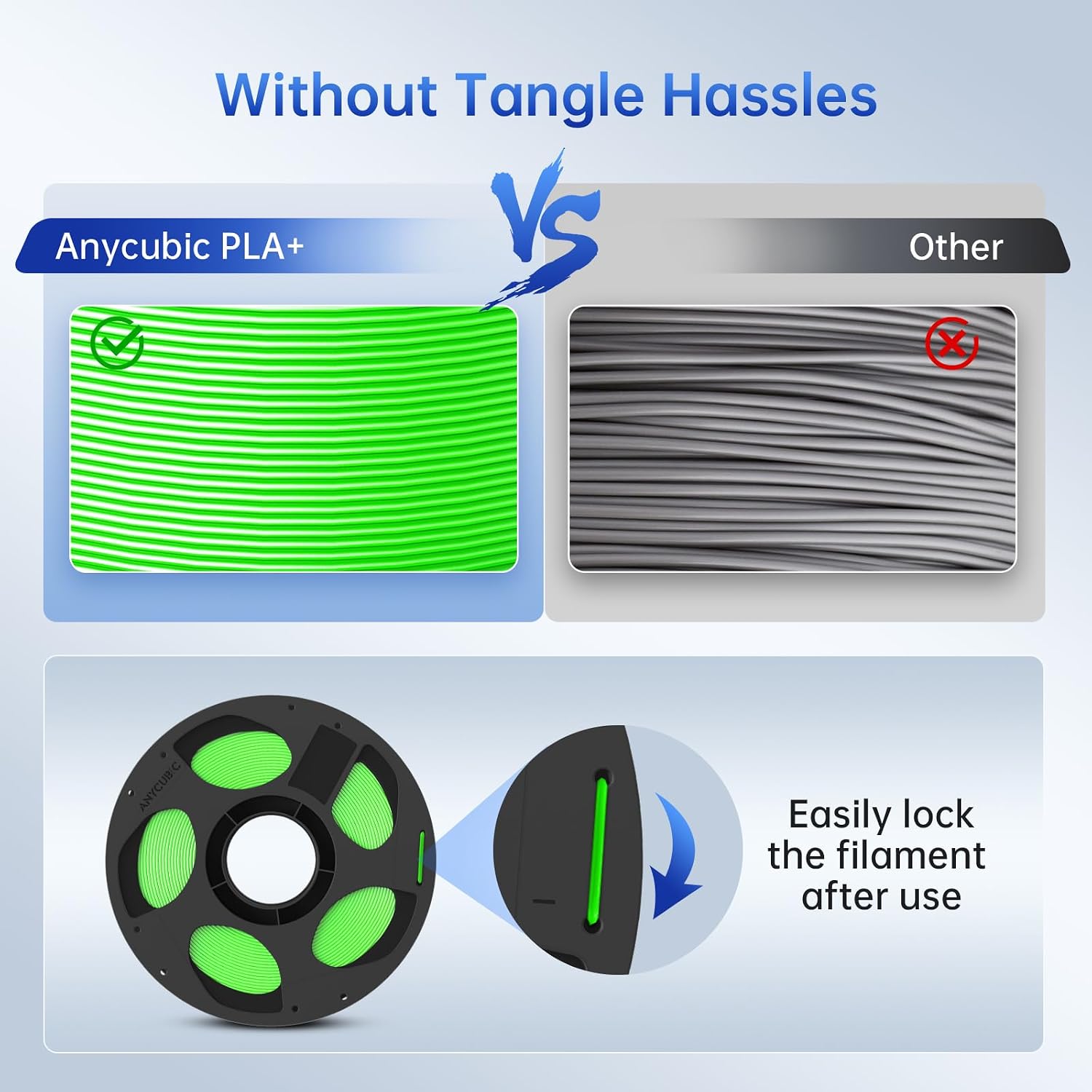
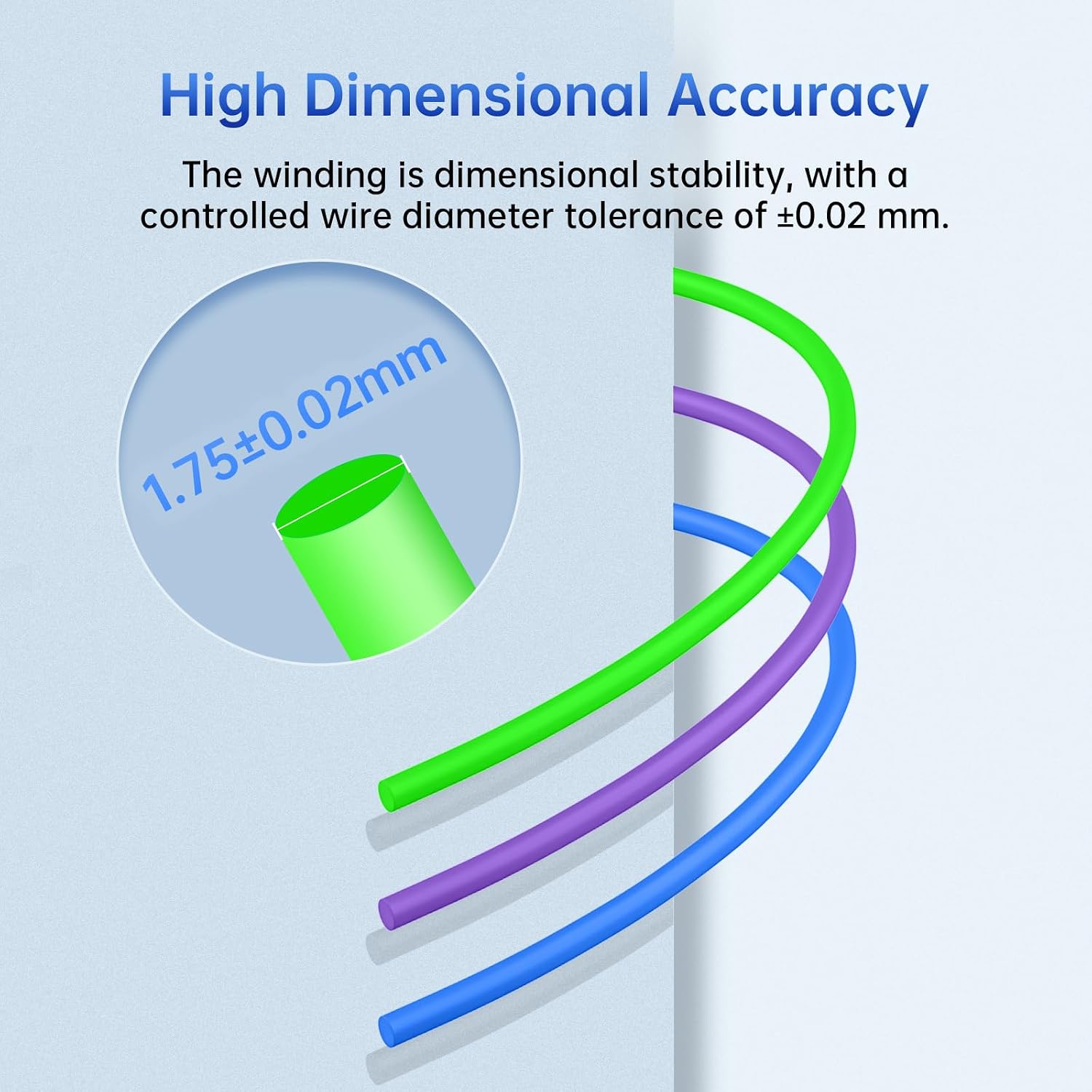
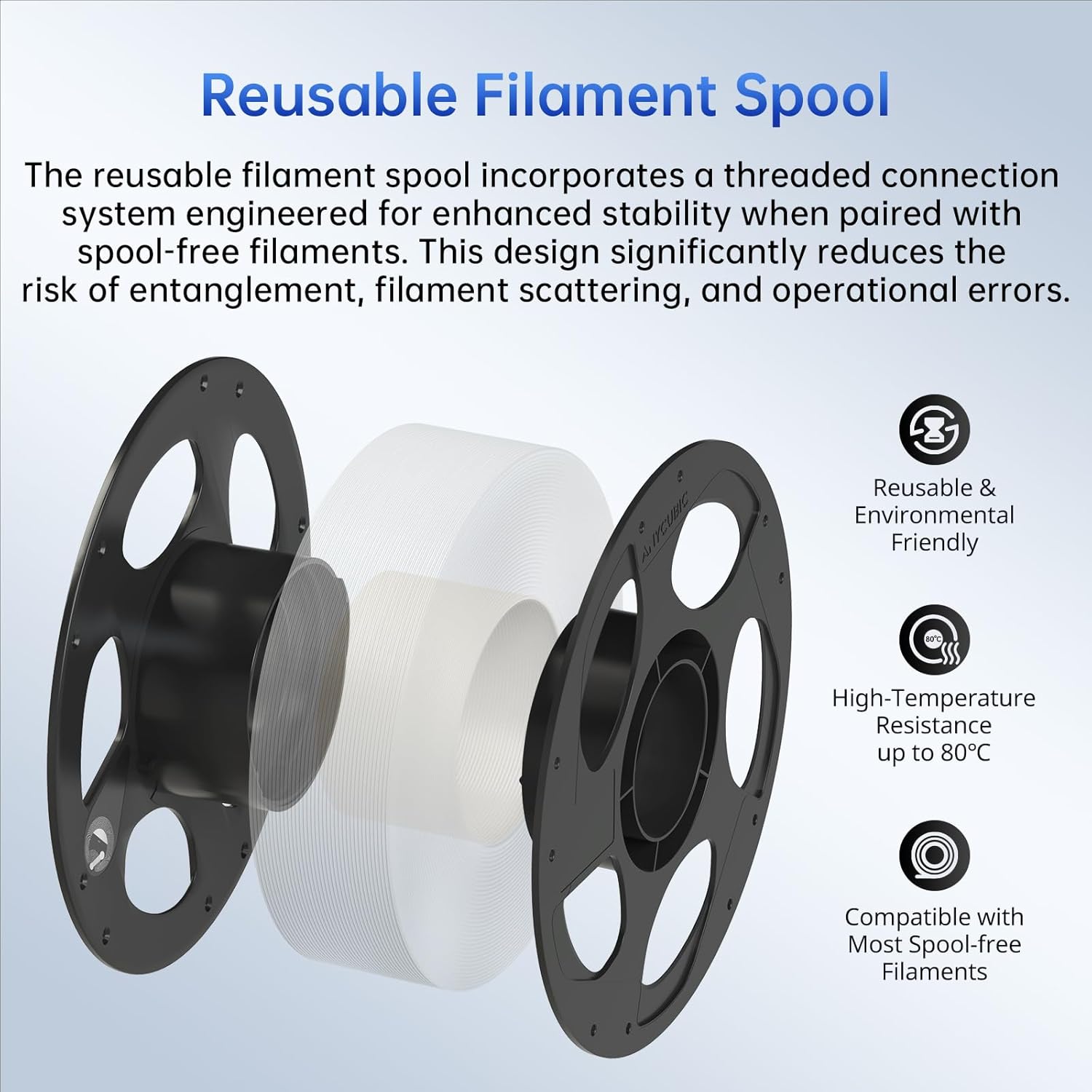
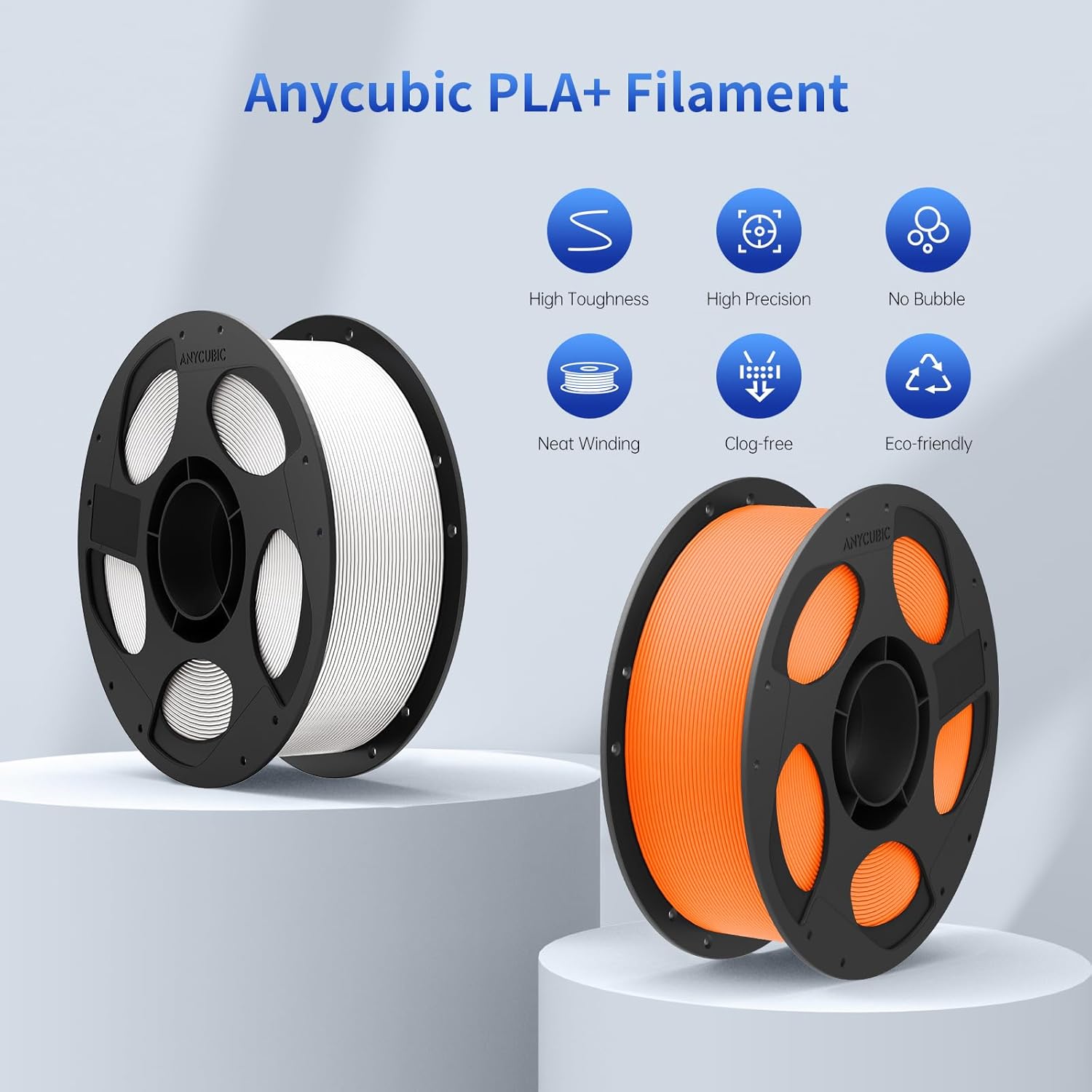
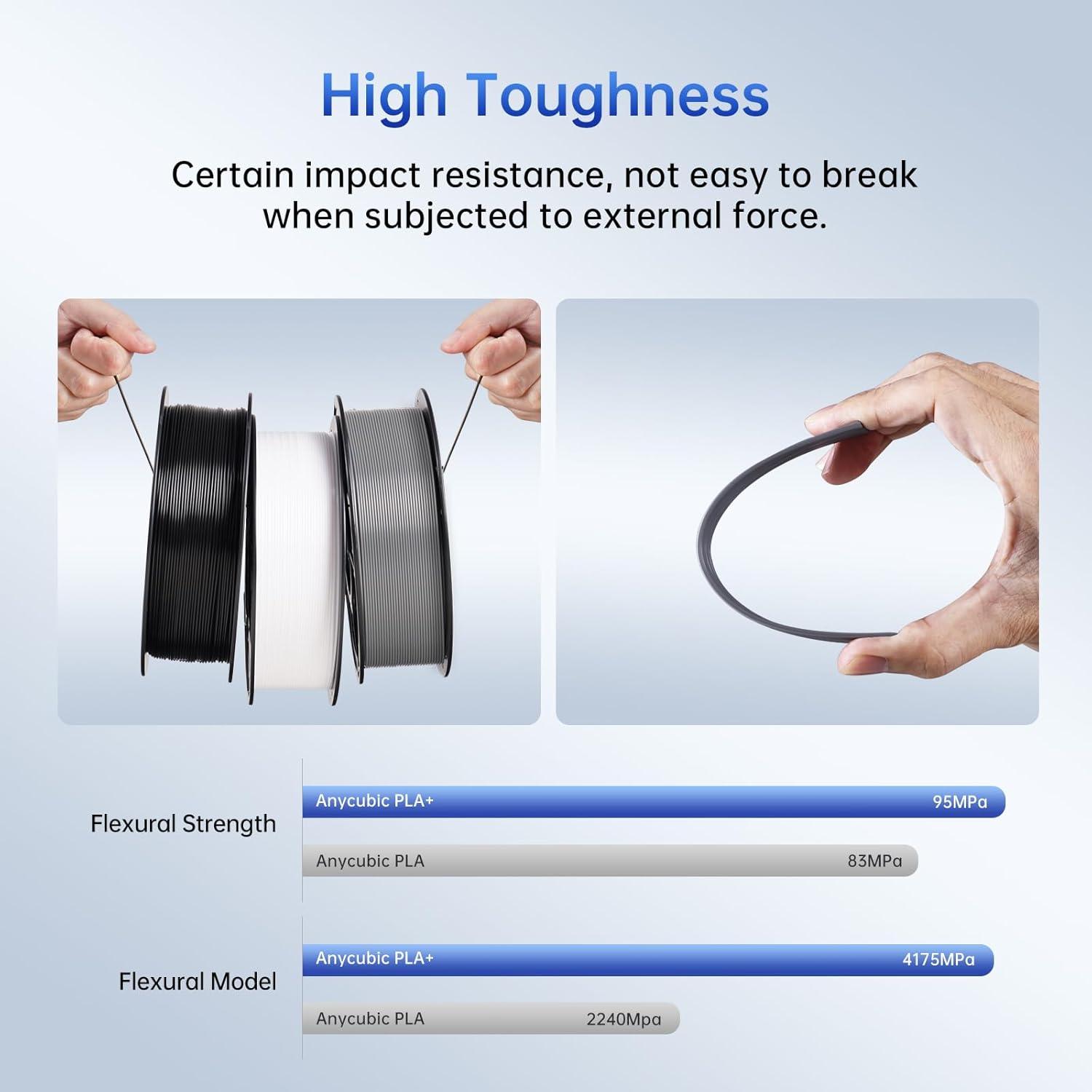
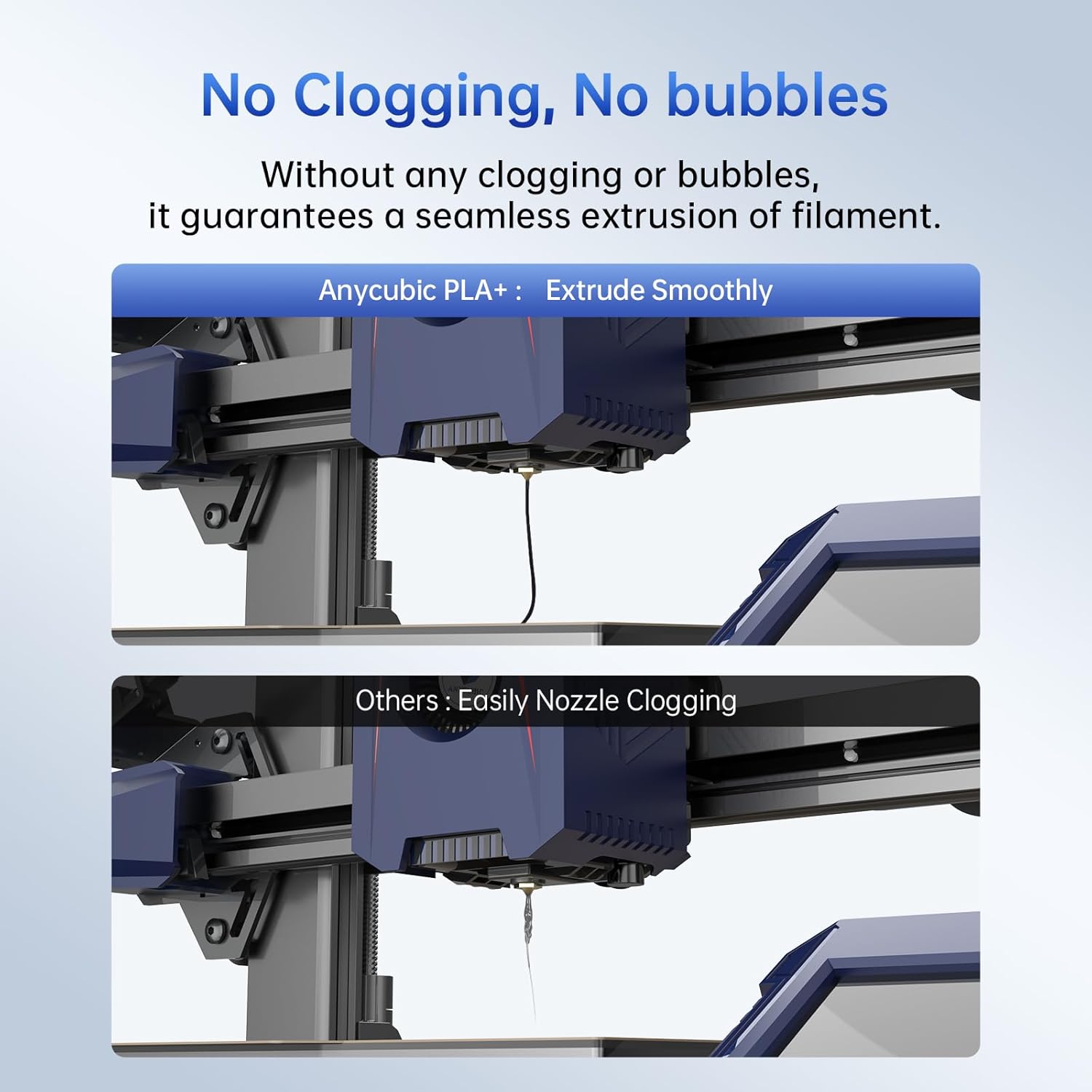
What this is and what it’s for\nAnycubic PLA+ filament is a 1.75mm material designed for a wide range of FDM 3D printers. It aims to combine improved toughness with smooth layer transitions, making it suitable for crafts, art, and engineering parts where a bit more impact resistance can matter. If you’re printing small functional pieces, display models or cosplay props, the PLA+ line is a pragmatic choice that sits between standard PLA and tougher alternatives.\n\n## How it performs on paper\nThe filament is produced with dimensional accuracy claimed at ±0.02 mm, a key factor when you’re printing detailed parts or parts that need tight fits. The claim of reduced cracking or warping is tied to the material’s higher toughness relative to plain PLA, plus an emphasis on smooth extrusion to minimise visible layering. The packaging is vacuum-sealed to reduce moisture uptake, which can otherwise affect print quality. The spool is described as reusable and detachable, with a threaded connection intended to improve stability and reduce tangling when used with compatible setups.\n\n## Intelligent identification and printer integration\nA notable feature is the identification system and Anycubic Color Engine Pro support. This means the filament is recognised by the printer or driver, with automatic adjustment of printing parameters. In practice, this can save time on setup and help you get to a first print faster, but it’s not a guarantee of perfect results on every machine — settings still benefit from a quick verification, especially if you’re printing complex geometries.\n\n## What stands out in use\n- High toughness: useful for models that need a bit more impact resistance without jumping to higher‑cost materials.\n- Dimensional stability: the ±0.02 mm tolerance helps reduce post‑processing surprises and helps with tight fits.\n- Broad compatibility: marketed as compatible with most FDM printers and 3D pens, which is convenient if you test different devices or upgrades.\n- Clean extrusion: claims of no obstructions or air bubbles suggest a smoother finish and consistent layer adhesion.\n- Reusable spool: the removable reel with a threaded connection aims to minimise misfeeds and tangling, a practical detail for long print runs.\n\n## Limitations and things to watch\nNo material is perfect for every scenario. PLA+ is still a plastic that can become brittle under certain conditions, and performance hinges on print temperature, bed adhesion and part geometry. If you regularly print large, flexible, or highly heat‑exposed parts, you may want to compare with other materials designed for those needs. Also, while automatic identification helps, you may still need to tweak slicer profiles for optimised results with specific printers or hotends.\n\n## Who this is for\n- Hobbyists printing decorative items or small functional parts that require a touch more resilience than standard PLA.\n- Makers who want a straightforward material that prints reliably on a wide array of desktop printers.\n- Anyone who appreciates a tidy, reusable spool design to help with storage and workflow.\n\n## When it makes sense to buy\nChoose PLA+ if you want a practical upgrade over basic PLA without stepping into more demanding materials like ABS or PETG. It’s a sensible option for classroom projects, prototyping, and artefacts where finish quality and ease of use are valued. It can be especially appealing if you prioritise smoother surfaces, minimal post‑processing, and predictable dimensional accuracy.\n\n## What to check before purchasing\n- Confirm 1.75 mm filament with a compatible printer and nozzle size.\n- Consider printer enclosure and ambient temperature, as PLA+ can respond to heat differently across machines.\n- If you rely on automatic colour matching or material identification, ensure your firmware supports the Anycubic Color Engine Pro workflow and that your slicer is up to date.\n\n## Practical usage example\nA small figurine with delicate curves prints more cleanly when the material flows smoothly and layers align well. The combination of controlled diameter and stable extrusion helps reduce visible seams on the surface and keeps features like fine textures intact.\n\n## The competition/alternative approaches in practice\nIf you’re choosing between PLA+ and standard PLA, the deciding factor is typically toughness and shrinkage. For users who need a bit more impact resistance without stepping up to PETG or ABS, PLA+ tends to be a middle ground with easier printability. If your priority is high heat resistance or chemical resistance, you might look at other polymers, for general use, PLA+ covers a broad range of everyday projects with a good balance of ease and reliability.\n\n## Final decision\nIs it worth it? Final verdict: it makes sense if you want a reliable, easy‑to‑print material with slightly enhanced toughness and accurate dimensional control, suitable for a variety of everyday projects. It may not be the best fit for high‑temperature or high‑load parts, but for general use and display models it offers a straightforward upgrade over plain PLA.\n\n## Quick FAQ\n- How does the 0.02 mm tolerance help my prints? It reduces the chance of end‑to‑end misfit parts and helps with consistent layer thickness, especially on parts with tight tolerances.\n- Will the automatic identification slow me down? In practice, it can simplify setup, but you should still verify your slicer settings for your specific printer.\n- Can I reuse the spool for other filaments? The spool is designed to be reusable and detachable, but ensure the threading and diameter match your new filament to avoid feeding issues.\n