

Hiwill-Audio Flagship 5.3.4 Soundbar with Dolby Atmos (800W) + Wireless Rear Speakers
Product description
What you’re really buying here
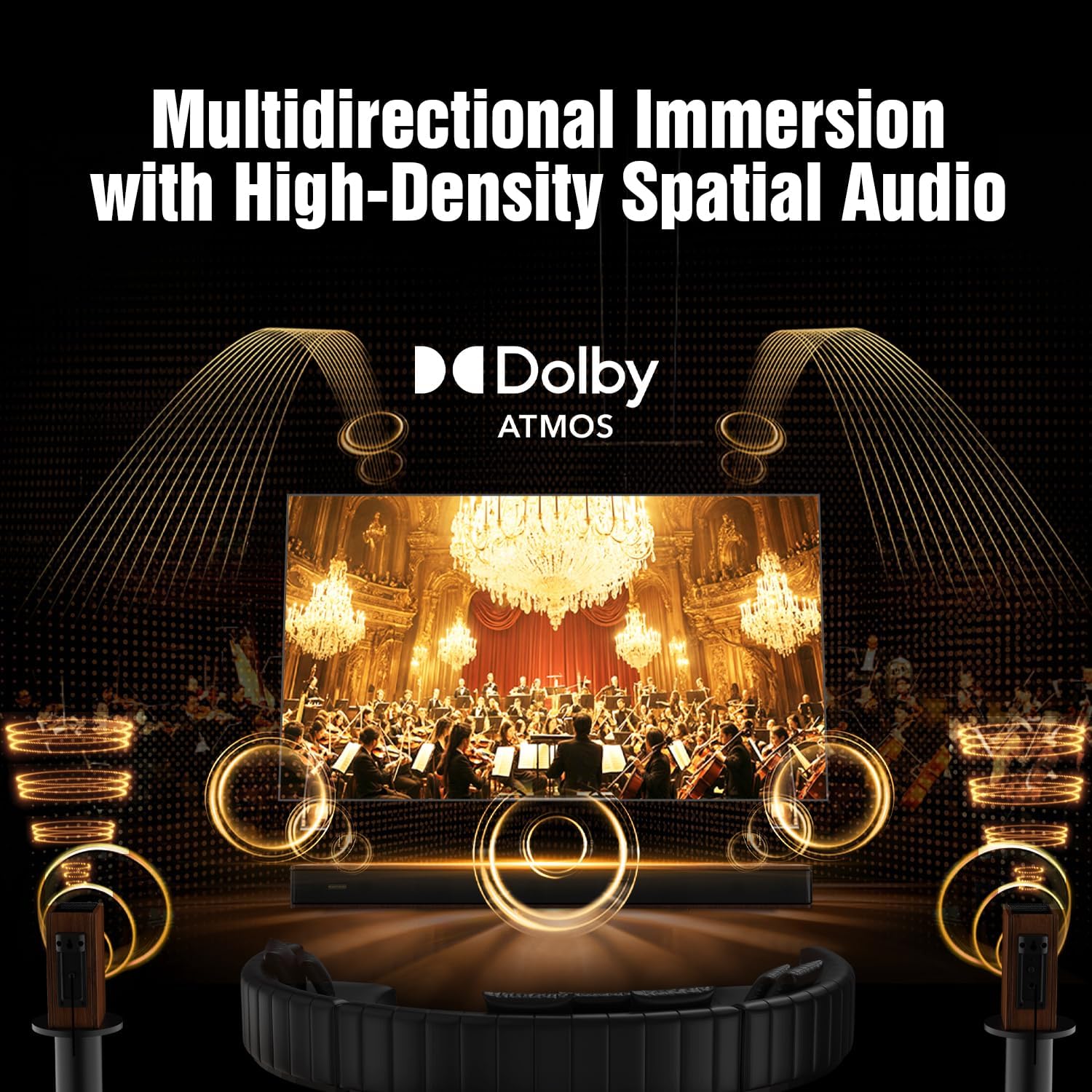
If you want a home-theater vibe from a TV setup, the Hiwill-Audio Flagship 5.3.4 is built around a simple promise: more believable Dolby Atmos immersion, not just louder sound. On paper, it targets clarity and separation using a “triple-band” driver layout and a multi-layer bass approach, then rounds it out with two wireless rear speakers.
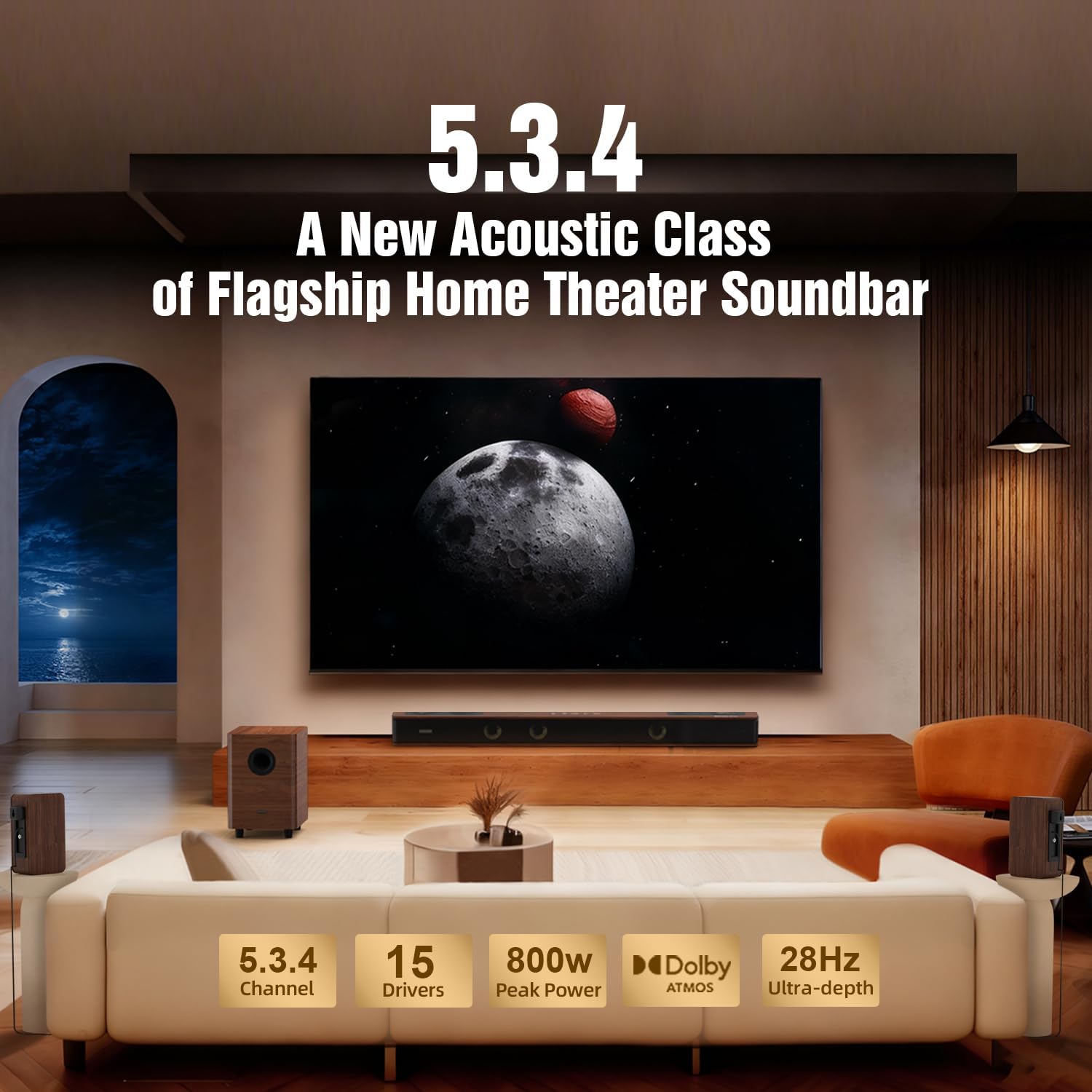
That 5.3.4 naming isn’t described as a quick channel count so much as an acoustic architecture intended for a more enveloping Atmos soundstage. So the goal is to make voices feel more understandable and height effects feel more controlled—especially when movies lean heavily on sound design.
Where it stands out (and why it matters)
A big part of this system’s appeal is how it’s described to handle sound separation and bass behavior.
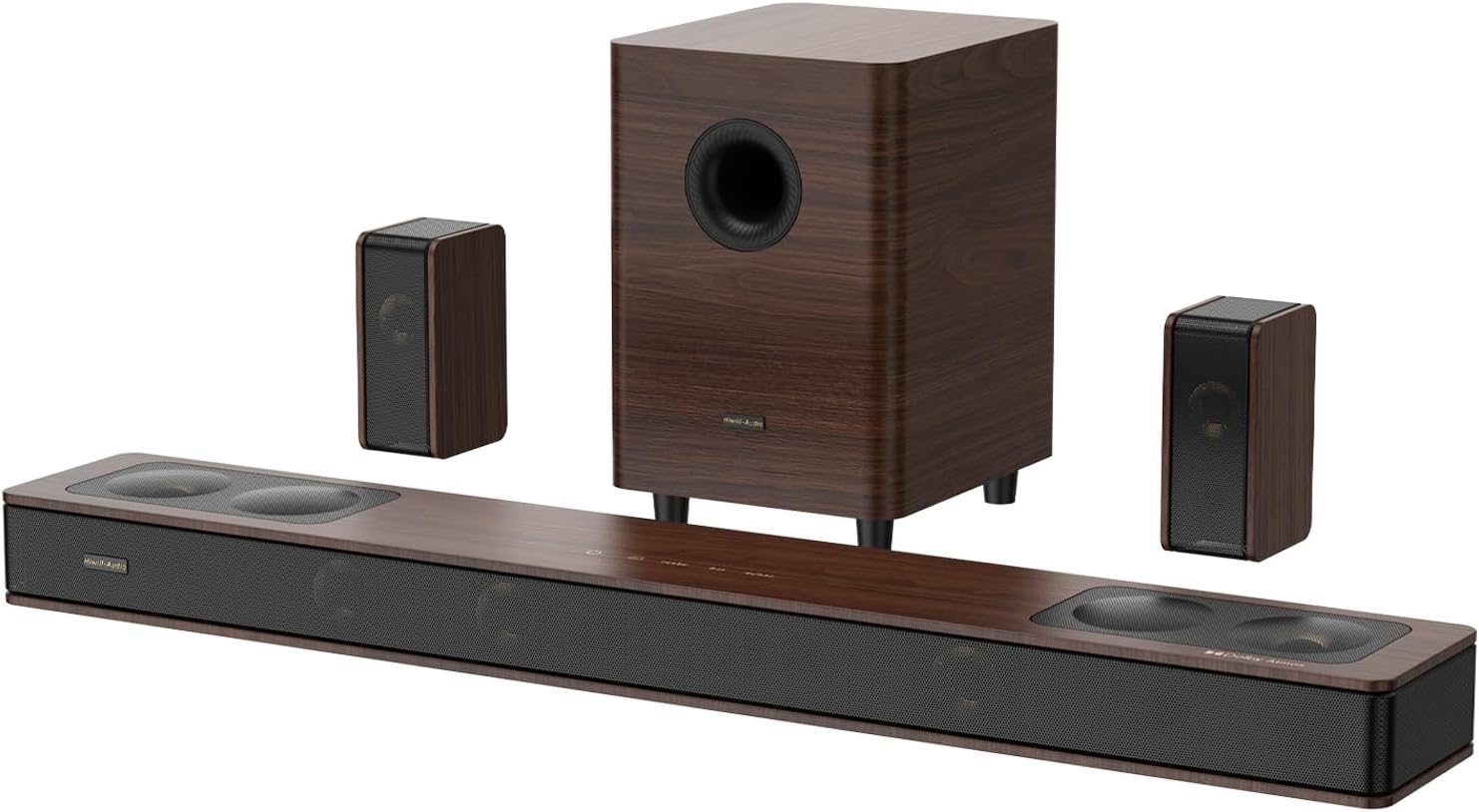
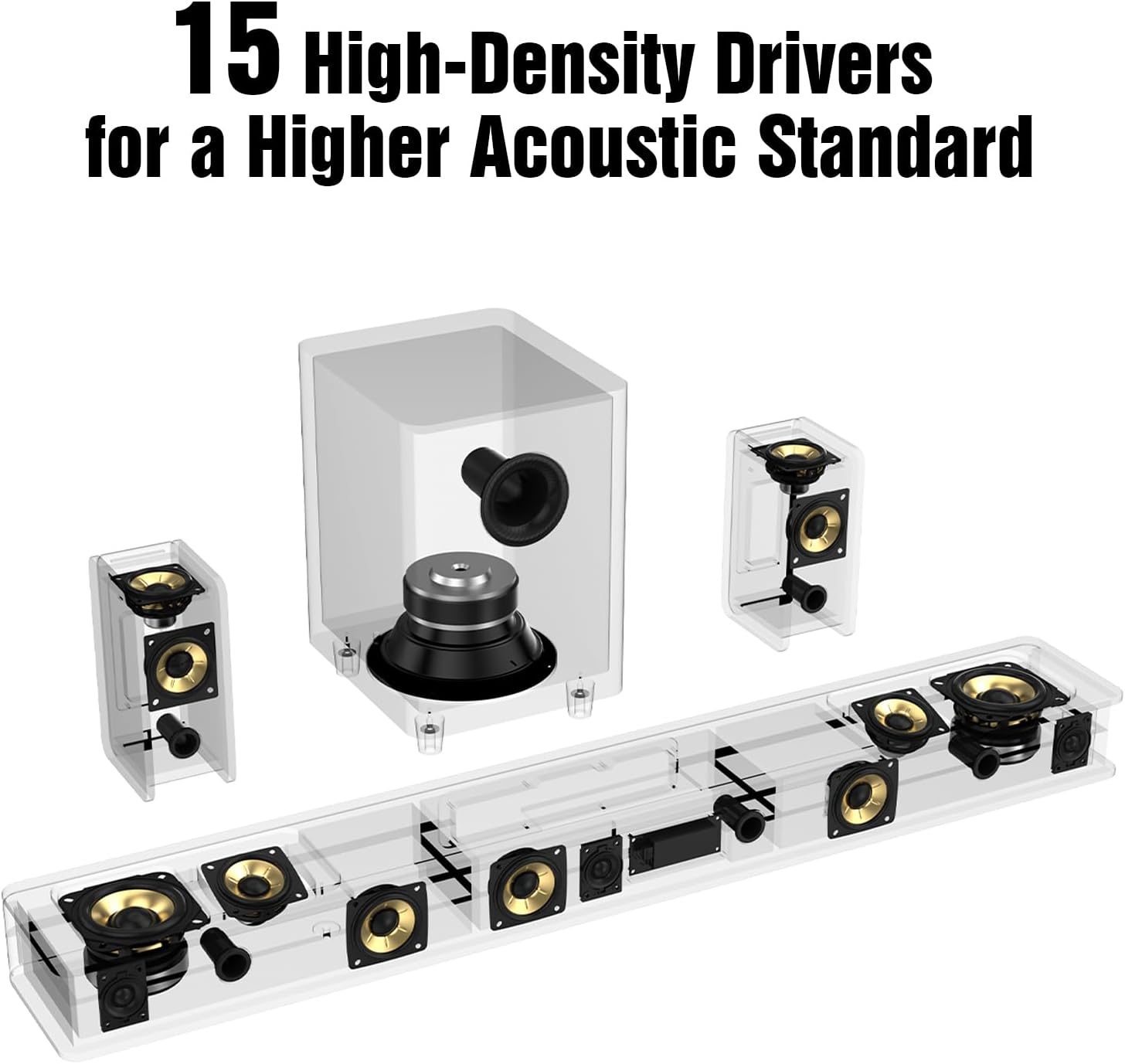
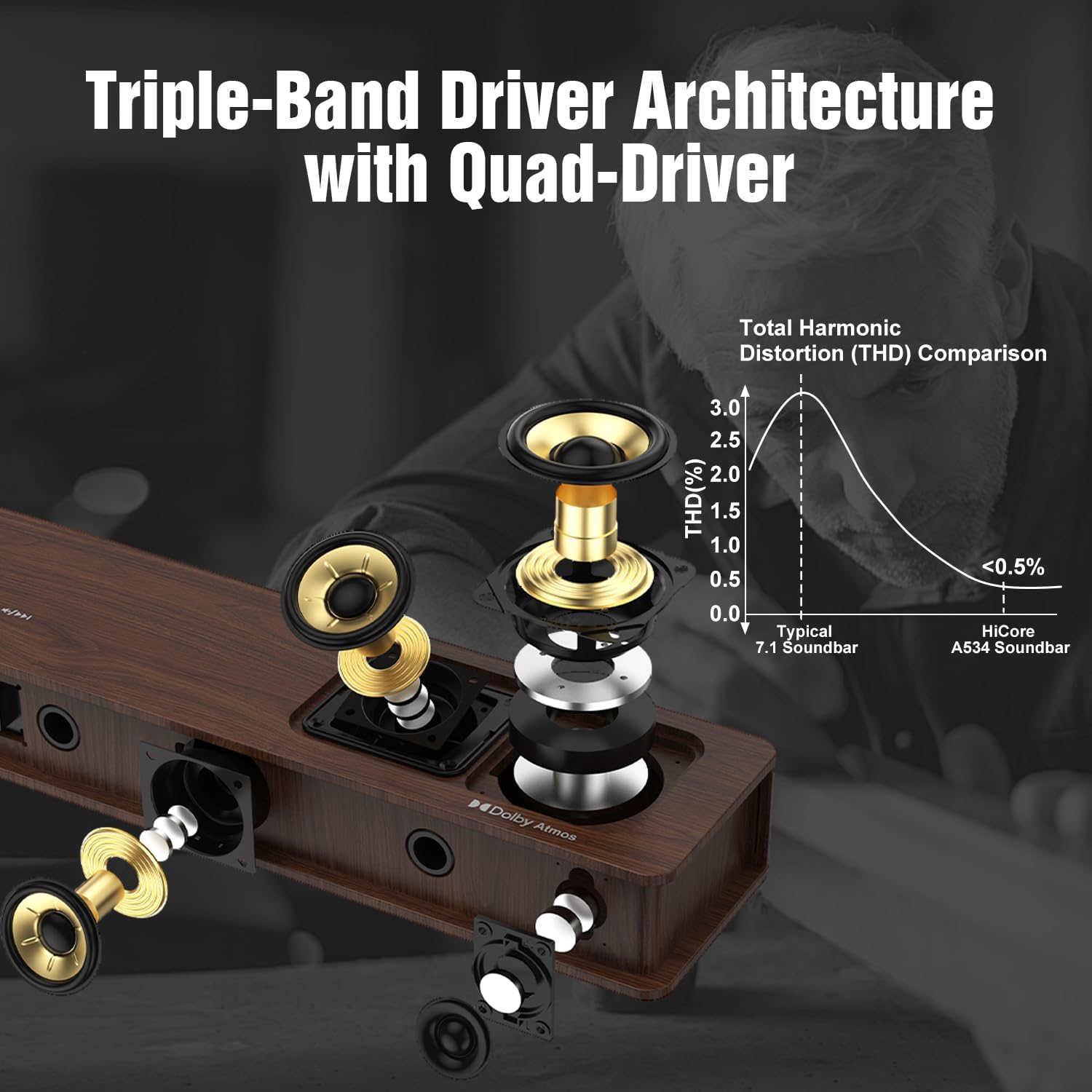
First, the soundbar is positioned as having a triple-band driver architecture. Instead of funneling everything through a single kind of driver, the design assigns dedicated roles across the frequency range, including woofers, mid-range units, tweeters, and upward-firing drivers. The point of that, as described, is to reduce overlap (“barbar/overlap” is the idea) so you get denser sound, clearer dialogue, and more convincing Atmos height cues.
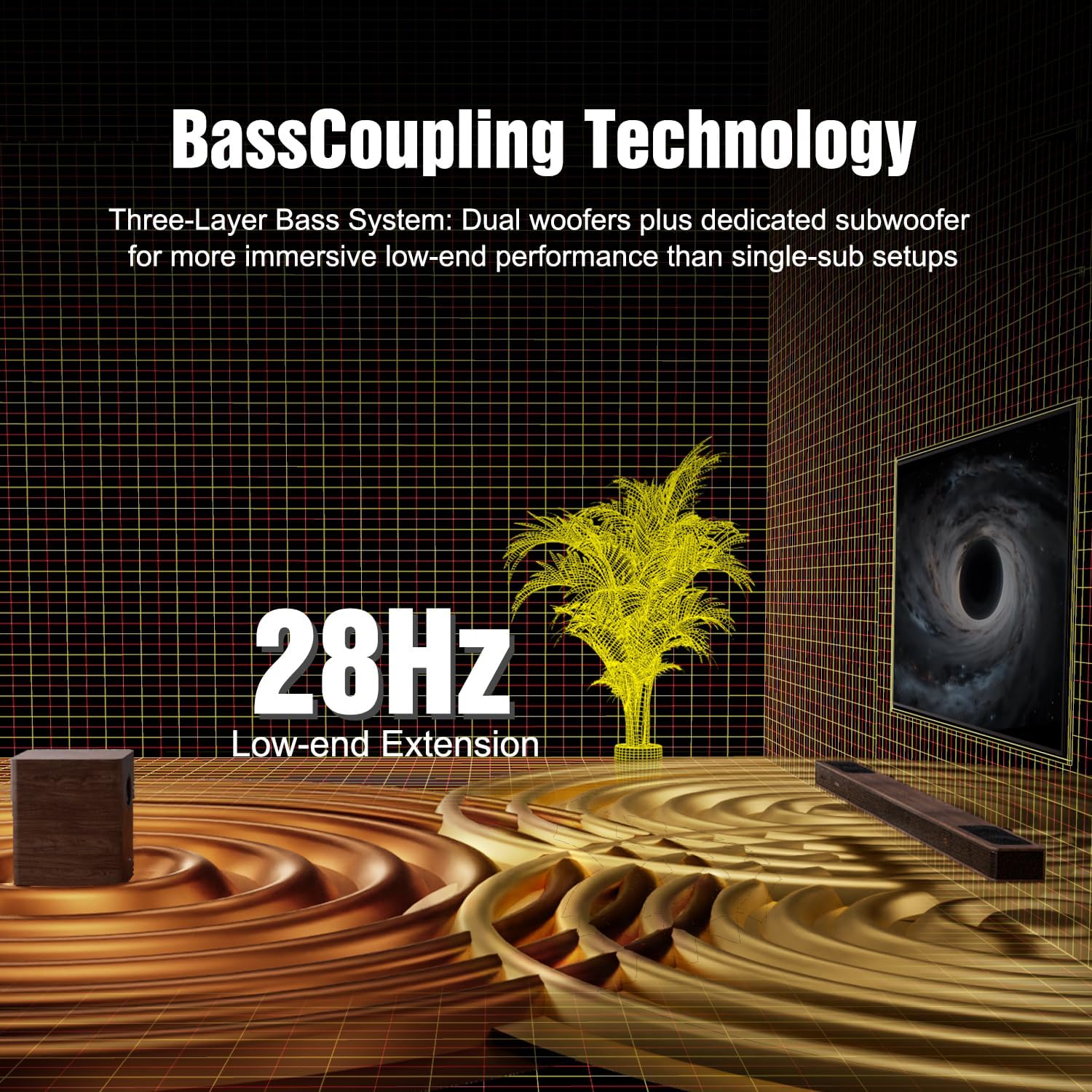
Second, the bass is treated as a system, not a single “sub handles it all” scenario. The BassCoupling tech is described as using coordinated low-frequency layers across a pair of 3-inch woofers and a larger 6.5-inch subwoofer, with depth claimed down to 28 Hz. The practical takeaway (if those numbers hold up in real use) is punch that feels deeper and tighter, rather than just bloated low-end.
Finally, Atmos is backed by the included rear speakers and upward-firing elements—again, on the design side—to help the system place sound around you. If your room setup allows the rear placement to match what the system expects, you’re more likely to notice the overhead and surround motion.
Key features you’ll notice in daily viewing
This is the kind of soundbar system where “what you’ll notice” is more about consistency than tricks.
- Dolby Atmos support is a core part of the pitch, with upward-firing drivers and rear wireless speakers aimed at making height effects feel more explicit.
- The system uses 15 high-density Al-Mg alloy drivers described across the soundbar, subwoofer, and surrounding areas.
- BassCoupling is intended to deliver multi-layer bass depth and reduce muddiness by distributing low frequencies into dedicated ranges.
Is it perfect? Not necessarily. A system like this will still depend on your TV model/settings, your room layout, and how well the Atmos signal is being provided to the soundbar. If the source is basic stereo or compressed heavily, the “cinema” effect can feel less dramatic—because the system can only be as expressive as the input.
Tech specs (the bits that help you judge fit)
Here are the concrete details provided in the product information:
- Name: Flagship 5.3.4 Soundbar with Dolby Atmos, 800W Sound Bar with Subwoofer, 2 Wireless Rear Speakers
- Type: Home theater surround sound system (soundbar + subwoofer + wireless rear speakers)
- Format: 5.3.4 acoustic architecture (as described by the brand)
- Power: 800W maximum output (as stated)
- Sound processing tech: BassCoupling for deeper bass down to 28 Hz (as stated)
- Connectivity: BT 5.4 (Bluetooth version as stated)
- Audio connection support mentioned: eARC
- Audio feature: Dolby Atmos
Usage tips (so you get closer to the promised surround)
To get the best shot at the immersive Atmos effect described, placement and setup matter more than people expect.
A practical way to test the system in a few minutes: play a movie scene with strong voice + background separation (a dialogue-heavy moment with music/FX). Then switch to a scene with lots of overhead cues (rain, aircraft passbys, or environments). You’re listening for two things: (1) whether voices stay clean and forward, and (2) whether the height effects feel like they come from above rather than just “outward.”
Also, since the system is described to work with eARC, double-check that your TV’s audio output is set up to send the right format through ARC/eARC—otherwise you might not fully benefit from Atmos.
Who it’s for (and who should think twice)
This makes the most sense if you:
It makes sense if you want a home-theater-leaning soundbar setup with Dolby Atmos and wireless rear speakers, and you care about clearer dialogue plus deeper, more controlled bass behavior.
You may want to skip it if you’re looking for a super-simple, budget sound upgrade where you don’t want to worry about TV audio settings or speaker placement. In that case, the complexity of Atmos + surround can feel like overkill.
Worth noting: based on the description, this system is positioned as more than a basic TV bar. It’s closer to “step up” home theater within a soundbar ecosystem—so if your expectations are purely for everyday TV volume without surround effects, you might not fully unlock what it’s designed to do.

In the box / compatibility notes
The listing information provided here calls out a soundbar, a subwoofer, two wireless rear speakers, and Bluetooth 5.4, plus eARC support. However, it doesn’t specify exact package contents like cables, remote included, mounting options, or power details.
If you’re sensitive to setup friction, it’s worth checking the amazon US listing for what’s included and any setup requirements before you commit.
Final verdict
Final verdict
Buying verdict If you’re shopping for a Dolby Atmos soundbar system that’s designed to emphasize separation (triple-band driver architecture) and deeper, more layered bass (BassCoupling down to 28 Hz, as stated), the Hiwill-Audio Flagship 5.3.4 is worth considering.
You shouldn’t expect magic from every source, though. If you mostly stream low-quality audio or rarely use an Atmos-capable format, the “cinema” difference may be smaller than the marketing suggests.
Is it worth it?
Is it worth it?
When it makes sense: it’s a strong match if you want an immersive TV setup with Atmos support, wireless rears, and bass engineered as part of the system.
When it may not: if you prefer a plug-and-play speaker with minimal setup, or you don’t care about Atmos height/surround effects, you may get more satisfaction elsewhere with a simpler approach.