

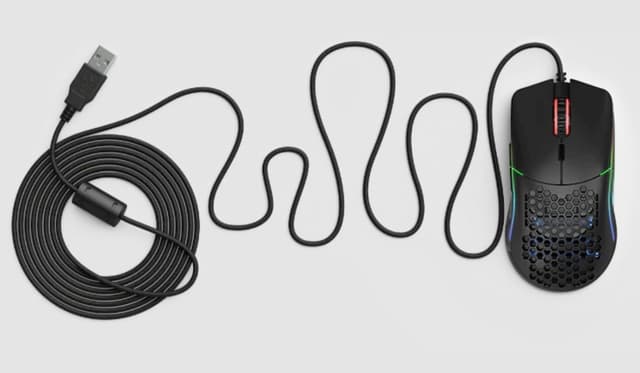
Glorious Model O- (Minus) Compact Wired Gaming Mouse (58g) — Honeycomb RGB, PixArt 3360, Ambidextrous
Product description
What it is and why it matters
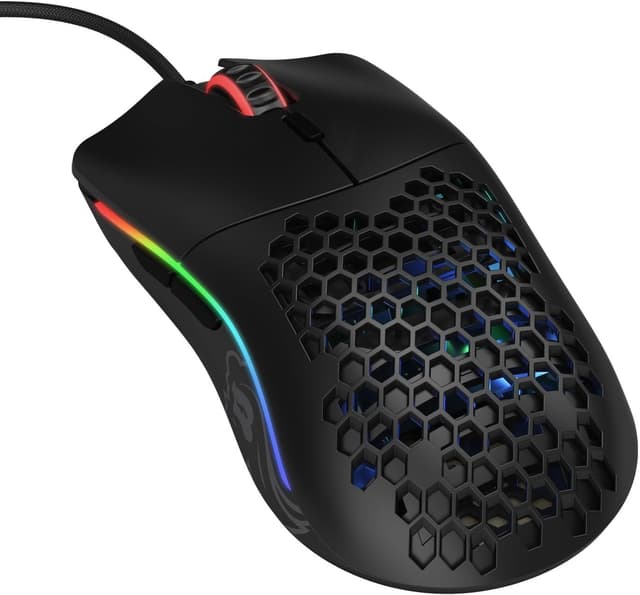
If you care about fast, consistent aiming, the Glorious Model O- (Minus) is built around one idea: keep the mouse light and responsive without turning your wrist into a heavy workout. It’s a compact, ambidextrous wired gaming mouse designed for speed, control, and comfort, with a superlight feel (58g is the headline here) and a honeycomb frame meant to stay durable.
On paper, it’s the kind of wired setup players choose when they want the “wireless-like” freedom of movement while still keeping the reliability of a cable. The Model O- (Minus) also leans into competitive specs like pixel-accurate tracking and reduced lift-off distance—details that can matter when you’re trying to avoid weird behavior during fast flicks.
Key features that translate into in-game feel
A lot of gaming mice claim “smoothness.” This one tries to back it up with specific design choices.
First, there’s the “Ascended” ultra-flexible paracord cable. The point isn’t just that it’s light—it’s that it’s meant to produce less drag, so your aim doesn’t feel tethered when you whip across the mousepad.
Then there are the skates: Glorious Skates made from 100% pure virgin PTFE, described as gliding “like blades on ice.” If you’ve used cheaper pads or older feet, you’ll recognize the difference the moment it’s rolling right—fewer micro-hitches and a more predictable slide.
For tracking, it uses a PixArt 3360 sensor, aiming for pixel-perfect tracking with zero mouse acceleration and no spinouts (as stated). It’s also set up with a 1000 Hz polling rate, and a less than 0.7mm lift-off distance, which is the kind of spec that can reduce unintended movement when you reposition.
Performance and build notes (the honest part)
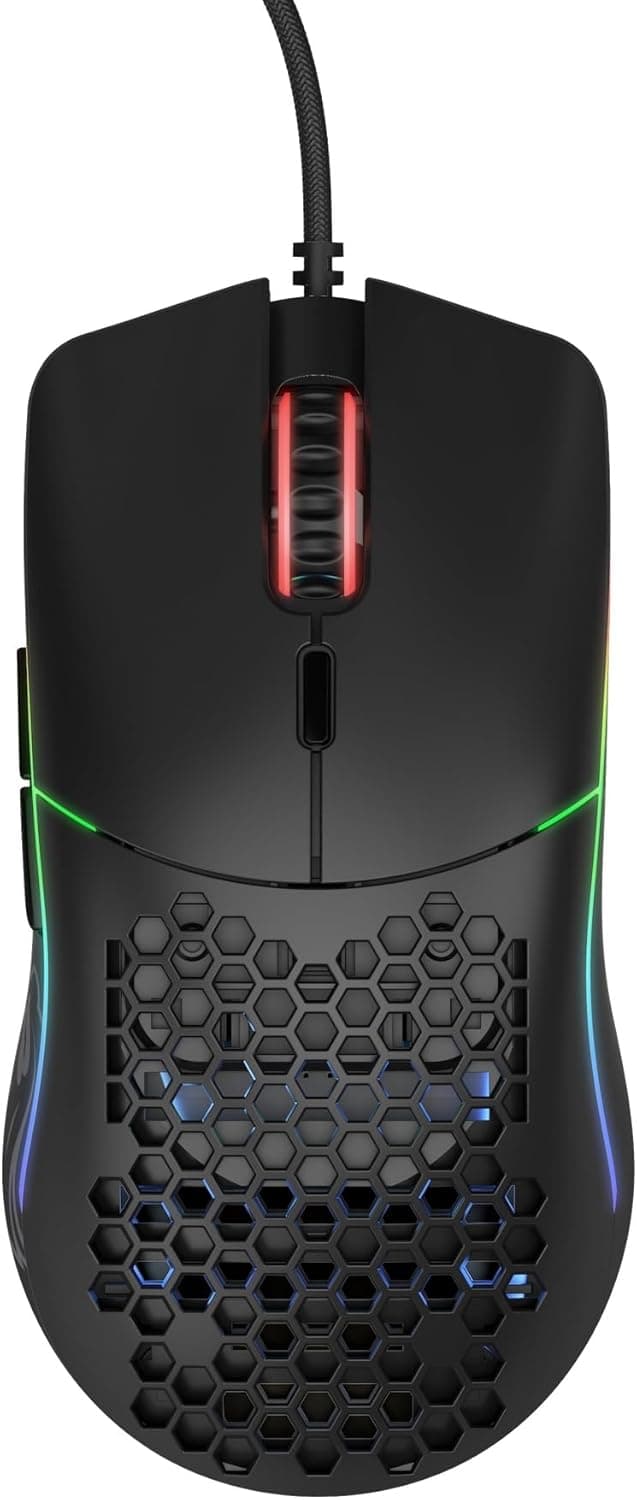
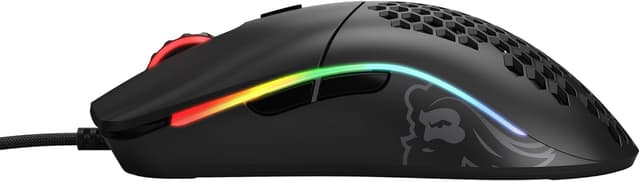
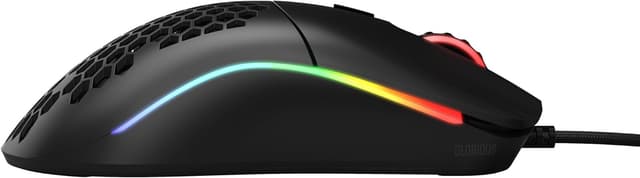
The Model O- (Minus) isn’t just “light for light’s sake.” The honeycomb design is intended to keep the weight down while not sacrificing durability.
Switch-wise, it uses Omron switches rated at 20M clicks (per the provided information). That’s a familiar reliability tier in the esports world, and it fits the mouse’s overall “built to last” framing.
One limitation to keep in mind: it’s described as ideal for medium and small hands. If you’re on the larger side or prefer a bigger palm grip shape, this compact form may feel cramped rather than “locked in.” Also, since it’s wired, you don’t get the full freedom of a true wireless setup—though the flexible paracord cable is trying hard to make the cable less intrusive.
Everyday comfort: what you’ll notice day to day
In a practical sense, you’ll probably feel the most difference in three moments: quick movements, re-centering, and micro-corrections.
Example: in a typical FPS round, during fast target swaps, a lighter mouse can reduce the effort needed to stop and start motion. Then, when you lift and reposition—like clearing a corner or resetting crosshair position—the less than 0.7mm lift-off distance is meant to help avoid unwanted jumps. And with the PTFE skates gliding as described, the mouse should stay consistent even when you’re pushing higher speeds.
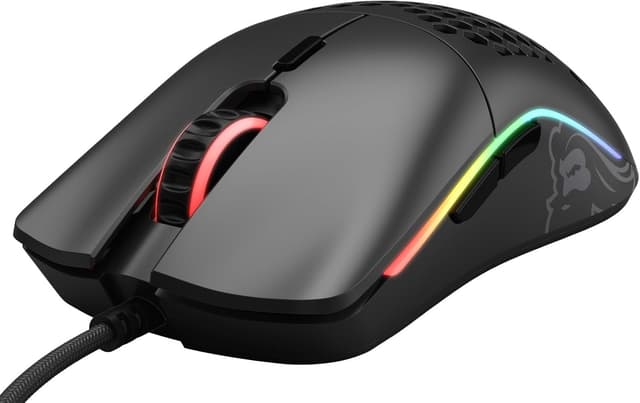
Aesthetically, it includes RGB, and the finish is matte black. Whether RGB is worth it is personal, but it does give the mouse some visual pop without changing its core purpose.
What matters most before you buy
Before committing, double-check these fit-and-experience items based on how you play:
- Hand size and grip: it’s built for medium and small hands.
- Ambidextrous shape: if you switch between grips or prefer left-right balance, that can be a plus.
- Wired comfort: you’ll benefit most if you like the stability of a cable but want it to feel flexible (the paracord approach here is a major reason to consider this model).
- Competitive settings: the sensor and stated behavior (zero mouse acceleration, no spinouts) are aimed at players who notice those issues.
If you’re mainly a casual gamer who doesn’t care about tracking behavior, you might not need to go this specific route. But if you’re chasing tighter control and smoother movement, the Model O- (Minus) is clearly leaning into that.
Should you buy it?
It’s a solid pick if you want a compact, lightweight, ambidextrous wired mouse that’s designed for speed and competitive control—especially if you have medium or small hands and you prefer a paracord-style cable feel.
You may want to skip it if you strongly prefer larger mice for palm comfort, or if you’re shopping for a truly wireless experience. And if tracking behavior and low-lift consistency don’t matter to your playstyle, you may find a simpler mouse better matches what you actually use.
For most players choosing between “regular wired” and “competitive lightweight,” this one sits firmly in the competitive, esports-minded category. Just make sure the compact size won’t work against you.
Mini FAQ
Is this mouse good for competitive FPS?
The provided details focus on competitive behavior like pixel-perfect tracking, zero mouse acceleration, no spinouts, a 1000 Hz polling rate, and a low lift-off distance—so it’s clearly intended for that style of play.
Is the shape ambidextrous?
Yes. It’s described as ambidextrous.
Does it use a flexible cable?
Yes. It includes an “Ascended” paracord-style cable designed to be ultra flexible and reduce drag.
What kind of hands is it meant for?
It’s described as ideal for medium and small hands.
How durable are the switches?
The info provided says the Omron switches are good for 20M clicks.