

FSATBTNE 400W Power Inverter (DC 12V to 110V AC) with 65W USB-C, 18W USB-A, and 2 AC Outlets
Product description
The essentials
If you’re trying to power more than one device on the road, this FSATBTNE 400W car power inverter is built around a simple idea: one adapter that turns your 12V input into household-style AC outlets plus dedicated fast-charging ports. The setup is aimed at road trips, driving breaks, or camping—situations where outlets for laptops, phones, and other electronics are hard to come by.
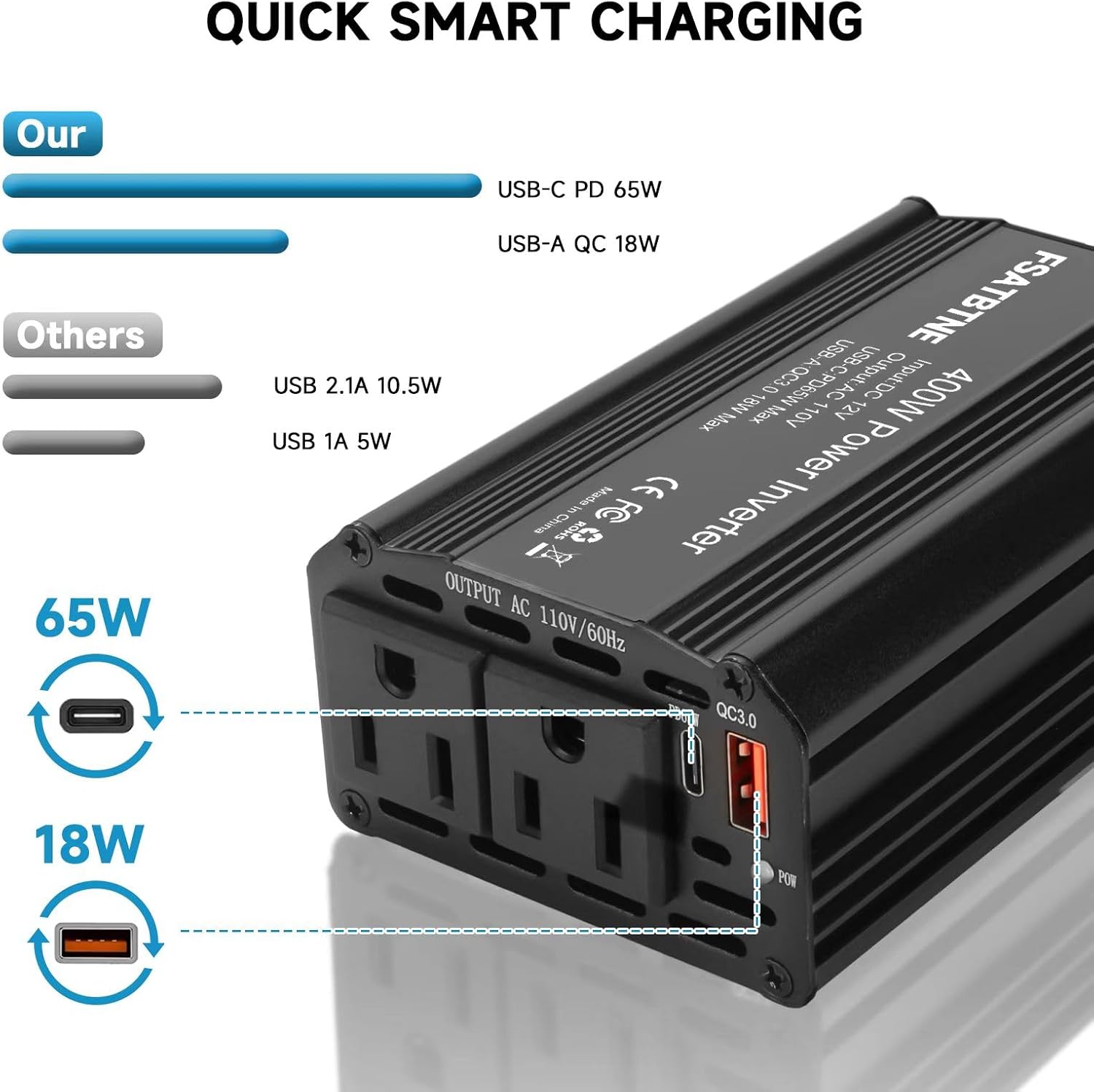
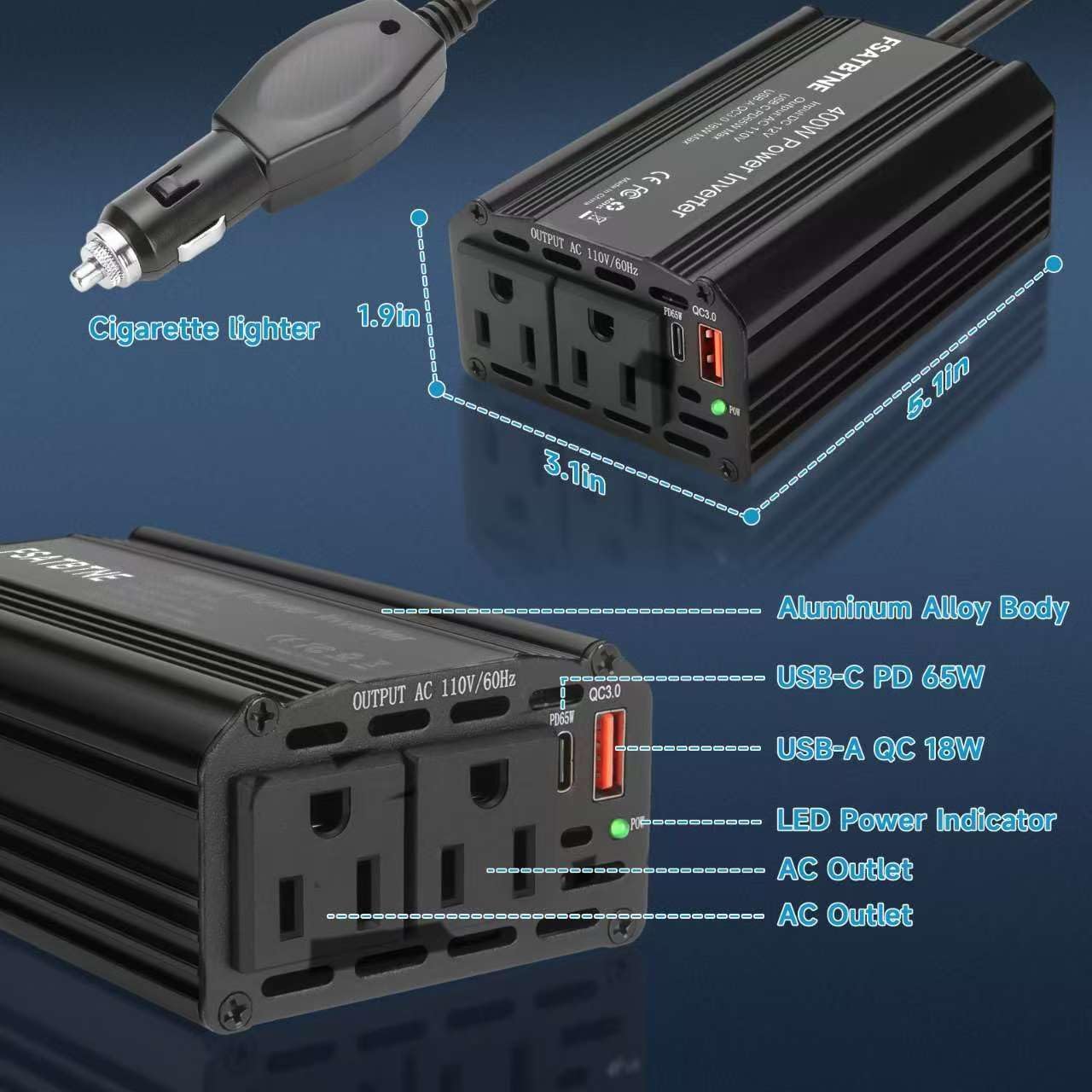
On paper, the biggest selling point is the mix: 2 AC outlets for traditional plugs, plus a USB-C port rated up to 65W and a USB-A port rated up to 18W. That’s a practical combo when you’ve got a phone and a larger device to charge at the same time, without needing a separate charger for everything.
That said, it’s still an inverter. Power needs, vehicle limits, and heat management matter—so it’s smart to think in terms of “what loads am I actually running?” rather than assuming it can handle everything comfortably.
What you can run with 2 AC outlets + fast charging
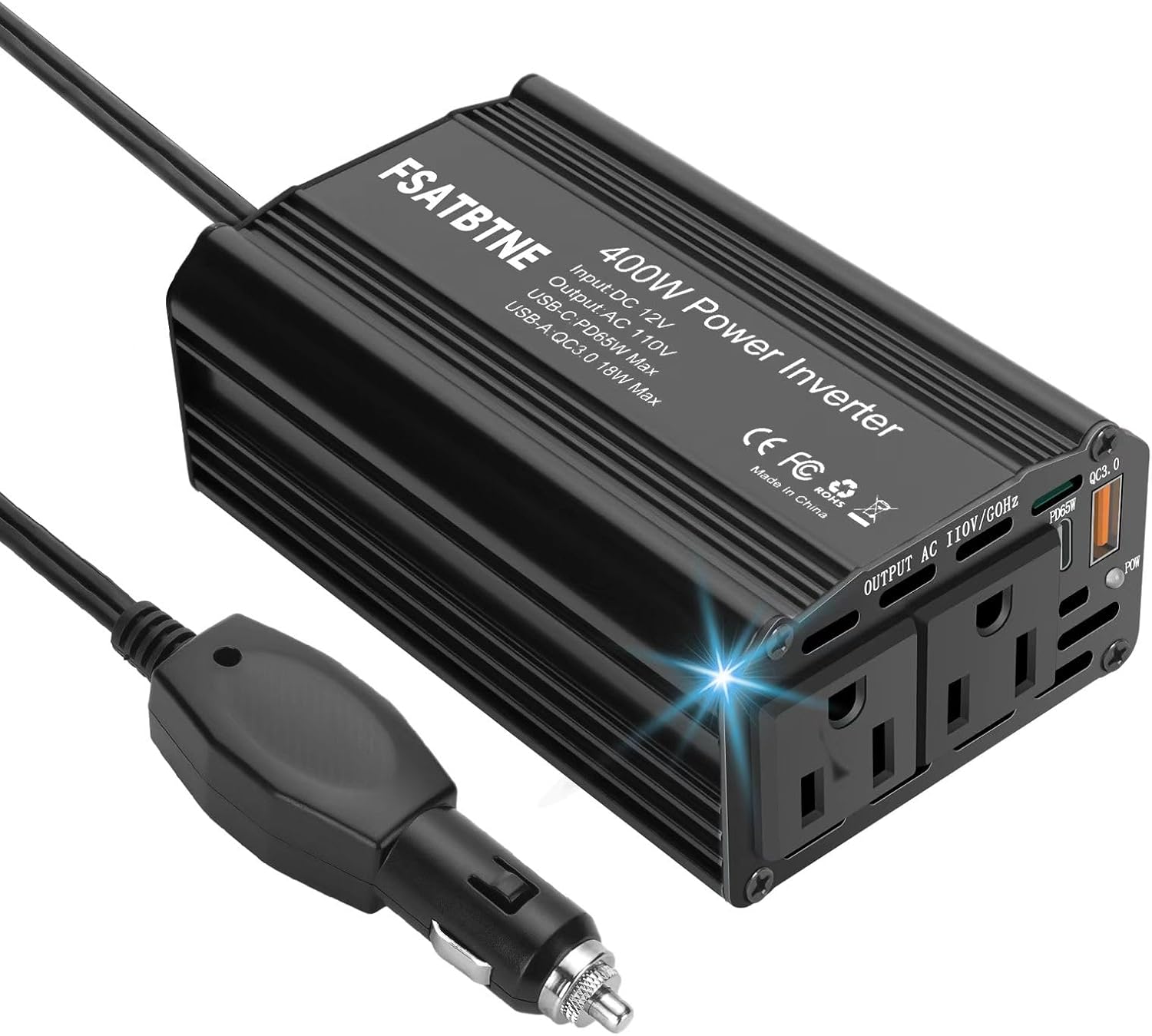
This inverter is designed to provide up to 400 watts continuous DC to AC power, with a stated peak of 800 watts. In daily terms, that positioning usually works best for electronics that don’t draw huge continuous power—things like chargers, small devices, and many laptop charging scenarios.
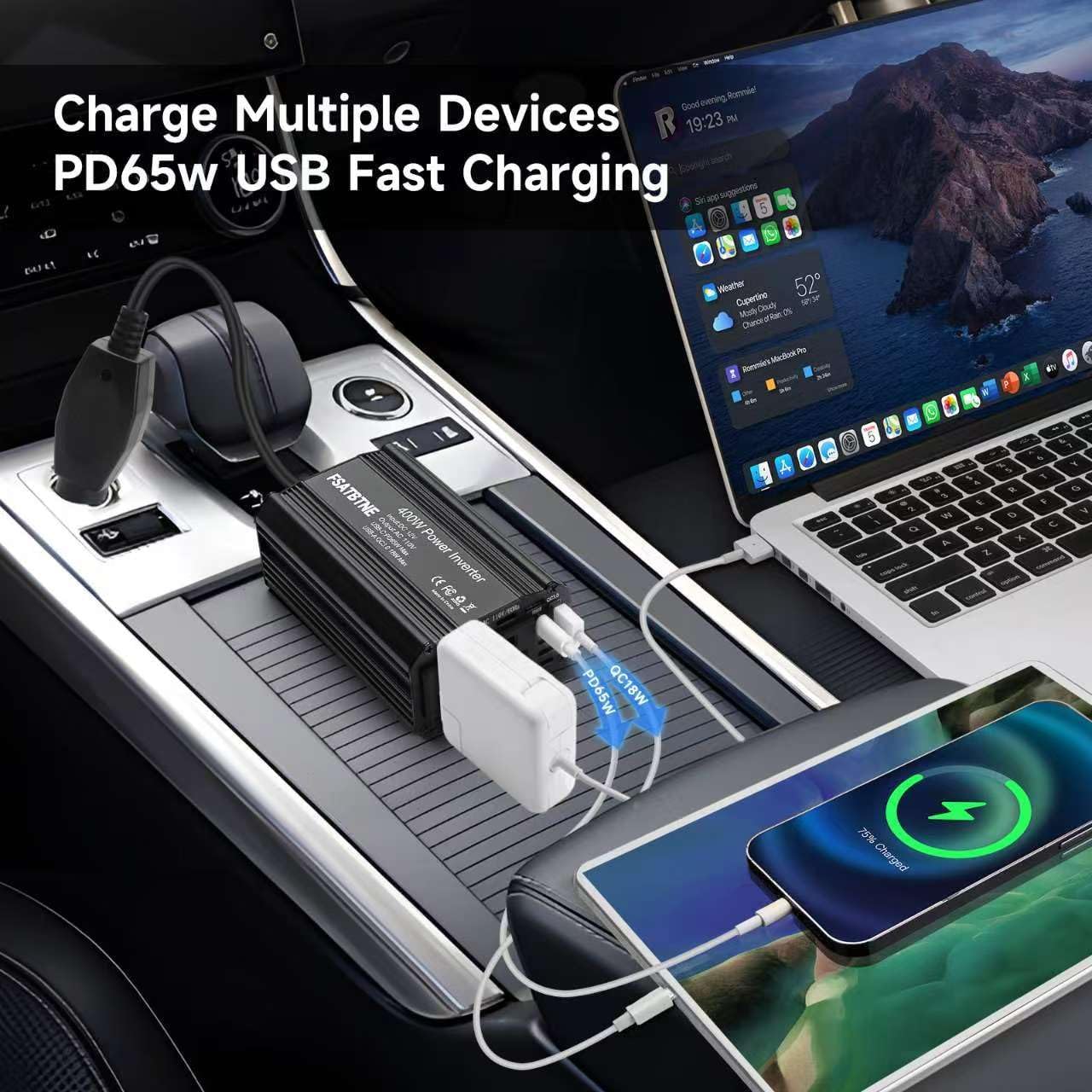
The charging ports are a major part of the convenience story. With the USB-C port supporting up to 65W and USB-A up to 18W, you can keep charging while you also plug in an AC device. If you’re trying to cut down on cables and chargers during a trip, this is the kind of “one box” approach that makes logistics easier.
Key features that affect real-world use
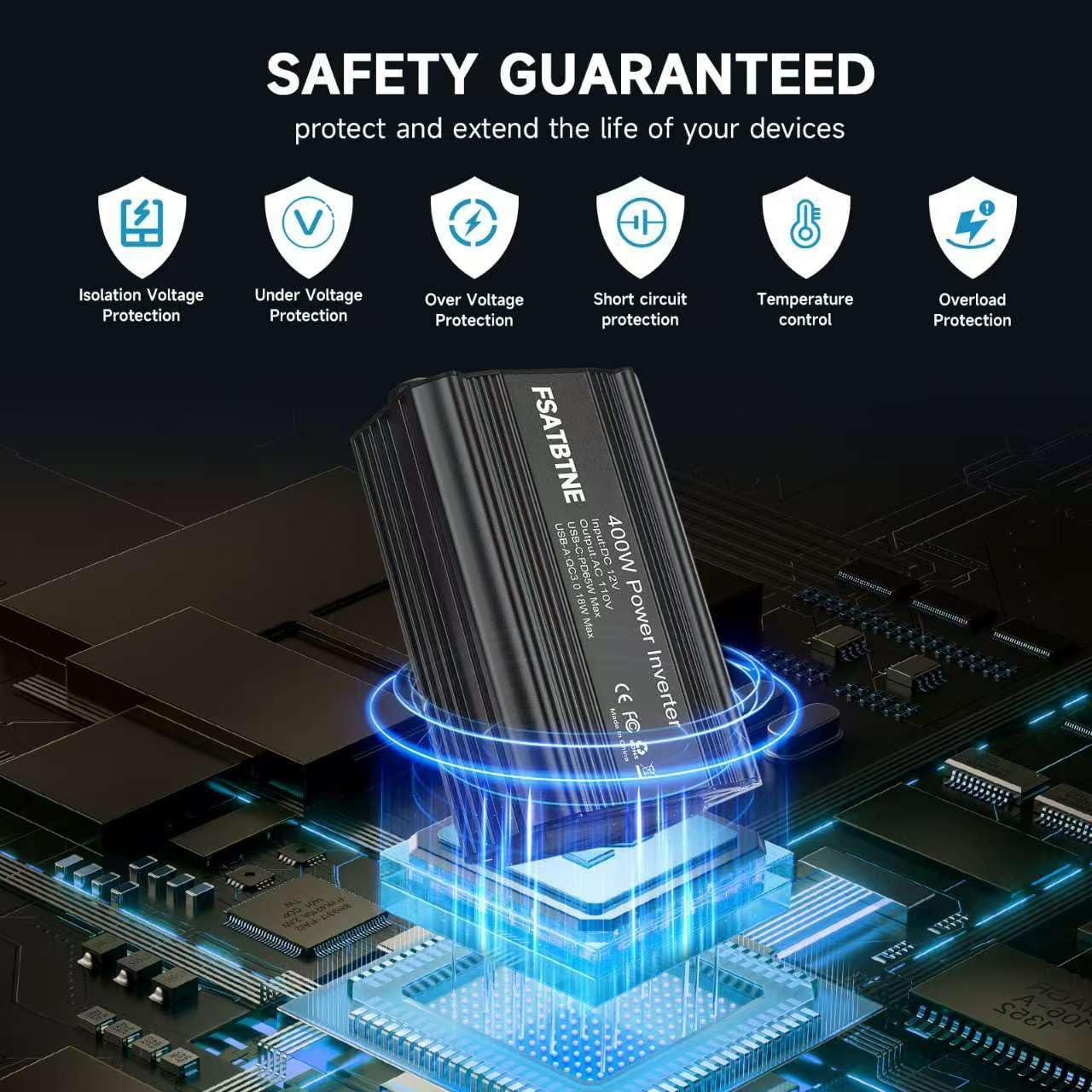
The housing is made from aluminum alloy, which is relevant because inverter use generates heat. The listing also notes built-in MCU intelligent chips that automatically identify the voltage and current required by connected devices, with protections for issues like overheating, undervoltage, overcurrent, overvoltage, overload, and short circuits.
There’s also a built-in intelligent cooling fan with a temperature sensor that adjusts fan speed based on working state and ambient temperature. The practical implication: you’re less likely to feel like the inverter is constantly “working at maximum” all the time, and it’s described as maintaining operation while aiming for minimal noise.
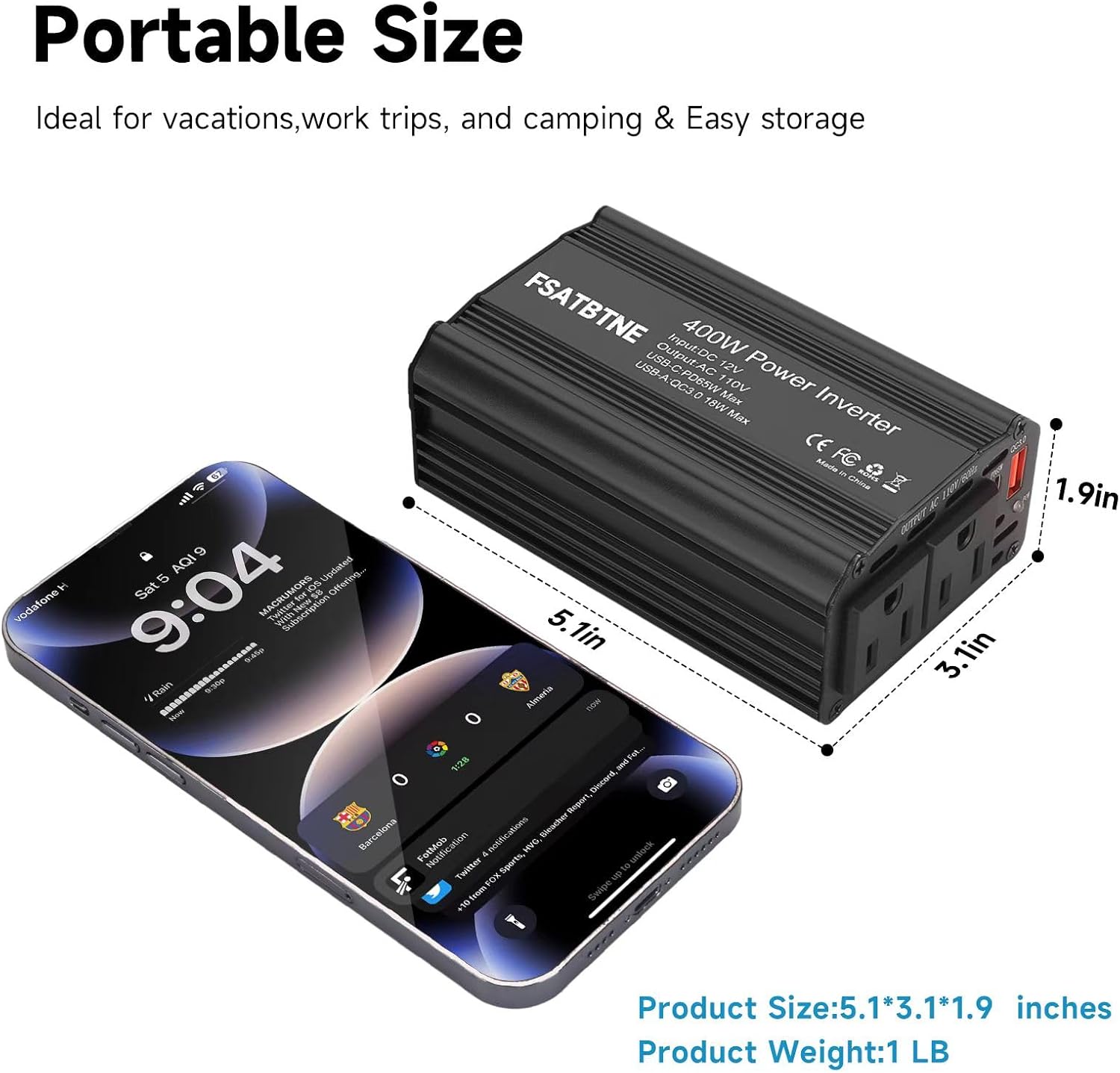
A small detail that matters for road use is the compact, lightweight design. It’s presented as portable, with a dual connection approach that can be powered via a car outlet or connected to a 12V battery (or a 12.8V LiFePO4 battery).
Note though: dual connection modes sound flexible, but if you’re expecting to run high-power AC loads constantly, you’ll want to be extra mindful of draw and heat. Inverters can be convenient, but they’re not magic.
Where it shines vs. where it may fall short
This inverter makes the most sense if your setup is mixed—part chargers on USB, part devices that need a standard AC plug. For example, on a road trip you might charge a phone and a laptop via USB-C, while also plugging in an AC device that uses a regular adapter.
Where it may not be the best fit is if your plan is heavy, continuous power for larger appliances. Even with the stated peak figure, the continuous rating (400W) is the number that matters most for sustained use. If you’re looking to run power-hungry gear for long stretches, you may find it too limiting.
Tech specs at a glance

- Type: 400W car power inverter (DC 12V to 110V AC)
- AC outputs: 2 outlets
- USB-C output: up to 65W (fast charging)
- USB-A output: up to 18W (fast charging)
- Stated power: 400W continuous, 800W peak
- Housing: aluminum alloy
- Cooling: intelligent fan with temperature sensor
- Connection options: car outlet or 12V battery / 12.8V LiFePO4 battery
- Included: 24-inch cigarette lighter plug, user manual, 24-month warranty
Getting the most from it (and what to double-check)
Before you buy, it’s worth checking your device needs. Look at what you plan to plug into the 2 AC outlets and how much continuous power those devices require. Then consider what you’ll charge via USB at the same time.
Also, be realistic about vehicle and battery conditions. In-car power and external battery connections can behave differently depending on your setup, and inverter load can increase heat. The fan and protections help, but they don’t eliminate the need to stay within sensible usage.
If you prioritize charging convenience—having USB-C and USB-A fast ports alongside AC outlets—this unit matches that goal well.
Is it worth it?
Worth considering if you want a single car inverter that covers both standard AC plugs and fast USB charging, and your devices are mostly in the “electronics and adapters” category rather than power-hungry appliances. The combination of 2 AC outlets plus 65W USB-C and 18W USB-A is the kind of feature mix that simplifies road-trip charging.
Better avoided if you expect to run large continuous AC loads for long periods. In that case, the continuous 400W rating is a real constraint, and you may want to look for a higher-capacity approach that better matches your actual wattage needs.
Mini FAQ
Can I charge multiple devices at the same time?
Yes, the design is meant for simultaneous use of the AC outlets and the USB-C/USB-A fast charging ports.
What’s the USB-C port rated for?
The USB-C port is listed as supporting up to 65W fast charging.
Does it have safety protections?
The listing mentions built-in protections for overheating, undervoltage, overcurrent, overvoltage, overload, and short circuits.
How is it powered?
It can be powered through a car outlet (with the included cigarette lighter plug) or connected to a 12V battery / 12.8V LiFePO4 battery.
How much power can it provide?
It’s rated for 400W continuous power output, with a stated 800W peak.