

Renogy Rover Lite 60A MPPT Solar Charge Controller (12V/24V/36V/48V) with 150V Max Solar Input
Product description
Key takeaways (at a glance)
The Renogy Rover Lite 60A MPPT controller is built for people who want a more capable MPPT solar setup without turning the install into a wiring project. On paper, the standout is the 150V maximum solar input, which gives you more flexibility with stringing panels—especially when you’re building a larger DIY system for home, an RV, a marine setup, or a workshop.
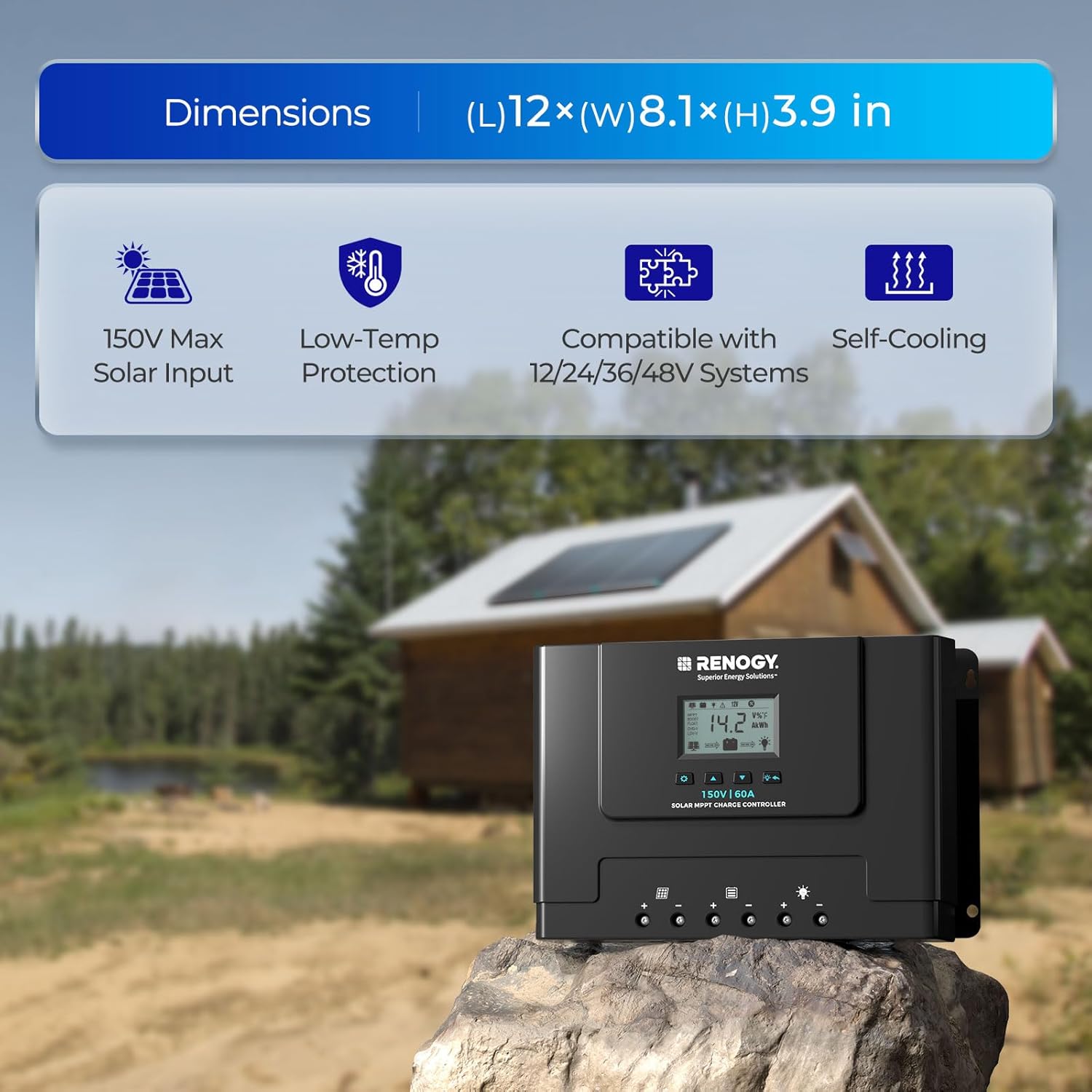
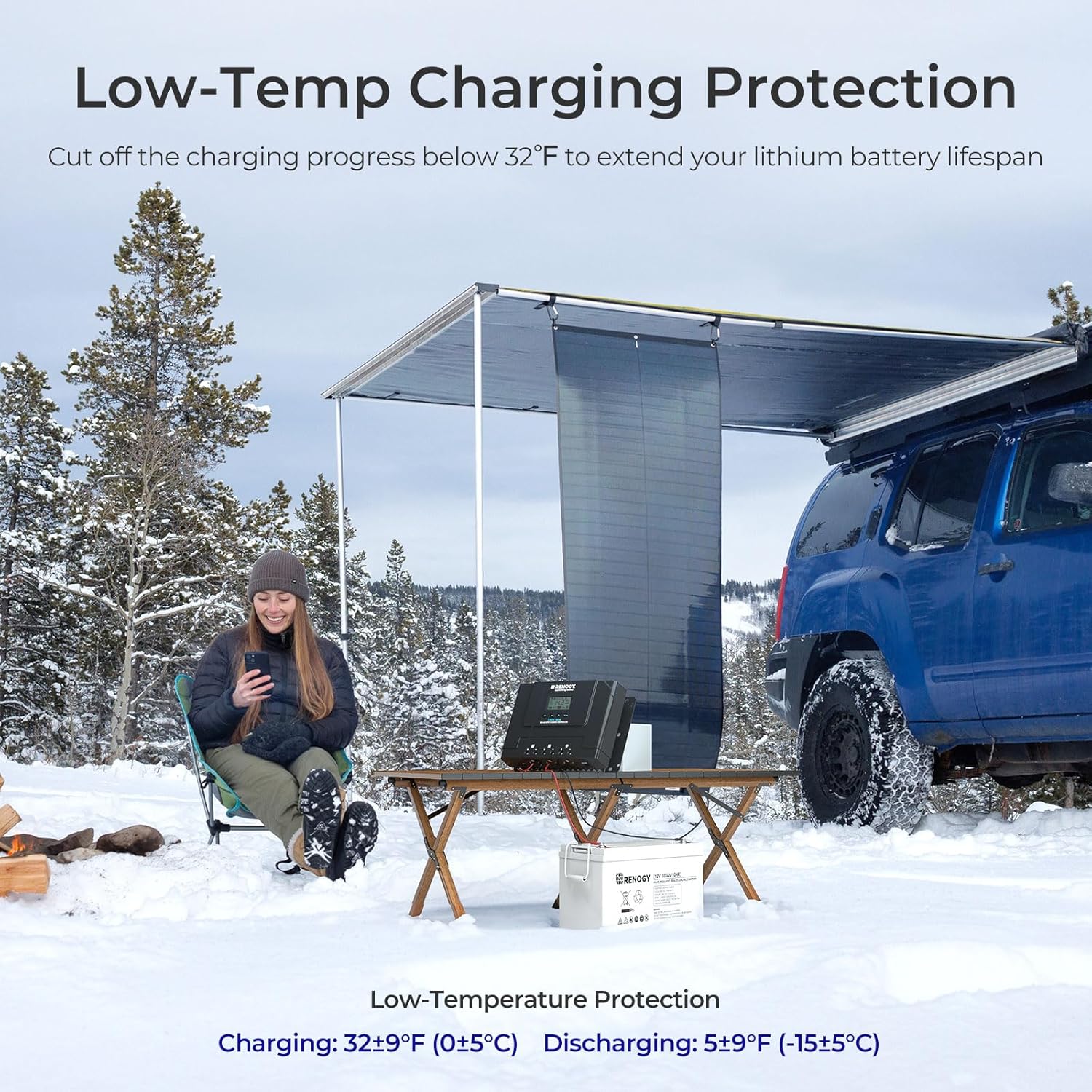
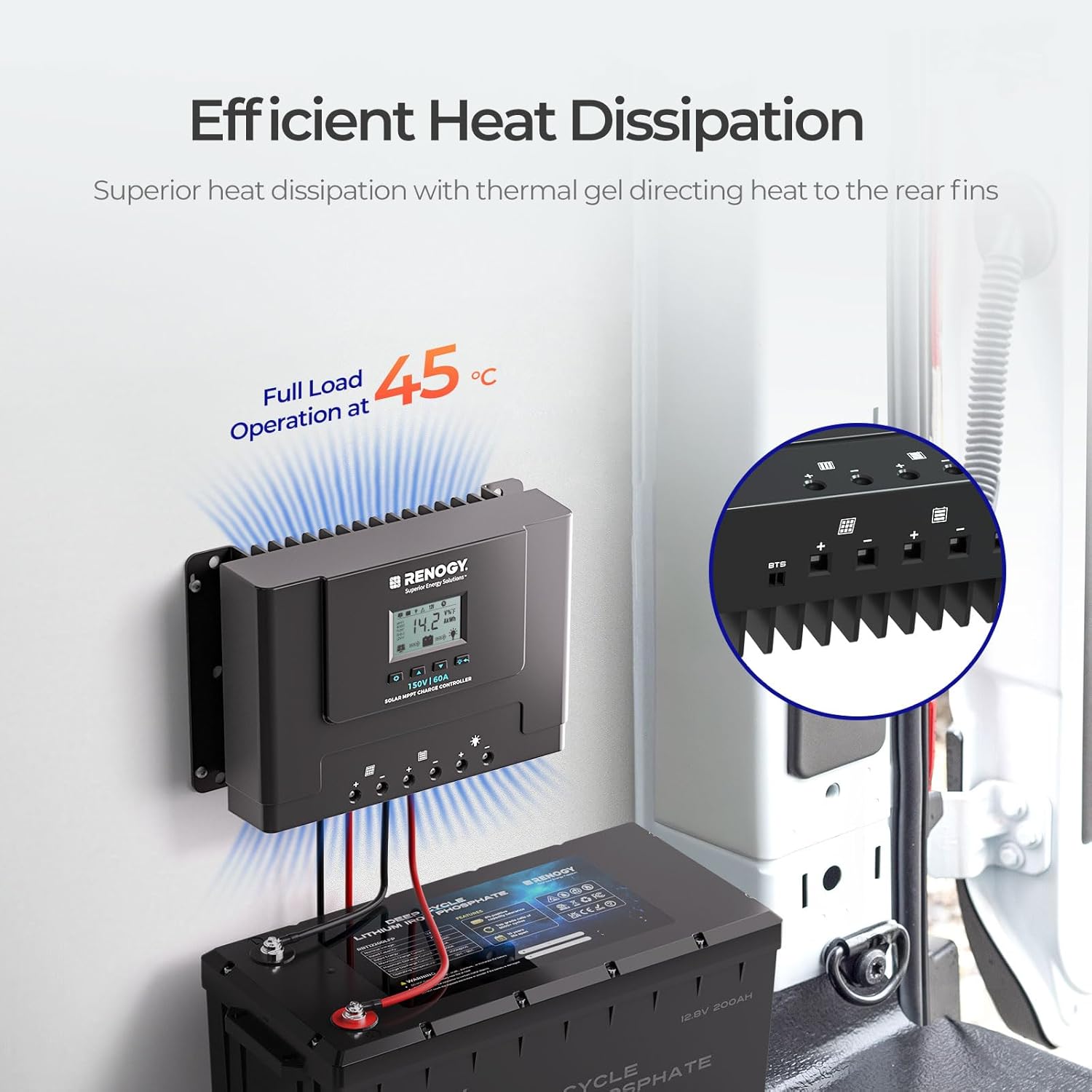
It also leans practical for real-world weather. It’s designed to run from -31°F to 113°F at full load, includes low-temperature protection meant to help protect lithium batteries, and uses self-cooling so it can keep working when things get hot. Still, it’s not perfect for every situation—if your system is small or you prefer super-simple controller sizing with minimal planning, you may find it feels like more controller than you strictly need.
What this is for (and why the 150V input matters)
This is an MPPT solar charge controller rated for 60A battery charging, supporting battery systems across 12V, 24V, 36V, and 48V. The 150V maximum solar input is the feature that often changes the whole planning stage of a solar build: it can reduce the need for heavy, extensive wiring by letting you connect up to six Renogy 200W monocrystalline panels in series (as stated in the product info).
In practical terms, it’s the kind of controller that makes sense when you’re trying to balance panel count, wiring runs, and installation complexity. If you’re working on an RV or marine project, the goal is usually the same—get the most useful charging from your array without creating a spaghetti mess of cable paths.
Performance in heat and cold
Renogy positions this unit for harsh temperature operation, covering a full-load range from -31°F to 113°F. The controller includes built-in low-temperature protection for lithium batteries, aimed at supporting a longer lifespan. There’s also a self-cooling design intended to help it operate efficiently in high heat.
If you live somewhere that swings hard between cold mornings and hot afternoons, that temperature coverage is one of those “you’ll notice it later” benefits. On the flip side, anyone expecting it to magically eliminate the need for good ventilation, sane cable sizing, and basic installation discipline should temper expectations—temperature ratings help, but they don’t replace good setup.
Battery and system compatibility (what it supports)
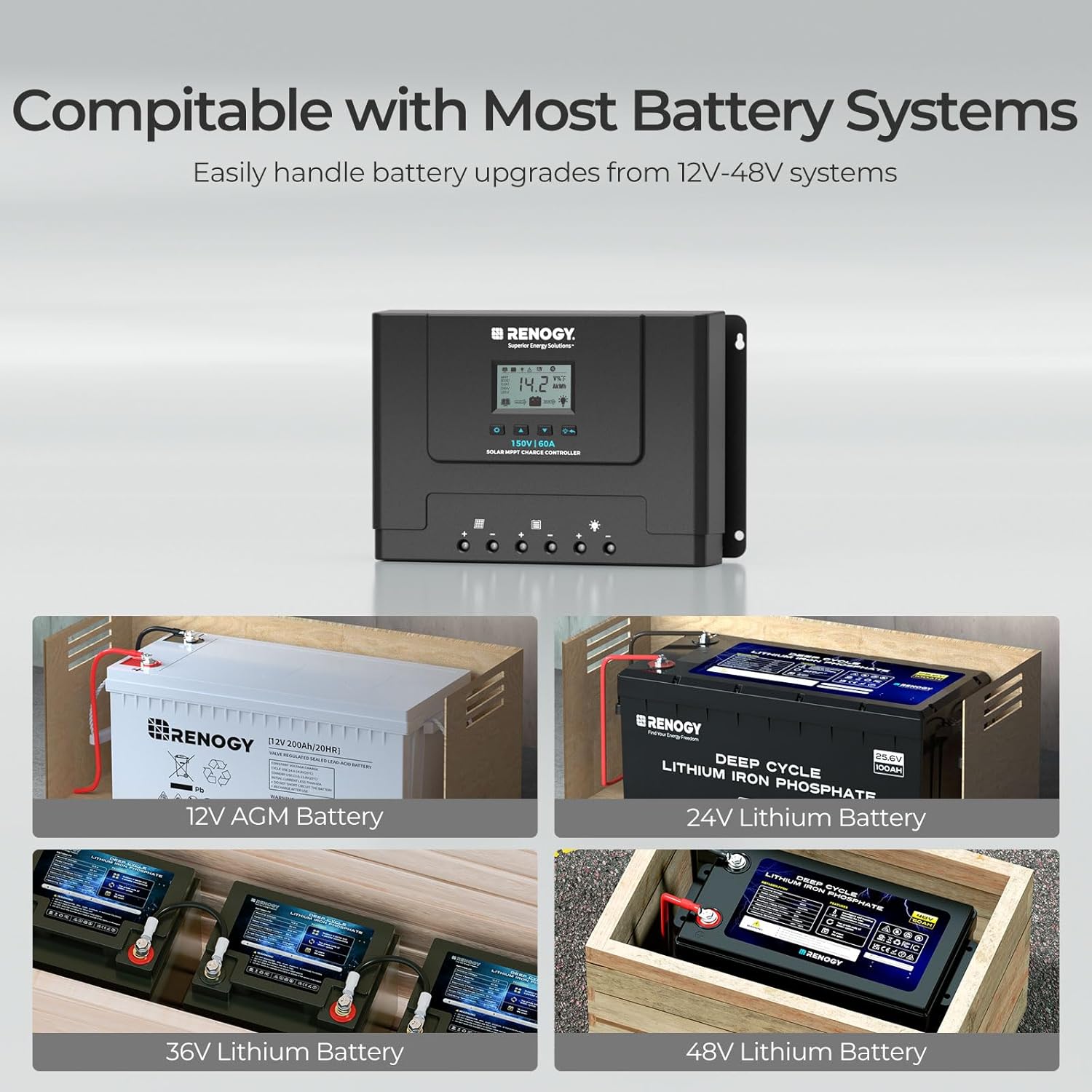
This controller is described as compatible with lithium, AGM, and gel battery types, including lithium protection via low-temperature functionality. It’s designed to adapt across 12V to 48V systems, which matters if you might change your battery bank configuration later or if you’re matching the controller to an existing RV/marine/workshop system.
Where it can be a better match is when you want one controller that fits multiple common battery voltages and a range of environments. Where it may not be the best match is when you already have a very simple, small array and you’re not aiming for the panel-string flexibility implied by a 150V solar input design.
Controls, display, and monitoring options
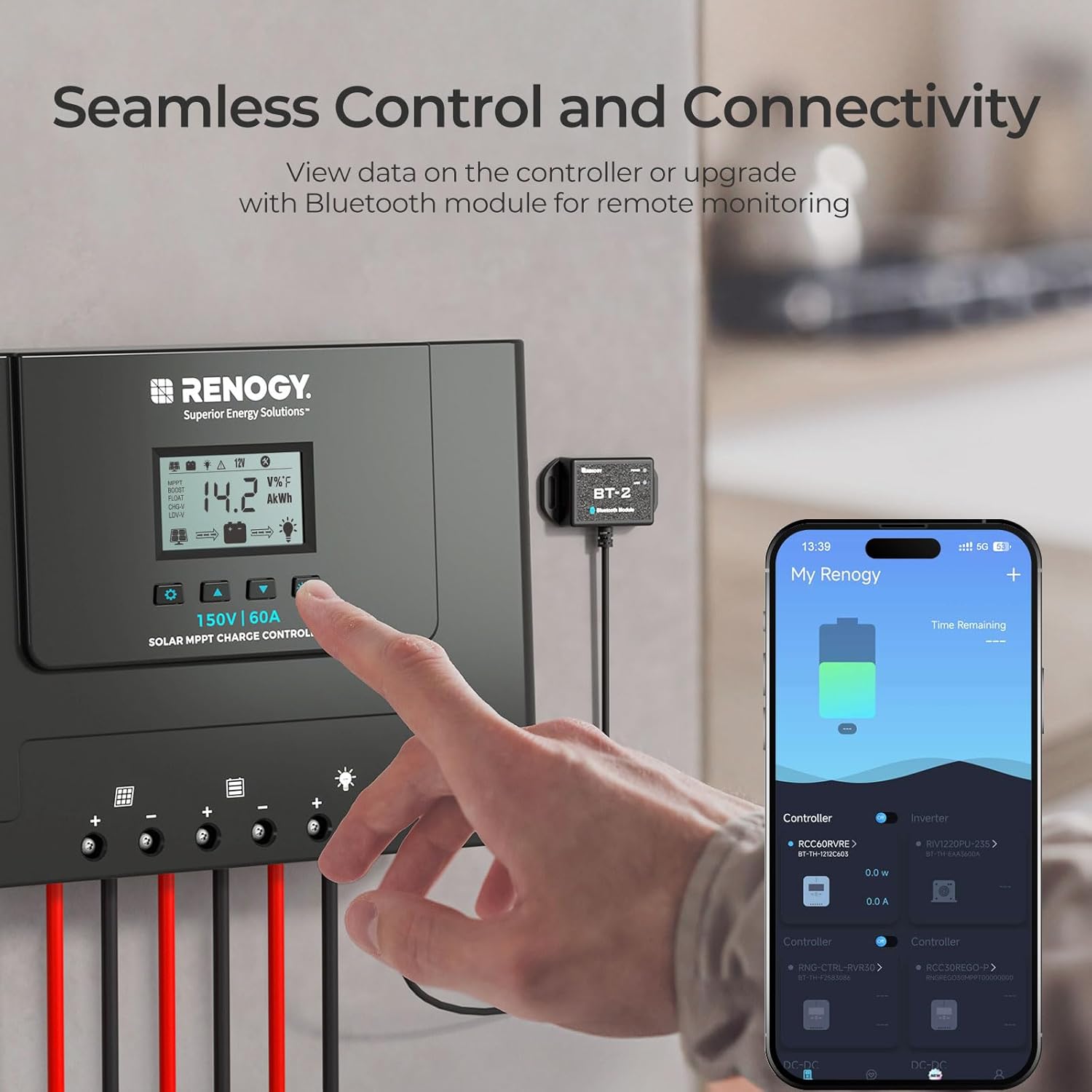
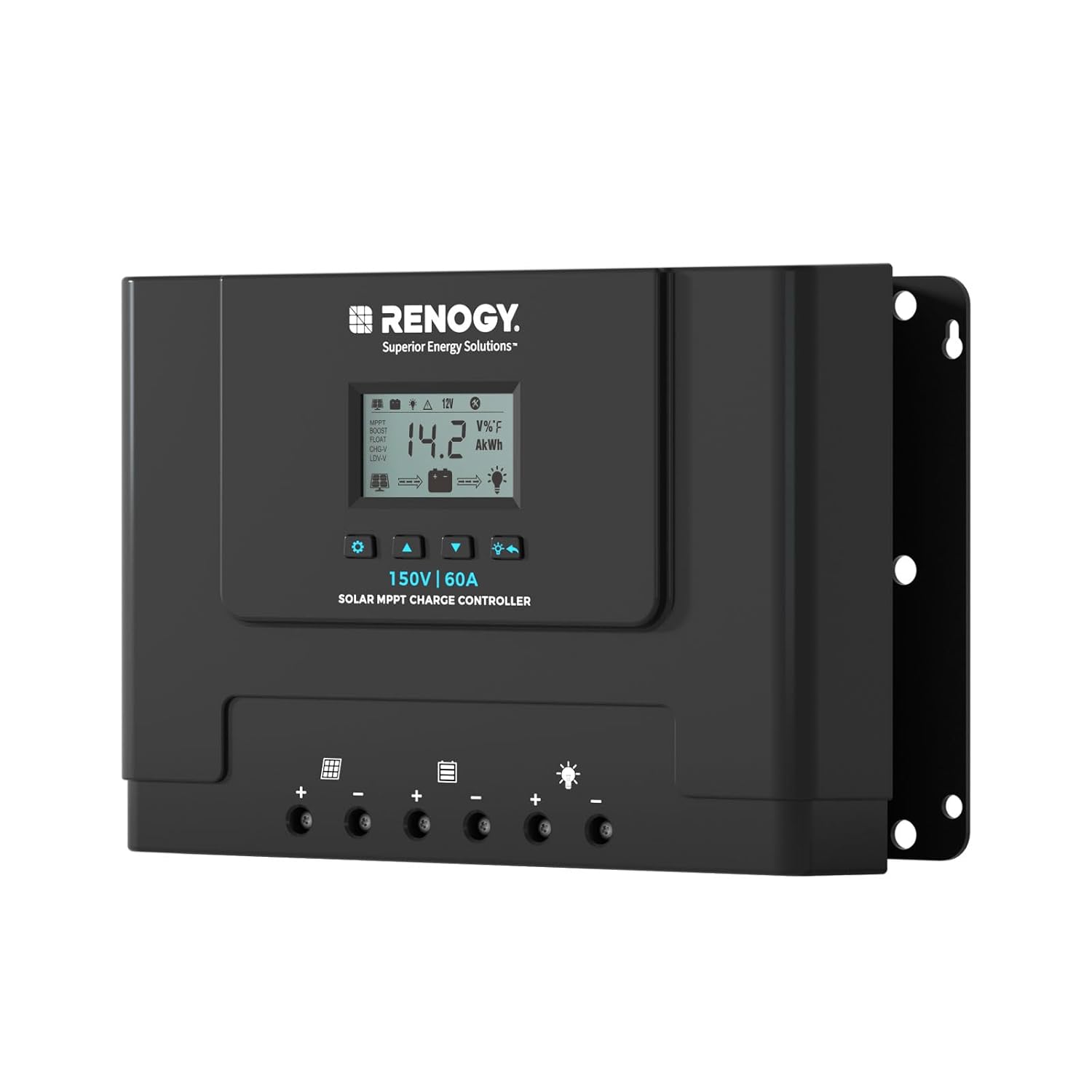
The Rover Lite 60A uses intuitive operation with clearly labeled ports for quicker connections. It includes an LCD screen and user-friendly buttons for on-device operation.
There’s also mention of an optional Bluetooth module that can be purchased separately to monitor system status from a smartphone. That’s a nice upgrade path if you like checking performance without walking over to the controller every time. The limitation is straightforward: without the optional module, you’ll be relying on the onboard LCD/buttons rather than app-style visibility.
Installation considerations to double-check before buying
A controller like this is often chosen for the flexibility of its solar input rating and system voltage support, so it’s worth taking a careful look at your plan before you commit.
- Confirm your battery bank voltage (12V/24V/36V/48V) matches the way you intend to run the system.
- Make sure your solar array design aligns with the stated 150V maximum solar input concept you’re planning around.
- If you’re going lithium (or mixing expectations), double-check that your battery type and usage scenario match what the controller is meant to protect (the info specifically calls out low-temperature protection for lithium batteries).
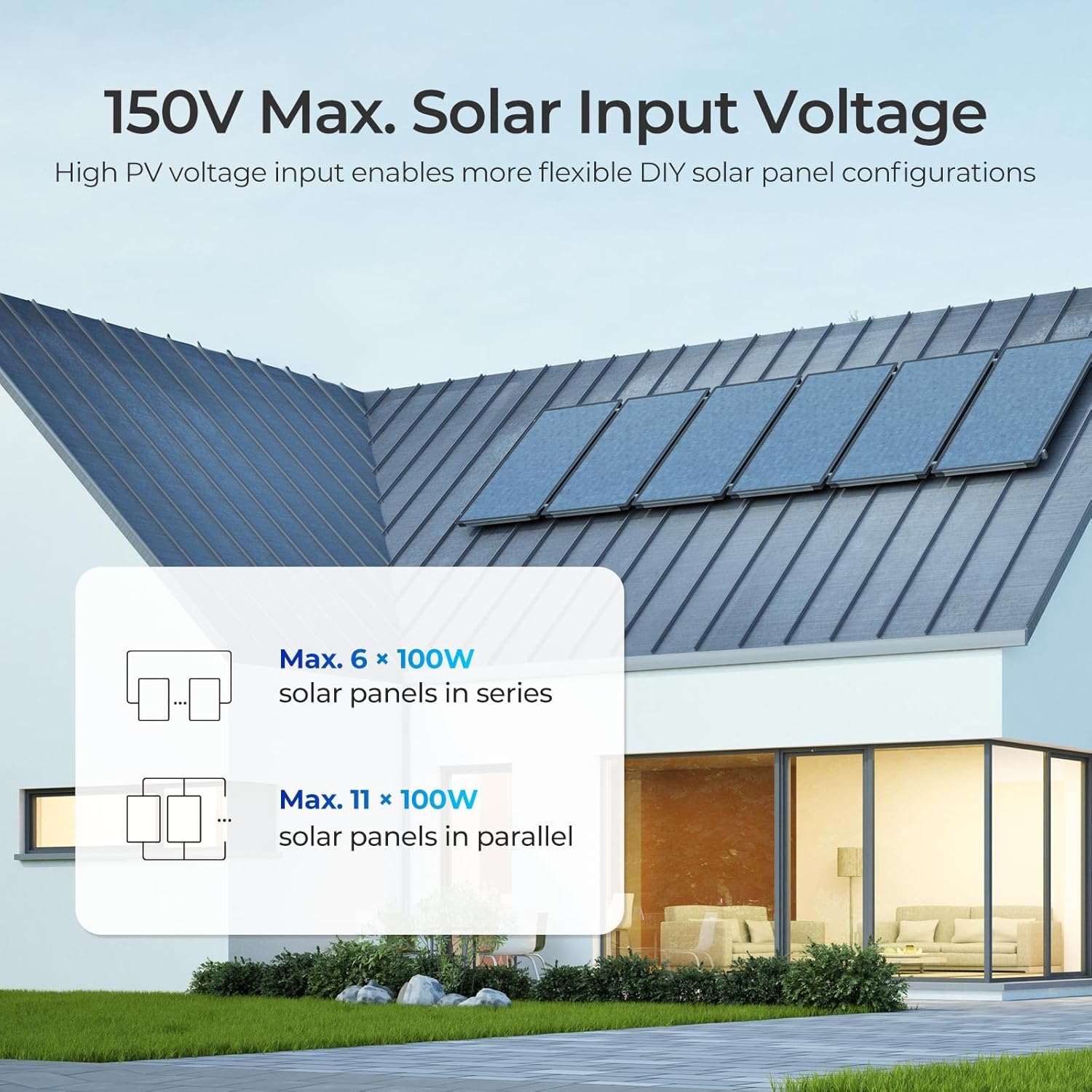
A good mental test: if your setup already fits the controller’s intent—bigger arrays, flexible panel stringing, and a need for stable operation in hot/cold swings—then this is likely to feel “right.” If your setup is tiny and straightforward, you might be paying for capabilities you won’t use.
Pros
- 150V maximum solar input for more flexible solar array planning.
- Designed for full-load operation from -31°F to 113°F.
- Low-temperature protection for lithium batteries is built in.
- Supports battery systems from 12V up to 48V.
- LCD screen and labeled ports make daily operation simpler.
What stands out day to day (and what can feel like overkill)
If you’re actively building or upgrading an RV, marine, workshop, or home solar setup and you’ve been stuck dealing with wiring complexity, this controller’s approach—especially the high solar input capacity—can be genuinely helpful. It’s also the kind of unit people choose when they want performance stability across temperature extremes, not just “works indoors” convenience.
That said, it may feel like overkill if your system is small, your panel string plan doesn’t benefit from the 150V ceiling, or you’re not looking for the broader 12V–48V compatibility.
Mini FAQ
Is this an MPPT controller?
Yes. The product is described as an MPPT solar charge controller.
What battery types does it work with?
It’s described as compatible with lithium, AGM, and gel batteries.
Does it include smartphone monitoring?
A Bluetooth module is mentioned as optional and sold separately, so smartphone monitoring depends on adding that module.
Can it handle cold weather?
It’s engineered for full-load operation from -31°F to 113°F, and it includes low-temperature protection aimed at lithium batteries.
Is it worth it?
Buy the Renogy Rover Lite 60A MPPT controller if your solar plan benefits from a 150V maximum solar input and you want a controller that’s meant to keep charging reliably across harsh temperatures. It’s also a strong fit if you’re working with 12V/24V/36V/48V battery systems and you’d appreciate the straightforward LCD + button control, with the option for Bluetooth monitoring later.
Skip it or think twice if your array is small and doesn’t need the higher solar input flexibility, or if you want a controller that’s only used in a limited, simple environment where the added capability won’t matter. As always with solar, the safest move is to verify your intended panel stringing approach and battery voltage match the setup you’re building—capability on paper only helps when your design actually aligns with it.