

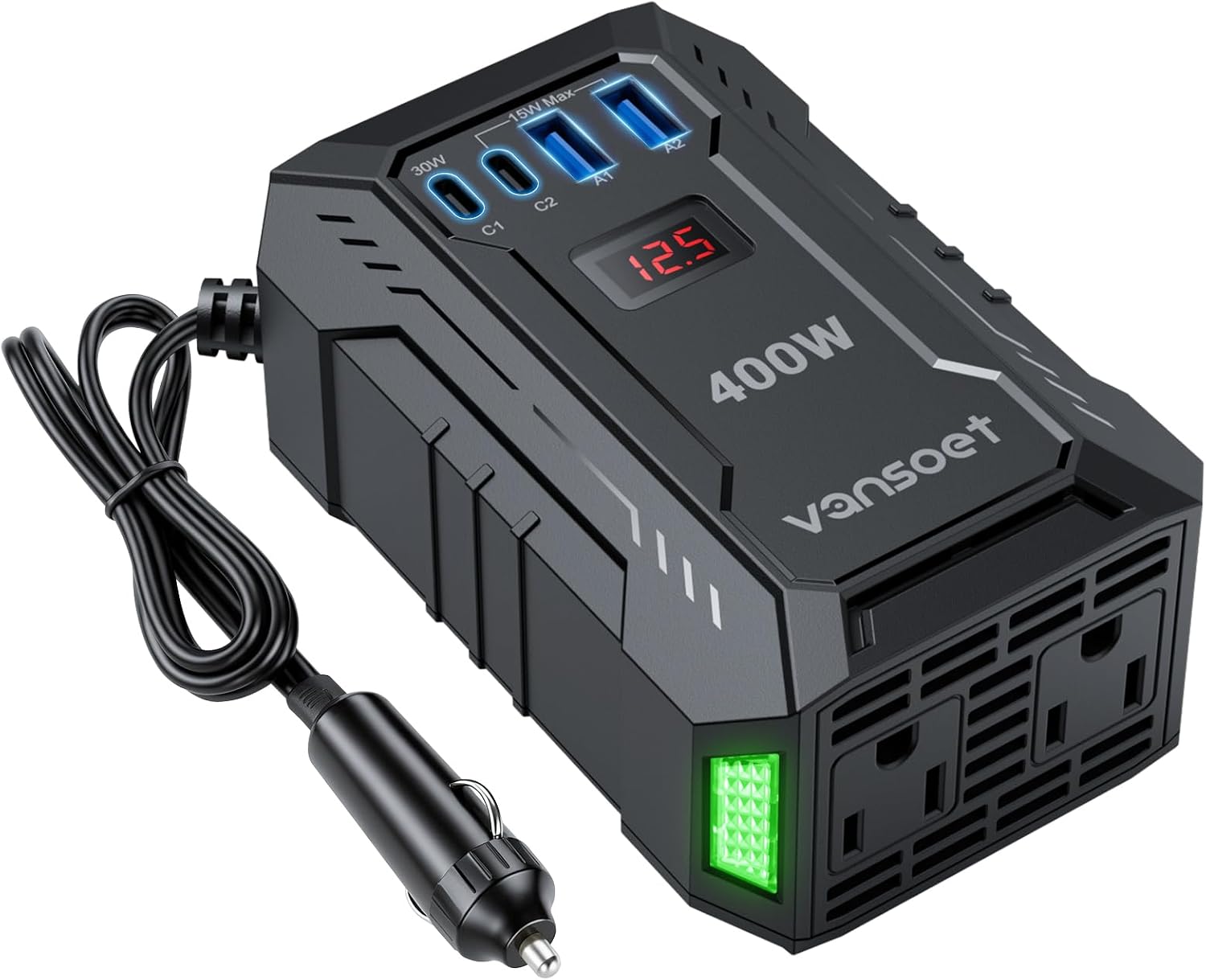
400W Car Power Inverter (DC 12V to 110V AC) with 30W/15W USB-C, 2 USB-A & 2 AC Outlets
Product description
The essentials
If you’re tired of juggling chargers and power bricks during a commute or road trip, a car power inverter is one of those “why didn’t I do this sooner?” accessories. This 400W car power inverter is built for a 12V car setup and turns DC power into household-style AC so you can run small electronics and appliances—while also charging devices through multiple USB ports.
On paper, the strong point here is how much it combines in one spot: 2 standard US AC outlets plus a USB charging hub with a 30W PD Type-C port, another 15W Type-C, and two 15W USB-A ports. That means phones, tablets, cameras, and similar gadgets can charge alongside whatever you’re powering through the AC outlets, without constantly unplugging and re-plugging.
That said, it’s not designed to power everything under the sun. Inverter setups always come with real-world limits based on wattage and the specific load you’re trying to run, so it’s smart to be selective about what you plug in.
Key features that matter in daily use
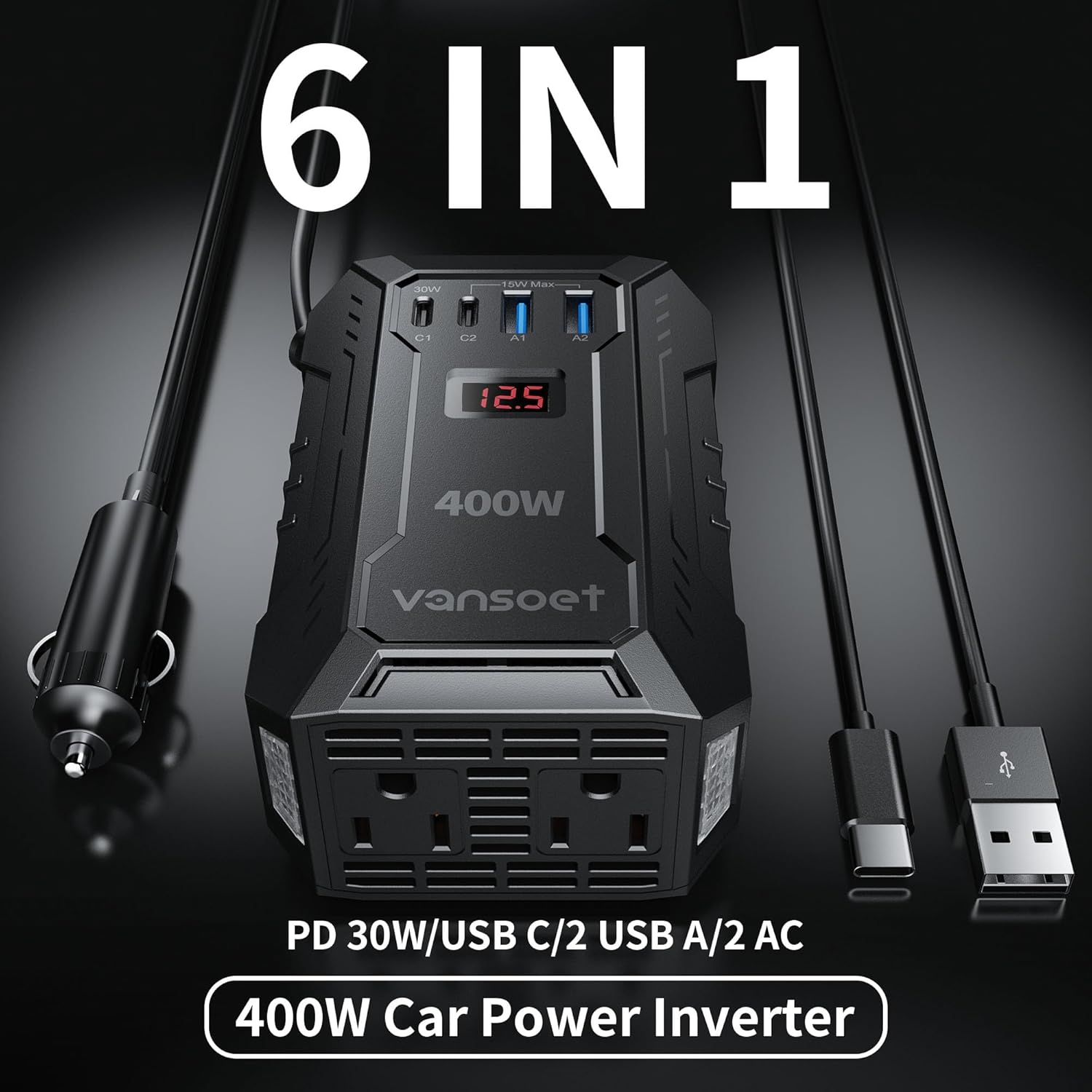
The included mix of outlets and charging options is what makes this inverter feel practical rather than “just another adapter.” You get:
- 2 AC outlets for small electronics that need AC power
- A USB-C PD fast-charge port rated at 30W (plus a second USB-C rated at 15W)
- Two additional USB-A ports rated at 15W
- A dedicated AC control switch so you can turn the AC outlets on/off independently (useful when you want to save power or reduce unnecessary draw)
Where it gets especially convenient is the idea of separate control for AC. You can keep charging running through USB while switching the AC side off, instead of having to remove the cigarette lighter adapter every time.
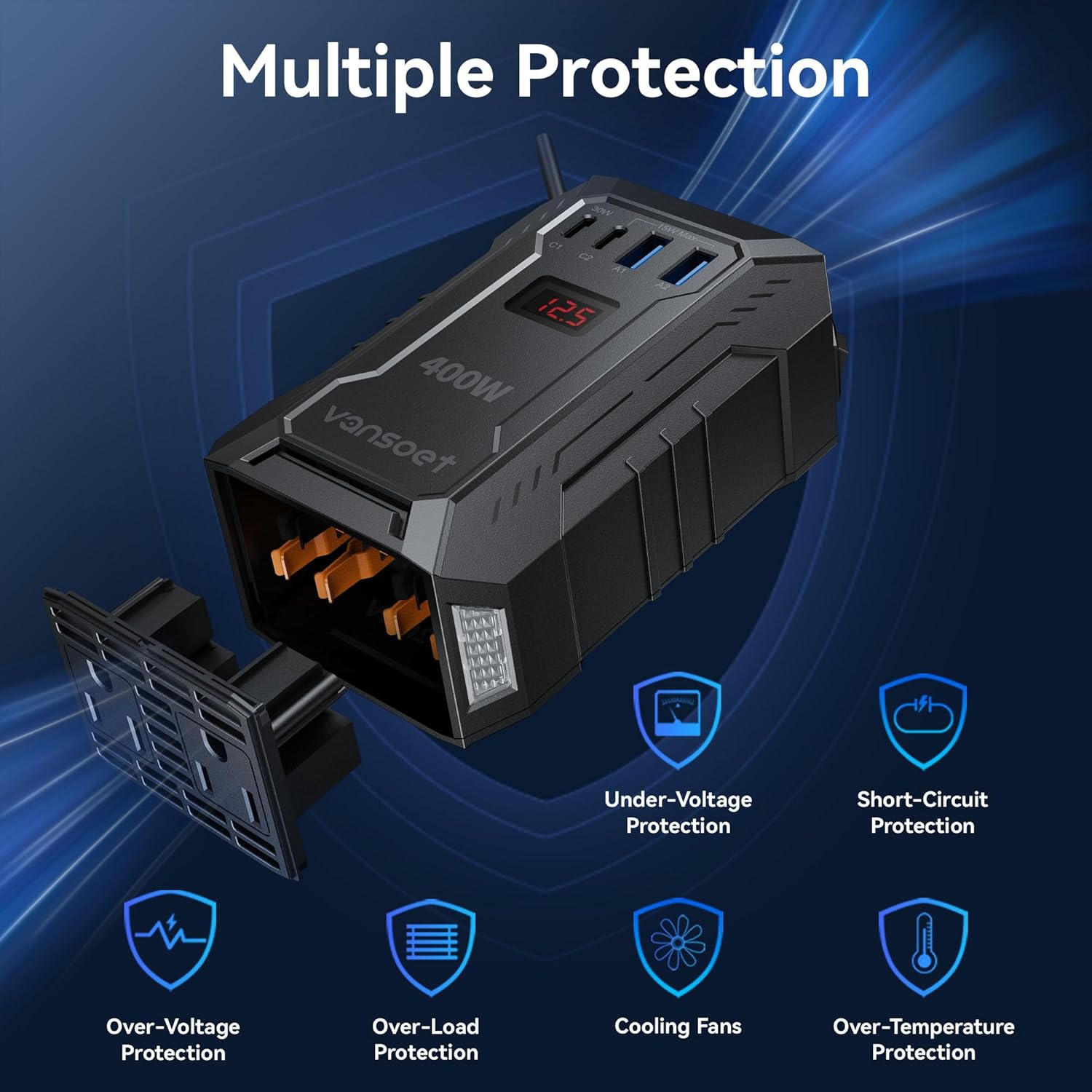
There’s also an intelligent temperature-controlled cooling fan. The fan is described as activating only when needed, which should help with longer runtime during extended use, while also aiming to keep noise in check.
And for safety, there’s LED status monitoring: a solid green light for normal operation, and a red warning indicator for issues such as over-voltage, under-voltage, overload, overheating, or short circuit. It’s the kind of “early warning” you appreciate when you’re driving and juggling gear.
Tech specs (quick read)
- Type: Car power inverter (DC 12V to 110V AC)
- Output power: 400W
- AC outlets: 2 standard US AC outlets
- USB charging ports: PD 30W Type-C, 15W Type-C, and 2x 15W USB-A
- Cooling: Temperature-controlled cooling fan
- Indicators: LED status (green = normal, red = fault warning)
What stands out vs. simpler car chargers
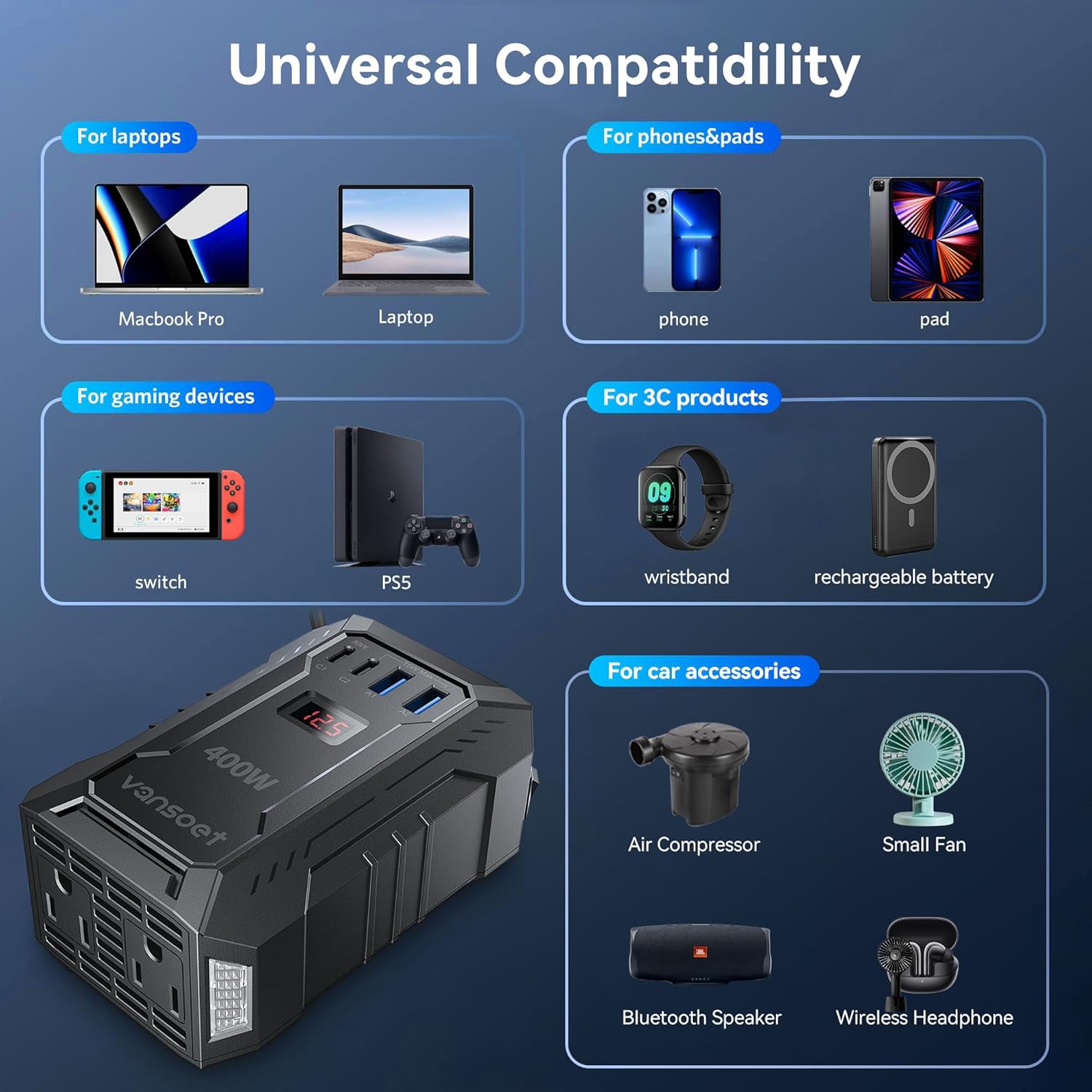
A typical car charger setup might handle phones and maybe one tablet, but it can’t replace the “plug in AC like you would at home” convenience. This inverter is more of a road-trip workhorse: it’s meant to run small devices and appliances (the description mentions items like laptops, mini coolers/fridges, drones, travel kettles/mugs, lights, and power tools) as long as they fall within the inverter’s 400W capability.
If you’re the kind of person who brings multiple devices—work laptop + phone + camera battery + maybe a small fan—this design aims to cut down on the “mess of cables” problem. You also get simultaneous charging/powering support, at least as far as the ports and outlets are concerned.
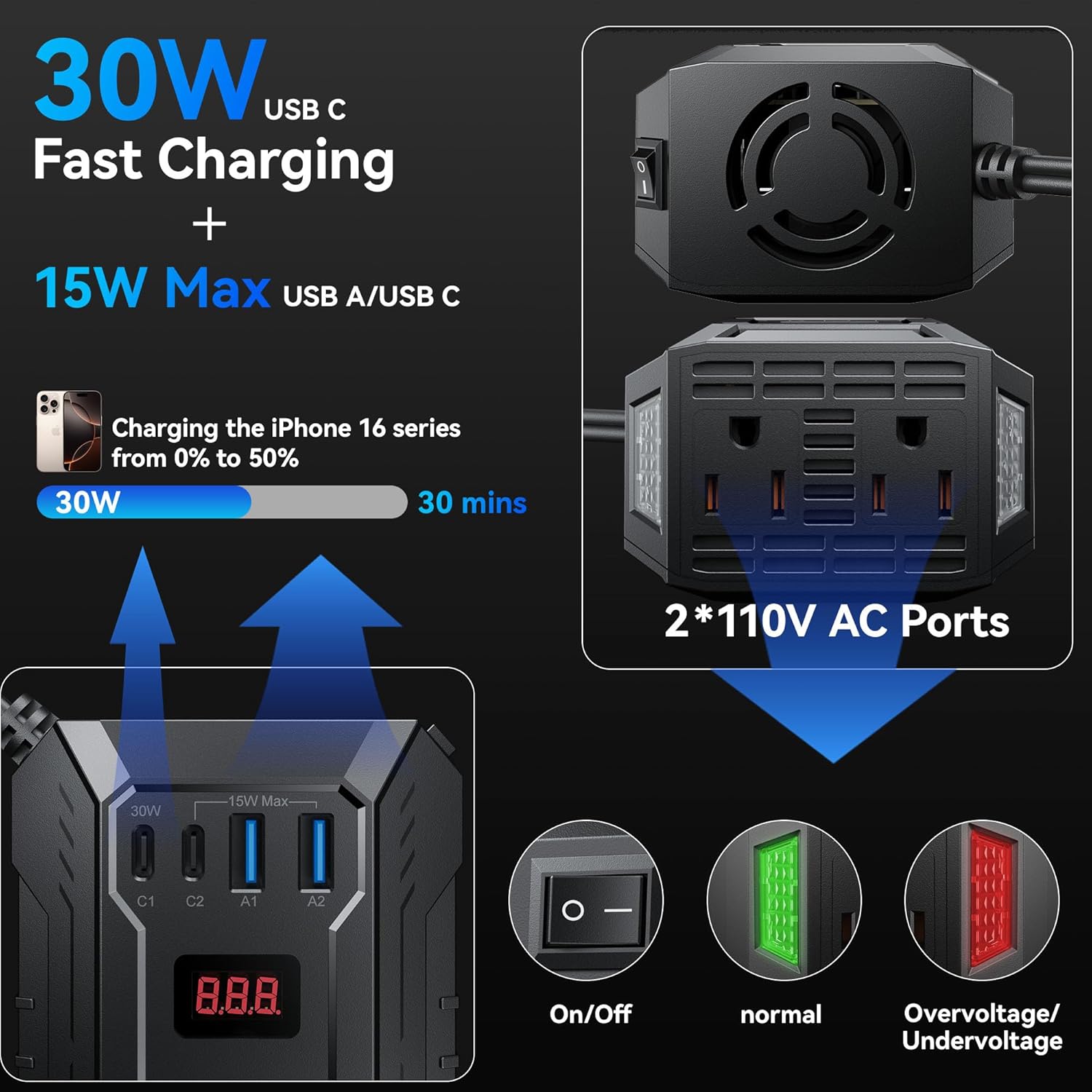
One limitation to keep in mind: fast charging via USB depends on the capabilities of your device and proper charging conditions. The inverter provides the port power levels, but it can’t force your device to accept that speed if it doesn’t support it.
Who it’s for (and who should skip it)
It’s a solid fit if you frequently do road trips, daily commutes with gear, camping, or outdoor work and want one hub to handle both AC power and USB charging. It also makes sense for emergency backup situations where you’d like to power small electronics in a 12V vehicle.
It may not suit you if your goal is to run high-draw appliances for long periods, or if you want a system that’s optimized purely for charging phones/tablets. In those cases, you may find a simpler charging approach more straightforward.
Not the best match if you’re trying to power devices with uncertain wattage. The description highlights overload and overheating fault protection, but you still don’t want to “guess and hope” with power-hungry loads.
Practical tips for getting the most from it
Before you plug anything in, think about two things: the device’s power draw (to avoid overload) and how you’ll want to manage charging. For example, on a road trip you could keep the AC outlets switched off while charging phones/tablets through the USB ports, then only switch AC on when you need a laptop or a small accessory.
Also pay attention to the LED indicator. If you ever see the red fault light, don’t treat it like a minor hiccup—stop and reassess what’s connected. Over-voltage, under-voltage, overload, overheating, and short circuit warnings all point to a situation where something needs adjusting.
Finally, because this relies on cooling and stable operation, extended use is where the temperature-controlled fan is meant to help. Still, don’t bury the inverter where airflow is blocked.
Final verdict
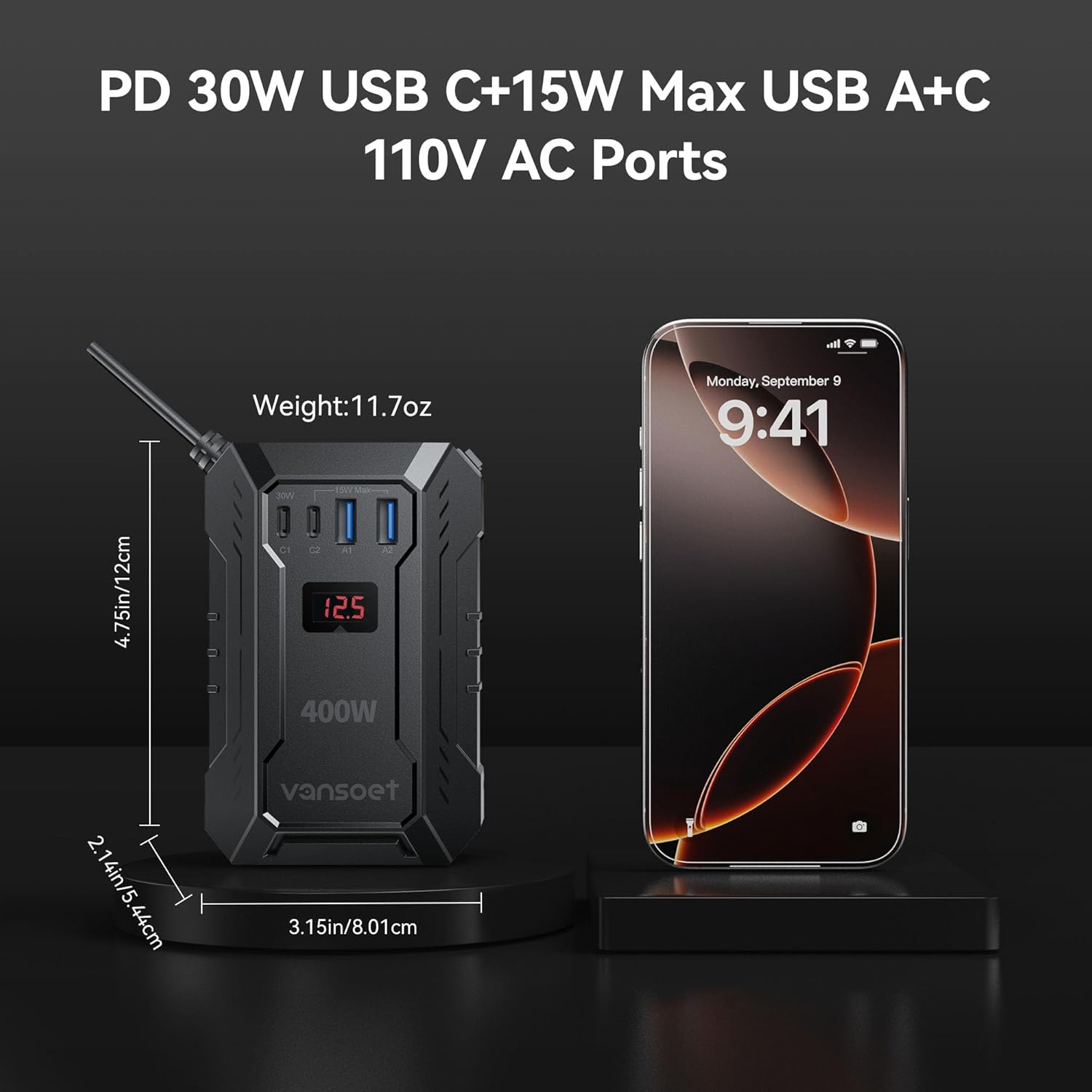
This 400W car power inverter is worth considering if you want one adapter that combines 2 AC outlets with a multi-port USB charging hub (including a 30W PD Type-C). It’s designed around practical travel scenarios—charging multiple devices at once and powering small AC electronics—while adding convenience (dedicated AC control switch) and safety cues (LED status warnings).
You may want to skip it if you only need to charge a phone or two, or if you plan to run power-hungry appliances where “400W” isn’t a realistic fit. And if you’re not sure what your devices consume, it’s better to verify your load first than rely on trial-and-error.
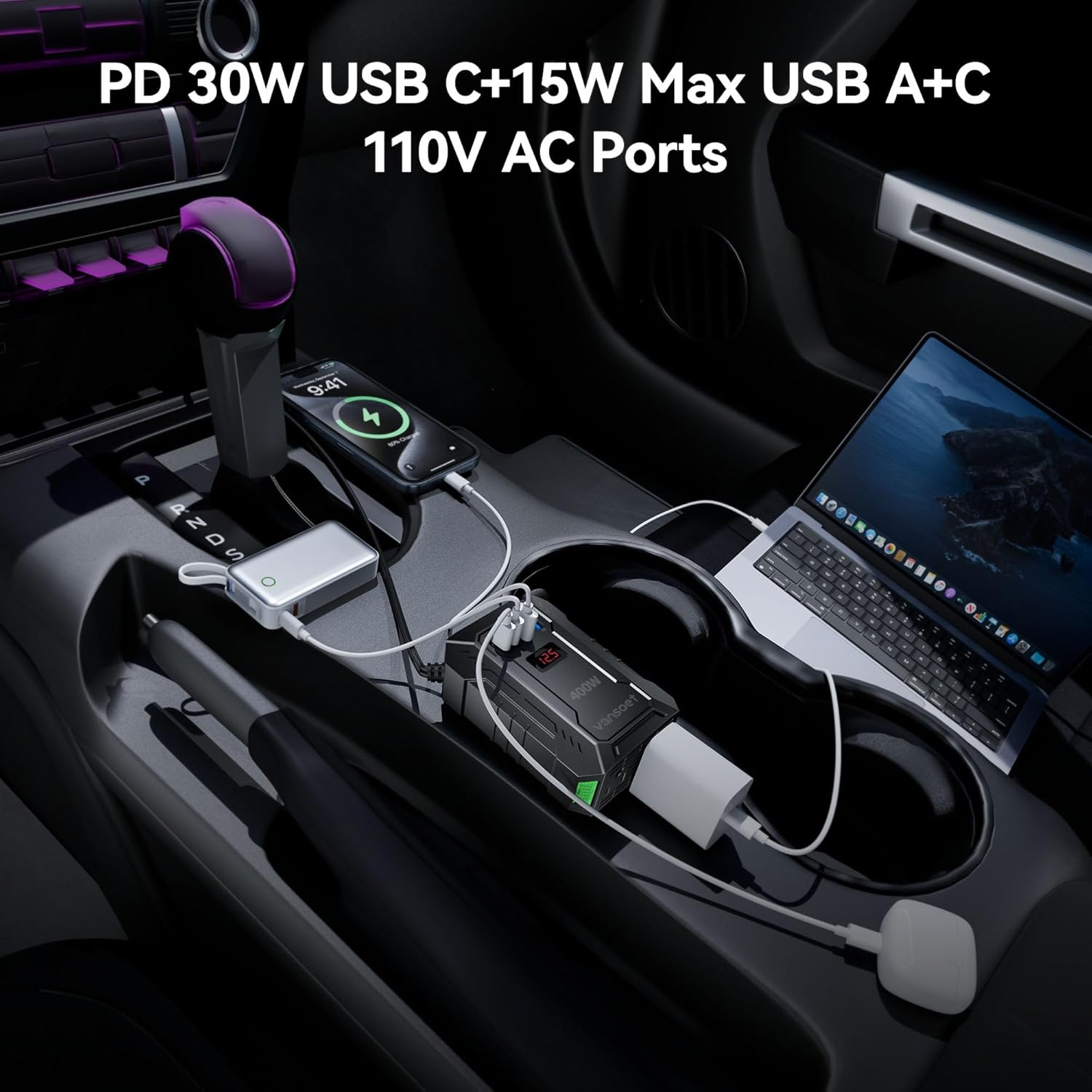
In short: it’s a capable in-vehicle power solution for smaller electronics and travel gear, but it’s still an inverter—so matching your devices to its wattage limits is the part that can’t be ignored.
Mini FAQ
How many charging ports does it include?
It includes one 30W PD Type-C port, one 15W Type-C port, and two 15W USB-A ports, plus 2 standard US AC outlets.
Does it support fast charging?
The description calls out a 30W PD fast-charging Type-C port for compatible devices, plus a 15W Type-C port and 15W USB-A ports for other devices.
What does the LED indicator mean?
A solid green light indicates normal operation. A red light warns of faults such as over-voltage, under-voltage, overload, overheating, or short circuit.
Where is it meant to be used?
It’s designed for in-vehicle use in cars, SUVs, trucks, and RVs with a 12V system, and it’s positioned for road trips, commuting, camping, and emergency backup.