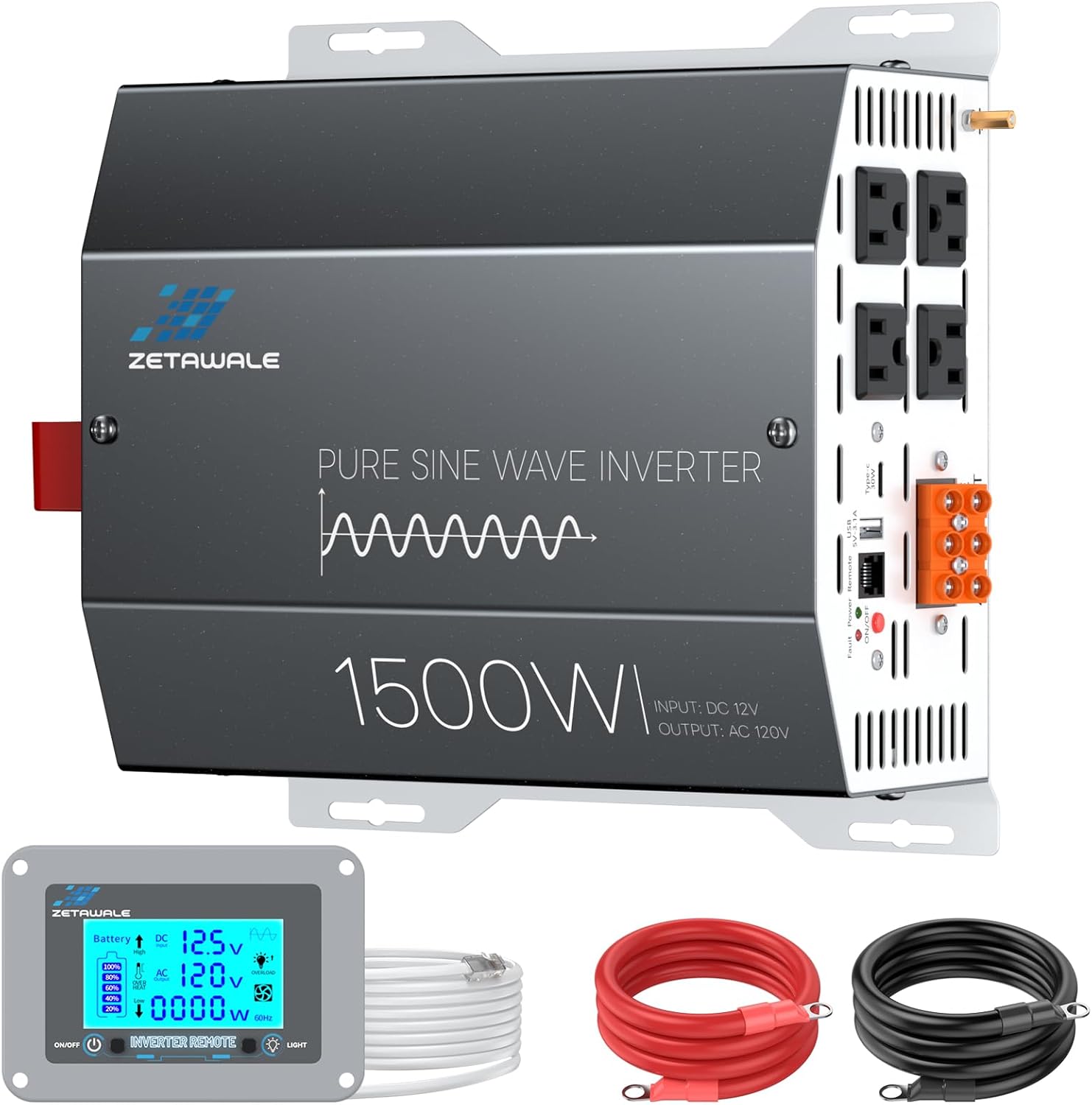
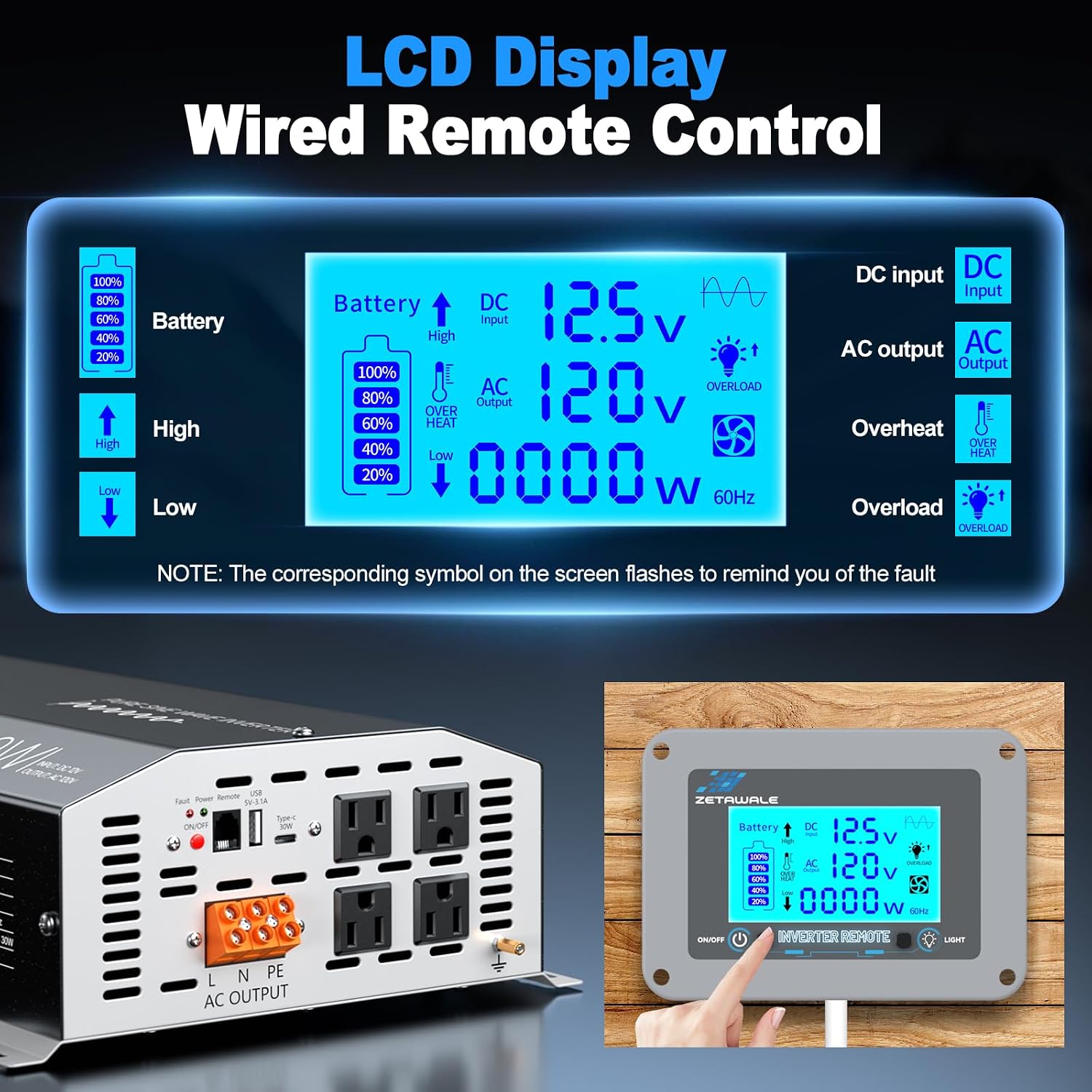
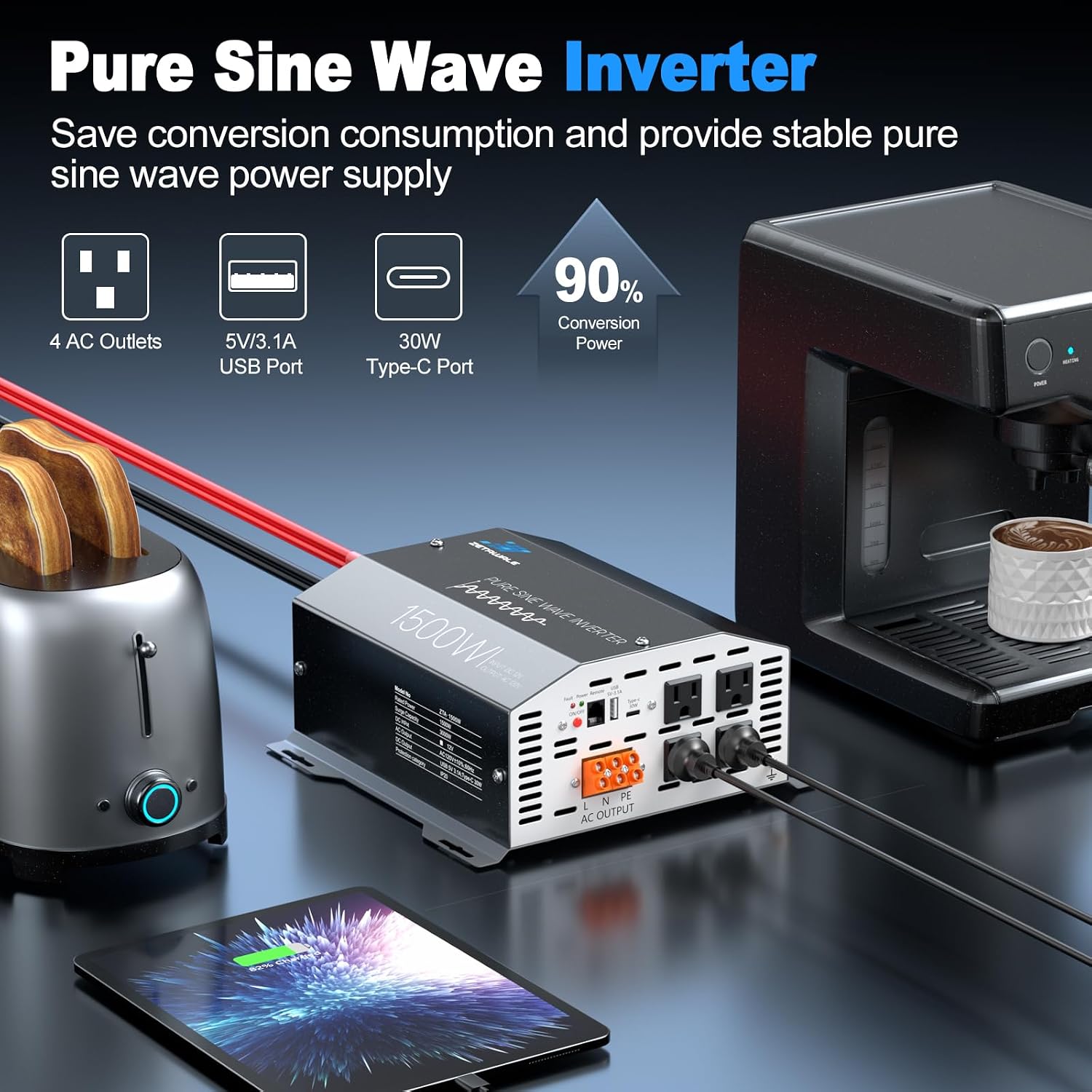
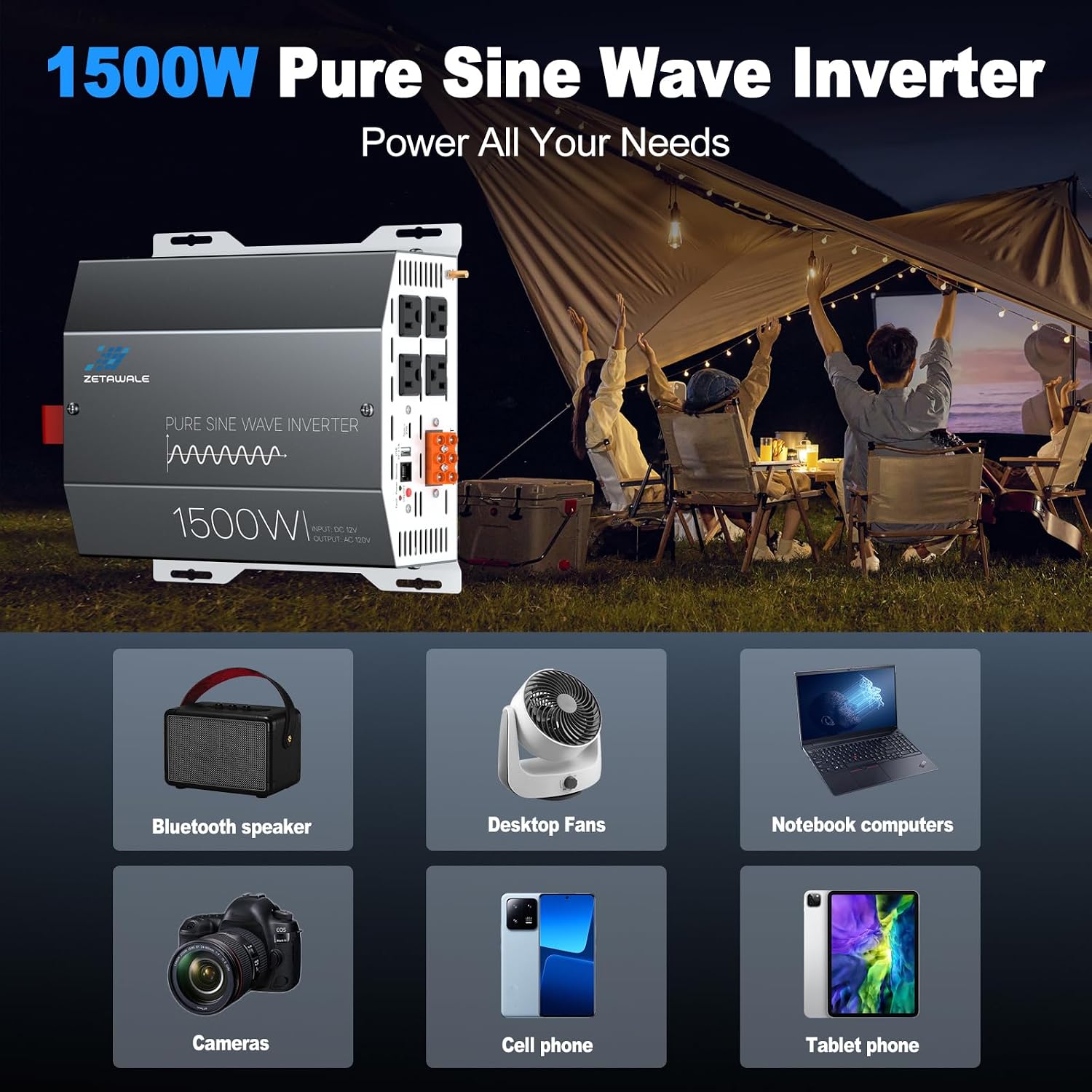
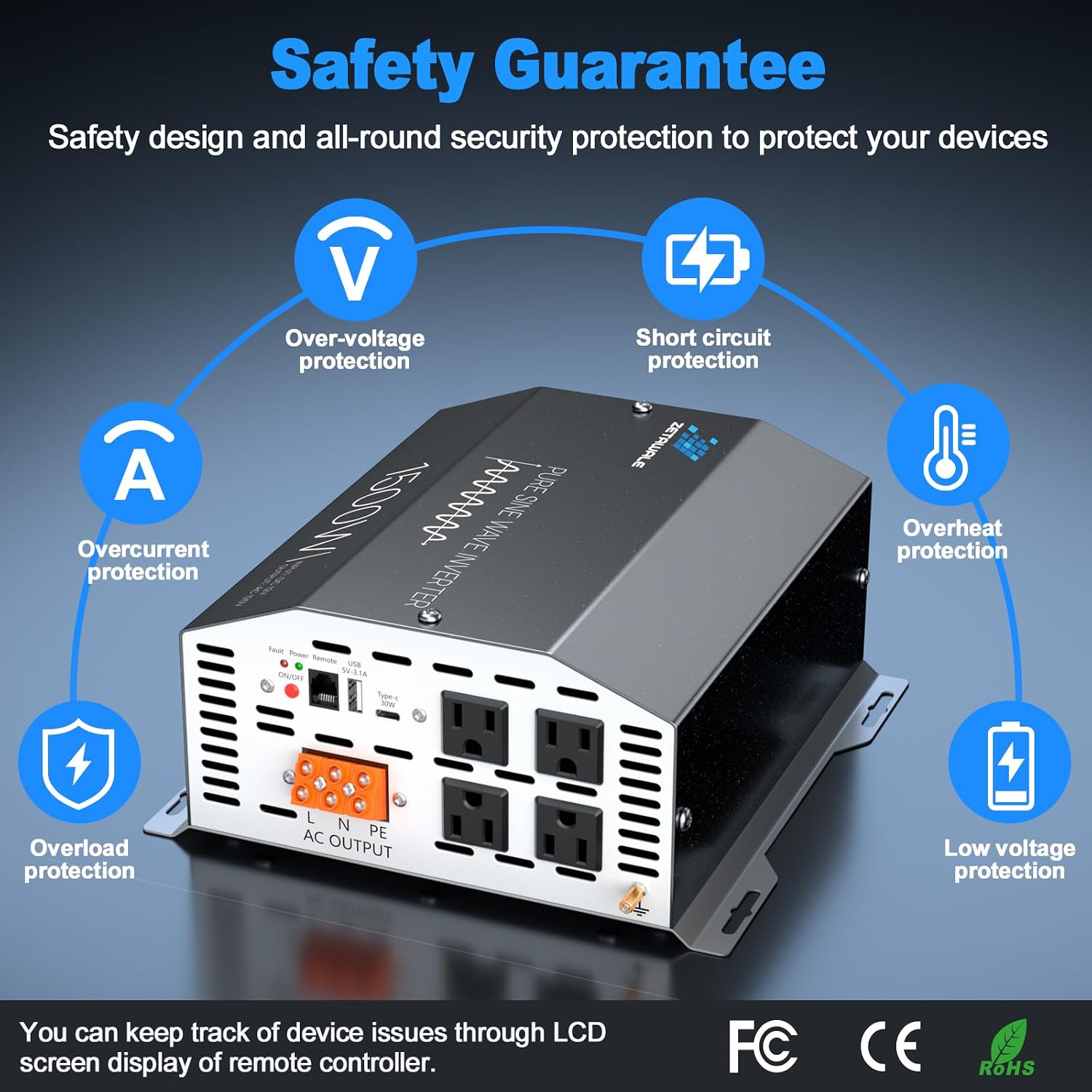
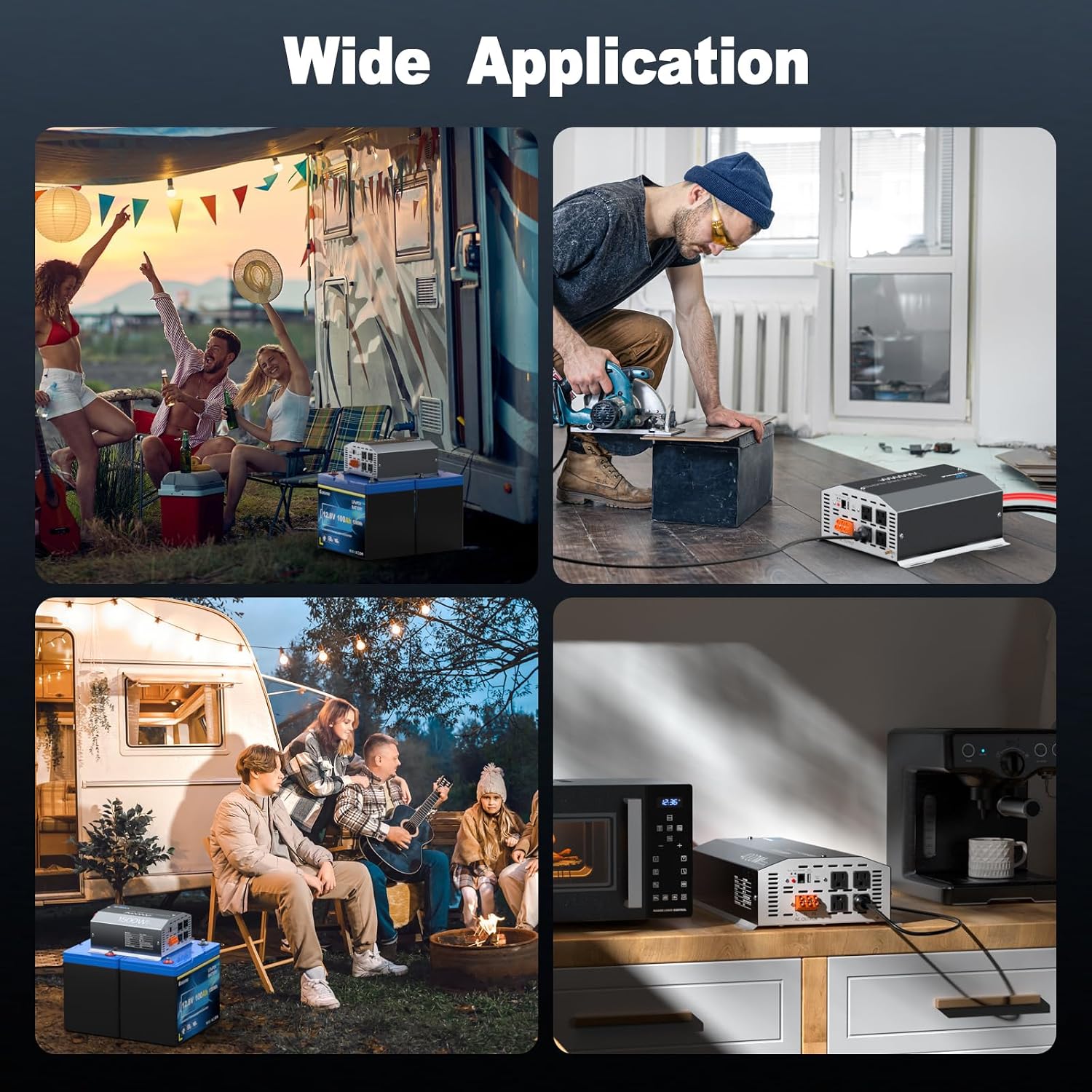
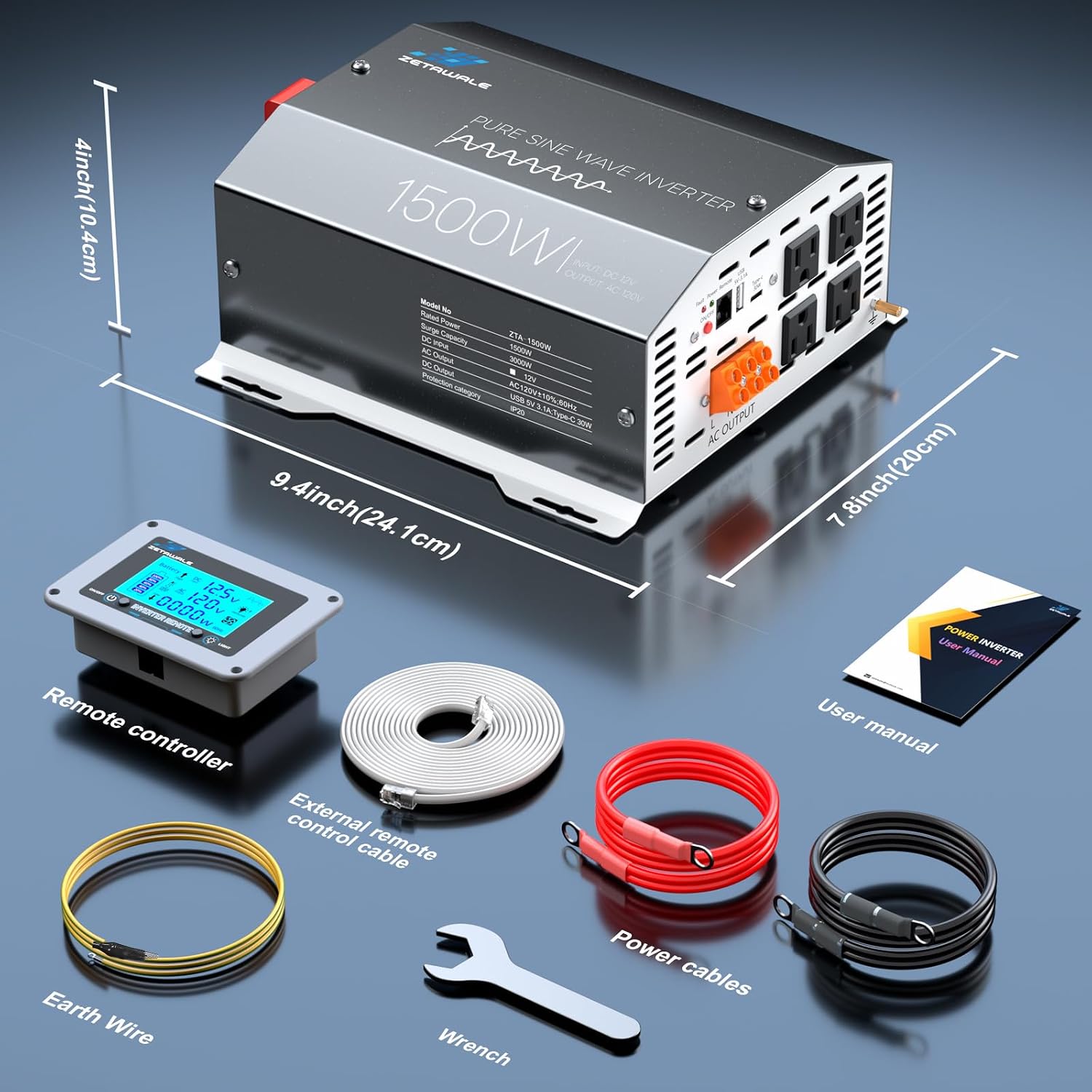
What this is and what it does\nThis inverter converts 12V DC battery power into stable 110V/120V AC electricity, delivering 1500W of continuous power with a 3000W peak. On paper, it’s designed to run common household and RV appliances—think refrigerators, microwaves, coffee makers, CPAP machines, TVs, and power tools—without the noise or interference you might worry about with some cheaper inverters. If you’re looking to power a small off-grid setup, keep the lights on during an outage, or run gear in an RV or truck, this model aims to be a practical, all-in-one solution.\n\n## How it stands out (the positives)\nThe core strength is the pure sine wave output, which is generally better for sensitive electronics and motors than modified sine wave rivals. The unit ships with 4 AC outlets plus USB and Type-C ports, plus heavy-duty AC terminal blocks, so you can supply several devices at once without juggling adapters. It’s marketed as compatible with a range of 12V batteries, including lithium, AGM, deep-cycle, and lead-acid varieties, which can be convenient if your vehicle or off-grid setup uses multiple battery types. Real-world usefulness hinges on your needs for simultaneous loads and the availability of a 12V battery bank, if you’re routinely pulling near the 1500W mark, battery capacity and cooling behavior deserve attention.\n\n## What to watch out for (the caveats)\nWhile the spec lists a 1500W continuous rating, sustained heavy loads can push any inverter toward heat and efficiency limits. Dual intelligent cooling fans are a plus for heat management, but under heavy, long-duration use you’ll want to ensure adequate ventilation. The remote LCD is a helpful feature for installations where the inverter isn’t in reach, yet it adds a separate component you’ll need to mount and route for visibility. If your setup rarely hits 1000–1200W consistently, you’ll likely be fine, but if you depend on running multiple high-wattage appliances at once, you should double-check your battery size and charging strategy.\n\n## Who it’s for\nThis inverter seems best suited to RV owners, truck travelers, campers, DIY solar enthusiasts, and anyone looking for portable power in off-grid or outage contexts. It’s a sensible mid-range option for people who want clean power and several outlets without buying multiple adapters or power bricks.\n\n## Who it isn’t ideal for\nIf your power needs regularly exceed 1500W sustained or you require ultra-compact weight and size, this may not be the best fit. For extensive off-grid builds with heavy appliance usage or limited battery capacity, you might look for higher output or more efficient top-end models. Also, if you value a plug-and-play, minimal-configuration setup with fewer cables, be prepared to plan the installation space accordingly.\n\n## Before you buy: key considerations\n- Battery health and type: ensure your 12V bank is capable of delivering the surge when needed and that wiring is capable of handling the current.\n- Ventilation: place the inverter where air can circulate to help the cooling fans keep temperatures in check.\n- Cable routing: the 14.76 ft remote reach is handy, but plan the cable path to avoid tripping or interference.\n- Load planning: map out which devices will run at the same time and compare that to the 1500W continuous rating to avoid brownouts.\n\n## A practical usage snapshot\nImagine you’re on a weekend camping trip and need to power a small fridge, a light, and a coffee maker while charging a phone via USB-C. You’d fire up the inverter, connect the fridge first to a dedicated outlet, then distribute the remaining load across the other outlets. If you’re in an RV with a shore-power option, you can use the inverter to supplement power during brief outages or to de-couple essential devices from the grid.\n\n## How it compares to other approaches\nCompared to a basic DC-AC adapter with a modified sine wave, this unit aims to deliver cleaner power that’s less likely to cause issues with electronics. Against larger, higher-output inverters, it won’t push as much wattage, but it’s lighter and typically easier to install in modest setups. If your goal is “just enough” power for essential appliances under outage or off-grid use, this model sits in a practical middle-ground—not the cheapest, not the most powerful, but often a sensible balance for mixed usage.\n\n## Final verdict\nIs it worth it? If your priority is stable, grid-quality power from a 12V source with multiple outlets and a handy remote display, this inverter offers a solid bundle for RVs, trucks, or off-grid camps. It may not be the best choice if you expect to routinely run several high-wattage devices simultaneously for long periods, or if you need a compact footprint above all else. Evaluate your typical load profile and battery capacity to decide if it aligns with your needs.\n\n## Quick FAQ\n- What kind of loads can I run with 1500W continuous? Typical small appliances like refrigerators, microwaves, and CPAP machines, plus some power tools, within the 1500W limit.\n- Do I need a particular battery type? It’s listed as compatible with several common 12V battery types, but you should verify that your battery’s capacity and health suit your planned loads.\n- Is remote monitoring essential? Not strictly, but the LCD remote adds visibility for voltage and load, which is useful for RV or solar setups.\n