

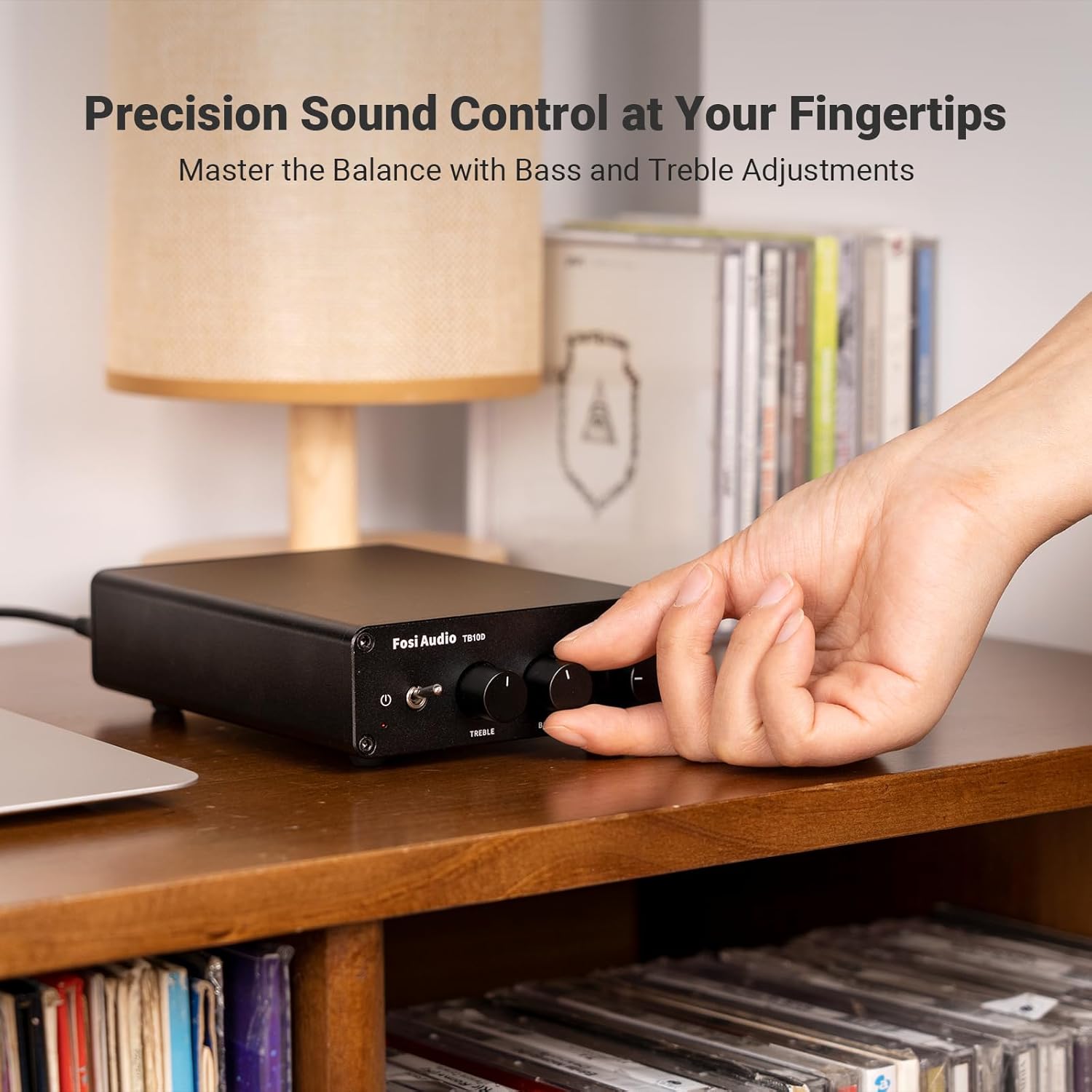


Fosi Audio TB10D 600W stereo amplifier
Product description
This compact Class D desktop amplifier brings solid power to small setups, offering punchy sound for bookshelf speakers, bass shakers, and multimedia rigs. It pairs high output with user controls so you can add low-end impact for gaming or warmth for vinyl playback while keeping a small footprint on the desk or shelf.
Key Points
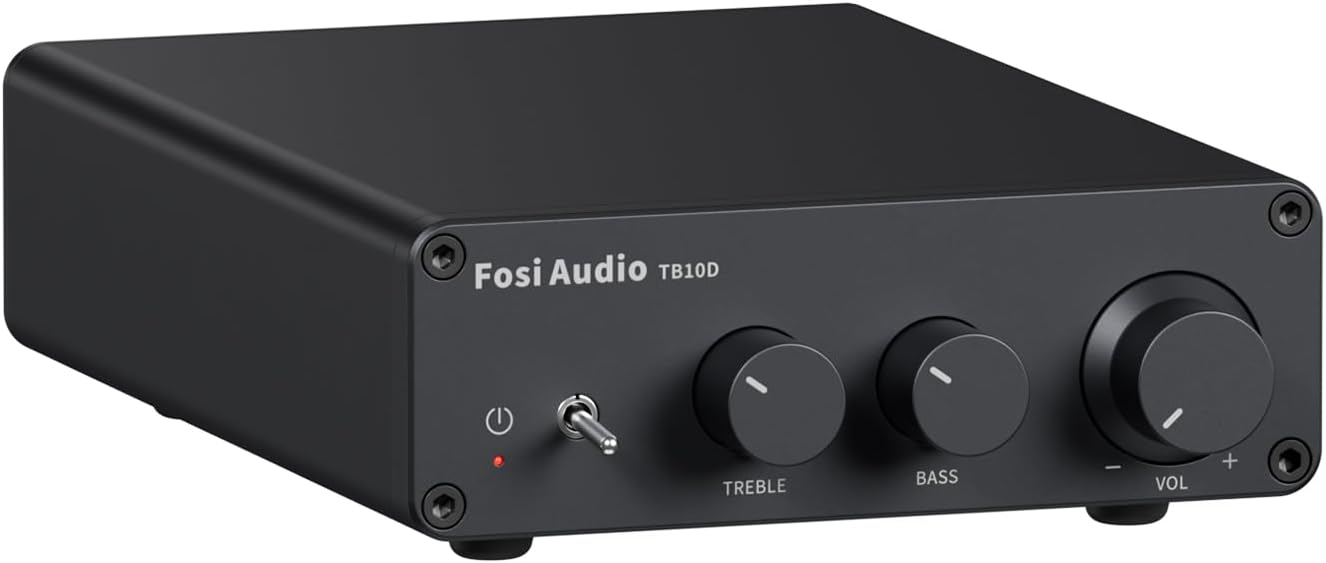
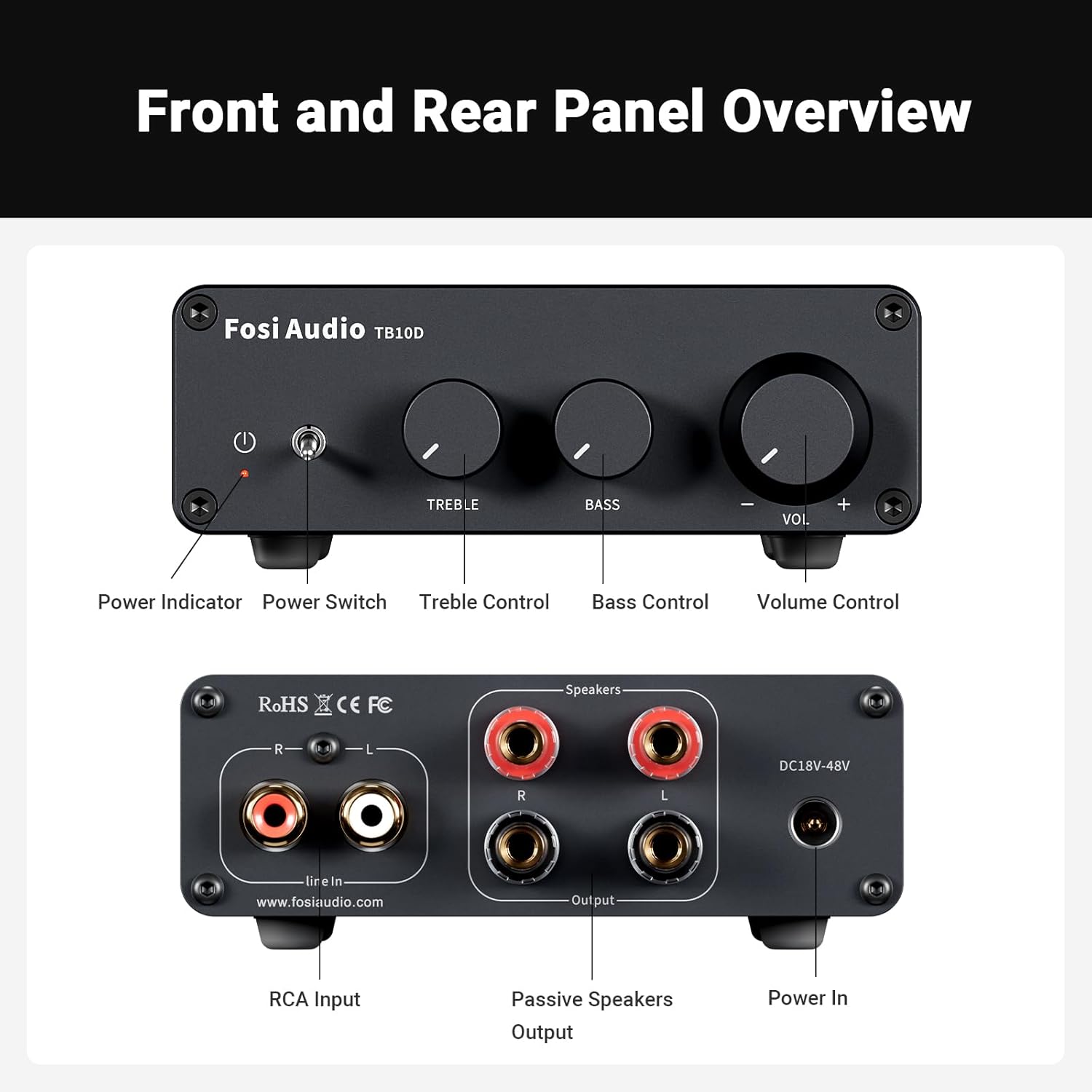
The unit delivers up to 300 watts per channel according to the manufacturer, using the TPA3255 amplification chip for efficient performance and lower heat. It supports speaker impedances from 2 to 8 ohms, which makes it compatible with most passive bookshelf speakers and tactile transducers. Physical controls for bass and treble let you shape the tone without diving into menus, and a front power switch simplifies daily use. It accepts standard RCA line inputs for easy connection to turntables with a phono preamp, CD players, TVs, computers, and other sources.
Technical Specifications
- Name: Fosi Audio TB10D
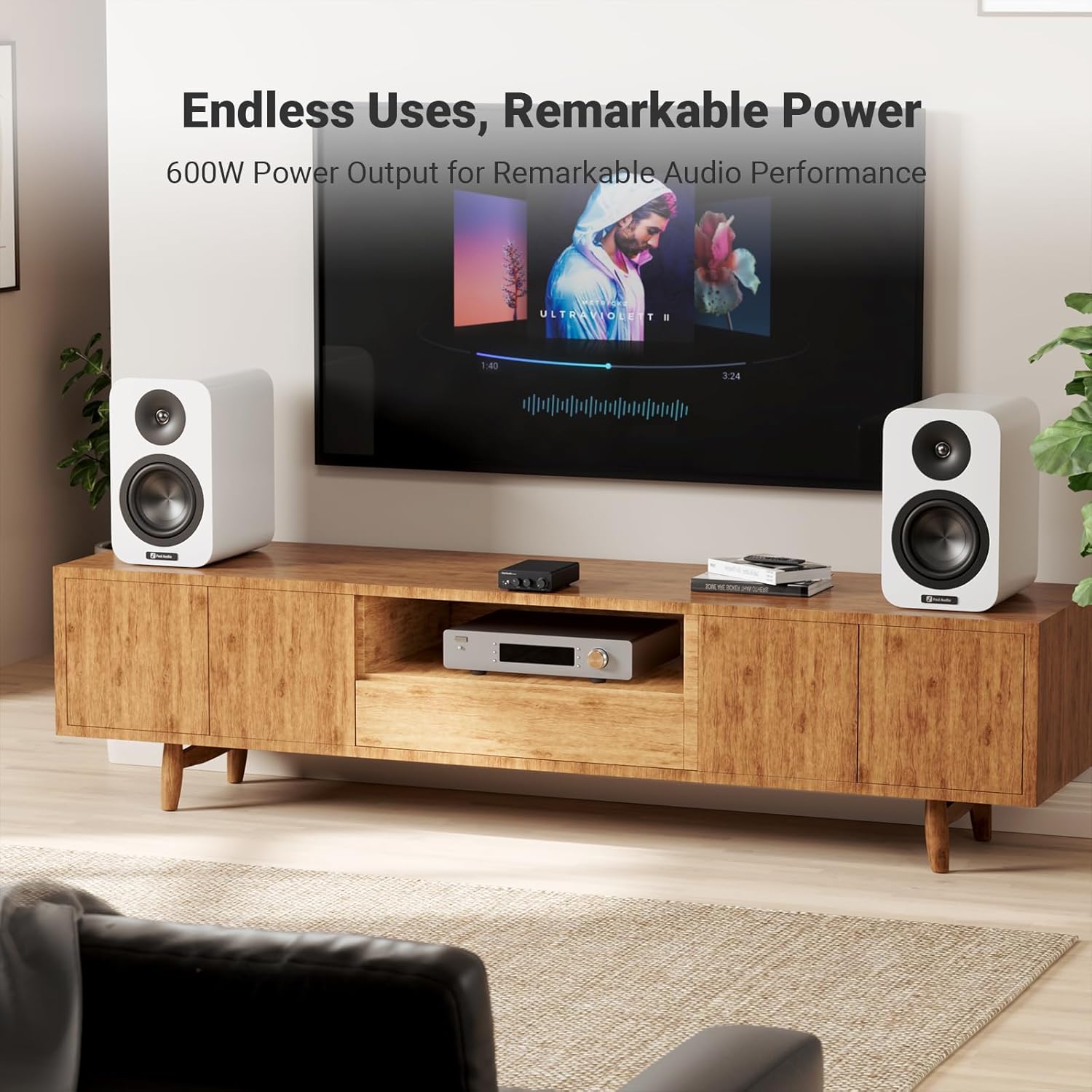
- Power Output: 300W per channel, 600W total (manufacturer rating)
- Amplifier Chip: TPA3255
- Speaker Impedance: 2–8 ohms
- Inputs: RCA line in
- Controls: Bass and treble knobs, power switch
Benefits

This amp offers a compact solution when space is limited, and it provides more headroom than many low-power desktop amps. Because it is Class D and uses the TPA3255, it tends to run cooler and with good efficiency during extended sessions. The tone controls are useful for quick adjustments when switching between sources such as movies, games, and music, and the broad impedance support means you can experiment with different speakers or add a bass shaker for tactile effects.
Usage Recommendations
Place the amplifier on a ventilated surface to allow airflow around the case because Class D designs still benefit from cooling. For turntable use, connect through a dedicated phono preamp first since this unit provides RCA line-level input rather than a built-in phono stage. If you pair it with sensitive speakers, start with lower volume and increase gradually to find the best balance between clarity and bass extension. Consider that manufacturer power ratings are peak or dynamic figures, and real-world listening depends on speaker efficiency and room acoustics.