

FNIRSI LCR-P1 Transistor Tester: All-in-One Component Analyzer for Electronics Hobbyists
Product description
What it is and who it’s for
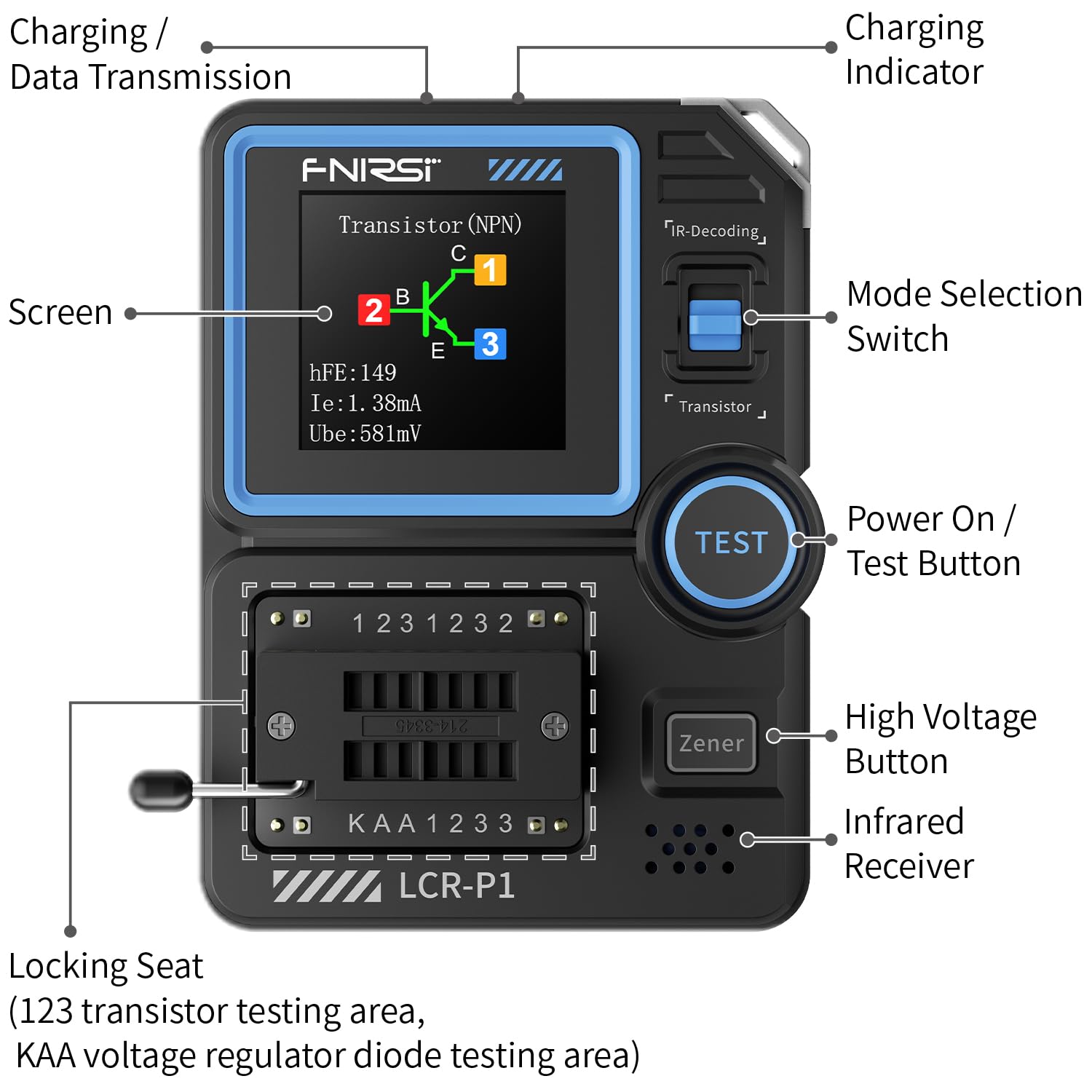
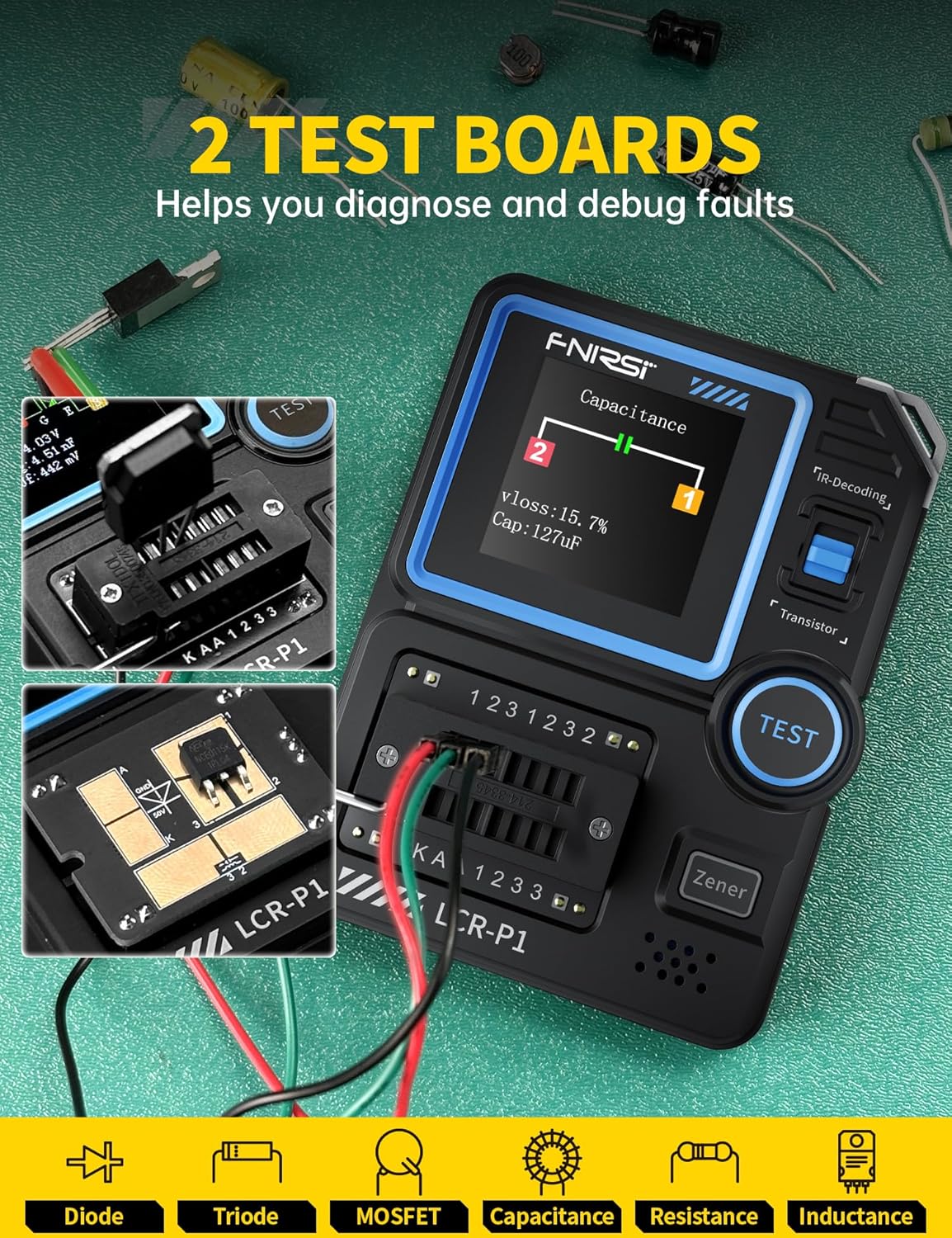
The FNIRSI LCR-P1 is a compact, all-in-one transistor tester designed to measure and analyze a wide range of electronic components. It covers NPN, PNP, triodes, MOSFETs, diodes (including Zeners), capacitors, resistors, inductors, and even batteries. If you regularly repair or experiment with electronics, this tool aims to be your portable lab in one device.
How it works in practice
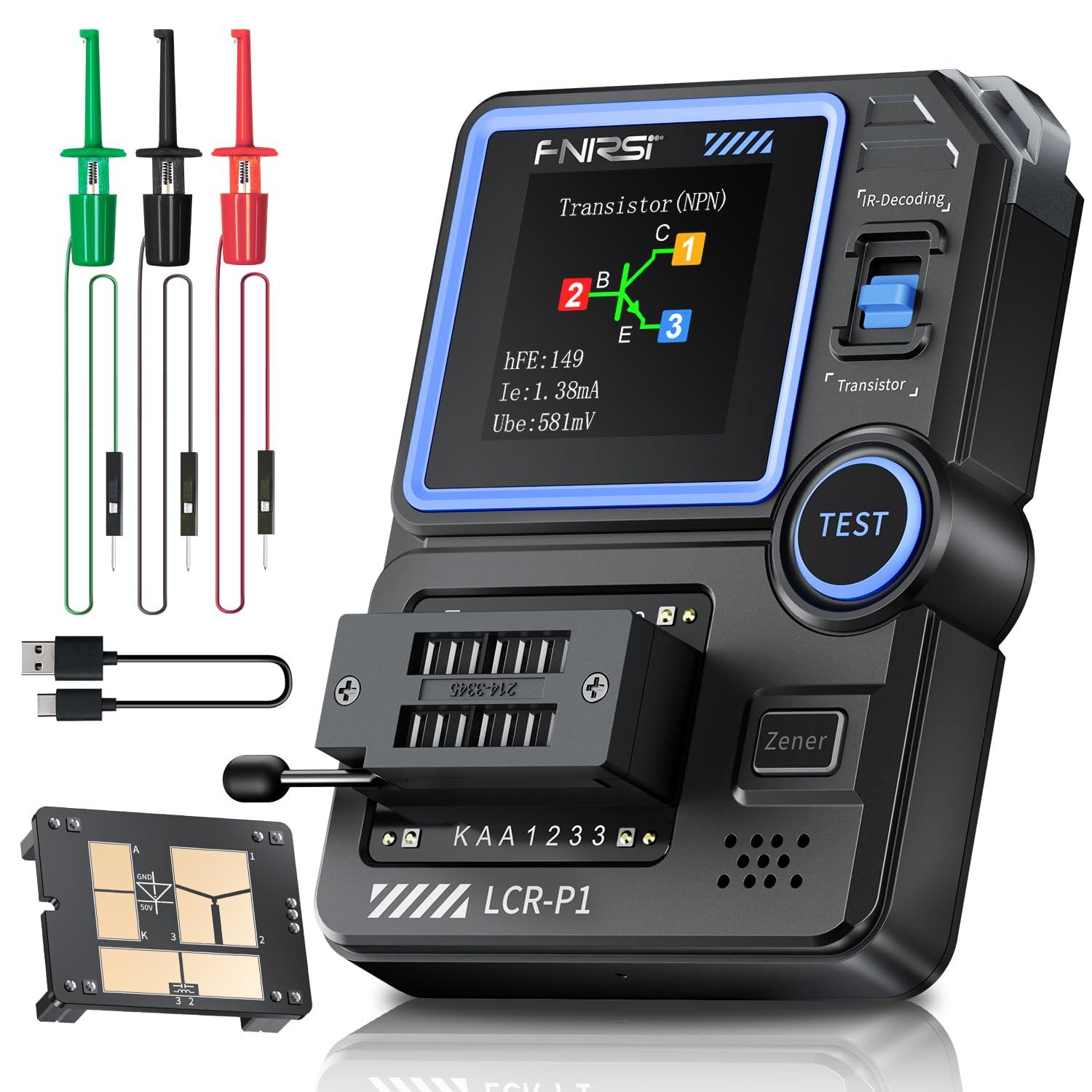
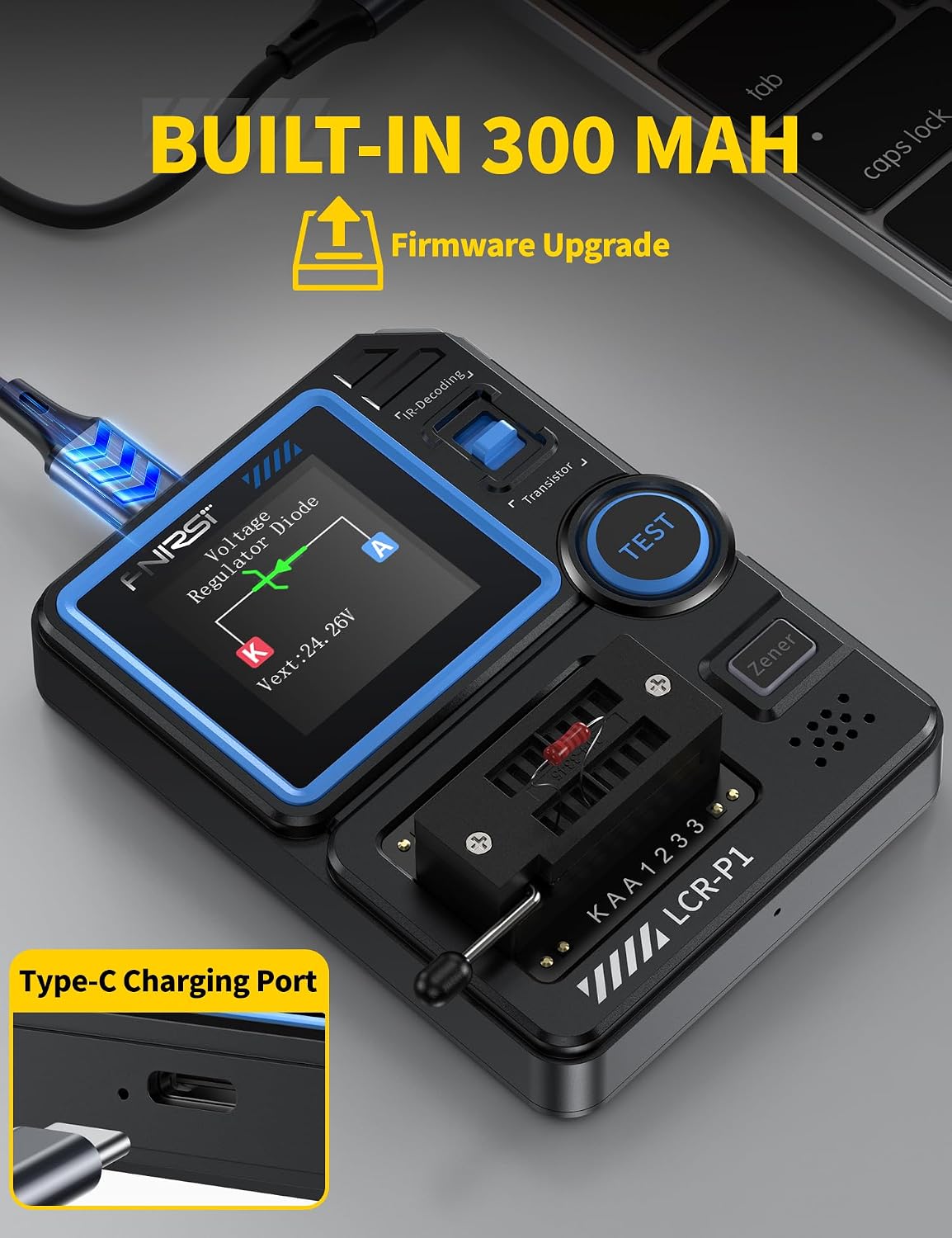
The tester features a replaceable patch seat that scales from tiny precision components to higher-power devices, enabling flexible probing. A 1.44 inch full-color screen keeps readings legible, while a 300 mAh battery powers it on the go. A Type-C interface handles charging and data transfer, and firmware can be upgraded to stay current.
What stands out on paper
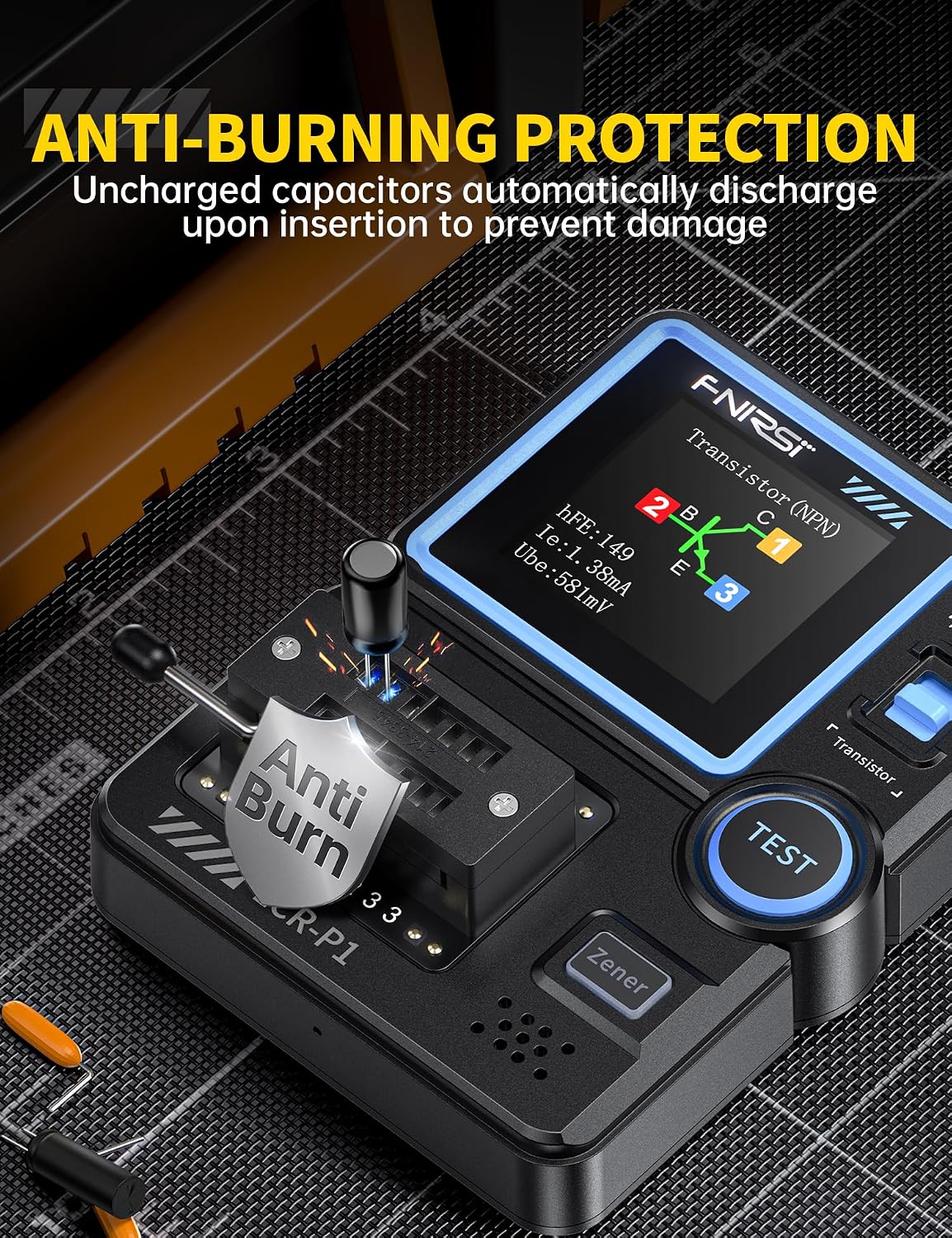
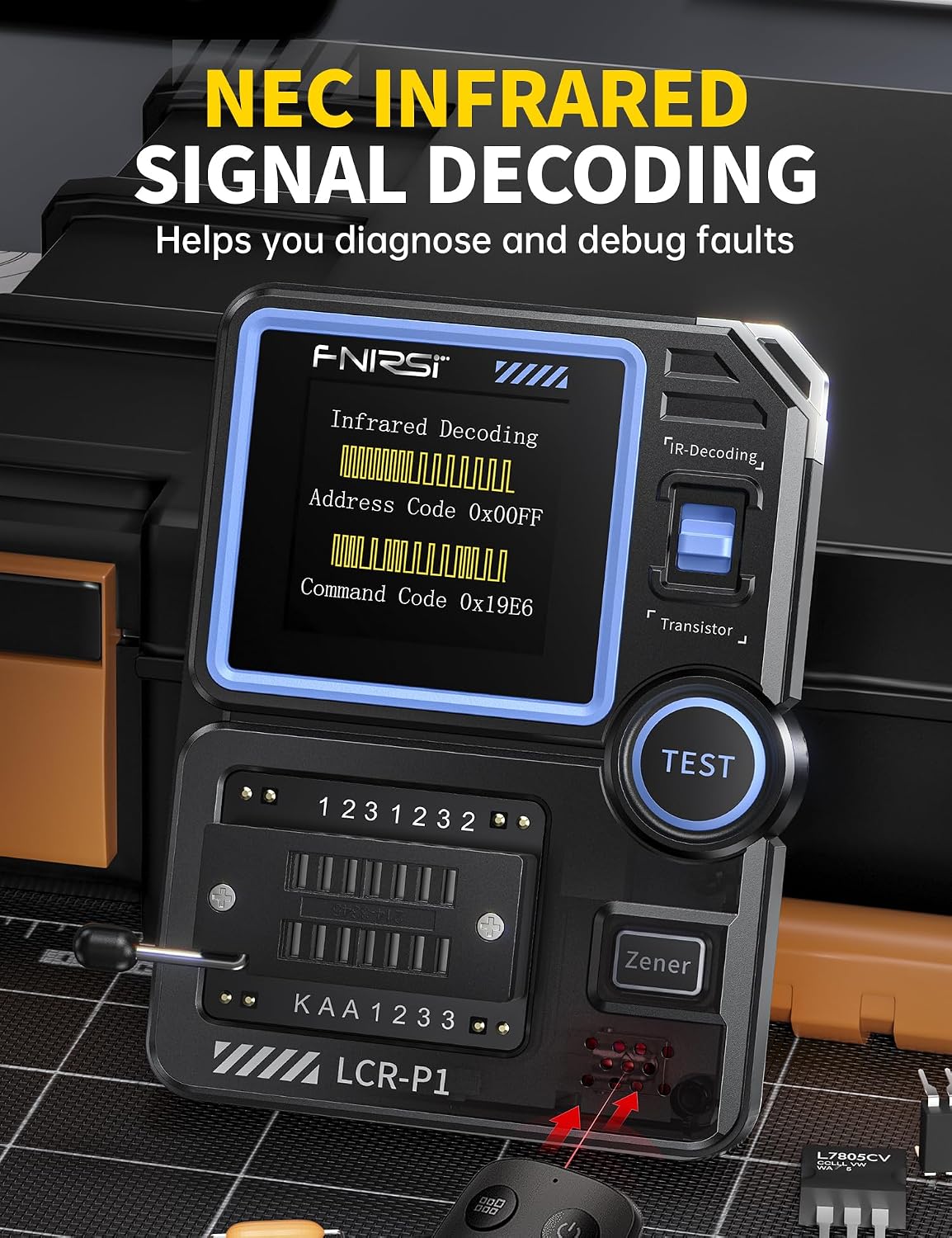
The LCR-P1 includes an anti-burn protection mechanism: when measuring capacitance and resistance, it automatically identifies undischarged capacitors and discharges them as you insert and lock the component. It also claims to support NEC infrared waveform analysis, useful for debugging infrared remotes and maintenance tasks. In addition, it offers intelligent automatic identification of component pins and parameters, aiming to speed up model and specification recognition.
The best use cases
If you frequently work with mixed device types—from small-signal components to MOSFETs and diodes—the LCR-P1 can streamline the diagnostic workflow. It’s particularly appealing for hobbyists or technicians who value a single, portable tool for quick identifications and measurements rather than flipping between multiple testers.
What it may not be perfect for
There’s no information about measurement precision, speed, or supported component range limits beyond the broad category list. If your work demands extremely tight tolerances or specialized measurements, you may want to verify whether these fit your needs before relying on it for critical tests.
Limitations to consider before buying
- The exact accuracy and range for each component type aren’t specified here, so expect that results are best for general-purpose testing rather than lab-grade analysis.
- NEC infrared analysis is a nice extra, but it may not cover all remote control protocols you encounter.
- As with any all-in-one device, heavy, high-power testing may push it toward its practical limits, plan to use it for typical repair and debugging tasks.
What to check before purchase
- Confirm that the component types you most often test align with the LCR-P1’s categories (NPN/PNP, MOSFETs, diodes, capacitors, resistors, inductors, batteries).
- If you rely on precise measurements, look for user reviews or specifications detailing accuracy and repeatability.
- Consider whether the replaceable patch seat design will accommodate your common test components and footprints.
Practical usage example
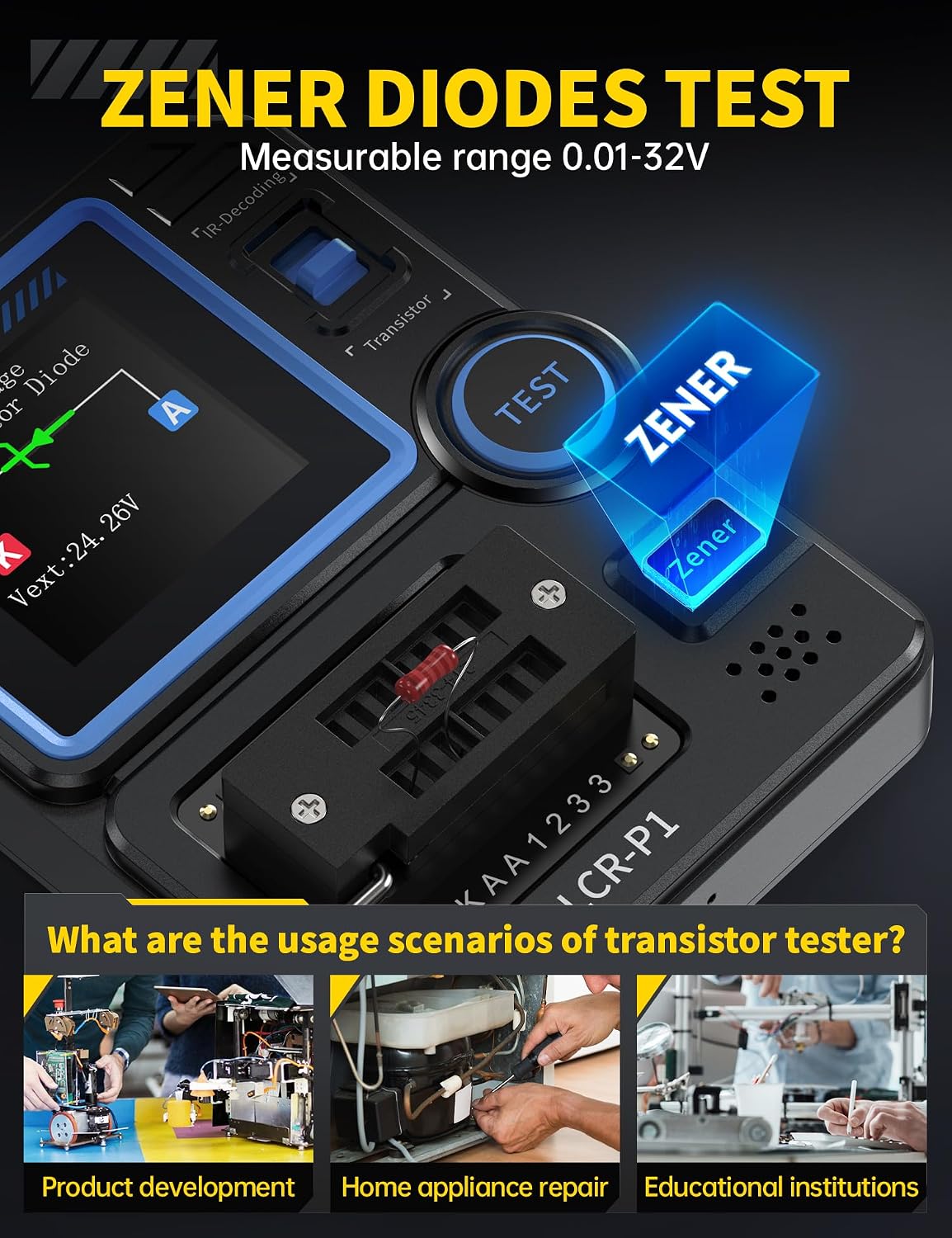
You’re repairing a vintage amplifier and need to verify a stubborn transistor and a leaky capacitor in one session. You can swap to the appropriate test patch, quickly identify the transistor’s type and pinout, and check the capacitor’s ESR and capacitance, all while the device remains powered down—thanks to the anti-burn feature.
What makes it different from a basic tester
Compared with basic single-function testers, the LCR-P1 combines transistor, diode, capacitor, resistor, and inductor testing with automatic identification and NEC infrared support. It’s a pragmatic choice if you want a single tool for common repair scenarios and general troubleshooting, rather than buying several specialized instruments.
Final decision: Is it worth it?
Worth considering if you’re after an all-in-one component tester with automatic identification and integrated protective features for everyday electronics work. If you require lab-grade precision or specialized measurements, you may want to compare against higher-end options or dedicated instruments.
FAQ (quick answers based on available data)
- Does it test MOSFETs and diodes? Yes, including NPN/PNP, triodes, MOSFETs, and diodes.
- Does it protect against accidental burns? Yes, it has an anti-burn mechanism that discharges undischarged capacitors during insertion.
- Can it analyze NEC infrared signals? Yes, it supports NEC infrared waveform analysis for debugging remotes.