

ELEGOO UNO R3 Starter Kit for Arduino
Product description
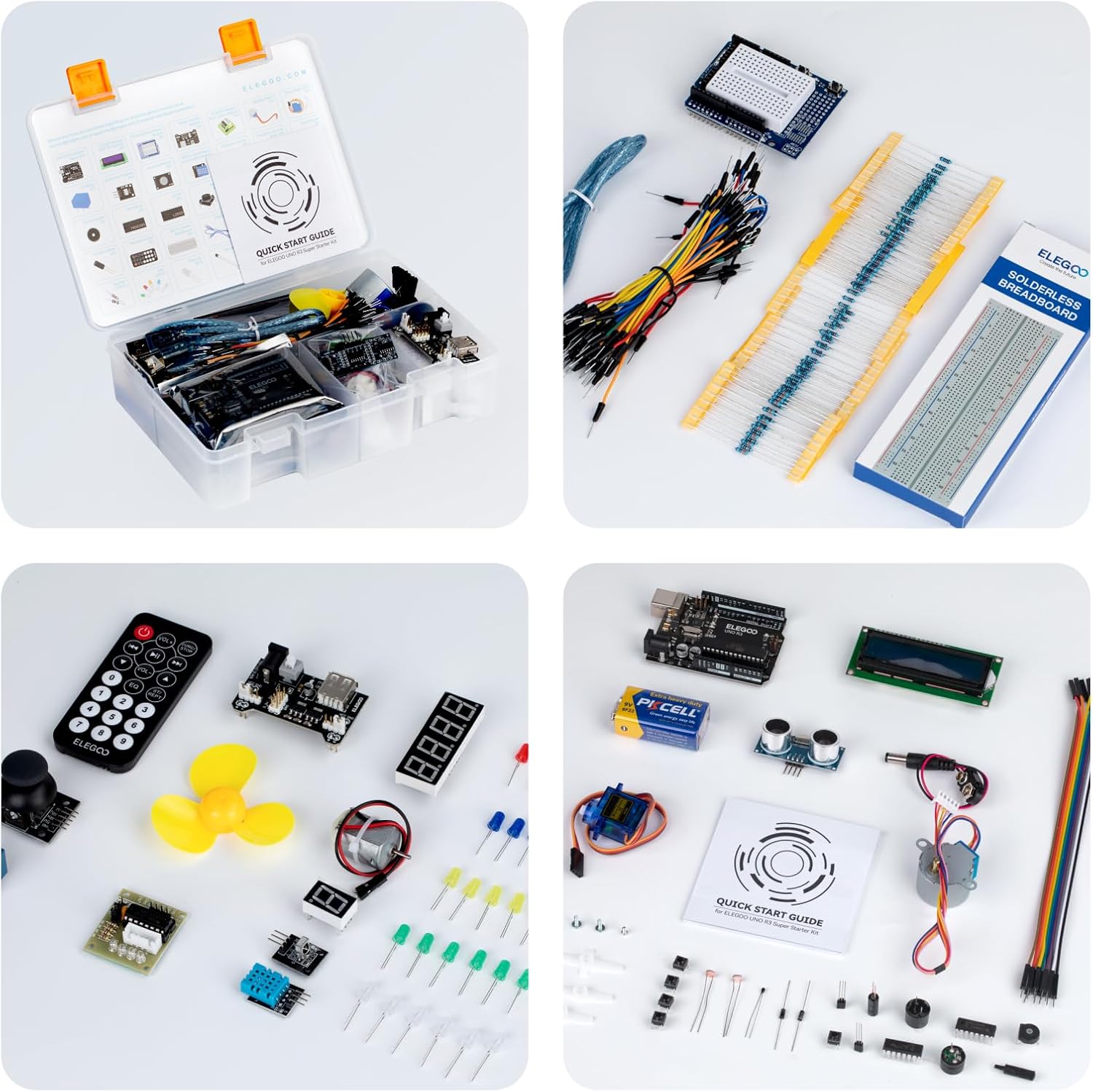
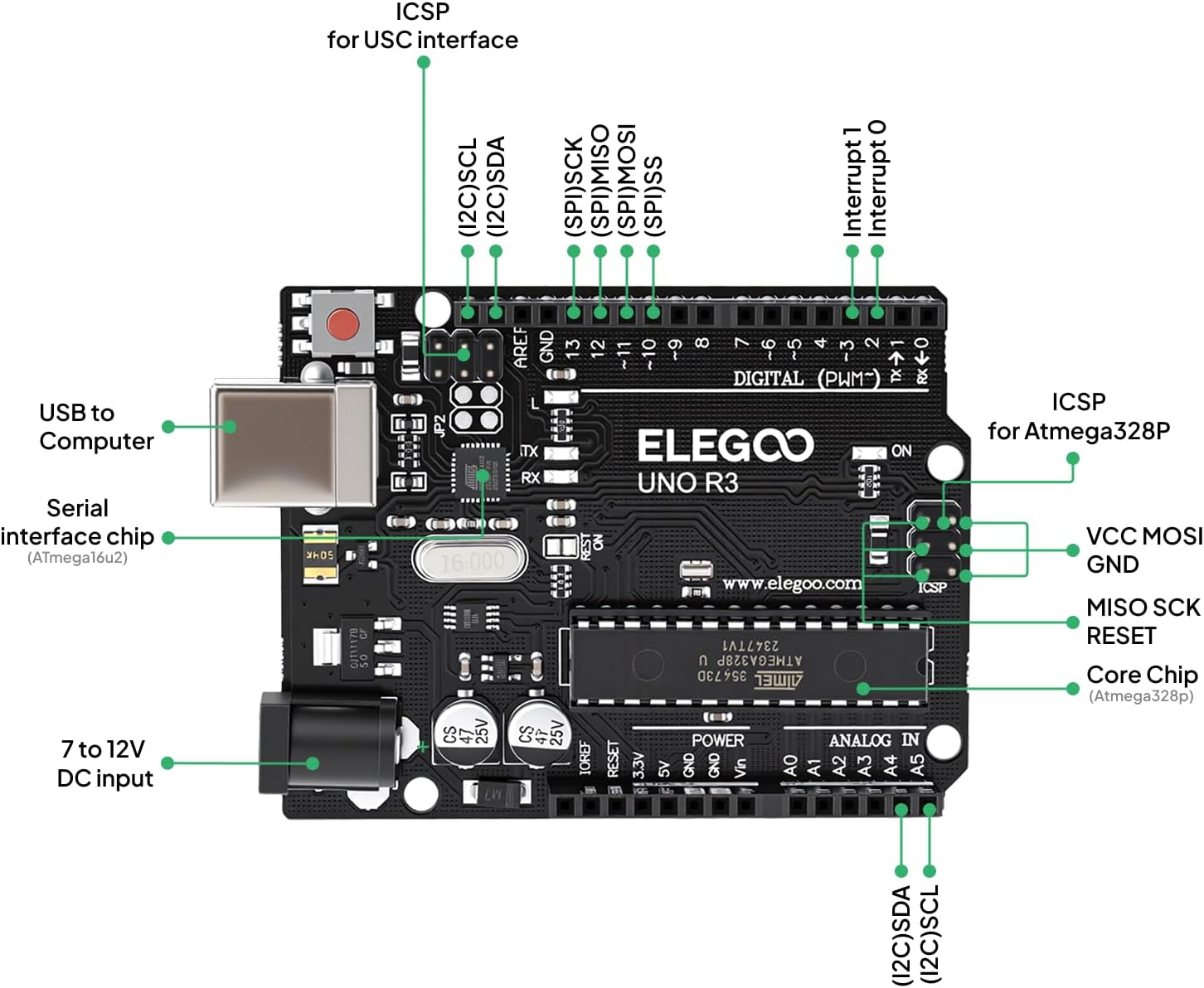
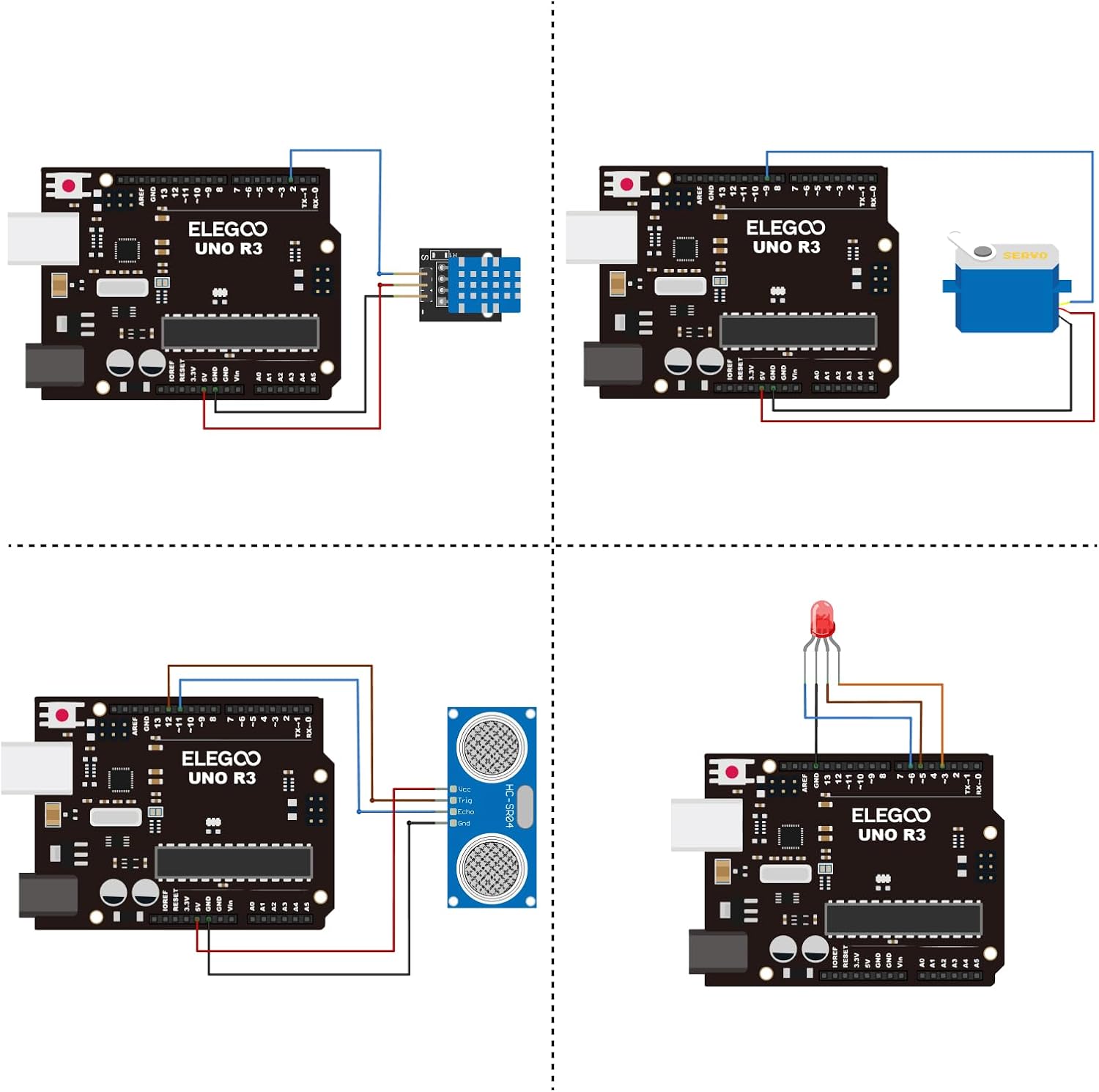
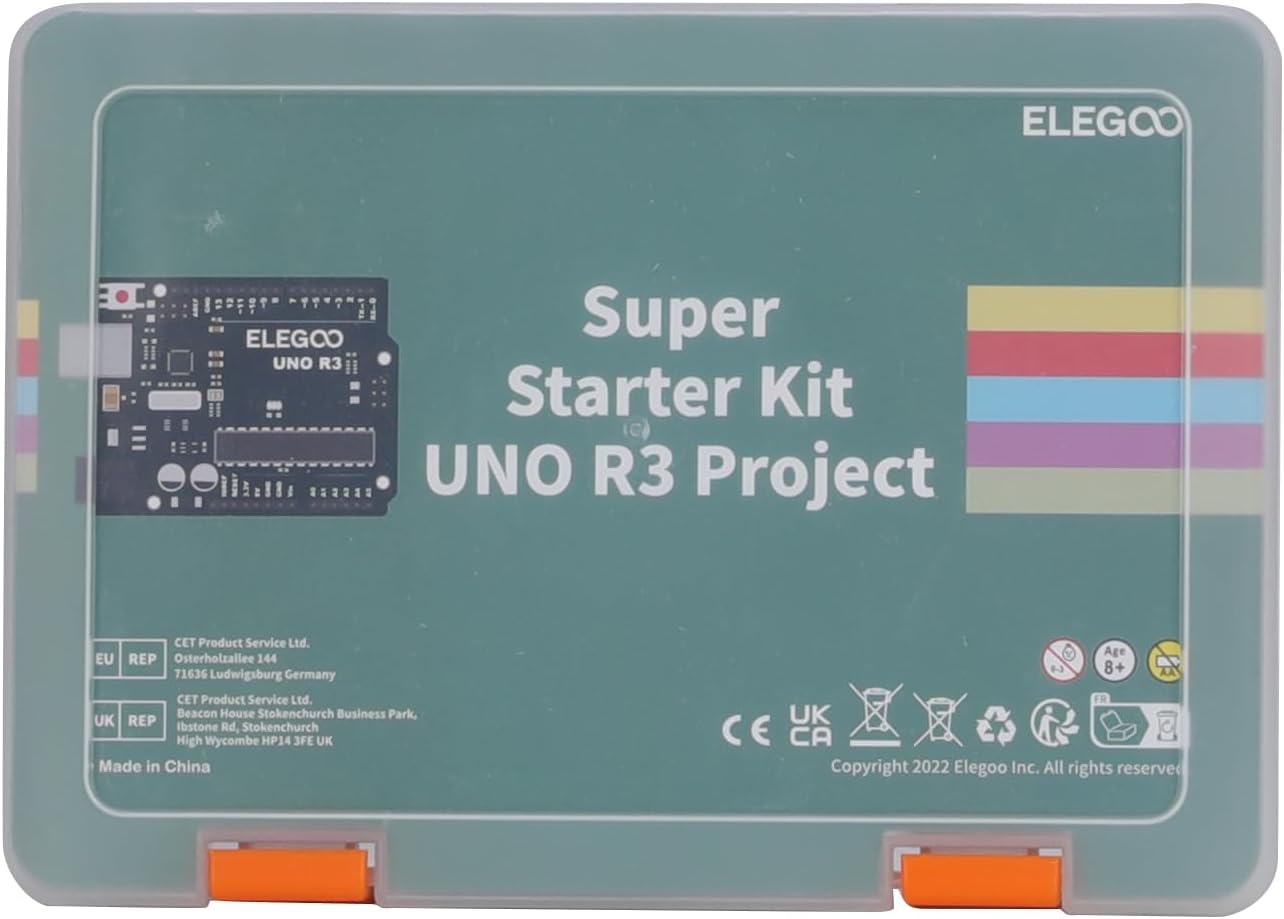
This starter kit brings together the essentials for learning microcontroller projects with an UNO-compatible board and hands-on lessons, making it easier to begin experimenting with sensors, LEDs, motors and simple displays. The package centers on an UNO R3 compatible board that works with the Arduino IDE and includes a PDF tutorial of more than 22 lessons, so beginners can follow step-by-step projects and build confidence quickly.
Key Points
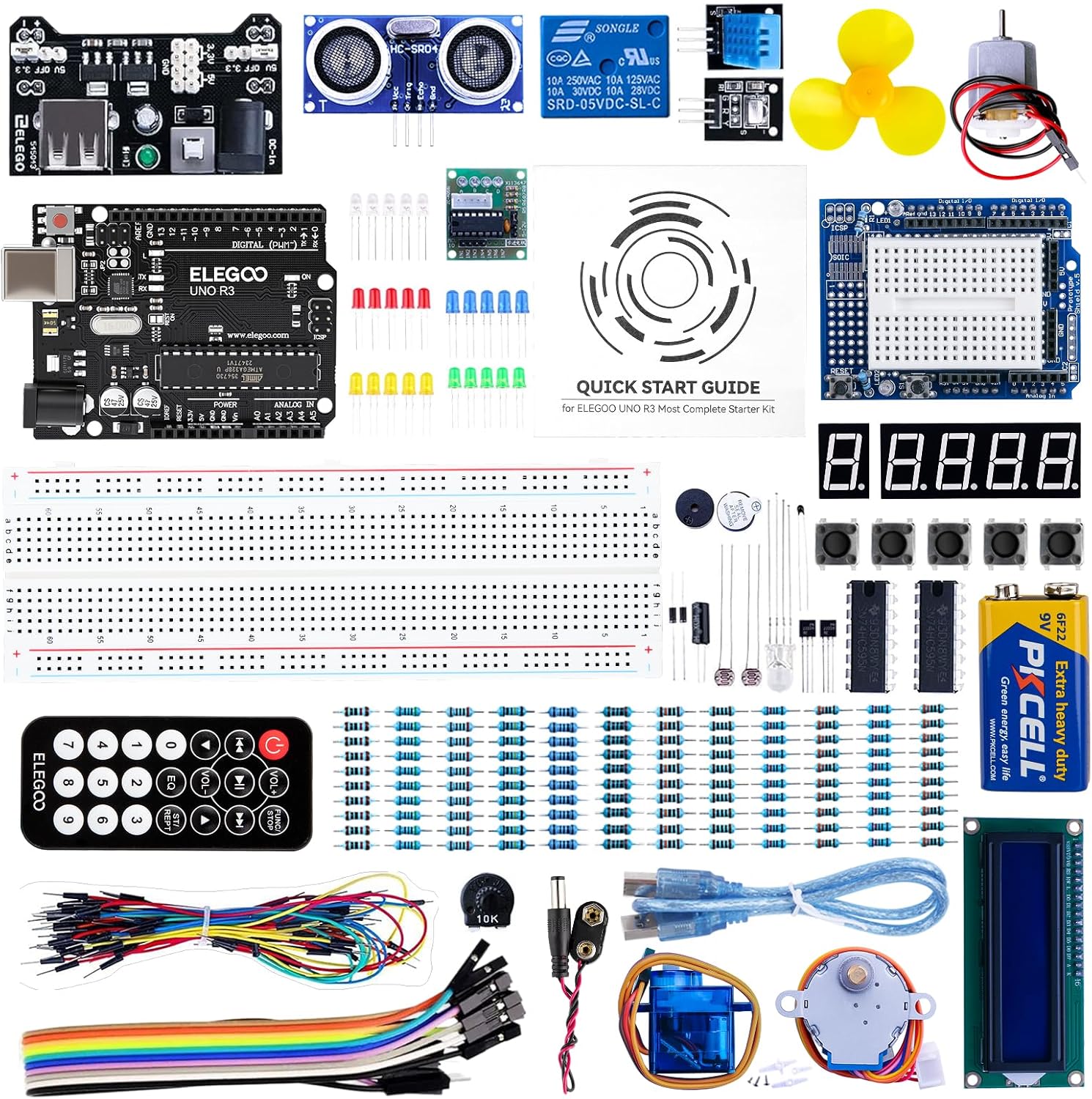
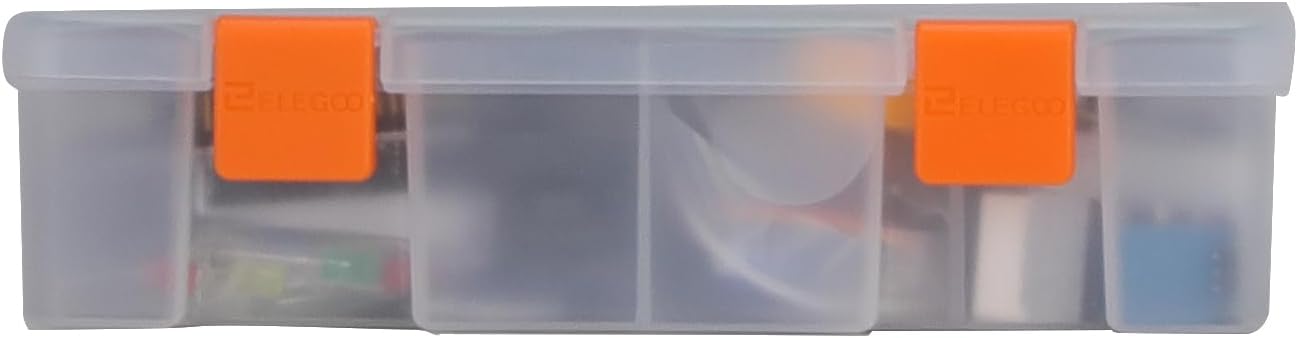
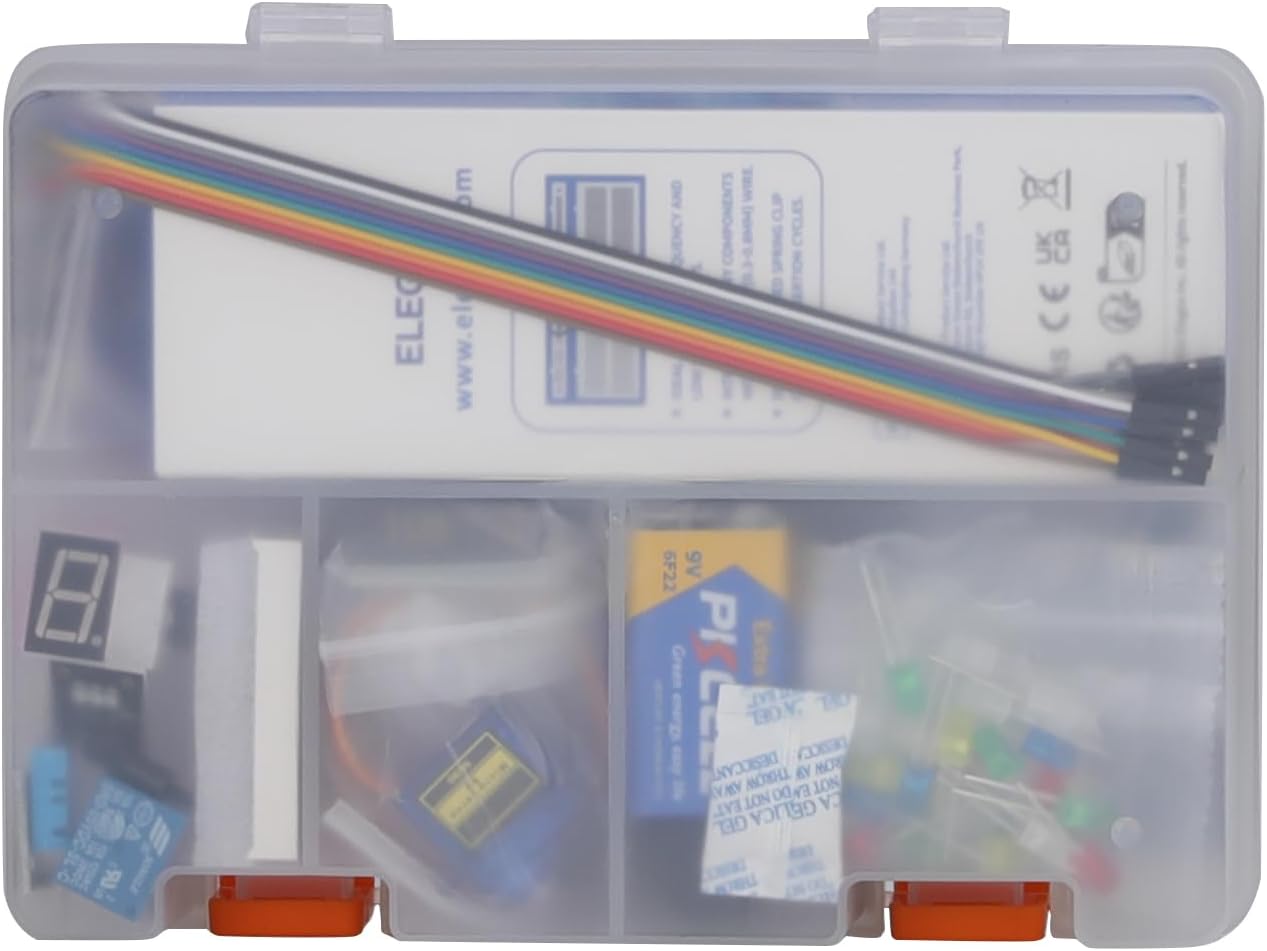
The kit includes a wide selection of modules and components to support dozens of basic projects. It ships with a power supply module and a 9V battery with DC connector so you can power breadboard experiments without extra purchases. The LCD1602 module comes pre-fitted with a pin header, which saves newcomers from soldering during early builds. According to the manufacturer, this is an economical option aimed at those starting to learn electronics and programming.
Technical Specifications
- Name: ELEGOO UNO Project Super Starter Kit with UNO R3 compatible board
- Tutorial: PDF with more than 22 lessons
- Board compatibility: Arduino IDE, compatible with Uno R3, Uno R4, Mega 2560 R3, Nano
- Power: Includes power supply module and 9V battery with DC connector
- Display: LCD1602 module with pin header (no soldering required)
Usage Recommendations
Start with the PDF tutorial lessons that guide you through wiring and basic code examples before trying more complex modules. Use the included power supply module for stable bench testing, and switch to the 9V battery when you need portable setups. For learning to program, open simple blink and sensor examples in the Arduino IDE and upload incrementally modified sketches to understand each change.
Positive Aspects
This collection reduces the number of separate purchases needed to begin experimenting because it bundles common components and an UNO-compatible board. The presence of a prepared LCD module and a clear lesson sequence can shorten the initial learning curve for people new to hardware. Consider that advanced users may find some components basic for larger projects, but the kit is well suited for education, prototyping and hobbyist practice.