

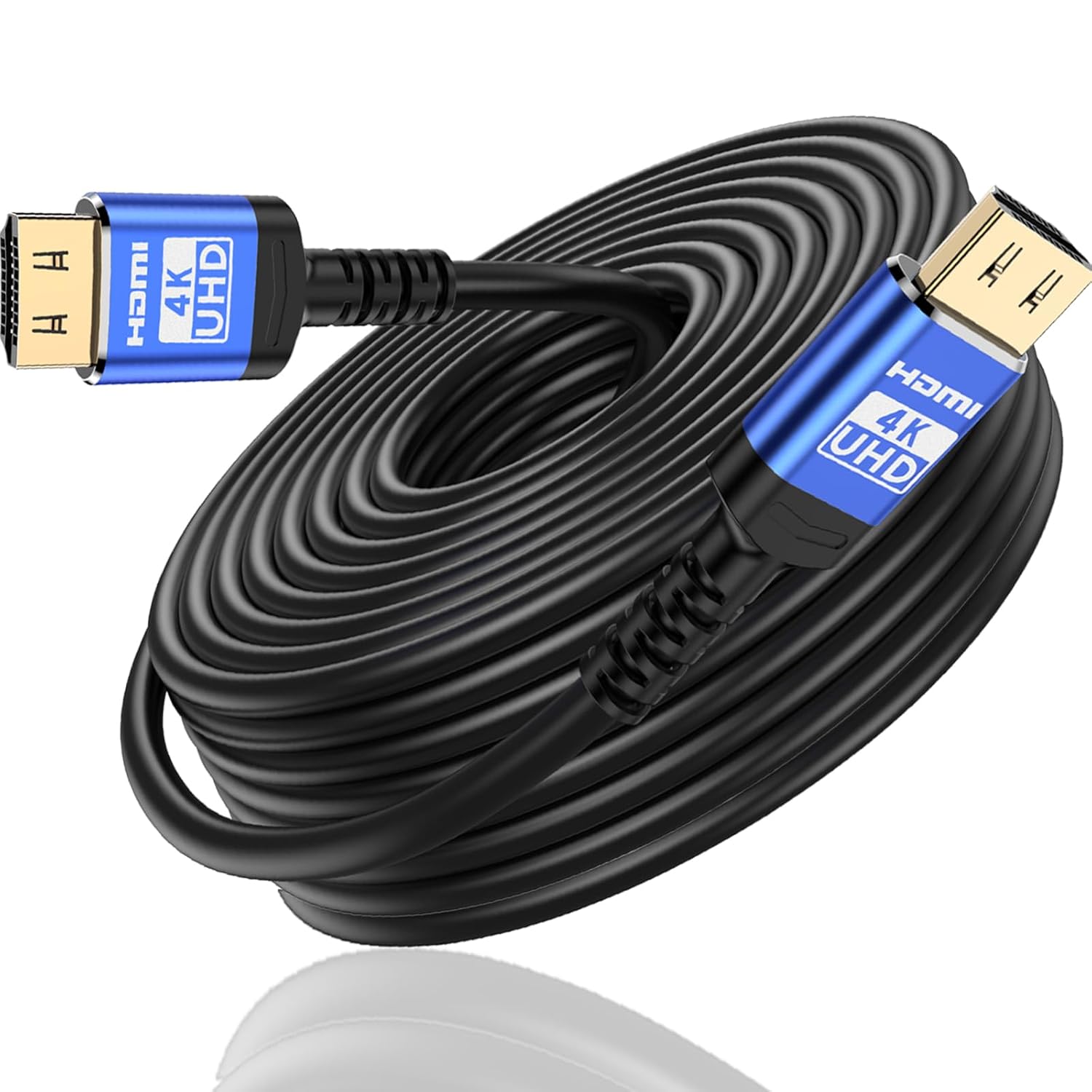
Adrenenjoyer Fiber Optic HDMI Cable, 100 ft (18Gbps) for 4K@60Hz, HDR10, eARC, HDCP 2.2
Reviews
Price
Product description
If you’re trying to run a reliable 4K HDMI signal over a long distance, fiber optic cables like this Adrenenjoyer model are built for the job. The big promise here is simple: better resistance to interference and fewer signal issues than typical copper runs when your setup gets messy.
On paper, it targets home theater and gaming-style connections where you want 4K up to 60Hz with HDR10 and support for features like eARC, CEC, and 3D. That’s a lot of checkbox energy, but it’s also a practical fit when standard HDMI cables start feeling unreliable past longer lengths.
The essentials: what this HDMI fiber cable is for
This is a fiber optic HDMI cable designed for long-distance video and audio transmission. Instead of relying on copper conductors, it uses optical transmission to help prevent electromagnetic interference from messing with the signal.
The result you should expect in a real living-room setup is fewer “why is it flickering?” moments when your source and display aren’t close together—especially if you have power cables, speakers, or other electronics near the HDMI path.
What to know about long-distance performance
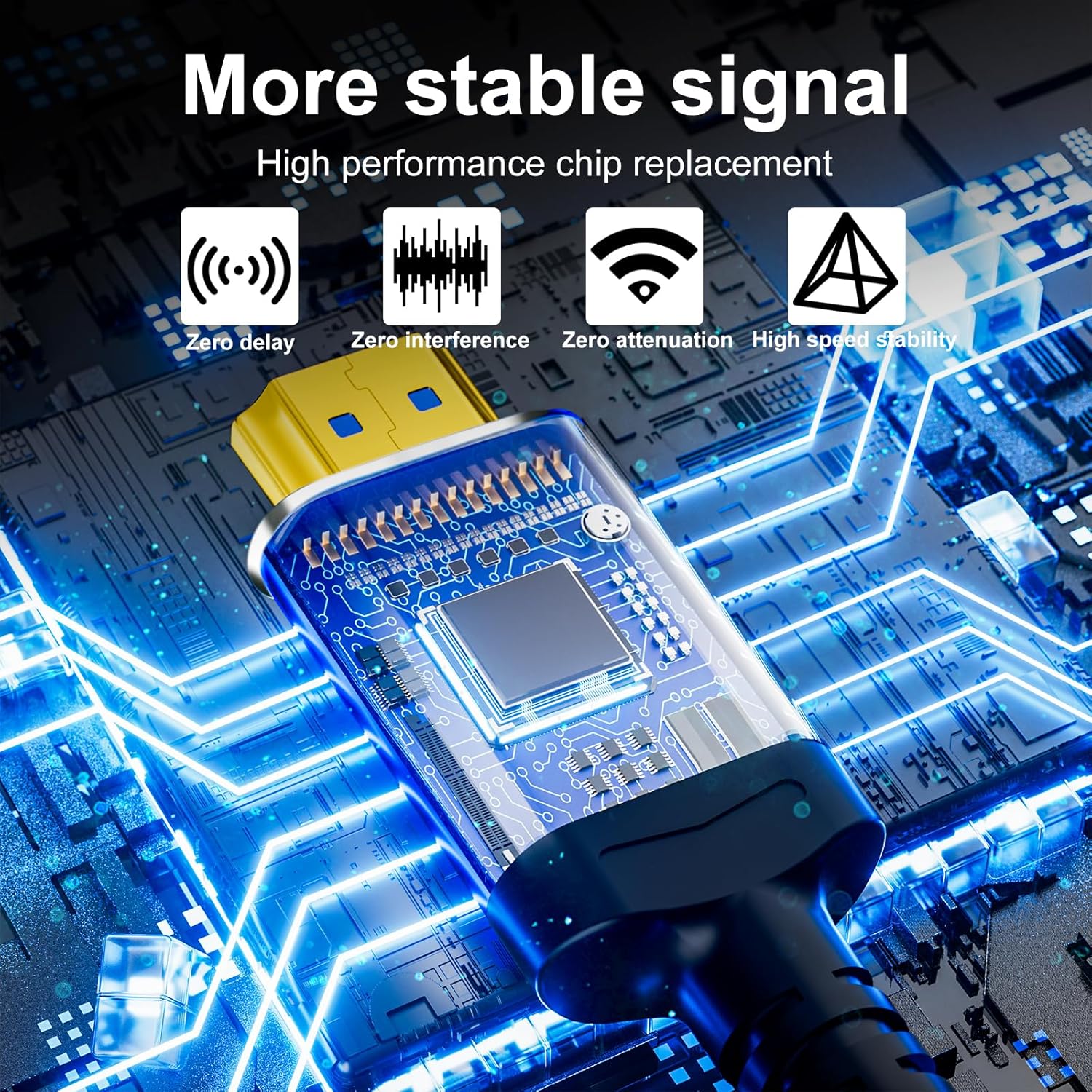
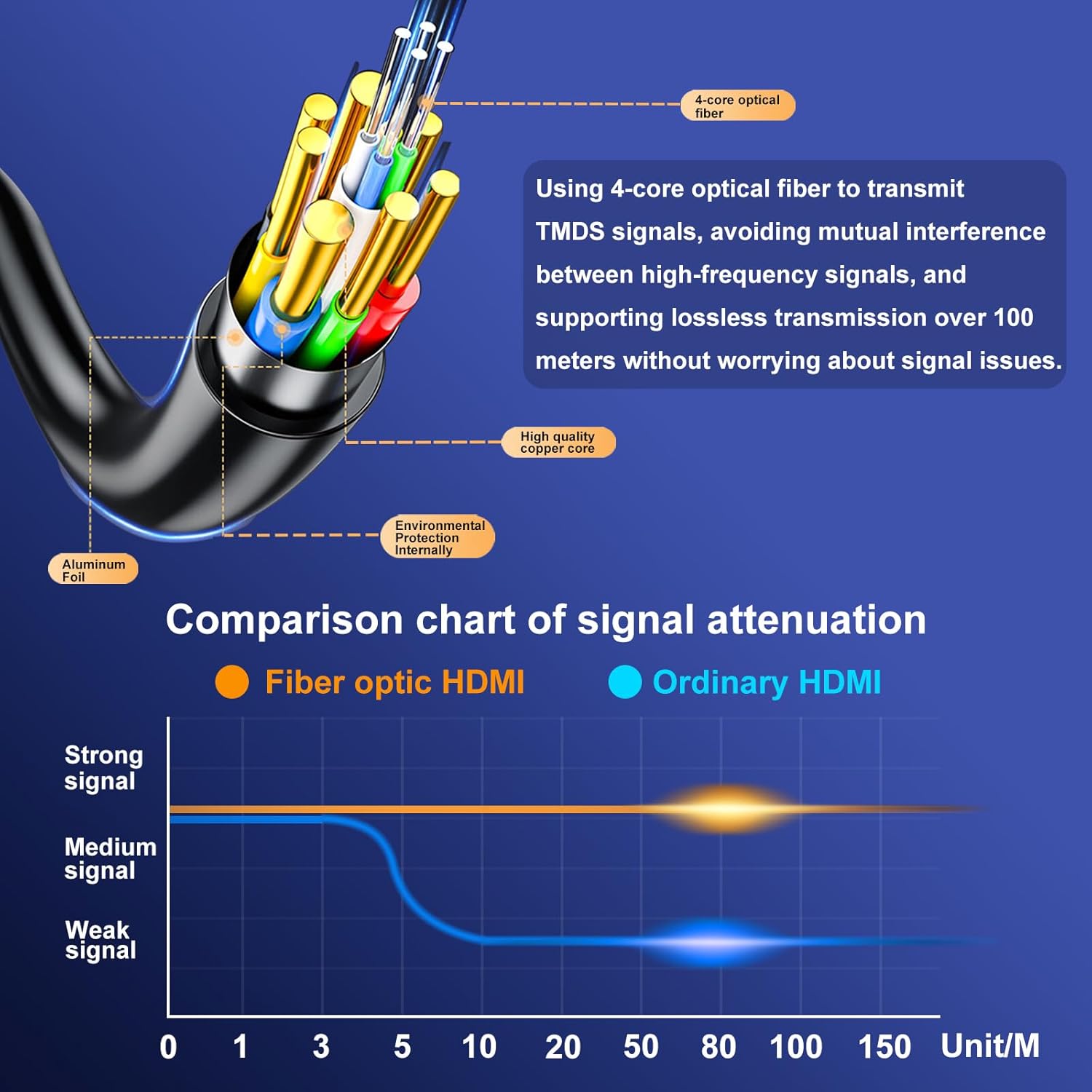
The manufacturer claims the optical approach enables transmission “without attenuation” and “without delay,” using four optical fibers as the transmission medium. In plain terms, it’s meant to keep the picture stable when copper might degrade over distance.
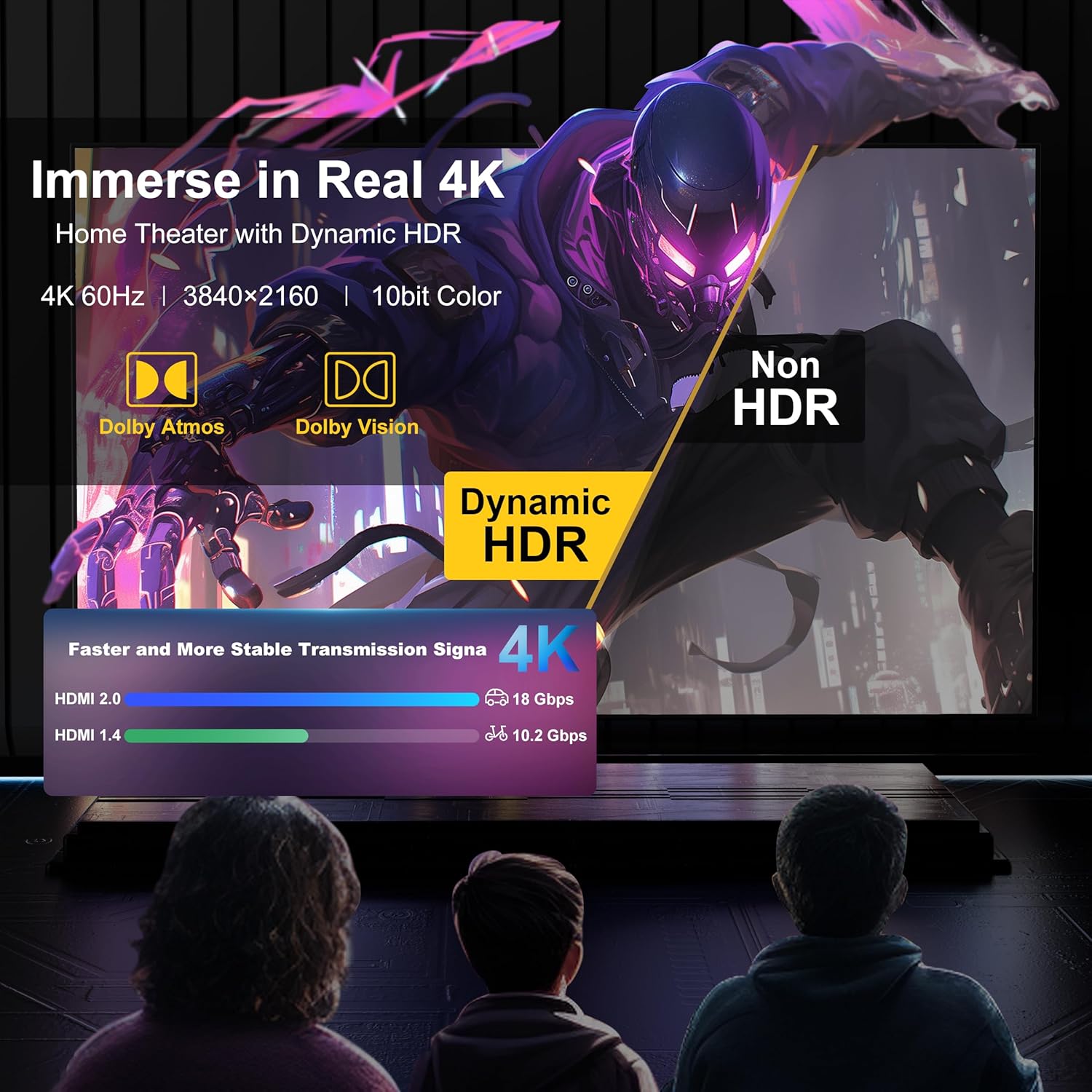
It also supports 4K@60Hz with 4:4:4 RGB (and also mentions compatibility with 2K@144Hz), plus HDR10. It’s also listed as supporting eARC and HDCP 2.2. If you want a setup where video and audio features aren’t left behind, this cable is aiming directly at that.
That said, “supports” doesn’t automatically guarantee every feature will work with every device. Depending on your TV/receiver/source handshake behavior, you may still need to check your settings.
Where it shines in everyday setups
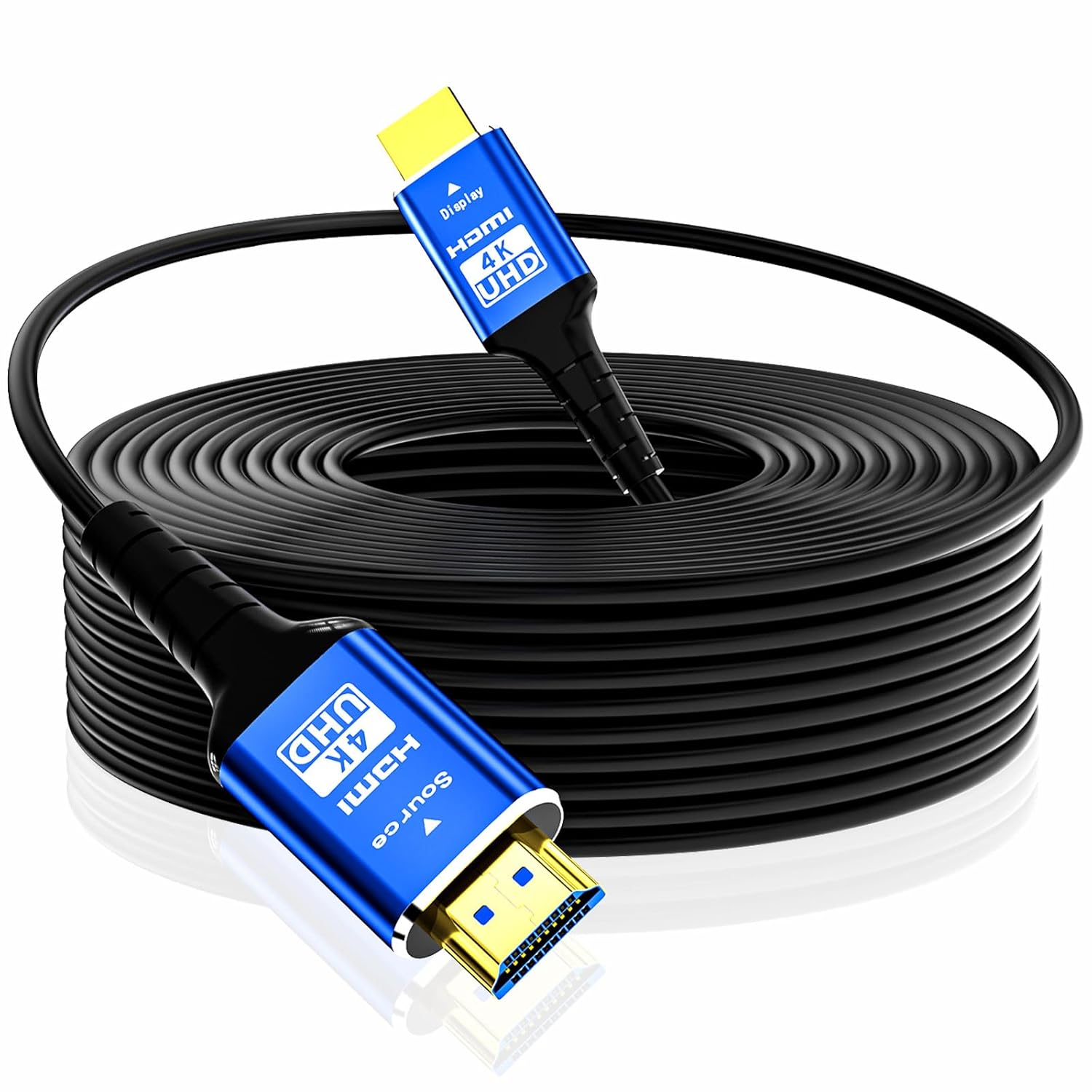
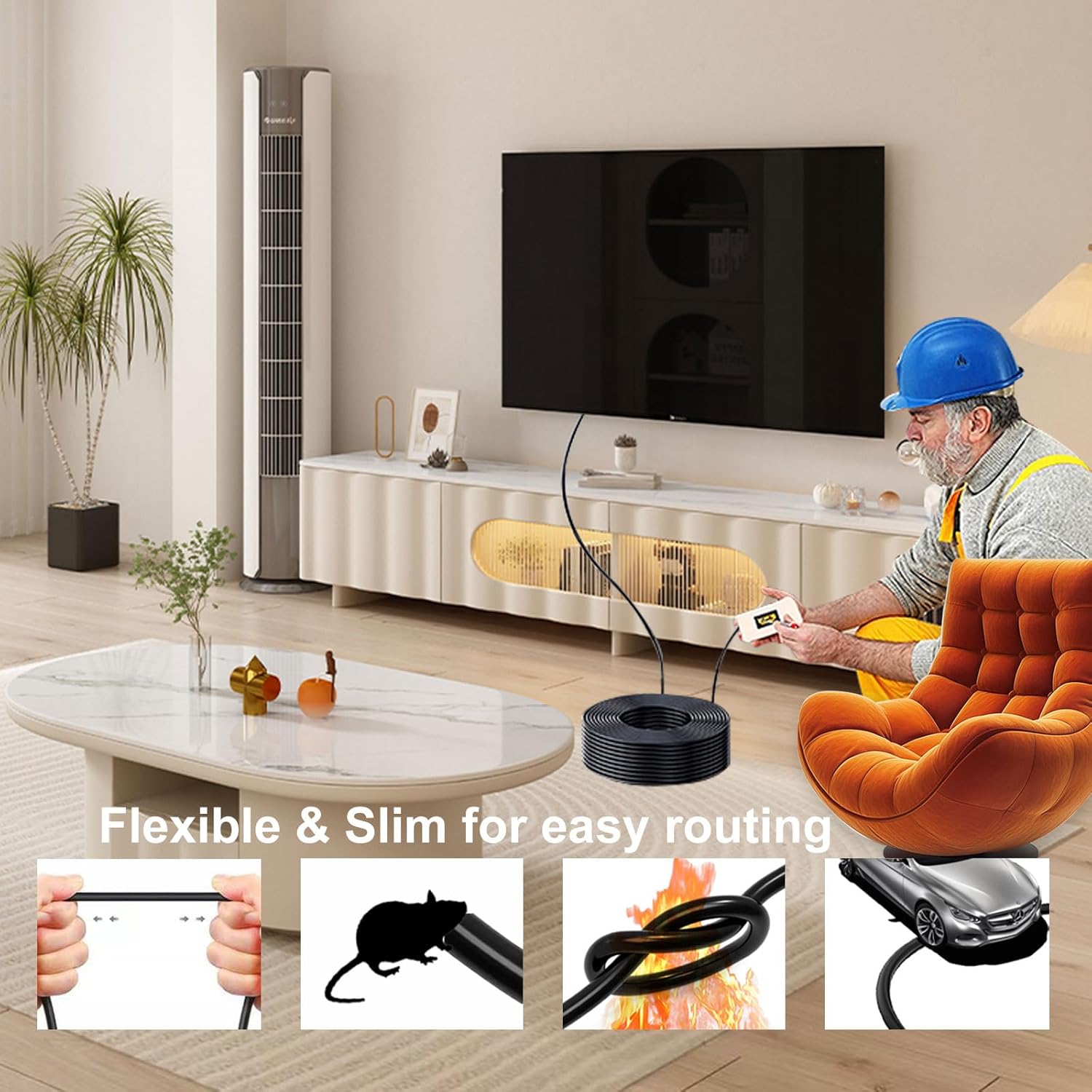
A 100 ft run is the kind of length where cable management becomes a headache—routing, bending radius, and storage all matter. This cable is described as slim (around 4.8 mm diameter) and flexible, which can make installation and storage easier than thicker alternatives.
A simple use case: say your gaming console or AV receiver sits in one area of the room, while your TV is across a gap or farther up the wall. With a fiber HDMI cable, you’re less likely to run into interference-driven artifacts compared to copper over similar long distances.
And because it’s “unidirectional,” you can’t just plug it in either way and hope—more on that next.
Direction matters: Source to Display (or it won’t work)
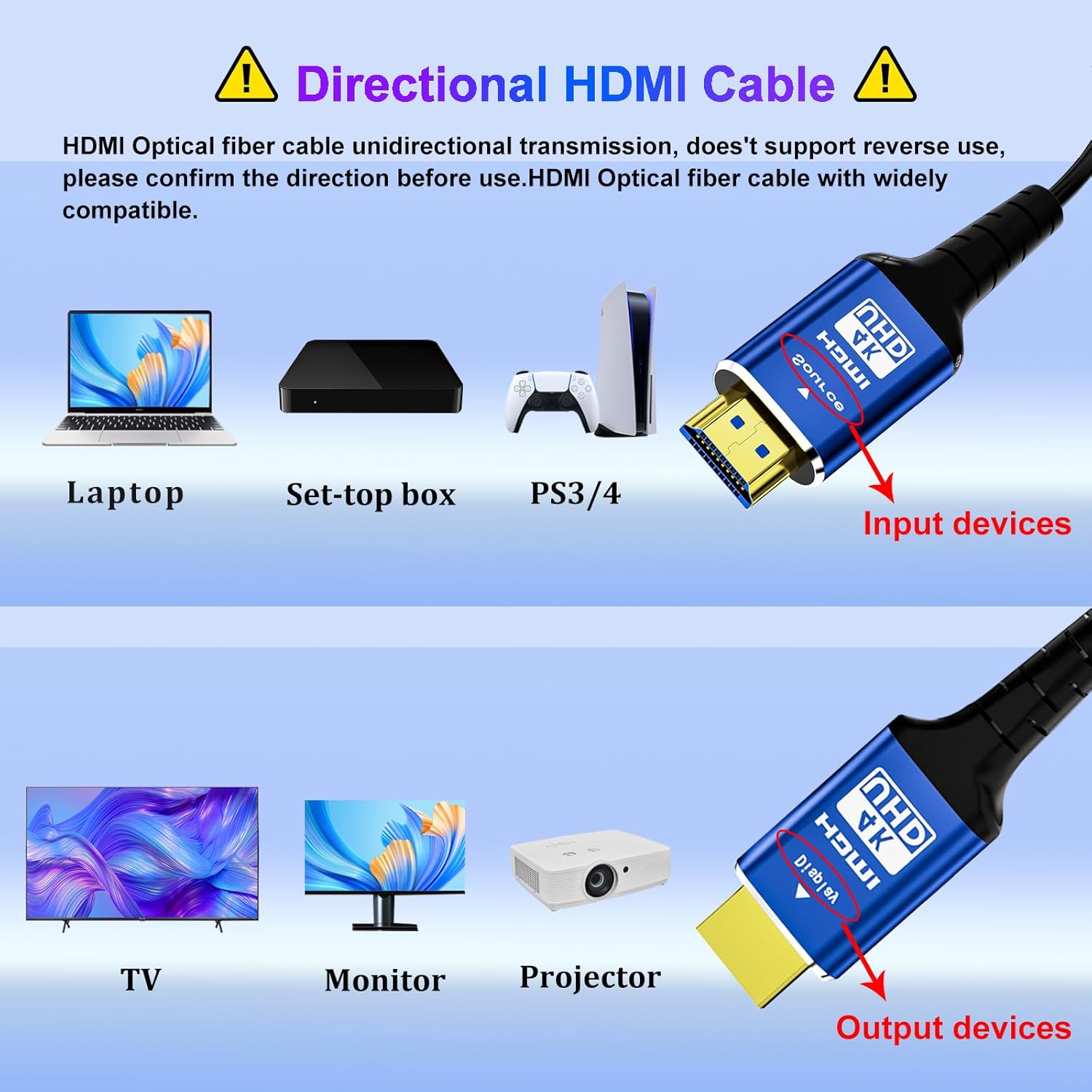
One of the most important practical details here is directionality. The connection labeled “Source” needs to go to the input device (like a player/console/receiver), and the “Display” side needs to go to the TV or monitor.
If you connect the ends backwards, the display may not function. It’s a small thing during setup, but it’s the kind of issue that can waste time because it looks like a dead cable until you check the labels.
Key specifications (quick check)
- Type: Fiber optic HDMI cable (active)
- Total bandwidth: 18Gbps
- Supported video: 4K@60Hz, and it also mentions compatibility with 2K@144Hz
- Color format mentioned: 4:4:4 RGB
- HDR: HDR10
- Audio/video features listed: eARC, CEC, 3D
- Copy protection listed: HDCP 2.2
- Directionality: Unidirectional
Should you buy it? (decision guide)
This cable makes sense if you need HDMI over a long distance and you suspect interference or signal degradation is the reason your current setup struggles. If your goal is to maintain 4K@60Hz with HDR10 plus features like eARC/CEC (based on the cable’s listed support), it’s a solid “over distance” approach.
It may not be the best match if your devices are close together and you don’t actually need long-run reliability—at that point, a shorter, simpler HDMI setup can be easier. Also, if you’re the type who often swaps equipment around quickly, remember the unidirectional labeling and direction requirements: you’ll want to route and install it thoughtfully.
A decent way to sanity-check before buying is to confirm your intended source and display both list support for the features you care about (like eARC/HDR/HDCP behavior). Even with the cable’s compatibility claims, device-side handshake and settings still matter.
Mini FAQ
Will this cable work for 4K@60Hz?
It’s listed as supporting 4K@60Hz (including 4:4:4 RGB). If your source and TV support those modes, it should be in the right lane.
Does it support HDR10 and eARC?
HDR10 and eARC are both mentioned in the product details, but feature availability can still depend on your devices and settings.
Is the HDMI direction really required?
Yes—this cable is described as unidirectional and requires “Source” to go to the input device and “Display” to go to the TV/monitor. If you reverse it, the display may not work.
How does it help with interference?
The cable is described as resistant to electromagnetic interference, using fiber optic transmission (instead of copper) and shielding/interference resistance.
Is it easy to install?
It’s described as slim and flexible, which generally helps with routing and storage—especially for a long 100 ft run.
Final verdict
If your main problem is getting a clean, feature-capable 4K HDMI connection over a long distance, the Adrenenjoyer fiber optic HDMI cable is worth considering. It’s built around interference resistance, optical long-distance transmission, and support for 4K@60Hz with HDR10 and eARC/CEC/HDCP 2.2. Just don’t treat it like a “plug and forget” cable—directionality matters, and device compatibility still determines how much of those supported features you actually get in practice.