


Acer Predator Helios Neo 16 AI Gaming Laptop (PHN16-73-92B8) with Intel Core Ultra 9 275HX and GeForce RTX 5070 Ti
Product description
Overview: desktop-level gaming, in a 16-inch frame
If you want a gaming laptop that feels closer to “desktop performance” than “barely enough,” Acer’s Predator Helios Neo 16 AI is built for exactly that goal. On paper, the combo of an Intel Core Ultra 9 275HX processor and an NVIDIA GeForce RTX 5070 Ti Laptop GPU targets smooth gameplay plus ray tracing-ready visuals, with NVIDIA DLSS support designed to boost FPS and reduce latency.
It also leans hard into AI features: the description calls out a dedicated NPU angle (up to 13 NPU TOPS) meant to offload background tasks like things such as background removal and audio optimization. The idea is that you spend more time playing/streaming and less time worrying about whether the system is juggling everything in real time.
That said, it’s not a “small compromise” kind of laptop. With this class of hardware and a high-refresh display, you’re paying for performance-first components, not portability-first priorities.
Key features that matter during gameplay
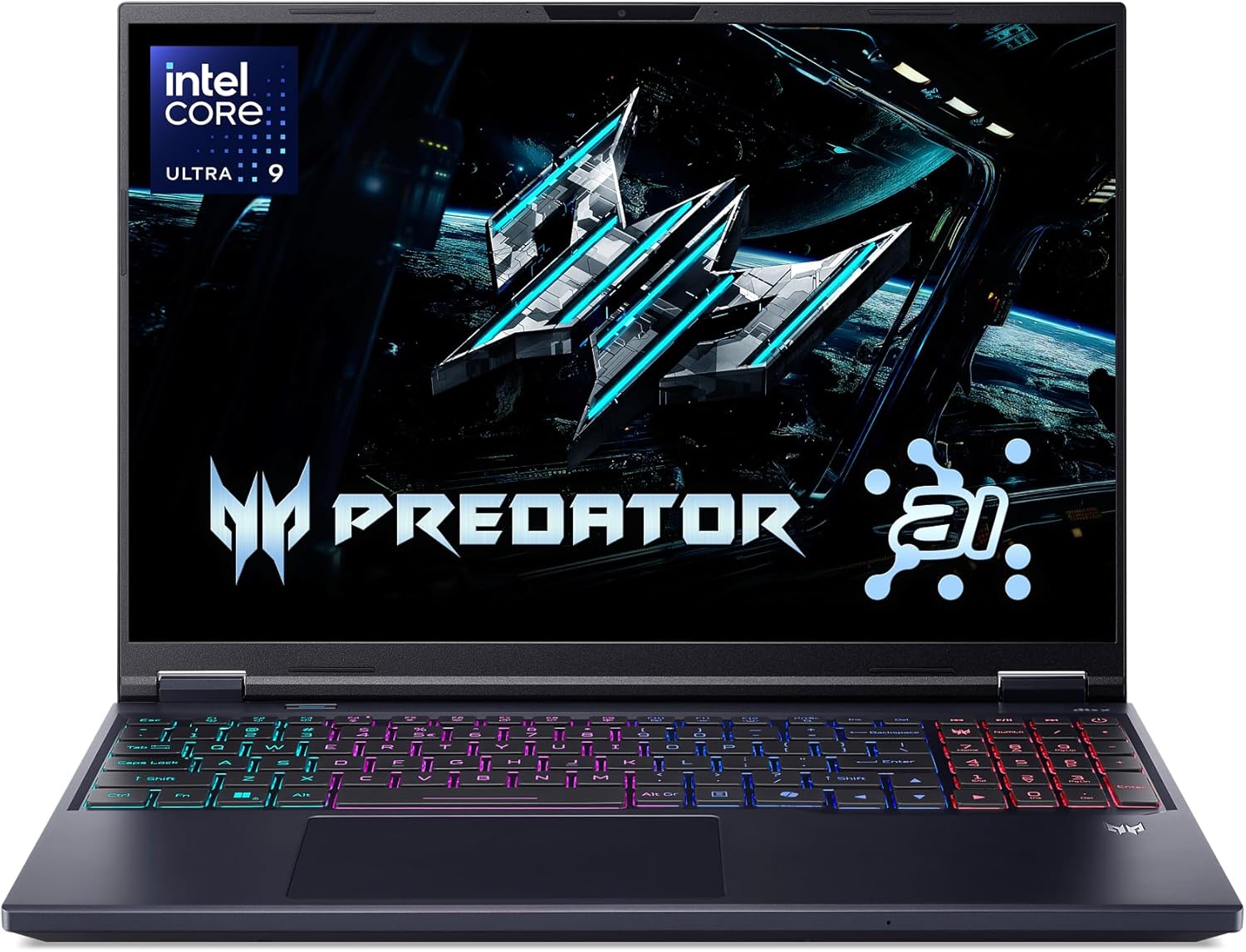
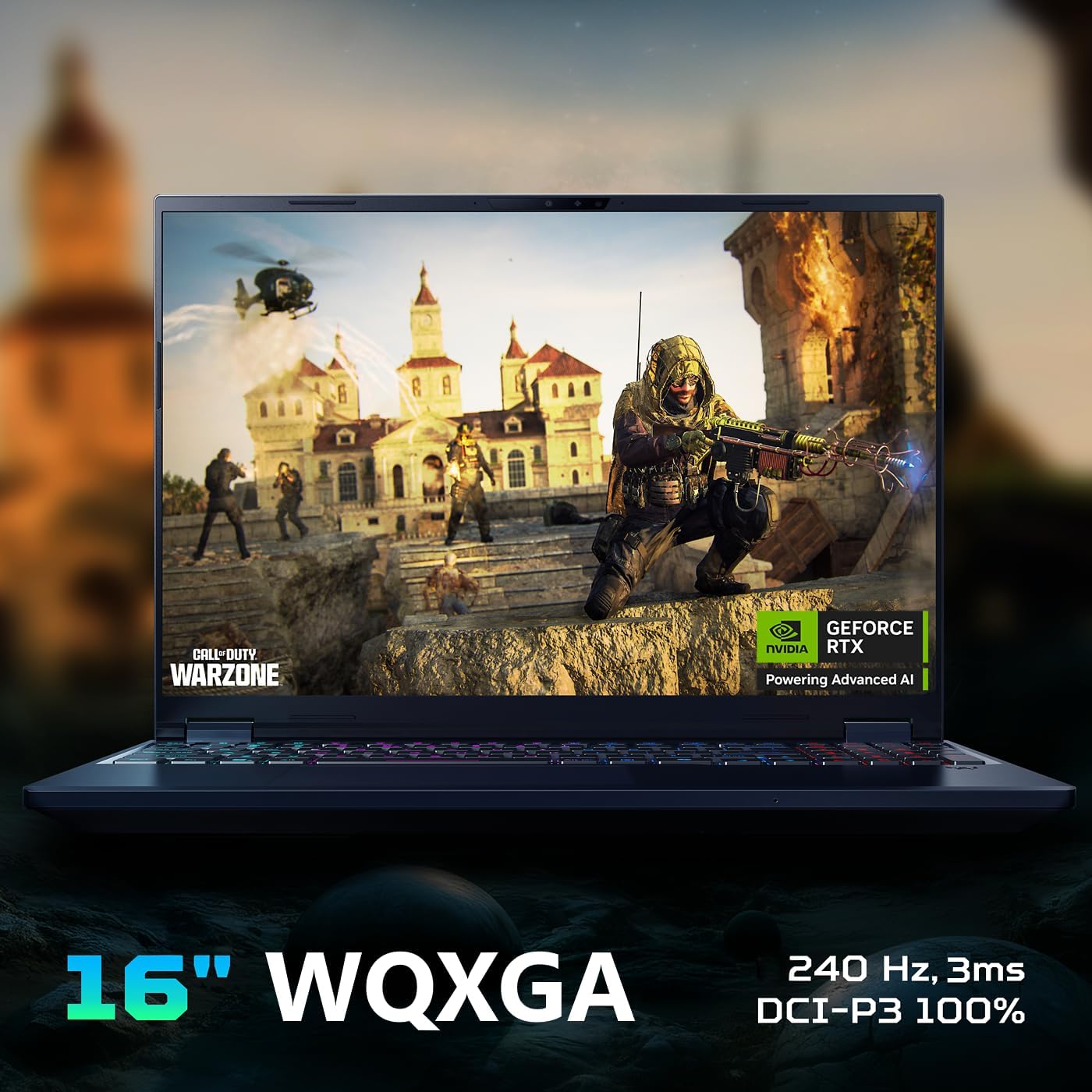
Where this model stands out is the pairing of high-end graphics and a high-refresh, G-SYNC-oriented panel. You get a 16-inch WQXGA display (16:10) with 240Hz refresh and a fast 3ms overdrive response time. The screen is listed as 500 nits with up to 100% DCI-P3, so it’s positioned for both competitive smoothness and vivid color.
On the graphics side, the NVIDIA GeForce RTX 5070 Ti Laptop GPU is described as supporting full ray tracing with “fourth-gen RT Cores” and AI-driven rendering approaches associated with DLSS 4. In practical terms, DLSS is the lever you’ll likely use most: it’s designed to improve image quality while boosting performance (and the claim includes reduced latency).
And for creators/streamers, the NPU pitch is worth attention. Background removal and audio optimization are called out in the base description, which is a reminder that the laptop isn’t only chasing frame rates—it’s also meant to help with AI-assisted tasks while you’re gaming.
What’s really powering the “AI” angle
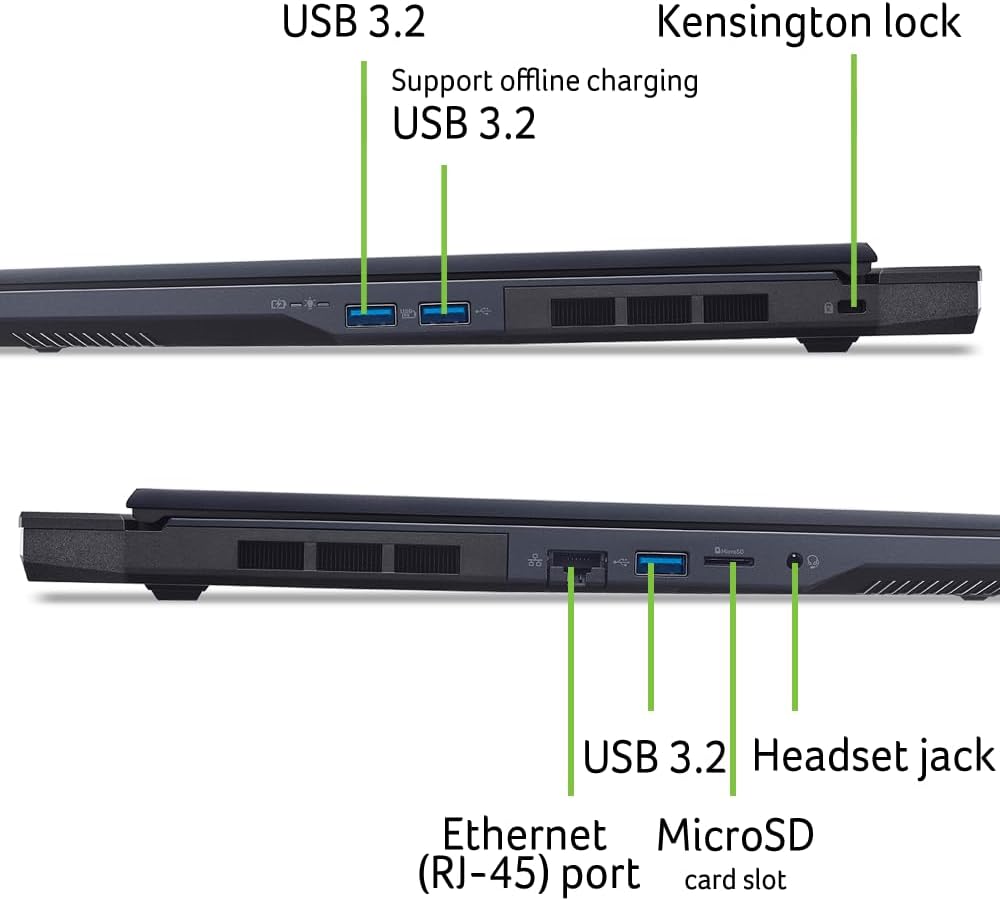
The “AI” theme here isn’t vague marketing, it’s tied to a named processing approach: an NPU with up to 13 NPU TOPS. The listing also mentions Intel Application Optimization to enhance performance in classic titles.
In day-to-day use, that can translate into a smoother experience when you’re doing more than one thing at once—like switching between a game and live commentary tools, or running AI-assisted effects while the game is up. Whether every workload benefits the same way depends a lot on the apps and games you use, and the listing doesn’t provide a specific benchmark for those exact scenarios.
There’s also a performance-forward memory/storage setup: DDR5 16GB and a 1TB Gen 4 SSD. For gaming, fast storage is usually a win for loading and asset streaming. But 16GB of RAM can feel tight depending on how heavy your multitasking gets (browser tabs, overlays, background apps, and so on).
Tech specs you should review before buying
Tech specs
- Name: Acer Predator Helios Neo 16 AI (PHN16-73-92B8)
- Processor: Intel Core Ultra 9 275HX
- GPU: NVIDIA GeForce RTX 5070 Ti Laptop GPU
- Display: 16-inch WQXGA (16:10), 240Hz, G-SYNC
- Overdrive response time: 3ms
- Screen brightness and color: 500 nits, up to 100% DCI-P3
- NPU performance: up to 13 NPU TOPS
- Memory: 16GB DDR5
- Storage: 1TB Gen 4 SSD
- Wireless: Killer Wi-Fi 6E
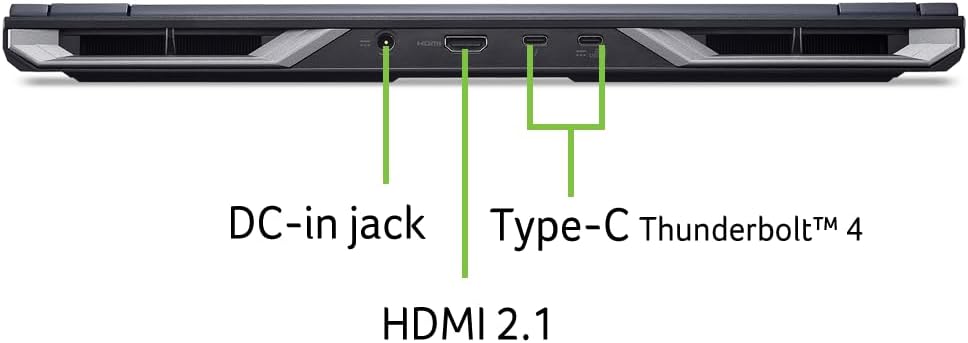
Who it’s for (and where it may not fit)
Acer’s Predator Helios Neo 16 AI looks like the kind of laptop you buy when you care about high-end visuals and smoother-than-standard gameplay. The 240Hz panel plus G-SYNC is a strong signal if you play competitive titles or you just hate stutter and screen tearing.
It also makes sense if you expect to use DLSS-driven ray tracing features and you’re interested in AI-assisted workflows for streaming or editing—at least, that’s the direction the feature list points to.

It may not suit you if you primarily want a simple “good enough” gaming machine. With a setup aimed at desktop-level performance, you could be overbuying if you only play lightweight games or if your main priority is battery life and quiet operation—those details aren’t provided here, so you’ll want to check real-world expectations from reviews.
Usage tips
If you get this laptop, the practical move is to match your settings to your target experience. With DLSS described as a way to boost FPS and improve image quality, it’s often the feature you’ll reach for when ray tracing is on and you want a steadier frame rate.
Also, since Killer Wi-Fi 6E is included for reduced latency and improved network performance, it’s worth using a modern Wi-Fi setup (or at least ensuring your router is up to the task) if you care about online gaming and streaming stability.
One more “keep it real” note: 16GB DDR5 is fine for many gaming sessions, but if you regularly game while running extra creator apps, it’s the part of the spec list most likely to become your limiter over time.
When it makes sense
Is it worth it?
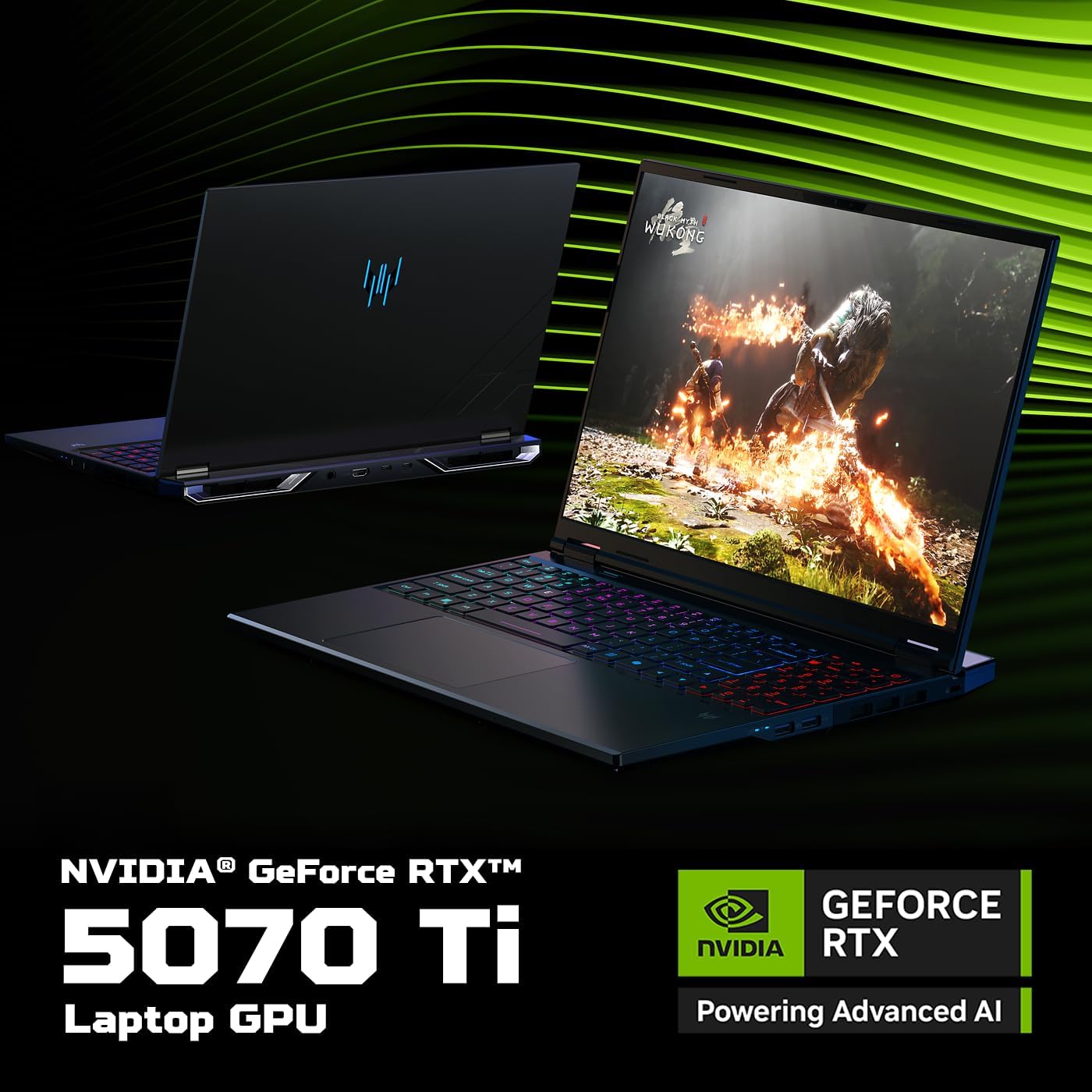
Buy this Acer Predator Helios Neo 16 AI if you want a performance-first 16-inch gaming laptop with a 240Hz WQXGA display, G-SYNC support, and an RTX 5070 Ti setup aimed at ray tracing and DLSS-driven performance boosts. It’s especially compelling if you’re the type of player who actually benefits from smoother motion and you’re interested in AI-assisted features for streaming or workflow tasks.
Skip it if you’re chasing budget value or you only need modest gaming performance. The 16GB RAM and the fact that key “real-world” concerns (like thermals, battery behavior, and loudness) aren’t covered in the provided details means you should do a quick sanity check from independent reviews before committing.
FAQ
Frequently asked questions
Does it support ray tracing and DLSS?
The listing states it’s powered by NVIDIA RTX for full ray tracing support and includes DLSS 4 described as a neural rendering suite designed to boost FPS, reduce latency, and improve image quality.
What display features are included?
It includes a 16-inch WQXGA (16:10) panel with 240Hz refresh and G-SYNC, plus a 3ms overdrive response time. Brightness is listed at 500 nits with up to 100% DCI-P3.
Is the Wi-Fi good for competitive gaming?
The product description highlights Killer Wi-Fi 6E for ultra-fast wireless connectivity with reduced latency and improved network performance, which is aimed at smoother online play and streaming.
How much RAM and storage come with it?
It ships with 16GB DDR5 and a 1TB Gen 4 SSD, per the provided information.