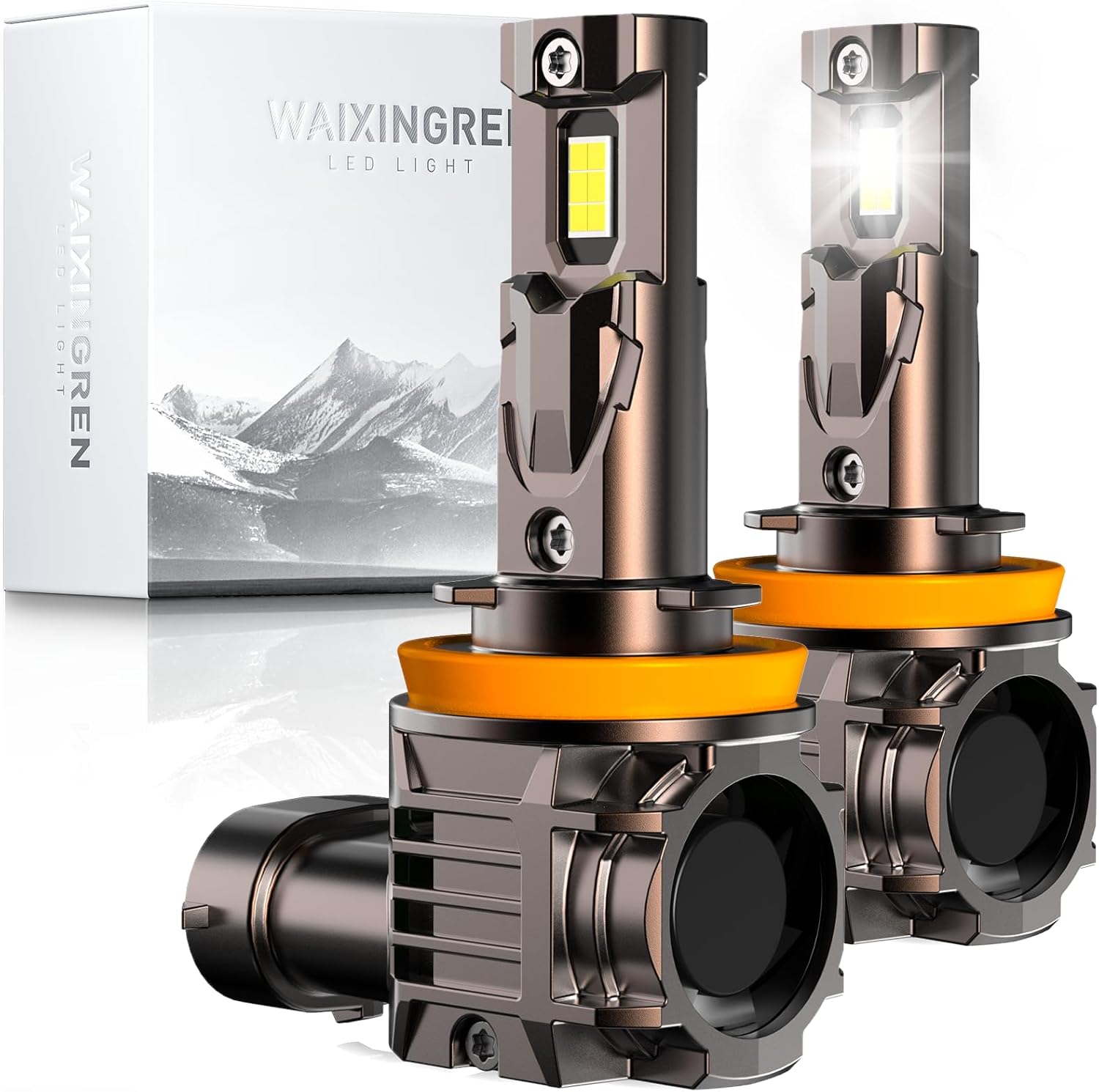
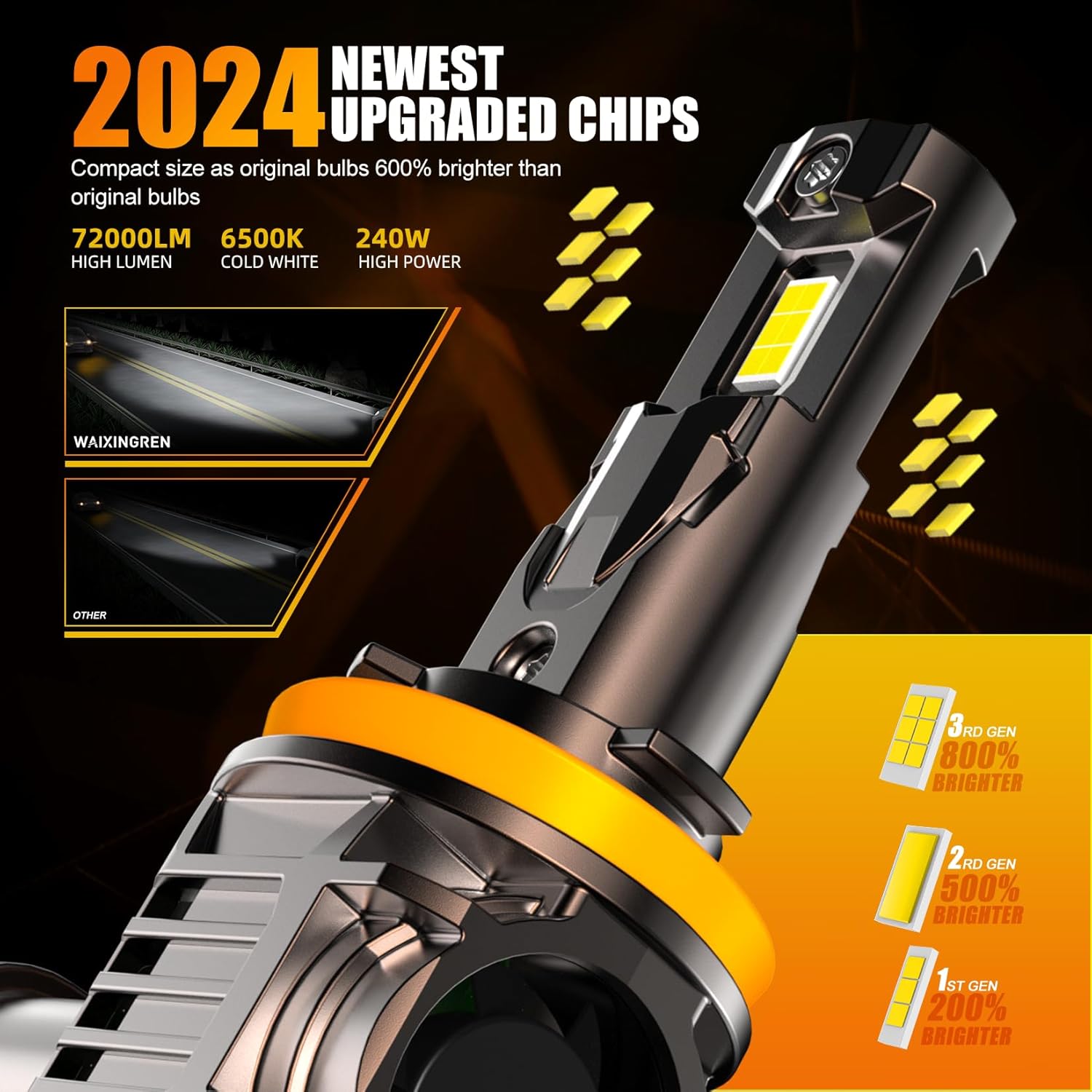
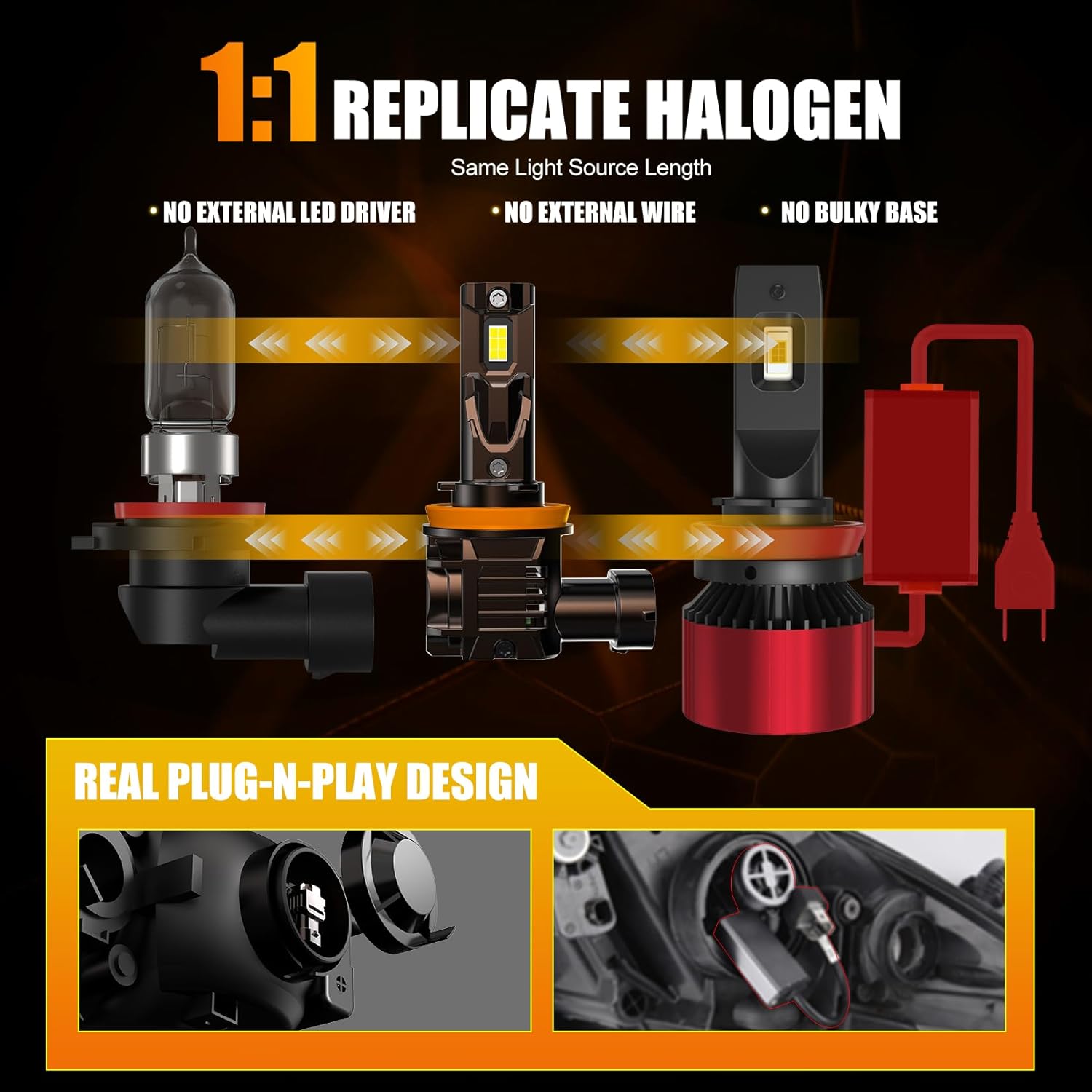
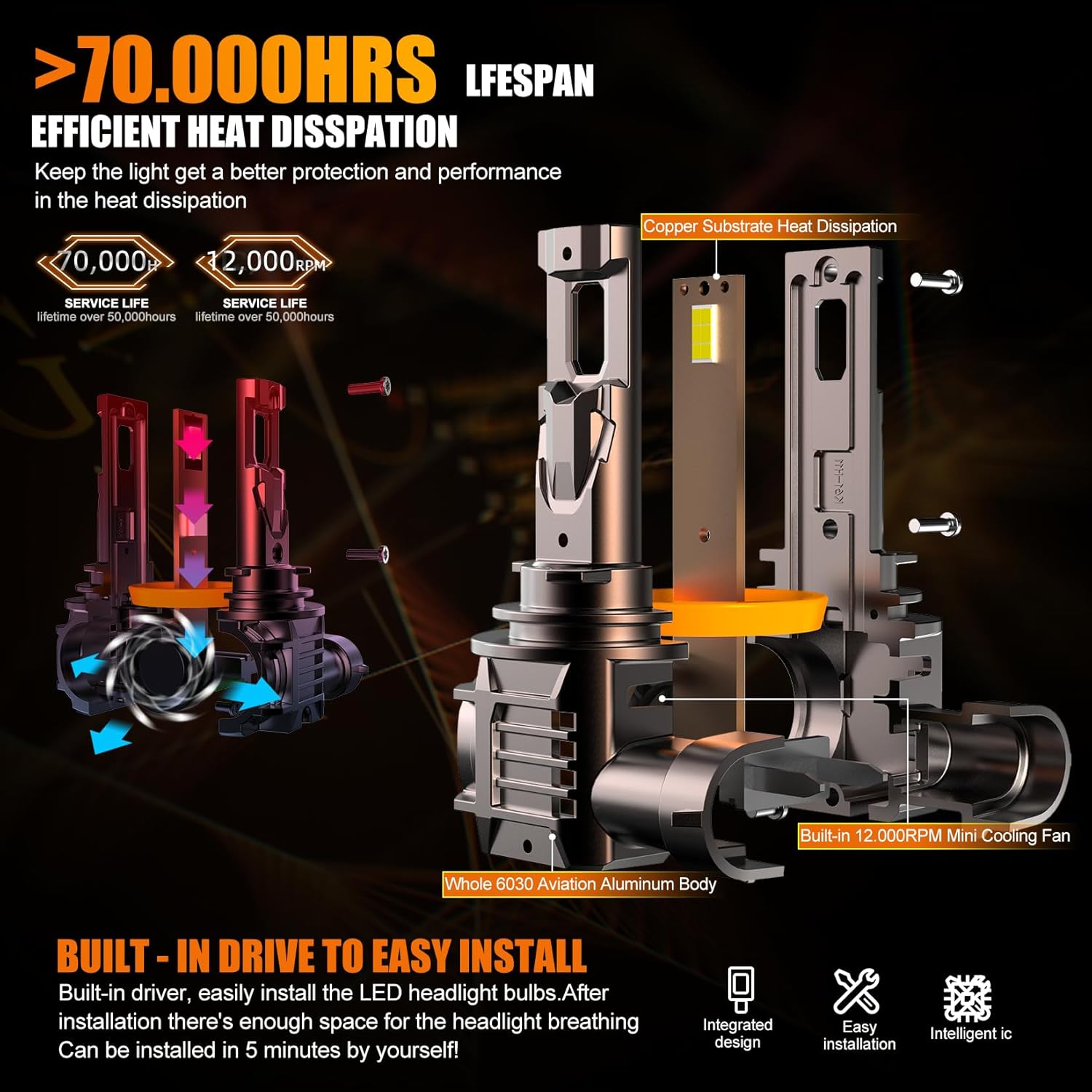
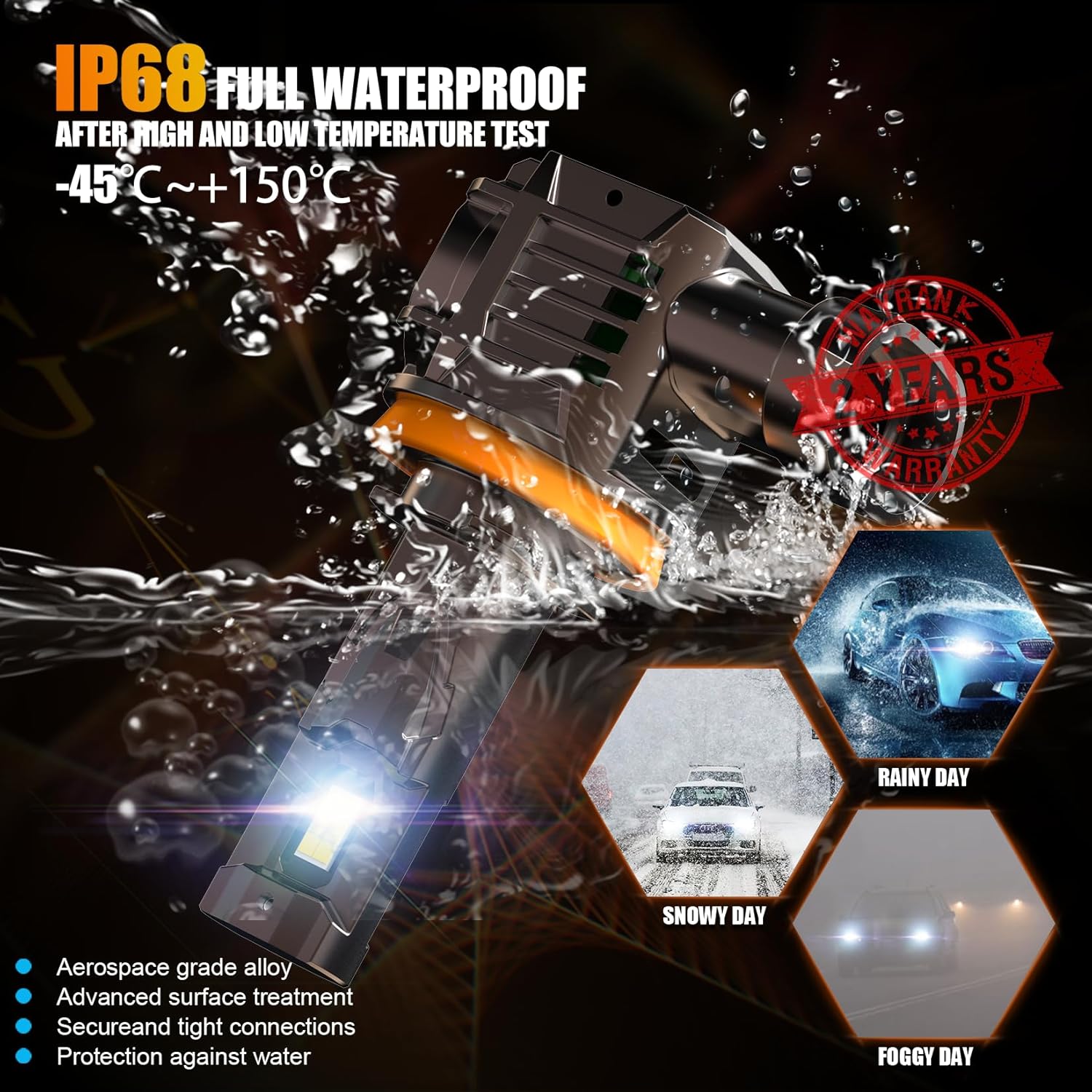
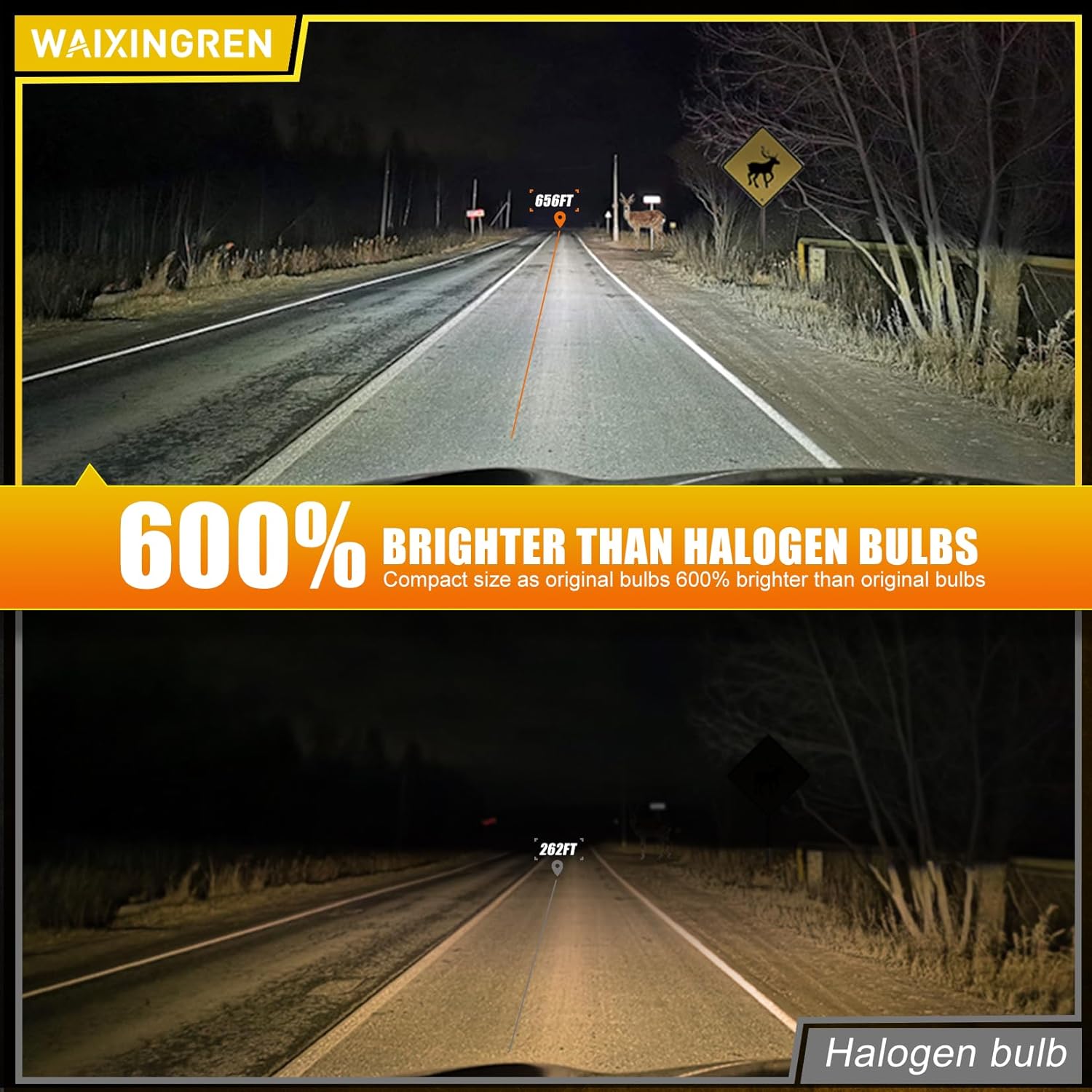
What it is and what it aims to solve\nThe WAIXINGREN H11 LED headlight bulbs are designed as a direct replacement for halogen bulbs, offered here as a pack of two. With a stated brightness of 32000LM and a colour temperature of 6500K, the aim is to improve night visibility and deliver a more modern lighting option for drivers who want better illumination without complicated wiring. The bulbs are built to sit close to the original halogen size, which helps with installation and fitment in a wide range of vehicles.\n\n## How it’s built and what that means in practice\nThe design includes a 120W LED setup and a 6063 aircraft aluminium body, which is intended to aid heat dissipation for consistent performance. An IP68 rating suggests protection against water and dust ingress, supporting reliability in typical wet and dusty conditions. The product is described as plug-and-play, with a size that’s almost identical to standard H11 halogen bulbs, which can simplify swapping in many cars without extra tools.\n\n## The best and the limits you should know\nOn paper, the brightness and the instant-on capability of LED headlights make them appealing for improved forward visibility and for other road users to notice your vehicle. However, effectiveness can vary with housing design, lens quality, and electrical compatibility in your car. The information provided does not confirm beam pattern specifics or long-term lumen stability across various weather conditions, so results may differ by vehicle.\n\n## Who this is most suitable for\nIf you’re replacing ageing halogen bulbs and want a brighter, whiter light with a straightforward fit, these WAIXINGREN H11 LEDs could be appealing. They are pitched as suitable for a wide range of vehicles and claim broad compatibility. If your vehicle has a more complex lighting system or specific wattage limits, you might want to verify with your vehicle’s manufacturer or a professional installer before purchase.\n\n## Who it might not be the best for\nNot all headlight housings will respond equally to high-brightness LEDs. Those who prioritise absolute maximum beam pattern control, or who drive in regions with very strict headlight regulations, should check local rules and consider a test fit. The claim of “600% brighter” is promotional and depends on comparison context and existing halogen performance.\n\n## Before you buy: practical checks\n- Confirm your vehicle accepts H11 bulbs in the intended headlight location and whether your wiring or canbus requires any adjustment.\n- Check that your headlight housing can handle 120W LED components and that there is adequate ventilation for heat management.\n- Consider the colour temperature of 6500K if you prefer a cool, daylight-like hue, and whether this aligns with your vehicle’s lens and safety expectations.\n\n## How it compares to other approaches\nIf you mainly rely on reliable halogen performance, a retrofit LED option like this offers a potentially significant step up in brightness and longevity, subject to fit. It isn’t a universal guarantee of superior beam pattern across every car—some drivers may still prefer a purpose-built projector or a different LED solution depending on their headlight housing and local regulations.\n\n## Final decision: Is it worth it?\nWorth considering if you want a straightforward upgrade to brighter headlights and your vehicle supports H11 LEDs with a plug‑and‑play approach. It’s sensible to verify fitment in your specific model and to consider the potential need for alignment or additional wiring checks. If you prioritise absolute beam pattern control or have unusually tight headlight housings, you may want to explore alternatives or consult a professional.\n\n## FAQ (quick questions you might have)\n- Can I install these myself? Yes, they’re described as plug and play and designed to be similar in size to the original halogen bulbs, which implies a straightforward swap for many vehicles.\n- How bright are they really? The claim is 32000LM total output at 6500K, but actual results depend on your existing setup and housing.\n- Are they suitable for all vehicles? The listing suggests compatibility with 99% of vehicles, but it’s wise to double‑check against your car’s requirements and LED acceptance.\n