

Veetop CAT8 Ethernet Cable 1m/3ft 3-Pack with Gold Plated RJ45 Connectors
Product description
What it is and what it’s for
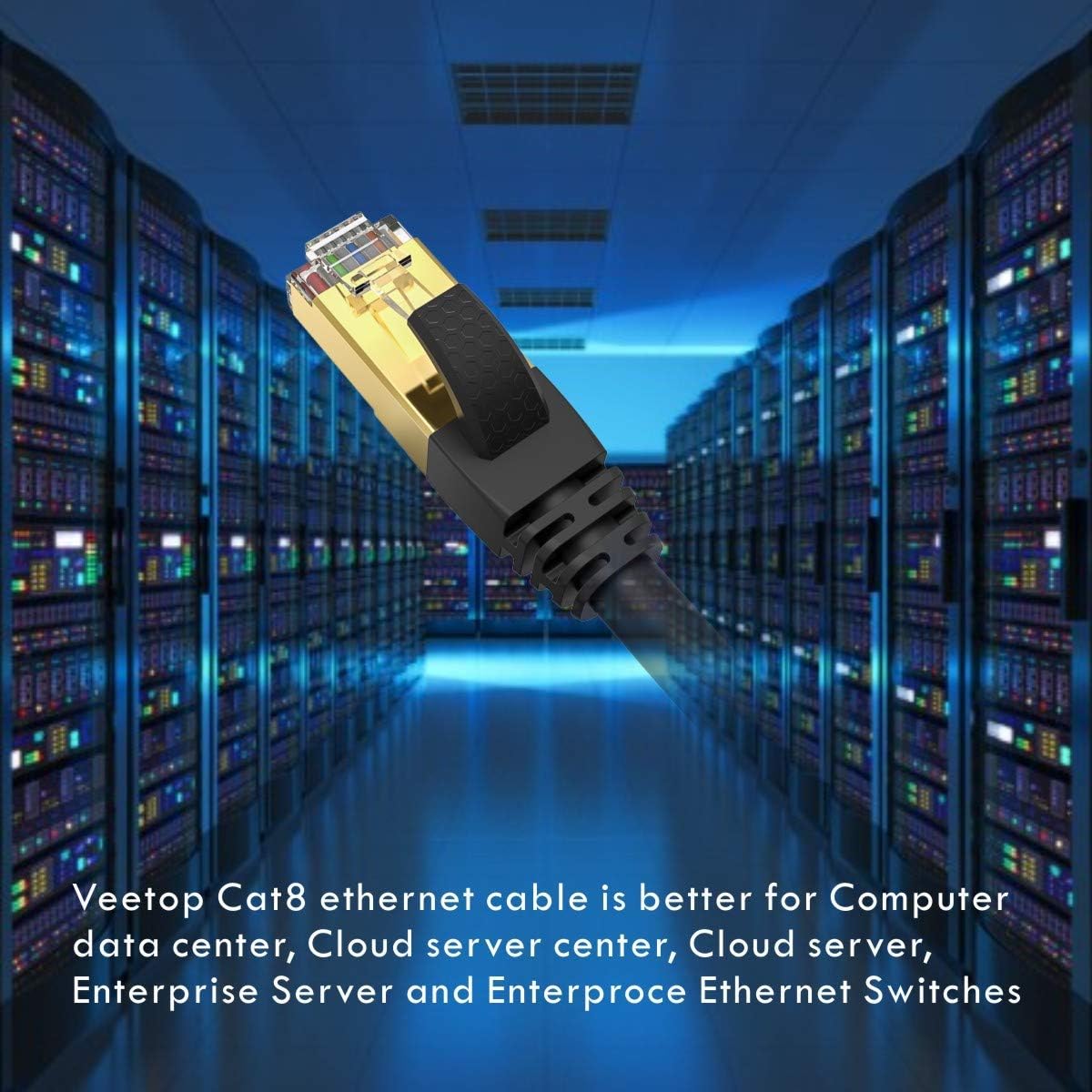
Veetop CAT8 Ethernet Cable is a 3-pack of high‑speed network cables, each 1 metre (3ft) long, designed for demanding home and office setups. Built to CAT8 standards, they promise up to 2000MHz bandwidth and 40Gbps data transmission, making them a sensible option when you’re seeking stable connections for gaming, large downloads, or data‑heavy tasks. The set is presented as suitable for smart homes, smart offices, and other IoT ecosystems where a reliable wired link can help reduce latency and packet loss. It’s not a gimmick link—on paper, these cables aim to reduce interference and sustain performance even under busy networks, which is particularly useful if you’re upgrading from older cables.
What stands out in terms of build quality
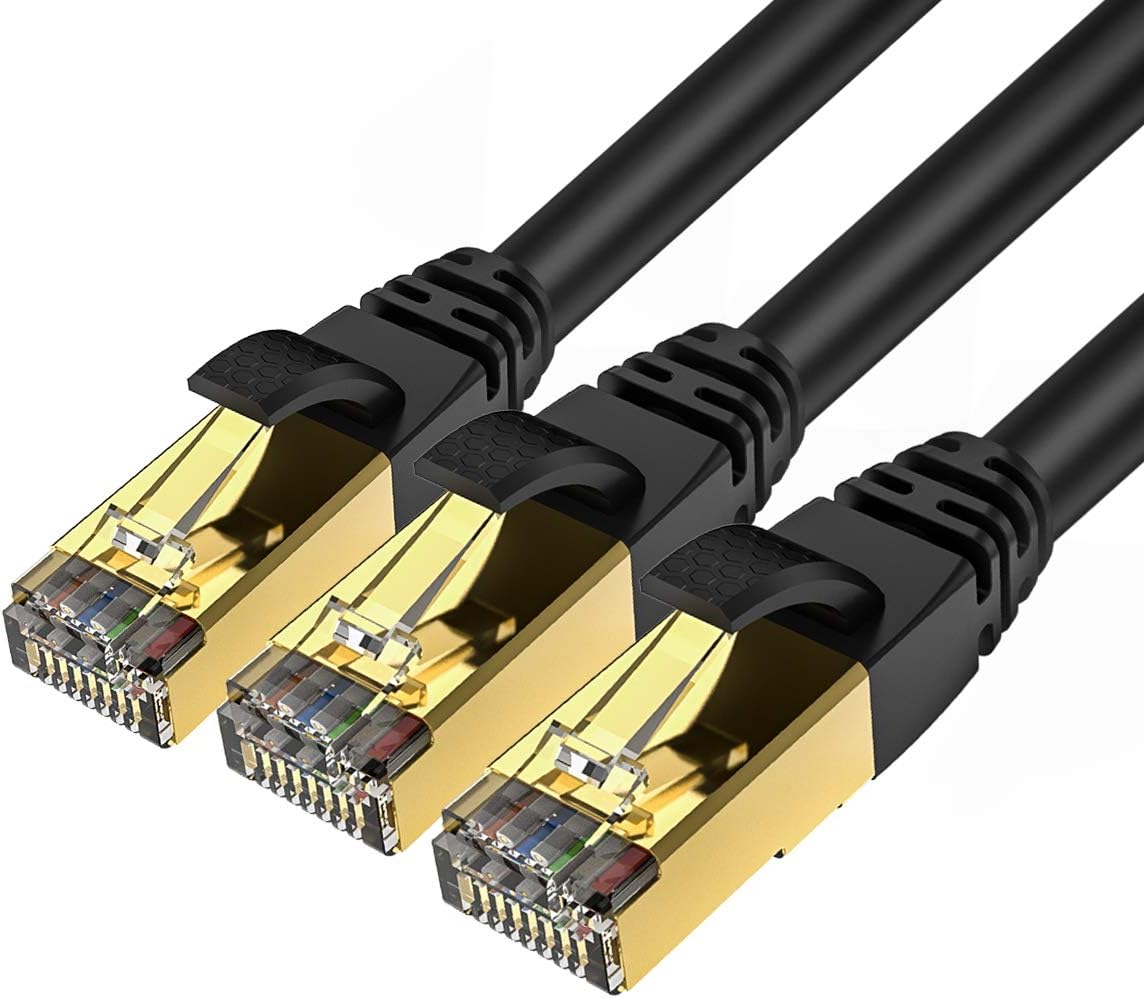
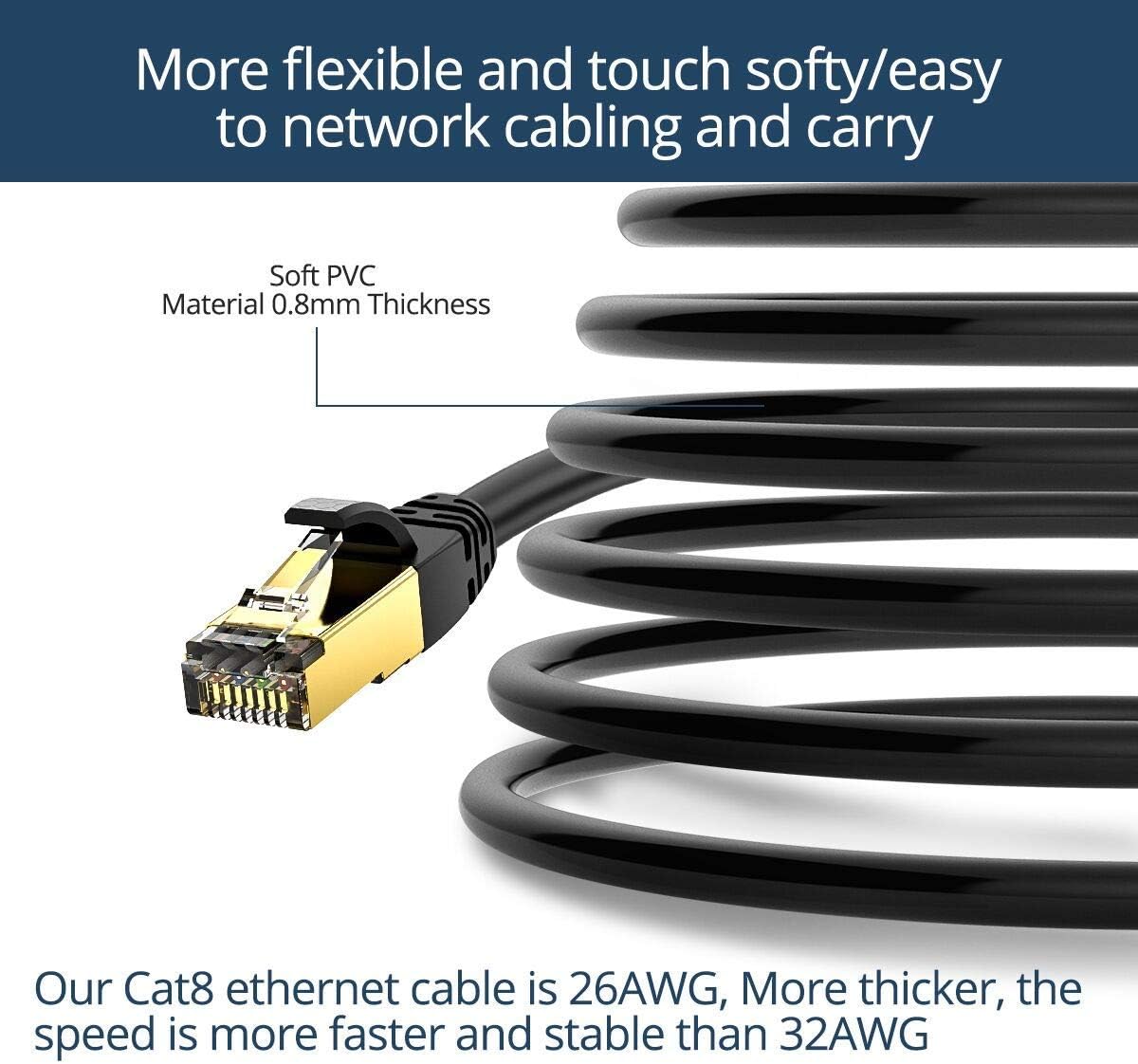
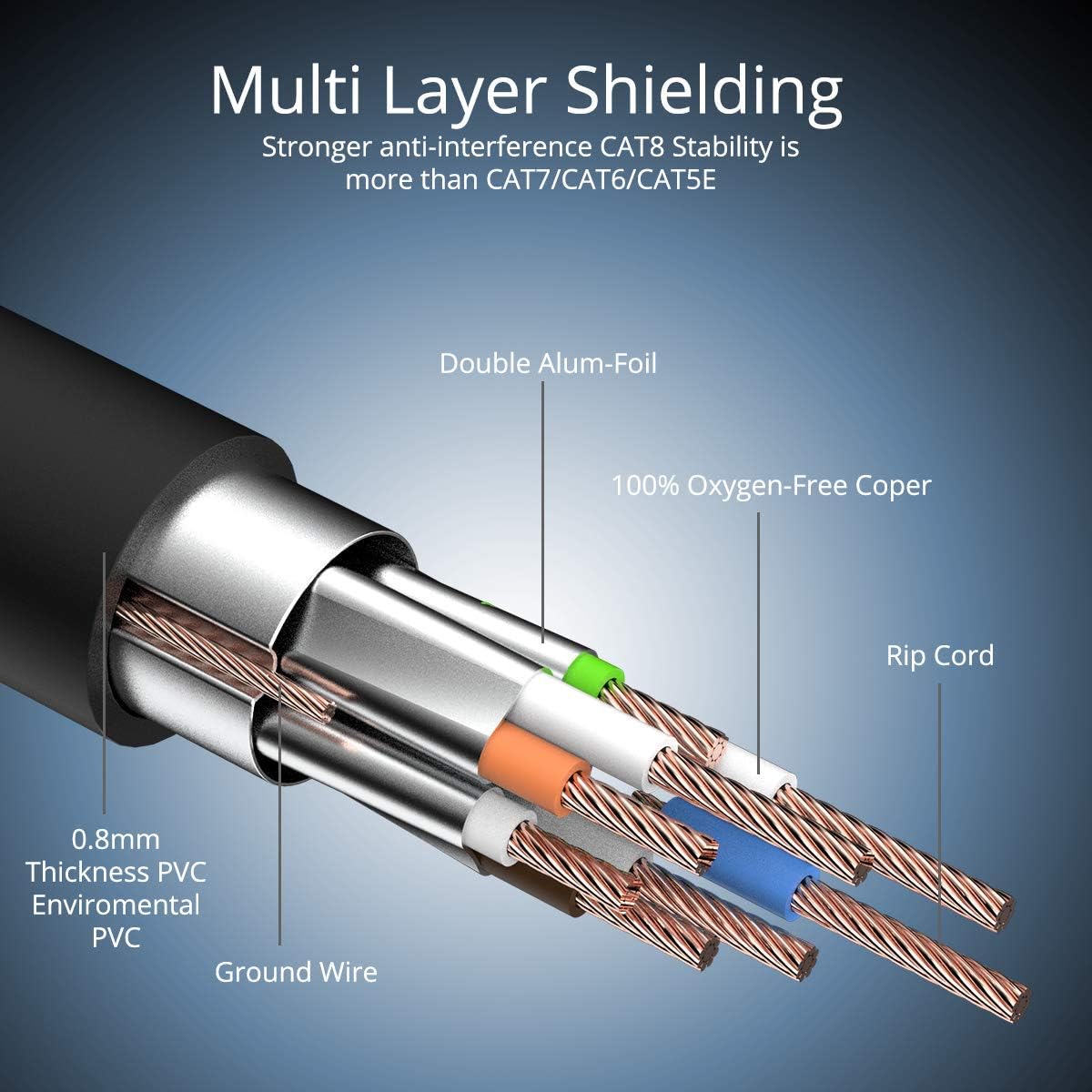
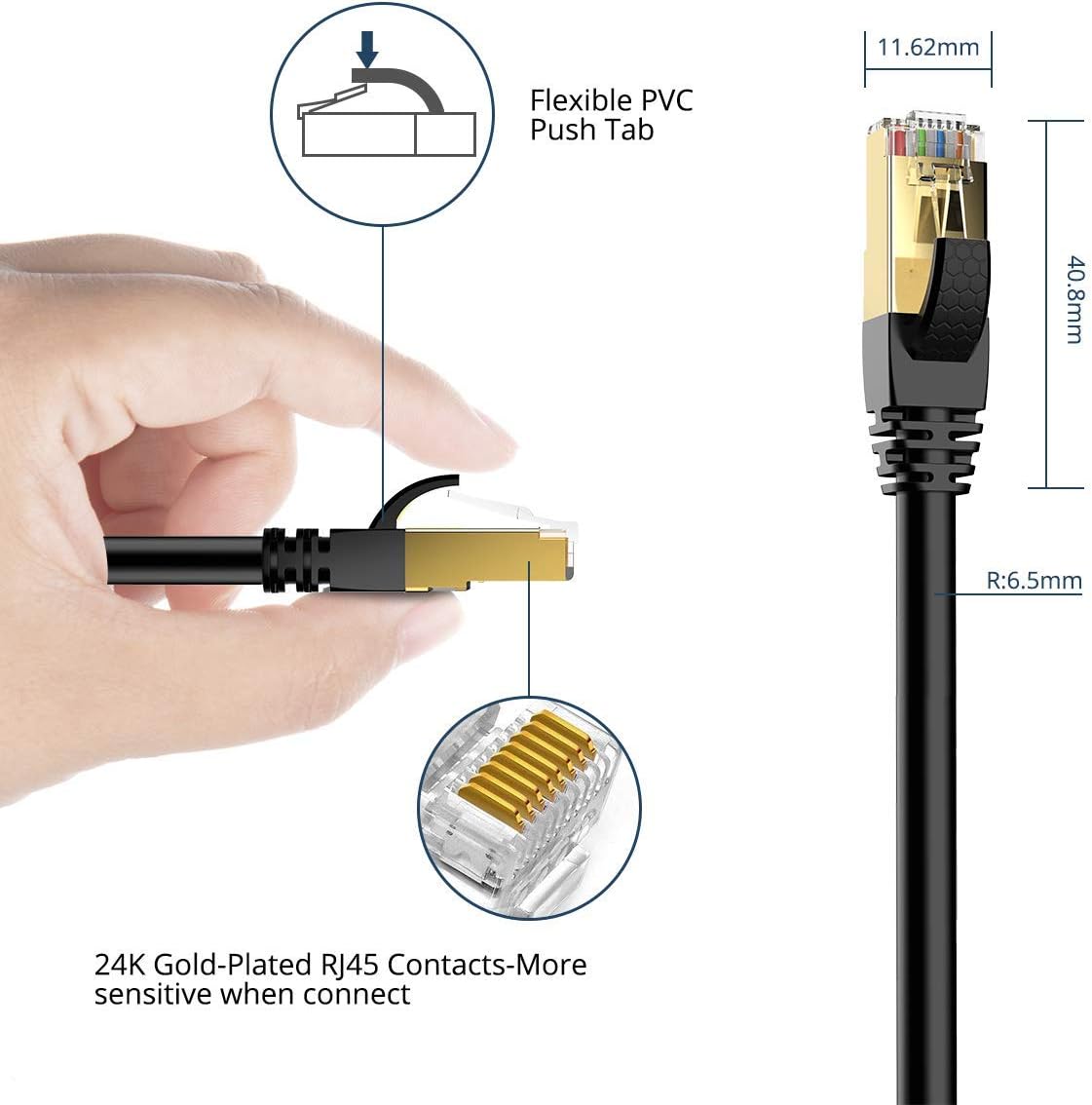
On the hardware side, the cables use gold‑plated RJ45 connectors, which are purported to improve contact reliability. The four pairs are claimed to be 100% pure copper, with shielding via Foiled Twisted Pair to curb interference and signal attenuation. The outer sheath is a relatively thick 0.8 mm PVC, described as durable and flexible, and the overall diameter is stated as 6.5 mm, aligning with the 26 AWG reference for CAT8 cabling. This is not a cosmetic claim—the design emphasises rigidity against wear while staying practical for tight networking spaces.
How it fits into a modern setup
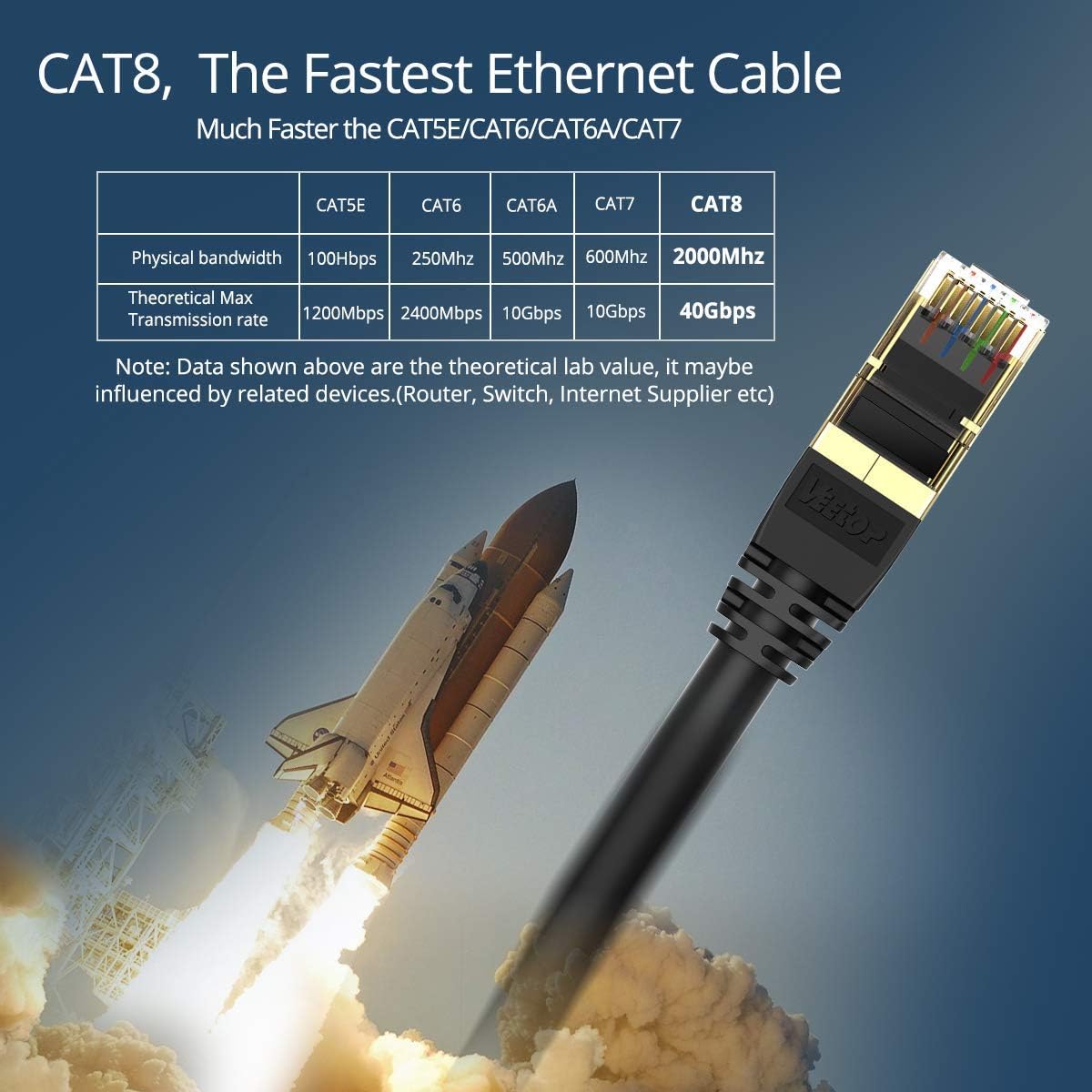
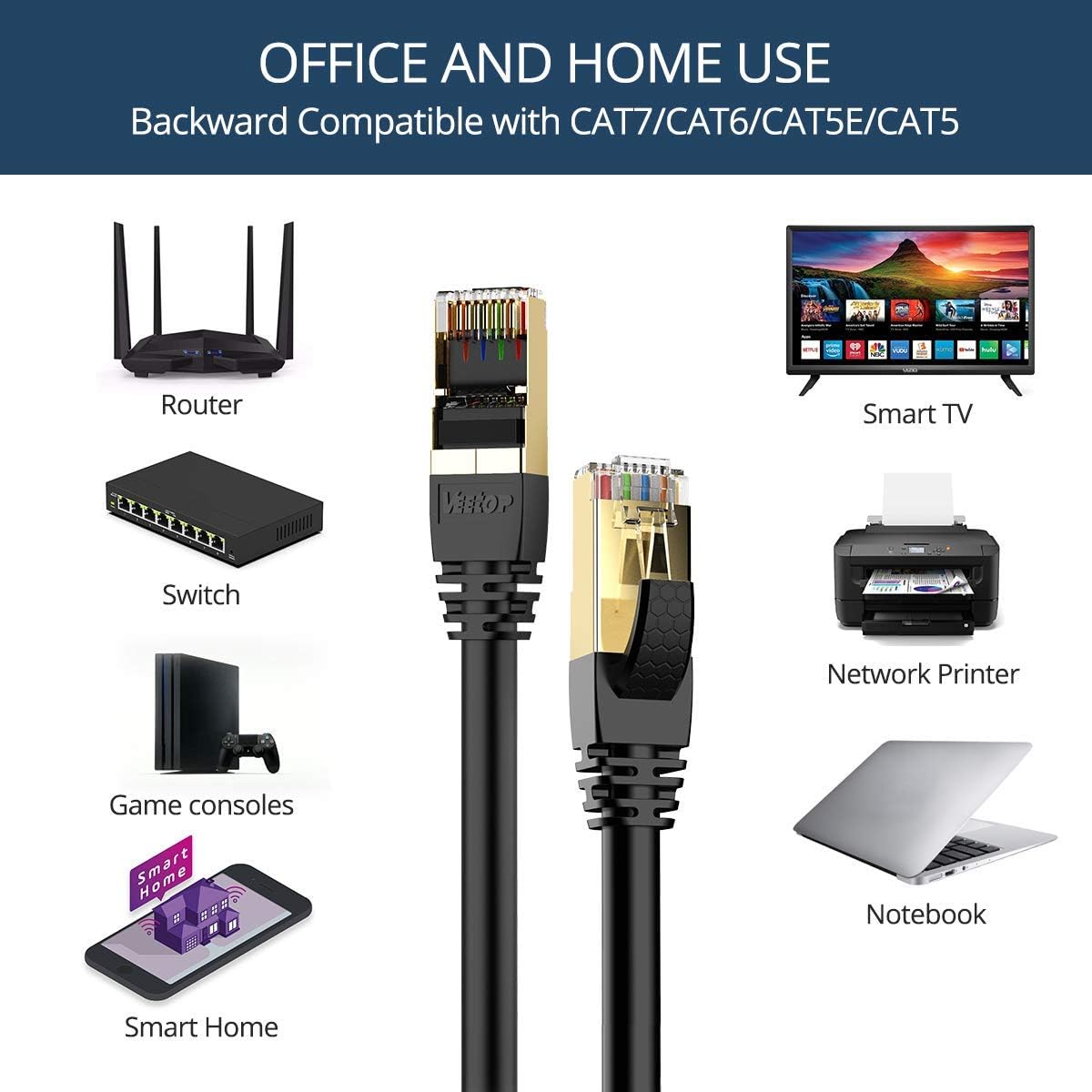
If you’re equipping a smart home or smart office, these cables are pitched as a straightforward upgrade from older Cat5e/Cat6 options. The claim is that higher bandwidth and lower interference can benefit AI devices, voice assistants, cloud services, and gaming consoles. For users with home servers, patch panels, or high‑speed data transfers, the CAT8 standard can feel tangible in terms of reduced latency and more stable throughput. It’s also pitched as suitable for gaming consoles and PC setups, where a fast, reliable wired connection can make a difference in online play and large‑file downloads.
What you might gain in daily use
In practice, you may notice smoother streaming of high‑resolution content, quicker initial data transfers, and fewer hiccups when multiple devices share the network. The shielded design is intended to mitigate common home interference from nearby wireless devices and other mains‑powered gear. The rounded, dark cable aesthetic can look tidy in a routed setup, and the 1 m length is convenient for connecting devices to nearby hubs, routers, or switches without excess slack.
When it may not live up to expectations
It’s important to keep expectations aligned with the product’s positioning. CAT8 is a premium standard, but the real-world gains depend heavily on your existing network infrastructure. If your router or switch does not support higher speeds, or if most activities on your network don’t saturate bandwidth, the perceptible difference may be modest. Also, the practical benefit of CAT8’s 2000 MHz bandwidth might be limited by other bottlenecks in your network—server response times, Wi‑Fi performance, or CPU load on connected devices. If your use case is light browsing or casual streaming on a mid‑range setup, you may not notice a dramatic step up.
Who it’s for and who should think twice
This 3‑pack targets users upgrading from older copper cables in environments where multiple high‑speed tasks occur in parallel. It’s potentially a good match for rooms with data‑heavy devices, smart assistants with local processing needs, or small office spaces that rely on reliable wired backhaul. If your gear already delivers excellent performance on Cat6a or Cat7 cables, the incremental benefit of moving to CAT8 will depend on your network load and hardware compatibility. For casual users, or those on a tight budget, it might be more sensible to assess whether a single well‑placed CAT7 or CAT6a run would suffice before investing in CAT8.
What to check before you buy
- Verify that your router, switch or NAS can support higher speeds and that the cabling path isn’t unduly long or routed through high‑interference areas.
- Consider the value of having multiple cables in a pack for a tidy, scalable setup rather than one‑offs that may force you to mix standards.
- Ensure device ports and network cards are compatible with CAT8 expectations, backward compatibility is advertised, but real gains require compatible endpoints.
- If you’re sensitive to bend radius or space constraints, confirm that the 6.5 mm diameter fits your conduit or cable routing paths.
How this compares to other approaches
In practice, upgrading to CAT8 gives you headroom for future upgrades and dense traffic scenarios, especially in environments with several high‑demand devices. If you’re weighing options, you might compare it to CAT6a or CAT7 cables: CAT8 is more robust against interference and capable of higher theoretical speeds, but the practical difference depends on whether your other equipment can push that bandwidth. For some users, a well‑constructed CAT6a run will deliver most of the benefits they need at a lower cost and without stressing compatibility.
A practical takeaway with a hint of caveat
If you prioritise a tidy setup with a clear intention to future‑proof a smart home or small office, these Veetop CAT8 cables could be worth considering. You’ll likely gain a more reliable wired backbone for latency‑sensitive tasks and large data transfers. Do keep in mind that the full benefits hinge on compatible networking hardware and the actual load on your network, in a light‑usage home, the upgrade might feel less dramatic.
Final decision: Is it worth it?
Final verdict: It’s worth considering if you intend to maximise wired network performance across multiple devices and you have the hardware to support the higher speeds. If your use is moderate or you’re unsure about your current gear’s ability to exploit CAT8 bandwidth, think about whether a CAT6a/7 upgrade would meet your needs more cost‑effectively. This pack is particularly appealing for those assembling a neat, future‑proofed wired network or for smart homes and offices that demand stable connection for multiple high‑demand devices.
Quick FAQ
- Do these cables work with standard routers? Yes, they are backward compatible with Cat5e/Cat6/Cat6a/Cat7 sockets.
- Will I notice a difference with gaming or streaming? In theory yes, if your setup already supports higher speeds, outcomes depend on your overall network and devices.
- Are the cables durable for everyday use? The construction emphasises shielding and a rugged outer sheath, but longevity will still depend on routing and handling.
- Is 1 m length enough for a typical desk setup? For most desk to router or switch connections it’s convenient, larger rooms may require longer runs.