

Satechi 90° Right Angle USB‑C to USB‑C Cable (240W PD, 20Gbps, 4K@60Hz) – 1m Braided, Black
Product description
The essentials
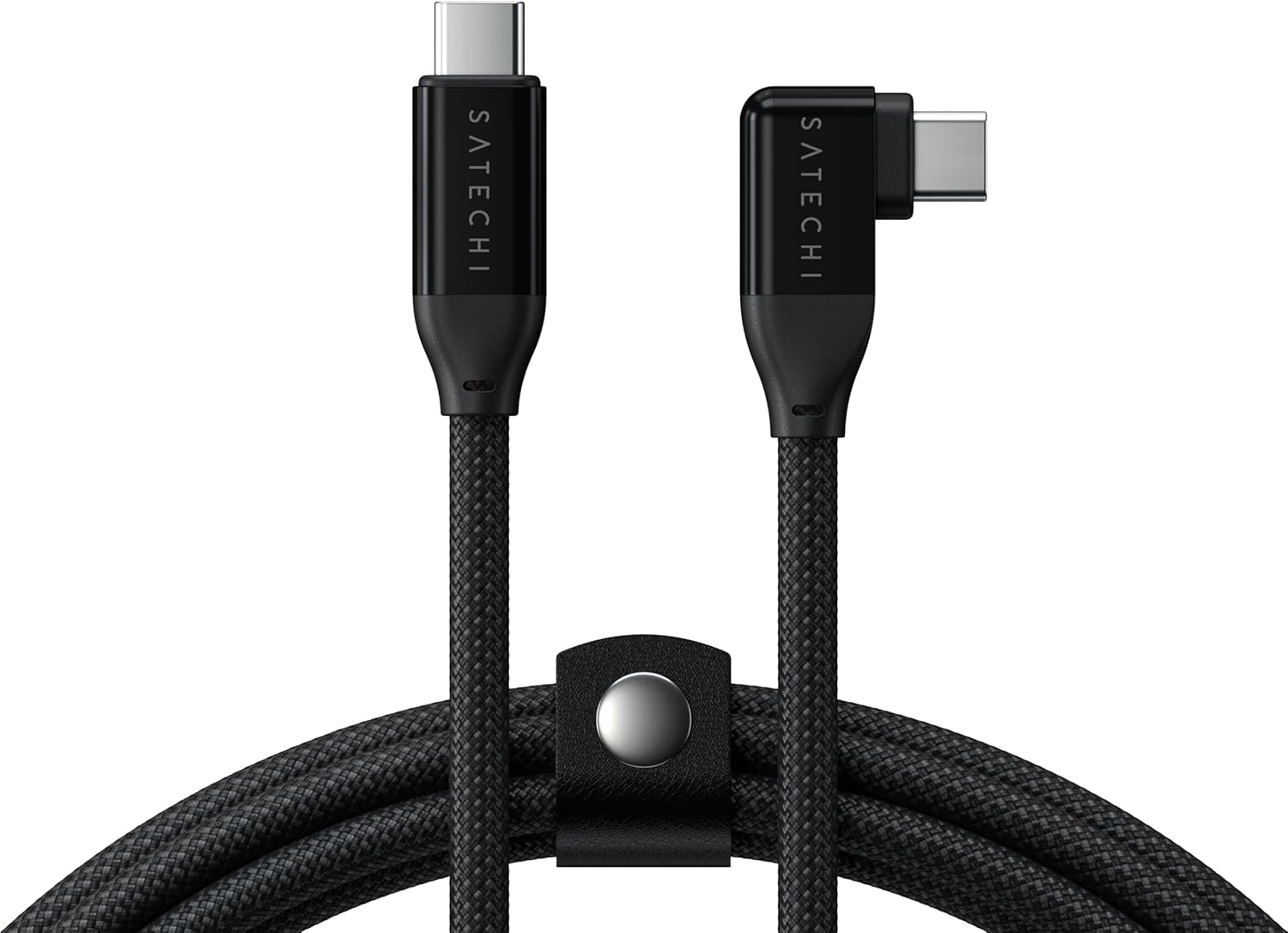
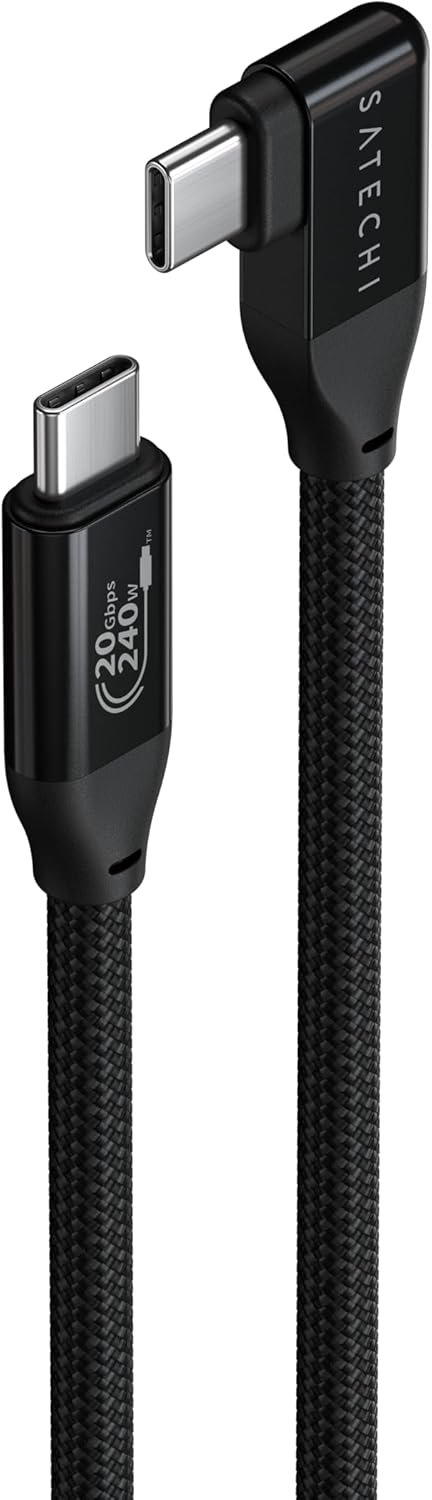
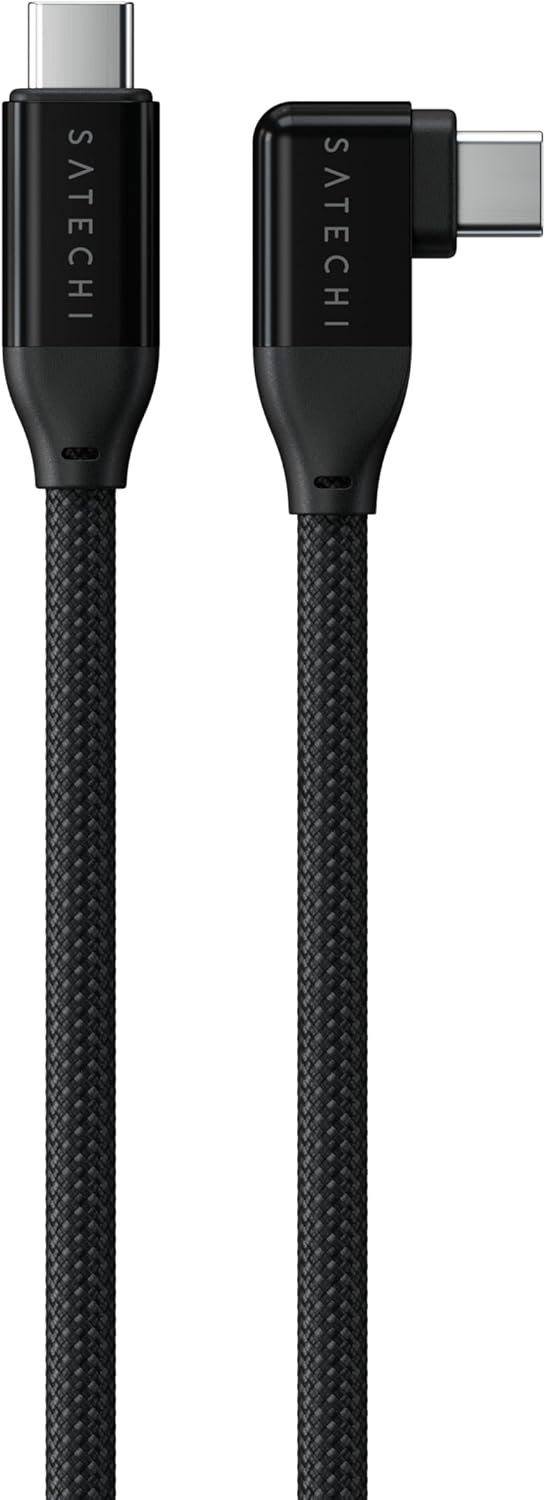
If you’re fed up with USB‑C cables that end up kinked, stressed, or awkward to plug in behind a laptop or in a tight desk corner, a right‑angle connector can be a proper fix. The Satechi 90° Right Angle USB‑C to USB‑C Cable is built for that exact kind of everyday friction: it uses a 90‑degree USB‑C connector, runs at a 1m length, and is designed to handle both charging and data/video.
On paper, it’s aimed at higher‑end USB‑C users who want more than basic charging—especially for laptops/tablets/phones that support USB‑C Power Delivery and where you also care about fast syncing and display output. The cable’s braided, tangle‑resistant style is another part of the pitch: it’s meant to stay out of your way rather than get frayed or messy after regular use.
It’s not magic, though. A cable can’t “force” compatibility if your device or port doesn’t support the relevant power, transfer rates, or video modes—so it’s worth checking that your devices actually support what you’re trying to do.
What matters most in daily use
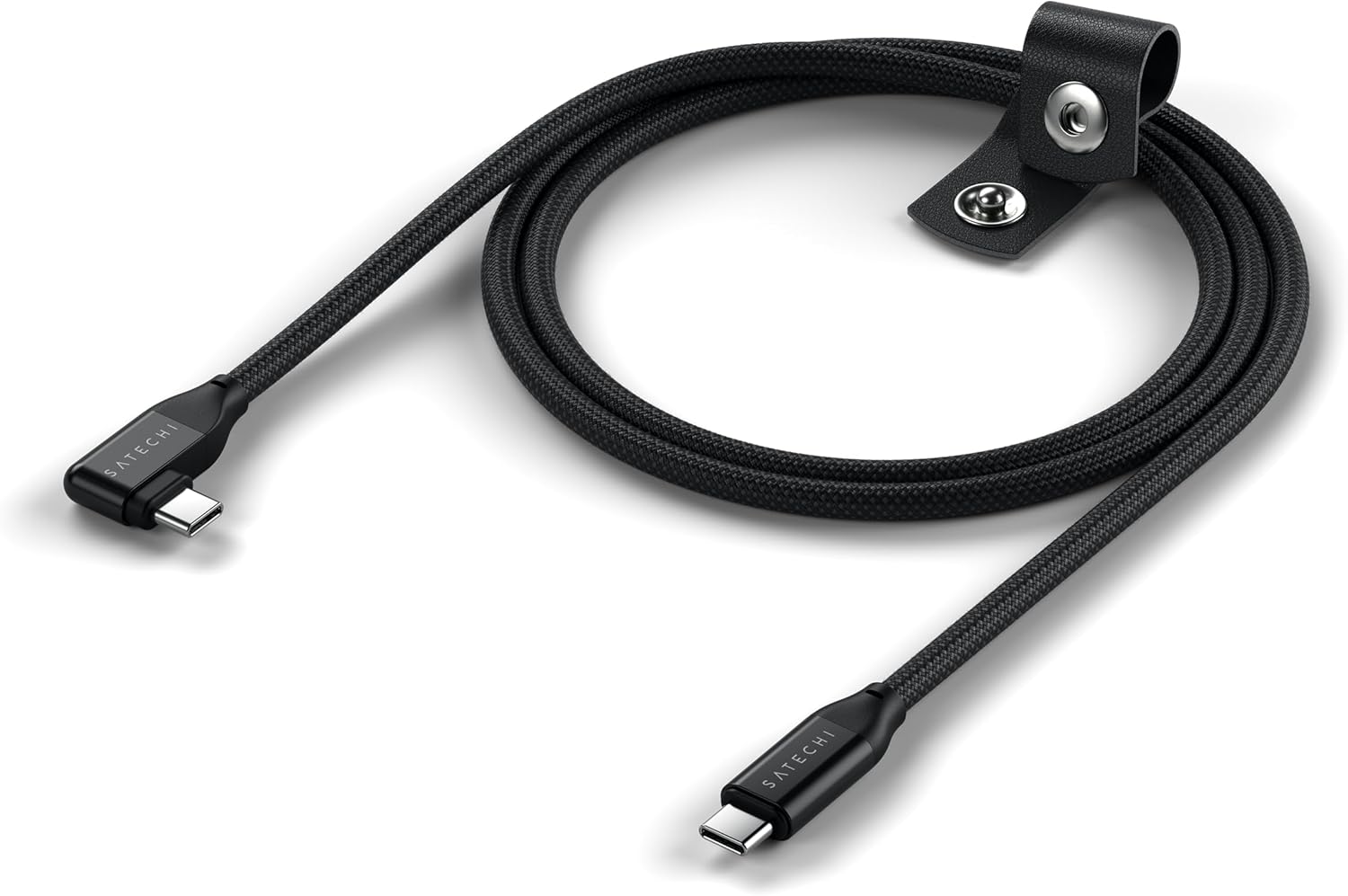
The headline differentiator here is the 90° connector. In practice, that tends to help when: - your laptop sits close to a wall, dock, or cable channel - you’re using the device on a desk setup where straight plugs get bumped - you’re mounting or gaming in a way that makes cable access awkward
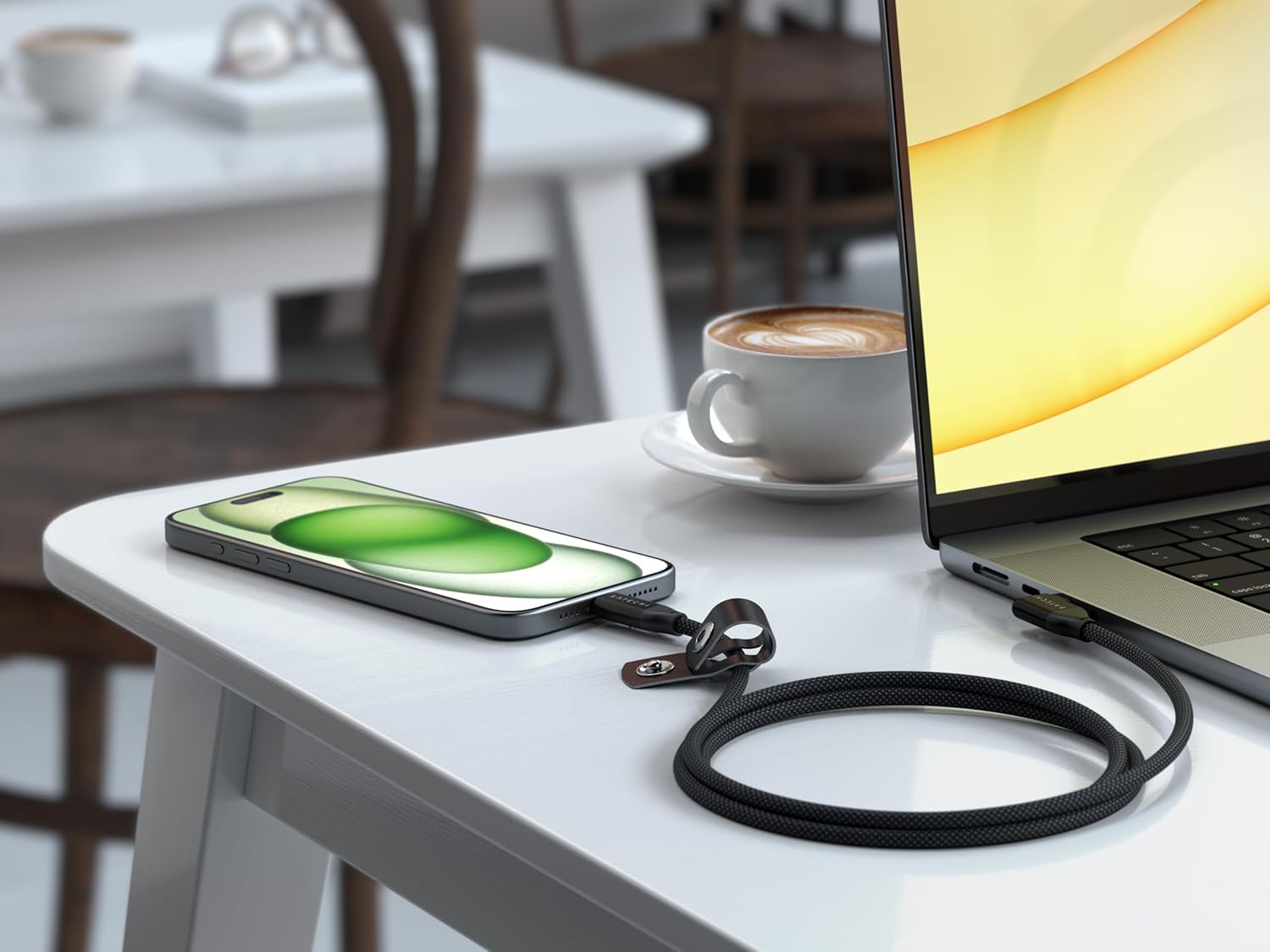
There’s also a real advantage in having one cable that’s designed to cover charging plus high‑speed transfer and video output. If your routine is “charge + sync + sometimes mirror a screen”, using a single USB‑C link is cleaner than mixing cables for different jobs.
For a quick micro‑scenario: imagine you’re transferring a folder from a USB‑C device to a laptop before a commute. With this cable positioned at the right angle, it’s less likely to get pulled or bent as you route it behind the laptop, and the faster transfer specification is there to support that workflow (assuming your devices negotiate those speeds).
Charging, data transfer and video output (the useful bit)
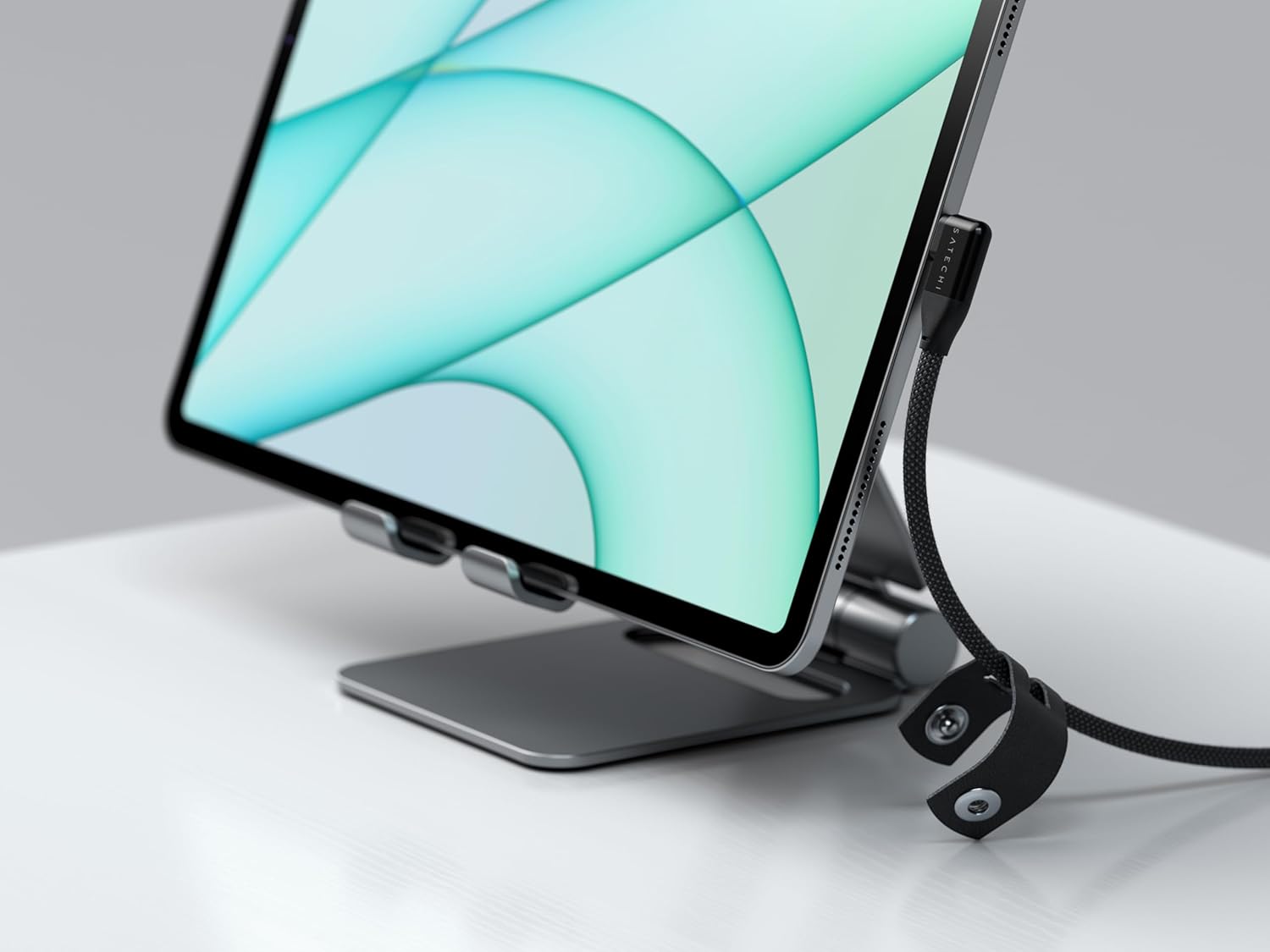
This cable is specified to support up to 240W Power Delivery, which is geared towards higher‑power USB‑C devices like laptops and tablets, not just small phone charging. It’s also described as supporting 20Gbps data transfer and 4K video output up to 60Hz.
What that means for buying decisions: if you’re trying to avoid running multiple cables—one for power and one for media/data—this is designed to be a “one‑cable” approach. If you only ever charge a phone from a low‑watt USB‑C adapter, you might find it overkill, and a simpler cable could do the job just fine.
Also keep expectations grounded: the cable can support these capabilities, but the actual performance still depends on the device, charger, and the ports you’re using.
Where it shines, and where it may not
Where it shines is flexibility under normal desk life: tighter plug access thanks to the 90° design, and a braided build that’s meant to handle everyday handling without turning into a tangled mess.
It may not be the best choice if you: - only need a basic USB‑C charging lead for low‑power devices - want a cable that’s extremely short for ultra‑minimal setups (this one is 1m) - are expecting guaranteed maximum 240W / 20Gbps / 4K@60Hz on every device just because the cable supports it
In other words, it’s a solid “do more in one cable” option, but it still lives within the limits of what your devices can actually negotiate.
Key specifications (at a glance)
- Name: Satechi Right Angle USB‑C to USB‑C Cable, 90 Degrees
- Type: USB‑C to USB‑C cable
- Power Delivery (PD): up to 240W
- Data transfer: up to 20Gbps
- Video output: 4K@60Hz
- Cable length: 1m/3.3ft
- Connector style: 90° right angle
- Cable material: braided
- Colour: Black
Compatibility and requirements (so you don’t get surprised)
The listing positions this cable for USB‑C devices in general, including laptops and tablets, and it explicitly mentions support for devices such as iPhone 17 series, iPhone 15 series, MacBook M5 and M4, iPad, and other USB‑C laptops/tablets/phones. It also frames the idea as broad USB‑C compatibility.
Still, two practical checks before you buy: confirm your charger and devices can support the power level you want, and make sure the device you’re connecting supports the video and transfer capabilities you’re aiming to use. If not, the cable will still work as a USB‑C cable, but you may not see the “top end” behaviour.
Should you buy it?
It makes sense if you want a single USB‑C cable that’s designed for higher‑power charging plus fast data transfer and 4K video output, and you specifically prefer the convenience of a 90° plug in tight spaces.
You may want to skip it if your use is simple phone charging, you don’t care about data/video performance, or your setup needs a very different cable length/connector arrangement.
Worth noting: if you prioritise cable manageability and access (rather than just having any USB‑C lead lying around), the right‑angle + braided approach is a sensible match for everyday desks and more “busy” setups.
Frequently asked questions
FAQ
Is a right‑angle USB‑C cable really useful?
For close‑quarters setups, yes. The 90° connector can reduce strain from awkward straight‑plug routing, especially when space is tight behind a laptop or dock.
Will I definitely get 240W charging and 20Gbps transfer?
This cable is specified to support those figures, but the real-world outcome depends on your charger, device ports, and what they negotiate.
Does it support 4K output?
It’s specified to support 4K video output up to 60Hz. Again, your connected device needs to support the same capability for you to benefit.
Is it good for everyday charging and syncing?
That’s the intended use. The combination of high‑power PD support, fast transfer capability, and a braided design makes it more convenient than running separate leads.
What’s the warranty like?
The listing states it includes customer support and a user manual, and that it’s covered by a 2‑year limited warranty against defects in materials and workmanship under normal use.