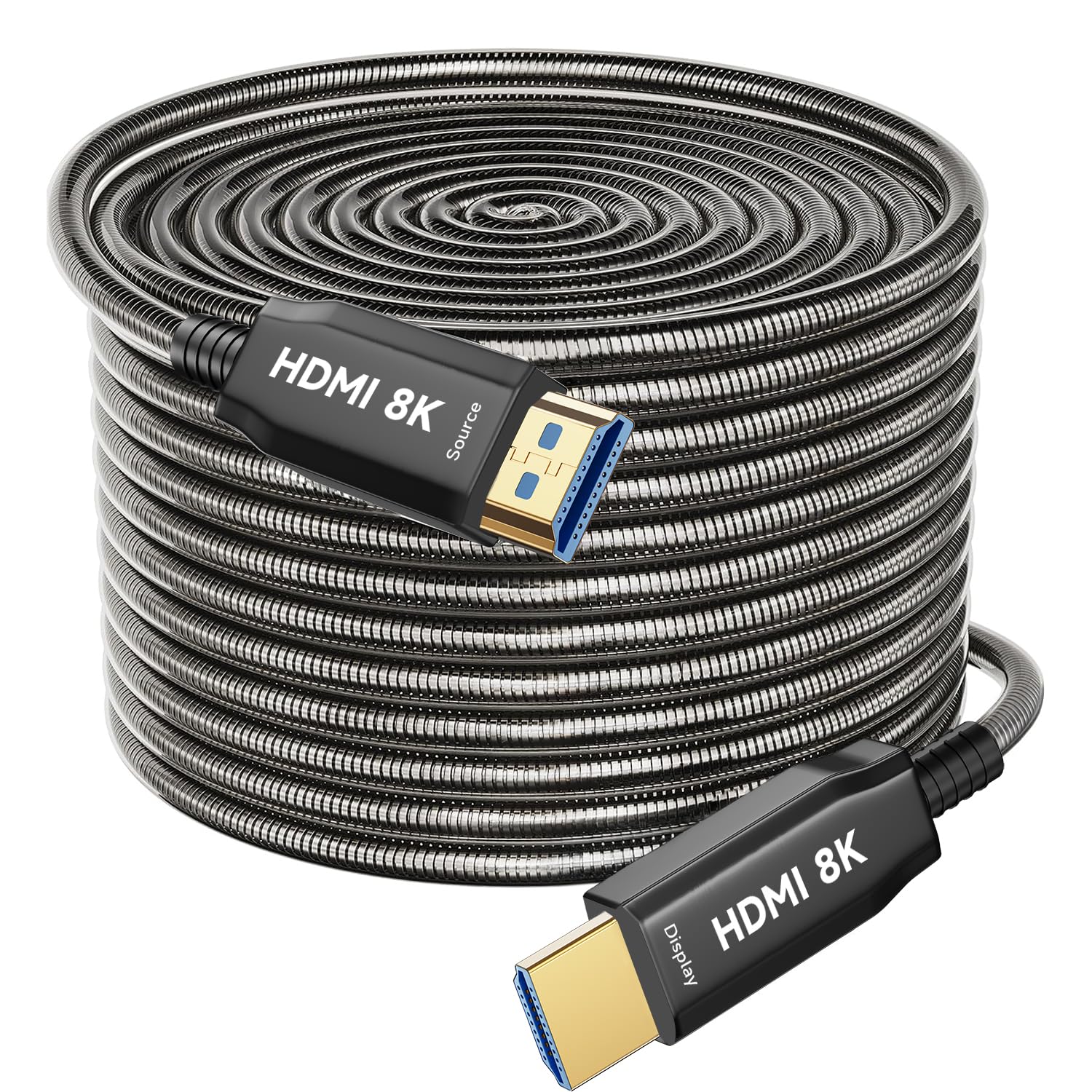
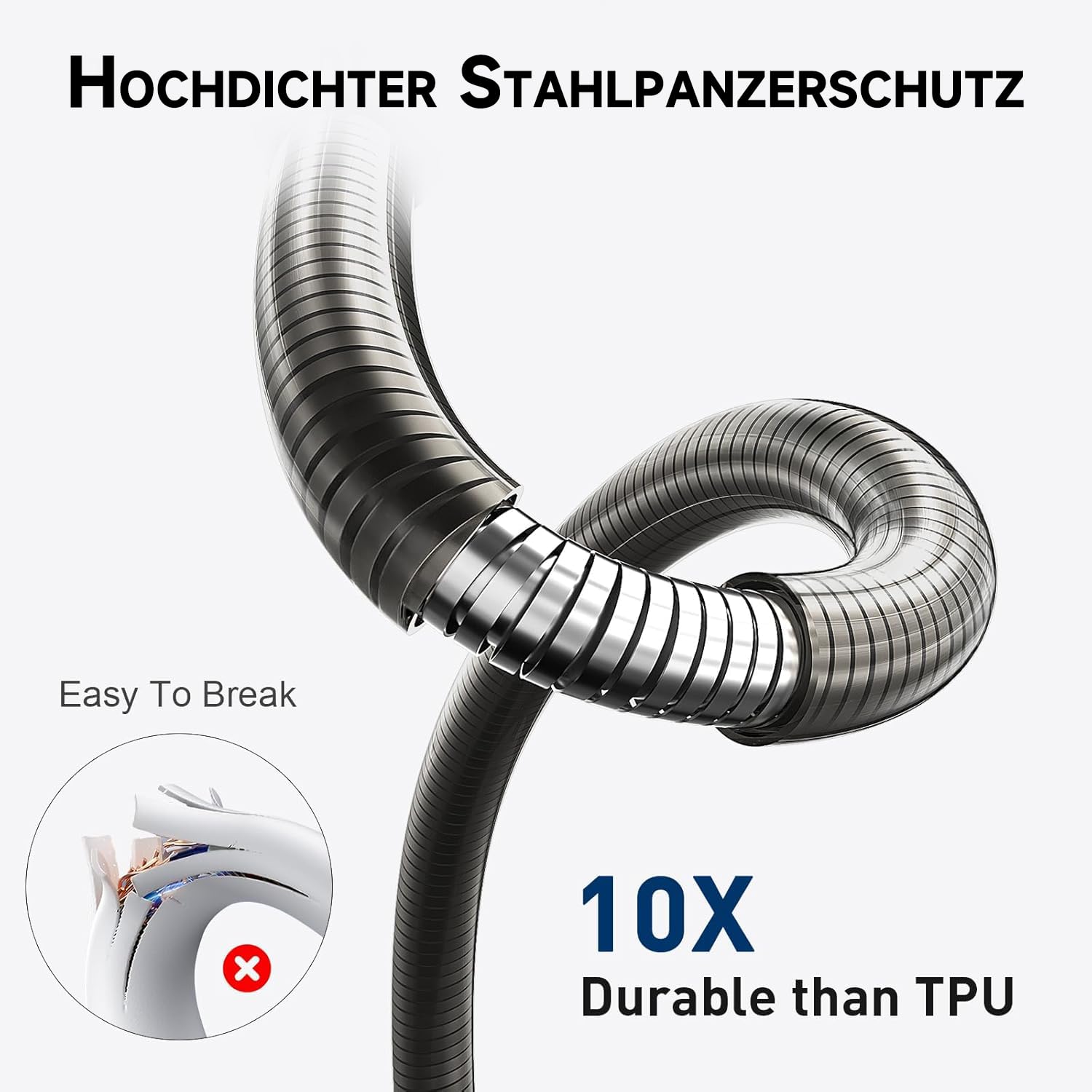
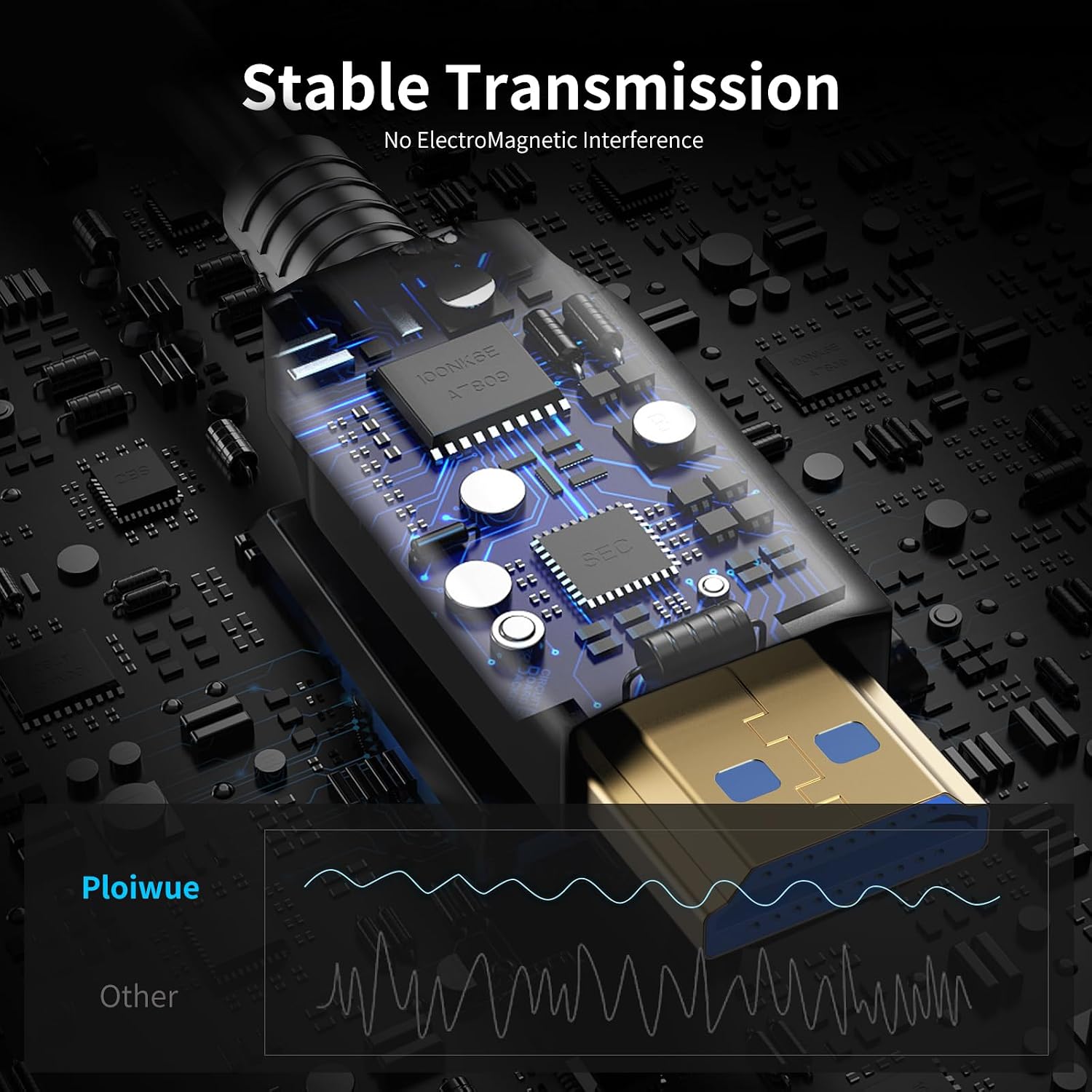
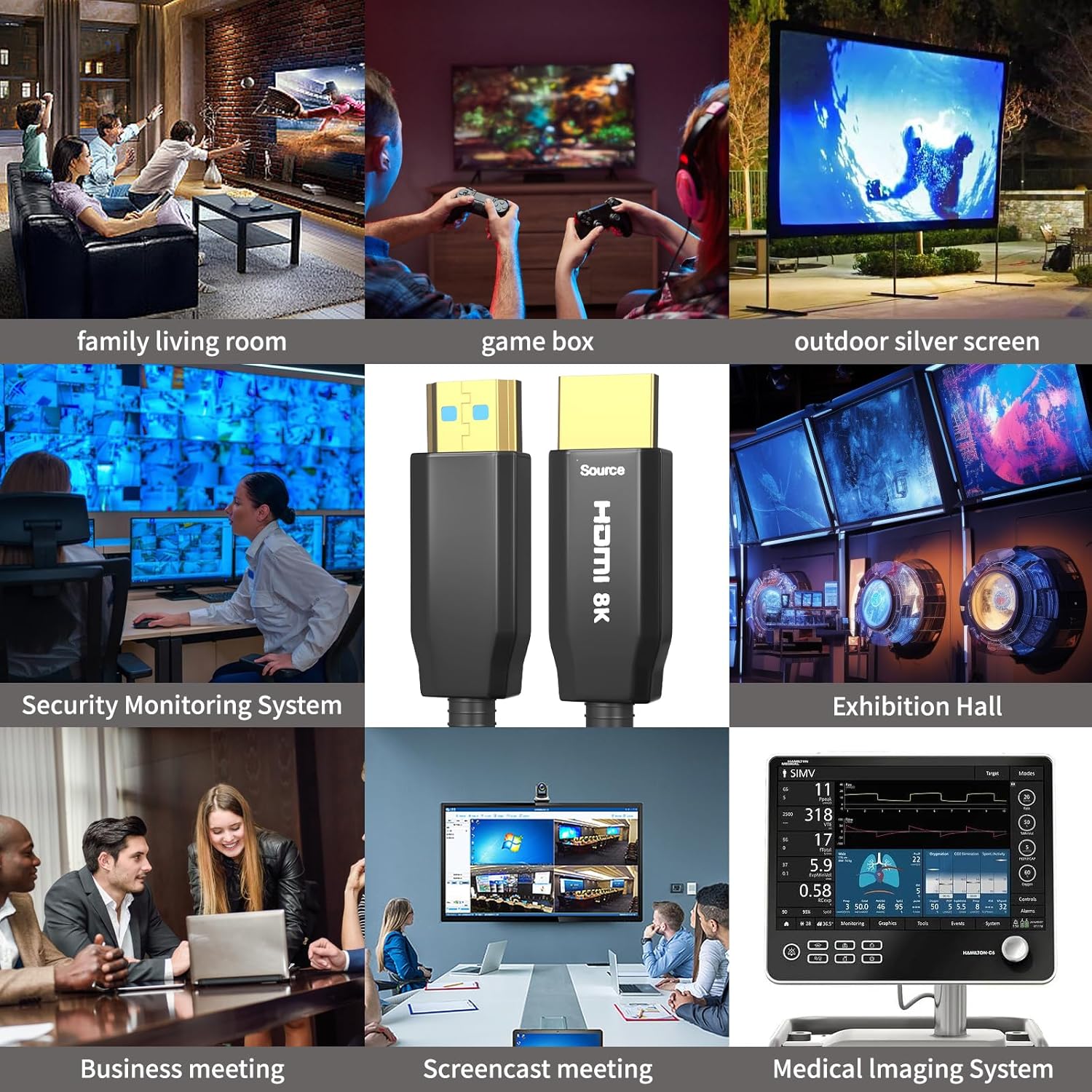
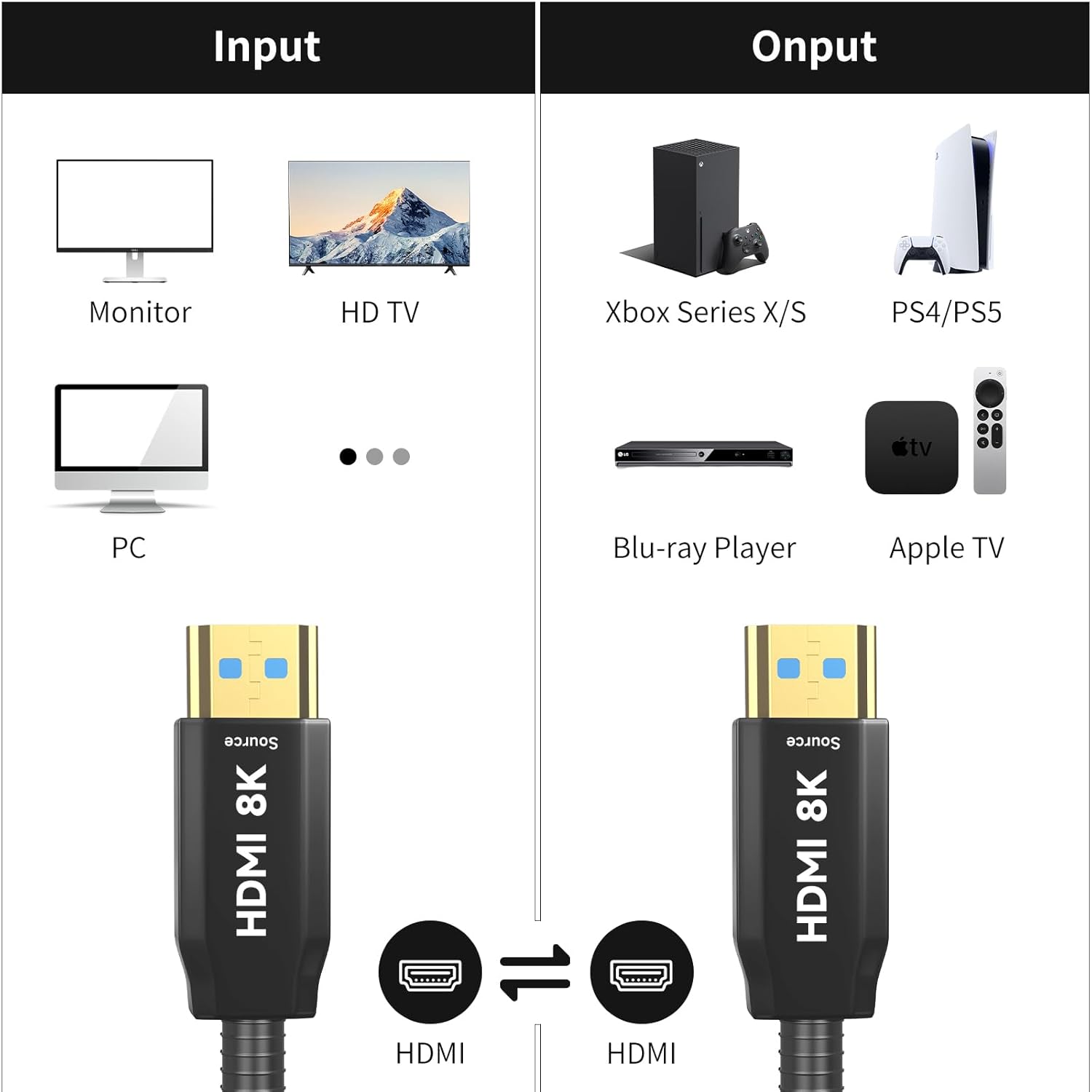
What it is and what it aims to fix\nThe Ploiwue optical fiber HDMI cable is designed to deliver high-bandwidth video and audio over longer distances than traditional copper HDMI cables. Built as an Active Optical Cable (AOC), it transmits an HDMI 2.1 signal using four-core optical fibres, with stainless steel armour for durability. On paper, this combination targets setups where reliability and resistance to interference are important, such as home theatres, projectors and long runs through walls or enclosures.\n\n## How it works and what that means in practice\nThe cable uses high-performance conversion chips at both ends to convert electrical HDMI signals to optoelectronic signals and back again. This helps to minimise electromagnetic interference and allows for longer distances without the usual signal degradation. The result should be a cleaner image and fewer dropouts when you’re running cables through walls, ceilings or public areas. It is essential to note the directionality: one end is SOURCE and the other is DISPLAY, so installation must follow the intended flow from source devices (laptops, Blu-ray players, set-top boxes, etc.) to display devices (TVs, monitors, projectors).\n\n## What you’ll notice in use\n- Picture quality: HDMI 2.1 with 48Gbps bandwidth supports 8K at 60Hz and a higher fidelity across compatible content. This is particularly relevant if you’re aiming for a sharper, more immersive home cinema or gaming experience.\n- Distance and stability: claimed to support up to 100 metres without noticeable delay or attenuation, making it a practical choice for long runs in pre-wiring or detailing in architectural installations.\n- Durability: stainless steel reinforced armour offers improved tensile and environmental protection, which may be beneficial for concealed or outdoor-facing installations.\n- Interference resistance: the optic transmission reduces cross-talk and electromagnetic interference common with high-frequency HDMI signals.\n\n## Pros and potential drawbacks\nPros: strong data rate on paper, long-distance capability, robust casing, and designed for modern high-bandwidth uses. It can be a sensible choice if you’re wiring for a home theatre or a multi-room setup where runs exceed standard copper cable lengths.\nCons: as with any fibre-based HDMI solution, it requires correct orientation and careful installation. If you’re not planning a long run or a project that truly needs 8K at high frame rates, the benefits may feel less pronounced. Also, the boundary between “up to 100m” claims and real-world performance can depend on installation conditions and source compatibility.\n\n## Who it’s for\n- Home theatre enthusiasts looking to future-proof HDMI wiring for 8K content.\n- People installing long runs through walls, ceilings or outdoor-friendly enclosures where traditional copper HDMI would be limited.\n- Users needing a robust, interference-resistant connection for gaming consoles, streaming boxes or PCs that push higher bandwidth.\nNot ideal for casual TV watching over very short distances where a standard HDMI cable already meets your needs.\n\n## When it makes sense to buy\nIf your setup requires long cables, durable protection, or you’re aiming to minimise interference in a high-frequency environment, this cable aligns with those needs on paper. It’s worth considering if you plan to run installation cables during build work or want a future-facing option for 8K content and gaming.\n\n## What to check before buying\n- Confirm your display and source devices support HDMI 2.1 and 8K at 60Hz to realise the stated bandwidth.\n- Verify the direction of the cable (SOURCE to DISPLAY) for your devices.\n- Assess whether your installation context benefits from the stainless steel armour and outdoor-ready claims, especially for long runs or pre-embedded wiring.\n- Keep expectations realistic: real-world performance depends on the entire signal chain, not just the cable.\n\n## Acknowledged comparison and context\nCompared with standard copper HDMI, this solution emphasises distance, EMI resistance and potential durability in challenging installs. It is not a universal upgrade for all setups, for short, straightforward HDMI connections, a high-quality copper cable may suffice and often be simpler to install. If you’re weighing options, think about the run length, whether you’ll be embedding cables in walls or exposing them to environmental factors, and whether your content truly utilises 8K/HDMI 2.1 bandwidth.\n\n## FAQ (practical questions you might have)\n- Do I need any special equipment to use this cable? The main requirement is that your source and display support HDMI 2.1, beyond that, install with correct orientation (SOURCE to DISPLAY).\n- Will it improve every movie or game? You’ll only gain if both the content and devices push 8K/60Hz and you have the appropriate display. For standard HD or 4K content, you may not notice a dramatic difference.\n- Can I run this outdoors or in a wall cavity? The stainless steel armour claims added protection, but always follow local building and safety guidelines for concealed or outdoor wiring.\n\n## Decision time: Is it worth it?\nIt makes sense if you need a robust, long-distance HDMI link capable of supporting 8K content and you value resistance to interference and environmental factors in a fixed installation.