

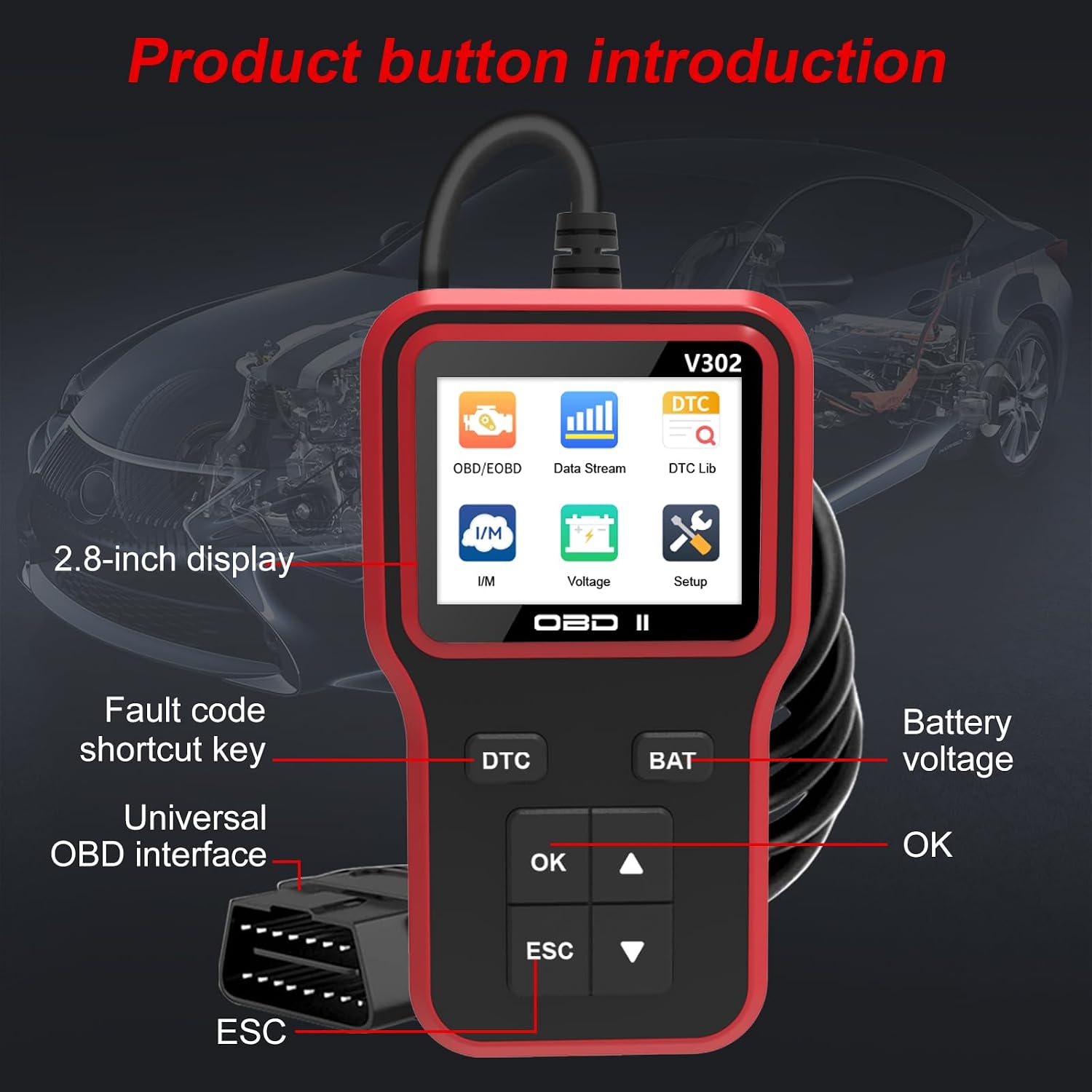
OBD2 Car Fault Code Reader (Wired) V302 for 1996+ OBD-II Vehicles — Live Data, Freeze Frame & EVAP Test
Product description
What it is (and why you’d want one)
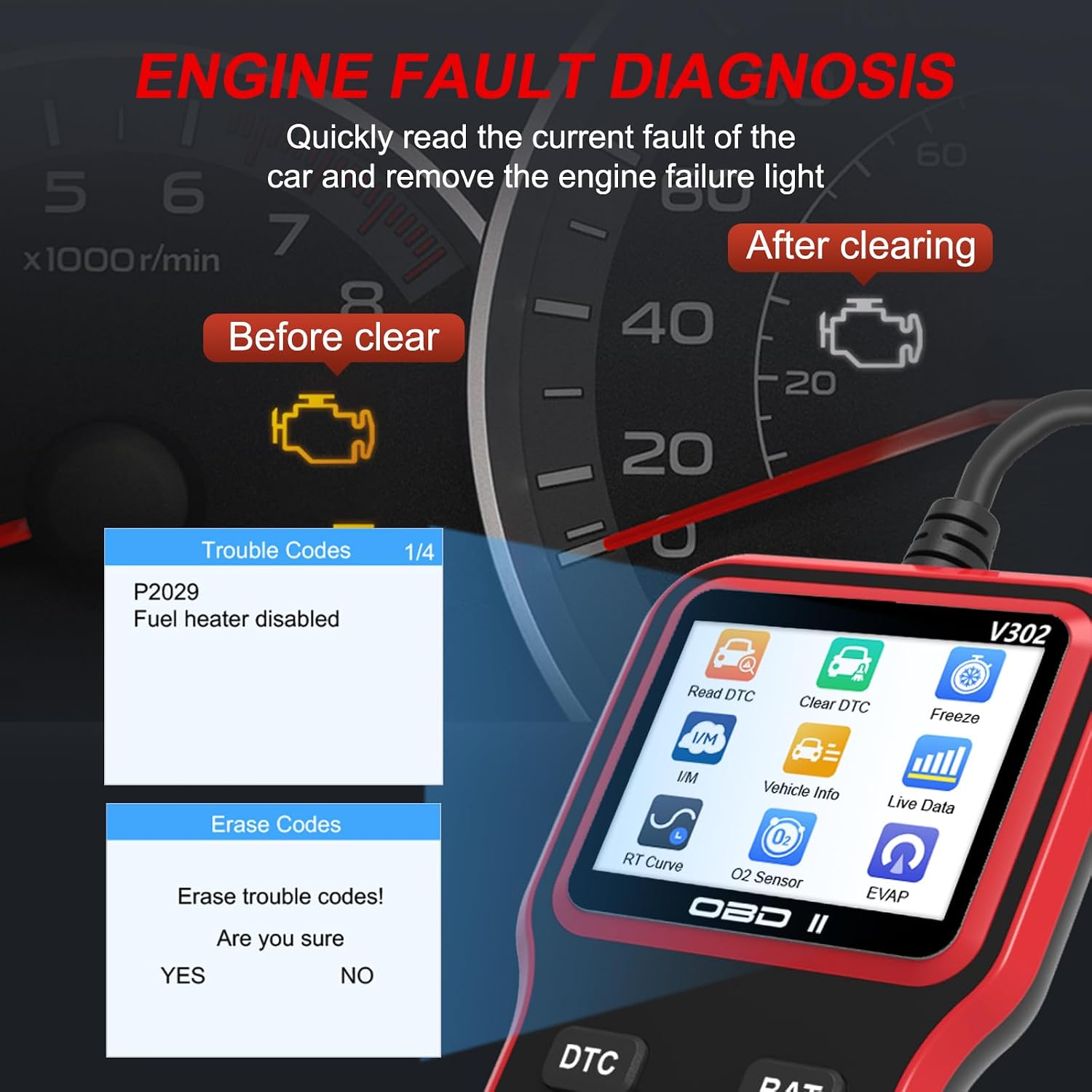
A wired OBD2 diagnostic scan tool like this is aimed at one main job: helping you understand why the Check Engine light has come on, then clearing the fault codes once you’ve addressed the underlying issue. On paper, it’s the kind of tool you keep in the car-gearbox (or home garage) so you’re not stuck guessing or relying purely on a mechanic’s quick verbal diagnosis.
This model is positioned as a general-purpose reader for OBD-II cars, with support for viewing freeze frame and live data, plus I/M readiness and monitor-style checks that link into smog/emissions testing workflows.
Key takeaways
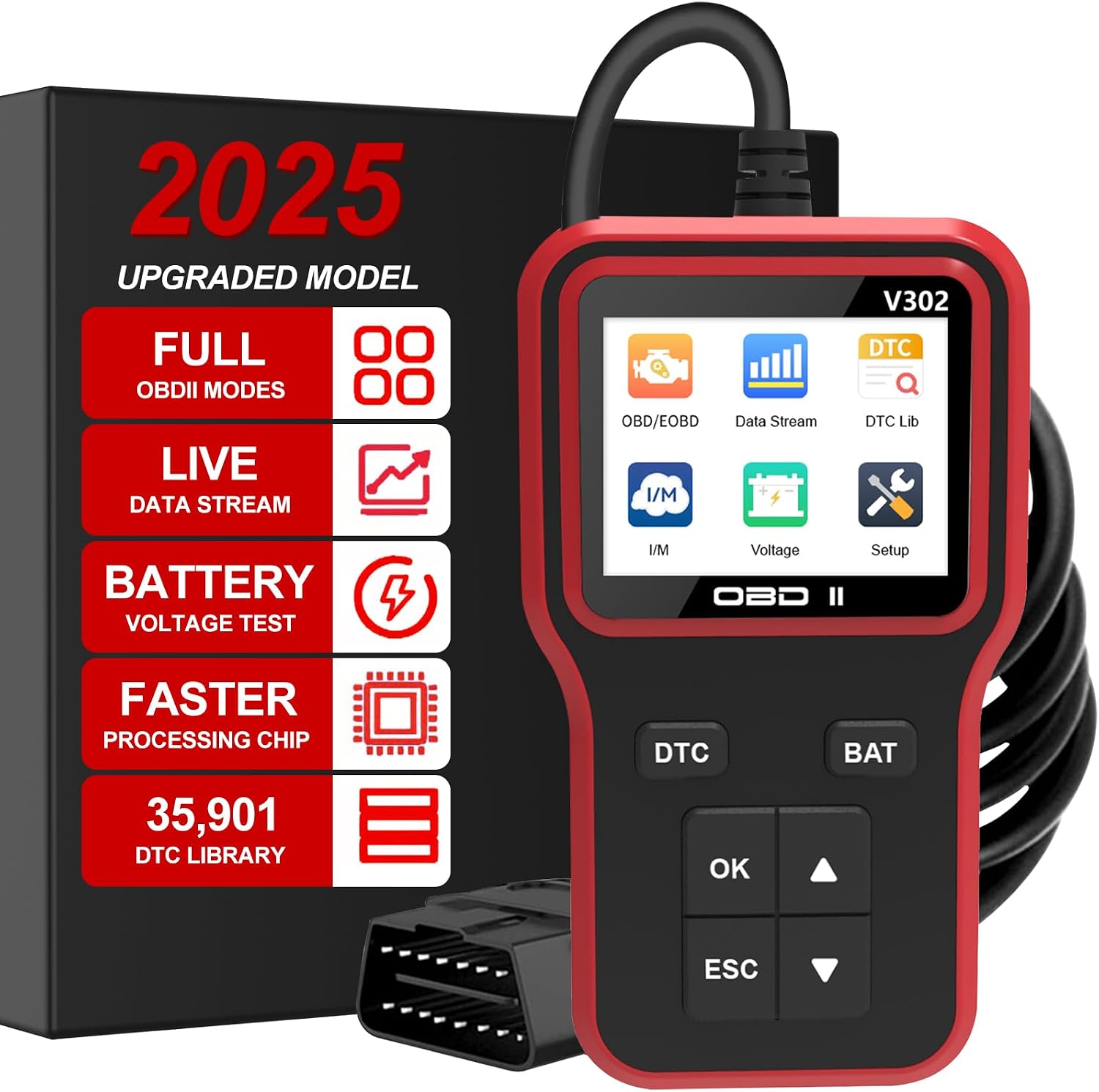
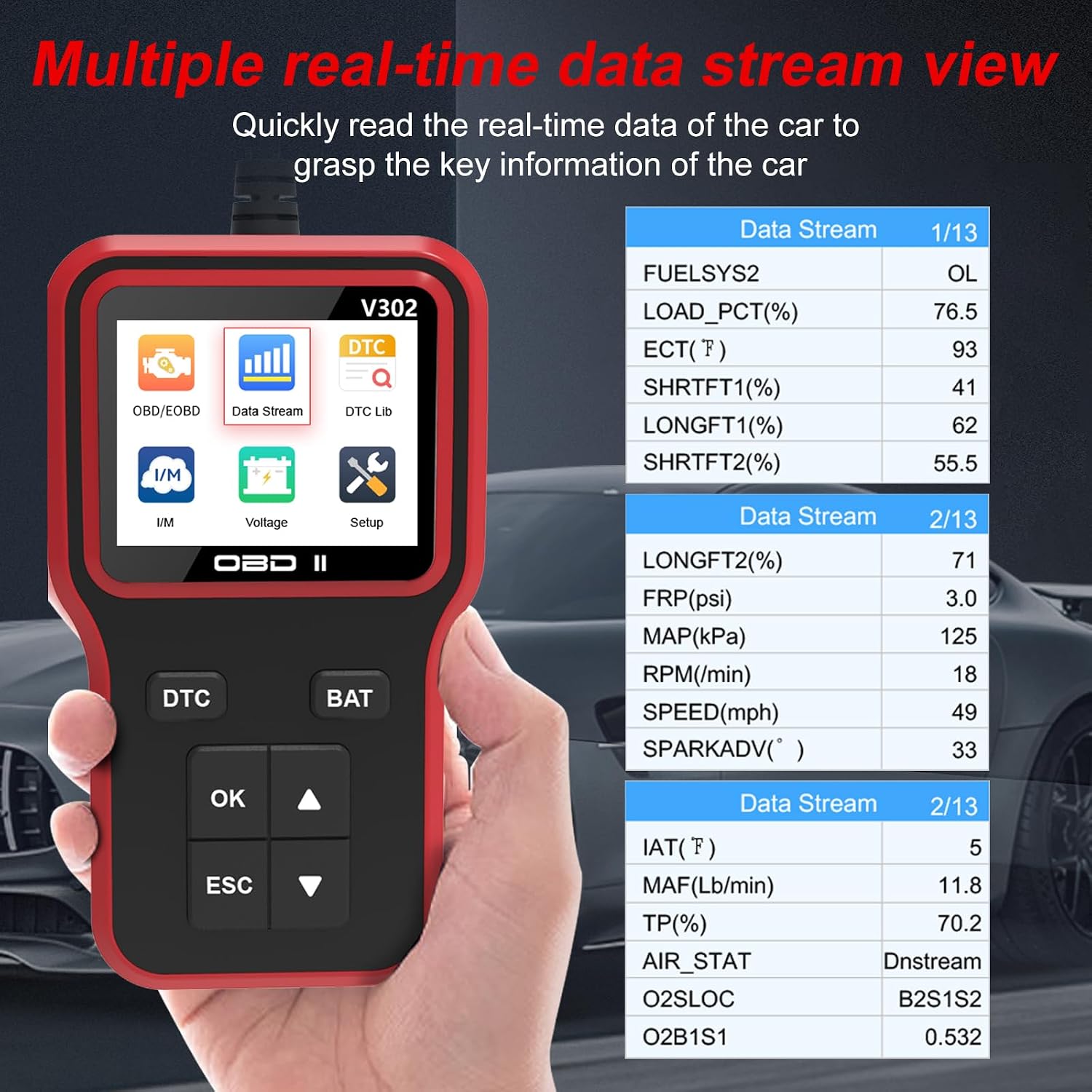
The practical “worth it” angle here is that it combines several useful readouts in one wired unit: diagnostic trouble codes, freeze frame information, and live data such as engine coolant temperature and engine speed. It also includes functions that go beyond just reading codes, like I/M readiness and an EVAP system test. If your priority is quick, at-home insight when warning lights appear, this ticks more boxes than a basic code-only reader.
That said, it’s not a substitute for deeper fault-finding tools if you’re chasing complex drivability issues or intermittent faults. A reader can point you in the right direction, but it can’t guarantee the exact cause every time.
Tech summary
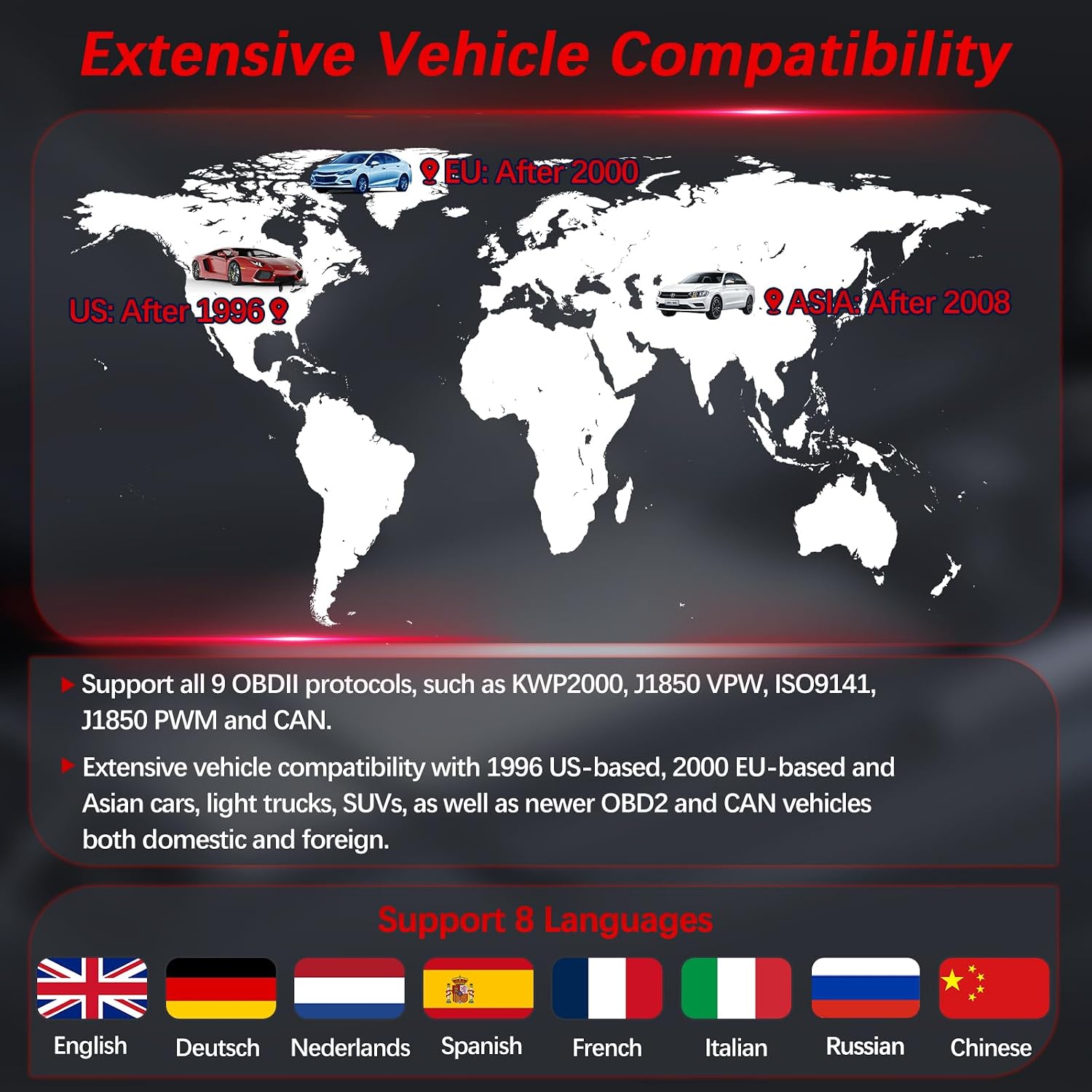
- OBD-II protocol support: KWP2000, J1850 VPW, ISO9141, J1850 PWM and CAN
- Support: 9 OBDII protocol vehicles (as described: broadly 1996 US-based and 2003 EU-based/Asian cars with newer OBD II & Can vehicles)
- Display: clear LCD screen
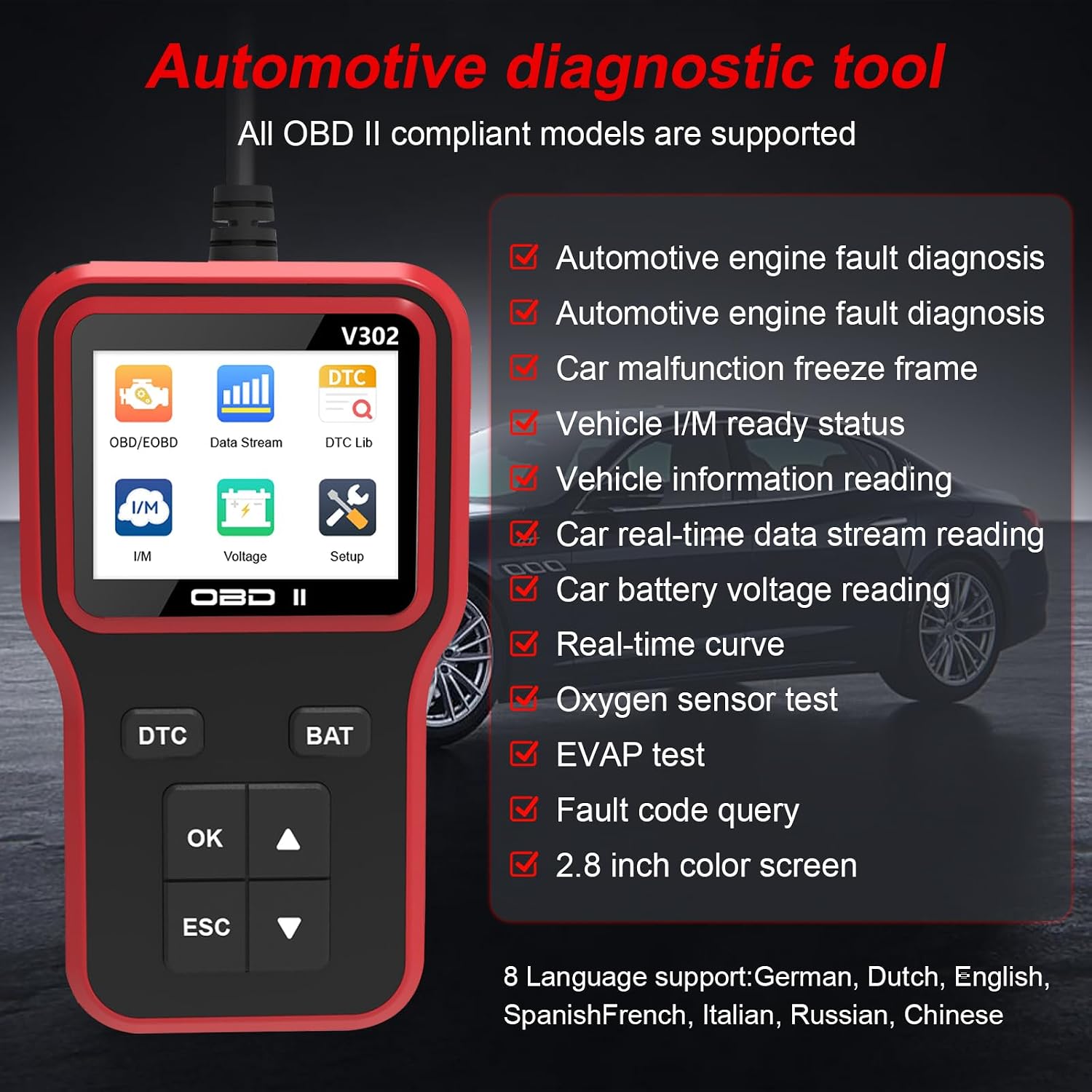
- Power: directly from the vehicle via the OBDII 16-pin Data Link Connector (no batteries or charger required)
- Read/clear functions: read and erase diagnostic trouble codes
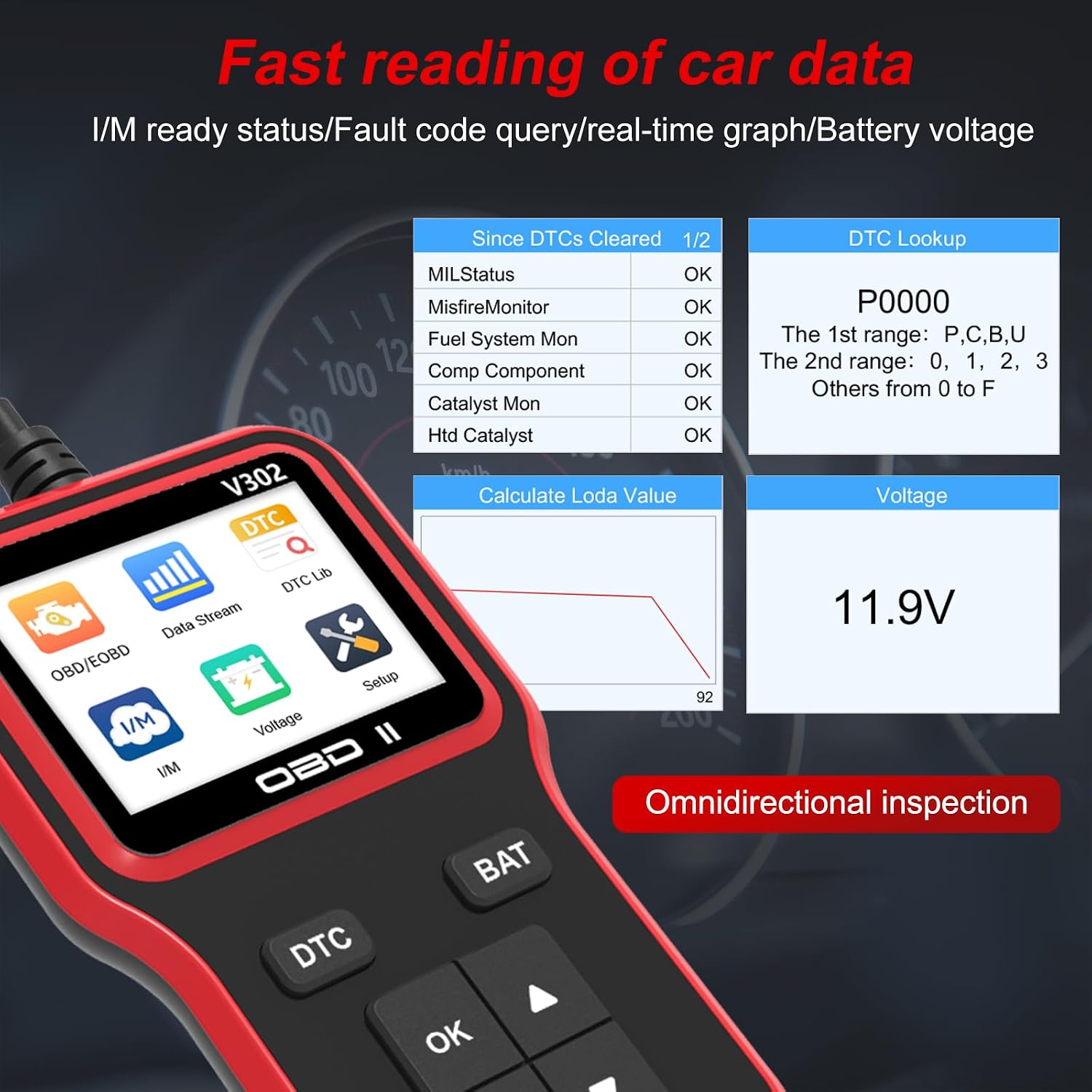
- Extra diagnostics shown: freeze frame, I/M readiness, vehicle information, and data flow
- On-board monitor test support (as described)
- Live data examples mentioned: engine load value, engine coolant temperature, engine speed, Battery Voltage, plus a Battery Life Test
- EVAP: includes EVAP system testing (as described)
- Emissions testing help: includes vehicle-specific monitor checks (examples mentioned include misfire, fuel system, comprehensive component, oxygen sensor heater, EVAP)
- Vehicle ID details: VIN and calibration-related information (including Calibration ID(s), CVNs)
- Languages: English, Spanish, German, French, Dutch, Ltalian, Chinese, Russian
- Model mentioned: V302
What you’ll notice day to day
The wired design is the most immediately noticeable thing. With no need for batteries, you’re less likely to have a “dead device” moment—connect it, turn the ignition on, and the tool gets its power from the OBD2 port.
A realistic micro-use example: say your Check Engine light comes on while you’re commuting. You plug the scanner into the 16-pin connector, power the ignition, read the stored codes, then check freeze frame to see what conditions were happening when the fault triggered (as described). If you’ve made a repair (or replaced a part) you can also clear the codes and then use I/M readiness or monitor checks to see what’s still pending.
Where it shines (and where it doesn’t)
Where it shines: - You want faster “first pass” diagnosis at home when warning lights appear. - You care about emissions test readiness and monitor-style checks that can help avoid surprises when you’re due for an annual test. - You want more than just a plain code read—freeze frame, live data and vehicle information are included (per the description).
Not the best choice if: - You expect this to behave like a specialist diagnostic system for advanced troubleshooting. It’s still a scan tool for OBD2/Can style diagnostics, not a full workshop-level diagnostic solution. - Your fault is intermittent and disappears before you can connect. Even with freeze frame, you can still end up with limited information if the issue doesn’t trigger while you’re reading.
Also worth keeping in mind: the description suggests compatibility “since 1996” and broadly across many OBD-II protocols, but it doesn’t list specific make/model exclusions. If you have an unusual import or pre-OBD-II setup, compatibility is something you’d want to double-check before relying on it.
Getting the most from it
To get useful results, treat it like a diagnostic workflow rather than a magic fix. Read the trouble codes first, then look at freeze frame and any live data relevant to the warning. After repairs, clear the codes and check I/M readiness and monitor status to see whether the vehicle is moving toward test readiness.
The “battery voltage and life test” mentioned can be handy when a fault light coincides with cold starts, sluggish cranking, or suspected charging issues. Still, you may not want to over-interpret it without other evidence—use it to support your investigation, not to replace common-sense checks.
Is it worth it?
It makes sense if you’re an at-home car owner who wants a wired OBD2 fault code reader that goes further than basic code reading—especially if you value freeze frame, live data, and I/M readiness/EVAP testing support for emissions check preparation.
It’s better avoided if you need specialist diagnostics for advanced faults, or if you’re dealing with intermittent issues that rarely trigger while you’re connected. In those scenarios, a more comprehensive diagnostic approach (or a professional diagnostic scan) will often be the safer bet.
If you mainly want a quick way to understand and clear Check Engine light-related codes for an OBD-II vehicle, this is the kind of tool that can genuinely reduce guesswork—without the hassle of charging batteries.
Mini FAQ
1) Does this reader need batteries?
No. The unit is described as drawing power directly from the OBDII 16-pin Data Link Connector when you turn the ignition on.
2) Can it clear fault codes?
Yes. The description states it can read and erase diagnostic trouble codes.
3) What extra info can it show besides codes?
As described, it can show freeze frame, I/M readiness, vehicle information (including VIN and calibration details), and data flow/live data such as engine speed and coolant temperature.
4) Does it help with emissions testing?
Yes, the description says it can check emissions system operation on OBD2 compliant vehicles and includes I/M readiness plus vehicle-specific monitor checks, including EVAP.
5) What OBD standards does it support?
It’s stated to support the listed OBD-II protocols including KWP2000, J1850 VPW, ISO9141, J1850 PWM and CAN.