

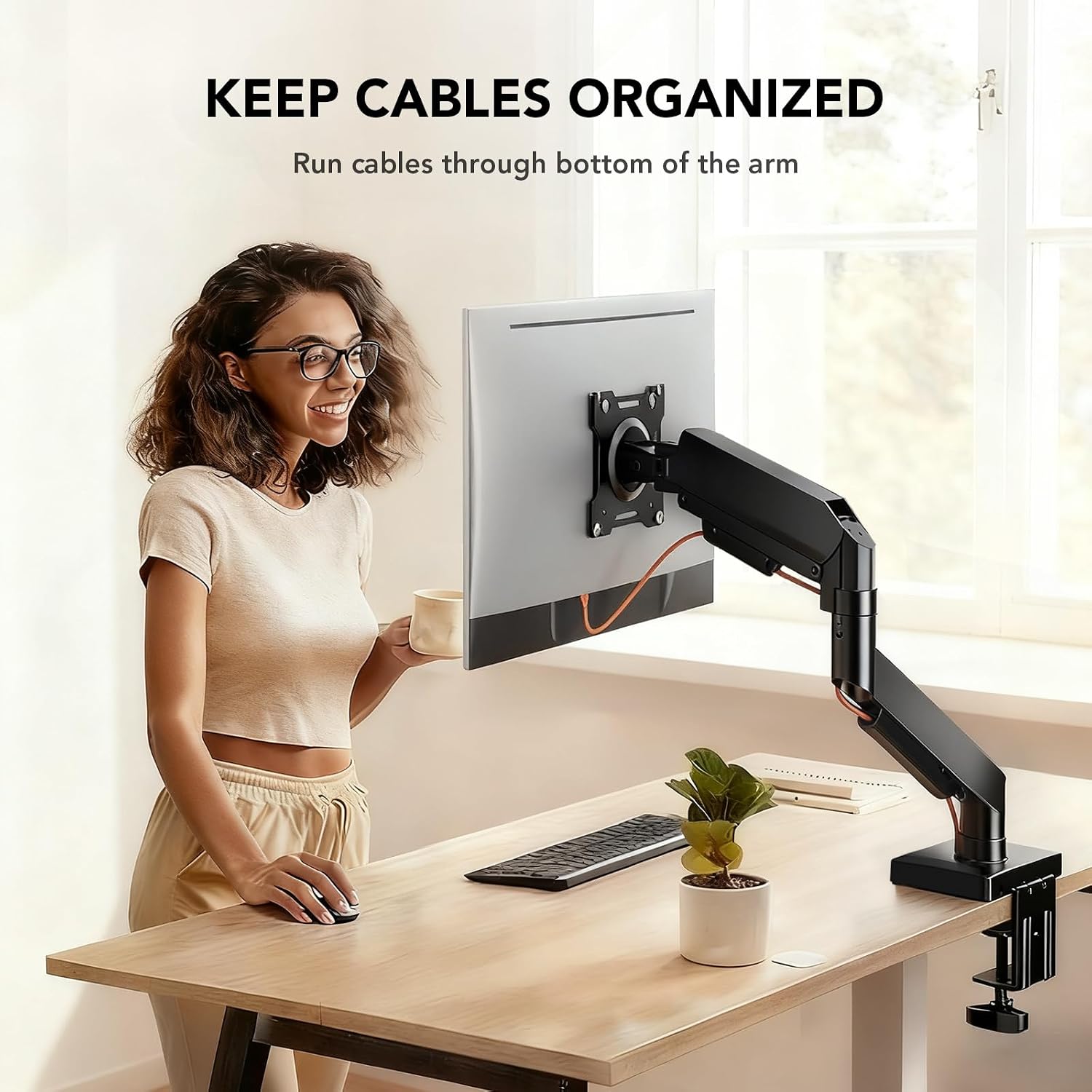
Hemudu single monitor arm (gas spring) for 17–32 inch screens, VESA 75/100mm, up to 9kg
Product description
What it is and the problem it solves
If your current monitor setup is keeping you in “head-down” territory, a monitor arm is often the quickest fix that doesn’t involve changing your whole desk. The Hemudu single monitor arm is a gas-spring desk mount designed for one screen, letting you reposition the display so it sits closer to eye level and in a more comfortable viewing angle.
On paper, it’s aimed at people who spend long stretches at a desk—programming, data work, or video editing—where small ergonomic changes add up. It also takes up far less desktop footprint than traditional stands, which matters if you’re working with limited desk depth.
The essentials: key features that affect day-to-day use
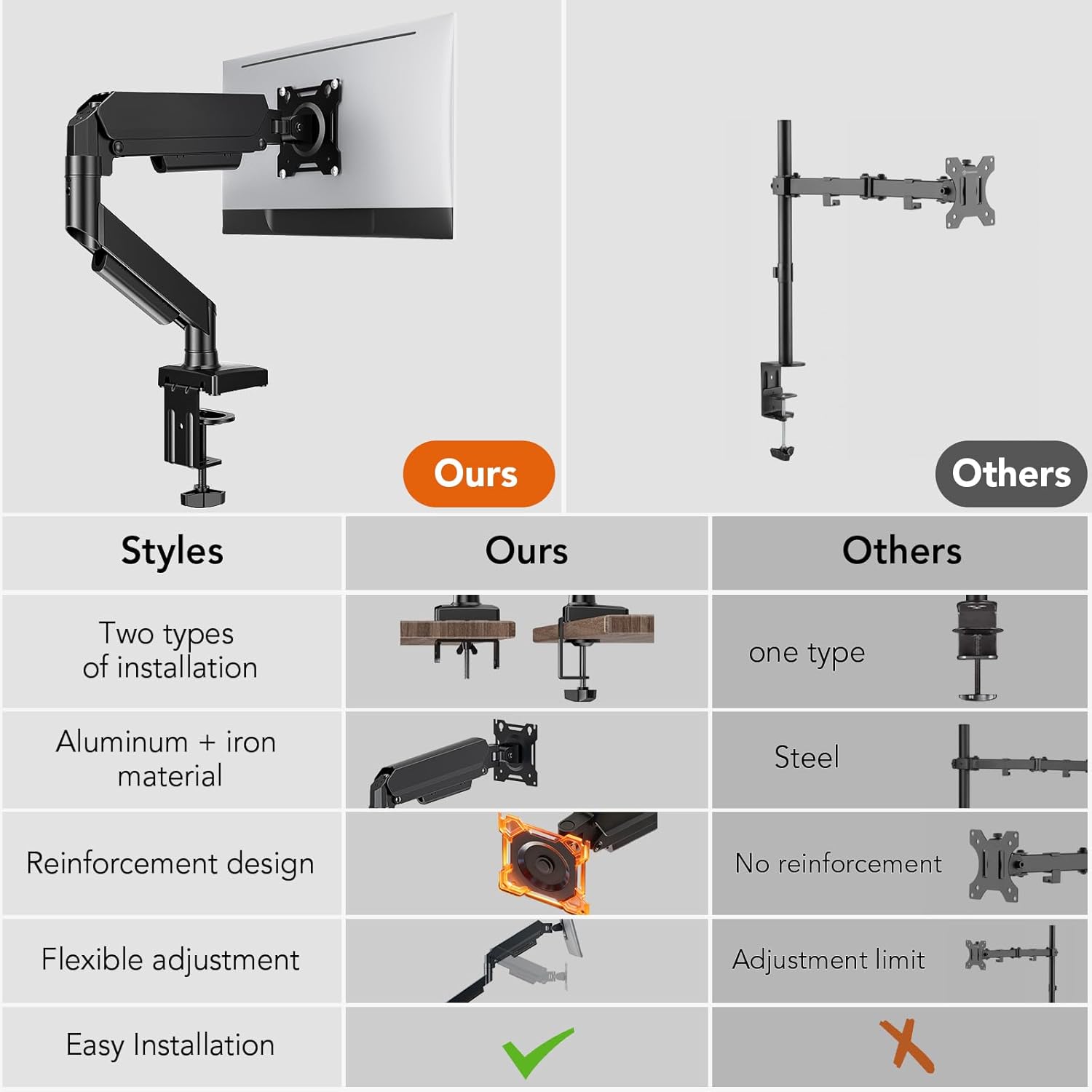
The arm is built around galvanised cold-rolled steel, with a sturdier aluminium alloy base. That combination is meant to bring more robustness and stability than setups built purely from cheaper ferrous metal.
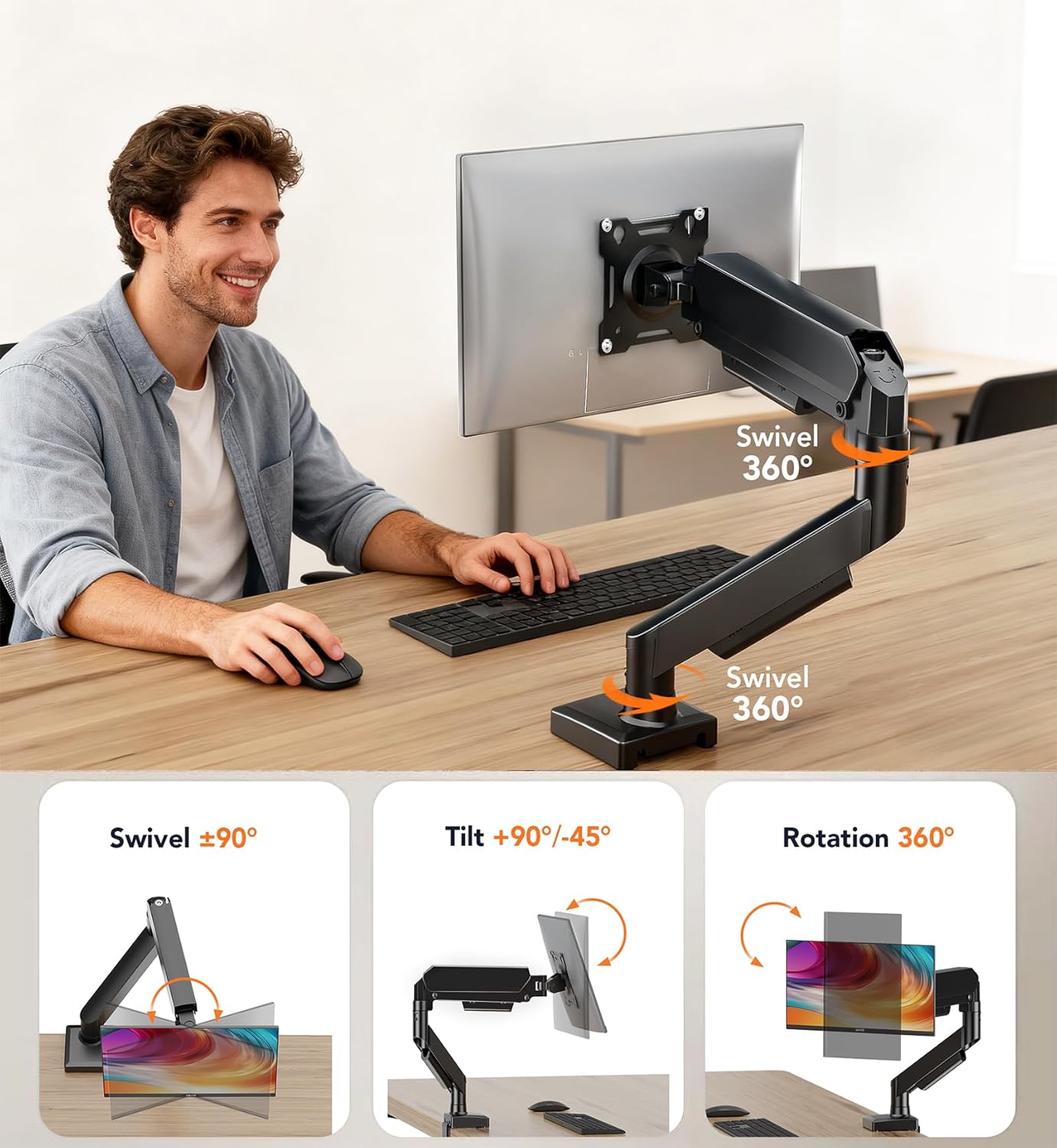
You can also move the monitor through multiple adjustment ranges: it supports 360° rotation, has tilt options (90° and 45°), and offers ±90° swivel. The whole point is to make the “find a comfortable spot” part quick—rather than leaving the screen in a fixed position.
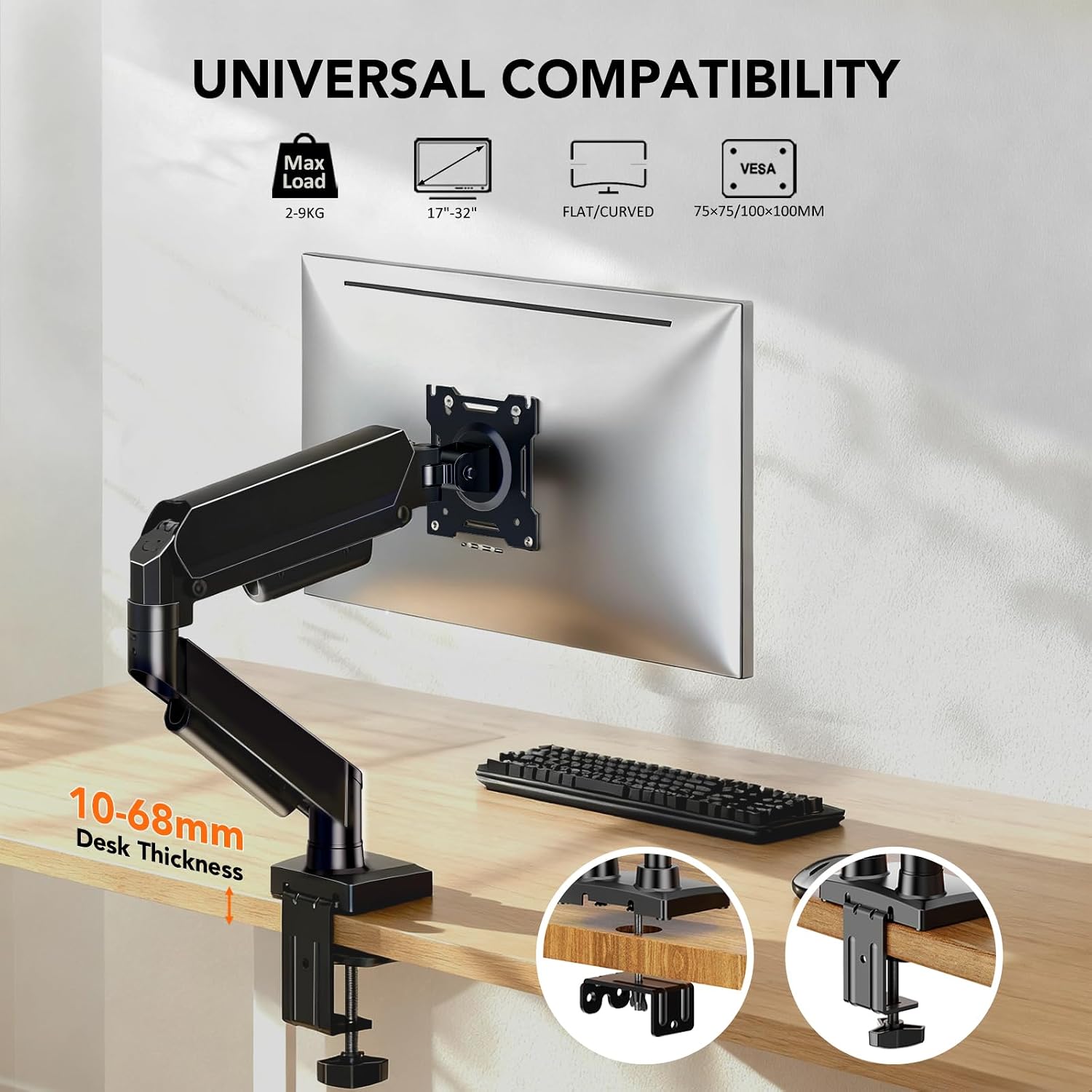
It’s designed for screens from 17 to 32 inches, with a load capacity stated as 2–9kg. The VESA mounting support covers 75×75mm and 100×100mm patterns, so it’s a good fit for many common monitors, but you’ll want to double-check your VESA size before buying.
There’s also an integrated gas spring and a stated 20,000-cycle test for long-term stability. Cable management is included via a concealed system, which helps keep the area under the monitor from turning into a tangle.
Positioning range: how high and how far it can bring your screen
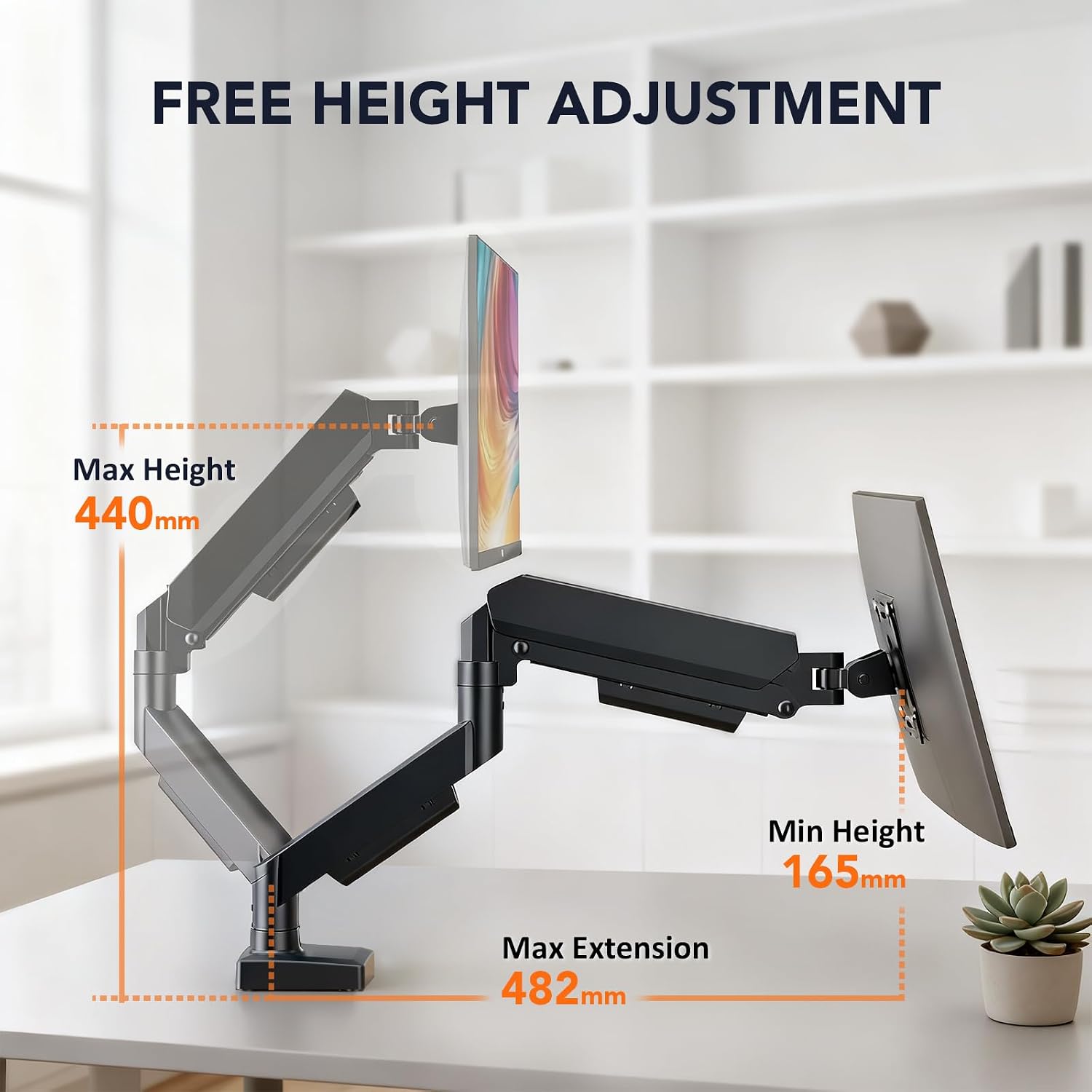
This arm elevates the display notably compared with many basic desk stands. It can raise the monitor up to 44cm above the desktop and lower it to a minimum of 16.5cm. It also extends the screen up to 48cm towards you.
That extension is the practical difference-maker: instead of only lifting the screen, it can also pull it into your working zone. For example, if you’re editing video or reviewing spreadsheets, you can bring the monitor closer so you’re not constantly leaning forward.
Do note: the usable height and reach you experience depends on your desk setup and clearance around the monitor, and it may not be ideal if your desk has limited space behind or above the mounting point.
Mounting options and desk compatibility considerations
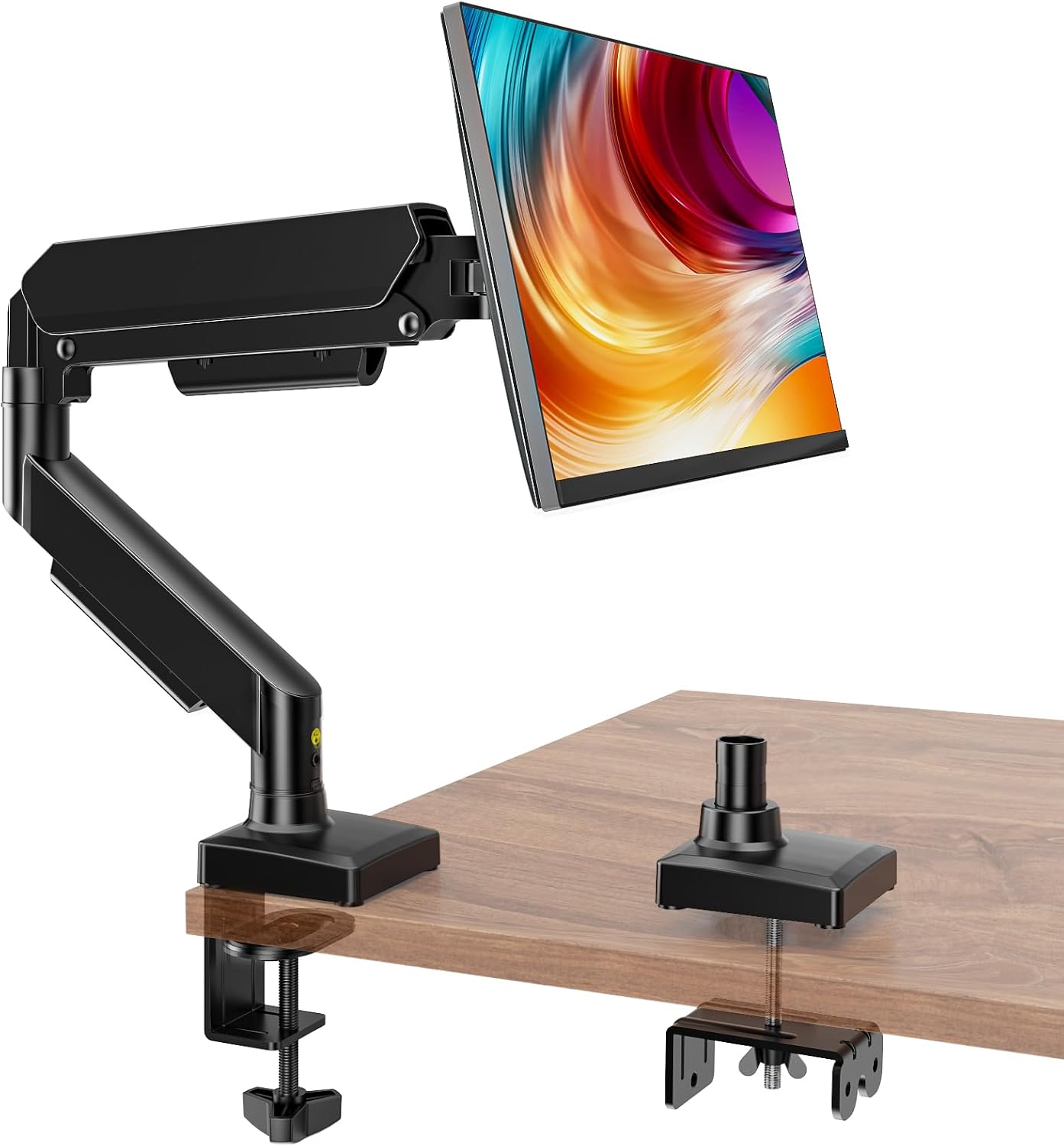
The monitor arm includes a C-clamp mounting approach (the listing also mentions through-hole mounting options, but the product name specifically calls out C-clamp). A C-clamp is often a sensible route for many home office desks, though some desk surfaces may be awkward depending on thickness and available clamping area.
Before committing, it’s worth checking two things: - Your monitor’s VESA pattern is 75×75mm or 100×100mm. - Your monitor’s weight sits within the stated 2–9kg range.

Those two points tend to be the make-or-break for monitor arms in general.
What stands out vs simpler desk stands
Compared with vertical monitor stands that take a lot of desk space (especially those with bulky bases), this arm is designed to free up working area. The manufacturer claims around 80% desk space saving versus glass-base vertical stands—whether you get the full benefit depends on your current setup, but the general idea is sound: you reclaim surface area.
It’s also more flexible than fixed mounts. If you switch between tasks—say, writing code, checking reference material, then editing a timeline—you can adjust without changing your entire posture every time.
When it’s a strong buy (and when to skip it)
This monitor arm makes sense if you want one-screen ergonomic adjustment—height changes, tilt, and rotation—and you’re shopping within the stated screen size and weight limits (17–32 inch, up to 9kg). It also suits people who care about tidy cable routing and prefer not to add another stand that eats desk space.
It might not be the best match if: - Your monitor is outside the 2–9kg range or doesn’t use VESA 75/100mm. - Your desk layout can’t accommodate the arm’s height/reach without bumping into constraints. - You’re after a very simple “sit it and forget it” solution—arms are brilliant, but they’re a bit more involved than basic stands.
Tech specs (from the listing)
- Screen size support: 17 to 32 inch
- Maximum load: up to 9kg
- Minimum load (stated support range): 2kg
- VESA compatibility: 75×75mm and 100×100mm
- Rotation: 360°
- Tilt: 90° and 45°
- Swivel: ±90°
- Height adjustment: up to 44cm above the desktop, down to 16.5cm minimum
- Reach: up to 48cm towards you
- Mount type mentioned: C-clamp (and through-hole mounting options are referenced)
- Build materials mentioned: galvanised cold-rolled steel, aluminium alloy base
- Testing mention: 20,000 cycles for long-term stability
Mini FAQ
Is this monitor arm meant for one screen only?
Yes—this is a single monitor arm setup intended to mount one display.
Will it fit my monitor?
It should if your screen is within 17–32 inches, your monitor weight is within 2–9kg, and your monitor uses VESA 75×75mm or 100×100mm. If any of those don’t line up, it won’t be the right choice.
How much can I move the monitor?
The listing states 360° rotation, tilt of 90°/45°, and ±90° swivel, plus significant height and forward reach.
Does it help reduce cable clutter?
Yes, the arm includes concealed cable management intended to tidy up cables under the monitor.
Final verdict
Should you buy it?
Buy it if you want a single, adjustable gas-spring monitor arm for a 17–32 inch monitor (up to 9kg) with VESA 75/100mm, and you’re looking to improve comfort by raising and angling the screen while keeping the desk area freer.
Skip it if your monitor doesn’t meet the stated VESA/weight range or your desk setup can’t handle the arm’s mounting and clearance. It’s not a “set and forget” item, but for people who regularly spend hours at the screen, that adjustability is exactly where the value comes from.