

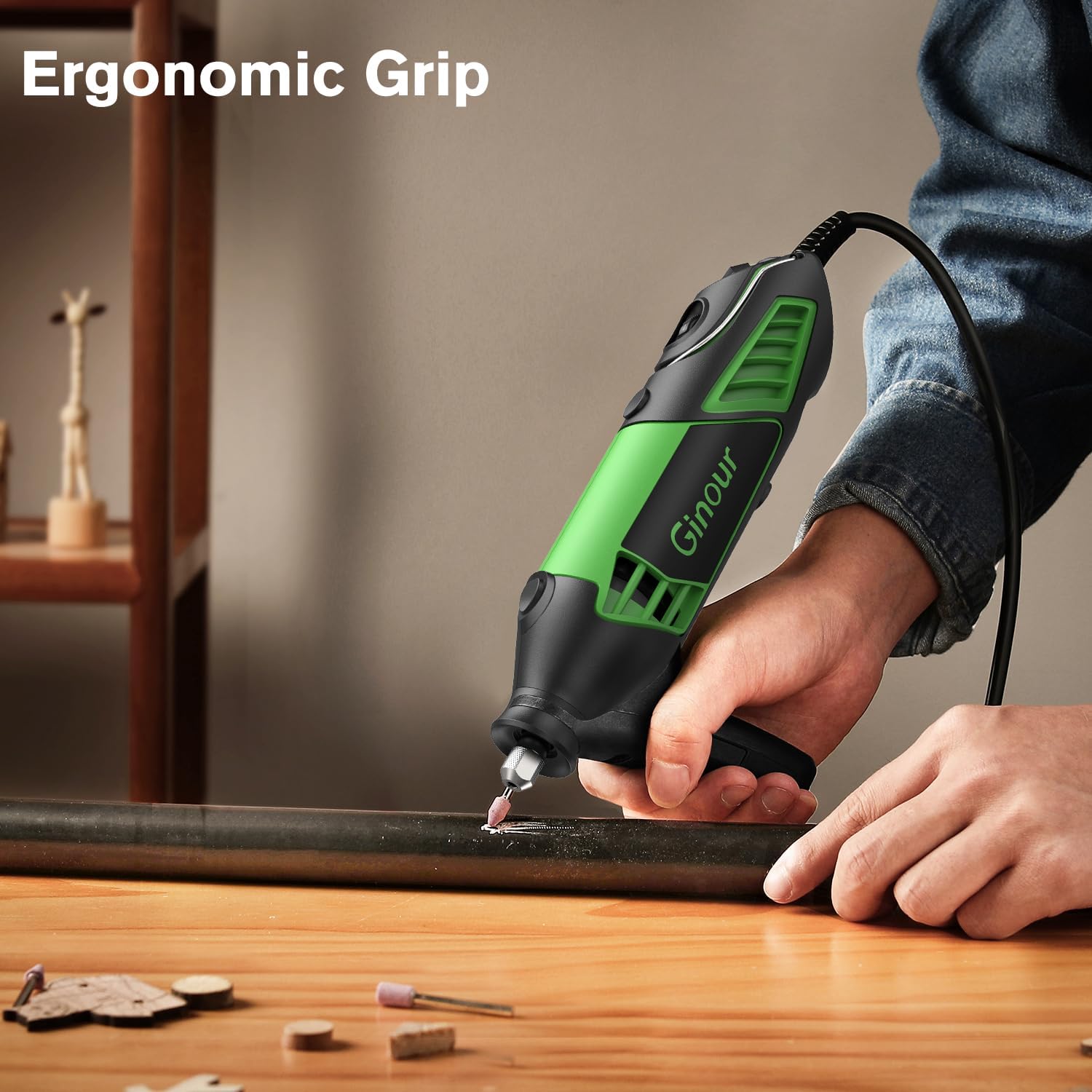
Ginour Rotary Tool Kit 200W (6 Variable Speeds 8000–35000RPM) with Keyless Chuck & Flex Shaft — 135 Accessories
Product description
Key takeaways (what you’re really buying)
The Ginour Rotary Tool Kit is a corded rotary multi-tool setup aimed at DIY tasks: engraving, cutting, sanding, polishing and general “small job” craft work. On paper, it leans into flexibility: you get 6 variable speeds from 8000 to 35000RPM, plus a keyless chuck and a flexible shaft for reaching awkward angles.
The kit also comes with a large bundle of accessories (the listing mentions 129 accessories and 6 attachments). That can be a big deal if you want to get started straight away without piecing together bits over time. The trade-off with bigger accessory sets is that not every attachment will feel like your favourite tool—some are best treated as trial-and-error parts until you find what suits your materials.
The essentials (specs that affect real use)
Where this tool tries to justify its place in the workshop is the combination of power and speed control. A 200W motor with six speed settings gives you room to match the job: faster speeds tend to suit fine finishing work, while lower speeds can be gentler when you’re starting out or working with more delicate material.
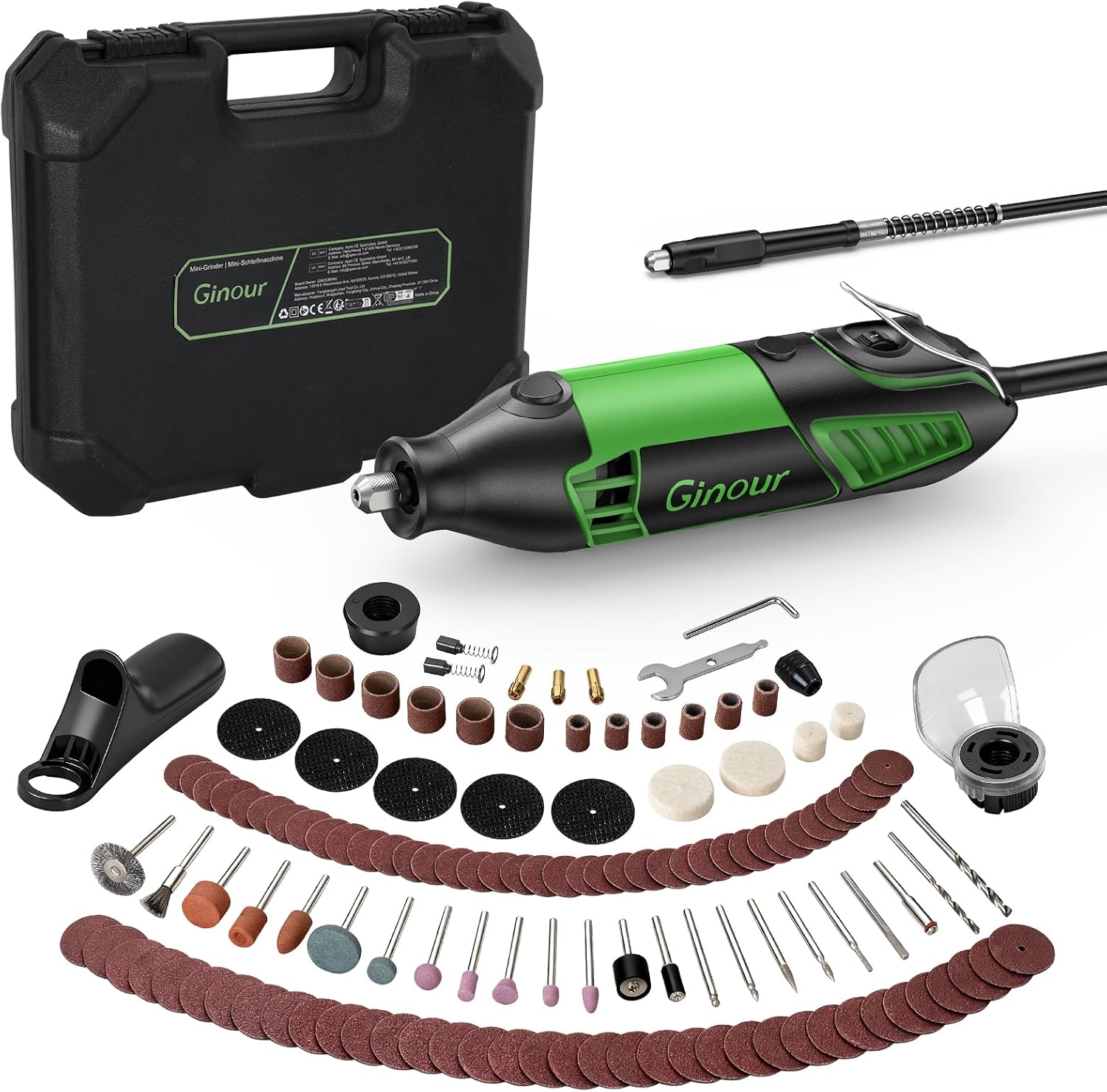
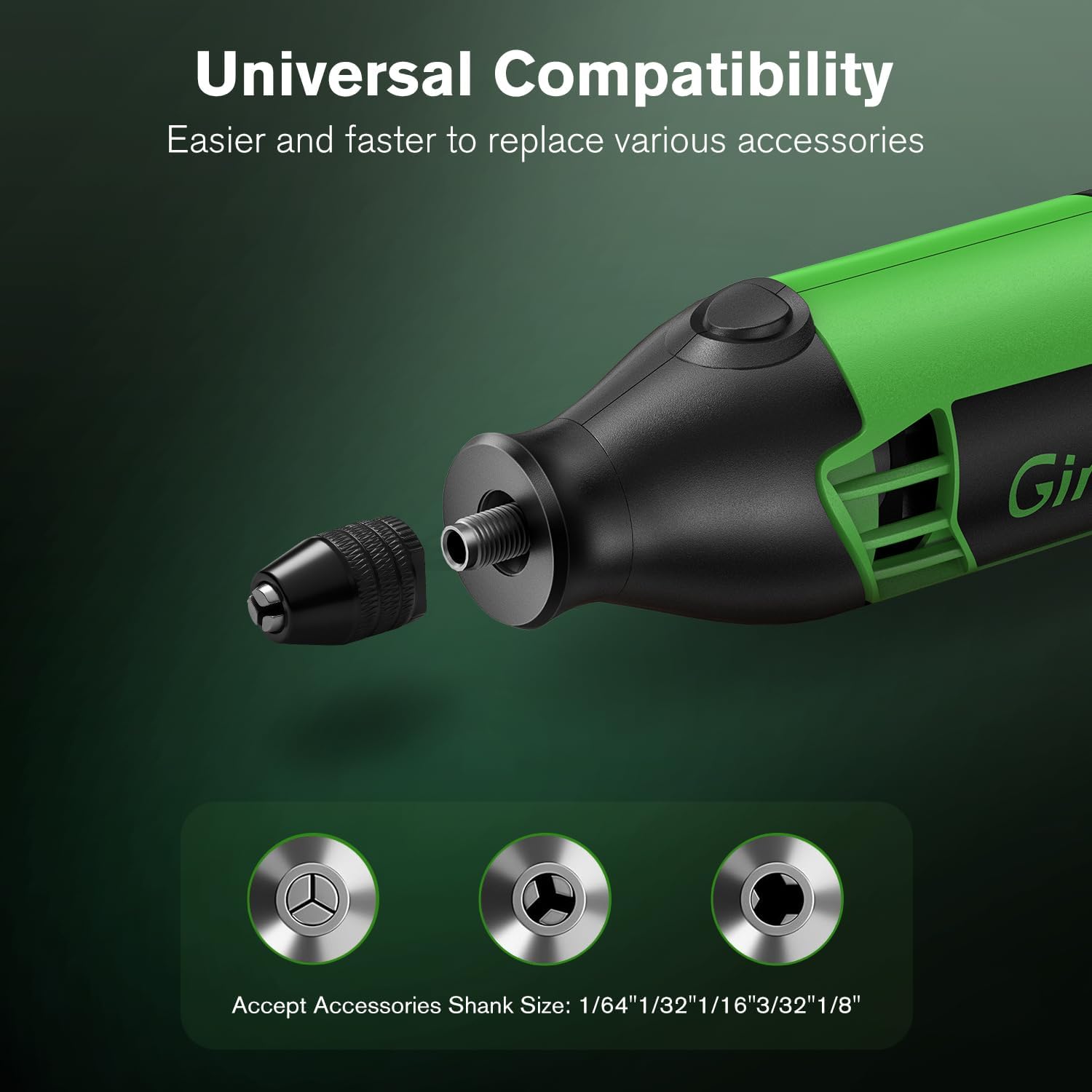
Speed matters because rotary tools aren’t “one speed fits all”. If you’re carving or cleaning, too much RPM can be unforgiving, if you’re polishing, the right speed can help you avoid turning the job into a rough, uneven finish. A keyless chuck is also practical: you can change accessories without hunting for a chuck key, which makes the tool feel more usable in quick sessions.
Key features (what stands out in the kit)
The universal keyless chuck is designed to accept a range of accessory sizes listed as 1/64", 1/32", 1/16", 3/32" and 1/8". That should cover most common hobby rotary attachments, and the listing states it’s compatible with other rotary tool attachments on the market.
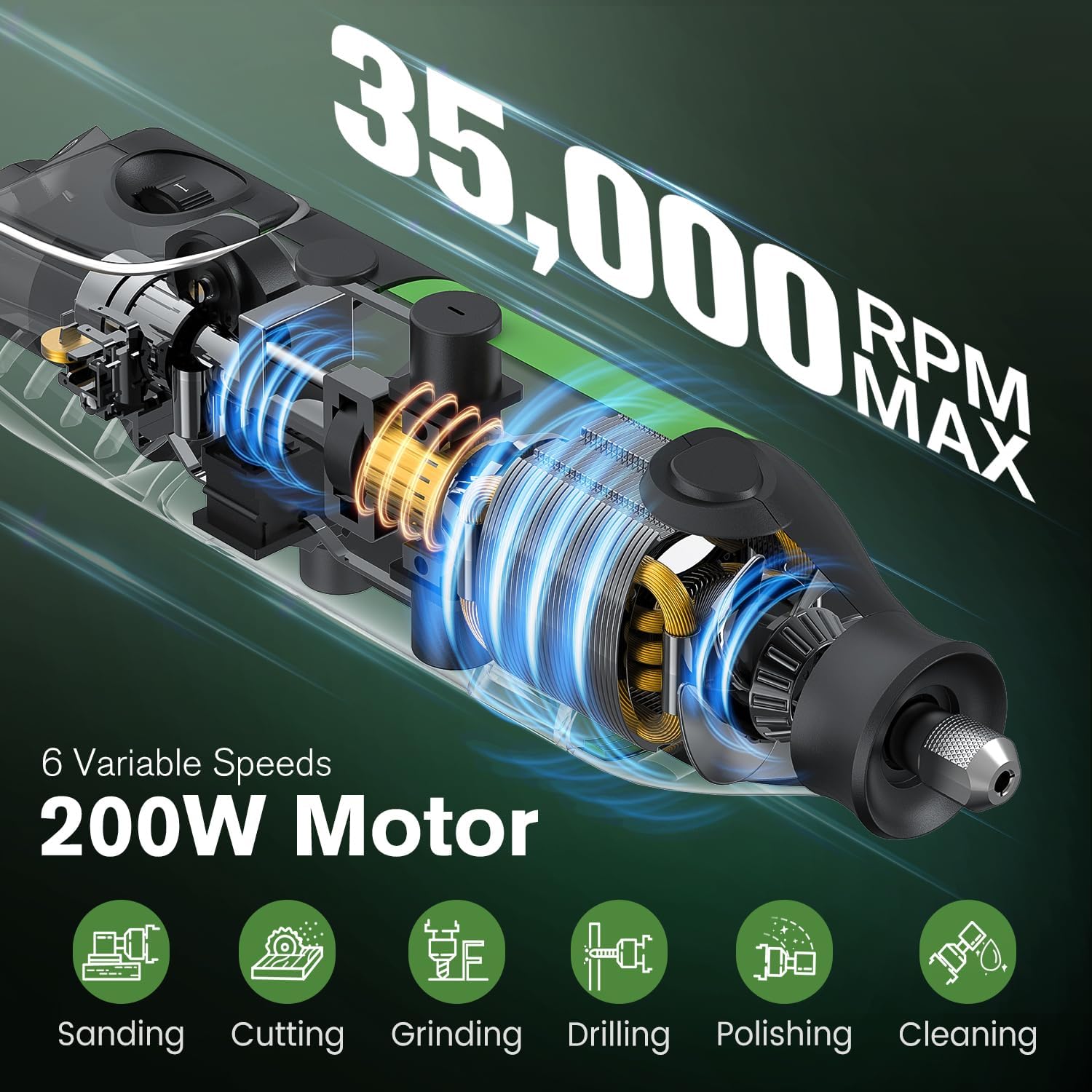
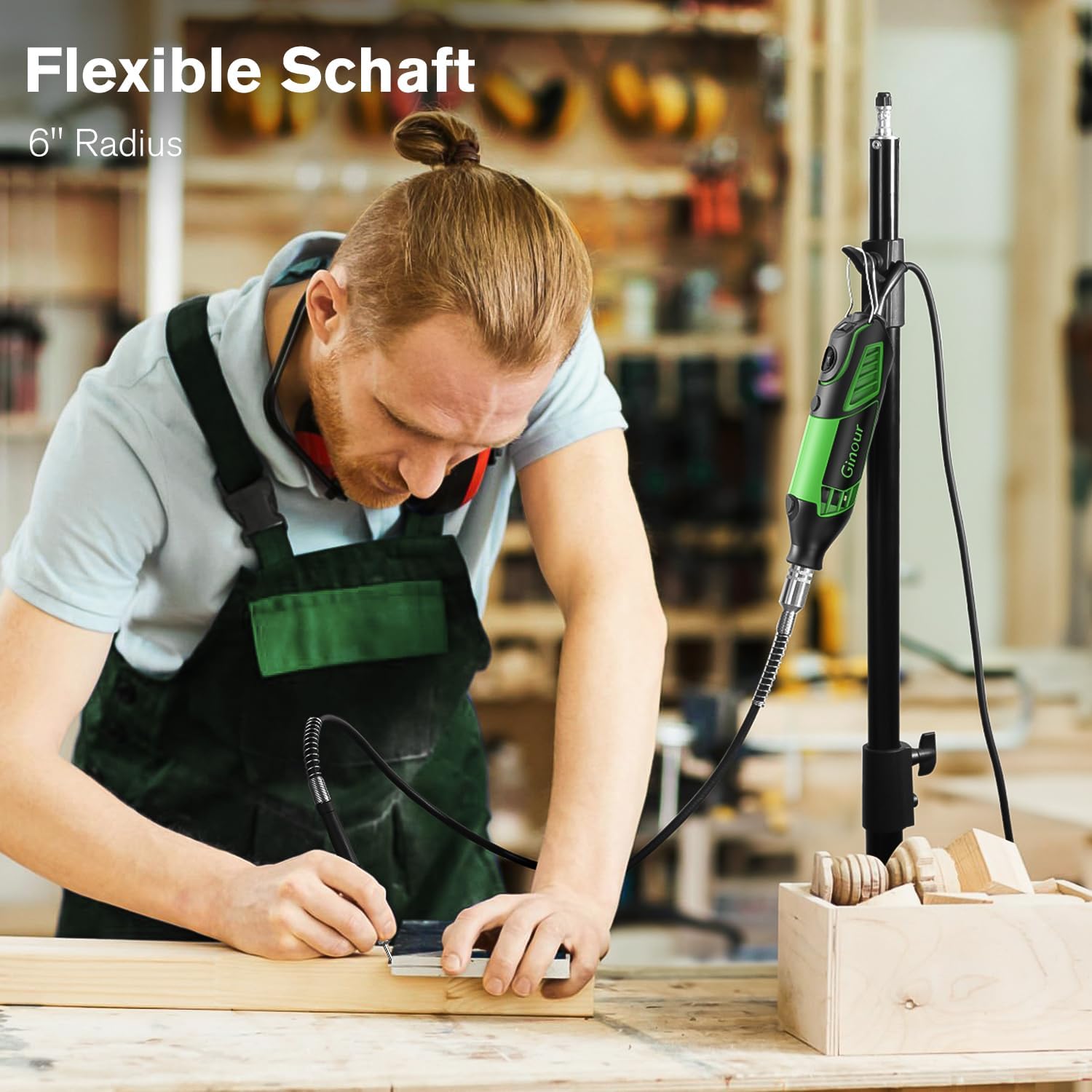
Two extras are particularly relevant for day-to-day control. First, the flexible shaft can help when you want a more reach-and-angle friendly setup—useful for detailed sanding, cleaning, or engraving in tight spaces. Second, the auxiliary handle offers extra support, which can reduce strain during longer sessions (rotary tools can be a bit “busy” in the hand if you’re holding them freehand for too long).
There’s also a protective cover mentioned for precise positioning on wood. That’s one of those details that doesn’t sound exciting, but it can help you work more confidently when you’re shaping or cleaning timber.
What to know before you buy
It’s a corded rotary tool kit, so think about where you’ll realistically use it. If your workspace is far from a power socket, you may end up relying on extension leads, and that’s one of the small practical friction points of corded tools.
Also, while the kit contains a lot of parts, the listing doesn’t spell out which exact accessories you’ll personally use most. If you’re expecting “professional” results every time, it may still depend heavily on the bits you choose, the material you’re working on, and how comfortably you control the RPM.
One more limitation to keep in mind: a kit like this is aimed at DIY crafting and general use. It may not be the best choice if you’re planning heavy, continuous work where you need something built for long industrial-style sessions.
Who it suits (and who should be cautious)
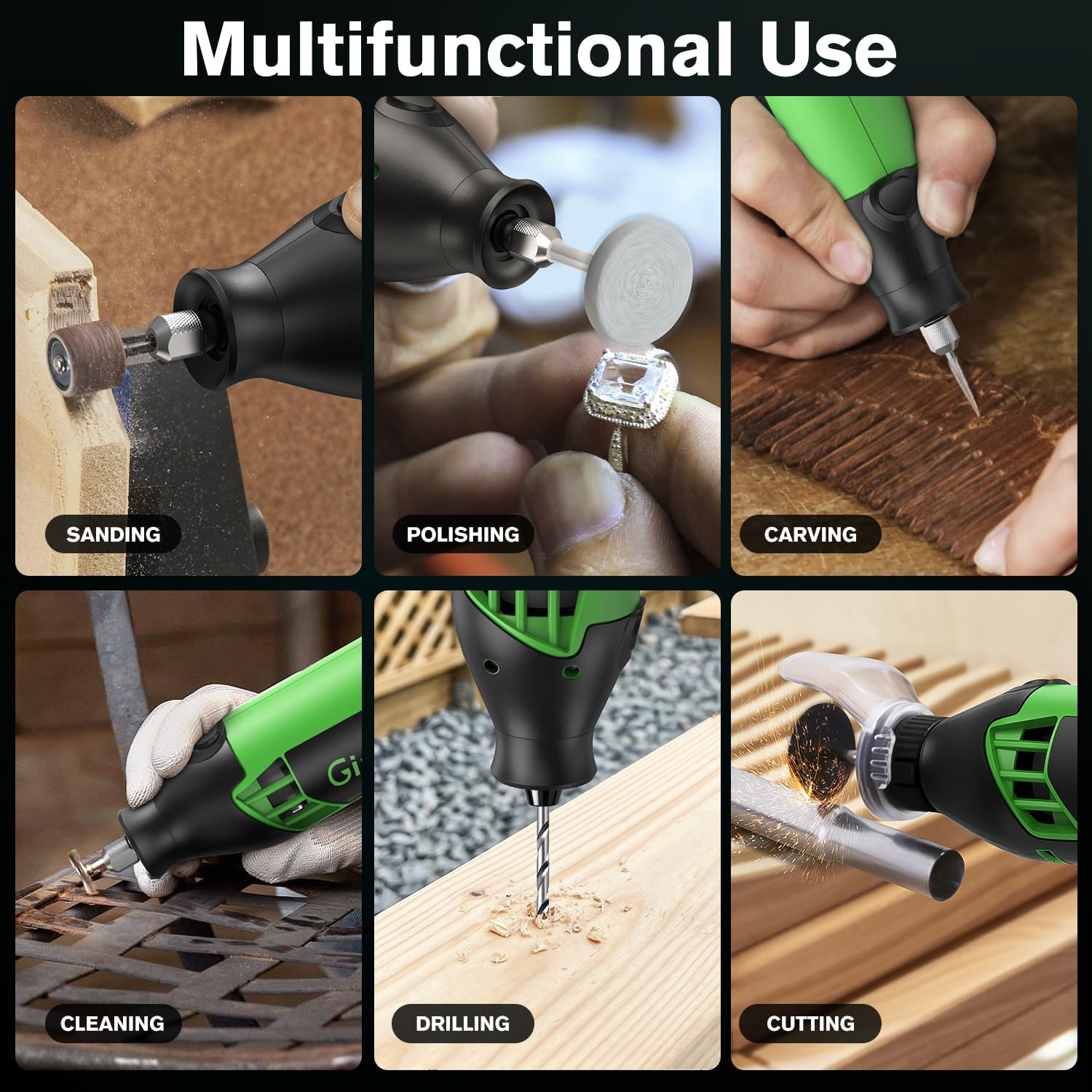
It makes sense if you want a rotary tool kit you can grow into—especially if you’re doing a mix of engraving, cutting, sanding, polishing and cleaning across materials like metal, wood and glass (as stated in the listing).
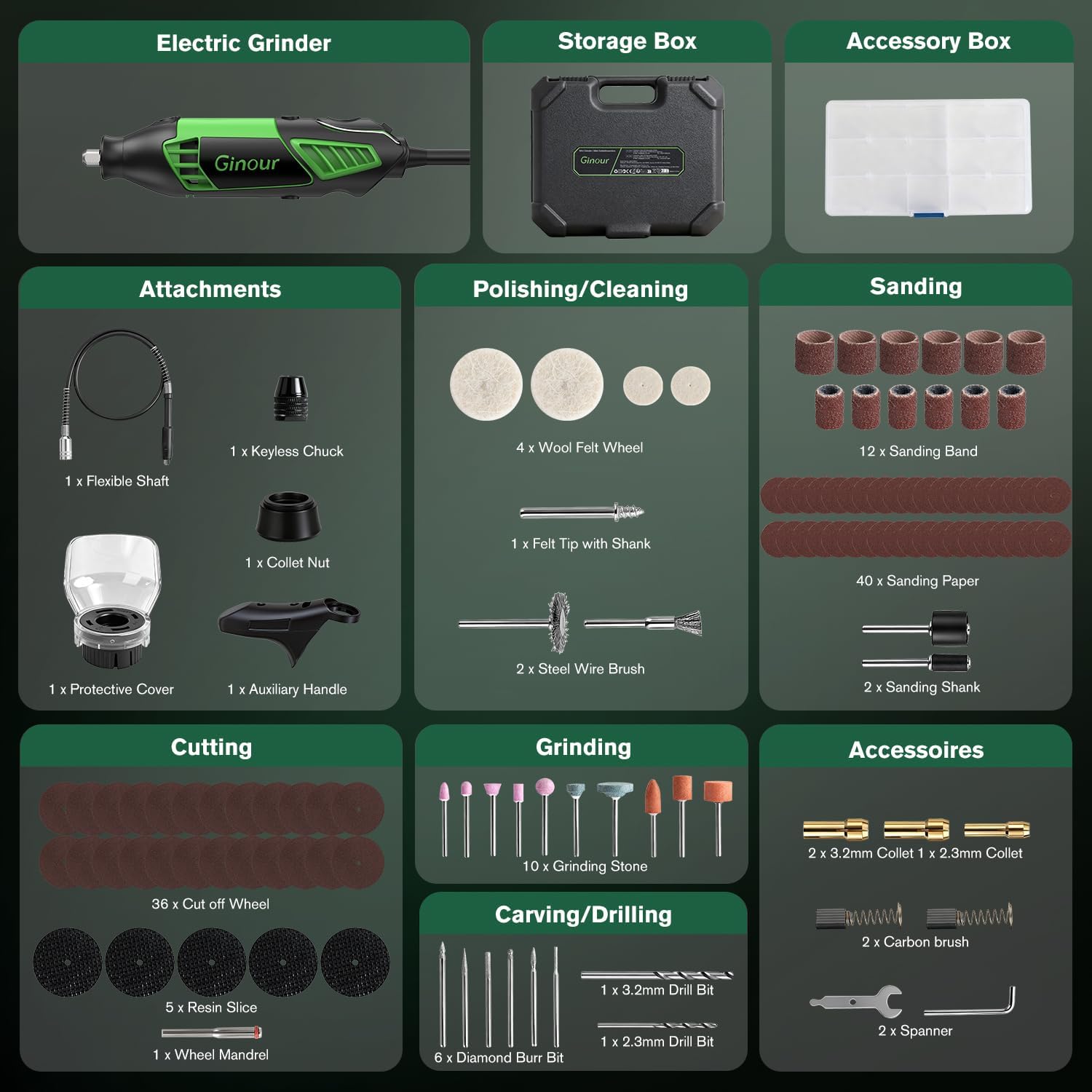
You’ll likely like it if you prefer having plenty of accessories ready to go and you don’t want to buy separate attachments for every new project. The carry case also points to a “keep it organised and grab it quickly” approach rather than leaving parts loose on a bench.
It might not be a great match if you already know exactly which accessories you want and you’d rather invest in a smaller, more targeted set. It can also be better to look elsewhere if you want cordless convenience or if you need a setup specifically optimised for very frequent, long-duration professional work.
Everyday use tips (a practical example)
Imagine you’re doing a small DIY craft job: lightly cleaning up a wooden edge, then finishing it with a polishing attachment. Start at a lower speed to avoid digging in, then step up only when you’re happy with how the surface reacts. Once you’ve shaped the area, switch to the polishing accessory and use a steadier touch.
If you need accuracy—say, engraving a name on a small wooden piece—using the auxiliary handle can help you keep the angle consistent. And if the work is awkward (like inside a curve or near a corner), the flexible shaft can make it easier to maintain control without fighting the tool’s straight-line orientation.
Final verdict (should you buy it?)
Worth considering if you’re after a corded rotary tool kit with variable speed (8000–35000RPM), a keyless chuck for easier accessory swaps, and extra help for control through the flexible shaft and auxiliary handle. The large accessories bundle and carry case make it practical for DIY craft projects where you want options.
Better avoided if you need cordless freedom, you’re working at very high frequency for long stretches, or you want a highly specialised tool-and-bit setup from day one. On paper, it sits firmly in the DIY/maker bracket—useful, versatile, and “good value for having a lot of attachments”, but not necessarily the choice if you’re chasing top-end, no-compromise professional performance.
Mini FAQ
What materials is the rotary tool kit aimed at?
The listing suggests it can be used for tasks across materials such as metal, wood and glass.
Are the accessories compatible with other rotary tool attachments?
The listing states the keyless chuck is designed to fit the accessory sizes listed and that it’s compatible with other rotary tool attachments available on the market.
Does it include a flexible shaft?
Yes—there’s a flexible shaft included, along with other attachments and a protective cover.
Is it cordless?
No, it’s described as an ideal corded rotary tool setup.
What’s the main advantage of the keyless chuck?
It’s designed to make accessory changes easier without needing a chuck key, which helps if you’re switching bits frequently during a project.