

240W USB-C Tester Power Meter: 4-30V, 0-12A PD/ PPS / QC Digital Multimeter
Product description
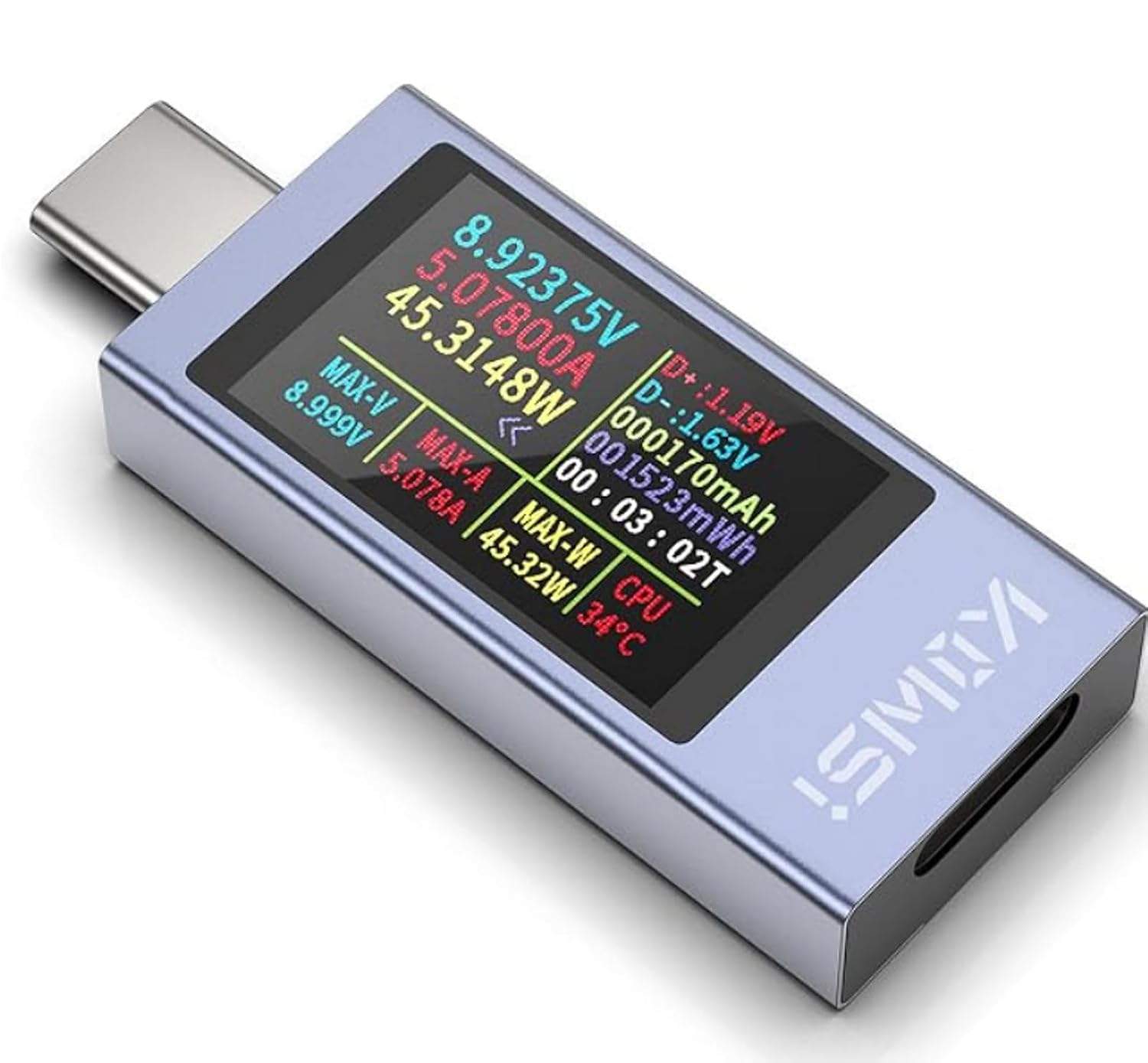
What it is and what it does\nThis compact USB-C power meter acts as a practical tester for charging setups, capable of recording max wattage, current and voltage during charging. It can detect voltage, current, capacity, energy, power, temperature and charging time, making it useful for assessing power supplies, chargers and USB‑C devices. On paper, it covers a broad range of everyday testing scenarios, from power banks to USB-C chargers, without needing clunky external equipment.\n\n## How it helps you compare and optimise charging\nWith a wide 4V–30V measurement window and a 12A high‑current terminal, it suits a variety of 3C devices. It lets you see how different chargers behave, which cables deliver the best performance, and whether a power bank actually lives up to its rated capacity. This is handy when you’re troubleshooting slow charging or trying to understand why a device heats up during a fill‑up.\n\n## What stands out day‑to‑day\nThe device stores data when powered off, so you can review capacity and energy consumption later. It supports fast charging protocols—PD 2.0/3.0, PPS, QC 2.0/3.0 and FCP—helping you verify that a charger and device negotiate the expected protocol. User interaction is straightforward: cycle through screens with a button, rotate the display with a double click, and clear capacity, energy and time data as needed.\n\n## Limitations and caveats\nNo single tester can perfectly predict all scenarios. The accuracy depends on the connected setup and the quality of the USB‑C cable. If you routinely test unusual power profiles or devices outside the 4V–30V range, you may find the tool less informative. Also, while it records several metrics, it won’t fix charging inefficiencies—it's primarily diagnostic.\n\n## Who it’s for\nThis is well suited for tech enthusiasts, DIY tinkerers, 3C professionals, and anyone who wants to understand how their USB‑C charging stack behaves in real life. If you prioritise precise measurement across multiple protocols and want quick, on‑the‑fly verification, you’ll likely find value here.\n\n## Who it isn’t ideal for\nIf you rarely test charging setups or rely on built‑in device indicators rather than real readouts, this tool may feel surplus to requirements. It’s also not a replacement for professional lab gear when you need laboratory‑grade accuracy or advanced data logging beyond what’s stored when powered down.\n\n## What to check before buying\nEnsure your intended use stays within the 4V–30V window and that you’ll benefit from seeing max wattage, energy, and protocol detection. Consider how you’ll read and interpret the data in real time, and whether the built‑in storage meets your review habits.\n\n## Practical example of use\nIf you’re testing a USB‑C charger paired with a power bank, you can monitor how quickly the bank reaches its stated capacity and whether the charger and cable cooperate under PD or PPS negotiations. It’s a small, keep‑in‑your‑toolbox kind of device for quick checks between charges.\n\n## FAQ (based on available information)\n- What protocols are supported? PD 2.0/3.0, PPS, QC 2.0/3.0 and FCP.\n- What is the current measurement range? 0–12A.\n- Does it save data after powering off? Yes, power‑off storage for later review.\n
Is it worth it?
Worth considering if you want concrete insight into charging performance and protocol negotiation without investing in heavier equipment. It may be less essential if you rarely test USB‑C charging or rely on device‑level indicators only.