


Chelhead 6 Way Boat Fuse Block 12V 🔌
Reviews
Price
Product description
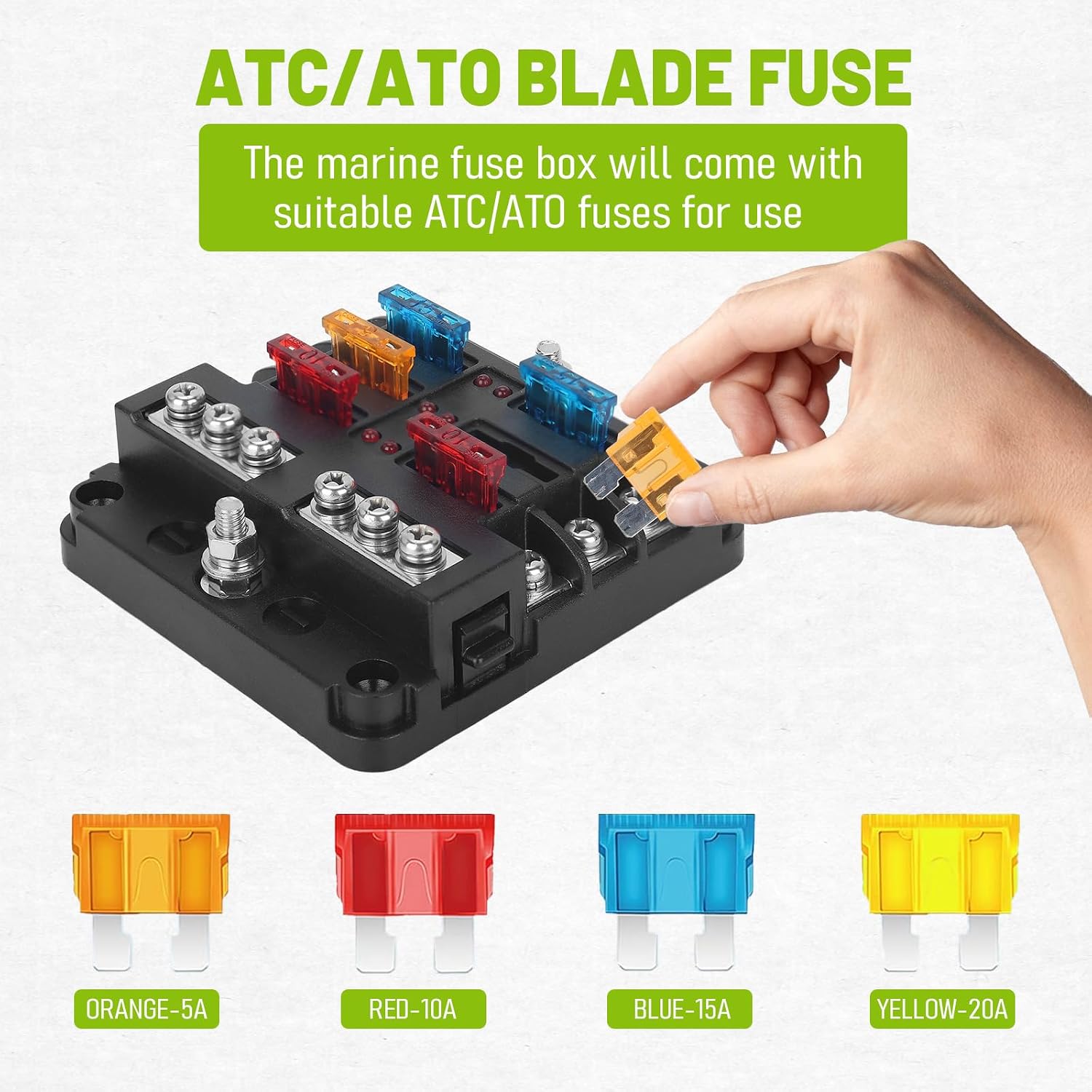
This 6-circuit fuse block from Chelhead organises and protects up to six 12 V electrical circuits on boats, cars, RVs and trailers while offering an LED indicator for quick fault diagnosis. It is useful where a compact, waterproof distribution point is required and where visible status lights help detect blown fuses without disassembly.
Key Points
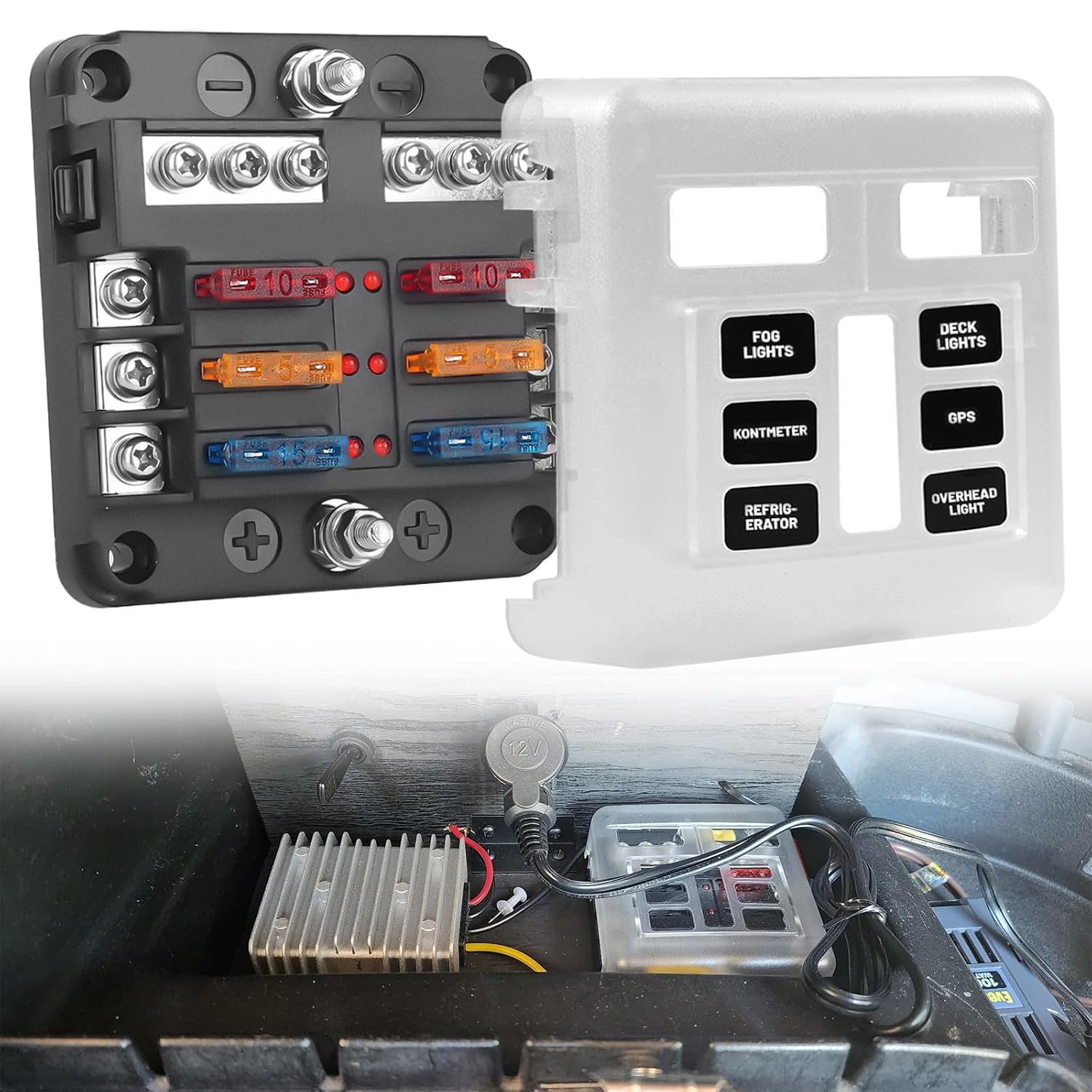
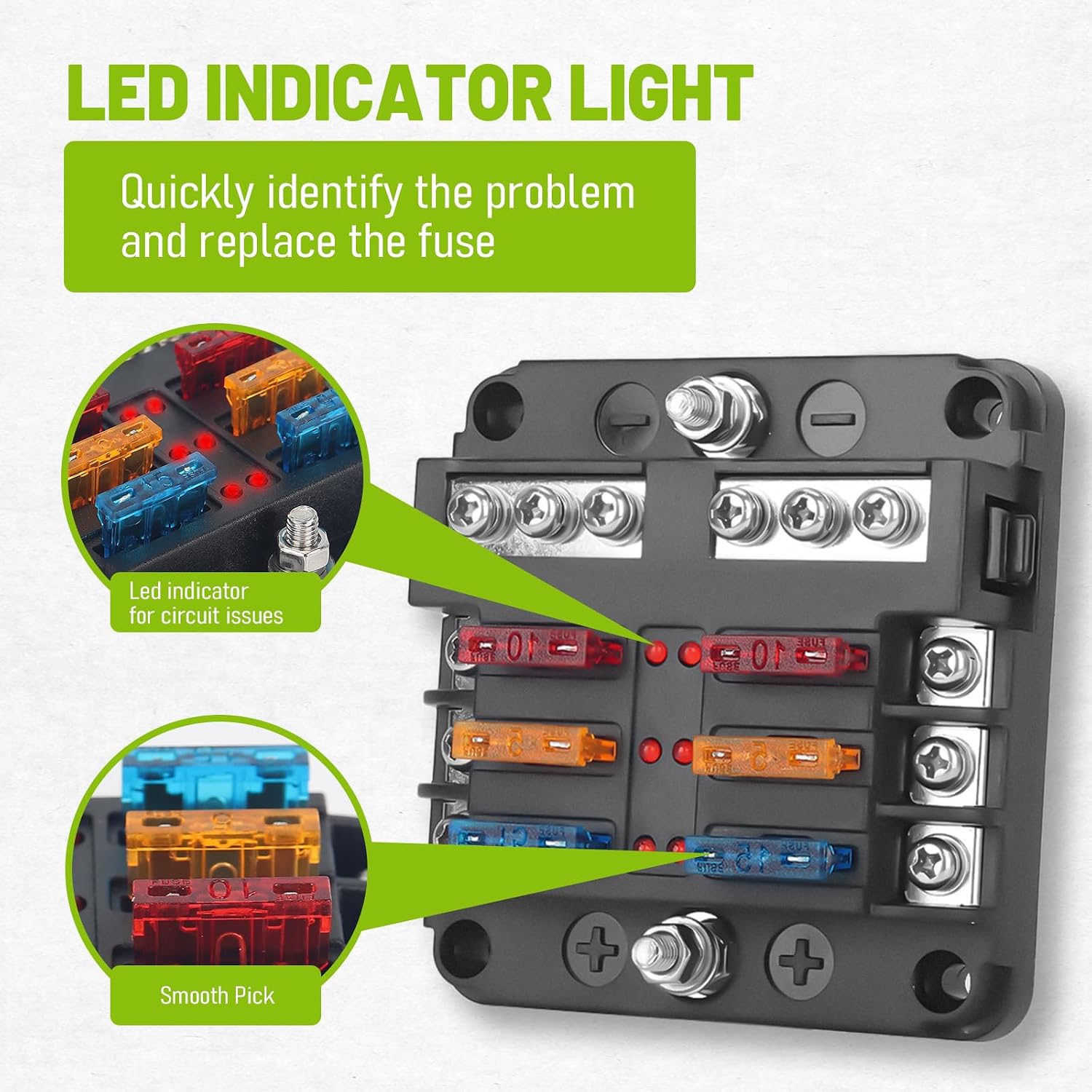
The unit accepts blade fuses and includes LED indicators that light when a circuit is active or when a fault is detected, making routine checks faster. According to the manufacturer, the input voltage is rated up to 32 V and the block is intended for 12 V and 24 V systems commonly found in marine and automotive environments. The housing is waterproof to reduce corrosion risk in damp conditions, and an integrated negative bus simplifies grounding.
Technical Specifications
- Name: Chelhead 6 Way Boat Fuse Block with LED Indicator
- Input voltage: 32 V (nominal according to the manufacturer)
- Input current: 100 A (maximum total input current)
- Output per circuit: 30 A (maximum current per circuit)
- Circuits: 6 blade fuse positions
- Compatibility: 12 V / 24 V systems
Benefits
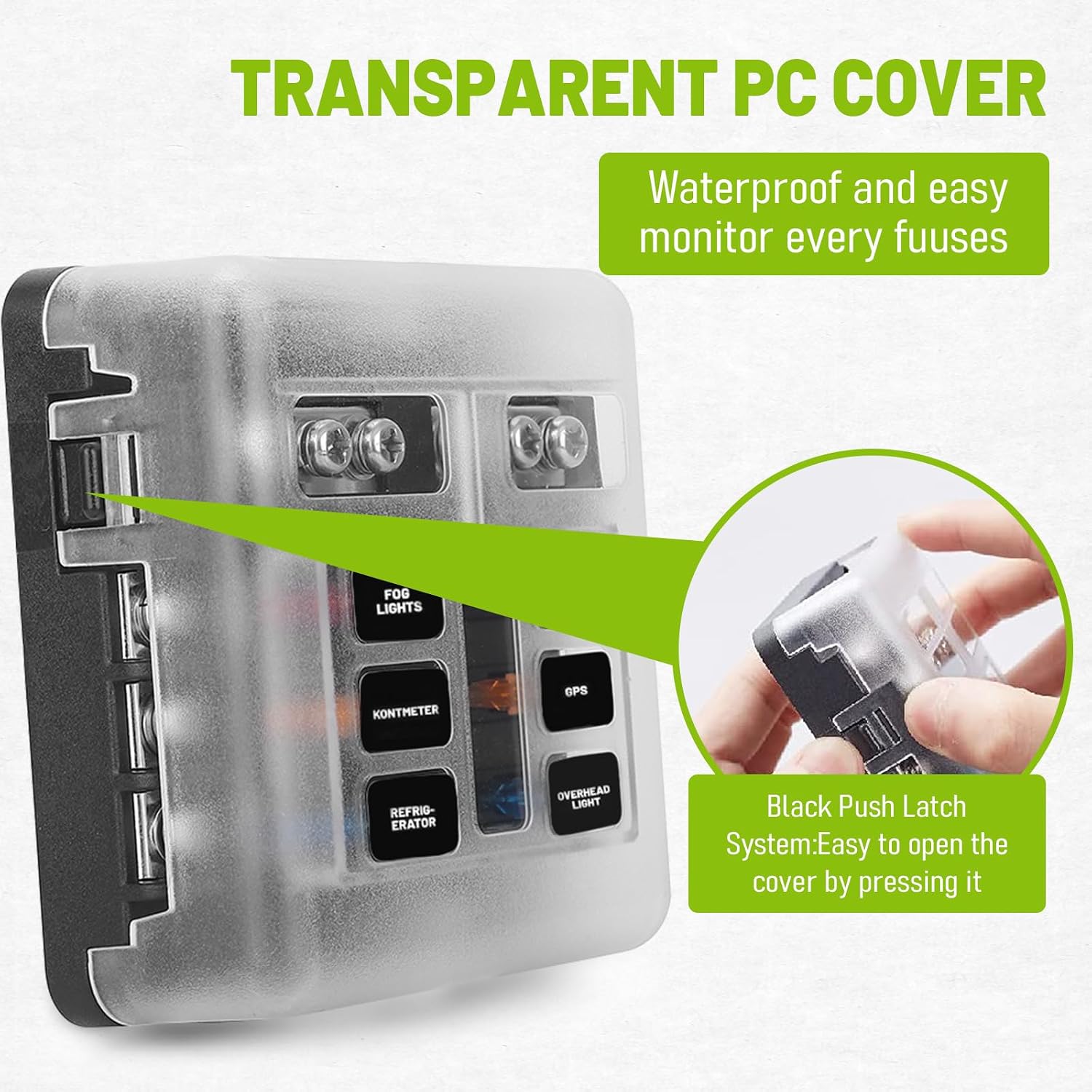
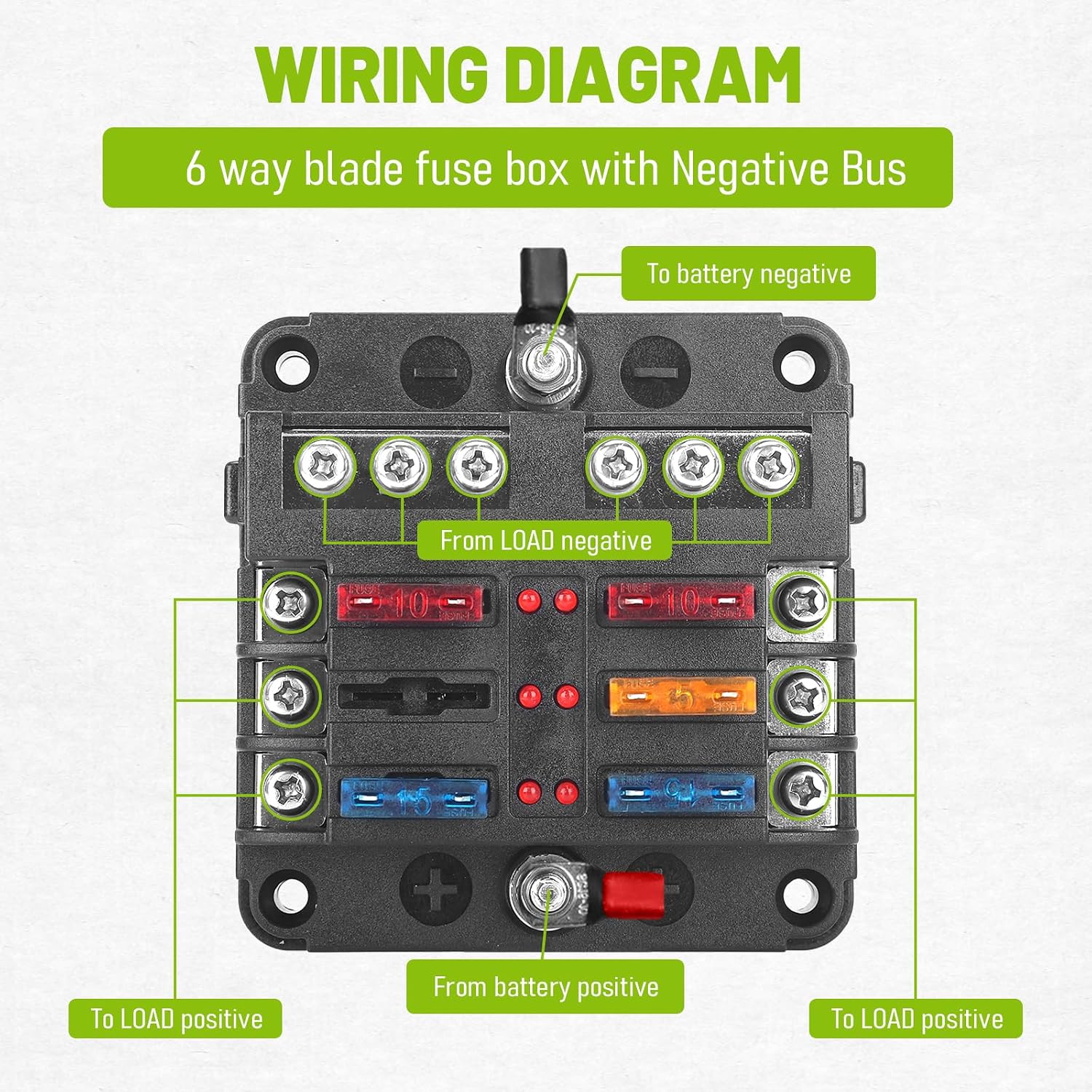
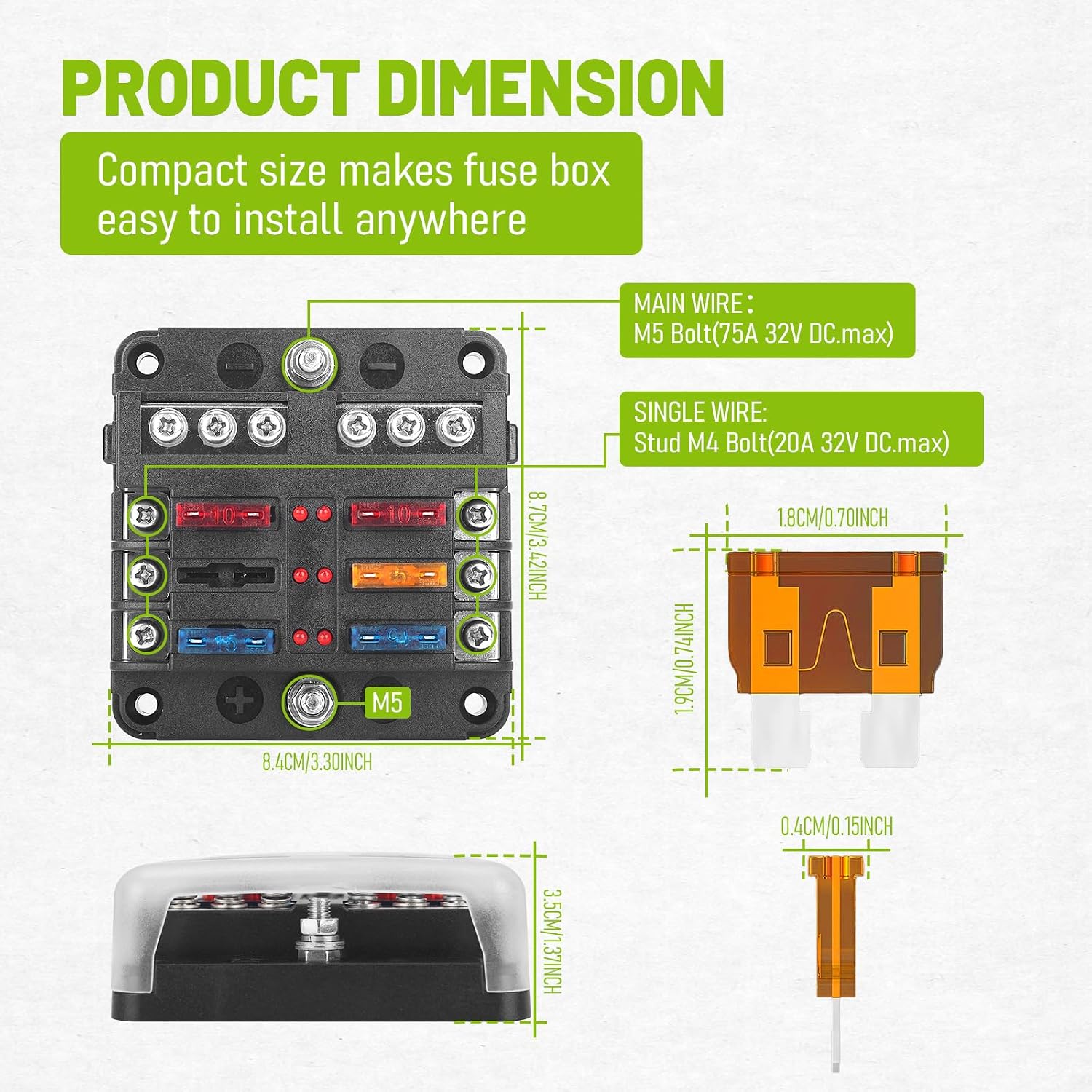
The presence of LED indicators reduces troubleshooting time because you can visually identify a blown fuse or an inactive circuit. The negative bus removes the need for multiple ground wires returning to a common point, which tidies wiring looms and can lower installation time. Its compact footprint helps when space is limited in instrument panels or behind lockers. Consider that the maximum 30 A per circuit is the rated limit according to the manufacturer, so heavy-draw devices should be checked against this figure before connection.
Usage Recommendations
Install the fuse block in a dry, accessible location where the LEDs can be seen during routine checks. Use blade fuses of the appropriate amperage to match each circuit load and ensure the main feed can handle 100 A if several circuits are loaded simultaneously. For marine installations, secure the unit away from bilge areas and route wiring to avoid chafe, additionally use heat-shrink or marine-grade terminals to improve corrosion resistance.