

Vansdon 2000W Pure Sine Wave Inverter (12V DC to 120V AC) for RV, Truck, Solar, Home Off-Grid Use
Reviews
Price
Product description
If you’re powering everyday gear off a 12V battery, a pure sine wave inverter is one of those choices that can quietly save you headaches. This Vansdon model is built to convert 12V DC to 120V AC with a regulated output, plus it adds multiple ways to connect loads (outlets, a hardwired terminal, and USB/USB-C).
It’s not “set it and forget it,” though—like most inverters in this class, real-world performance still depends on your battery and how you manage starting surges. So it’s worth looking closely at where it fits best: RV essentials, home/off-grid backup, and vehicle-based work setups.
The essentials
This Vansdon 2000W pure sine wave inverter is designed for people who need clean, stable AC power from a 12V source. On paper, the big story is the pure sine wave output intended to be grid-like, with low THD and strong emphasis on protecting sensitive electronics. It also targets regulated AC output behavior as the input voltage changes—something that matters if your battery sags during heavier use.
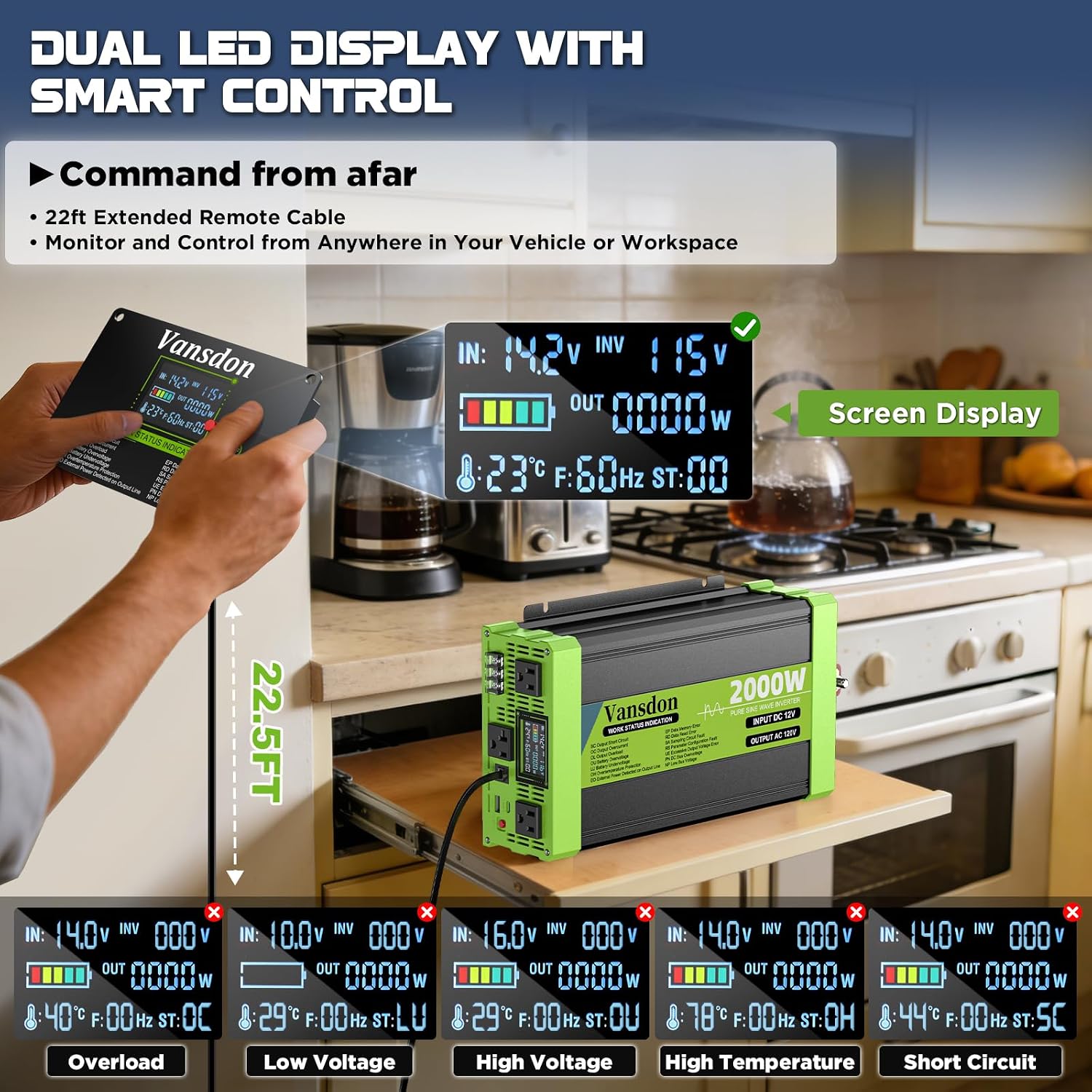
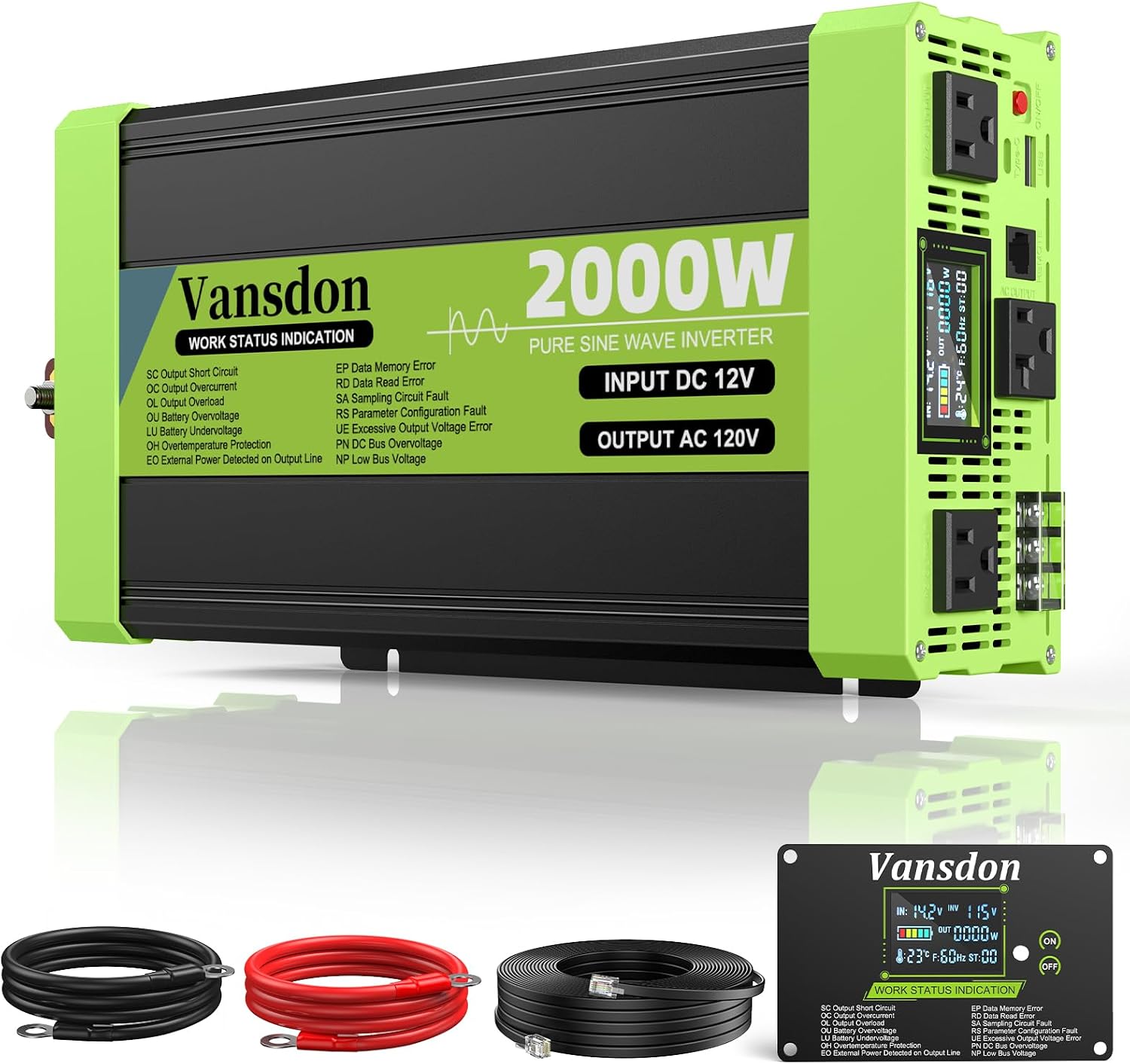
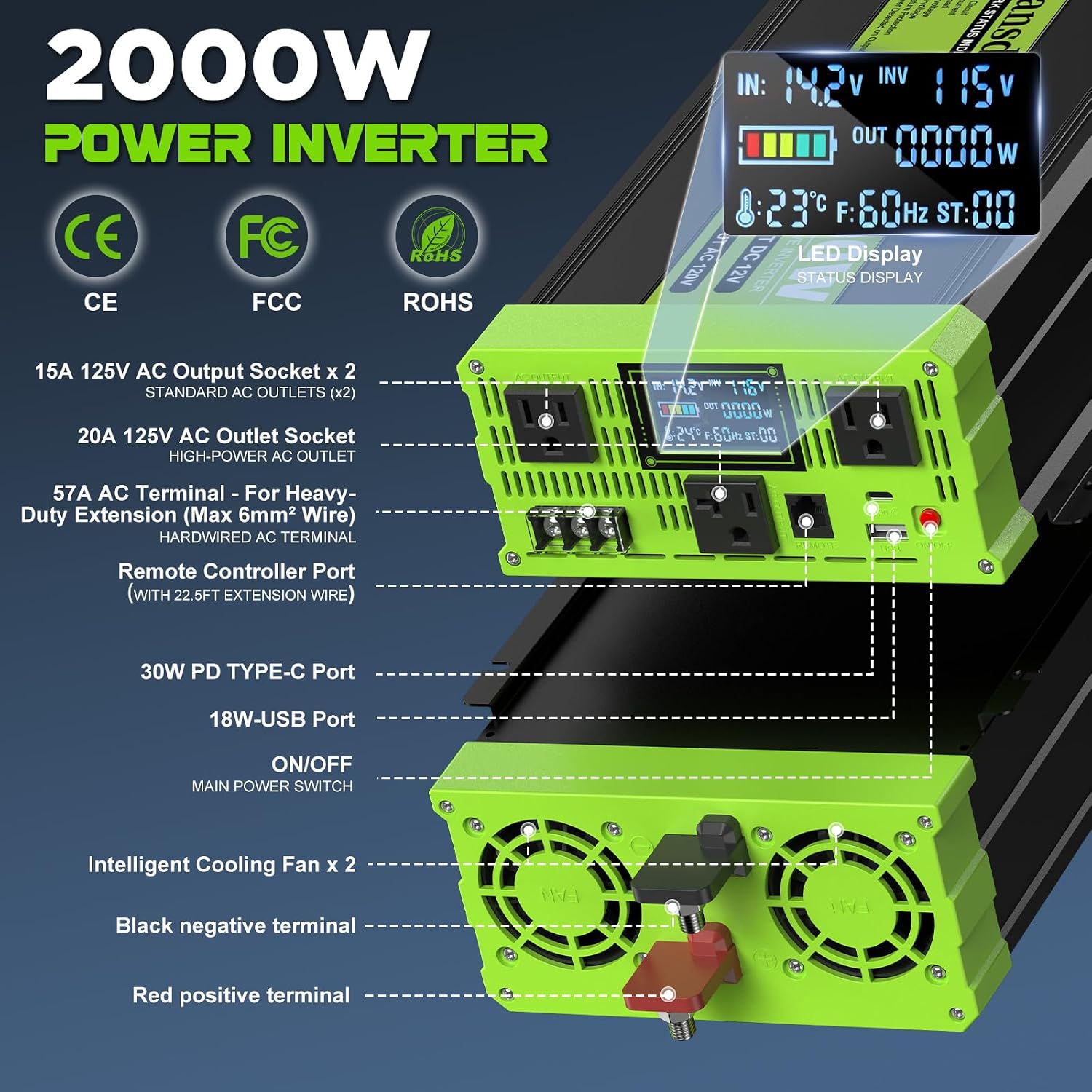
It includes 3 AC outlets and one hardwired terminal for higher-current appliances or tools, plus charging ports: a 30W USB-C PD port and additional USB power. There’s also a wired remote with an LCD screen so you can monitor battery voltage, current power output, and error codes.
What to know before you buy
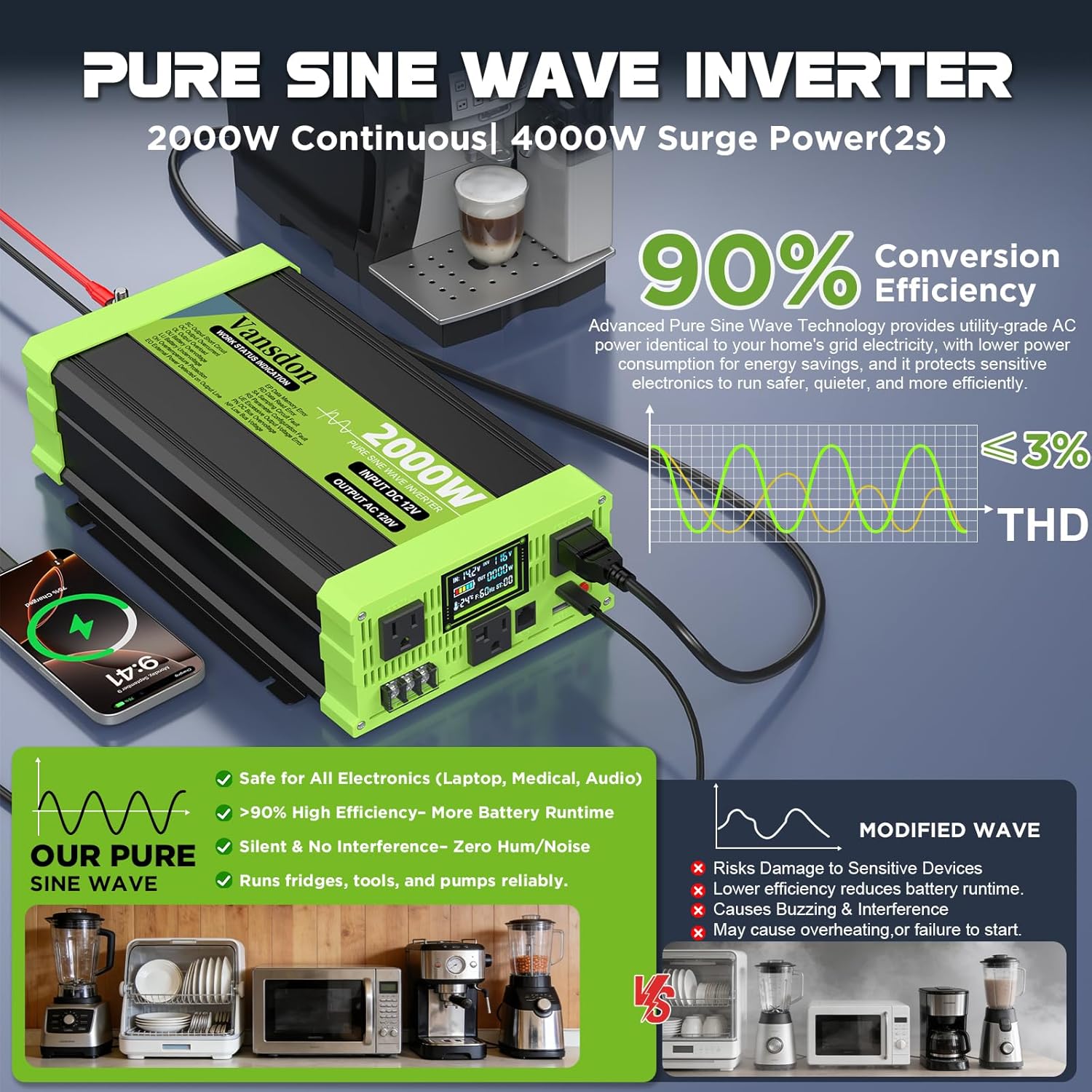
The rated capability is 2000W continuous output, with a stated surge up to 4000W. That surge figure is relevant if you plan to run motor-driven loads—think refrigerators or power tools—because starting currents can be much higher than steady running draw.
Also pay attention to the input/output regulation claims. The inverter is described as maintaining 115–120V when input is at or above 12V, and keeping output at least 110V even when input drops to 10–11V. If you’re planning to run devices that don’t like voltage swings (the listing specifically calls out CPAP machines, computers, mini fridges, water pumps, and coffee makers), this regulated approach is the kind of feature that makes a difference.
One limitation to keep in mind: the listing notes cooling behavior tied to internal temperature thresholds and load percentage. In other words, if you’re pushing it hard for long stretches, heat management will matter, and your battery capacity and wiring quality still play a major role.
Key features that matter in daily use
The “pure sine wave” angle is the most practical differentiator here. Compared with modified sine wave designs, pure sine wave is meant to produce cleaner power with less waveform distortion—helpful for electronics that are picky about power quality. The listing claims grid-identical AC behavior, low THD, and wording like “minimizing energy waste” and “no-load loss,” which are exactly the kinds of details you notice when you run off a battery.
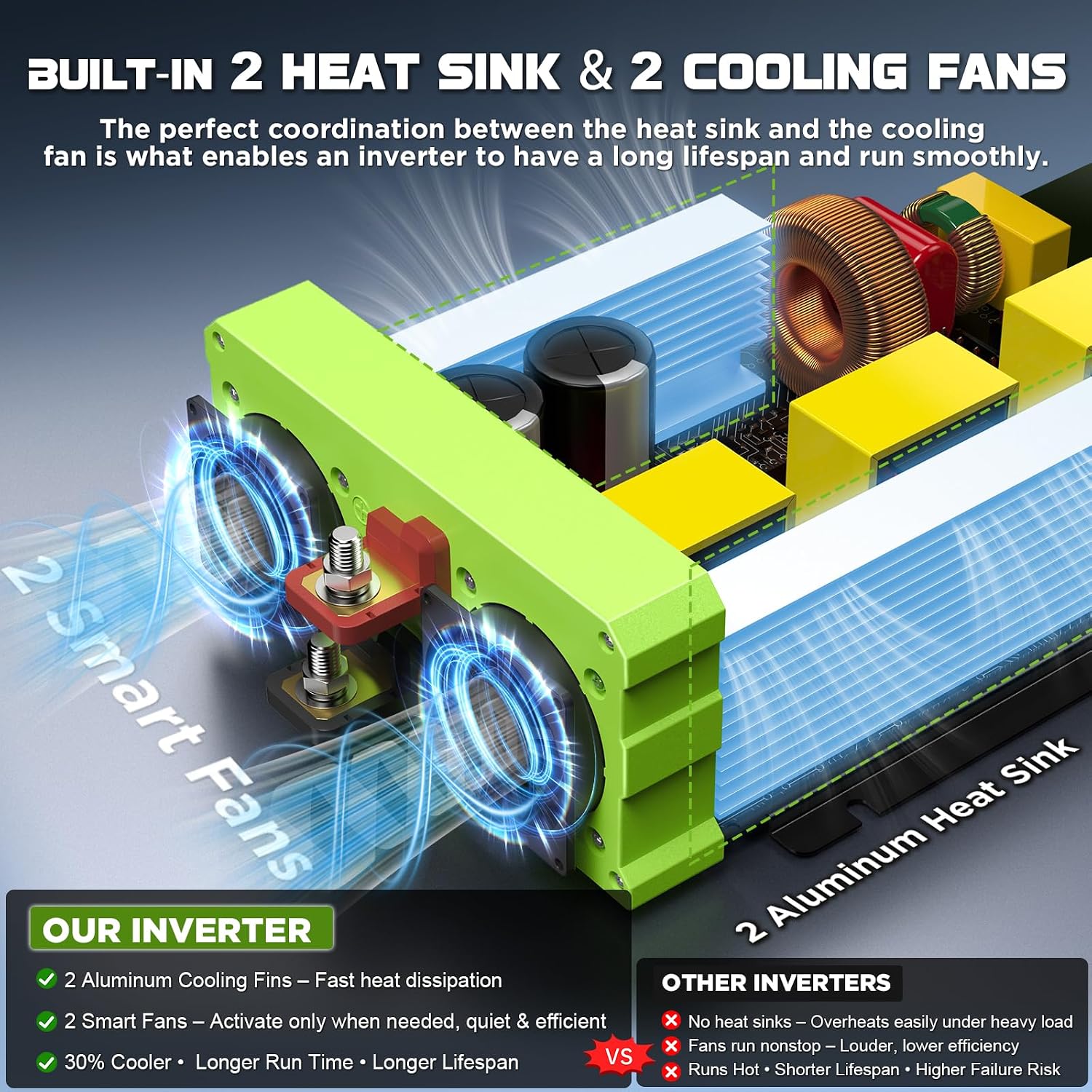
On top of that, the inverter includes a dual cooling system with aluminum heat sinks and smart fans. When internal temperature exceeds 140°F (60°C) or the load hits 35%, the fan auto-activates for faster cooling. The protection layer is also emphasized: it’s described as using a 7-layer circuit protection set for conditions like over/under voltage, overload, short circuit, over-temp, and reverse polarity.
How it connects (and why it’s not just “another outlet inverter”)
A lot of inverters give you one simple outlet setup. This one goes further with 3 AC outlets plus a hardwired terminal for higher-power electrical appliances/tools. That can be useful if you want a more permanent connection for certain devices rather than relying only on cords and plugs.
Charging is handled too. The inverter includes a 30W USB-C PD port and a 5V/2.1A USB port for powering or topping up smaller devices. The listing also describes using mixed loads at the same time—example use includes running a microwave and an electric skillet together, and charging a laptop from 0 to 50% in under an hour (as described).
Usage tips
If you want the clean-power benefits to actually show up, start by matching loads to the inverter’s reality. Heavy motor start-ups are where things can get tricky on any inverter.
A practical scenario: say you’re in an RV and want to run a small vent fan and LED lighting while charging a laptop via USB-C. With this setup, the pure sine wave design and multi-port charging mean you can keep sensitive electronics happier while distributing power across outlets and charging ports.
And if you’re using it off-grid at home, the wired LCD remote is the kind of detail that helps you stay ahead of problems. Instead of guessing, you can monitor battery voltage, current power draw, and any error codes before the system shuts down unexpectedly.
When it makes sense (and when it doesn’t)
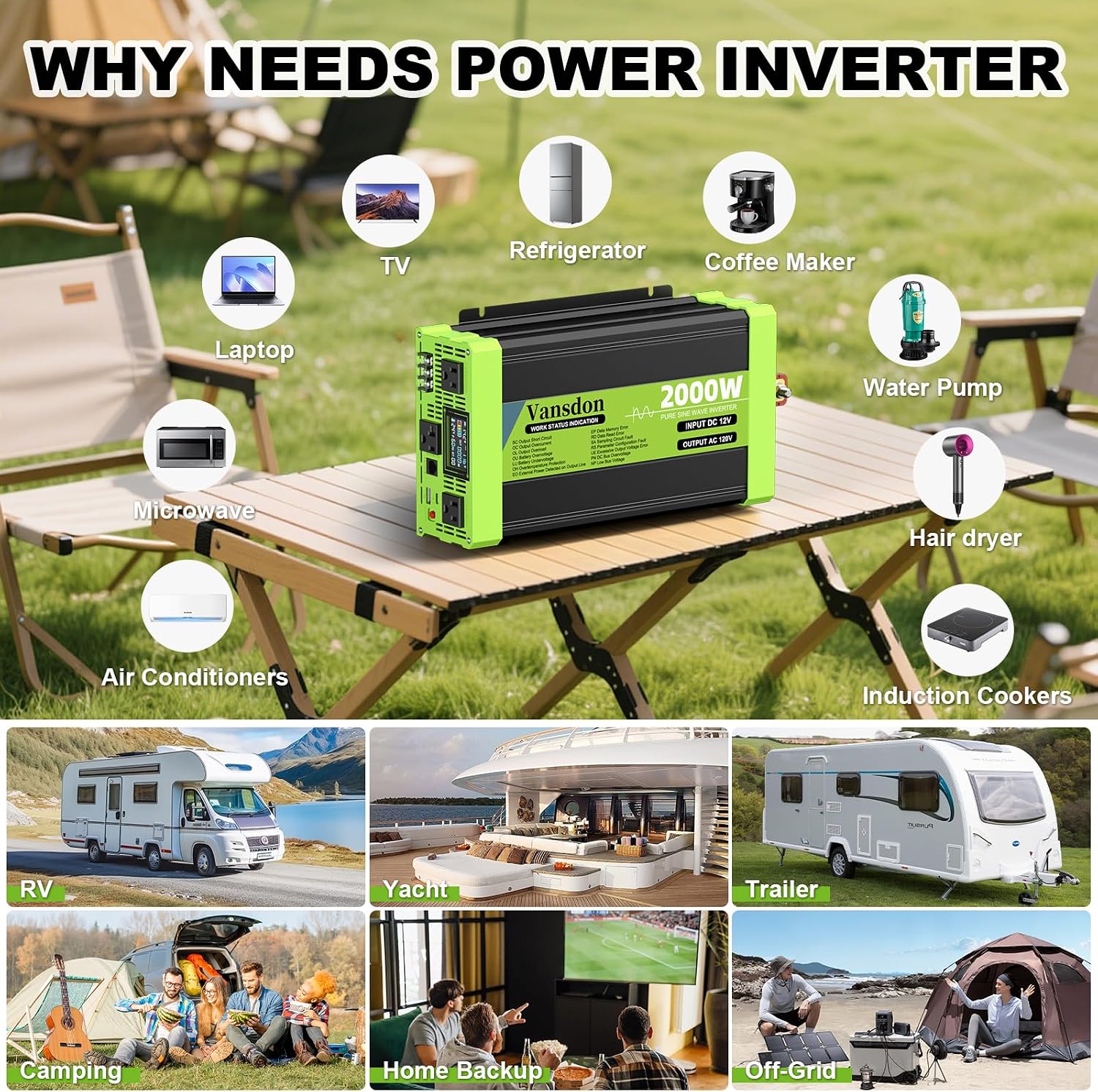
It makes sense if you need a 12V-to-120V inverter for RV essentials, solar/off-grid use, or truck/home backup where you care about cleaner power for sensitive electronics—and you want more than one AC connection method.
It may not suit you as well if your goal is only basic, low-power charging and you don’t need pure sine wave behavior or the added connection options. And if your plans heavily rely on sustained high loads without considering battery capacity and heat management, you could find that it feels more “workable within limits” than “effortless power.”
Tech specs
- Name: Vansdon 2000W Pure Sine Wave Inverter (12V DC to 120V AC)
- Type: Inverter
- Output power: 2000W continuous
- Surge power: 4000W
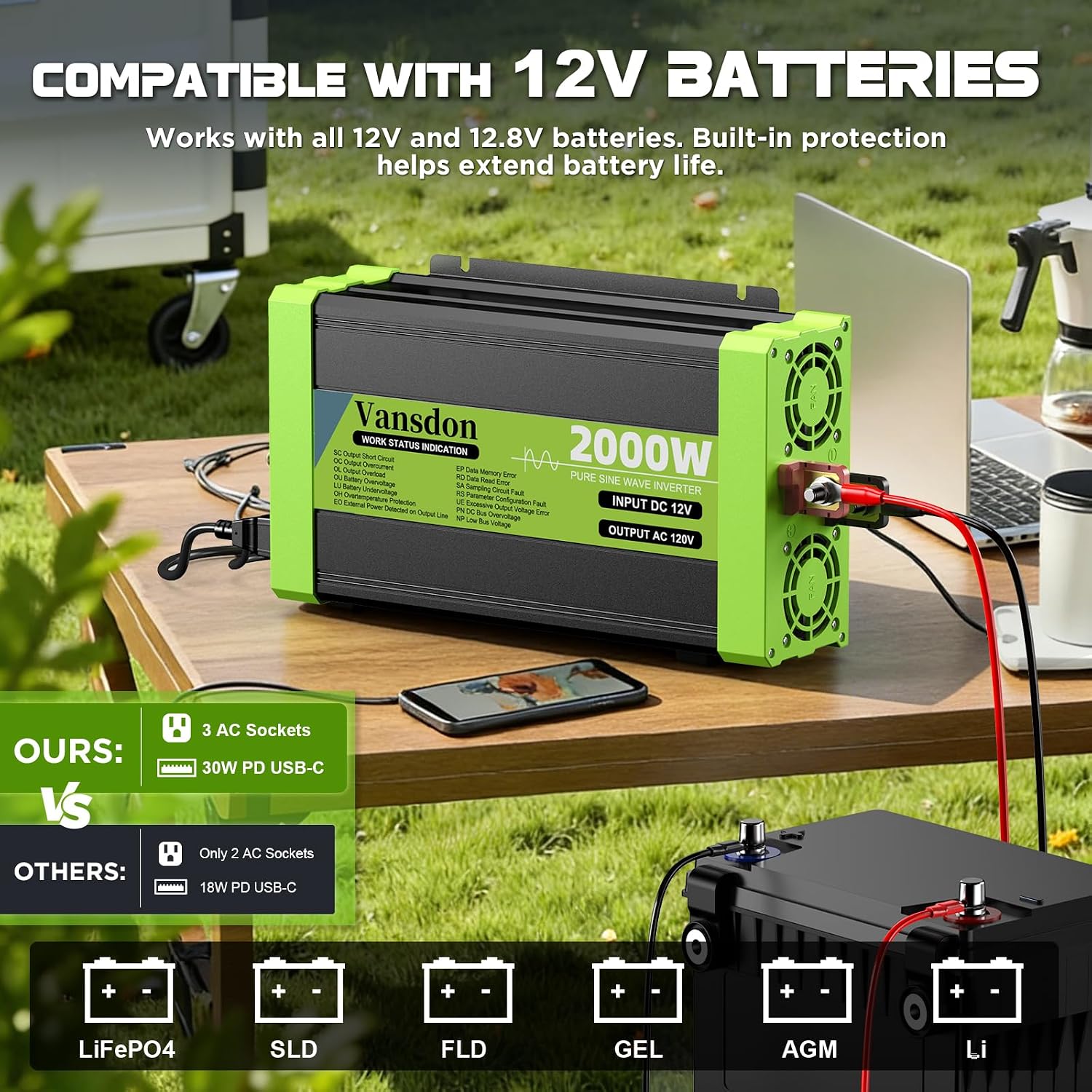
- AC outlets: 3
- USB-C PD: 30W
- Remote control: Wired remote with LCD display
Should you buy it?
Buy it if you want pure sine wave AC output from a 12V battery, you expect to run a mix of sensitive electronics and higher-startup loads, and you like having a hardwired terminal plus multiple charging options. The regulated output claim and the cooling/protection emphasis are also the right signals for off-grid and RV-style use.
Skip it (or reconsider) if you only need very light power and prefer the simplest inverter approach, or if you don’t plan to manage load size and starting surges responsibly. In this category, the inverter is only part of the equation—your battery health, wiring, and realistic load planning will decide whether the experience feels smooth or stressful.
Mini FAQ
Is this a pure sine wave inverter?
Yes. The listing positions this as a pure sine wave inverter intended to produce cleaner, grid-like AC power.
Does it support devices like CPAP machines?
The product description specifically mentions CPAP machines as a type of sensitive device that benefits from regulated, stable output.
How do you monitor what’s happening?
It includes a wired remote with an LCD screen showing real-time battery voltage, current power output, and error codes.
Does it have both outlets and a hardwired connection?
Yes—3 AC outlets plus a hardwired terminal are included for different appliance/tool connection needs.