

Tymate RV Tire Pressure Monitoring System (M12-3) with Solar Charge, 4 Sensors, LCD Display
Product description
If you drive an RV, tire pressure isn’t just a maintenance chore—it’s part of how safely and smoothly you travel. The Tymate RV Tire Pressure Monitoring System (M12-3) is built for that “check it without thinking” routine, with real-time monitoring, multiple alarm modes, and a solar charging setup meant to keep things running with less hassle.
It’s not a high-end lab device, and the experience will still depend on correct sensor placement and how your RV’s tires behave over time. But on paper, it’s a practical TPMS approach for RV owners who want clear alerts and an LCD display that’s meant to be readable when driving conditions change.
Key takeaways
The M12-3 focuses on five alarm types and a reference-based setup after pairing, so the system can flag abnormal conditions instead of only shouting a single generic warning. You also get an auto backlight plus sleep/wake behavior—small features, but they matter when you’re bouncing between campsites, parking spots, and long drives.
One more detail worth noting is the tire position exchange function: if you rotate or swap where a sensor sits, you can change the sensor position in the monitor without reinstalling everything.
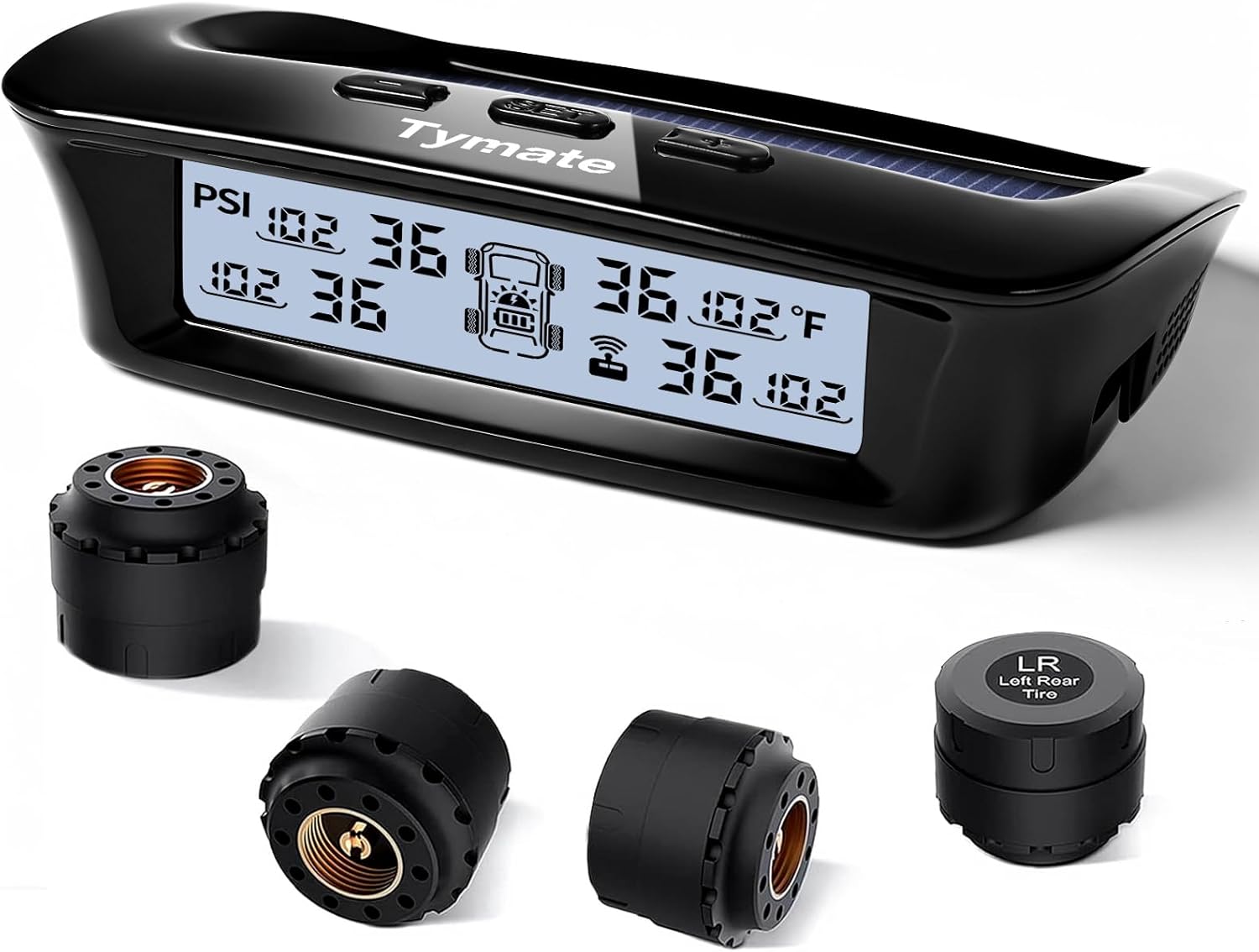
That’s a nice quality-of-life feature. Still, it won’t help much if you ignore sensor pairing steps or you routinely change tire positions without updating the system.
What it’s designed to do (and why it helps)
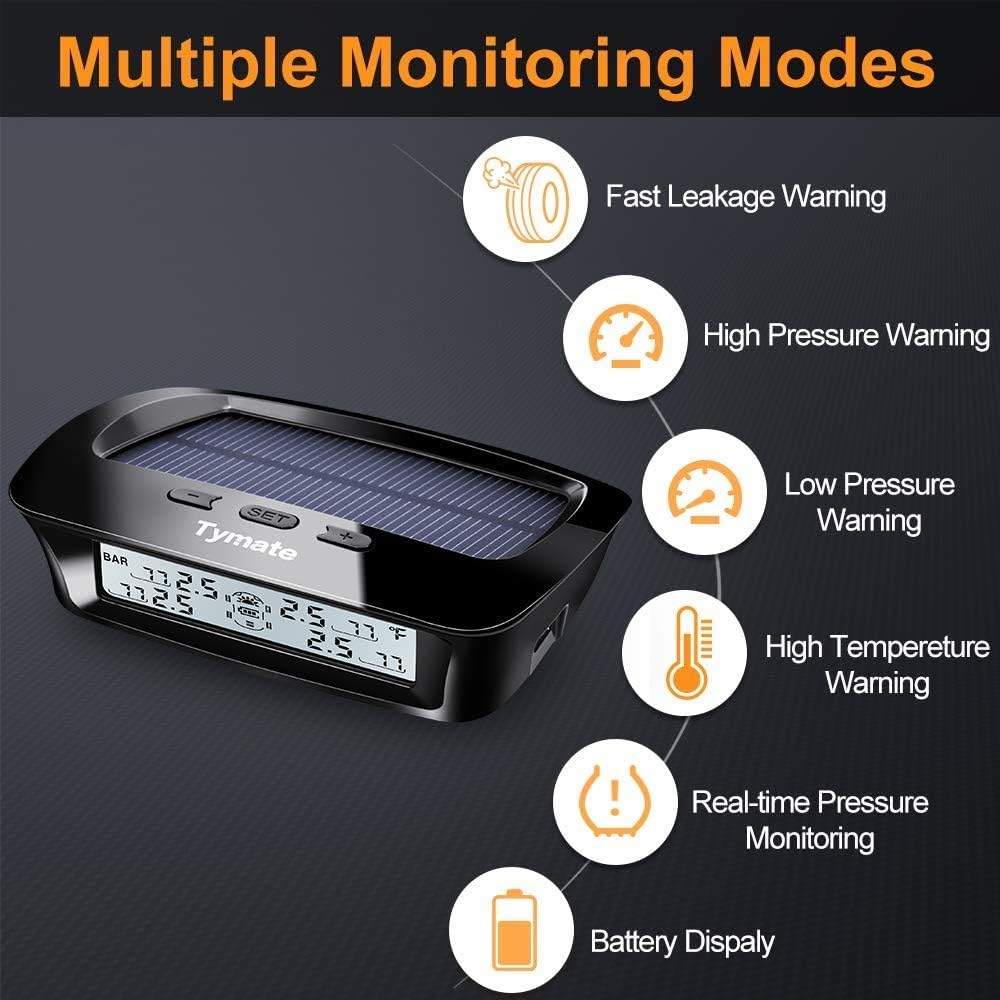
This RV TPMS system monitors tire pressure and related conditions continuously, using 4 external sensors. When something looks off, it’s set up to notify you with alarm modes for:
- High pressure
- Low pressure
- High temperature
- Rapid air leakage
- Sensor low battery
In a real-world RV routine, this can be the difference between noticing a problem after it becomes obvious vs. being warned while you’re still in the “catch it early” window. For example, imagine starting a highway drive after a short stop: if a tire is losing air faster than expected, an alert mode aimed at rapid leakage is designed to bring that to your attention before you keep rolling.
Where it shines day to day
Several design choices in the M12-3 are aimed at daily usability.
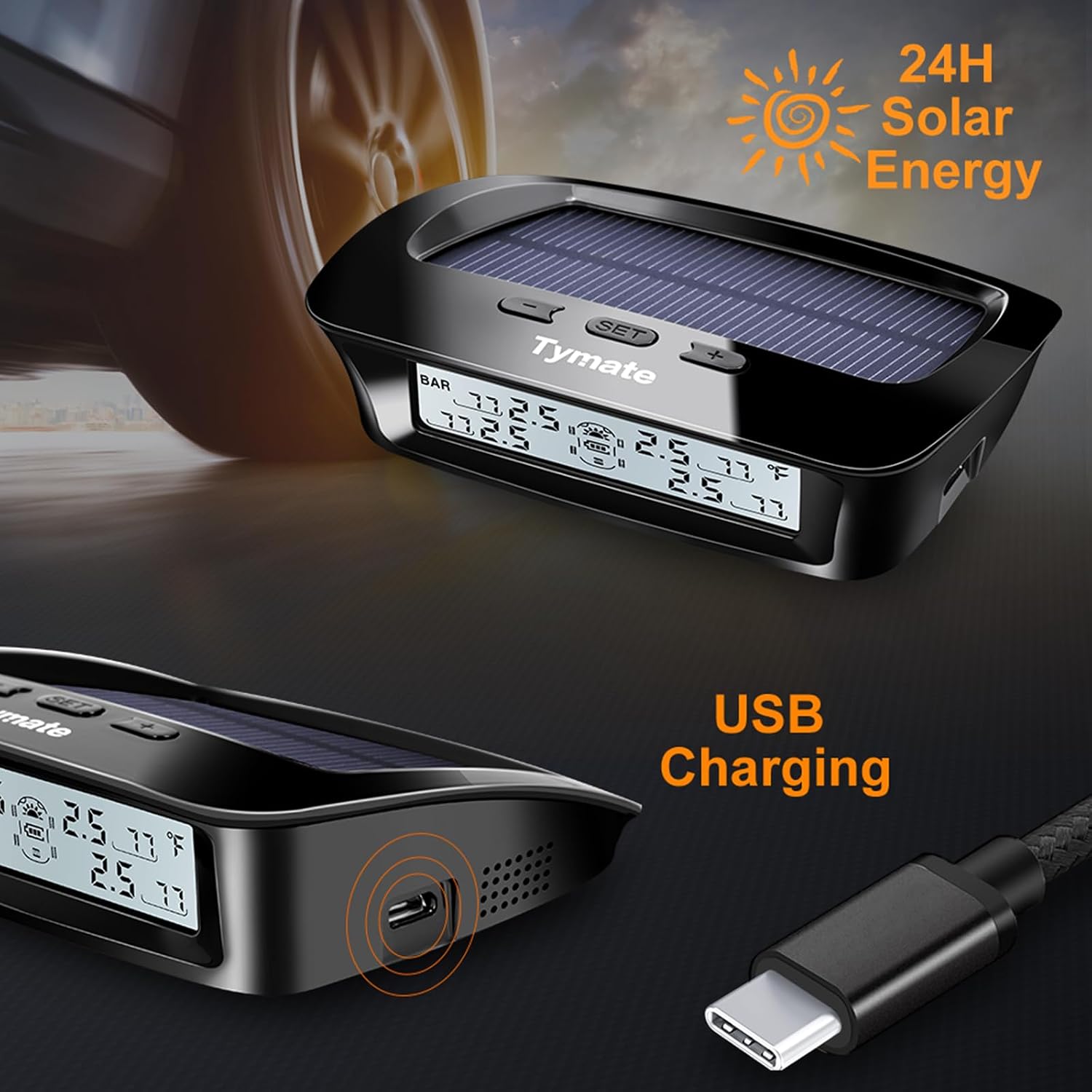
First, the solar charging approach is meant to reduce the “will the system die on me?” worry by using automatic solar charging and also allowing AC/DC charging when there’s no sunlight. That matters if your RV sits for stretches of time or you spend more days parked than driving.
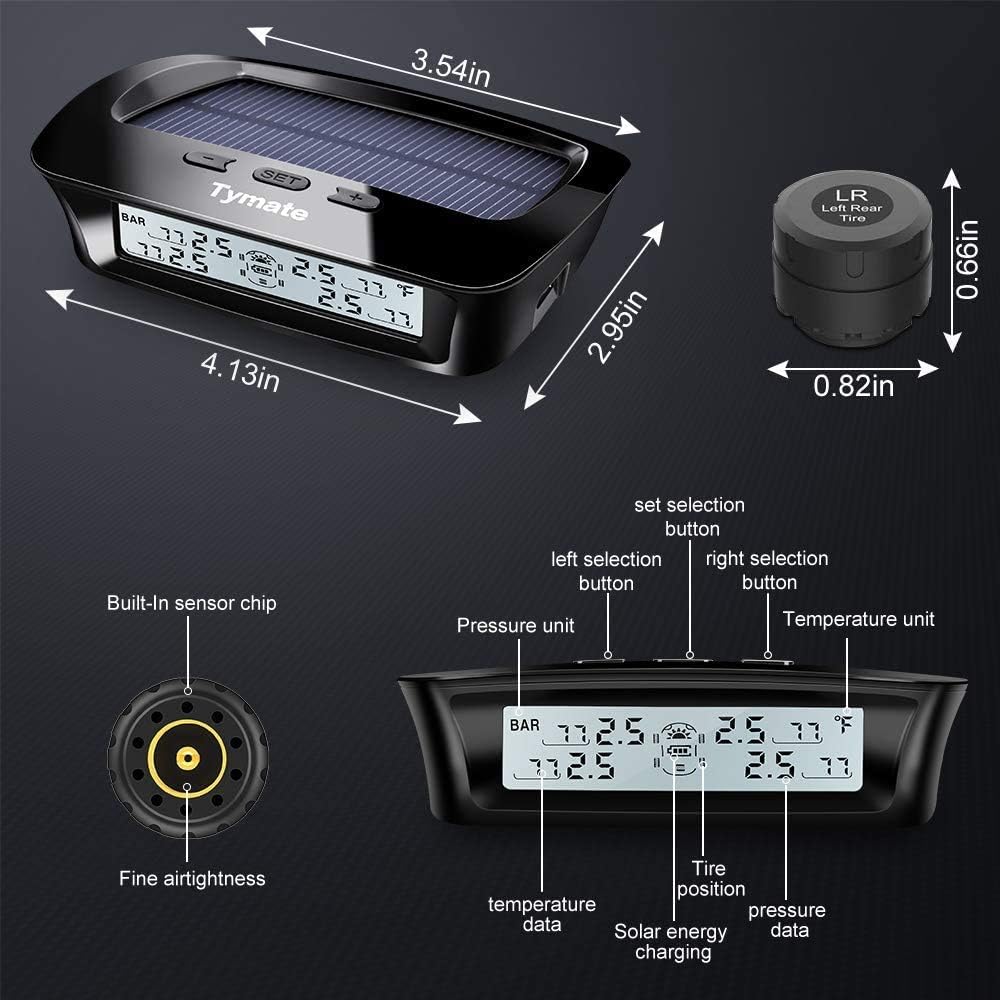
Second, the display experience is built around changing light. The auto-adjustable backlight is intended to keep the data visible in low light or strong light environments.
Third, the sleep and awake behavior is meant to save energy: it enters sleep after the vehicle stops running for 10 minutes and wakes when the car is turned on. That kind of cycle can help prolong the monitoring life rather than keeping everything active constantly.
Finally, the sensors are described as low power consumption with a long working-life claim of up to 2 years.
Tech specs
- Type: RV Tire Pressure Monitoring System (TPMS)
- Sensors: 4 external sensors
- Measuring range (PSI): 0–87 PSI
- Alarm modes: five alarm modes (high pressure, low pressure, high temperature, rapid air leakage, sensor low battery alarm)
- Reference pressure behavior: after pairing, it automatically sets current pressure as the reference pressure
- Alarming range vs. reference pressure: +25% PSI to -15% PSI of reference pressure
- Display: LCD display with auto backlight
- Power behavior: auto sleep mode after 10 minutes of not running, wakes when vehicle turns on
- Solar charging: automatic solar charging, with the option for AC/DC charging when there’s no sunlight
- Sensor accuracy (given): error range ≈ 3 PSI
- Sensor battery/life (given): up to 2 years maximum
- Special feature: tire position exchange without reinstalling sensors
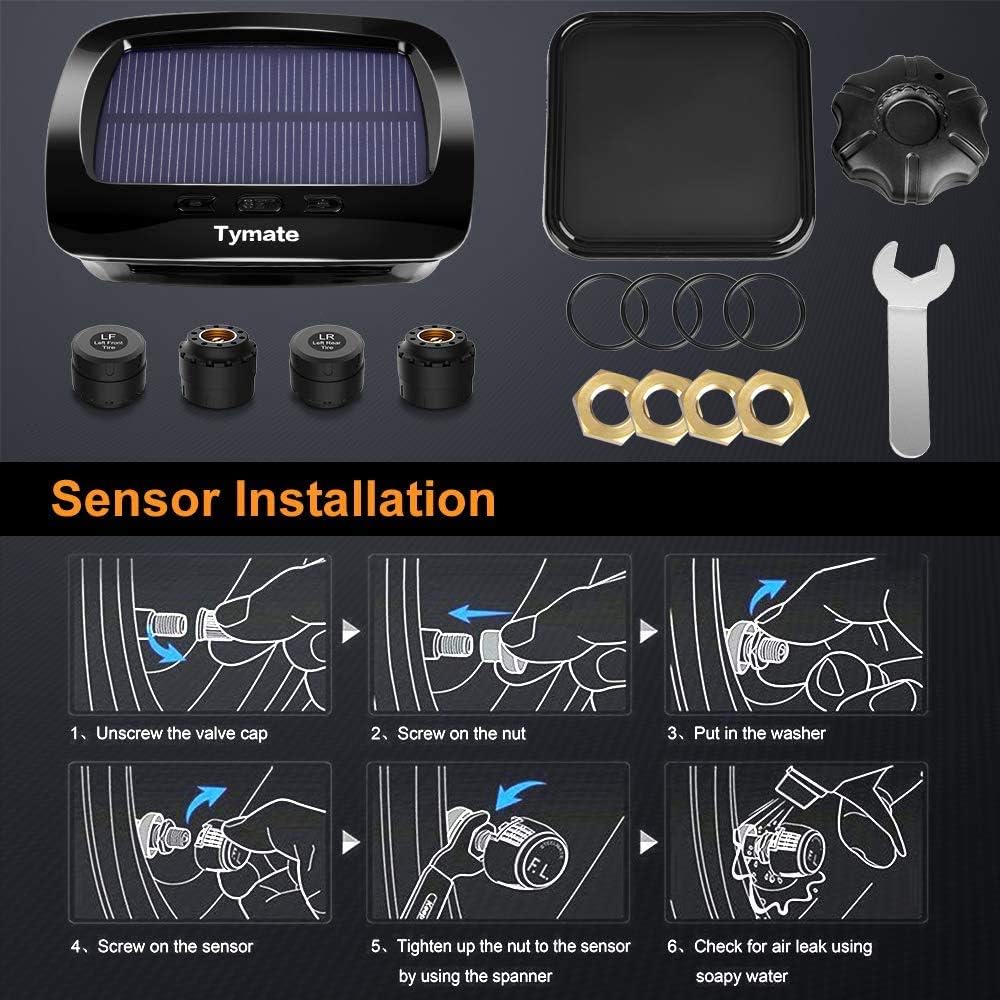
- Installation: described as easy to install
Who should buy it (and who should skip it)
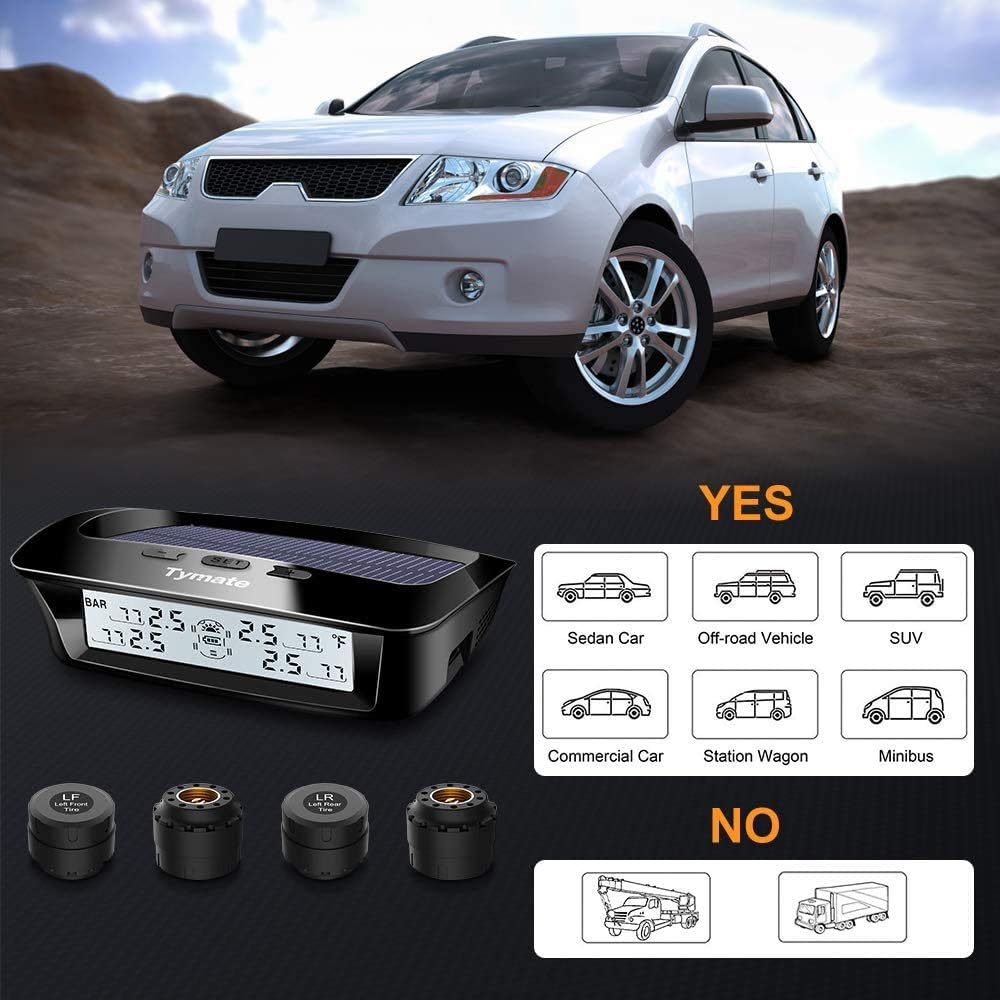
It’s a solid pick if you want an RV TPMS that prioritizes continuous monitoring, multiple alarm types, and a solar charging approach so you’re not constantly thinking about powering the system. You’ll also appreciate the tire position exchange feature if you rotate or swap sensor locations as part of routine tire care.
It may not suit you if you’re looking for very fine-grained diagnostics beyond what the alarm modes cover, or if you tend to ignore calibration/reference steps after installation. Since the alarming range is based on a reference pressure set after pairing, the system’s “normal” baseline depends on getting that setup right.
Also, if your RV’s setup changes often and you don’t want to manage sensor positioning in the monitor, you might find that part of the workflow a bit annoying.
Should you buy it?
Buy the Tymate M12-3 if you’re trying to make tire pressure monitoring feel more automatic—solar charging, an LCD display with auto backlight, and multiple alarms are all aimed at keeping you informed while you drive.
Skip it if you only need basic tire pressure checks and don’t care about alarm modes like rapid leakage or temperature, or if you don’t want to deal with reference pressure setup after pairing and updating tire positions in the monitor.
For RV owners who want a practical TPMS that helps catch abnormal conditions earlier, it’s the kind of system that makes sense to have in your setup—just remember that correct installation and pairing are doing a lot of the heavy lifting.
Mini FAQ
Does it work with four tires/sensors?
Yes—this kit is described as including 4 external sensors for RV TPMS monitoring.
How does the system decide what counts as “abnormal”?
After pairing, it automatically sets the current pressure as the reference pressure. The alarming range is given as +25% PSI to -15% PSI of that reference.
Is the display usable in bright or dark conditions?
It’s described as having an auto-adjustable backlight intended to help readability in low light or strong light.
What happens when the RV is parked for a while?
The system is described as entering a sleep energy-saving mode after the vehicle stops running for 10 minutes, and then waking when the vehicle is turned on.
Can you avoid reinstalling sensors when rotating tires?
The system includes a tire position exchange function, so you can change the sensor position in the monitor without reinstalling sensors.