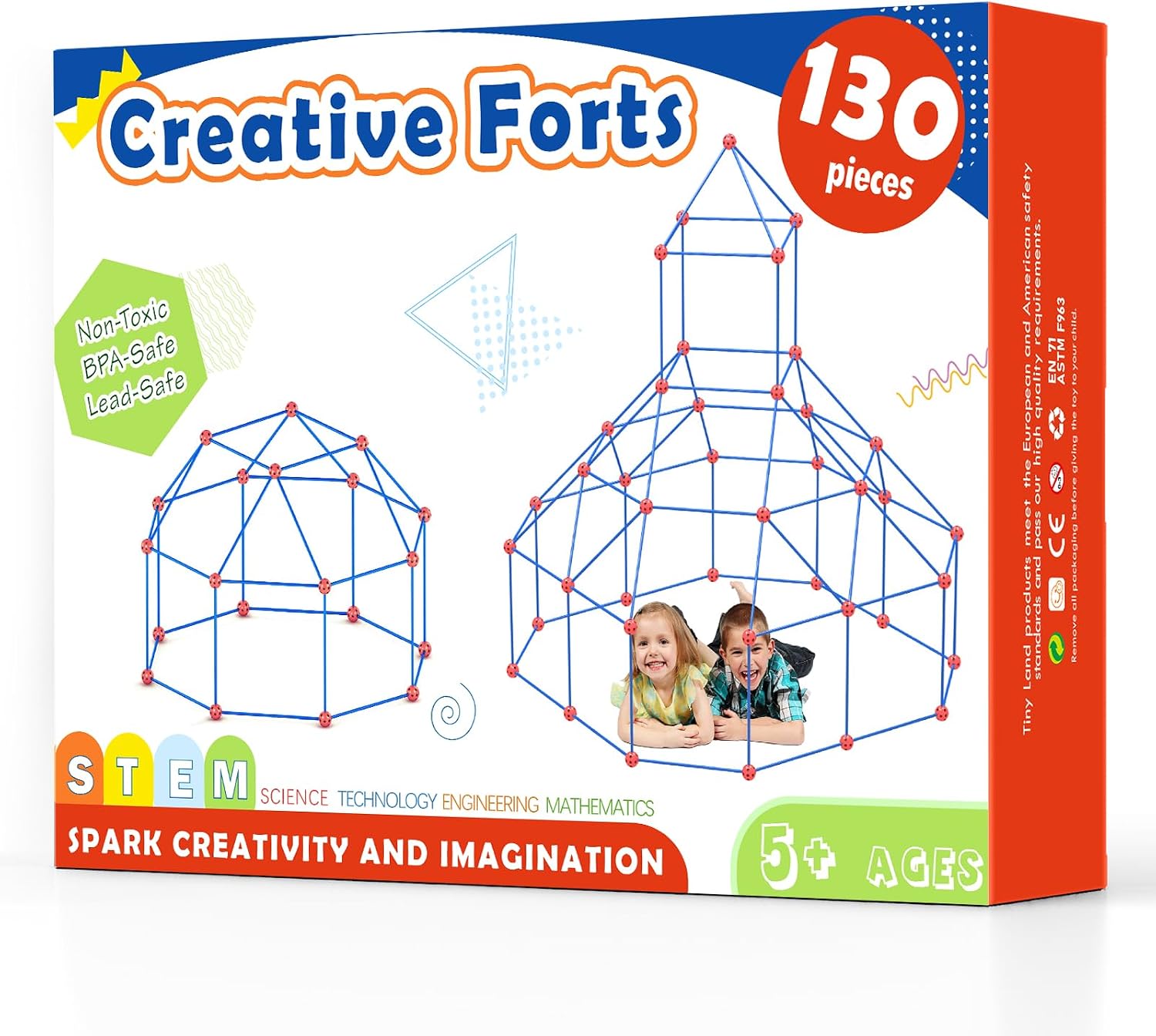
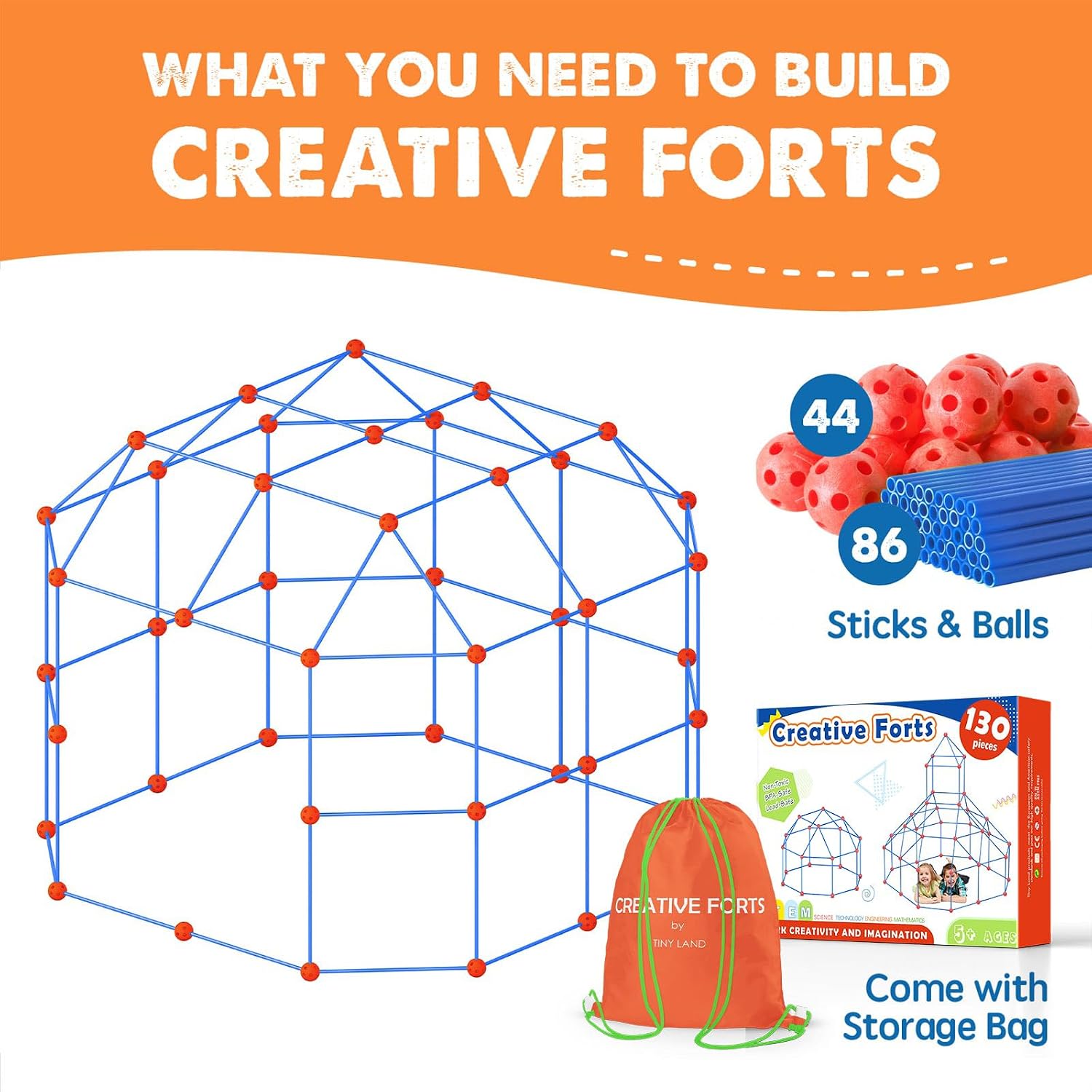
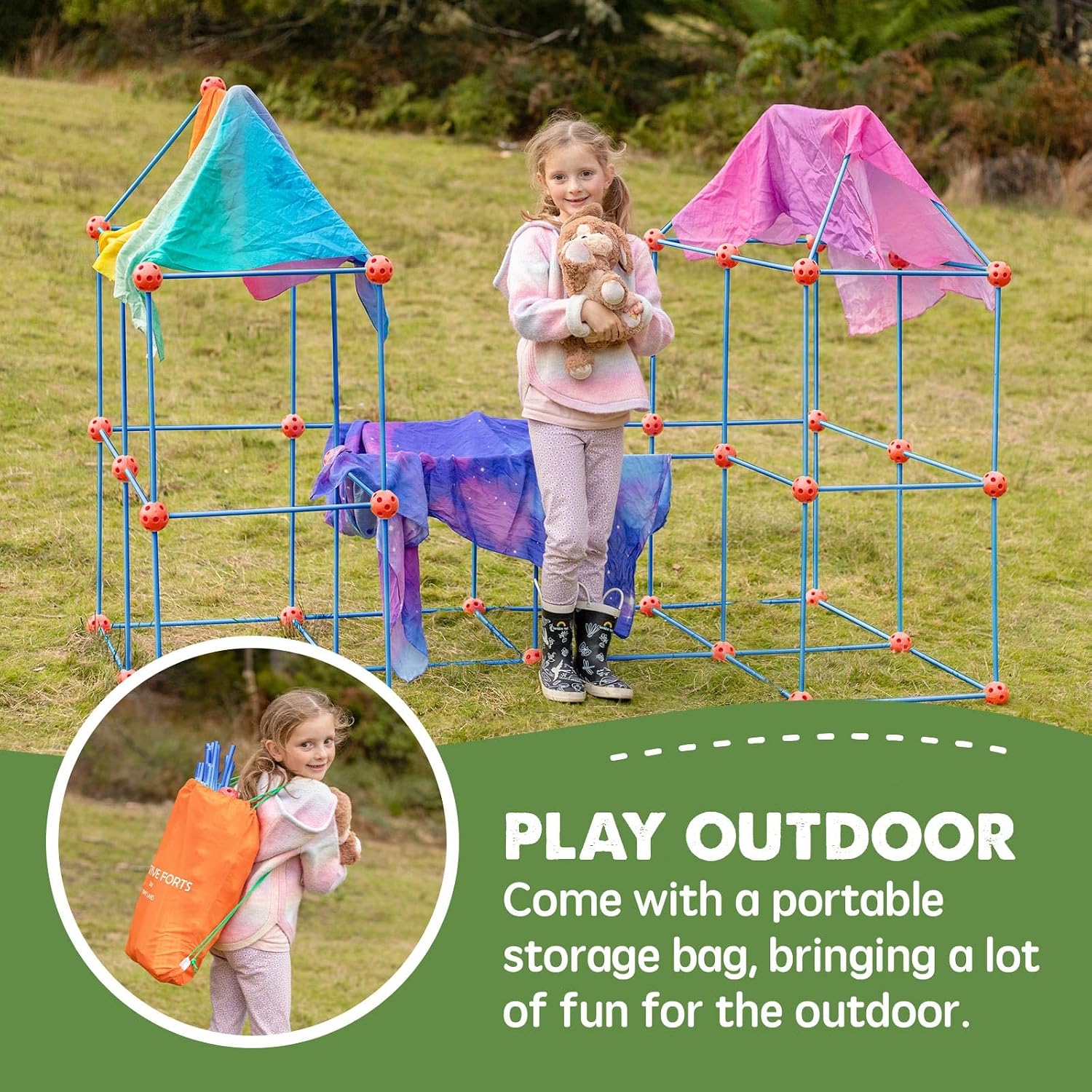
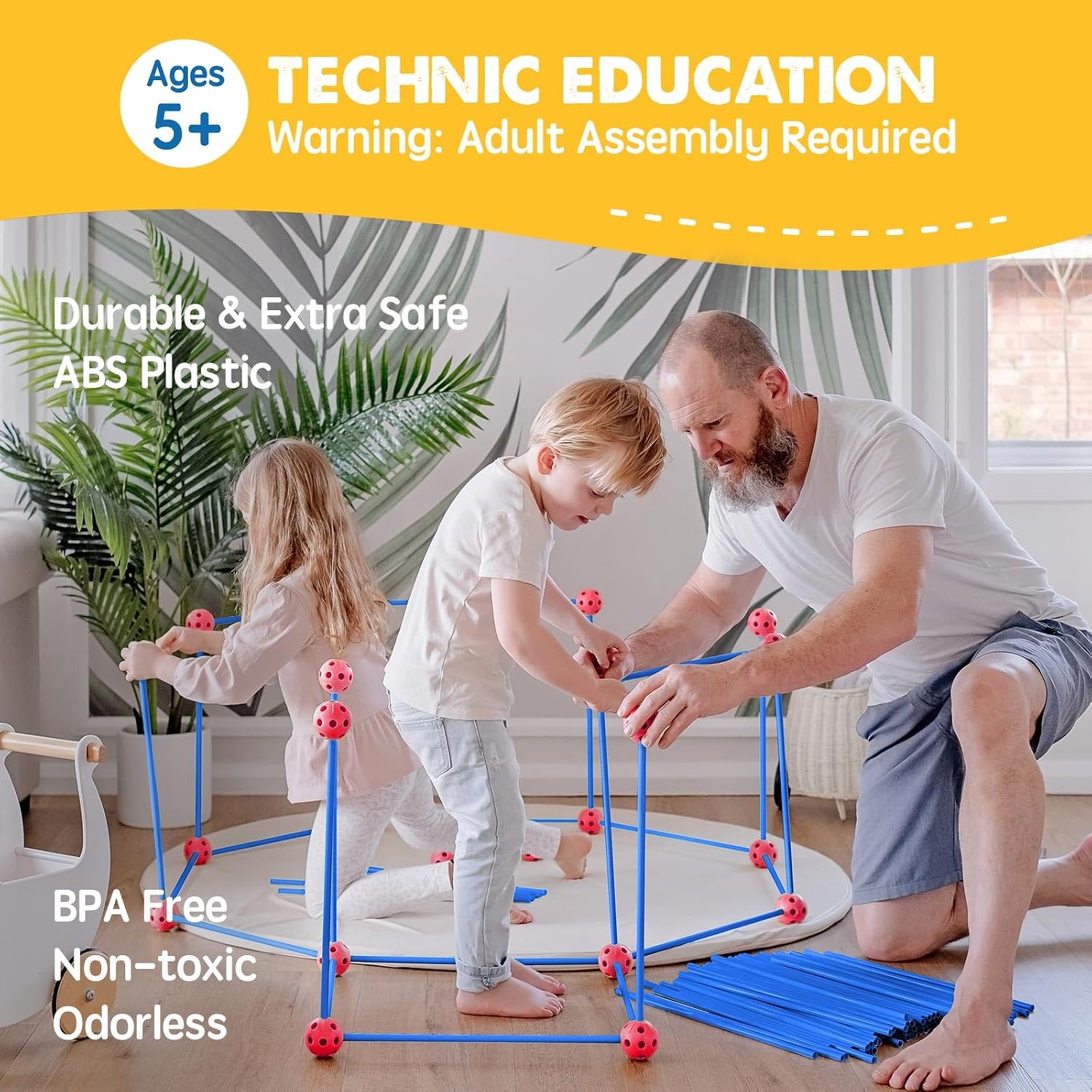
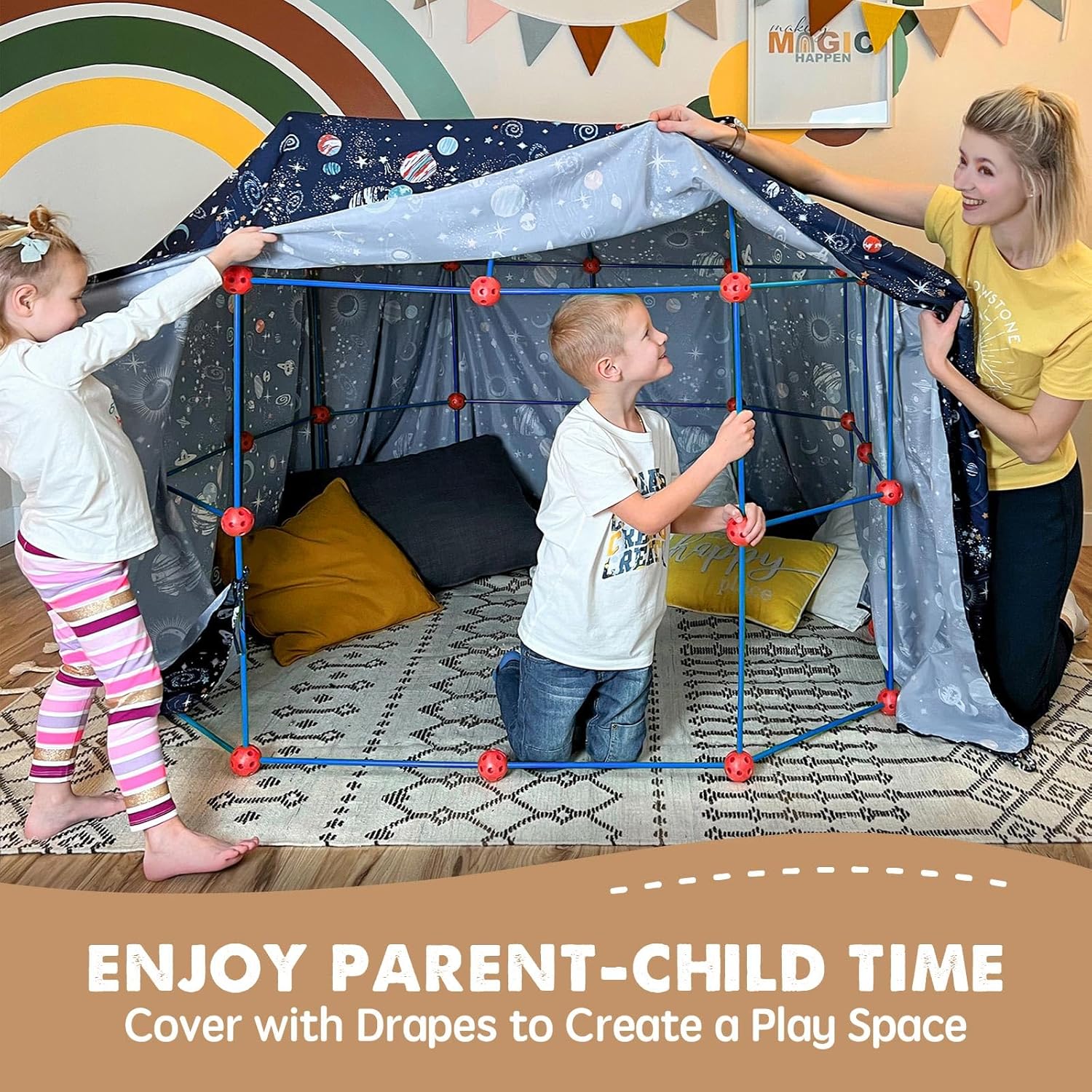
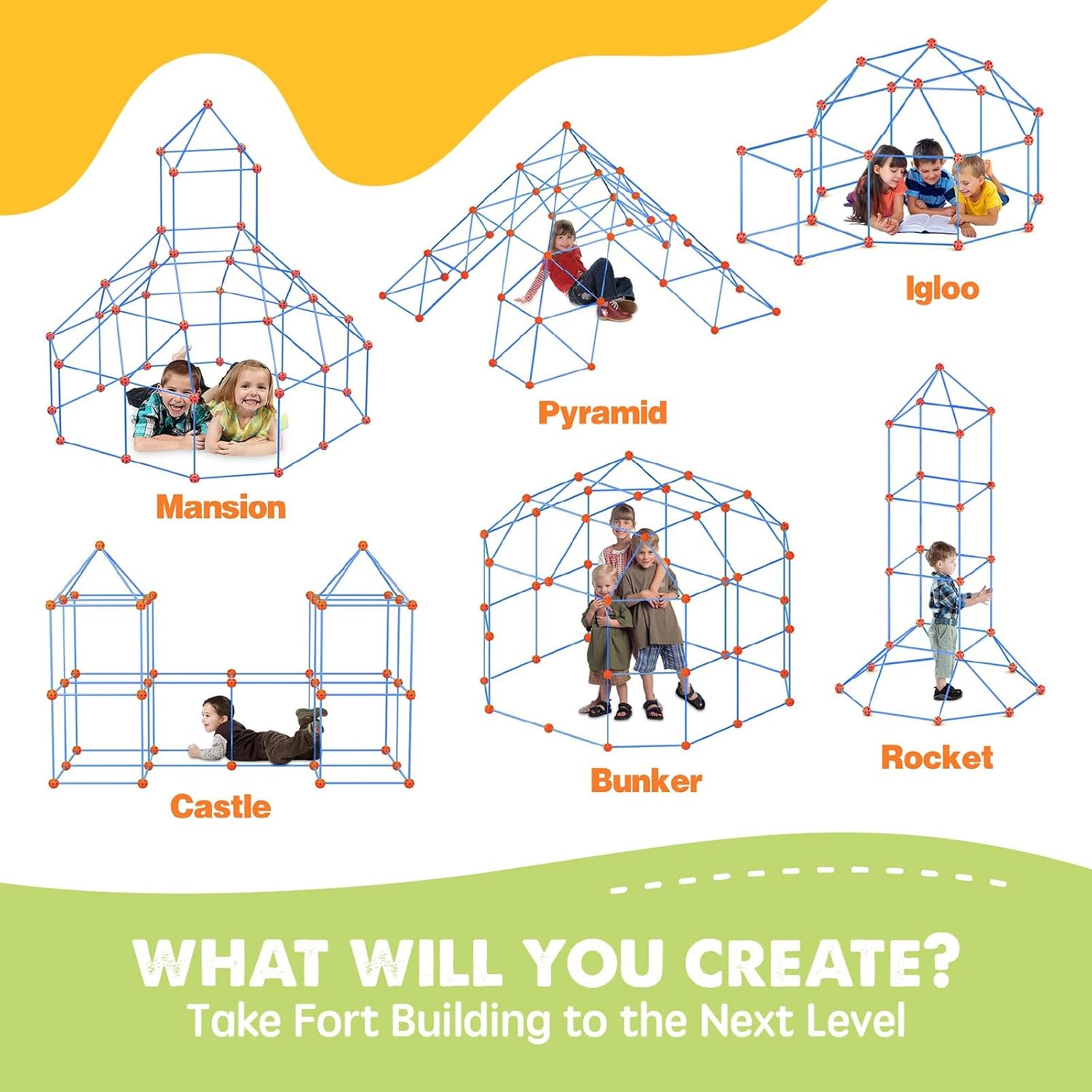
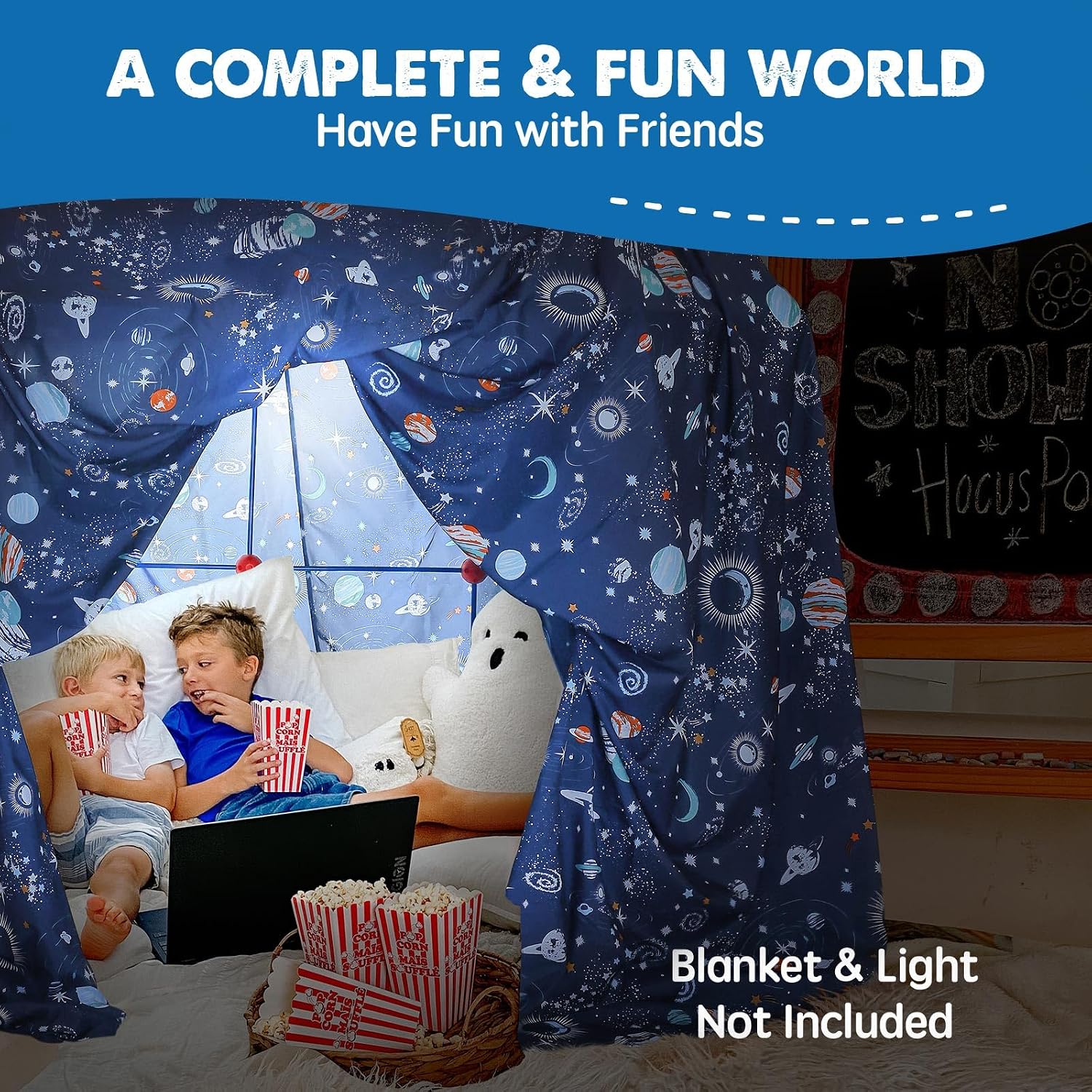
What it is and the need it addresses\nThe Tiny Land Fort Building Kit is a 130-piece set designed to help kids ages 4–12 explore building basics while engaging in hands-on, imaginative play. With 86 rods and 44 balls, it enables kids to build forts, tunnels, caves, tents, rockets, houses, and more. The kit is intended to be easy to assemble and disassemble, supporting iterative play and collaborative building with family. A storage pouch is included for keeping parts organized between sessions. On the table or outdoors, this kind of open-ended construction toy aims to spark creativity, problem-solving, and motor skill development through practical, tangible play.\n\n## What stands out in use\nOn paper, the system is straightforward: connect rods with balls to form stable structures that kids can reconfigure as their ideas evolve. This flexibility makes it possible to adapt a fort layout to the space you have, whether indoors or outside. Because you can build multiple forms—from tunnels to castles—the activity stays engaging over time rather than delivering a single destination.\n\n## Pros and what to watch for\n- Pros: Durable non-toxic materials (PP and a PP/PE mix) and a design that aims to stay together during play. The kit supports independent play for older kids and guided play with parents for younger ones. A big benefit is the storage bag, which helps reduce clutter after sessions.\n- Limitations: The description notes that the kit “won’t fall apart” in typical use, but real-world performance depends on how firmly joints are connected and how actively kids manipulate the pieces. If your space is very small or if younger children tend to yank components, you may want to supervise closely during setup.\n\n## Who it’s for\nThis kit seems well-suited for kids who enjoy building and imaginative setup—parents may also join in to help younger builders. It’s positioned as a family activity that can scale from simple to more complex structures as skills grow. For kids who love forts and creative spaces, the kit offers a tangible, hands-on alternative to screen time.\n\n## When it makes sense to buy\nConsider this set if you want a reusable, reusable-use toy that supports open-ended play and STEM-oriented exploration. It’s a practical birthday or holiday gift for families looking for a collaborative project that evolves with the child’s ideas. If you’re prioritizing rapid, single-purpose assembly, or if you need a compact, minimal setup, this kit might feel more than you need.\n\n## What to review before purchasing\nCheck that you have enough space to build and pull apart structures safely. Confirm you’re comfortable with a kit that relies on connecting rods and balls to form shapes, as the stability will depend on fit and technique. If you’re shopping for an option with a luminous variant, note that one other Tiny Land kit exists, but details aren’t provided here.\n\n## How it compares to broader options\nIn the realm of STEM building toys, this kit emphasizes open-ended construction rather than a fixed model. If you prefer a guided, step-by-step build, a more structured set might suit better. If you want an activity that supports collaborative play and ongoing reconfiguration, this approach generally fits the bill.\n\n## FAQ (quick notes)\n- What ages is it for? Suitable for kids 4–12.\n- Are the materials safe? The kit uses non-toxic PP and a PP/PE mix, and it meets ASTM F963-17 and CPSIA testing standards.\n- Is storage included? Yes, a storage pouch is included.\n- Can it be used outdoors? Yes, it’s designed for both indoor and outdoor play.\n- Is there a luminous version available? There is mention of a 130-piece kit with luminous function offered by Tiny Land.\n\n## Final verdict\nIs it worth it? If your priority is a versatile, family-friendly building toy that supports STEM-like exploration and long-lasting, reconfigurable play, this 130-piece kit offers a clear path to many structures and shared play sessions. It may not be the best fit if you need a compact, single-purpose alternative or if supervision is limited for younger children during initial assembly. Overall, it leans toward the middle of the market—more substantial than simple starter sets, yet not a premium kit.\n