


AIRAIN TECH 14-in-1 Wireless Weather Station (No WiFi) with Outdoor Sensor
Product description
The essentials
If you want a weather setup that’s more than “just temperature,” the AIRAIN TECH 14-in-1 Wireless Weather Station is built for live, multi-metric tracking. It’s designed to display a broad mix of readings—rain, wind speed and direction, air pressure, moon phase, indoor and outdoor temperature/humidity, and more—using wireless pairing between the outdoor sensor and the indoor console.
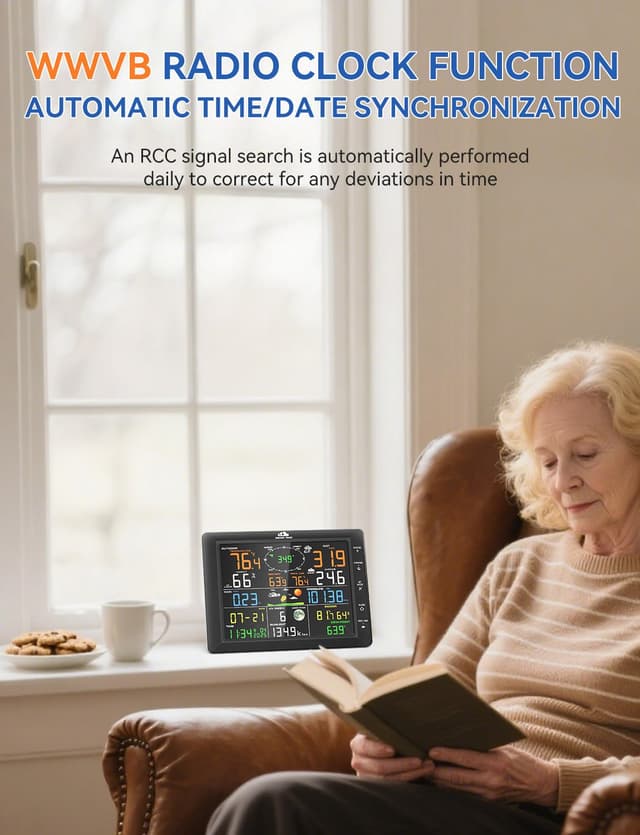
Where it gets interesting is the clock side too. The station includes a radio-controlled atomic clock signal (WWVB), so the time is meant to calibrate automatically. Add alarms for temperature, humidity, air pressure, and rain, and you end up with a station that’s not only informative, but also a little “heads up” when conditions drift.
That said, one limitation you should keep in mind: it’s explicitly listed as NO WiFi. So if your main goal is remote viewing on a phone app, this won’t match that approach.
Key features that affect real use
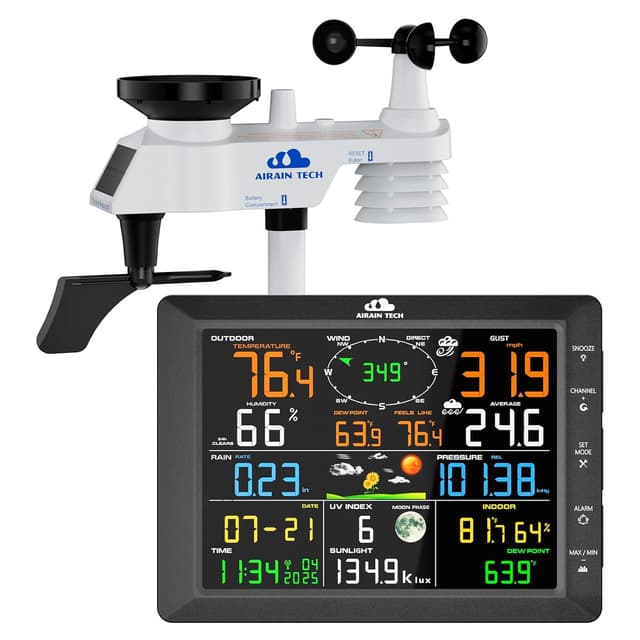
On paper, the feature list is long—and in everyday use, the value comes from how many different weather angles you can see at once. The indoor unit uses a large 8.5-inch LCD with adjustable brightness, which helps if you check readings often from different lighting conditions.
Here’s what stands out for day-to-day decision-making:
- Wireless sensor pairing, intended to remove tedious manual setup.
- Wind reporting with both speed and direction, plus wind chill index.
- Rain gauge data.
- Outdoor dew point and other outdoor context readings, alongside indoor temperature and humidity.
- Air pressure plus barometer support.
- A moon phase display, which can be surprisingly useful if you pay attention to outdoor activity planning.
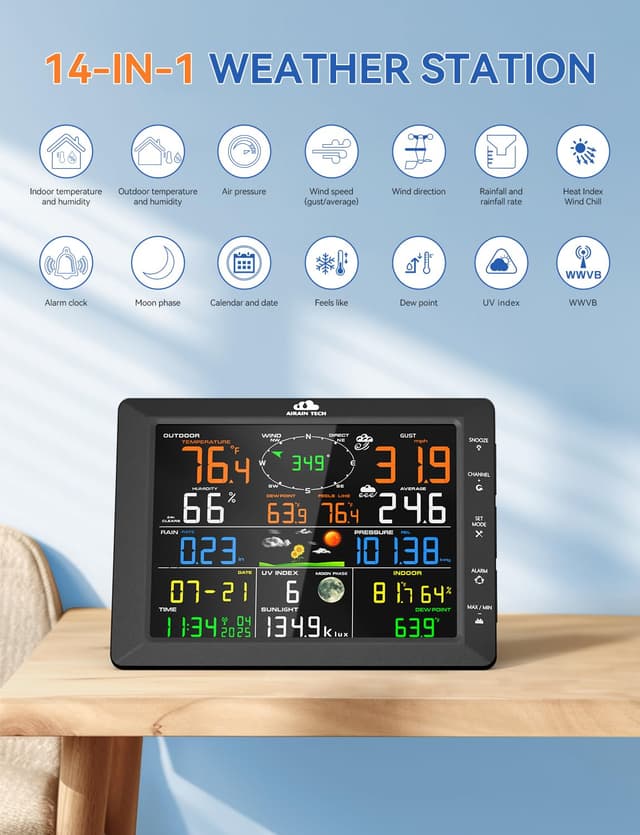
The station also includes weather-related alerts based on configurable alarms, so you’re not limited to passive monitoring.
Wireless range and power: what to expect
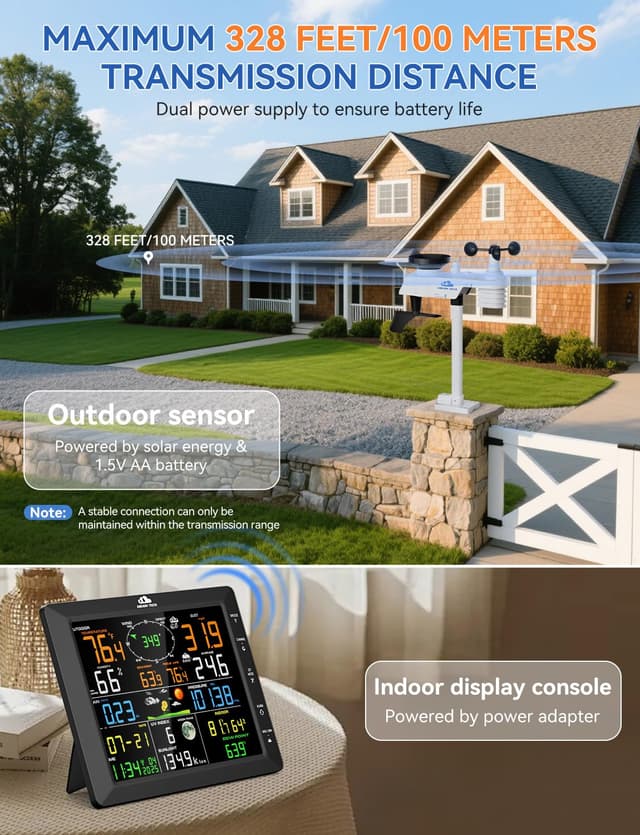
The system uses wireless transmission with a stated range of up to 100 meters (about 328 feet). The outdoor sensor is powered with solar energy and a battery, which generally means you don’t have to plan for hardwiring the outdoor part.
Still, “up to” range depends on your placement. Walls, building materials, and distance can affect the connection quality. The good news is the product is designed around automatic searching and pairing, so you’re not expected to constantly troubleshoot setup steps.
What’s it for (and who should avoid it)
This station fits best if you want a home weather display that feels like a dedicated weather instrument—clear, multi-metric, and usable without WiFi.
It’s a strong match if: It makes sense if you care about wind + rain + pressure trends in addition to temperature, and you prefer viewing everything from an indoor console. It also suits you if you want alarms for specific thresholds, not just scrolling through data.
It might not suit you if: It’s not for you if you need app-based remote access, because it’s described as NO WiFi. You may also want to skip it if your setup is extremely sensitive to signal interruptions and you can’t place the outdoor sensor in a reasonably open location.
Tech specs
- Name: AIRAIN TECH 14-in-1 Wireless Weather Station with Outdoor Wireless Sensor
- Type: Wireless weather station (No WiFi)
- Display: 8.5-inch LCD with adjustable brightness
- Transmission range: up to 328 feet (100 meters)
- Clock: Atomic clock signal (WWVB)
- Includes outdoor sensor: Yes (powered by solar and battery, per description)
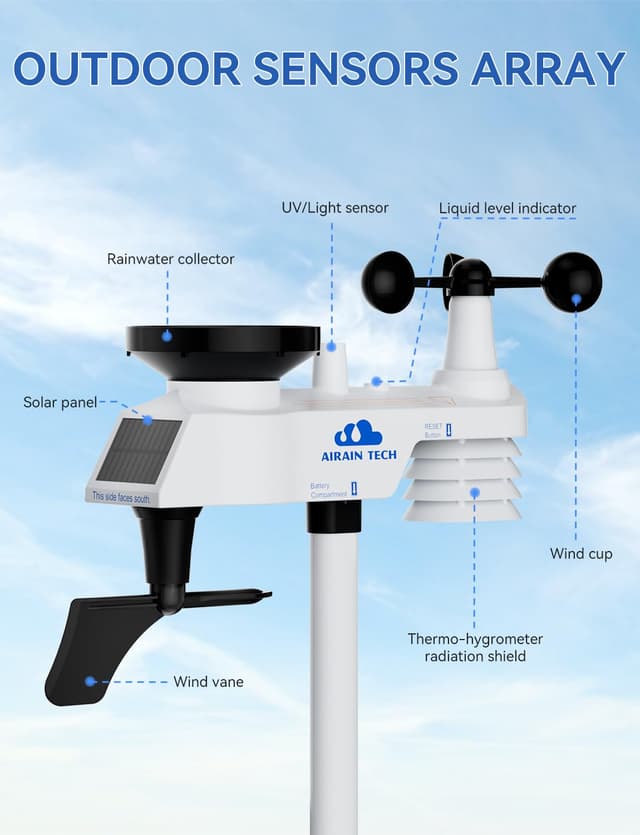
- Measurements/features mentioned: rain gauge, wind speed/direction, moon phase, wind chill index, outdoor dew point, barometer/air pressure, indoor & outdoor temperature and humidity, UV radiation, alerts/alarms
The buying checklist (what to verify before you commit)
Before purchasing, it helps to check a couple things that aren’t always obvious until you set up:
- Placement: make sure the outdoor sensor can be mounted where it has workable wireless reception within the stated range.
- Power expectations: since the outdoor sensor uses solar plus a battery, think about sun exposure where you plan to install it.
- Your “must-have” features: confirm whether NO WiFi is acceptable for your use case. If you’re expecting phone access, you’ll likely be disappointed.
- Alarm setup: if you plan to rely on alerts, take a moment to verify which readings you’ll use most (the description mentions temperature, humidity, air pressure, and rain).
Is it worth it?
This is worth considering if you want a wireless, multi-sensor weather station with a big, easy-to-read indoor screen and practical alerts—without needing any WiFi infrastructure. The atomic-clock approach (WWVB) and the wide range of displayed metrics make it a compelling “standalone weather console” for homeowners and anyone who likes seeing conditions at a glance.
But don’t buy it expecting smart-home or remote app access, because it’s explicitly positioned as NO WiFi. And as with any wireless setup, placement matters, you may need to experiment a bit to get stable readings depending on your home layout.

Quick FAQ
How does the station keep the time accurate?
It’s designed to automatically search for the WWVB atomic clock signal and calibrate the time, and you can select the correct time zone.
Does it work with WiFi?
No—this model is described as NO WiFi, so it’s aimed at direct console viewing rather than phone-based remote monitoring.
What outdoor sensor measurements are included?
The description includes wind speed/direction, rain gauge, outdoor dew point, and barometer/air pressure-related data, along with outdoor temperature.
Can it alert you when conditions change?
Yes. You can configure alarms for temperature, humidity, air pressure, and rain.
What kind of installation should I expect?
It’s described as wireless with automatic searching and pairing between the outdoor sensor and the indoor console, which generally reduces the manual setup hassle.