

Callsun 50W Flexible Solar Panel for 12V Systems (ETFE, 240° Bendable)
Product description
What it’s for and why people buy it
If you’re trying to keep a 12V setup topped off—without wrestling a rigid panel onto uneven surfaces—the Callsun 50W flexible solar panel is designed for that exact problem. It’s built to conform to curved roofs and marine-style mounting areas, where a standard “flat” panel can be a hassle to fit or look out of place.
On paper, the appeal is the combination of a very thin, bendable format and a weather-focused coating. You’re not buying this to replace a large fixed array for heavy daily cycling. You’re more likely buying it for battery maintenance, light off-grid charging, or “set it and forget it” support for a solar generator or small battery bank.
The essentials (what stands out)
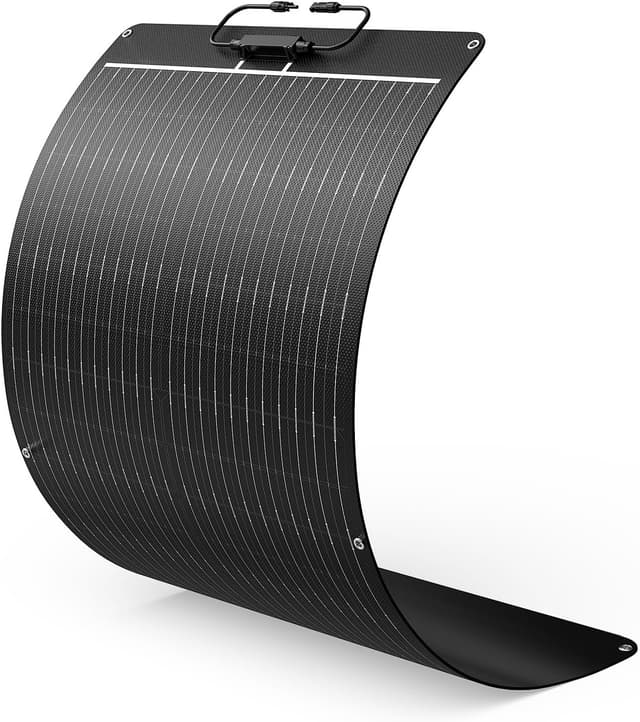
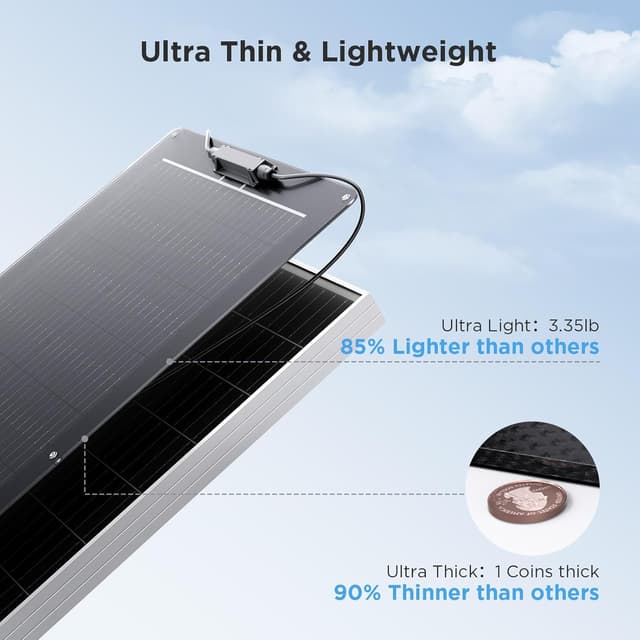
The headline features here are flexibility, all-weather materials, and low-profile mounting. The panel is described as bendable up to 240°, with an ultra-thin design meant to install nearly flush. That matters if you run a van, trailer, or boat setup where clearance and aerodynamics aren’t just aesthetics—they affect how practical the install feels.
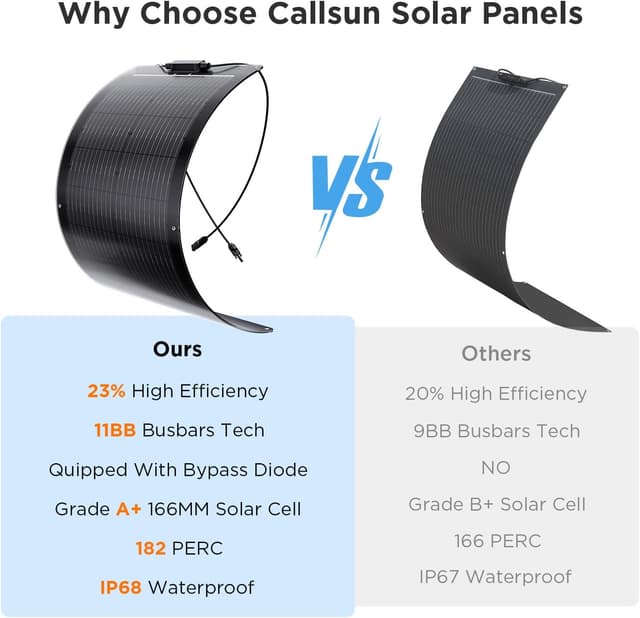
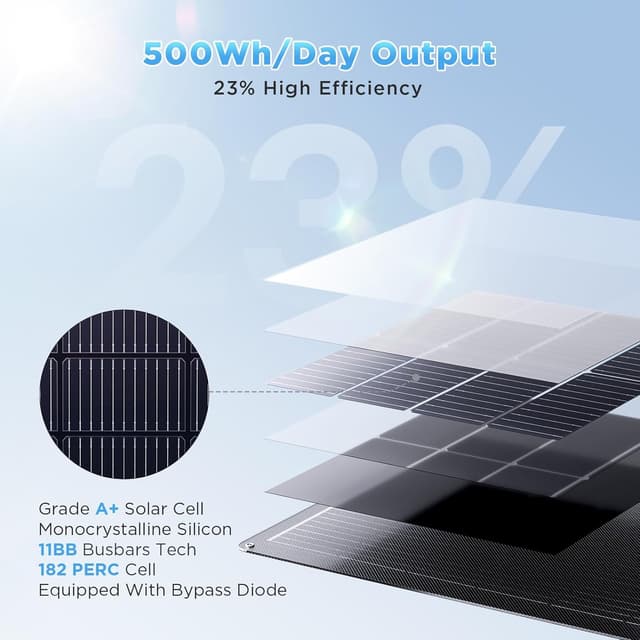
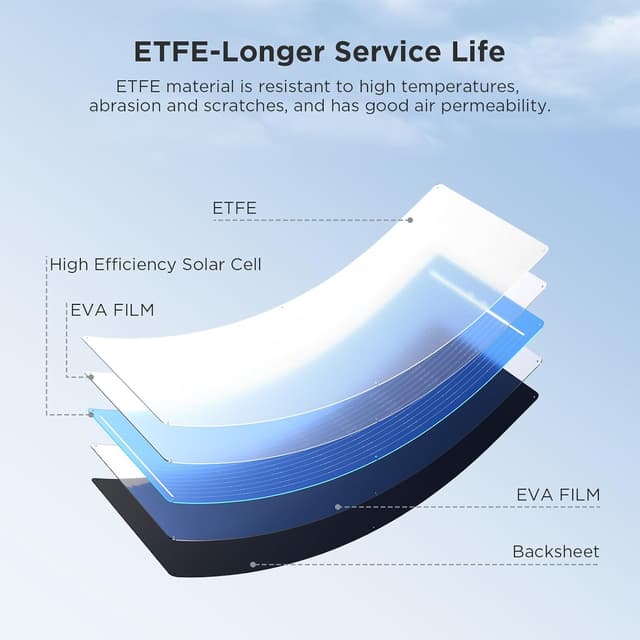
It also uses an ETFE coating and monocrystalline cells with bypass diodes. The intent is simple: better durability than cheaper PET-style coatings, plus more stable output when conditions aren’t ideal (like partial shade or lower light).
There’s also a universal “companion” angle: the listing says it includes standard solar connectors for quick plug-and-play with popular portable power stations, plus it’s positioned for 12V battery trickle charging.
Key specifications (the numbers you should care about)
- Type: Flexible solar panel for 12V power / solar charging
- Power: 50W
- Flexibility: up to 240° bend
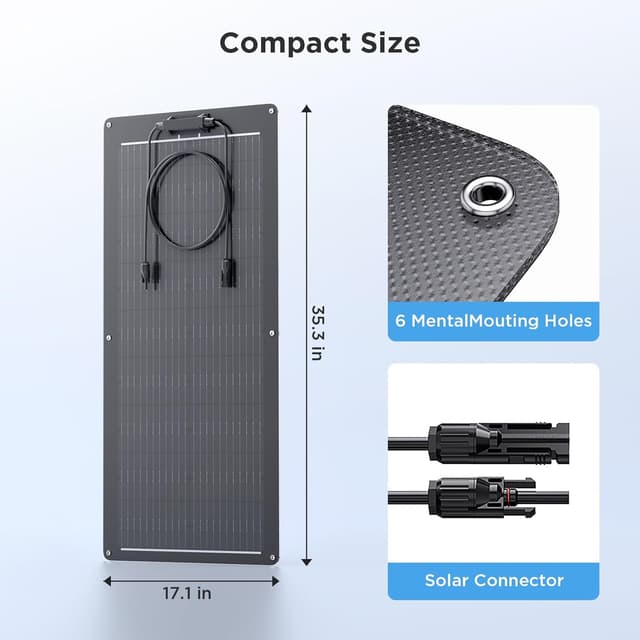
- Thickness: about 0.1 inches (low-profile)
- Efficiency: 23%
- Solar cells: 11BB monocrystalline cells
- Coating: ETFE (described as marine-grade all-weather)
Where it really fits (and where it might not)
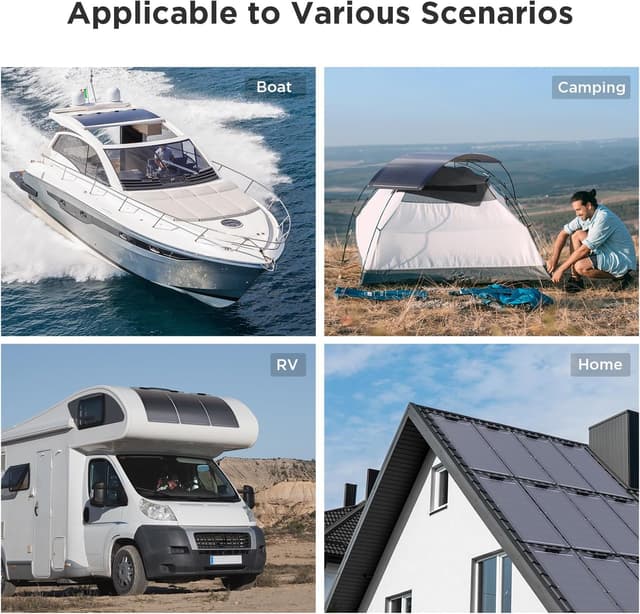
It suits you if your install surface is curved—think RV roofs, teardrop trailer contours, or a boat bimini/top area. The “hugs the contours” approach is exactly what you want when you don’t want to force-mount a rigid panel and end up with gaps, awkward angles, or a look that bothers you every time you park.
It also makes sense if you prioritize a stealthy, low-clearance setup. A 0.1-inch, all-black profile is the type of detail that can determine whether the panel stays practical on a vehicle roofline or hood area.
Still, a quick reality check: flexible panels can be convenient, but performance will always depend on sun exposure. The listing notes stable output in partial shade or low-light conditions, yet that doesn’t mean it will replace perfect full-sun positioning.
Everyday use: what charging feels like
A common scenario is battery maintenance. Imagine you park your van or boat for a few days. You mount the panel on a curved section using the intended fit, run the included connector cables, and use the setup to keep a 12V battery topped off rather than constantly worrying about it. In real-life terms, this is the kind of “slow and steady” support that helps reduce the stress of forgetting to recharge.
The bypass diodes and monocrystalline cells are there for stability when the panel can’t receive uniform light—like when a roof rack casts a little shadow or the sun angle changes throughout the day.
Compatibility and what to verify before buying
The listing claims compatibility with several portable power stations (EcoFlow Delta/River, Jackery, Bluetti, and GoLabs) and says it includes standard solar connectors for quick setup. That’s promising, but compatibility can still be picky about connector type and input specs on the specific unit.
Before you buy, make sure your power station or battery setup accepts a flexible solar input in the way you plan to connect it, and double-check the connector fit with your system’s solar input.
Also consider whether your mounting approach will keep the panel securely in place outdoors. The product focuses on fit and durability, but any outdoor solar install is only as good as the way it’s secured.
Pros, cons, and the main trade-off
What you’ll likely like: - It’s built for curved installations (up to 240° flexibility). - The ETFE coating is positioned as more durable in harsh conditions than cheaper alternatives. - The low-profile, near-flush thickness helps with stealth and clearance. - Designed for 12V trickle charging and stable output under less-than-ideal light.
A limitation to keep in mind: - It’s a 50W panel—so it’s best treated as maintenance/support charging rather than a high-demand power replacement. If you expect rapid, high-throughput charging every day, you may feel constrained.
Final verdict
It’s worth it if you want a flexible, low-profile solar panel that can actually follow the shape of your RV roof, trailer, or boat bimini without looking like an afterthought. The ETFE durability angle and the focus on 12V battery maintenance make this feel more “practical solar accessory” than “big solar build.”
You may want to skip it if your priority is maximum charging speed for heavy power use, or if your setup requires guaranteed performance only under consistent, full-sun exposure. In those cases, the small-to-midsize power rating and real-world mounting constraints could leave you wanting more.
Mini FAQ
FAQ
Is this mainly for 12V battery maintenance? The listing positions it for trickle charging and maintaining 12V batteries, especially for solar-generator battery upkeep.
Can it be used on curved surfaces like RV roofs or boat areas? Yes—flexibility up to 240° is specifically highlighted for a better fit on curved installations.
What does the ETFE coating help with? The listing says the ETFE coating is meant to resist hail, yellowing, and cracking, and to last longer than cheaper PET-style coatings.
Does it work if there’s partial shade? It’s described as providing stable power in partial shade or low-light conditions, helped by bypass diodes.
What’s included in the package? The listing says you get the flexible panel (all-black), solar connector cables, a welcome guide, and a worry-free 5-year warranty.