

BDFHYK Cabin Air Filter w/ Activated Carbon (CF10133) for 2002-2008 Toyota Corolla & 2003-2008 Matrix 1.8L
Product description
The essentials
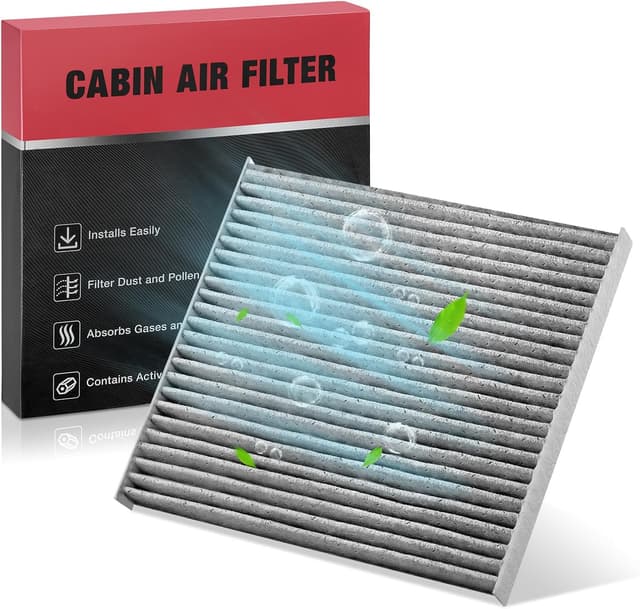
If you’ve ever turned on the A/C or heat and felt the cabin air just isn’t as fresh as it should be, a worn cabin air filter is often the boring culprit. The BDFHYK Cabin Air Filter w/ Activated Carbon (CF10133) is designed to sit in your Toyota’s ventilation system and help keep particles out while supporting airflow through the heating and A/C.
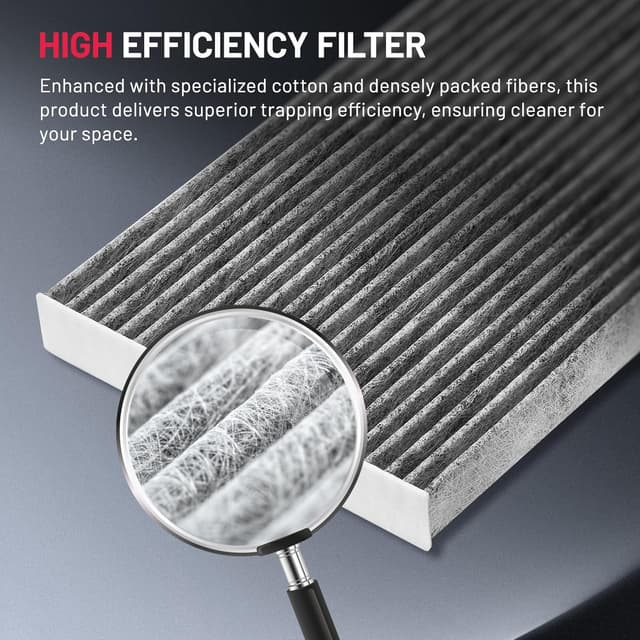
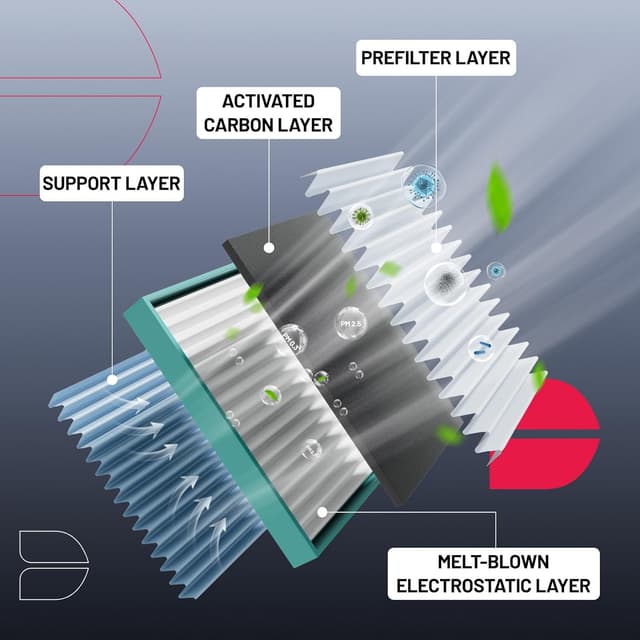
On paper, it checks the boxes most drivers care about: it uses a close-meshed, non-woven layer to block particles, it’s positioned as a replacement part for multiple listed reference numbers, and it’s suggested to include activated carbon for extra odor-focused filtration. The real win here is practical—when the cabin filter is working well, the system doesn’t have to fight clogged airflow.
Still, it’s not magic. If your main issue is a smell coming from a deeper source (like the evaporator or standing moisture), replacing the cabin filter helps, but it may not be the full fix.
What it does for your cabin air
This cabin air filter is built around two ideas: capturing airborne particles and keeping HVAC airflow efficient. The description calls out a close-meshed, non-woven layer that blocks particles, which is the part you’ll notice over time when dust and debris start building up.
It also aims to “optimize” your heating and air conditioning system by maintaining high flow capacity, so the fan doesn’t work as hard against a heavily restricted filter. That matters most if you regularly drive in dusty conditions, near traffic, or in places where air quality isn’t great.
A big question people have is whether the activated carbon component is worth caring about. If you’re sensitive to everyday odors (outside air smells, exhaust haze, or general urban grime), carbon-based filtration is typically the reason to choose this style over a basic particle-only filter.
Where it fits (and what to double-check)
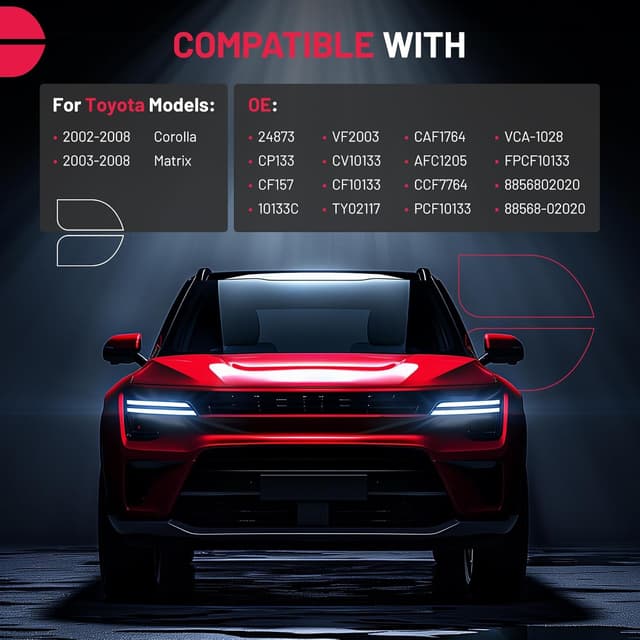
The listing states compatibility as a replacement for Toyota models:
- 2002–2008 Corolla (1.8L l4)
- 2003–2008 Matrix (1.8L l4)
It also lists several “replaces” / cross-reference part numbers, including 88568-02020 and CF10133 (among others). That’s helpful when you’re matching by part number rather than by vehicle year alone.
It may not suit you if your Toyota’s cabin filter size or exact spec differs from what the referenced numbers and engine family call for. Since the compatibility info in the listing is tied to specific model years and a 1.8L l4 engine, it’s worth verifying your vehicle’s fitment before you buy—especially if you’re in a transitional year or you’re unsure which exact variant your car has.
Key things to expect in everyday use
A cabin filter replacement is one of those “small job, noticeable difference” purchases when your old filter is overdue. After installation, you can reasonably expect:
- Better filtration for dust and airborne particles getting into the cabin
- HVAC airflow that stays steadier (the description emphasizes high flow capacity)
- Potential reduction in everyday odors if the activated carbon portion is doing its job
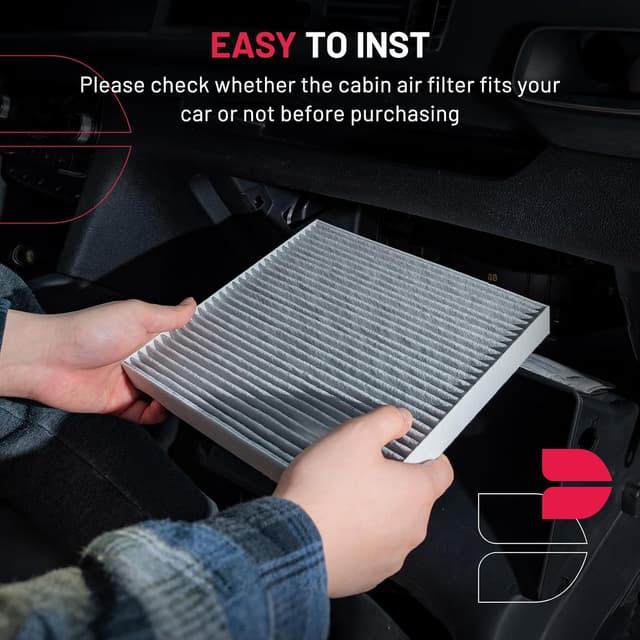
Micro-example: imagine you start your commute, turn on the fan, and after a few minutes you realize the cabin air feels less “stale” than usual—less dustiness and fewer lingering smells. That’s the kind of day-to-day improvement a cabin filter can deliver, especially if you were previously running with a clogged element.
That said, don’t expect it to eliminate strong odors from sources that aren’t filtered by the cabin element.
Replacement schedule: how often you should change it
The listing recommends replacing the cabin air filter every 12 months or 12,000 miles, or as specified by your vehicle manufacturer.

If you drive in heavily polluted areas or on dirt roads, the suggested interval tightens to every 5,000 miles. That’s an important nuance: if your driving environment is rough, you may want to treat this more like a “check and replace sooner” item rather than a set-it-and-forget-it purchase.
Pros and the limitations to keep in mind
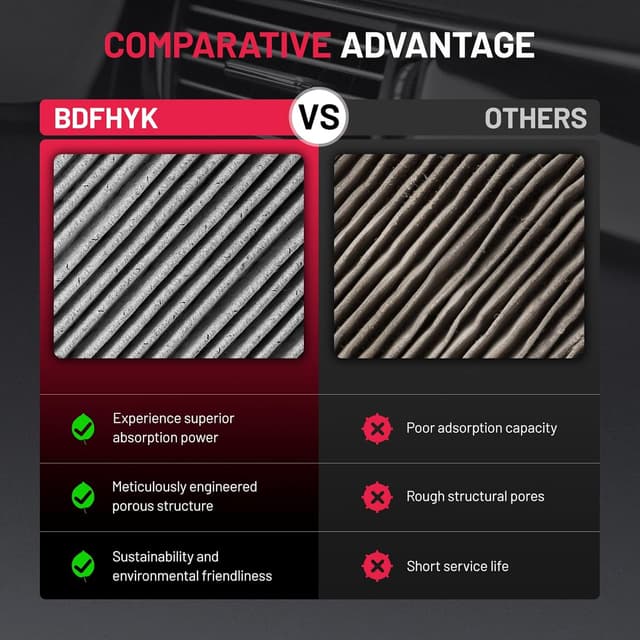
What you’ll like about it (based on the listing): - Particle filtration using a close-meshed, non-woven layer - Activated carbon included, aiming at more than just dust - Built to support HVAC airflow (high flow capacity focus) - Designed as a replacement for multiple cross-reference part numbers
Where it may fall short: - If your goal is deep odor elimination or HVAC issues caused by other components, a cabin filter alone may not be enough - It’s only as good as the fit—so if your vehicle’s cabin filter doesn’t match the listed compatibility, you’ll want to stop and confirm before installing
Should you buy it?
This BDFHYK CF10133-style cabin air filter makes sense if you’re looking for a straightforward replacement for a 2002–2008 Toyota Corolla 1.8L l4 or a 2003–2008 Matrix 1.8L l4, and you want filtration that goes beyond basic particle blocking thanks to activated carbon.
You may want to skip it if you can’t confirm your cabin filter fitment (years, engine family, and part number alignment matter), or if your odor/comfort problem is likely caused by something else in the HVAC system.
Worth considering if you drive in dusty conditions, polluted areas, or dirt roads—because the listing’s shorter replacement guidance lines up with that kind of usage.
Mini FAQ
FAQ: Common questions before buying
Does this work as a direct replacement? The listing positions it as a replacement part and references multiple “replaces” numbers, but you should still verify your vehicle’s exact match using the provided part numbers and stated model/engine compatibility.
How often should I replace my cabin air filter? The recommendation is every 12 months or 12,000 miles. For heavily polluted areas or dirt roads, the listing suggests every 5,000 miles or sooner.
What does the activated carbon portion help with? Activated carbon is included to support filtration beyond particles. The listing frames it as part of a cabin air filtration approach, which is most useful when you care about everyday odors.
Will this fix a strong smell in the car? It can help with odors that come through airflow, but if the smell is caused by deeper HVAC issues or moisture, the filter alone may not fully solve it.