


BDFHYK Cabin Air Filter with Activated Carbon (OE cross CF10140 and 27277- series) for Mitsubishi & Nissan/INFINITI models
Reviews
Price
Product description
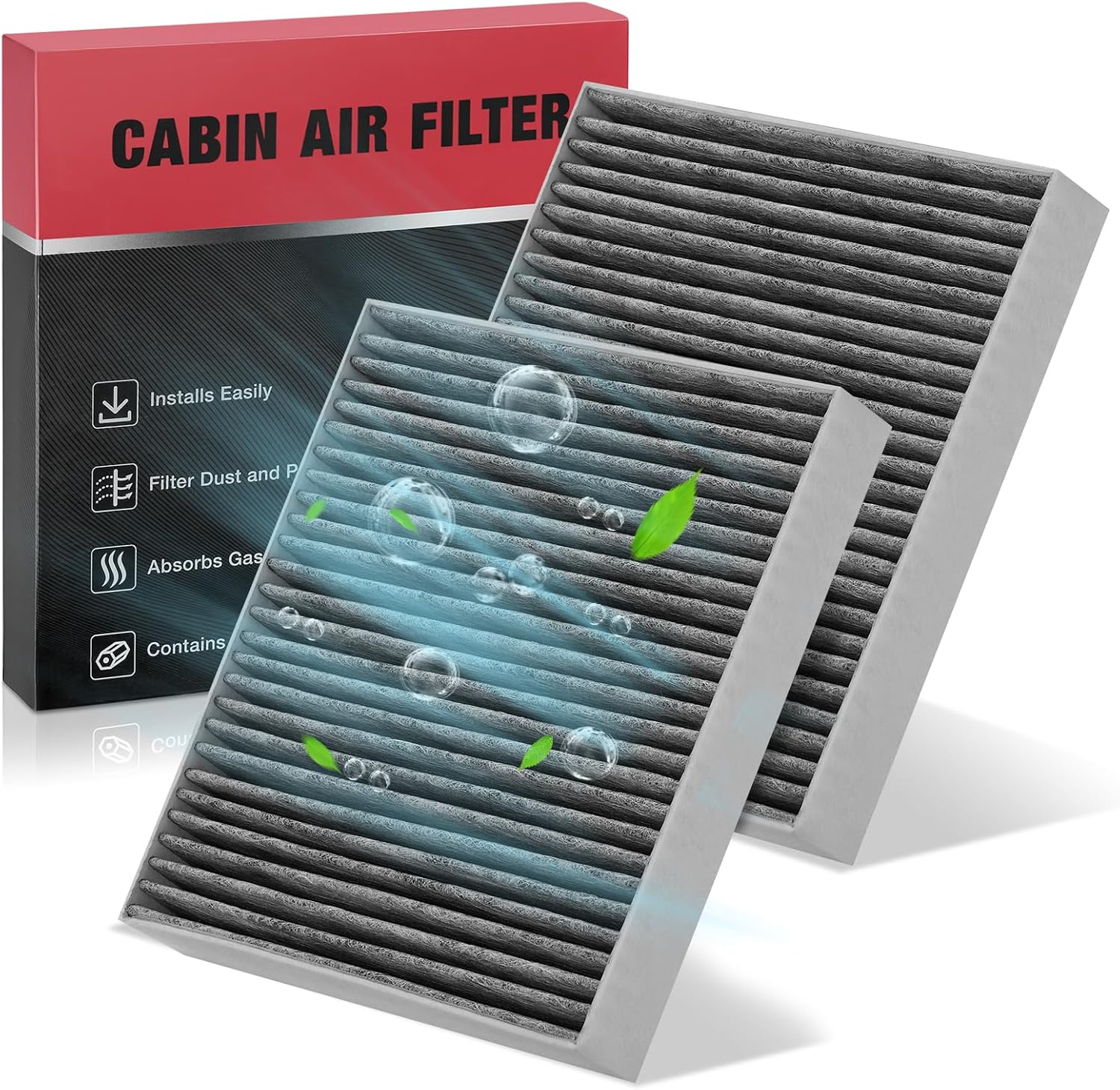
If you care about what you breathe inside the cabin, the BDFHYK Cabin Air Filter with Activated Carbon is a practical upgrade on paper. It’s designed to help trap fine particles and support better airflow through your heating and A/C—something you’ll notice more when the system has to work harder.
That said, it’s not a magic wand. A cabin filter can only do so much, and performance will still depend on your driving conditions and how often you replace the filter.
The essentials (what it’s for)
This cabin air filter is built to replace the OE-style part for select Mitsubishi, Nissan, and INFINITI applications. The key idea is efficient filtration for the air that moves through your cabin vents.
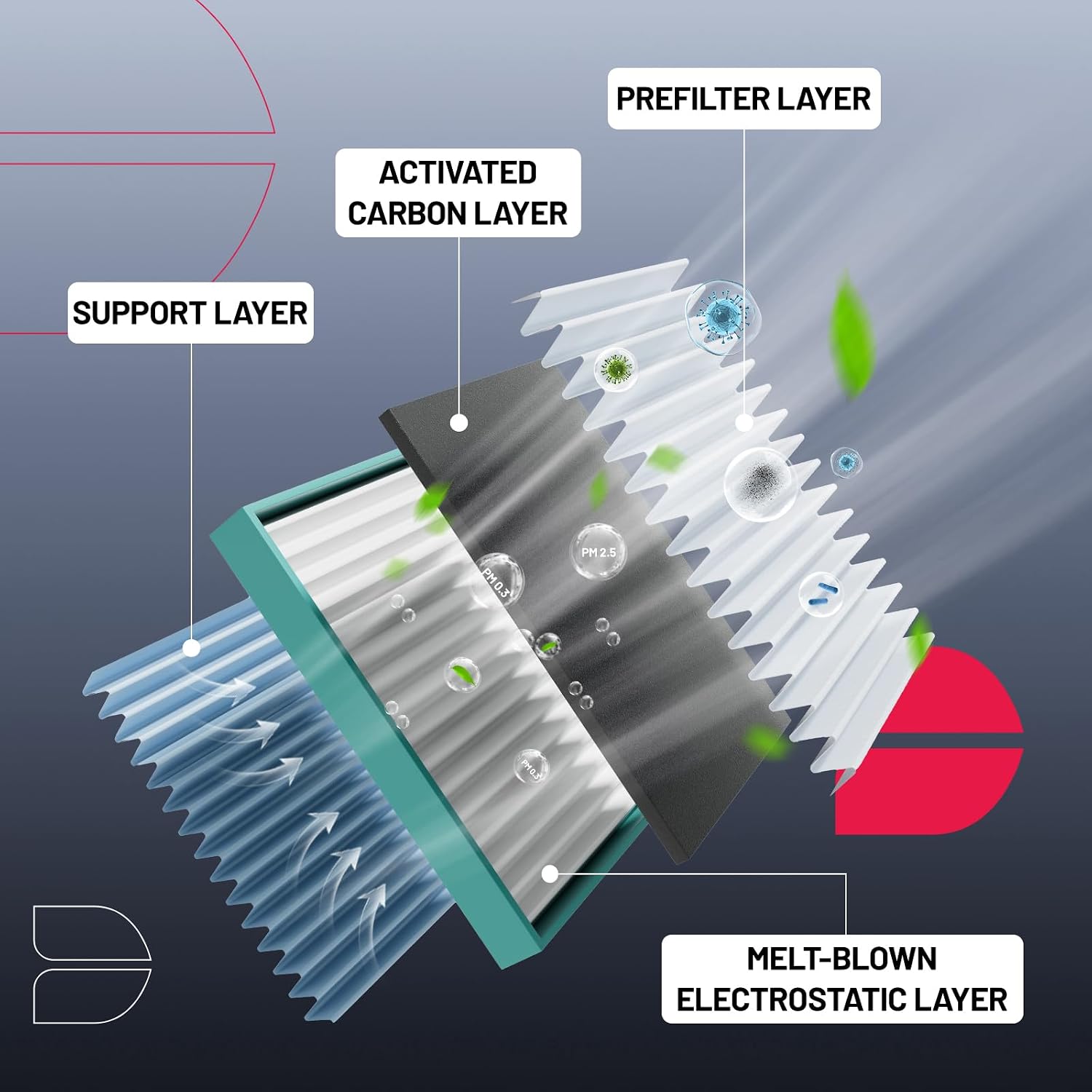
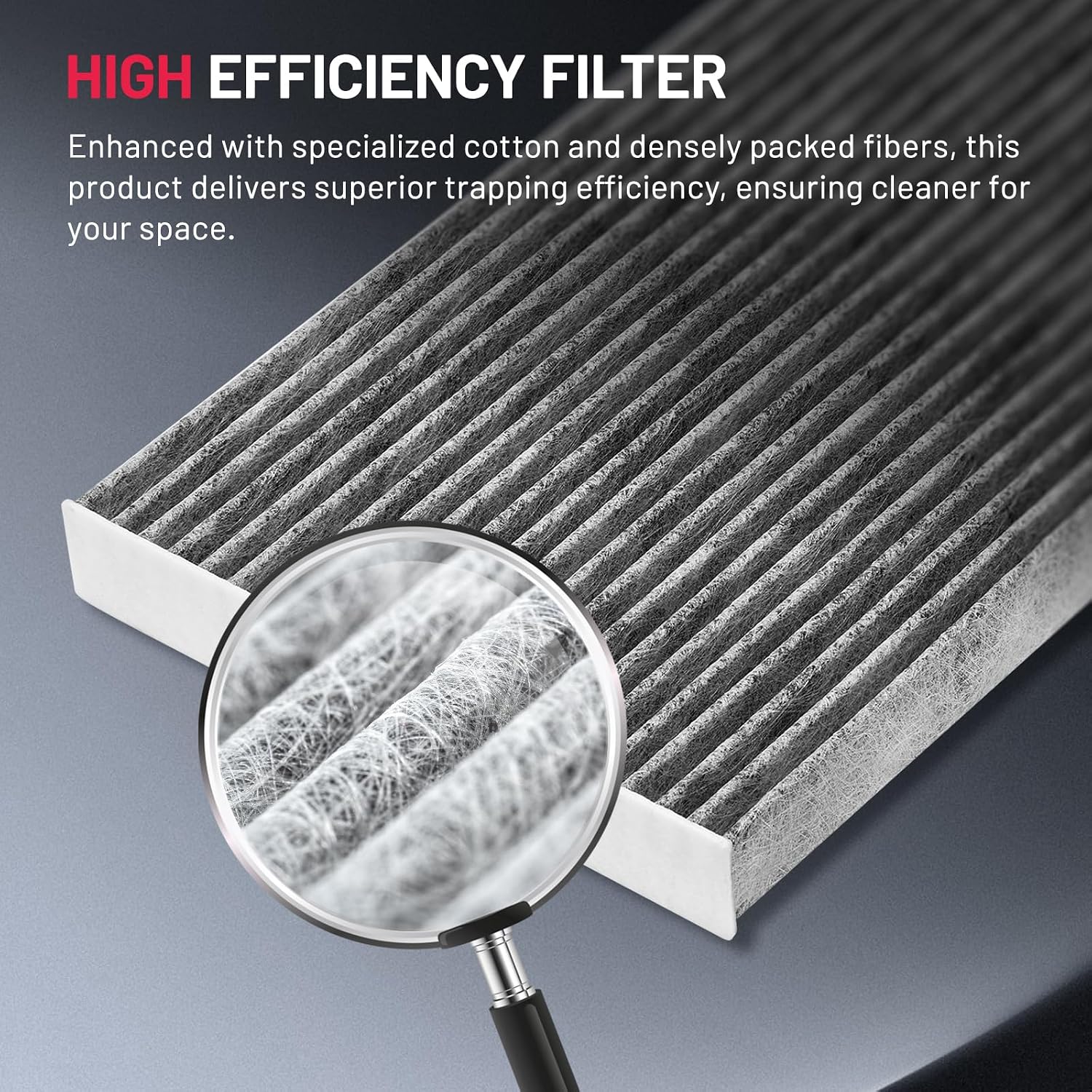
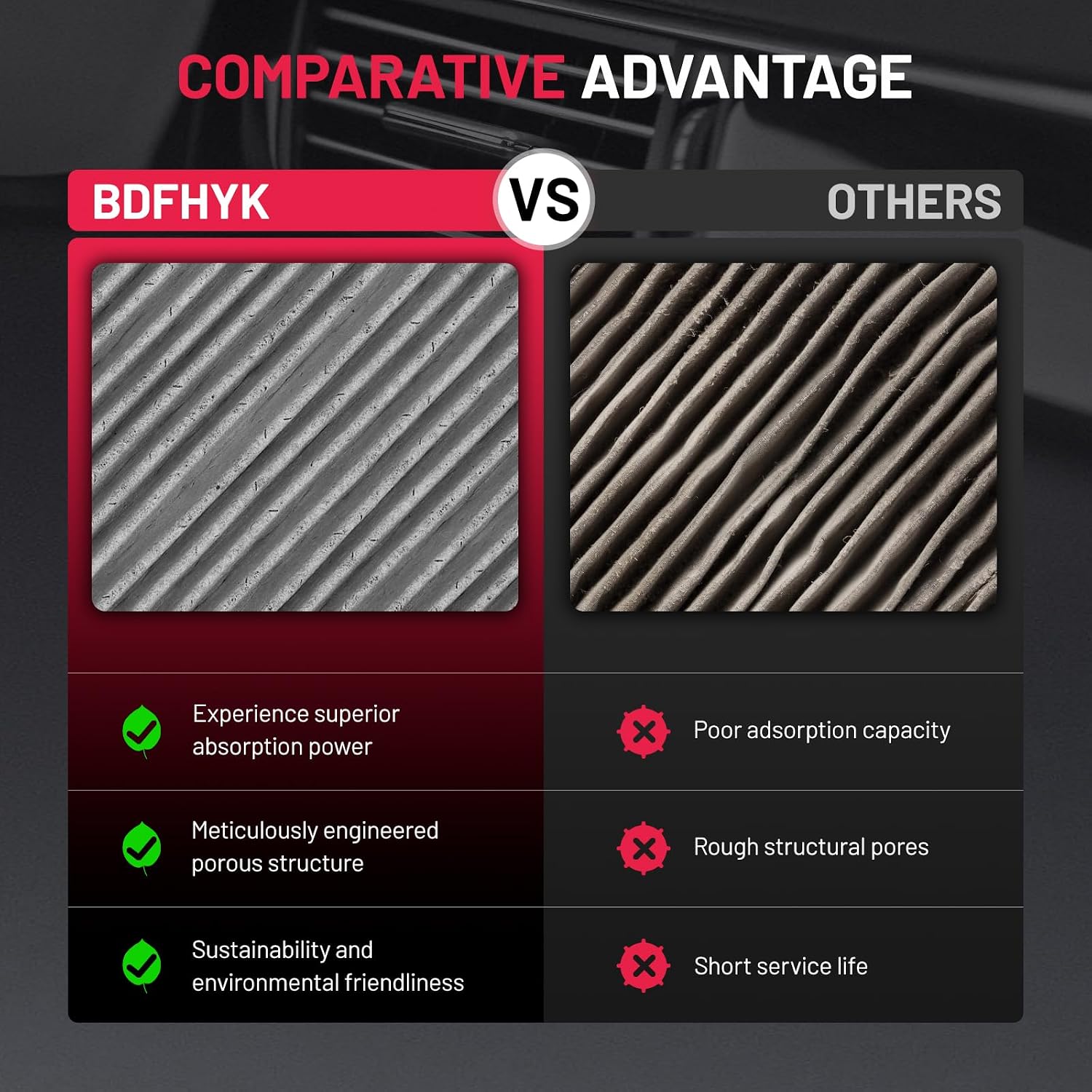
The activated-carbon angle is meant to add an extra layer of odor-fighting capacity compared with a basic paper-only filter—useful if you deal with everyday city fumes, traffic exhaust, or just want fresher cabin airflow. The product description also calls out a close-meshed, non-woven layer that blocks particles, which is the part that most directly supports cleaner cabin air.
Key takeaways (what to expect day to day)
In day-to-day use, the best benefit of a cabin filter usually isn’t dramatic “before/after” performance—it’s steadier, cleaner airflow. A fresh cabin filter can help your heating and cooling system run with less restriction, so the fan doesn’t feel like it’s pushing against a clogged filter.
On the comfort side, the listing specifically positions the filter as helping optimize your climate system by supporting high flow capacity. On the air quality side, it aims to reduce particulates getting into the cabin.
One nuance: if your filter has been overdue, replacing it can feel like a sudden improvement because the vent airflow is no longer battling buildup. If you’re already on top of maintenance, the difference may be more subtle.
What stands out vs basic filters
Activated carbon is the main differentiator here. In simple terms, it’s included for odor-related performance, while the fine filtration layer is for particulates.
The other practical win is that the listing frames this as an efficient, straightforward swap rather than a complex service. If you’d rather not pay a repair shop every time it’s time to replace, this kind of cabin filter is typically the “keep your routine simple” route.
Where it shines (and where it doesn’t)
It’s a sensible fit if you want a convenient replacement that’s listed for a broad set of Mitsubishi and Nissan/INFINITI models, and you’re specifically interested in filtration plus activated carbon.
However, it may not suit you if you’re looking for a specialized, high-end filtration system (or if your main concern is something beyond cabin air particulates and typical odor sources). Also, if you rarely replace cabin filters, you may find the benefits lag until you’re truly back on schedule.
Installation and replacement timing
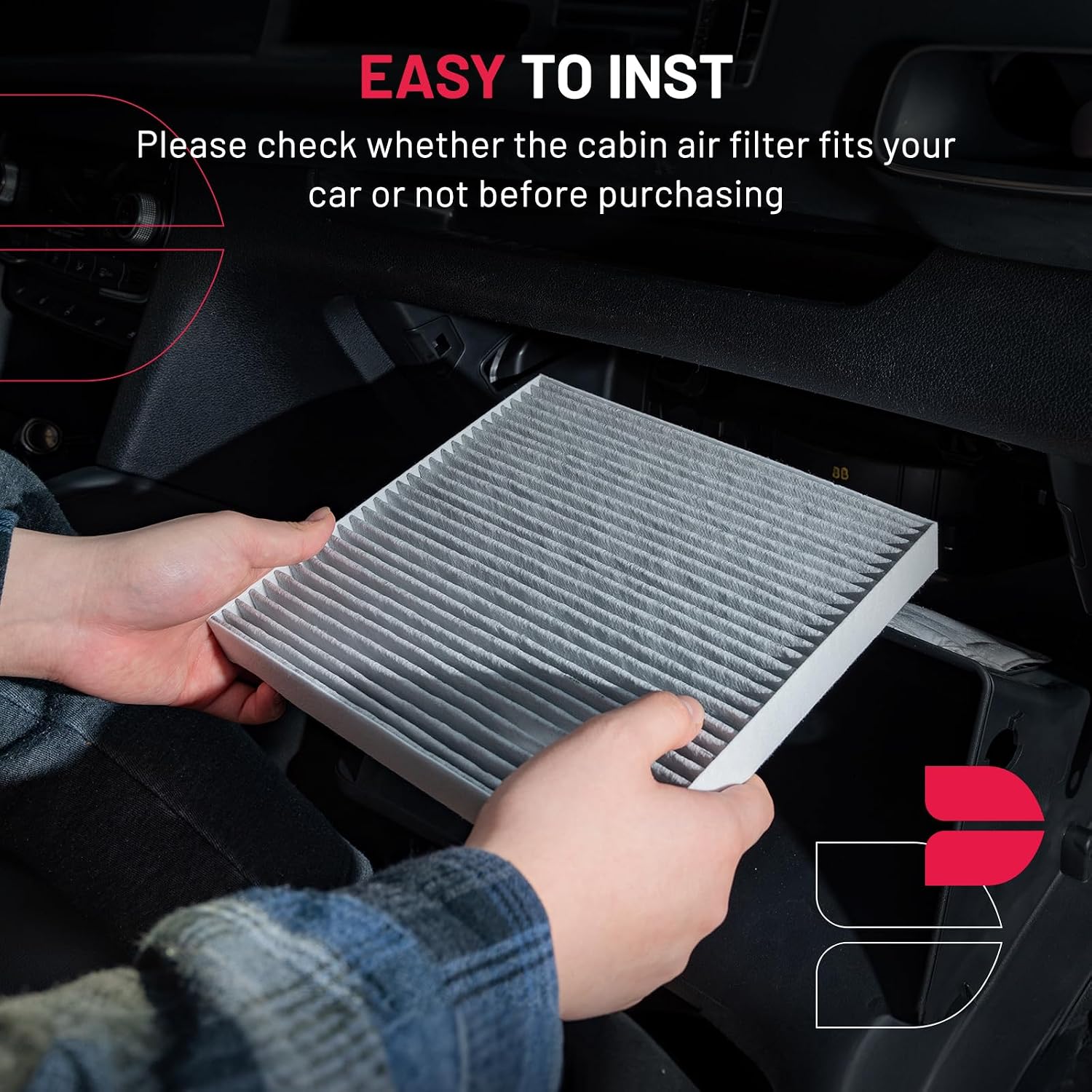
The listing says installation is easy and you don’t need tools, with most installs taking under 5 minutes for many cars. That matters if you’re planning to do the work yourself and want to avoid a hassle.
For replacement intervals, the guidance provided is: - Recommended replacement every 12 months or 12,000 miles, or as your vehicle manufacturer specifies. - If you drive in heavily polluted areas or on dirt roads, change it every 5,000 miles.
In other words, this is best treated as a maintenance item, not a one-time “install and forget” part.
Key specifications (from the listing)
- Close-meshed, non-woven filtration layer designed to block particles
- Activated carbon included for added cabin odor-related help
- Replacement interval guidance: every 12 months / 12,000 miles, or as specified, otherwise every 5,000 miles in heavy pollution/dirt-road conditions
Compatibility & requirements
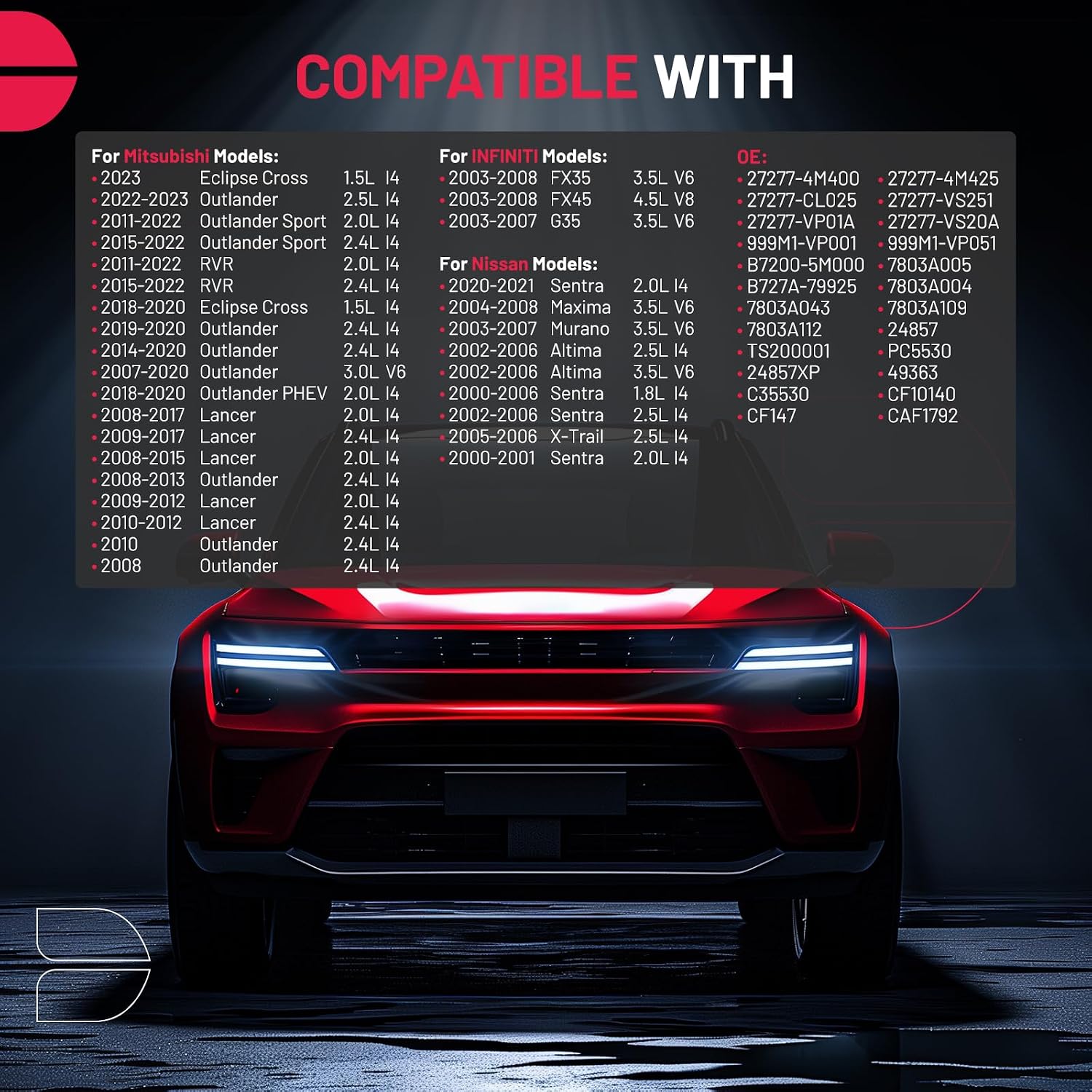
Before buying, don’t rely only on the model years. The listing emphasizes checking OE numbers (including options like CF10140 and multiple 27277- series part numbers).
It is listed as compatible with: - Mitsubishi: Eclipse Cross (2018-2020 & 2023), Outlander (2007-2020 & 2022-2023), Outlander Sport (2011-2022), Outlander PHEV (2018-2020), RVR (2011-2022), Lancer (2008-2017) - Nissan: Maxima (2003-2008), Altima (2002-2006), Sentra (2000-2006 & 2020-2021), X-Trail (2005-2006) - INFINITI: FX35/FX45 (2003-2008), G35 (2003-2007)
If your OE number doesn’t match, you’ll want to confirm the part number first—cabin filters can be surprisingly picky.
Mini FAQ
How often should I replace a cabin air filter like this?
The listing recommends every 12 months or 12,000 miles, or follow your vehicle manufacturer’s guidance. If you drive in heavy pollution or on dirt roads, it suggests every 5,000 miles.
Does the activated carbon actually help?
The product is specifically described as an activated carbon cabin air filter. The intended benefit is better odor-related performance alongside particle filtration, but real-world results still depend on driving conditions and how fresh the filter is.
Is it hard to install?
According to the listing, it comes with easy instructions, no tools are needed, and most cars can be installed in under 5 minutes.
What should I check before purchasing?
Double-check the OE part number using the OE options provided in the listing. This is the safest way to avoid ordering the wrong cabin filter.
Is it worth it?
It’s worth considering if you want a straightforward cabin air filter replacement for the listed Mitsubishi, Nissan, and INFINITI applications—especially if you value activated carbon for odor control and you’re looking to maintain better airflow through your HVAC.
You may want to skip it if you can’t confirm your OE number matches the ones listed, or if you’re expecting a cabin filter to solve more than what standard cabin filtration can realistically address. It’s a maintenance-focused part, treat it like one, and you’ll get more consistent results.
For best results, prioritize correct OE matching and stay on the replacement schedule—because even the best filter in the wrong slot (or when overdue) won’t perform the way you hope.