


BDFHYK CF10329 Cabin Air Filter with Activated Carbon for Select Hyundai/Kia Models
Product description
What it is and why you’d care
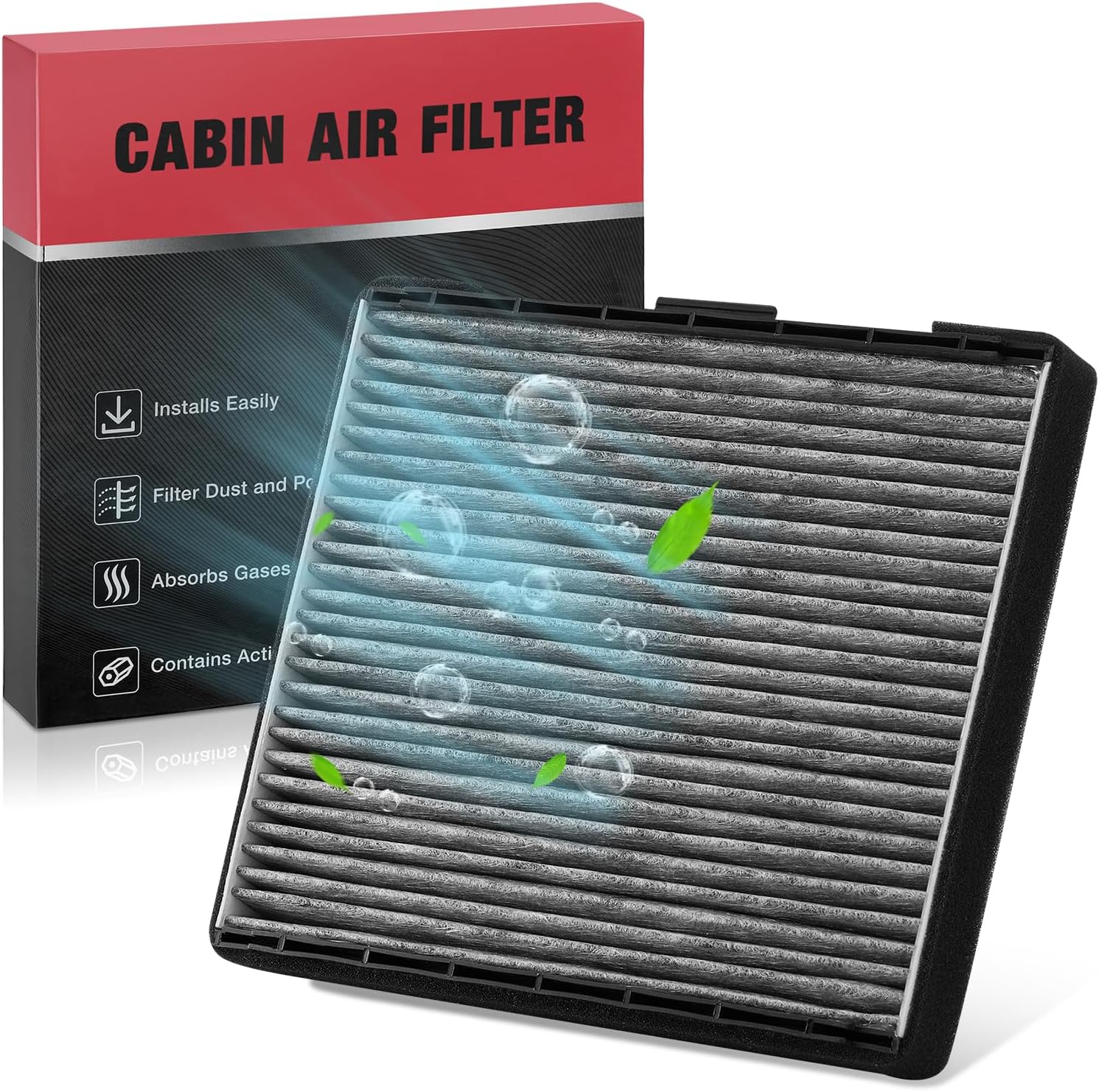
If the air inside your car doesn’t feel as fresh as you remember, the culprit is often the cabin air filter. The BDFHYK CF10329 is a cabin air filter with activated carbon, built to help keep airborne particles from getting into the vehicle’s cabin. Over time, dust and other particulates build up in the filter media, and swapping it out can make a noticeable difference in day-to-day breathing comfort—especially when you’re stuck in traffic or driving through dusty conditions.
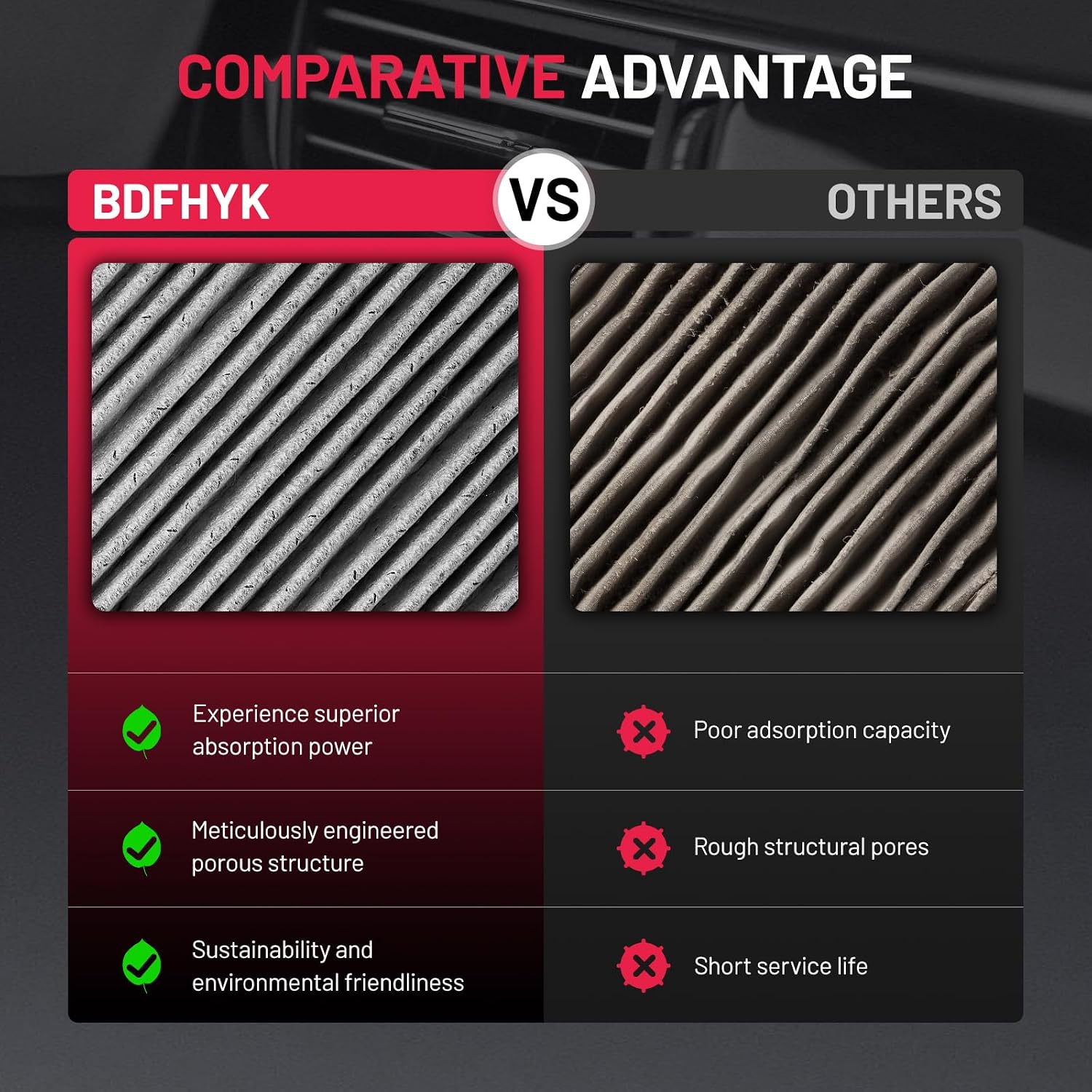
On paper, this one is designed around dense non-woven filtration to block particulate matter, while the activated carbon component adds an extra layer of support for odor-related contaminants. It’s not perfect magic, though—an air filter can’t replace a full HVAC service if you have deeper airflow or system issues. Still, as routine maintenance, it makes a lot of sense.
Compatibility you should double-check
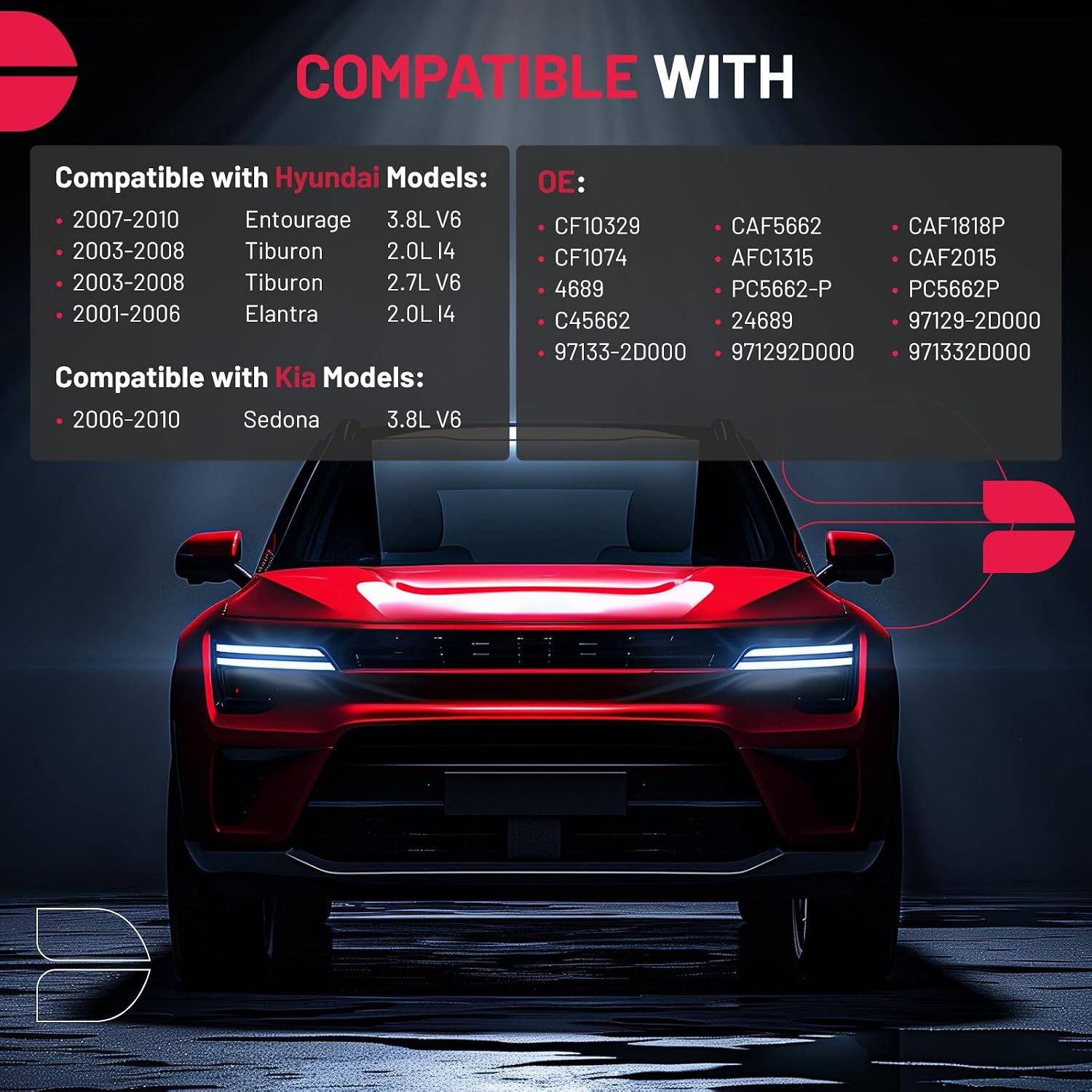
This CF10329 cabin air filter is listed as compatible with certain Hyundai and Kia vehicles. The fitment info provided includes:
- Hyundai: 2001–2006 Elantra (2.0L l4), 2007–2010 Entourage (3.8L V6), 2003–2008 Tiburon (2.0L l4 / 2.7L V6)
- Kia: 2006–2010 Sedona (3.8L V6)
It also notes it can replace multiple part numbers, including CF10329 (and several others). That’s helpful, but here’s the practical limitation: even with a long replacement list, the safest approach is to confirm your exact cabin filter spec/part number for your specific year/trim and engine setup before ordering.
Key features that matter in real use
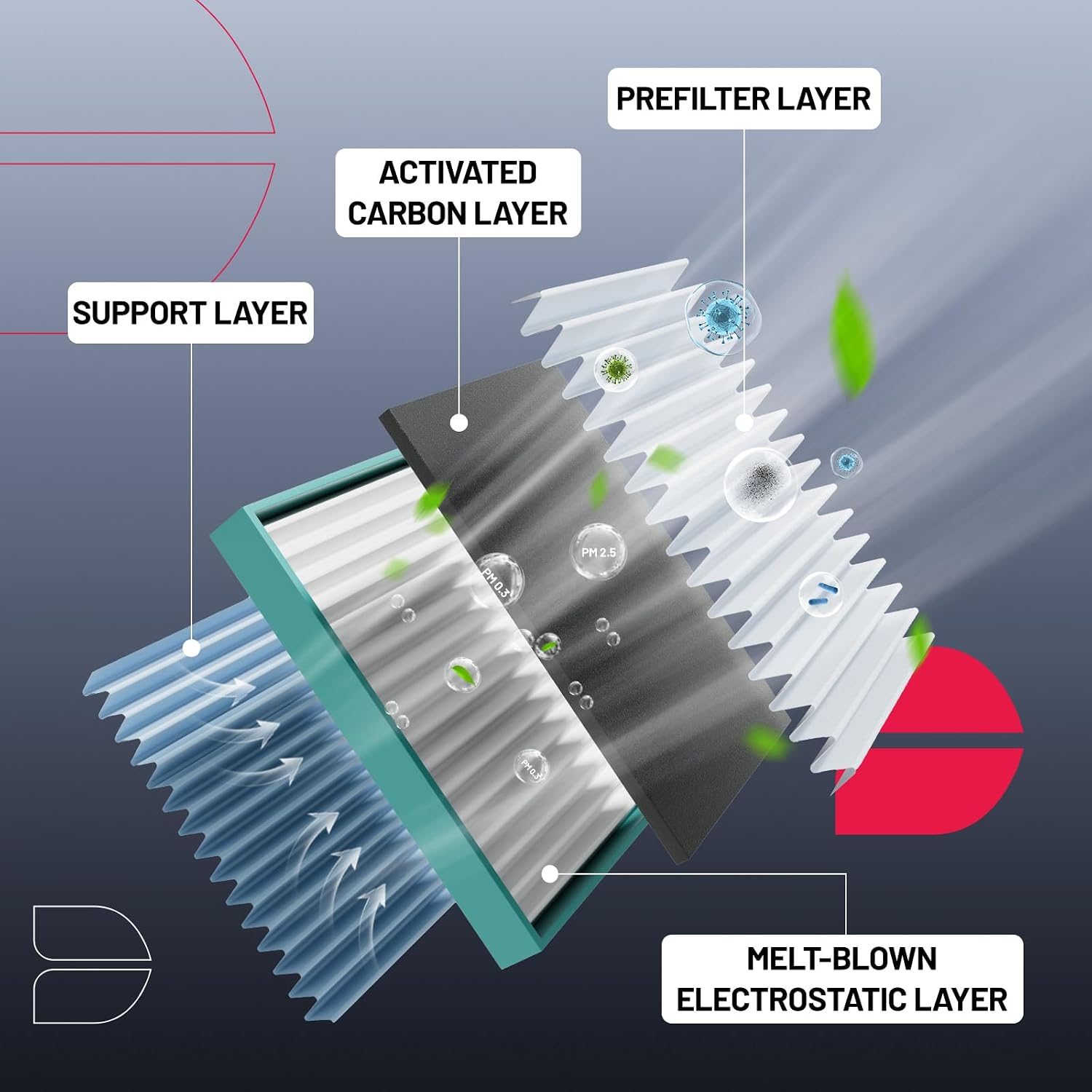
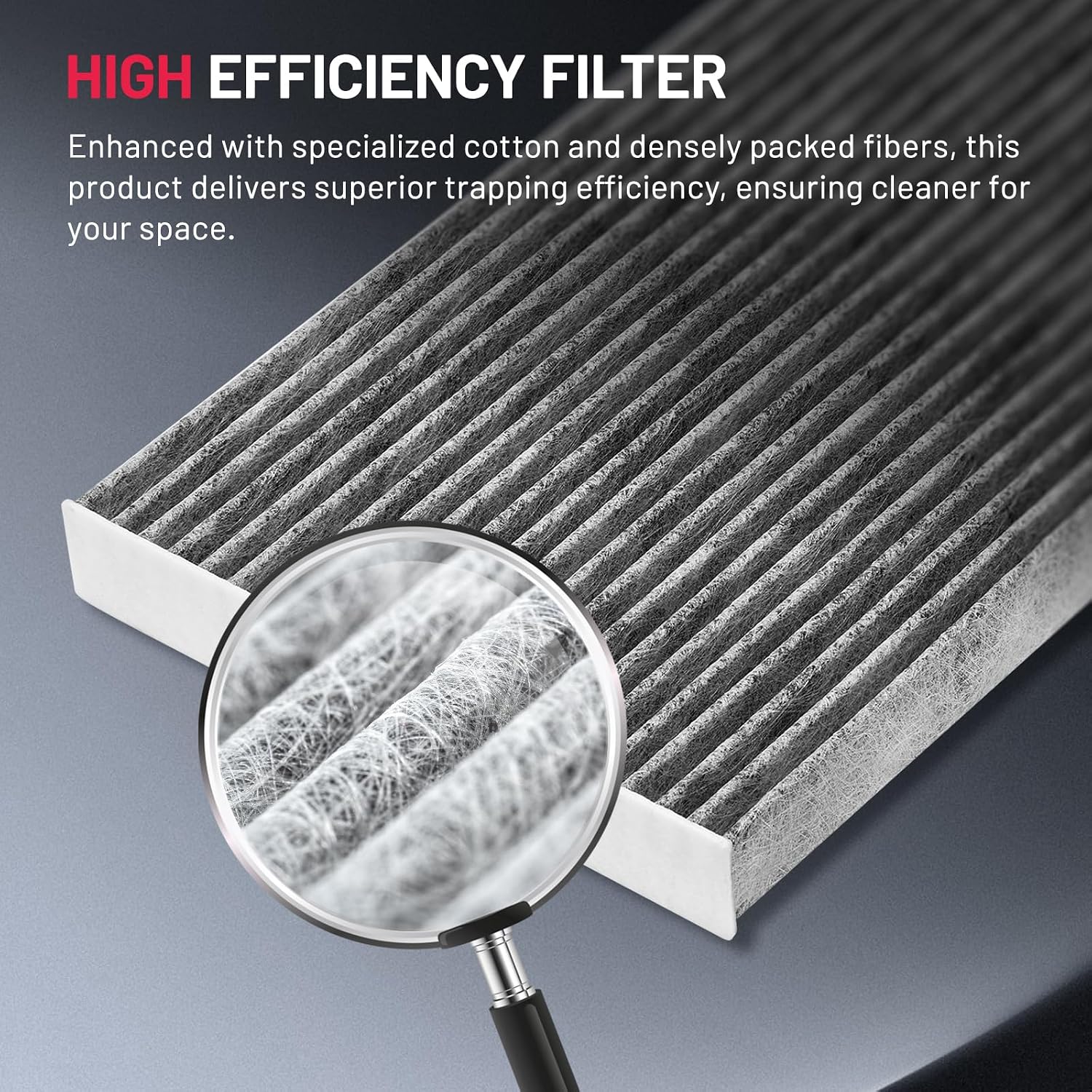
The main idea is straightforward: keep particulates out and support cleaner cabin air. The filter uses dense non-woven fabric to block airborne particulate matter, which can help prevent pollutants from entering the vehicle and improve the air you’re exposed to while driving.
The activated carbon angle is the other big draw. Carbon-based filtration is commonly chosen when people want more than just particle blocking—think musty smells or odor-carrying contaminants that can ride along with airflow. Will it erase every odor instantly? Not necessarily. But if you’re due for a replacement, having activated carbon as part of the design is a sensible upgrade versus a basic particle-only filter.
Replacement interval: how to think about timing
The provided guidance suggests replacing the cabin air filter every 12 months or 12,000 miles, or as specified by your vehicle manufacturer. It also includes a tougher schedule suggestion: in heavily polluted areas or on dirt roads, replace closer to every 5,000 miles.
This matters because cabin filters don’t just “wear out” in a vacuum—they load up. If your commute involves construction dust, pollen-heavy seasons, or regular gravel-road driving, you may find you need the earlier interval more often than average.
Installation and effort level
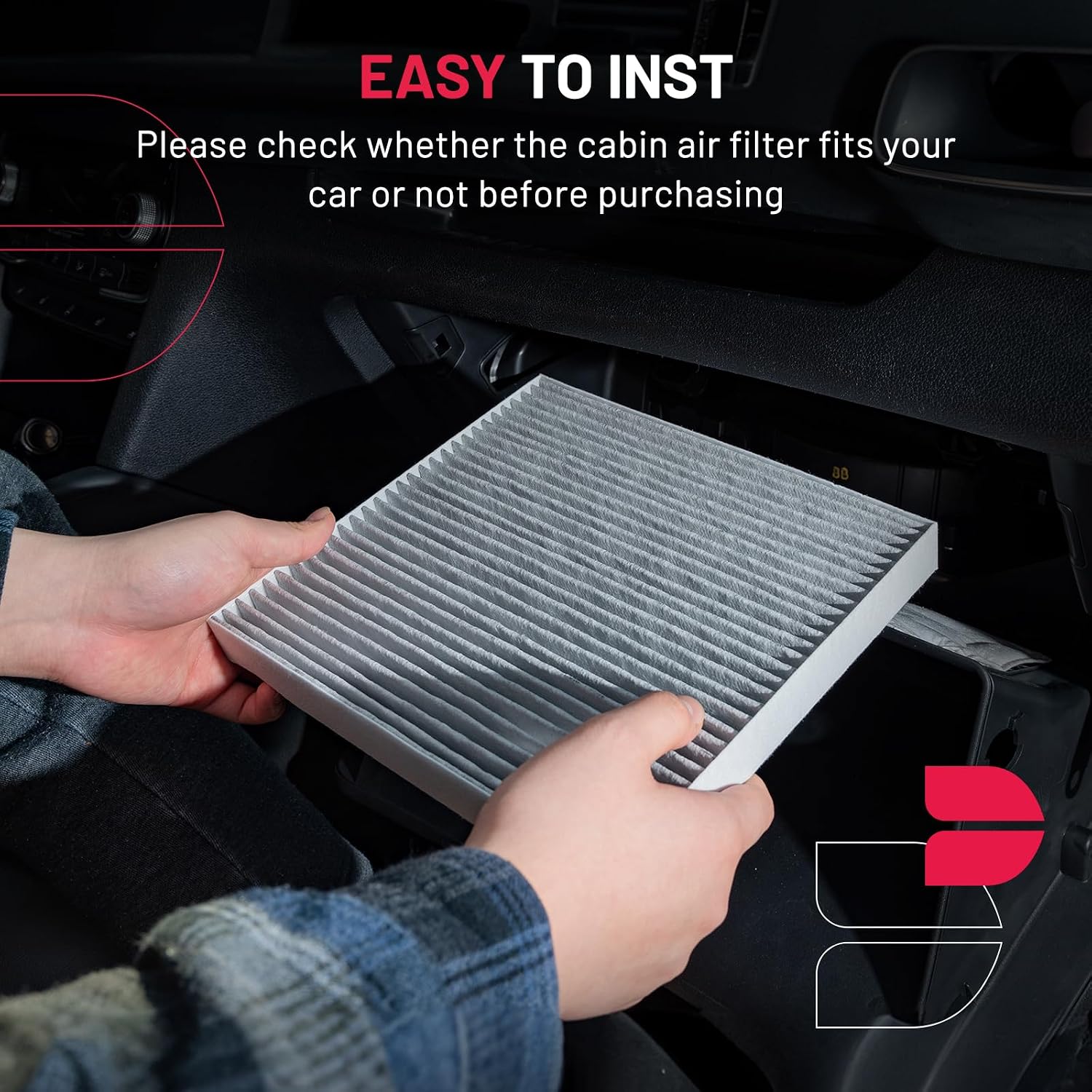
Good news for DIY-minded shoppers: the product description says it’s designed to be easy to install, with instructions included, no tools required, and most cars can be installed in under 5 minutes. That makes it appealing if you’re trying to avoid shop labor fees or you just want a straightforward maintenance job.
If you’re the type who likes to do quick checks, this is the sort of replacement that fits well into routine upkeep. You pop the old filter out, drop the new one in, and you’re back on the road.
Pros and limitations to keep expectations grounded
What stands out: - Cabin filtration focused on blocking particulate matter using dense non-woven fabric - Activated carbon included for odor-related filtration support - Replacement guidance includes both standard and harsher-condition intervals - Install is described as tool-free and quick
What to be aware of: - Fitment is vehicle-specific—double-check compatibility for your exact model/year/engine - It’s a maintenance part, not a cure for major HVAC problems, if airflow is weak or there’s a system issue, the filter alone may not solve it
Is it worth it?
Worth considering if you’re looking for a cabin air filter replacement for one of the listed Hyundai/Kia models, and you want a filter that goes beyond basic particle blocking thanks to activated carbon. It’s especially reasonable if you drive in polluted areas, deal with dirt roads, or simply want cleaner cabin air as part of regular upkeep.
You may want to skip it if you can’t confirm the CF10329 fitment for your specific vehicle, or if you’re dealing with symptoms that point to HVAC or blower issues beyond filtration. In that case, a filter change could help, but it might not be the full answer.
Mini FAQ
1) Does this cabin air filter help with odors?
It includes activated carbon, which is typically used to support odor-related filtration. It won’t guarantee instant elimination of every smell, but it’s designed to add that extra filtration layer.
2) How often should I replace it?
The guidance provided recommends every 12 months or 12,000 miles, or per your vehicle manufacturer. For heavy pollution or dirt-road driving, it suggests replacing closer to every 5,000 miles.
3) Is installation difficult?
The description says it’s designed to be simple, tool-free, and quick—often under 5 minutes for most cars.
4) What if my vehicle part number doesn’t match exactly?
The product lists replacement part numbers, but you should still verify your vehicle’s exact cabin filter requirement before buying to avoid a mismatch.
5) What does the filtration actually do?
It uses dense non-woven fabric to block particulate matter from entering the cabin air, helping reduce airborne pollutants that you breathe while driving.