

AstroAI TRMS Multimeter 4000 Counts Digital
Reviews
Price
Product description
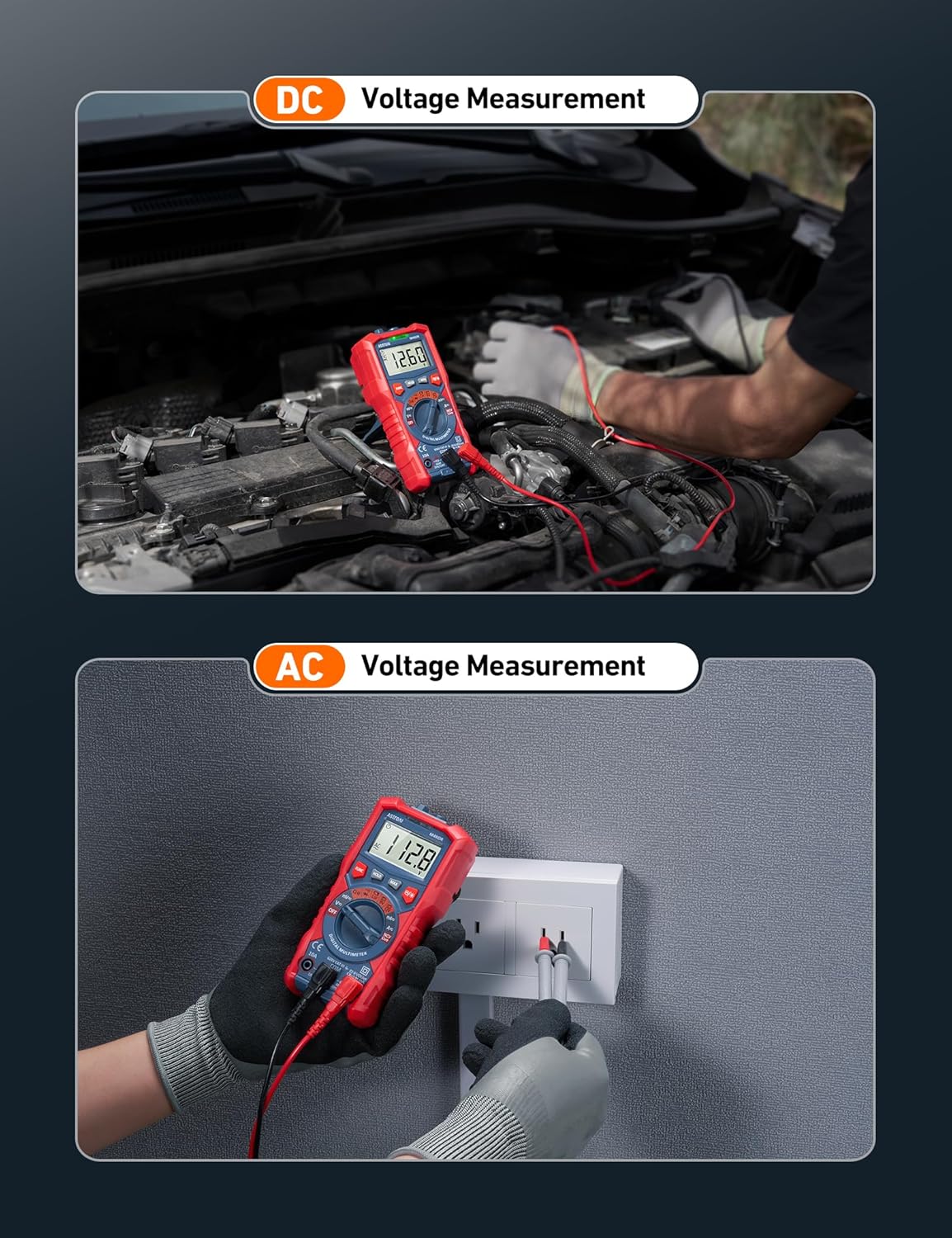
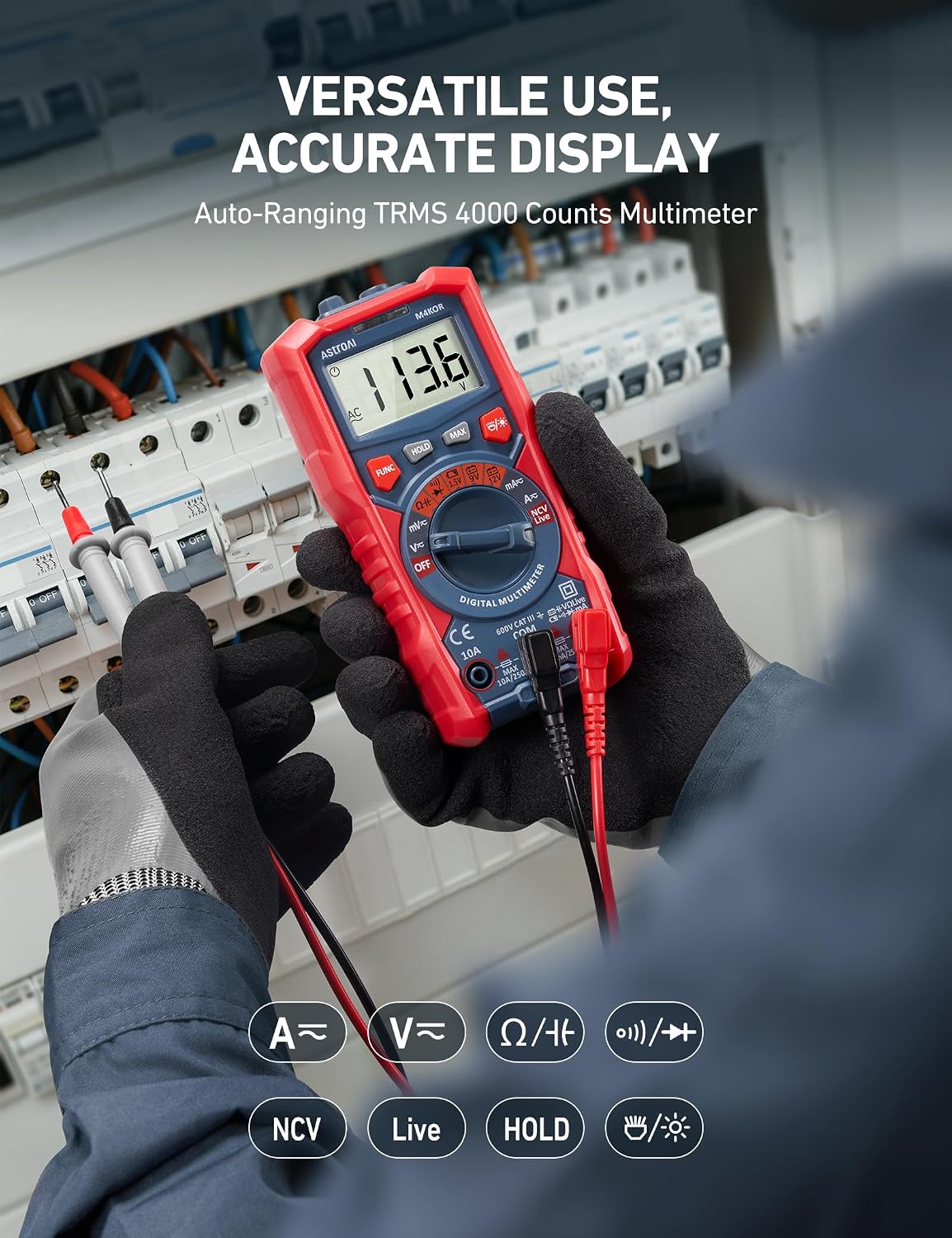
This compact digital multimeter from AstroAI combines TRMS measurement and auto-ranging functions to handle household and automotive electrical checks with practical ease. It measures AC/DC voltage up to 600 V and current up to 10 A, making it useful for testing batteries, circuits, and common installations while offering non-contact voltage detection for safer inspections.
Key Points
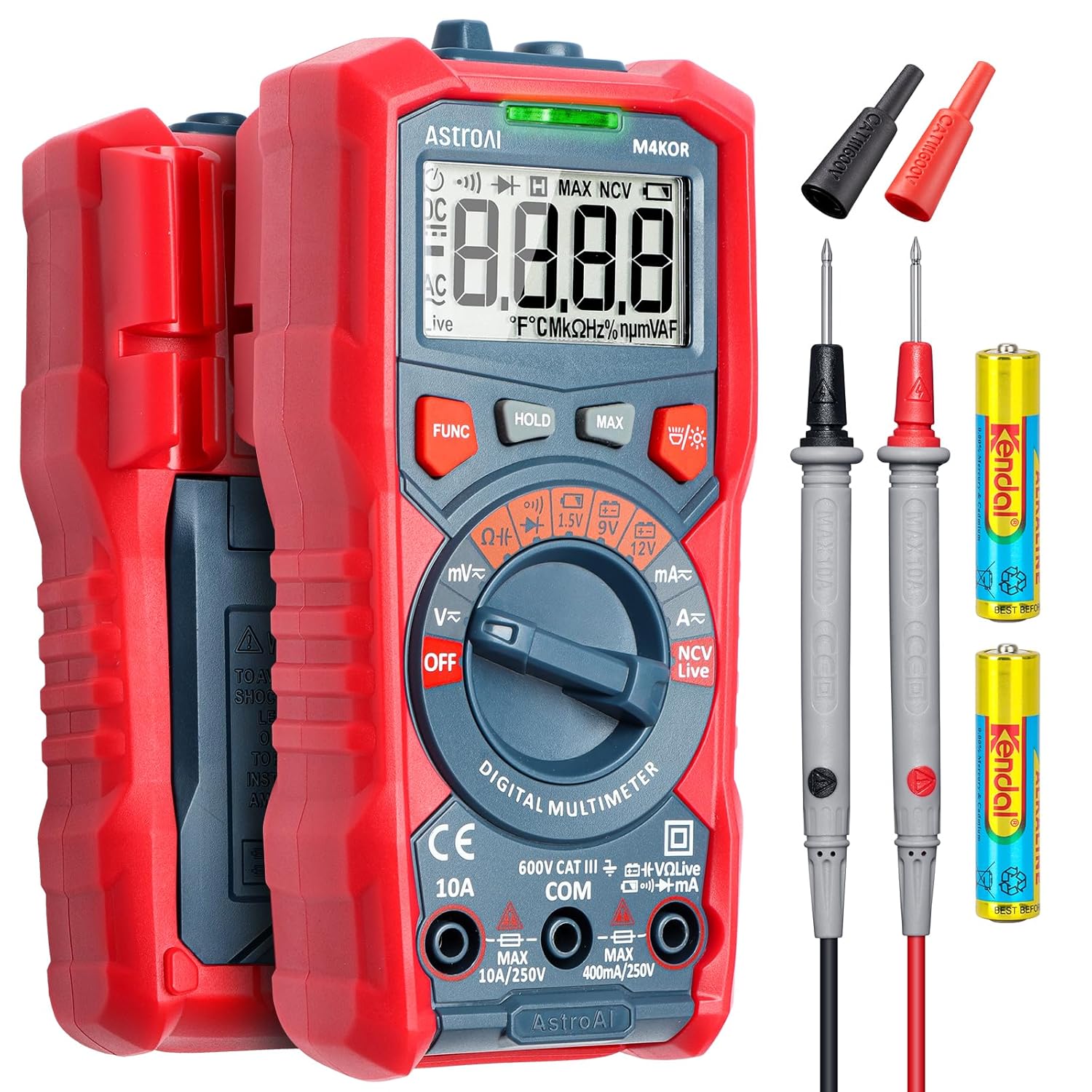
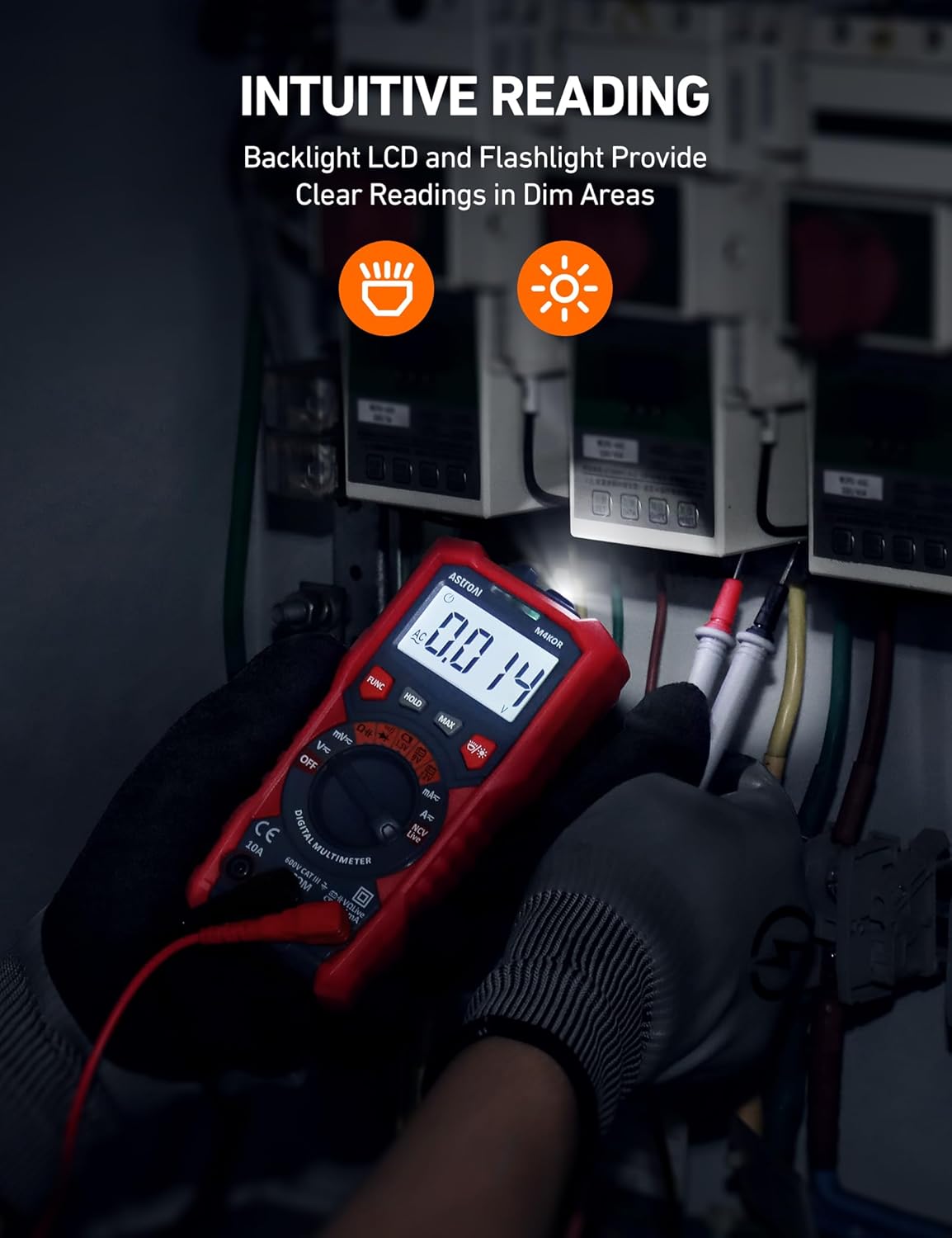
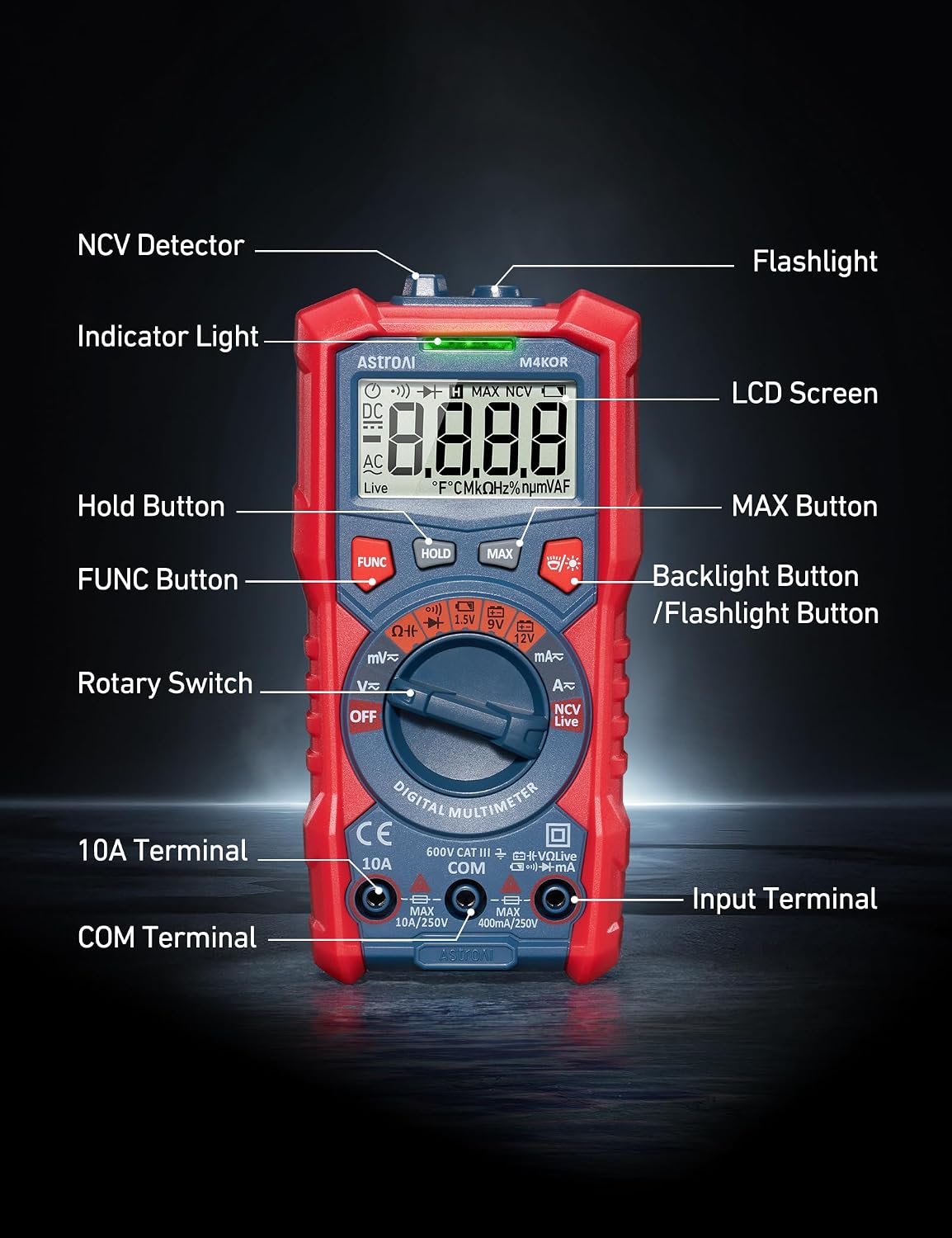
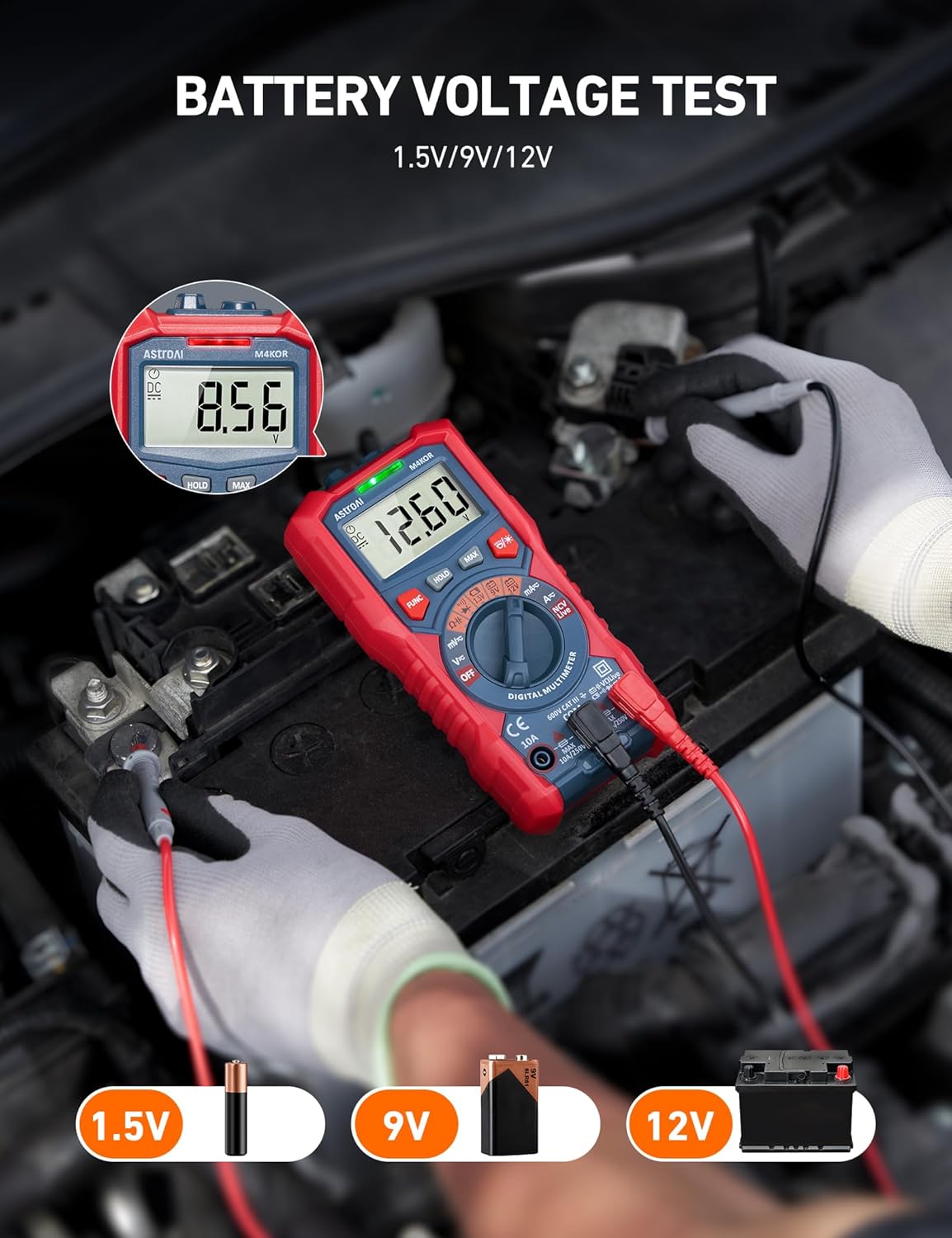
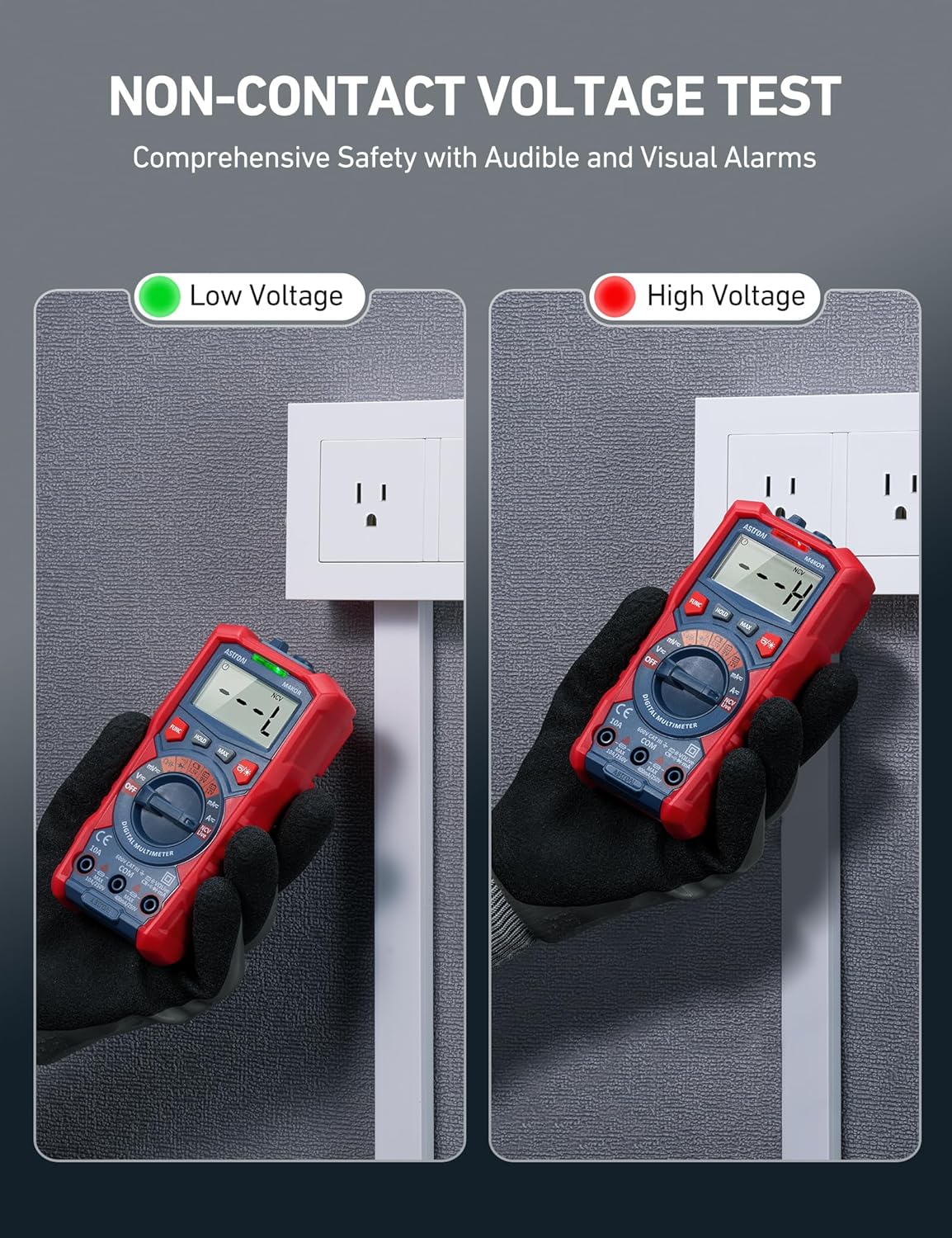
The meter supports True RMS readings and a 4000-count display for clearer numeric resolution, which helps when working with varying signals. It has dedicated functions to measure resistance up to 40 MΩ, continuity, diode checks, capacitance, and battery voltages such as 1.5 V, 9 V and 12 V. The NCV feature alerts with a red light and audible buzzer when strong AC is detected, allowing you to find live wires without probes 🔍. The LCD backlight and built-in flashlight make readings easier in dim workspaces, and the low-battery indicator helps avoid unexpected shutdowns.
Technical Specifications
- Name: AstroAI Multimeter Tester TRMS 4000
- Measurement range (voltage): AC/DC up to 600 V
- Current range: up to 10 A
- Resistance: up to 40 MΩ
- Display: 4000 counts, LCD backlight
- Power: 2 × AAA batteries (included)
- Safety rating: Overvoltage Category III 600 V
Benefits
The inclusion of a double ceramic fuse increases protection against overloads and reduces risk of damage during accidental misuse, which adds a practical layer of safety. The rubber holster cushions the instrument from small drops and spills, so it endures everyday workshop handling. Data hold and maximum value capture simplify diagnostics when you cannot keep your eyes on the screen constantly.
Usage Recommendations
Use the NCV mode to quickly scan outlets, cords, and junctions before using probes, this reduces exposure to live wiring. For battery checks, employ the dedicated battery test positions for 1.5 V, 9 V and 12 V to get a fast status indication where the meter shows red for low and green for adequate voltage. When measuring current near the meter's upper limit, consider using shorter test intervals to avoid heating and rely on the ceramic fuse protection as a precaution. Note that while the meter covers most DIY and light professional tasks, more specialized industrial measurements may require instruments with higher ranges or additional certifications.