

TINMORRY PLA Filament 1.75mm Matte Brown (1 kg spool) for FDM 3D printing
Product description
What it’s for
TINMORRY PLA Filament is a matte PLA option aimed at FDM 3D printer users who want a cleaner surface finish, especially where layer lines would normally stand out. The product comes in 1.75mm diameter and a 1 kg spool, and it’s positioned as a “daily workhorse” PLA rather than a specialty resin-style finish.
On paper, the headline is the matte look: the filament is described as effectively hiding layer lines for a smoother, higher-quality appearance. That’s the sort of benefit you notice on visual models, display pieces, and anything you plan to leave unpainted or lightly finished.
Key features that matter in real prints
The practical selling points here are about appearance, convenience, and print consistency.
For appearance, the matte printing surface is the main idea. If your goal is a model that looks more even and less “stacked”, matte PLA can help. It’s particularly framed as ideal for models with a matte appearance.

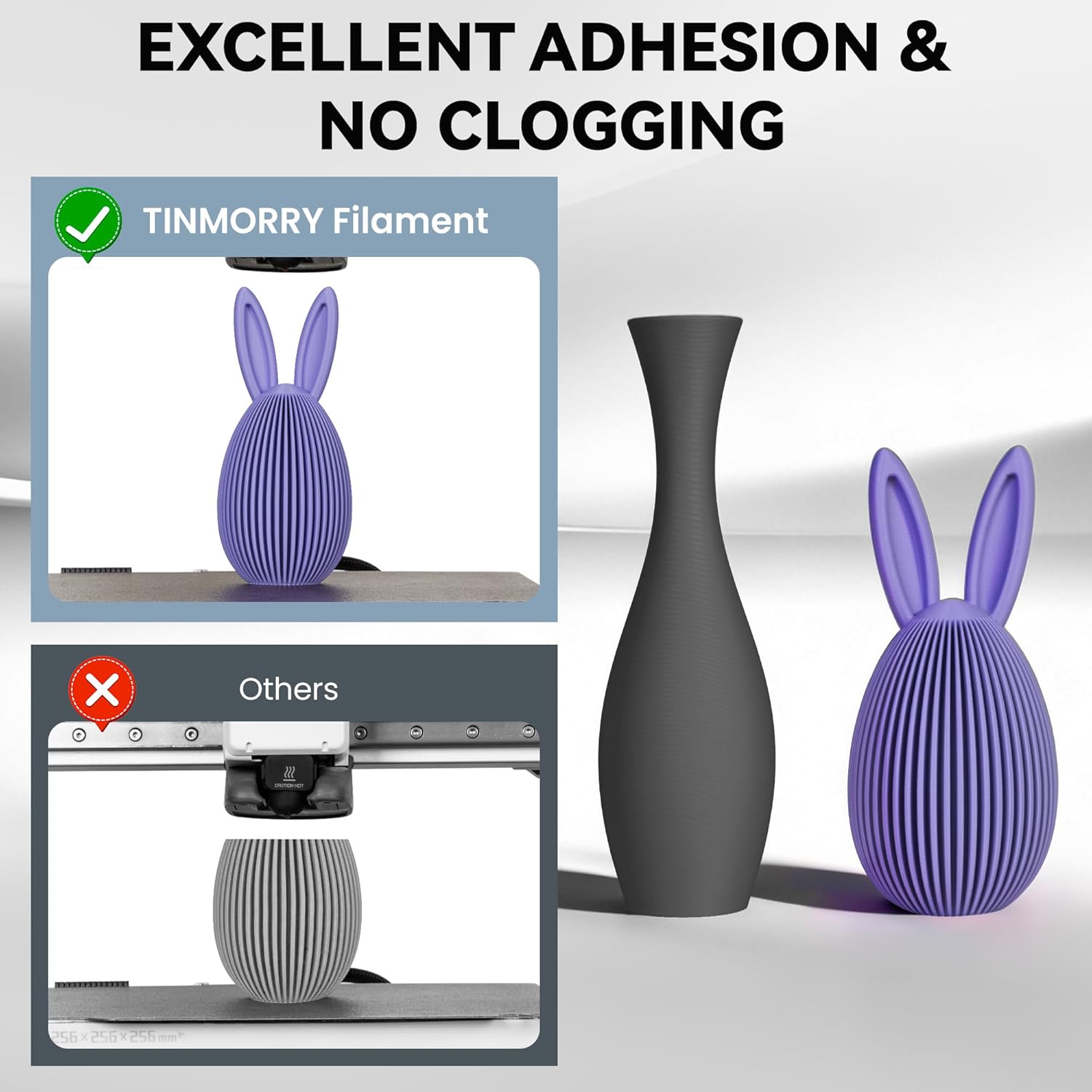
For ease of printing, the filament is described as mechanically wound and inspected for neat winding and easy feeding. It also claims a new formula that reduces nozzle clogging and clumping compared with other PLA, which is exactly the kind of annoyance you want to avoid when you’re doing longer runs or printing multiple parts.
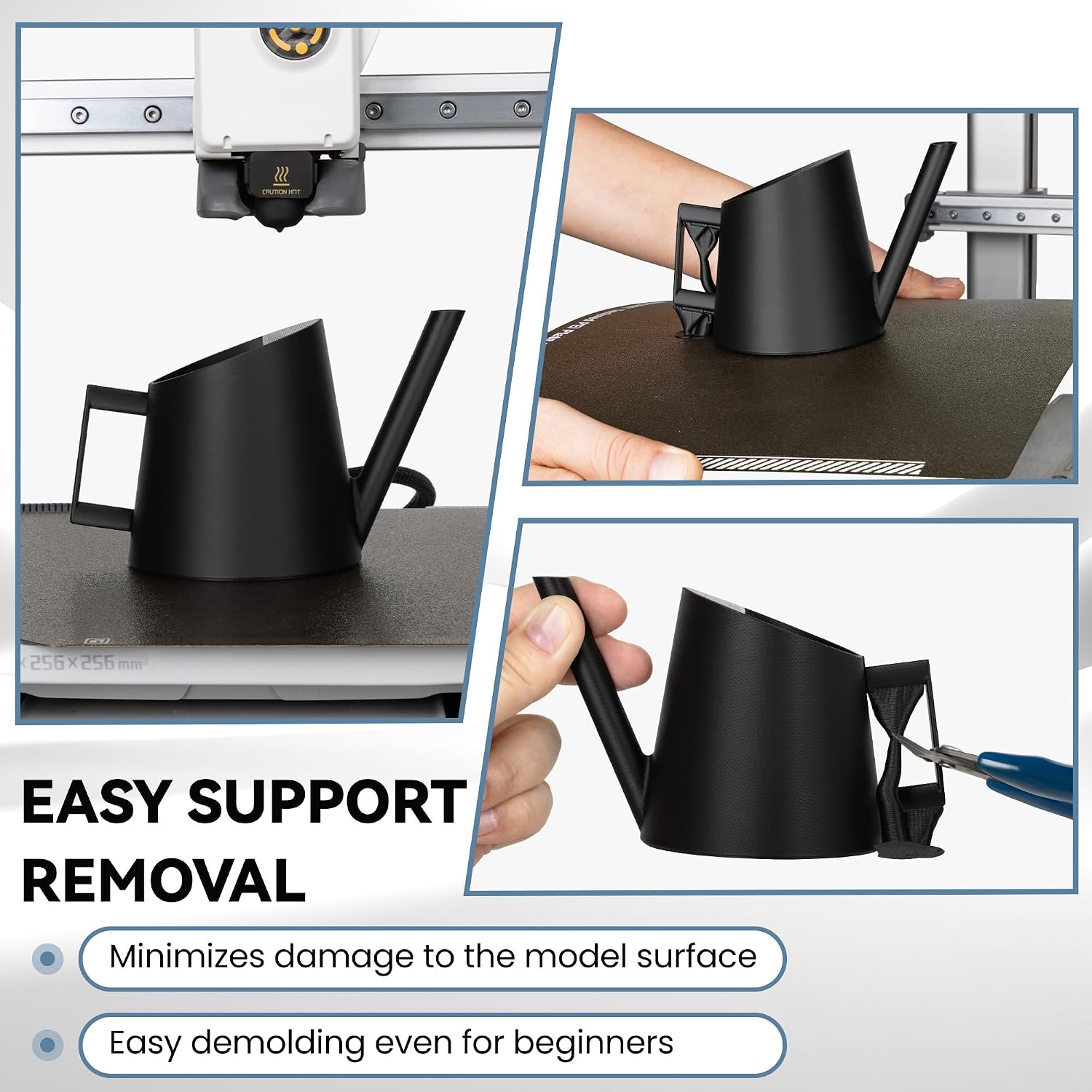
There’s also a support-related angle: the filament is said to shrink less and not warp as easily, which should help when you’re printing parts that need accurate fit. It’s presented as easier to remove than regular PLA supports, while keeping a smooth support surface.
Still, it’s worth tempering expectations: PLA is generally not the most forgiving material if your printer’s settings are way off, and any “matte hides layer lines” claim won’t replace good calibration and sensible layer height choices.
Print settings to start with

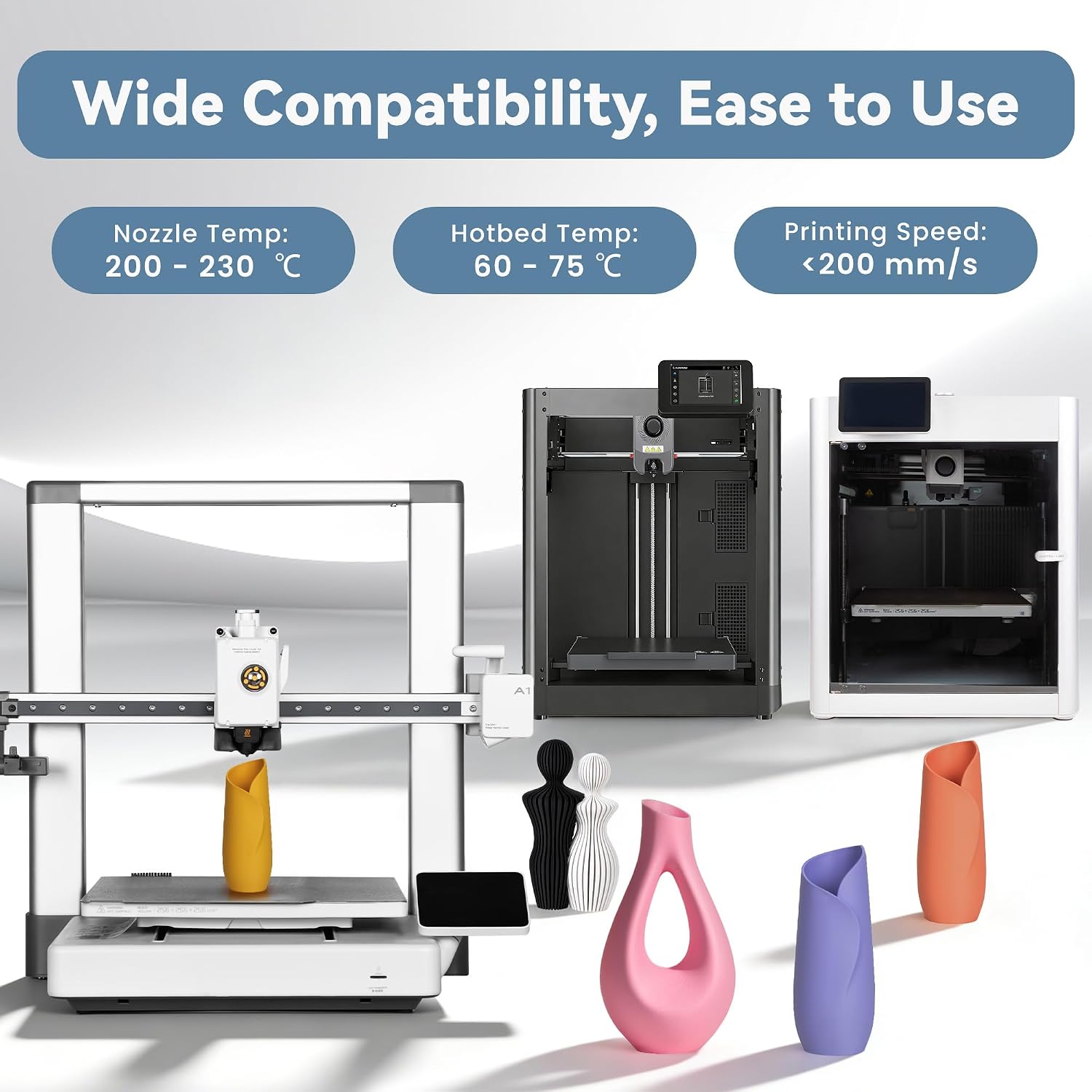
If you’re trying to get reliable results without spending ages tuning, the provided temperature ranges are a good starting point.
Suggested settings include:
- Print temperature: 200–230℃
- Bed temperature: 60–75℃
- Print speed: under 200 mm/s
You’ll also see a note about contacting the seller for a filament profile or checking a GitHub download. That’s useful if you want to match settings more closely to how the filament performs rather than relying purely on generic PLA profiles.
Compatibility and where it fits
The listing explicitly states compatibility with Bambu Lab FDM 3D printers, calling it perfectly compatible with Bambu FDM 3D printers. So if you’re already running one of those systems, you’re not starting from scratch.
That said, “compatible” can mean different things in practice: it usually points to settings that work well rather than a guarantee that it will feel identical across every machine and slicer combination. If you’re using a different ecosystem, you may still be able to run it, but you’ll likely rely on your own PLA tuning and profiles.
What you’ll notice day to day

This filament is designed to reduce some of the common pain points of PLA.
First, the support removal story is specific: it claims PLA matte filament shrinks less and does not warp, allowing for a better fit between printed models. If you regularly print multi-part assemblies, that’s a meaningful target.
Second, there’s a focus on filament handling: less prone to tangling and clogging, with a diameter of 1.75±0.03mm. In practice, diameter consistency and tidy winding can translate into fewer feeding problems.
Finally, the matte brown colour approach matters if you care about the final look. Matte finishes can also make surfaces look more “calm” under room lighting, but they can be less forgiving if you’re expecting super glossy results straight off the printer.
Where it may not be the best match is if you’re chasing maximum detail sharpness with glossy, glassy surfaces or you’re printing something that benefits from the very specific properties of more specialised materials. For that, you might need a different filament direction.
Pros and limits
What stands out (based on the listing): - Matte finish intended to reduce the visibility of layer lines - Self-supporting behaviour for easier support removal - Suggested print temperature/bed ranges and a speed cap to keep things stable - Claims around reduced nozzle clogging and clumping - 1 kg spool size aimed at longer projects without constant swapping
Things to keep in mind: - It may still require sensible calibration and tuning, matte finish won’t “fix” everything - Support performance and warp resistance can depend heavily on your model geometry, enclosure conditions, and your actual print settings - You’re committing to a matte aesthetic, if you want a glossy or highly reflective surface, this may feel like the wrong direction
If you prioritise smoother visual surfaces with minimal finishing, this is likely a strong bet. If your priority is purely speed or maximum strength in demanding conditions, PLA matte might feel like it’s focusing on the wrong attributes.
Is it worth it?
It’s a sensible buy if you want a matte PLA filament for FDM printing where the surface finish matters, you want easier-to-handle filament that’s less likely to tangle, and you’re printing models that benefit from better support behaviour and reduced warping risk.
You may want to skip it if you’re looking for a glossy finish, or if you’re printing something where PLA generally isn’t the right material choice for performance. It also might not suit you if your machine setup is still very inconsistent—matte PLA can look great, but only when the basics are dialled in.

A good practical scenario: printing a matte brown figurine or a functional-looking display bracket where you’d rather avoid heavy sanding. Start with the listed 200–230℃ hotend range and 60–75℃ bed range, keep speed under 200 mm/s, and let the matte surface do its job.
Mini FAQ
How hot should I print this PLA?
The listing suggests a print temperature range of 200–230℃, with a bed temperature of 60–75℃ and print speed under 200 mm/s.
Is it actually compatible with Bambu FDM printers?
The product description states it’s perfectly compatible with Bambu FDM 3D printers, and mentions using filament profiles or downloads if you have questions.
Does it help with supports?
Yes, the listing specifically claims it’s easier to remove than regular PLA supports, with less shrinkage and reduced warping, plus a smoother support surface.
Does matte PLA really hide layer lines?
It’s described as effectively hiding layer lines thanks to the matte finish. It can improve the look noticeably, but results still depend on your settings and calibration.
Is 1 kg a good size for long prints?
At 1 kg per spool, it’s designed for extended projects without constant spool changes, which can be handy if you’re printing multiple parts or repeated batches.