

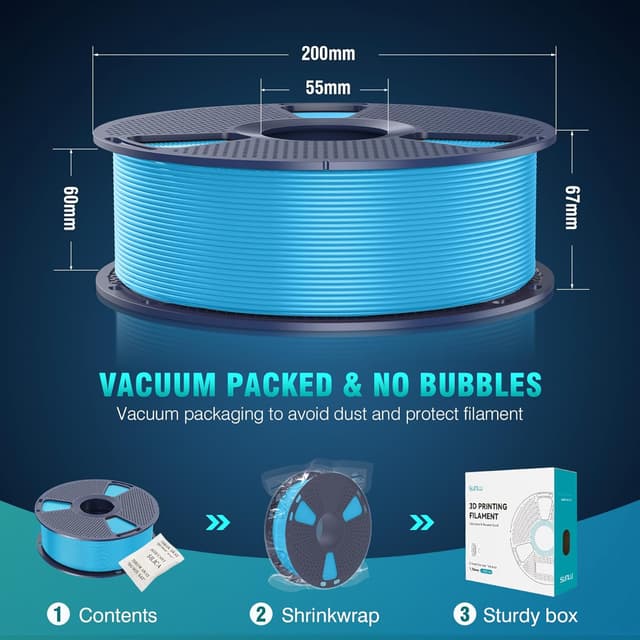
SUNLU PLA+ 2.0 1.75mm Filament (10KG total, Black & White spools)
Product description
If your prints keep snapping where you hoped they’d flex, this is the kind of filament upgrade that can genuinely change the feel of your finished parts. SUNLU’s PLA+ 2.0 is positioned as a sturdier take on standard PLA+, with faster melting and smoother flow for printing, and it’s supplied as 10KG total in neatly wound 1kg spools (Black and White in a 5+5 split).
That said, no filament is magic. PLA+ 2.0 can still be picked up too often as a “one spool solves everything” option, and it won’t replace performance filaments for heat-heavy applications. Where it shines is everyday durability, easier processing, and consistent feeding.
What it is and why you might want PLA+ 2.0
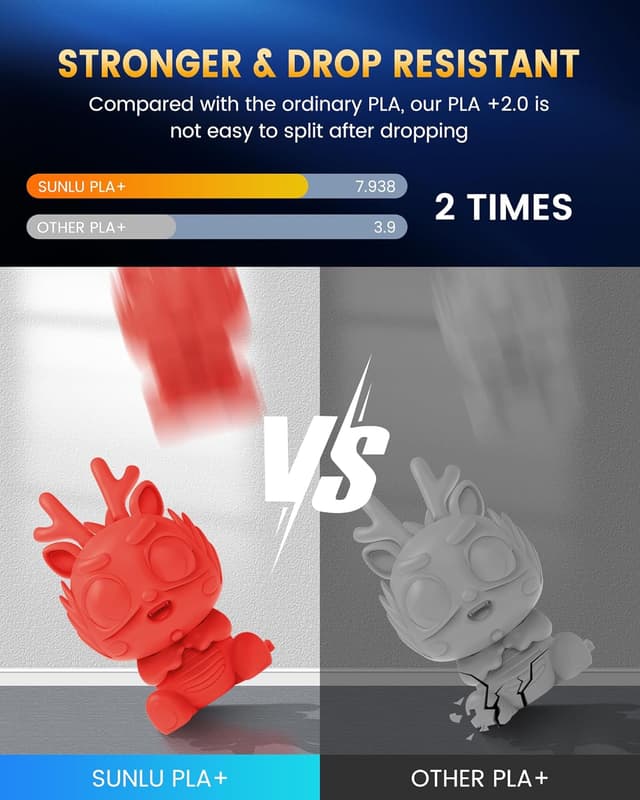
This is a 1.75mm FDM 3D printer filament based on PLA+. The practical goal is to print parts that are less prone to brittleness and cracking compared with standard PLA+. In real terms, that can mean fewer tiny failures at stress points—think small brackets, enclosure bits, replacement clips, or functional prototypes that you actually use rather than just display.
It also targets a smoother print experience. The filament is described as melting quickly and flowing smoothly, which is useful if you’re trying to move through projects without constantly babysitting extrusion quality.

Key takeaways for buying decision
A big part of whether this is “worth it” comes down to how you print and what you’re printing for.
If you’re after stronger-than-basic PLA-style prints and you want a filament that feeds neatly, this fits the bill. The packaging also supports larger build plans: 10KG total gives you enough material to run multiple batches, iterate models, and still keep colours organised.
Worth noting: the filament is recommended for FDM printers that accept 1.75mm material and where you can set nozzle/bed temps roughly in the provided range. If your printer setup can’t reach those settings, performance may not match the expectation.

What you’ll notice in use (not just on paper)
Two things stand out from the stated design: resistance and handling.
On resistance, the core claim is reduced brittleness and cracking compared with standard PLA+. That’s exactly the kind of difference that becomes obvious after you print something and then stress it gently—like snapping a clip back and forth a few times, or tightening a small press-fit component and seeing whether it cracks around the edges.
On handling, it’s described as fast to melt and smooth to flow, enabling speeds of up to 300mm/s (depending on your printer and settings). If your current filament feels like it needs careful tuning to maintain consistency, a smoother material can reduce the amount of time spent troubleshooting.
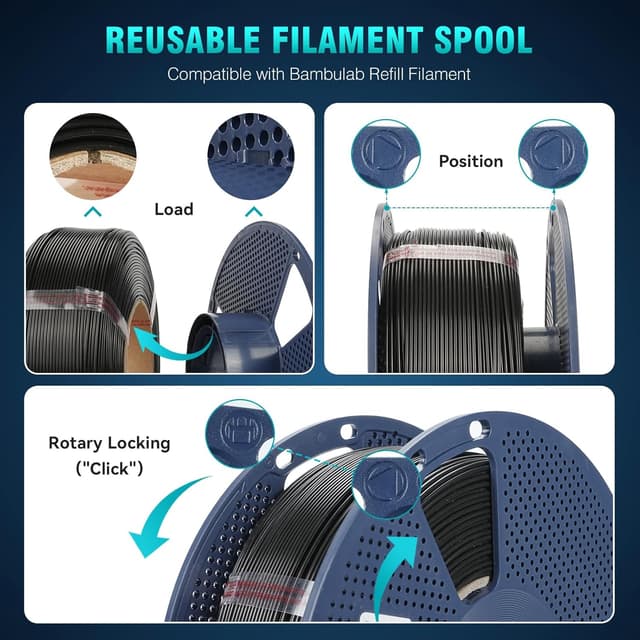
The “neatly wound” spool approach is also relevant. In practice, consistent winding can reduce tangles and help avoid clogging issues during longer runs—small detail, but it matters when you’re halfway through a bigger print and don’t want to stop.
Tech specs that matter before you commit
- Name: SUNLU PLA+ 2.0 Filament
- Type: PLA+
- Format: 1.75mm filament for FDM printing
- Size: 1.75mm
- Capacity: 10KG total (1KG per spool)
- Colour: Black5 + White5
- Recommended nozzle temperature: 205-220°C
- Recommended bed temperature: 50-60°C
- Recommended print speed range: 100-300mm/s
- Dimensional accuracy: +/- 0.02mm
Where it shines, and where it may not
Where it shines is fairly clear from the stated use-cases: high-precision models, functional parts, and decorative items. If you’re printing parts that need to survive day-to-day handling—rather than only looking good on a shelf—PLA+ 2.0 is the more sensible direction than basic PLA.

Where it may not be the best fit is if you need extreme performance in heat, or if your workflow depends on very specific printer behaviour outside the recommended temperature/speed ranges. Also, if you’re currently getting great results with your existing filament and you mainly print display-only models, the benefit may feel less dramatic.
How to get the best results (practical setup guidance)
To get the most consistent results, it helps to set up your printer in the ballpark of the recommended settings:
For nozzle temperature, aim within 205-220°C, and for the bed, use 50-60°C. Print speed is recommended between 100-300mm/s. The “up to 300mm/s” figure is there, but it’s also reasonable to start nearer the middle of the range while you dial in your own machine.
A quick example: if you’re printing a small functional bracket, set your temps within the recommended band and run a modest speed first. If layer lines look clean and the part doesn’t show obvious cracking at corners after cooling, you’ve probably found a workable baseline for that model geometry.
In the end: is it worth it?
A solid pick if you want a 1.75mm PLA+ filament that’s aimed at resisting brittleness and cracking, while also staying user-friendly and fast to print. Buying 10KG total can make sense if you run regular projects, test variations, or you like having multiple colours ready without mixing spools mid-run.
It may not be a great match if your printer can’t comfortably hit the recommended nozzle and bed temperatures, or if your projects are heavily exposed to heat where PLA-style materials tend to struggle. And if you only need decorative prints with no functional stress, you might not notice enough difference to justify changing filament.
Mini FAQ

Will this work with most 1.75mm FDM printers?
On paper, it’s designed for 1.75mm FDM printers and claims compatibility with nearly all printers that use 1.75mm filament.
What temperatures should I start with?
The recommended starting points are 205-220°C for the nozzle and 50-60°C for the bed.
Is it suitable for fast printing?
It’s described as supporting printing speeds up to 300mm/s, with a recommended speed range of 100-300mm/s.
Does the “neatly wound” spool design actually help?
It’s intended to reduce tangling and clogging during printing. That matters most on longer prints or when you’re reusing the spool multiple times.
Is 10KG total good value?
It’s a convenient way to stock up with 1KG per spool, especially if you plan more than one project. Whether it’s value depends on how quickly you use filament and how often you need both Black and White.