

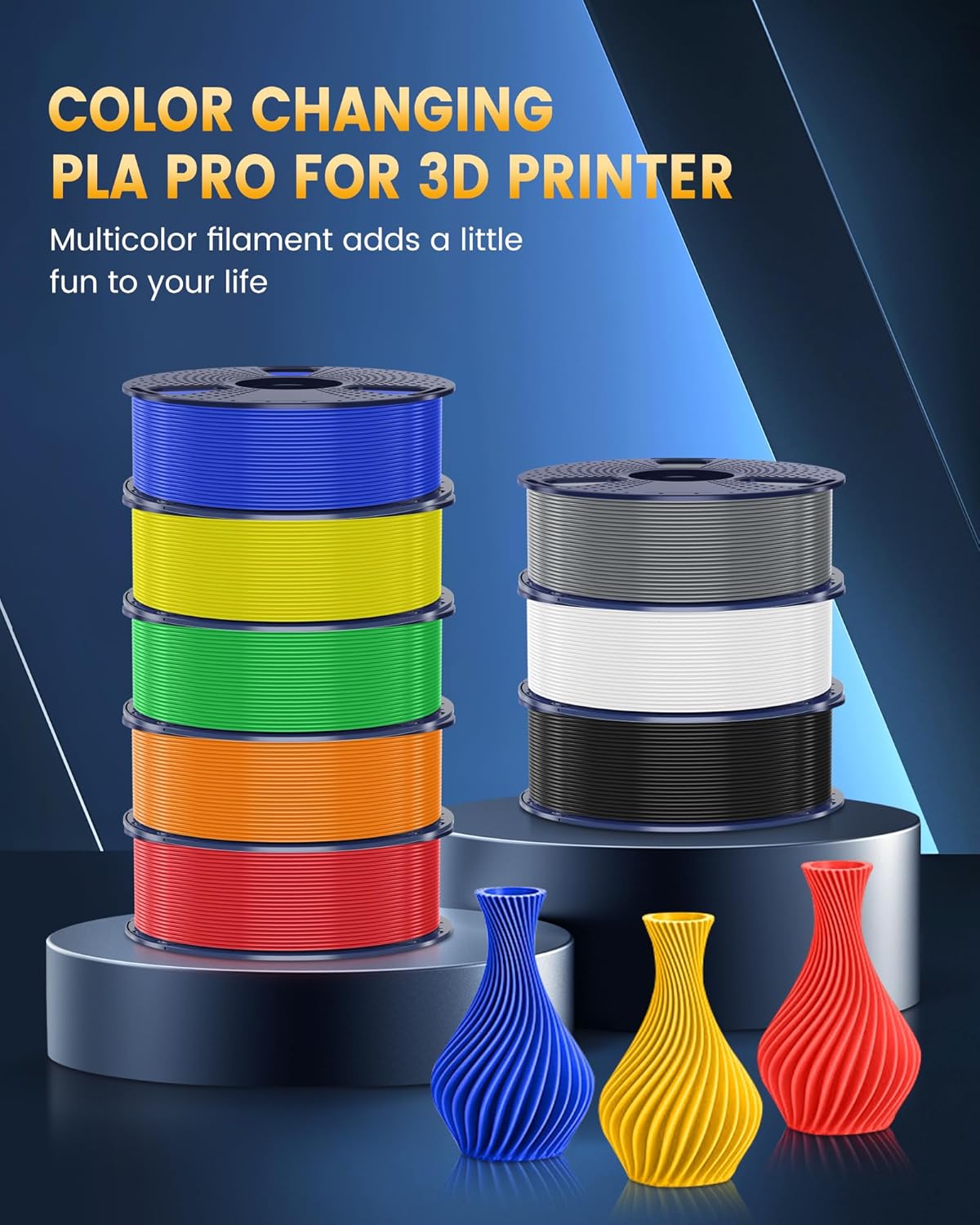
SUNLU PLA+ 2.0 Filament (PLA+ Upgrade) 1.75mm, Black, 1kg spool
Product description
Key takeaways
SUNLU PLA+ 2.0 is a PLA+ filament designed for people who want prints that feel tougher than “standard” PLA, without making the whole setup feel complicated. On paper, it targets less brittleness and fewer cracking-related headaches, while still aiming to run smoothly for both newer makers and experienced users.
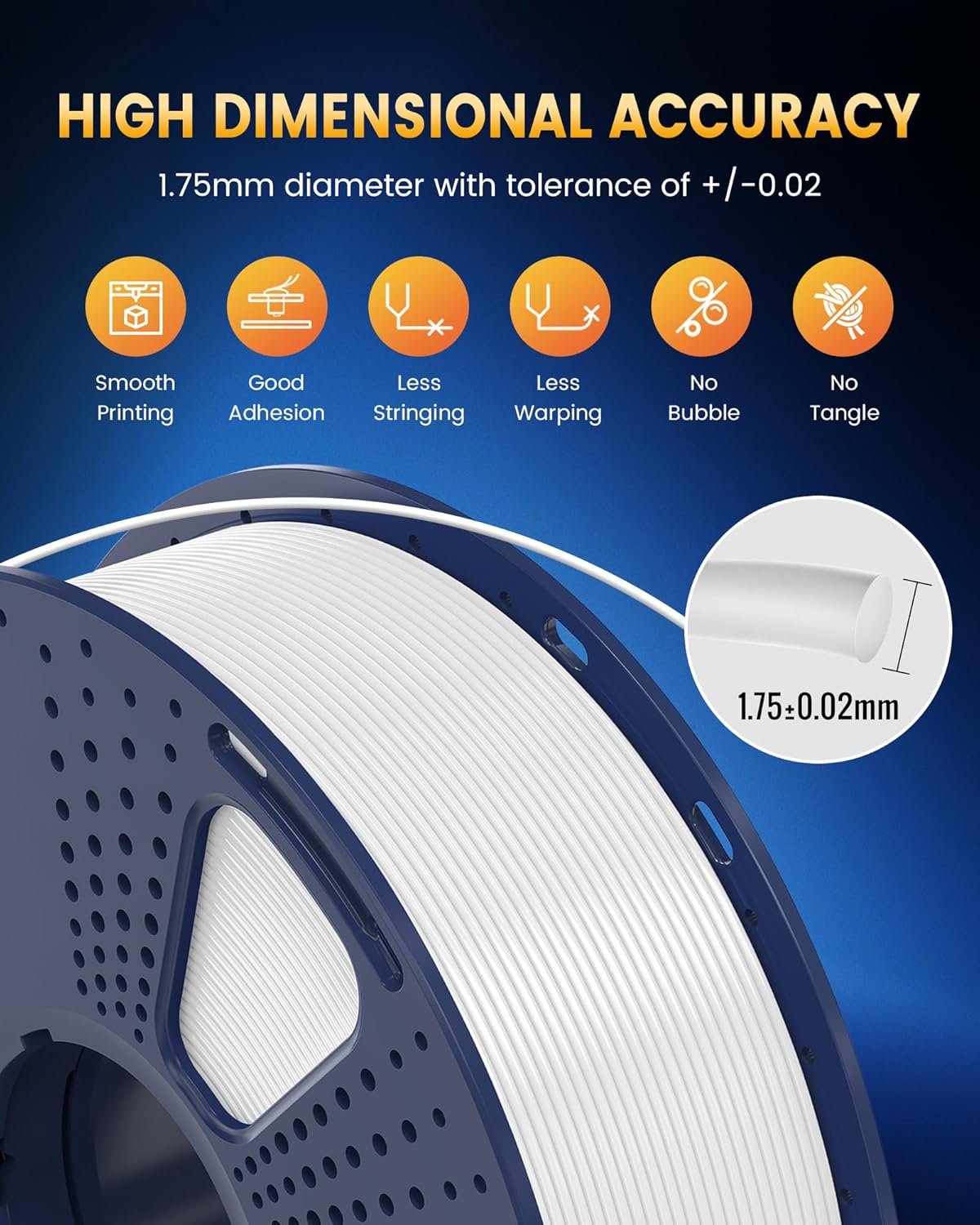
If you’re already using 1.75mm FDM, the appeal is pretty straightforward: consistent feed, neat winding, and a stated dimensional accuracy of ±0.02mm. That accuracy claim is helpful when you’re chasing cleaner fit between parts, but it’s still worth remembering that real-world results also depend heavily on your printer and your calibration.
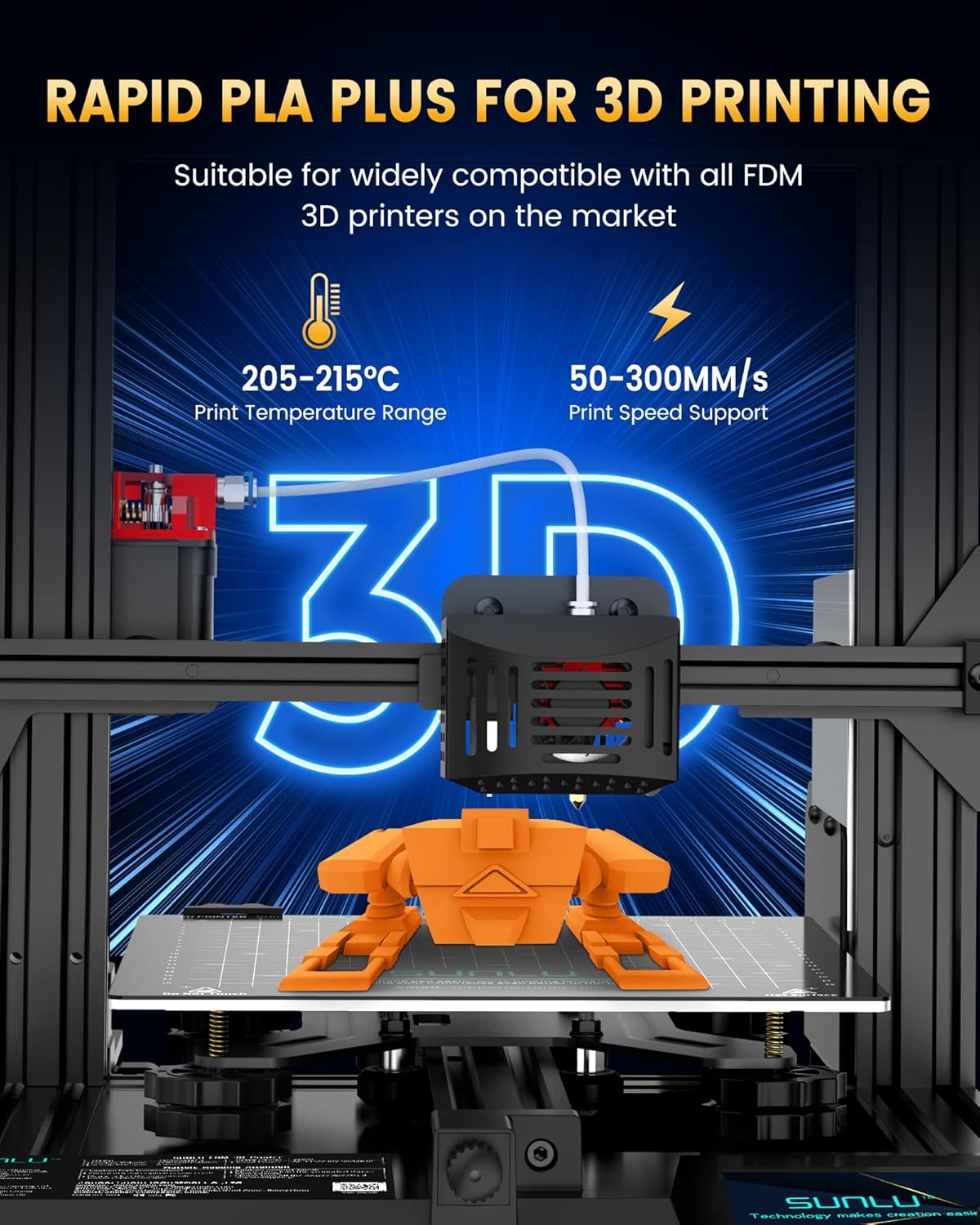
The brand also positions this as fast-printing capable, with a recommended speed range that reaches up to 300mm/s. The “works quickly” promise can be great if you print functional items, prototypes, or batches where time matters. But if your priority is ultra-fine cosmetic perfection, you may still need to slow down a bit and tune settings.
The essentials
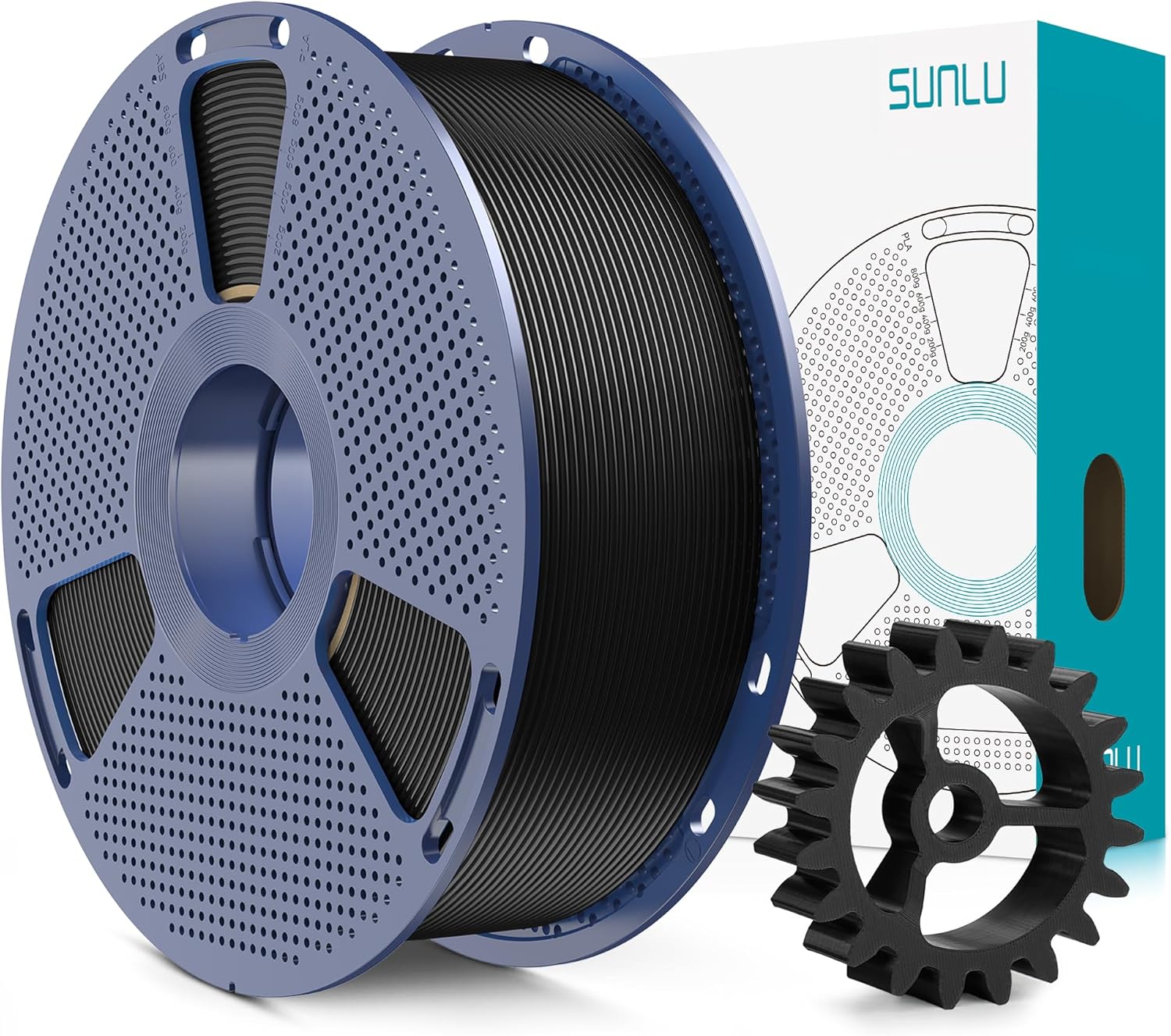
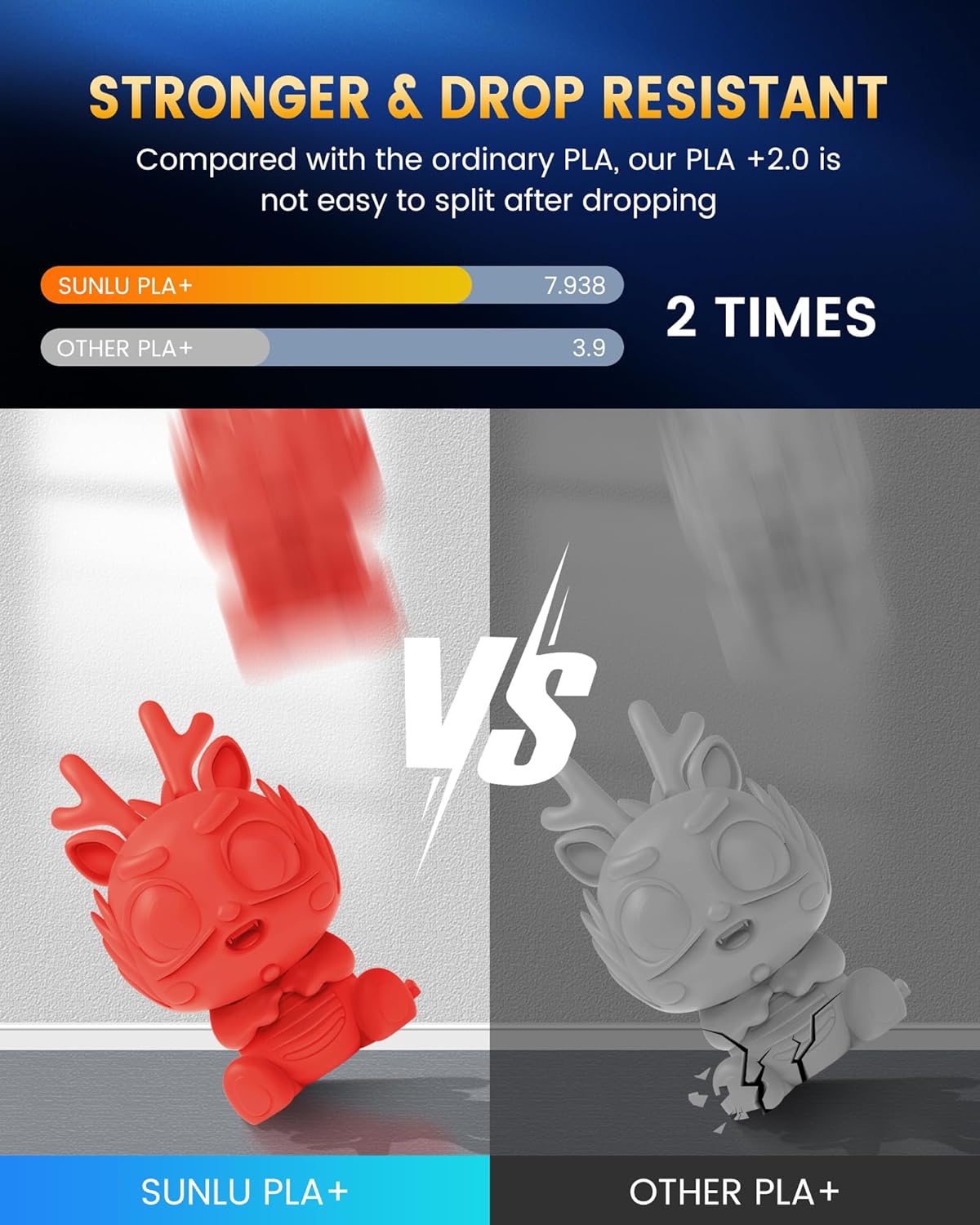
This is a 1.75mm FDM PLA+ filament supplied as a 1kg spool in black. SUNLU describes it as an upgrade PLA+ formulation that improves resistance to brittleness and cracking compared with standard PLA+. The intended outcome is prints that are stronger and more durable for day-to-day use cases.
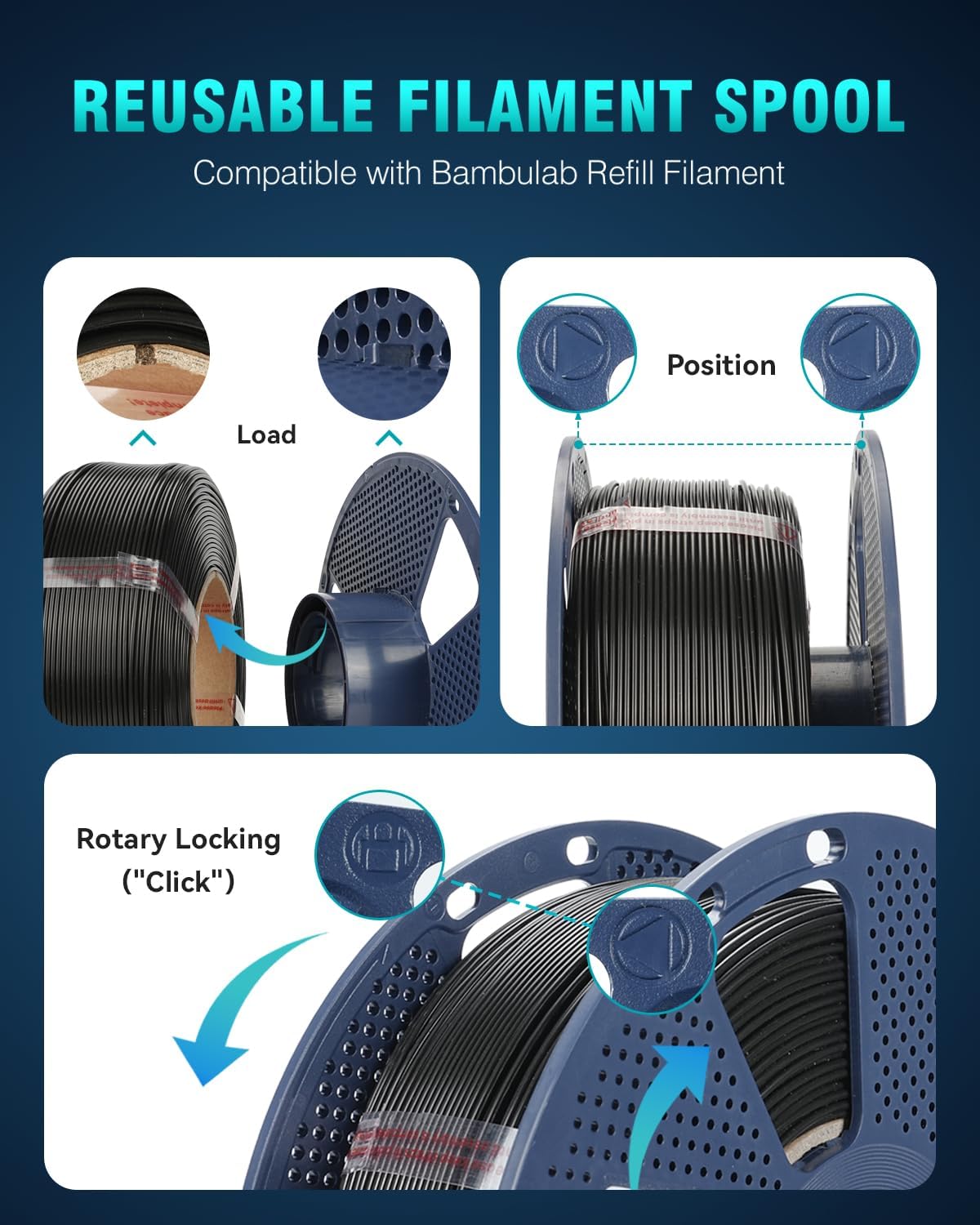
It’s also built around practical handling: the filament is described as “neatly wound”, with the goal of reducing tangling and clogging during printing. That’s the sort of thing you only notice when it goes wrong—so if you’ve ever had a spool derail or a machine struggle mid-job, this design choice matters more than marketing copy suggests.
On the workflow side, SUNLU says the filament melts quickly and flows smoothly, supporting faster print speeds. In practice, that can translate to faster turnaround on functional parts and prototypes, assuming your hotend, cooling, and print profile can keep up.
What stands out
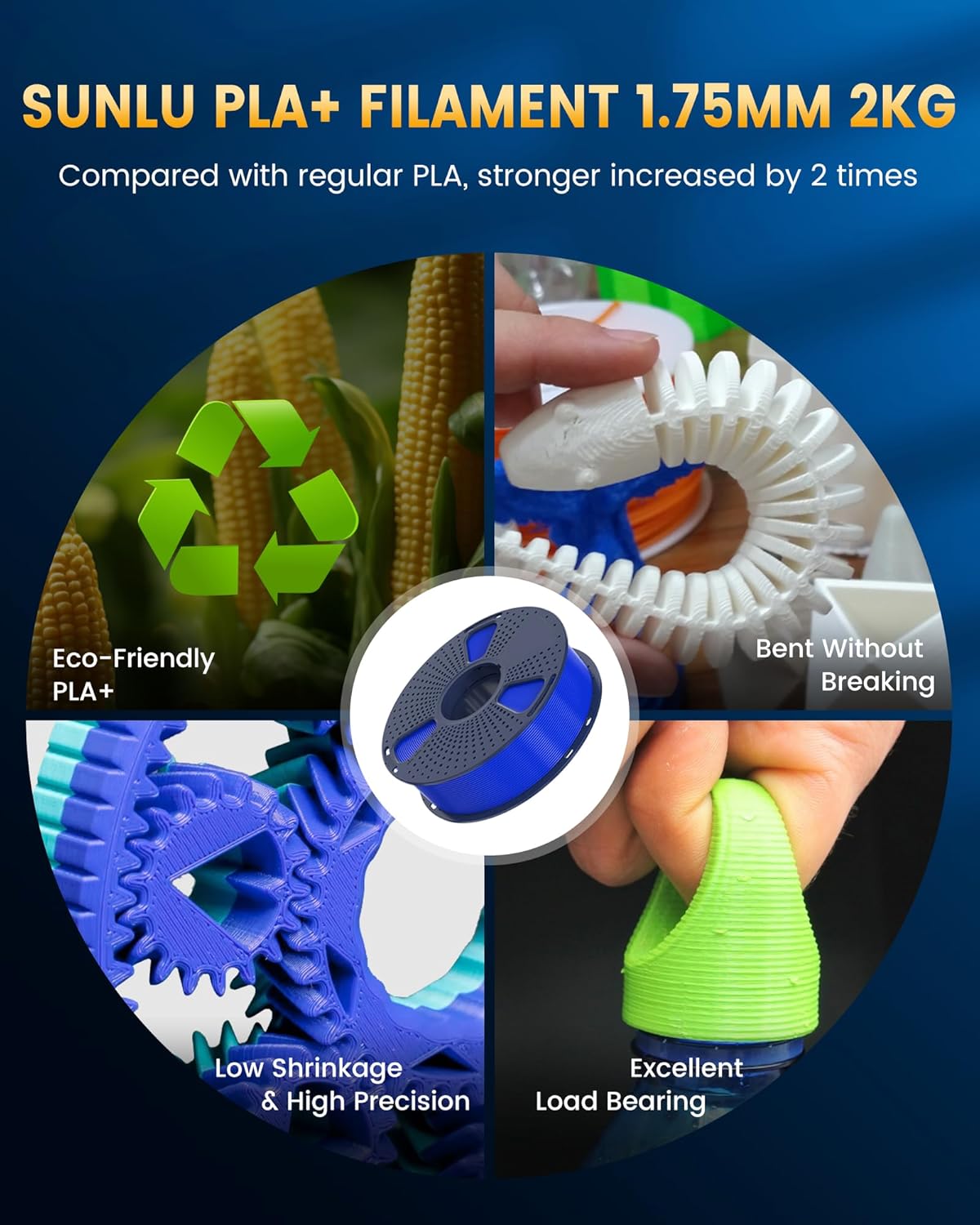
The standout details here are mostly about performance-without-drama:
- Tougher, less crack-prone behaviour versus standard PLA+ (as claimed). If you tend to break prints during post-processing or use items that see a bit of stress, that’s a meaningful direction.
- Dimensional accuracy of ±0.02mm, which can help with repeatability when printing high-precision models or parts that need to line up.
- Neat winding meant to avoid tangling and clogging, which should reduce interruptions.
That said, every PLA-family filament has its limits. PLA+ can still be less forgiving than engineering materials when you’re expecting serious heat resistance or structural loads. If your projects require high-temperature performance, it might not be the material to rely on.
Pros and cons
Pros - Designed to be tougher and more durable than standard PLA+ (per the description). - Neatly wound spool approach, aimed at smoother feeding. - Accuracy target of ±0.02mm, helpful for precision work. - Speeds up to 300mm/s are suggested, so it can suit batch printing.
Cons / limitations to consider - Your results will still depend on printer tuning, airflow, and calibration—accuracy claims won’t override poor setup. - If you push the upper speed range, quality can drop for some geometries and printers (that’s true for fast profiles in general). - Nozzle/bed guidance is provided, but you’ll still need to test and dial in for your specific machine.
It may be more of a mid-range “workhorse PLA+” than a material you’d pick for demanding, high-stress engineering applications.
Who it’s for (and who should skip it)
It makes sense if you: - Print with a 1.75mm FDM printer and want a PLA+ option geared towards reduced brittleness. - Care about cleaner fit for precision models or functional parts, not just display pieces. - Want a filament that’s straightforward to run and supports reasonably fast prints.
You may want to skip it if you: - Need high heat resistance or true engineering-level strength for demanding environments. - Only ever print very small cosmetic details where you plan to obsess over the absolute smoothest surface finish above all else.
Tech specs
- Type: PLA+ 2.0 filament (Upgrade PLA+)
- Format: 1.75mm filament for FDM 3D printing
- Colour: Black
- Spool capacity: 1kg spool
- Dimensional accuracy: ±0.02mm
- Recommended nozzle temperature: 205-220°C
- Recommended bed temperature: 50-60°C
- Recommended print speed: 100-300mm/s
Getting the most from it
For a practical starting point, SUNLU recommends nozzle temperature of 205-220°C, bed temperature 50-60°C, and a print speed range of 100-300mm/s. If you’re aiming to see the benefit of “fast printing”, try the higher speeds gradually—ramp up rather than leaping straight to the top—especially if your cooling isn’t strong or your part has fine details.
A simple micro-scenario: say you’re printing a small functional holder that needs a bit of resilience. Start within the mid-range of the speed suggestion, check layer bonding and any signs of warping or cracking, then adjust. If you see brittle failure, you’re usually better off tuning temperature and speed before blaming the filament.
Also, because the spool is described as neatly wound to reduce tangling/clogging, it’s still smart to monitor early in the print. Even with good winding, your first layers will tell you whether feed and retraction behaviour are in a good place.
¿Merece la pena?
SUNLU PLA+ 2.0 is worth considering if you want a PLA+ filament that leans into toughness and durability, plus a setup-friendly approach (neat winding, smooth flow, and speed range). For many makers, that combination is the difference between “it prints” and “it actually lasts once it’s out the door.”
It might not be the best match if your expectations are closer to engineering polymers or you’re printing under conditions where PLA materials struggle. Also, if your printer runs poorly with higher-flow, faster profiles, you may find you need to stick to the lower end of the speed range to get consistent results.
Mini FAQ
What is SUNLU PLA+ 2.0 designed to improve?
It’s positioned as more resistant to brittleness and cracking than standard PLA+ so prints come out stronger and more durable.
Is it suitable for 1.75mm FDM printers?
The description says it’s compatible with nearly all 1.75mm FDM 3D printers.
Does the filament support fast printing?
SUNLU states the improved PLA+ melts quickly and flows smoothly, enabling speeds up to 300mm/s, with a recommended range of 100-300mm/s.
What temperatures should I start with?
Recommended settings are nozzle 205-220°C and bed 50-60°C, then adjust based on your print quality and geometry.
Will the claimed accuracy matter in real prints?
±0.02mm accuracy is a useful guideline for precision work, but real outcomes depend on printer calibration, measurement tolerances, and how you set up the model and slicer profile.