

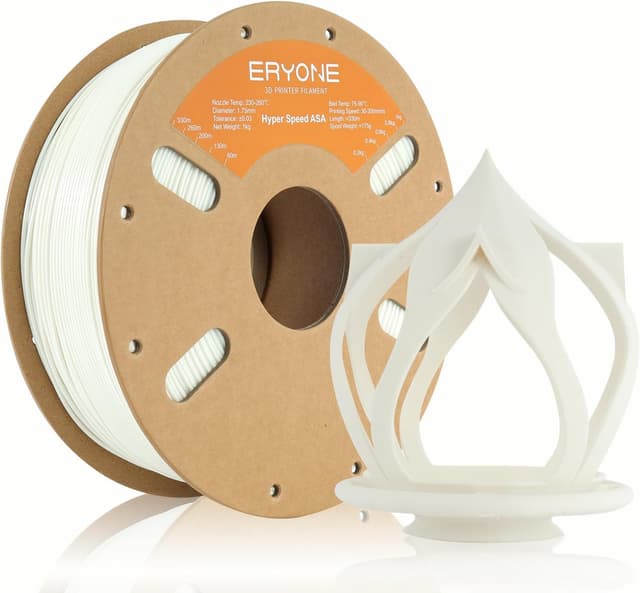
Eryone High Speed Burnt Titanium PETG 1.75mm (1kg) 3D printing filament, dark gold (towards black)
Product description
Key takeaways
If you’re chasing PETG that aims to handle heat and keep its shape while printing fast, this Eryone High Speed Burnt Titanium PETG is built around that idea. On paper it’s meant to reduce distortion and warping, while still offering strong interlayer adhesion—exactly the combination you tend to want when parts need to survive real use rather than just look good.
The “high speed” claim is the headline here: it’s positioned to reach speeds up to 600 mm/s with smooth flow. That can be appealing if you run production-style prints or simply hate waiting for the same model to finish. The burnt titanium look in a dark gold direction (towards black) is also a nice touch if your output needs a more serious, less “bright” aesthetic.
That said, it’s not a magic filament. Even with low shrinkage mentioned, print results still depend quite a lot on your printer setup and tuning. If you’re after plug-and-play simplicity, PETG can still demand your attention with temps, cooling, and first-layer settings.

The essentials
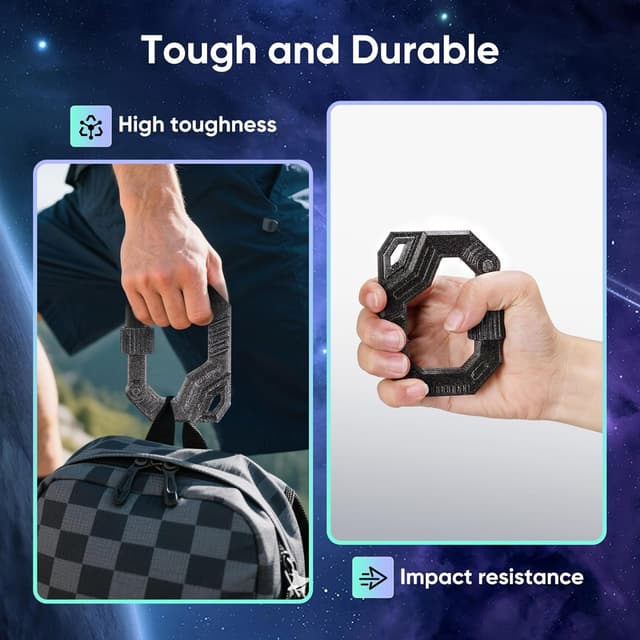
This is a 1.75mm PETG filament spool (1kg) designed for 3D printing, with an emphasis on strength, durability, and dimensional stability. The baseline pitch is that it’s chemically stable and “not easy to break”, with good toughness and good moulding effect. It also focuses on reducing warpage, which is often the headache that pushes people away from demanding prints.
In practical terms, you’d consider it when you want functional parts—think brackets, covers, housings, or components that shouldn’t split along the layer lines. The filament is also described as having strong texture and high interlayer adhesion, which is usually where PETG separates itself when you compare it to simpler, more brittle options.
There’s also an “upside” angle: the filament is framed as supporting faster melting and smoother flow, so you can spend less time printing the same model. If you regularly produce repeat parts, this could be a meaningful workflow upgrade.

What matters most
The biggest reason to look at this filament is the combination of performance traits working together:
- Strength and toughness are highlighted, alongside a claim that it’s not easy to break and is less likely to crack.
- Warpage is specifically called out as something it aims to minimise, supported by low shrinkage language for dimensional stability.
- Interlayer adhesion is positioned as strong even at higher speeds, so layer separation risk is intended to be lower.
Where it may fall short is in expectation management. “Up to 600 mm/s” only helps if your printer can actually keep up and your settings match the filament’s flow behaviour. If your machine struggles at speed (or you’re printing complex geometries), you may not hit those numbers consistently.
Quick overview
On the colour/finish side, the filament is described as dark gold “more towards black”. That matters if you care about how functional parts look when finished—PETG can show layer lines differently depending on colour and flow, and darker tones can make an object feel more cohesive.
On the compatibility side, it’s marketed as compatible with most 3D printers. That’s useful if you’re not locked into one ecosystem. Still, “compatible” is a broad word, you’ll want to ensure your printer supports 1.75mm filament and can handle PETG reliably.
Tech summary

- Type: PETG 3D printing filament
- Name: High Speed Burnt Titanium (burnt titanium) filament
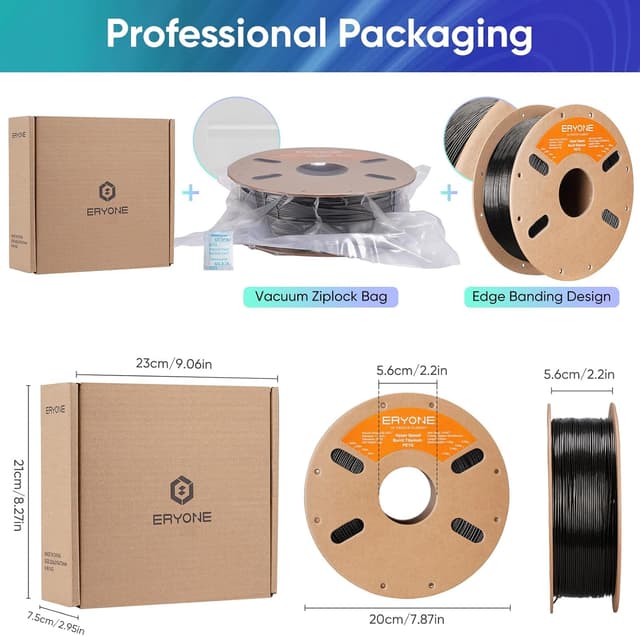
- Diameter: 1.75mm (±0.03mm)
- Net weight: 1kg (spool)
- Claimed max print speed: up to 600 mm/s
- Colour: Dark Gold (more towards black)
Who it’s for, and who should be cautious
It makes sense if you want PETG for parts where toughness, layer adhesion, and shape stability matter, and you’re also trying to speed up production without falling back to very slow print profiles.
It may not suit you if you’re still learning printer calibration and rely on forgiving filaments while you dial in temperatures, retraction, and cooling. Also consider skipping if your goal is purely visual display models and you don’t need the extra structural focus—there are more straightforward choices for “print it and admire it” use cases.
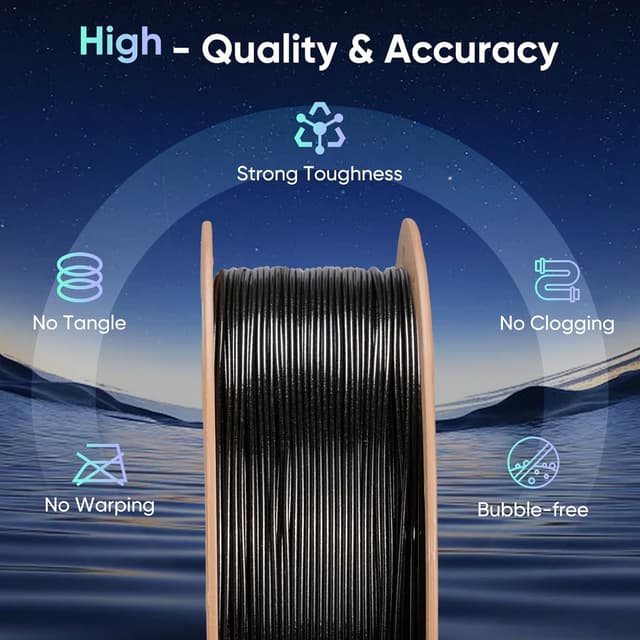
Worth considering if you’re doing repeat builds and you’d like smoother flow with fast melting, but you still want fewer headaches around warping.
Should you buy it?
This filament is a solid pick if you’re after PETG that’s positioned to resist warping, keep dimensional stability, and maintain interlayer adhesion while printing quickly—especially when you need parts that are less likely to crack under everyday stress.
It’s not the best choice if your printer setup can’t support high-speed behaviour, or if you’re looking for maximum simplicity over tuning. In that scenario, you might find yourself spending more time adjusting than you saved on print time.
If you’re balancing speed and strength, though, this Eryone PETG makes a lot of sense on paper—and it’s the kind of spool you’d keep around for functional projects rather than just decorative prints.
Mini FAQ
Getting the best results with this PETG
Because it’s designed for fast printing and strong interlayer adhesion, results will depend on matching your printer settings to PETG and keeping first-layer quality consistent.
Does the dark gold colour affect print strength?
The input focuses on strength, toughness, adhesion, and warpage control rather than colour affecting mechanics. The colour may influence how the finish looks, though.
Is it suitable for beginners?
It may be fine if you’re comfortable tuning PETG, but it’s aimed at performance (including high-speed printing), so it’s not guaranteed to be the easiest learning filament.
Final check before you buy
Confirm your printer is happy with 1.75mm filament and that it can realistically handle the speed range you plan to print at.