

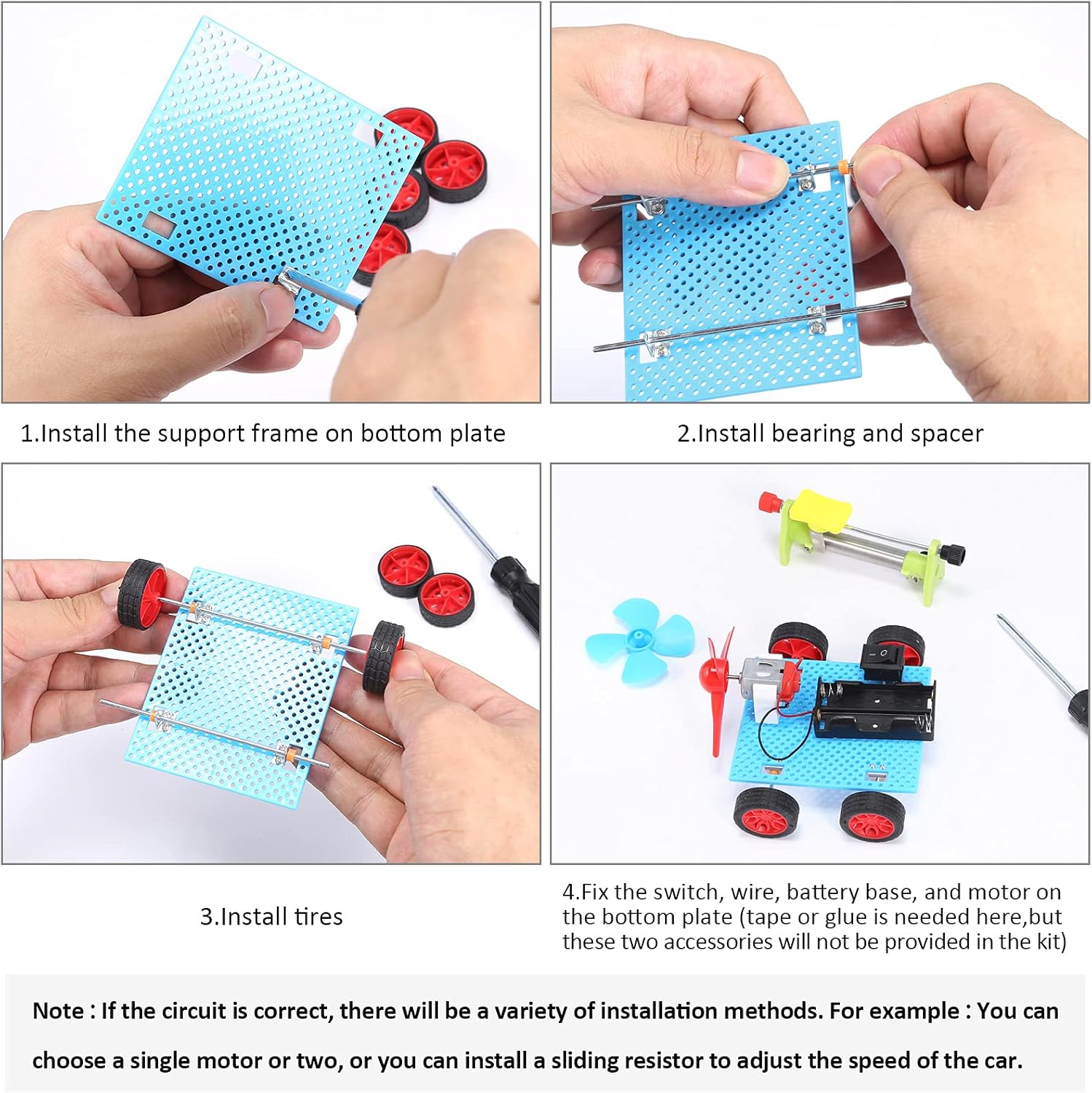
Sntieecr Electric Circuit Learning Kit (Car Model Assemble) – STEM DIY physics experiment set for 14+
Product description
What it is and what problem it solves
Sntieecr’s Electric Circuit Learning Kit is a DIY STEM experiment set built around simple electronic circuits, motors, and a car model you assemble as you learn. If you’re looking for something more hands-on than a typical “read about circuits” activity, this kit is designed to get kids building, testing, and tweaking components rather than just watching.
The kit leans into active learning: you’re not only connecting parts, you’re also using controls (like rocker switches and a sliding rheostat) and powering motors and bulbs as part of the same build. On paper, that makes it a practical way to introduce core ideas such as making a complete circuit and seeing what changes when you vary the setup.
That said, it’s not the type of kit that magically teaches itself. There’s a clear suggestion that it’s best used with guidance from a teacher or someone who understands the principle, and that’s worth taking seriously—especially because circuits can be fiddly.
Key takeaways for buying
This set is aimed at older students, with a stated suitability of 14+ (and specific safety notes for small parts). In other words, it’s closer to a junior physics workshop tool than a preschool science toy.
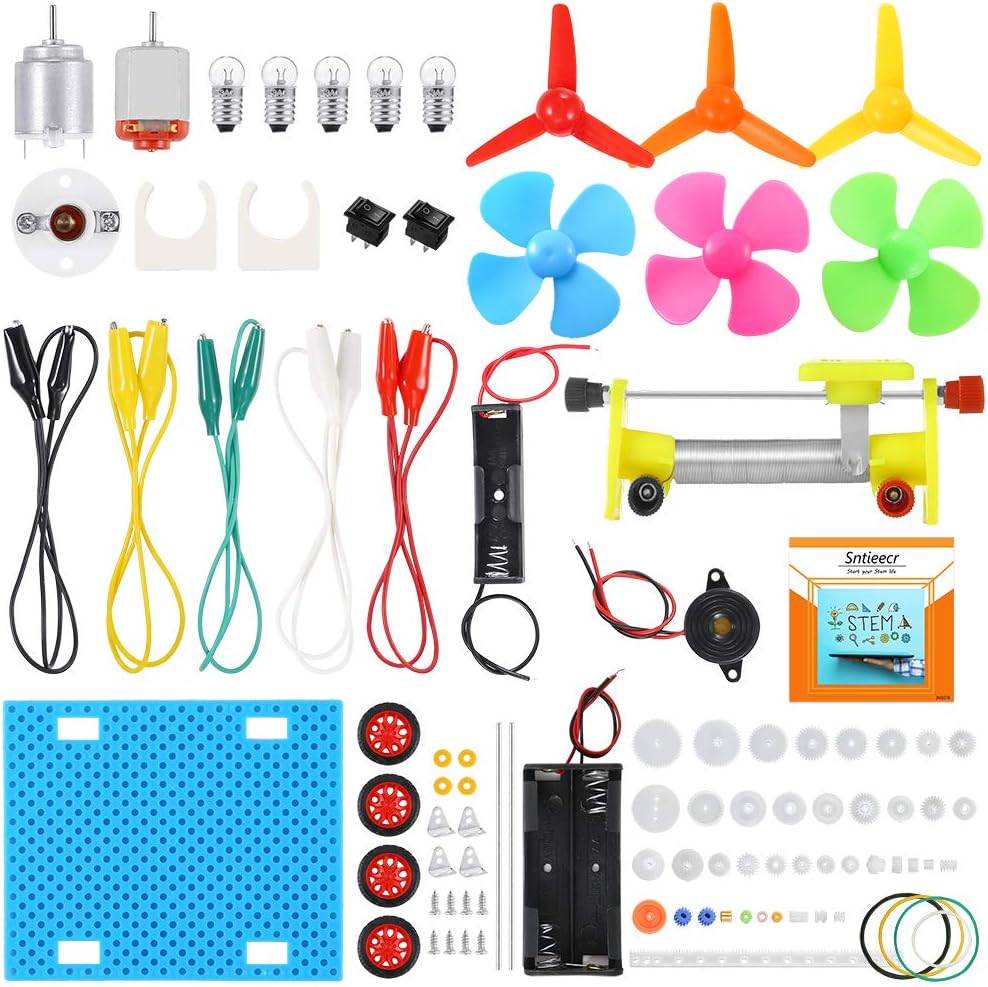
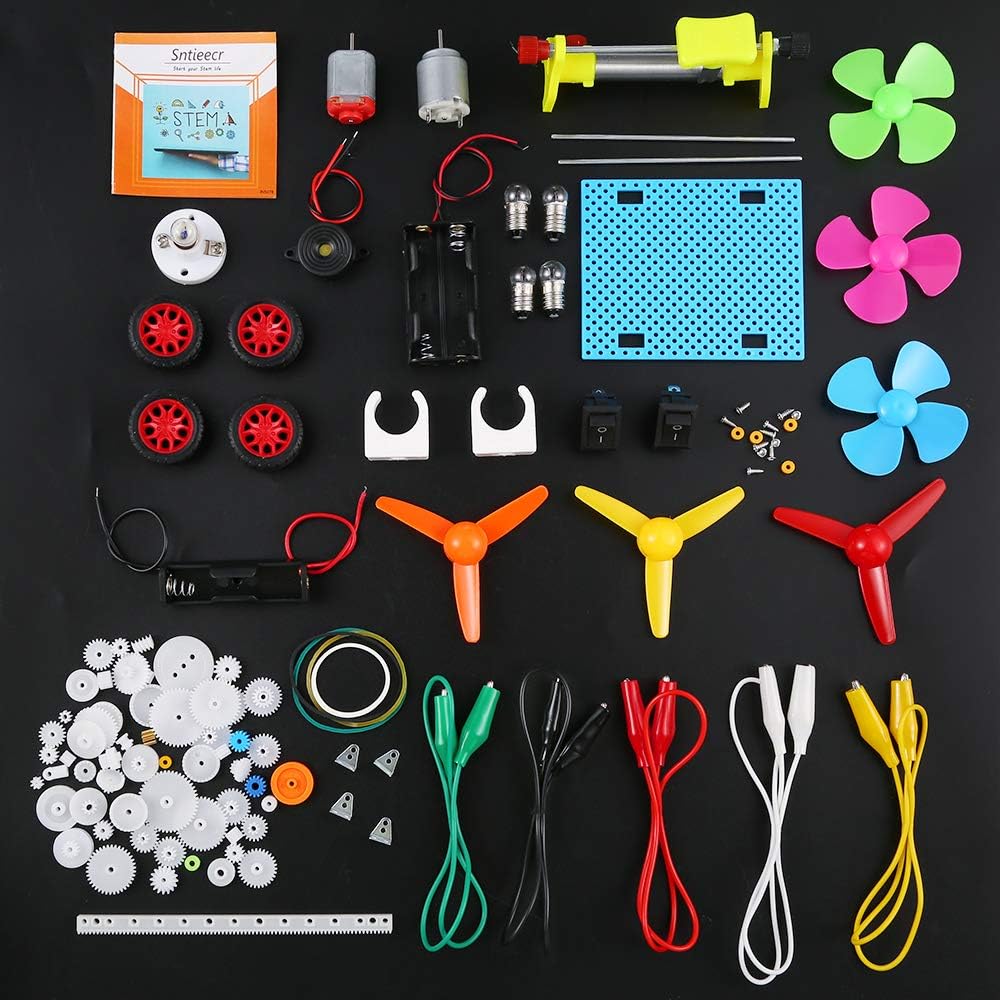
The main ingredients you get (based on the included items) include circuit leads (crocodile clips), bulbs, motors, rocker switches, a sliding rheostat, a buzzer sounder, bulb holders, a selection of plastic gears, and a car model parts group. There are also plastic propellers with different vane counts, suggesting you can extend beyond a single “car only” build.
If you value learning-by-assembly—where the project is the learning—this kit’s package makes sense. If you want something that’s strictly plug-and-play with minimal tinkering, you may find the setup more involved than you’d like.
What stands out in day-to-day use
Where this kit feels most useful is in how many “circuit behaviours” it allows you to demonstrate while the build is in progress. The inclusion of two rocker switches and a sliding rheostat points to at least a couple of different control styles: simple on/off control and variable-style control.
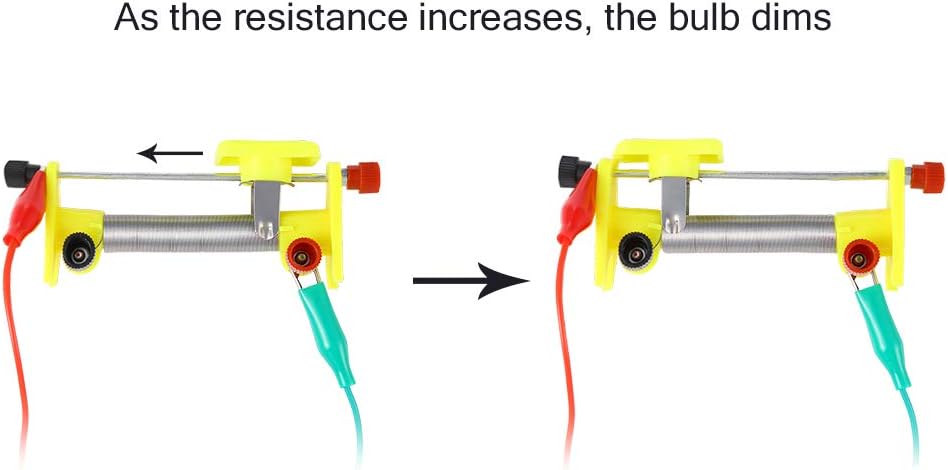
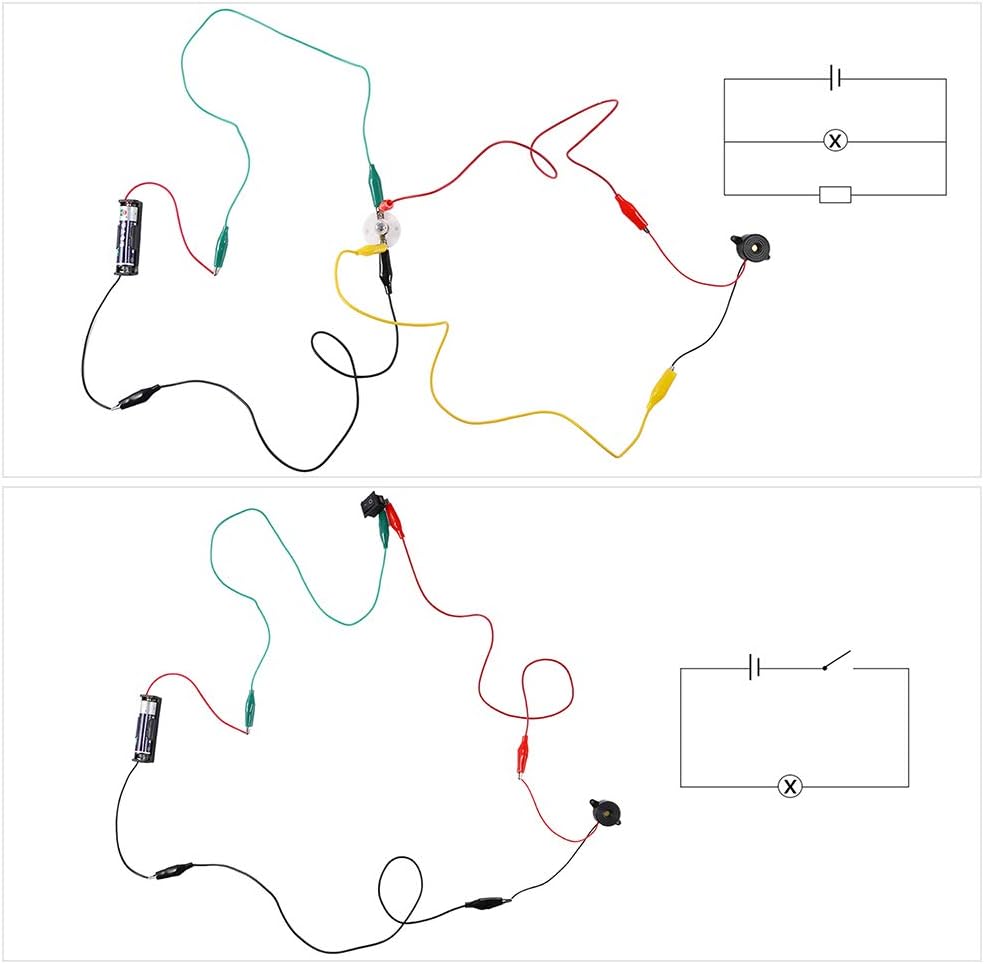
A micro example of how it might go in practice: you connect bulbs using the crocodile clip leads, then add a motor and use one of the rocker switches to power it while the other switch can control a different element (like an extra load). Because the kit includes a sliding rheostat, you can also explore how adjusting resistance changes the circuit output—turning “circuits” into something you can actually manipulate.
You’ll also notice the kit is structured for curiosity and experimentation, not just one fixed outcome. The gears, car parts, and propellers suggest you can build a working model and then iterate with different configurations.
What to consider before you buy (limitations and safety)
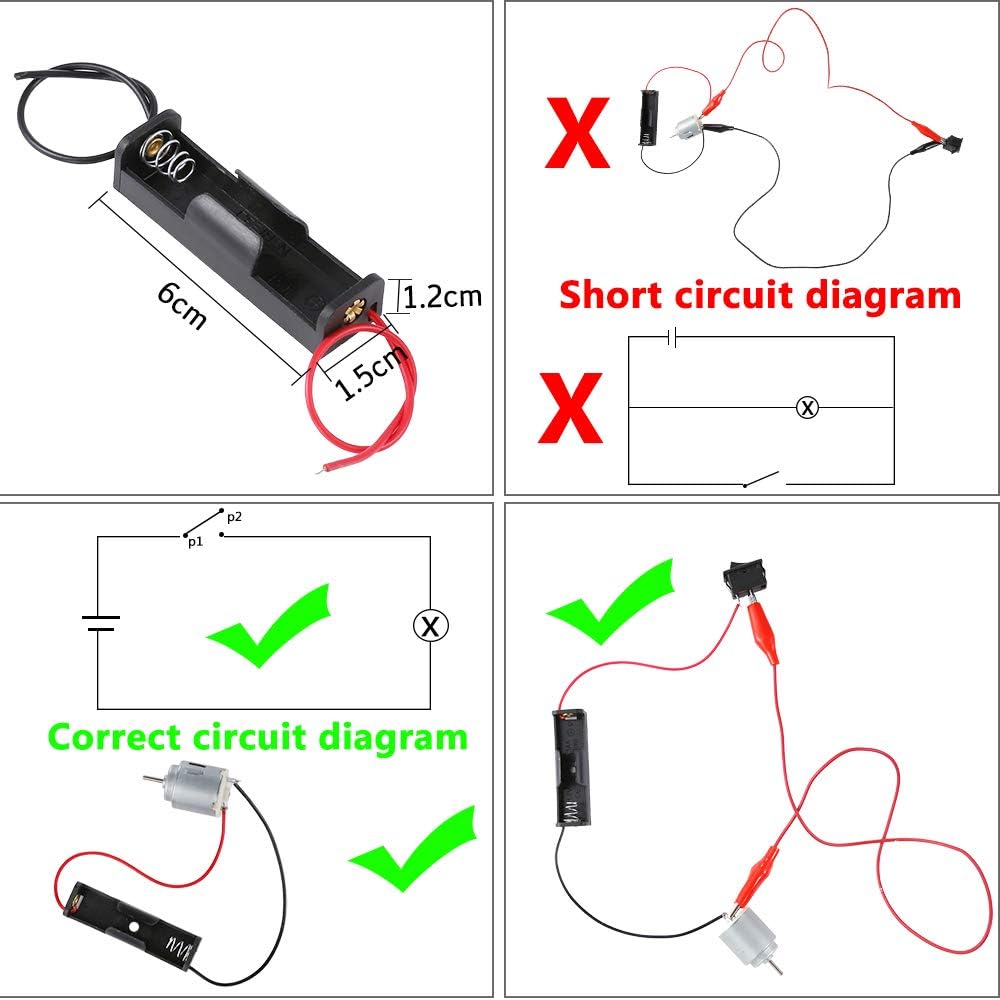
The headline limitation is age and supervision. The kit includes small parts (a choking hazard for under 3s), and it explicitly says children must use it under adult supervision. It also includes a caution around short circuits (including scald risk) and gives battery mixing warnings.
Battery handling is another area to take seriously. The kit provides AA-sized battery holders (one set for 1.5V and another for 2 x 1.5V, according to the description) and it advises that the suggested voltage is 1.5V–3V. It also warns not to mix old and new batteries, and not to mix different battery types such as alkaline, standard (carbon-zinc), or rechargeable. These are all the sorts of details that matter if you want consistent results and fewer issues during experiments.
Finally, the kit mentions that if instructions are lost, you should contact the seller for an electronic manual. That’s helpful to know, but it also implies the project experience depends on having the instructions to hand.
Key specifications (as far as provided)
Technical details you’ll actually need to know
Here’s what’s stated as included in the kit: - Instruction(s): includes one set of instructions - Leads: 5 crocodile clip leads - Lighting: 5 bulbs and bulb holders - Motor parts: 2 motors and 2 motor holder - Switches and control: 2 rocker switches and a sliding rheostat - Sound: 1 buzzer sounder - Propellers: 3 propellers with 3 vanes, and 3 propellers with 4 vanes - Mechanical parts: 60 plastic gears, and 7 car model parts - Power: AA size battery holder (1 x 1.5V) and AA size battery holder (2 x 1.5V)
Who it suits (and who might want to skip it)
It’s a strong match if you’re buying for a curious student in secondary/junior high range who’s ready to experiment and can follow safety guidance. The kit is presented as suitable for school physics/STEM/engineering-style projects, and the car model angle may make it easier to keep motivation up compared with a purely abstract circuit activity.
It may not suit you if you’re shopping for younger kids who need something more forgiving, or if you’re expecting a completely self-contained learning experience without adult involvement. It also might be a harder sell if you’re short on time, because building and testing circuits and mechanical parts usually takes a bit of patience.
Worth keeping in mind: it’s described as an “advanced and professional suit” with sliding rheostat control, so it generally sits above the simplest “basic circuit demo” kits.
Getting the most from it
This kit is best approached as a lab-style activity. Set aside time to read the instructions before you start connecting parts, and plan for a few test cycles rather than assuming the first build will work perfectly.
If you’re using it in a classroom or as a home project with supervision, agree on safety rules first: battery handling, avoiding mixing battery types, and using adult oversight when the circuit is powered. When you change components (like moving leads or swapping parts), it’s usually the moment when mistakes happen, so slow down there.
Is it worth it?
Sntieecr’s Electric Circuit Learning Kit is worth considering if you want a DIY STEM project that combines circuit basics with a car model build, includes both on/off switching and a sliding rheostat, and you’re happy to lean on the instructions and adult guidance.
You may want to skip it if you need something for very young children, if you’re not comfortable with basic circuit safety and battery rules, or if you’re looking for a quick, low-tinkering activity.
Mini FAQ
Is this kit suitable for younger children?
The kit is stated as suitable for 14+ and includes a choking hazard note for small parts, so it’s not aimed at very young kids.
What kind of experiments can you do with it?
Based on the included parts, you can build simple circuits involving bulbs and motors, use rocker switches and a sliding rheostat for control, and add a buzzer sounder.
Does it come with instructions?
Yes, it includes one set of instructions, and it notes that an electronic manual can be provided if instructions are lost.
What batteries does it use?
It includes AA size battery holders and suggests a voltage range of 1.5V–3V, with warnings not to mix battery types or old/new cells.
Do you need adult supervision?
The kit explicitly says it must be used under adult supervision.