

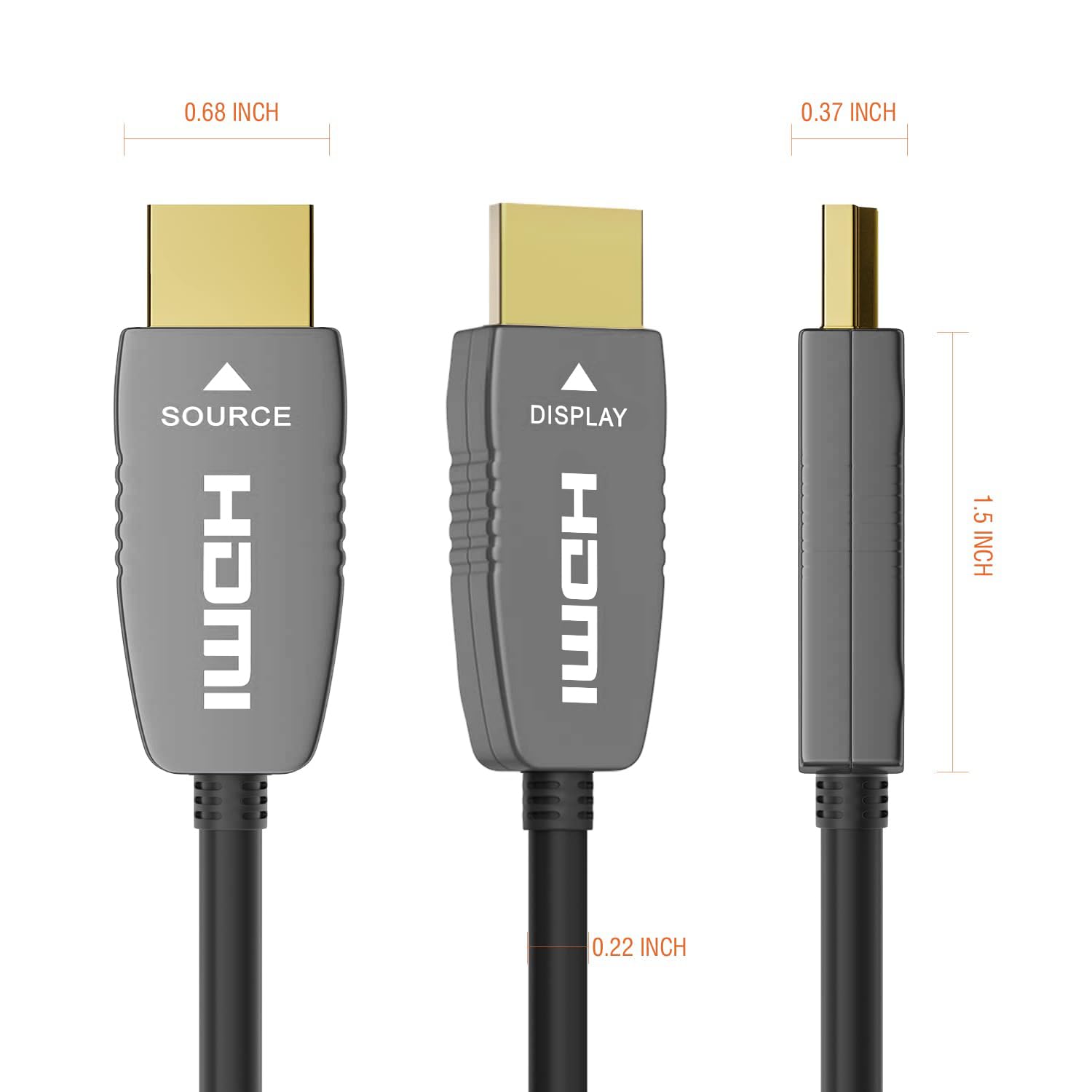
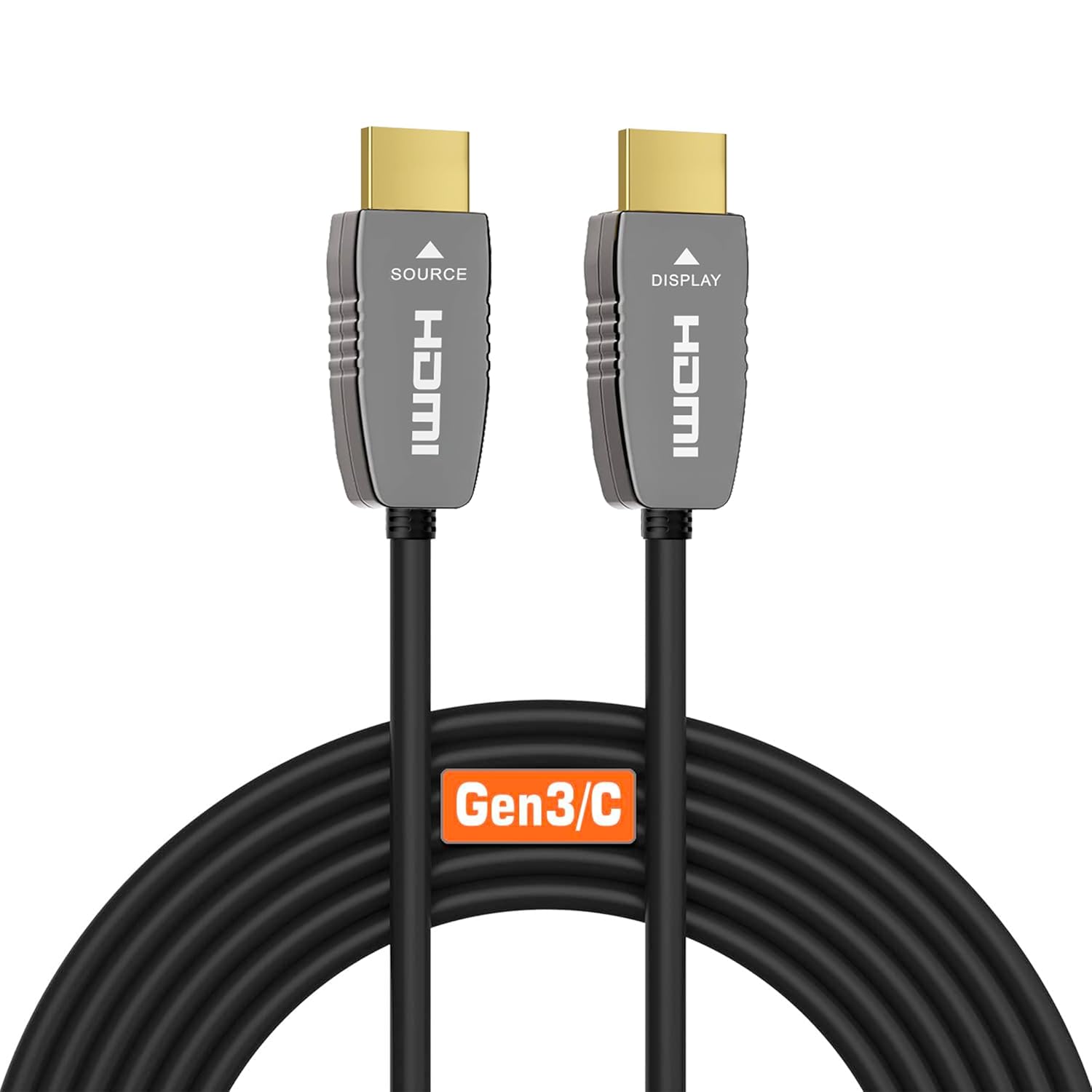
RUIPRO 8K Fiber Optic HDMI Cable (HDMI 2.1, 12m) for 8K@60Hz and 4K@120Hz home theatre & gaming
Product description
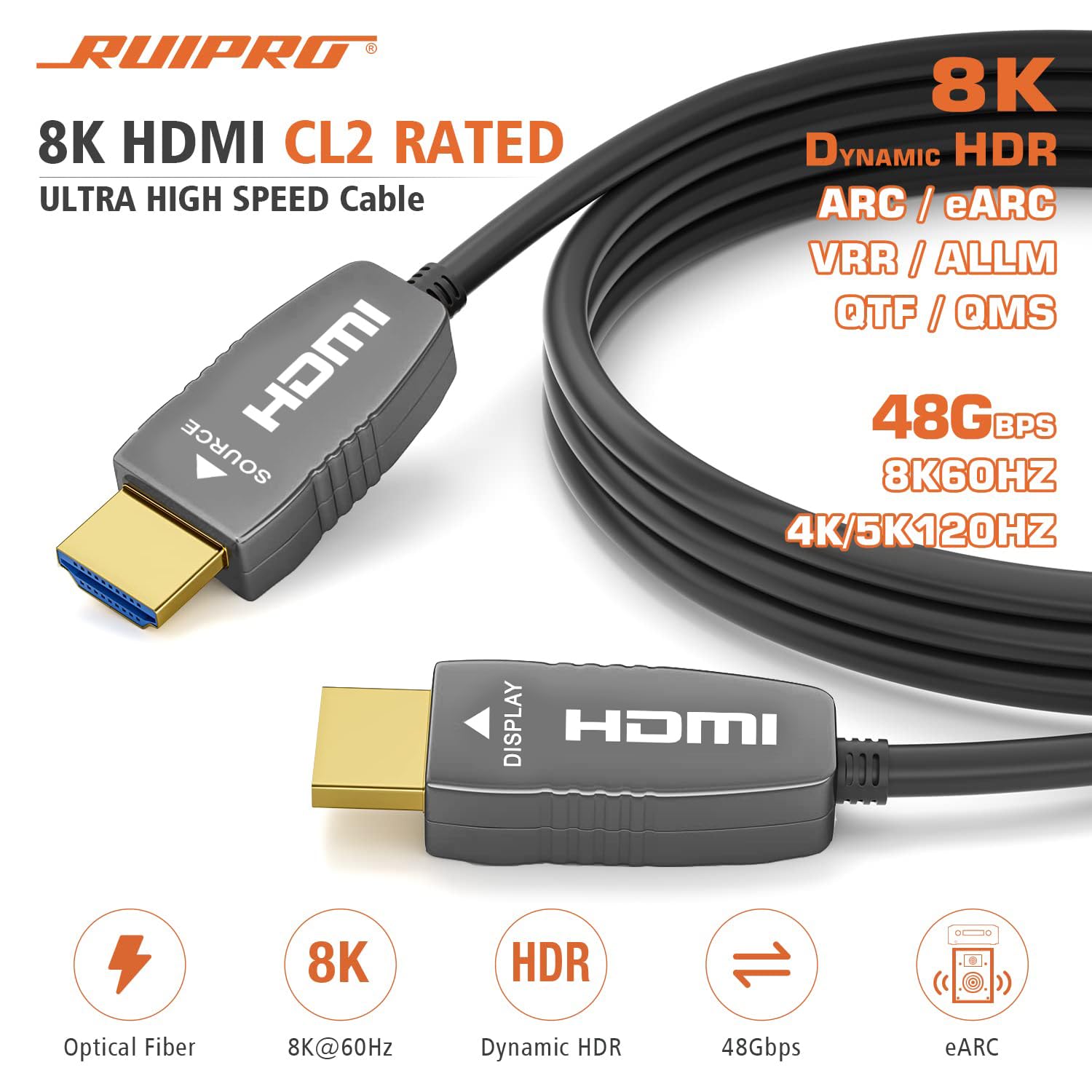
If you need HDMI over a long run without the usual copper-fibre compromises, RUIPRO’s 8K Fiber Optic HDMI cable is built for that kind of job. On paper it’s aiming squarely at HDMI 2.1 performance: up to 8K@60Hz, 4K@120Hz, and a claimed 48Gbps bandwidth, with features like Dynamic HDR, eARC and HDCP 2.2/2.3.
It’s also not the sort of cable you’d buy just because it’s cheap and “looks like HDMI”. The fibre approach is most relevant when distance is the problem. If your setup is already short cable runs, you may not get much benefit from paying for a spec designed for long-distance stability.
The essentials: what this HDMI 2.1 fibre cable is for
This RUIPRO HDMI cable is positioned as an HDMI 2.1-ready fibre optic link for modern TVs, projectors, home cinema systems and next-gen gaming setups. The selling point isn’t just the headline 8K support, it’s how the cable is designed to keep the signal steadier over longer distances than traditional copper HDMI, which can be more hit-and-miss when you get into bigger lengths.
A practical example: if you’re mounting a games console or TV box in one room and your display is on the opposite side, a 12m run can be the difference between “it mostly works” and “it behaves properly” (especially once you’re trying to use higher refresh rates or HDR).
Where it shines in real use
A few things stand out from its stated spec support:
- High bandwidth for demanding video modes. Support for 8K@60Hz and 4K@120Hz suggests it’s designed to handle both cinematic detail and faster, smoother gameplay modes.
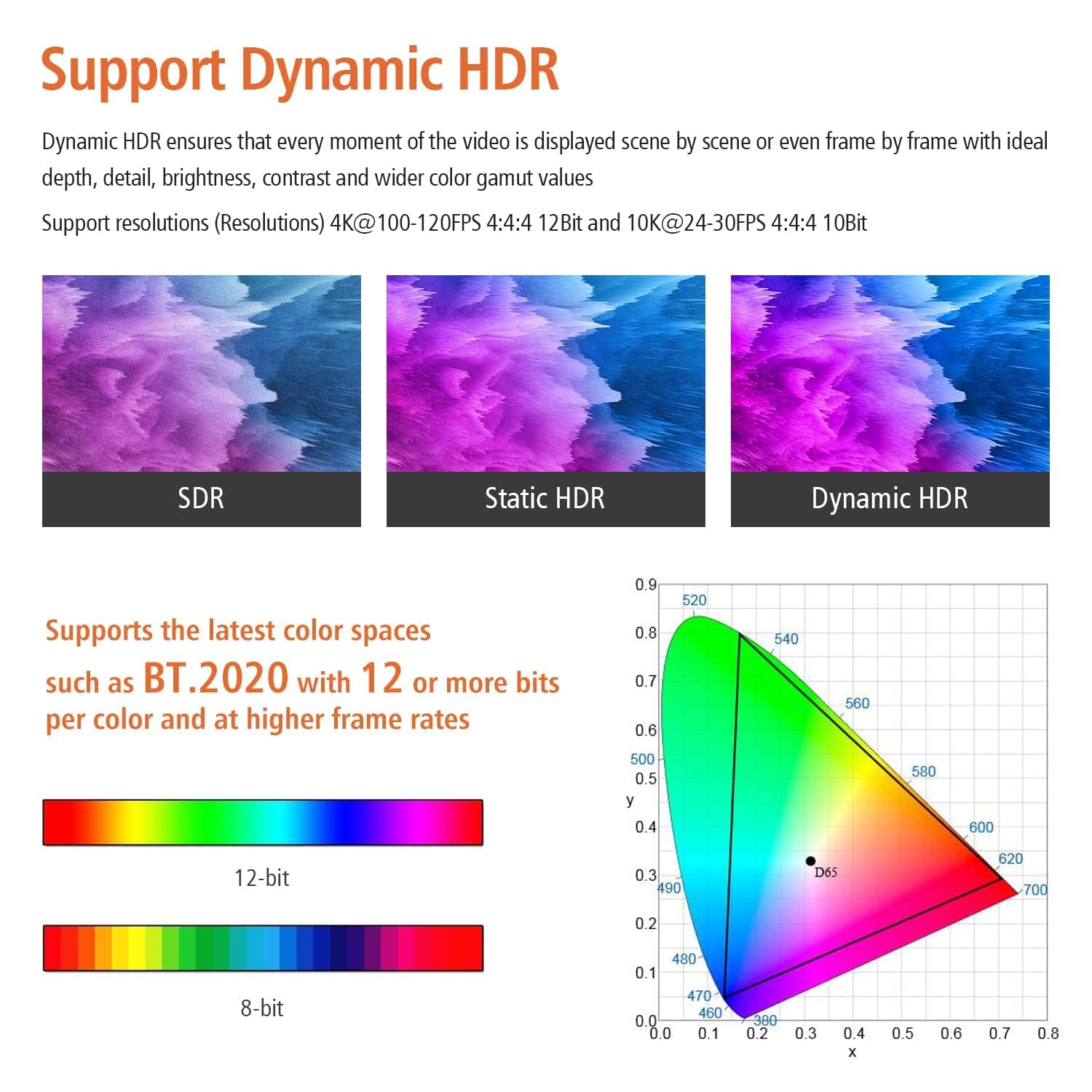
- Dynamic HDR support. Dynamic HDR is included, which is relevant if your TV supports it and you care about brightness/contrast handling scene-by-scene.
- eARC for immersive audio. eARC support is listed, along with Dolby Atmos and DTS support. If you’re feeding audio to a soundbar/AV receiver, this is the sort of feature you’ll notice when watching films or playing games that use spatial audio.
- Game-friendly features. The cable is listed as supporting ALLM, QFT, QMS and VRR. These are aimed at reducing delay, improving responsiveness, and smoothing transitions—useful if you’re playing at higher frame rates.
One gentle reality check: these features only make a difference if your TV/AV receiver/source device also supports them. The cable can’t “create” eARC or VRR if the rest of the chain doesn’t support the same HDMI features.
Key compatibility considerations (don’t rush this bit)
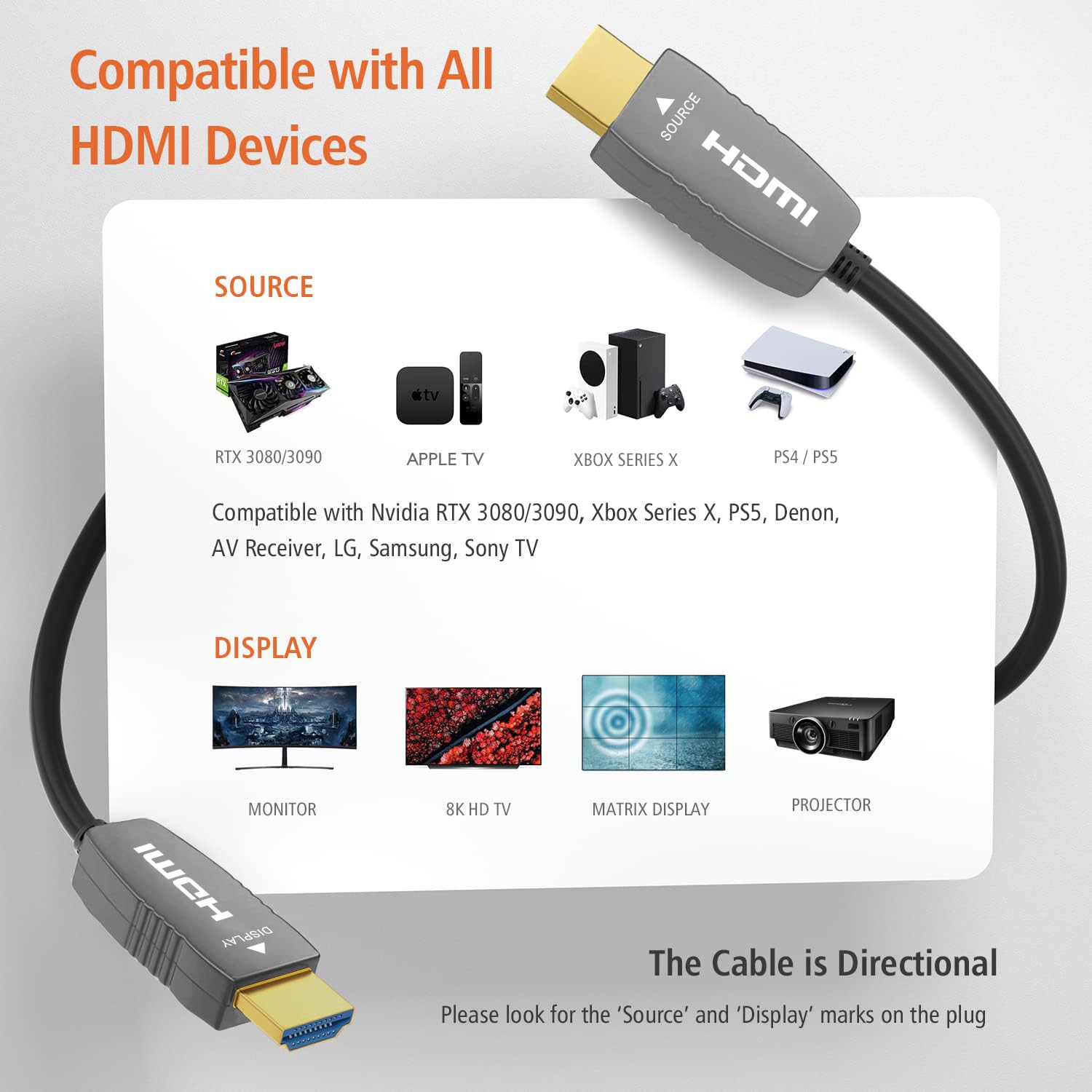
Compatibility is described broadly for HDMI 2.1 devices and common entertainment/gaming equipment such as PS5, Xbox Series X, gaming PCs, 8K/4K TVs, gaming monitors, projectors and TV boxes.
Still, it’s worth double-checking your own setup against what you actually want to run:
- If your display is older or only supports lower HDMI modes, you may be paying for capabilities you can’t fully use.
- If you’re relying on specific audio formats via eARC, confirm that your sound system and TV both support the relevant eARC behaviour.
As a rule of thumb: this cable makes the most sense when you’re trying to keep performance stable across distance and you intend to use modern HDMI features.
Tech details that matter (without getting lost)
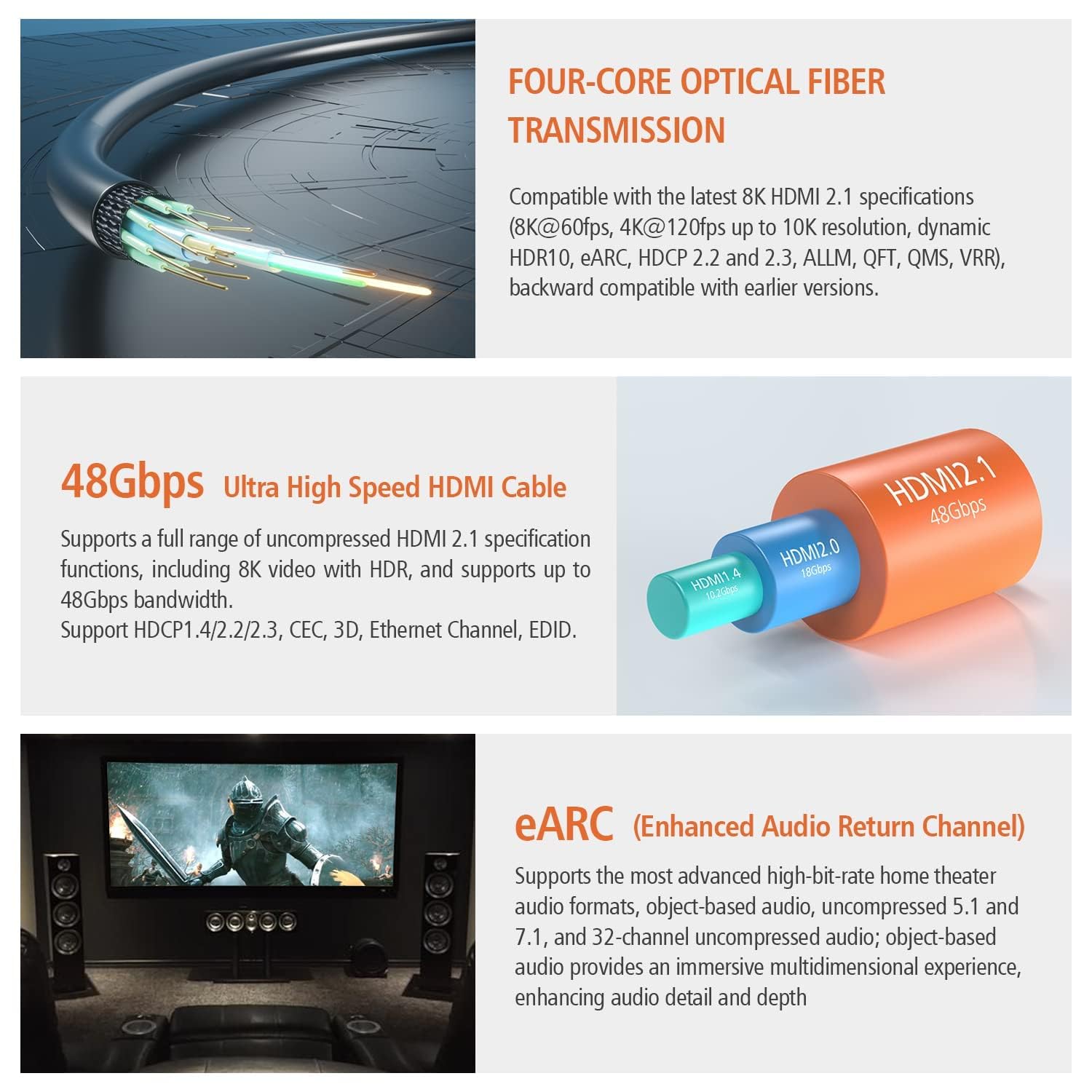
This RUIPRO cable is described as an active optical fibre HDMI 2.1 solution (a Gen3/C version is mentioned). It claims support for:
- Up to 48Gbps bandwidth
- 8K at 60Hz
- 4K at 120Hz
- Dynamic HDR
- eARC
- HDCP 2.2/2.3
- ALLM, QFT, QMS and VRR
It’s also stated as being engineered for long-distance transmission, with a listed transmission capability “up to 150m” in compatible setups. That’s a big number, but the key takeaway for your buying decision is simpler: it’s designed to cope better than standard copper HDMI when you need longer routing.
How to decide if it’s worth buying
It’s a good fit if you’re: It makes sense if your priority is keeping modern HDMI 2.1 features working over a long run (12m in this listing) and you’re using a TV/projector, games console, or home theatre chain where you care about HDR, higher refresh rates, or eARC audio.
It’s not for you if you: It might not be a great match if your distances are short and you’re not planning to use high refresh-rate gaming modes, Dynamic HDR, or eARC. In those cases, you’ll likely get better value by choosing a more standard HDMI cable that suits your length rather than paying for fibre’s higher-end spec.
The essentials before you hit “buy”
Before purchasing, it’s worth checking:
- Your required length: this listing is for a 12m run, so measure your route rather than guessing.
- Your HDMI chain: confirm your TV/sound system and source device support the features you want (eARC, HDR type, VRR/ALLM etc.).
- Your planned use: if you’re gaming and watching movies, the included feature set lines up well, if you only do basic TV streaming on older gear, it could be overkill.
Final verdict
Worth considering if your setup genuinely benefits from HDMI over distance, and you want HDMI 2.1 features like 8K@60Hz/4K@120Hz support, Dynamic HDR and eARC to stay intact across a longer installation.
You may want to skip it if you’re running a short cable, or your devices don’t support the modern HDMI features listed. In that situation, it’s more of a “future-proof” purchase than an immediately useful upgrade.
Mini FAQ
Is this HDMI cable only for gaming?
Not only. It’s described for HDTVs, projectors and home theatre use as well, with support for Dynamic HDR and eARC, which matter for films and sports too.
Will I get 8K@60Hz and 4K@120Hz with any TV?
Not necessarily. The cable supports those modes on compatible setups, but your TV, source device and HDMI handshake all need to support the same capabilities.
Does eARC work if my soundbar/AV receiver supports it?
If your TV and audio equipment support eARC, the cable is listed for eARC and includes Dolby Atmos and DTS support. If they don’t, you won’t see the benefits.
Is fibre optic HDMI better than copper for long runs?
Over longer distances, fibre is designed to be more stable than traditional copper HDMI (as described). If your run is short, the advantage may be less noticeable.
Where is this cable most useful?
Based on its design and spec, it’s most useful for longer installations (like in-wall or across rooms) where you still want modern HDMI 2.1 behaviour rather than relying on a standard copper cable to “just work”.