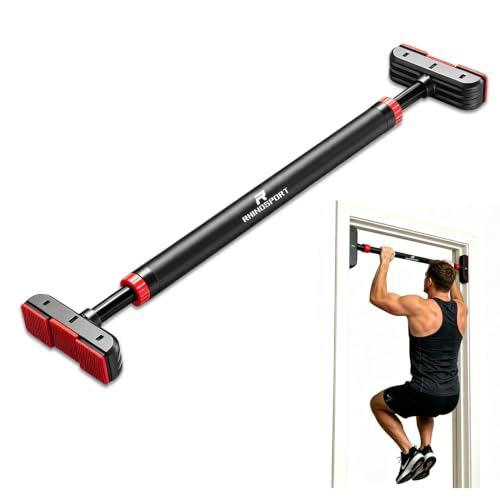
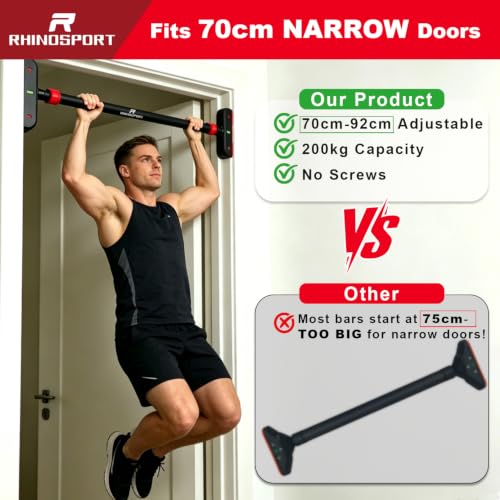
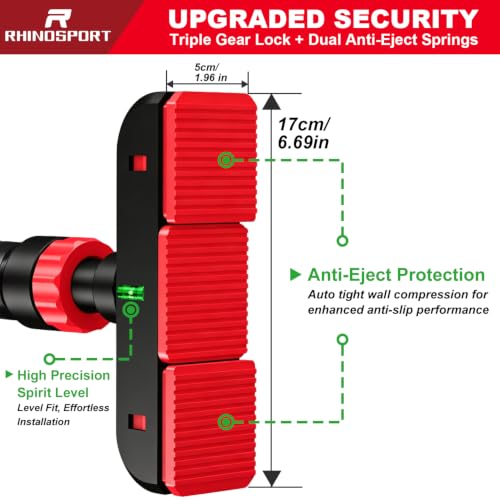
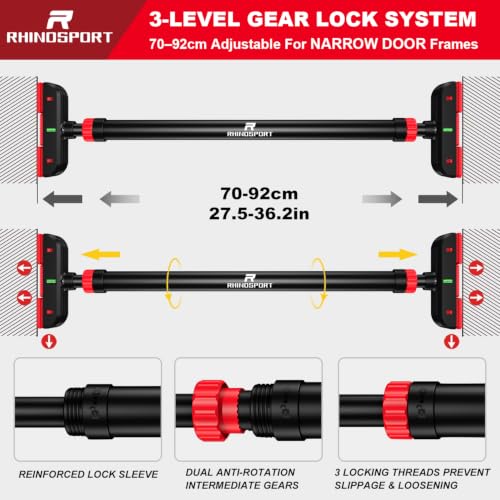
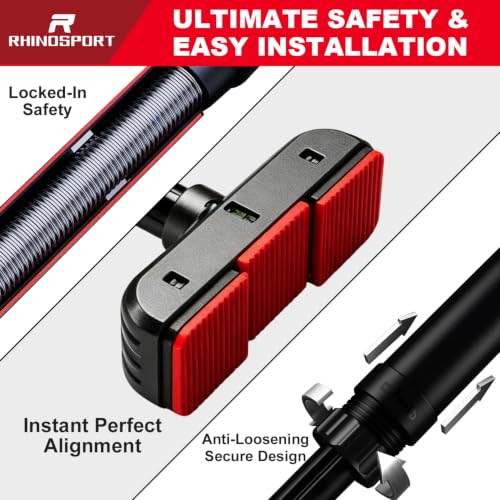
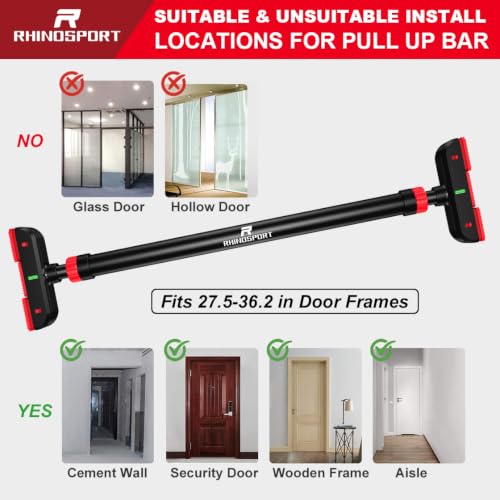
What it is and the need it meets\nThe RHINOSPORT Pull Up & Chin Up Bar is designed for UK homes with narrow or standard doorway frames, tolerating widths from 70cm to 92cm. It aims to provide a sturdy, kitchen-counterpart-friendly option for bodyweight exercises like pull-ups, chin-ups, leg raises and dips without mounting a traditional wall-mounted rig. If you’re short on space but want a compact solution for upper-body work, this model offers a practical alternative to free-standing rigs or ceiling-mounted options.\n\n## How it’s built for stability and safety\nOn paper, the standout is the dual anti-eject spring safety system paired with triple anti-rotation gear locks. This combination is designed to tighten under load, reducing the risk of slippage, loosening or twisting during sets. It’s important to note that, as with any doorway bar, stability hinges on correct installation and a solid frame. The product specifies that it fits solid wood or brick frames and warns against glass, hollow, carved or tiled surfaces. This isn’t a gimmick, it reflects the practical limits of doorway-mounted rigs when you actually start training under load.\n\n## Contact points and frame protection\nThe bar uses soft anti-scratch pads and a full-wrap sweatproof EVA grip. These features are aimed at reducing wear on door frames andft providing a comfortable grip in longer sessions. The pads are described as oversized and PVC-based, which should help with friction and minimise marks after removal—something renters often care about. Still, you might notice some wear after heavy daily use, depending on your door frame material and painting.\n\n## What you can do with it\nPractically, this unit supports a range of exercises: pull-ups, chin-ups, leg raises and dips are the obvious staples, but the design also suits transitional moves that target the back, shoulders and core. The multiple grip positions help distribute fatigue and potentially reduce blistering, which matters if you’re new to bodyweight training or returning after a lay-off.\n\n## For whom this makes sense\nIf you’re looking for a space-saving, doorway-mounted bar that tolerates both narrow and wider frames (within 70–92cm) and you’re prioritising safety features and frame care, this model aligns with that intent. It’s likely to appeal to home gym enthusiasts who value a robust safety system and convenient, tool-free setup.\n\n## Where it may fall short\nNo product is perfect, and there are practical caveats here. The 200kg static load is substantial, but stability still depends on the door frame’s integrity. The manufacturer’s warning about the types of surfaces you can mount on is important—if you live in rented accommodation or have a plasterboard door with weak bracing, this may not be ideal. Some users may also prefer a ceiling-mounted option for heavy sets, or a model with a different mounting method for extra confidence.\n\n## What to check before buying\n- Confirm your door frame is solid wood or brick and within the 70–92cm width range.\n- Inspect the frame for any existing wear, a door with chipped paint or weak trim can affect fit.\n- Decide if you need the soft pads and high-grip EVA for comfort, versus a model that relies on different material choices.\n- Consider your training plan: if you plan long sessions with aggressive loads, ensure you distribute workouts to avoid over-reliance on a single grip.\n\n## How it compares to broader options\nCompared with ceiling-mounted or freestanding rigs, doorway bars trade some absolute stability for space-saving convenience. If you prioritise a discreet footprint and renter-friendly marks-free removal, this approach often makes more sense. If you’re training at higher intensities or require more varied load bearing, you might evaluate alternatives that offer different mounting points or higher frame tolerance.\n\n## Practical user story\nImagine finishing a busy day and squeezing in a fast, four-movement routine: a couple of pulls, a mid-set leg raise, a couple of chin-ups, then a brief tricep dip. The grip positions let you switch hands to manage fatigue, and the soft pads keep the door frame looking intact after the session.\n\n## Is it worth it?\nFinal verdict comes down to your frame, space, and how much you value the combination of tool-free setup and a dedicated safety system. If your door is solid and within 70–92cm, and you want a compact, frame-friendly training solution, it’s worth considering. If you already have a ceiling-mounted setup or require very heavy-duty training beyond typical bodyweight work, look at alternatives that offer different mounting approaches or higher maximum loads.\n\n## FAQ (quick answers)\n- Will it damage my door frame? The soft pads are designed to minimise scratches, but any mounting carries some risk on delicate finishes.\n- Can I use it on hollow doors? The product specifies solid wood or brick frames, hollow or weaker constructions aren’t recommended.\n- What exercises are best with this bar? Pull-ups, chin-ups, leg raises and dips are the primary moves supported by the design.\n- How easy is the installation? It’s described as tool-free with a built-in spirit level for tilt-free mounting, subject to door integrity.\n