


Odoga 500W Power Inverter 12V to 230V with UK Plug Socket and USB-C (65W) / USB-A (18W)
Product description
The essentials
If you spend time on the move and still need proper 230V power for everyday kit, a car power inverter is one of those gadgets that’s either a lifesaver or simply sits in a drawer. The Odoga 500W Power Inverter is built for the former: it takes 12V from a car and turns it into a UK wall outlet, with extra USB charging for phones and tablets. On paper it’s designed to cover “power on-the-go” needs for laptops, mobile phones, tablets, consoles and more.
It’s also the kind of adapter that can make camping and road trips feel a bit less like you’re constantly rationing outlets. Still, it’s worth being realistic about what a 500W inverter can and can’t do—power-hungry gear and poor cabling choices can quickly become the limiting factor.
What you’ll notice day to day
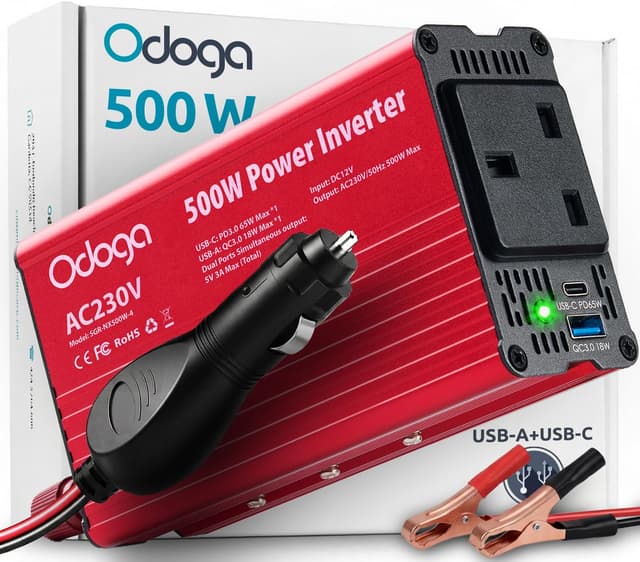
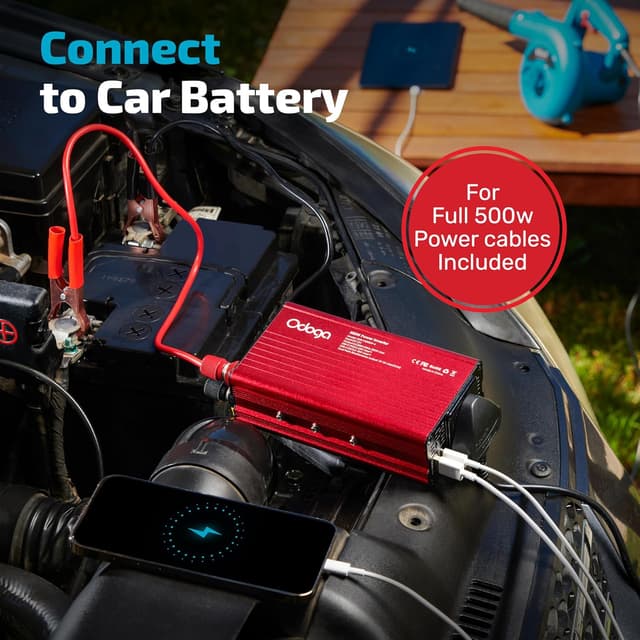
The setup approach here is fairly straightforward. You’re meant to plug the inverter into the car’s lighter/12V socket for easier use, and the listing also mentions cables so you can connect directly to the car battery for higher power output. That flexibility matters, because the “car plug” path is quick for light tasks, while a direct battery connection is often what you look for when you want the full capacity.
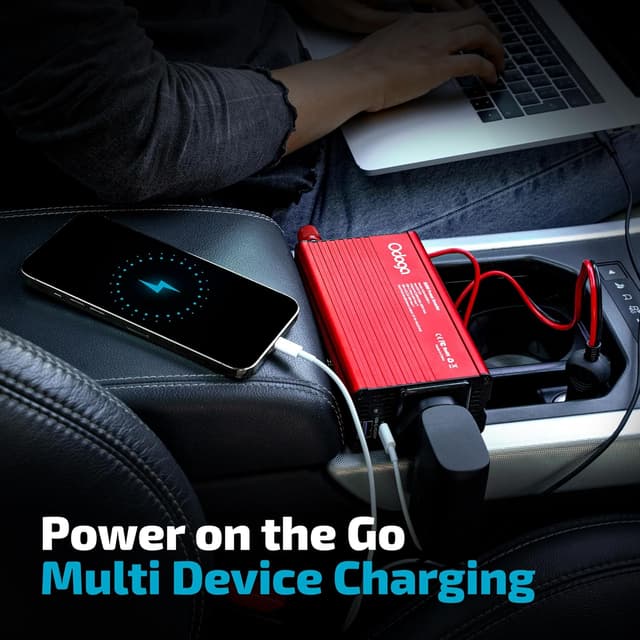
There are also two USB charging ports built in: USB-C rated at 65W and USB-A rated at 18W. That’s useful if you’ve got a mix of devices—modern phones and tablets often like USB-C for faster charging, while other accessories may only take USB-A. In practice, this can mean fewer chargers and fewer wall-brick scenarios.
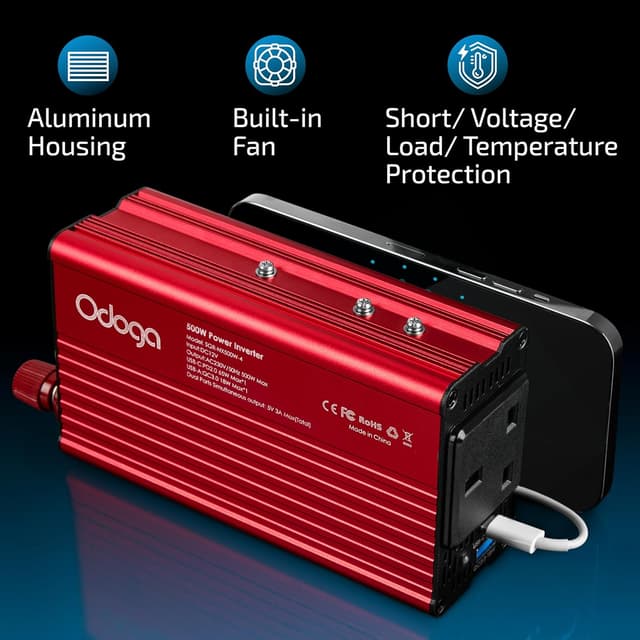
A small but important detail is that the unit uses an aluminium housing with a fan. Inverters can run warm under load, so active cooling is one of those “not glamorous, but reassuring” features.
Key features that matter for buying
Beyond the headline wattage, the safety and protection side is what helps this feel like a practical travel inverter rather than a random gadget. The listing states it includes reverse-connect protection, as well as voltage, short circuit and overload protection. Those safeguards don’t replace sensible behaviour (like not overloading it), but they do reduce the risk when you’re using it away from home.
The output is described as a modified sine wave to a 3-pin UK plug socket. That is an important nuance: some sensitive electronics may prefer a pure sine wave setup. If your device is particularly picky (for example, certain power supplies or equipment that doesn’t like modified outputs), you may want to double-check the manufacturer’s guidance before committing.
Where it shines (and where it can fall short)
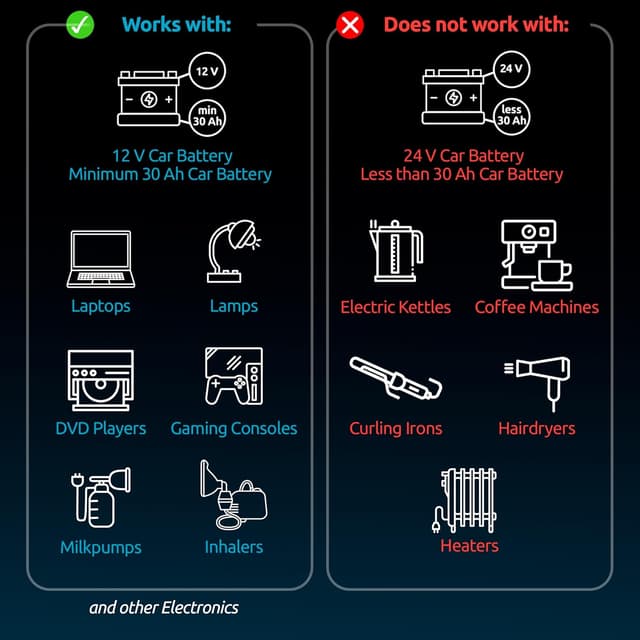
This inverter looks best suited to people who want one unit that covers multiple needs: a UK wall outlet for laptop charging (where supported), plus USB-C and USB-A for everything else you can throw at it while travelling.
However, it might not be the best match if:
- You’re planning to run high-demand appliances for long periods. The listing mentions 150W via the car lighter socket and up to 500W via direct battery connection, so the “full power” scenario depends on how you wire it.
- You need a pure sine wave for sensitive equipment. The inverter is described as modified sine wave, which can be a deal-breaker for some devices.
Safety and power expectations you should check
Before buying, it’s worth thinking about your actual use case rather than the maximum number. Power conversion is only half the story—what you plug in will determine how hard the inverter works.
From the information provided, the unit can be used:
- Via the car plug (lighter/12V socket) for up to the lower power figure mentioned (150W in the listing).
- With cables for direct battery connection for the full 500W.
If you’re charging a laptop, phones, or tablets, it usually makes sense because these loads are typically intermittent. If you’re planning to run something like a small appliance continuously, you may find it gets closer to the inverter’s limits than you’d expect.
Quick FAQ for first-time buyers
What devices can I use with the Odoga inverter?
The listing frames it for laptops, mobile phones, tablets, consoles and more, and it provides both a UK 3-pin wall outlet and USB ports (USB-C and USB-A).
How do I connect it in a car?
You can plug it into the car lighter/12V socket for simpler use. The listing also mentions you can connect it directly to the car battery using included cables for the full 500W.
Does it include built-in safety protection?
Yes. It’s stated to include reverse-connect, voltage, short circuit and overload protection.
Is the output suitable for all electronics?
It’s described as a modified sine wave output. If you have sensitive equipment, it may not suit every device, so checking compatibility is wise.
Is the fan and aluminium housing helpful?
The listing notes a fan and aluminium housing for performance and safety, which is generally what you want when the inverter is working.
Should you buy it?
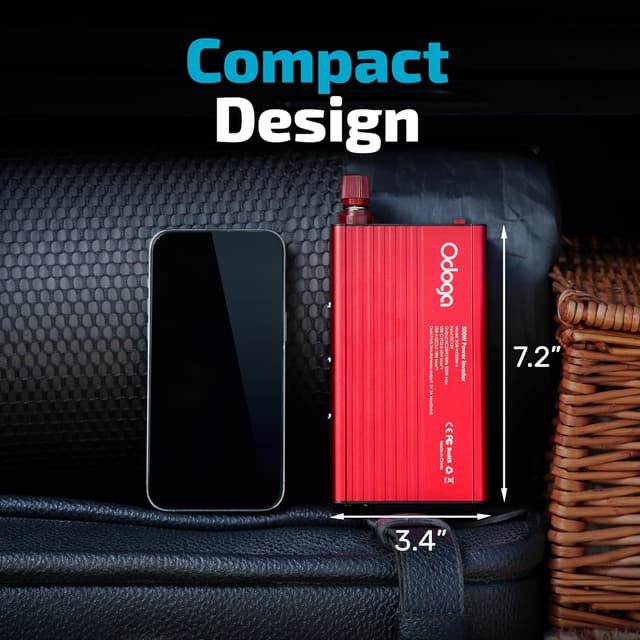
Buy it if you want a compact 12V car inverter that gives you a UK plug socket plus USB-C (65W) and USB-A (18W) for mixed charging on road trips, travelling, or camping. It particularly makes sense if you want one setup for both “proper plug” devices and everyday charging without juggling multiple adapters.
Skip it or tread carefully if your plan involves sensitive electronics that may not like modified sine wave output, or if you expect to run power-hungry appliances frequently or for long stretches. Also, because the listing distinguishes power via the car plug versus direct battery connection, it’s smart to align your use with how you’ll be powering it.
If you’re mainly powering laptops, phones, tablets and consoles while you’re out and about, this kind of inverter setup is the practical direction to go. Just keep your expectations realistic about wattage, and you’ll be much happier with the end result.