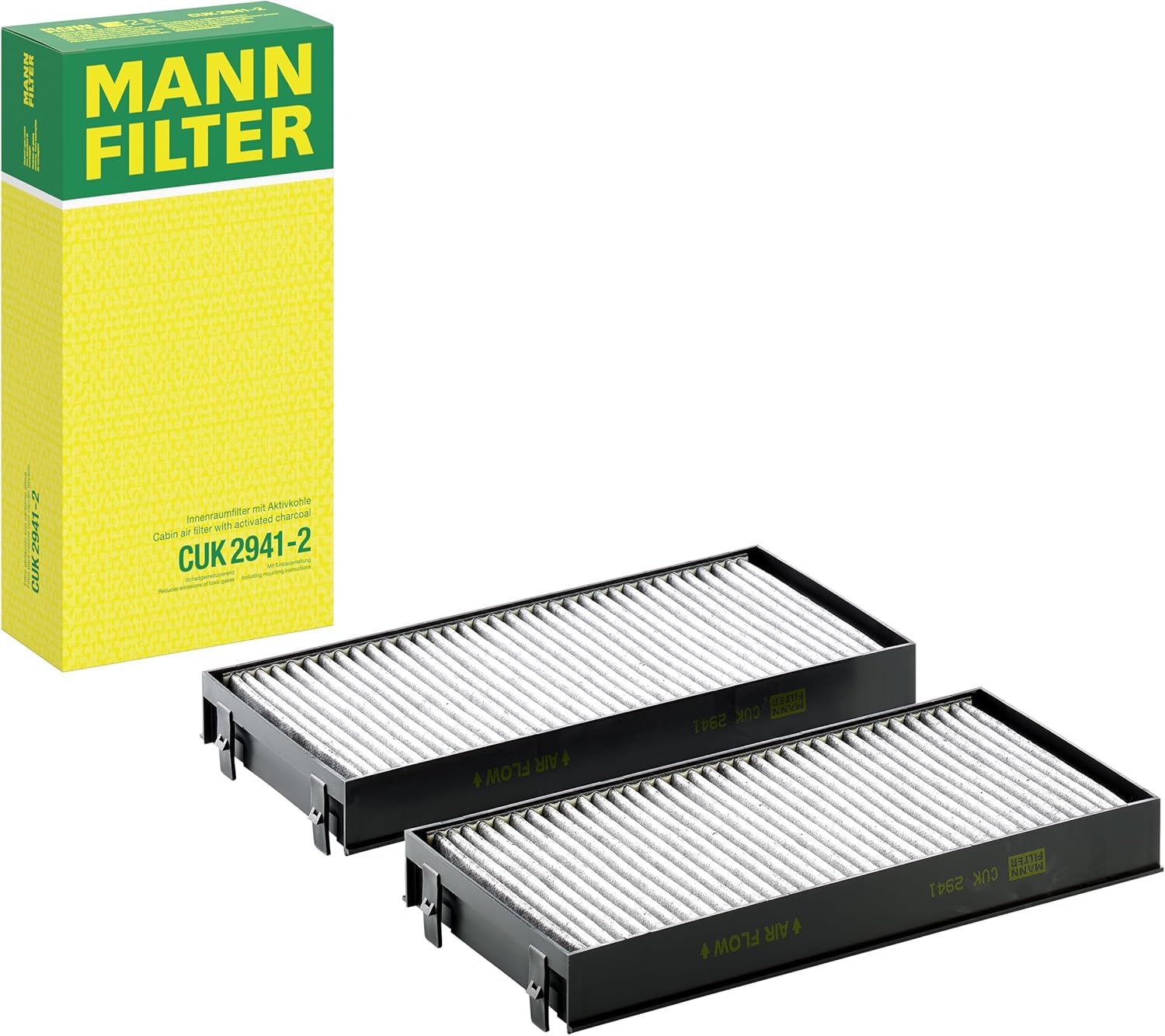
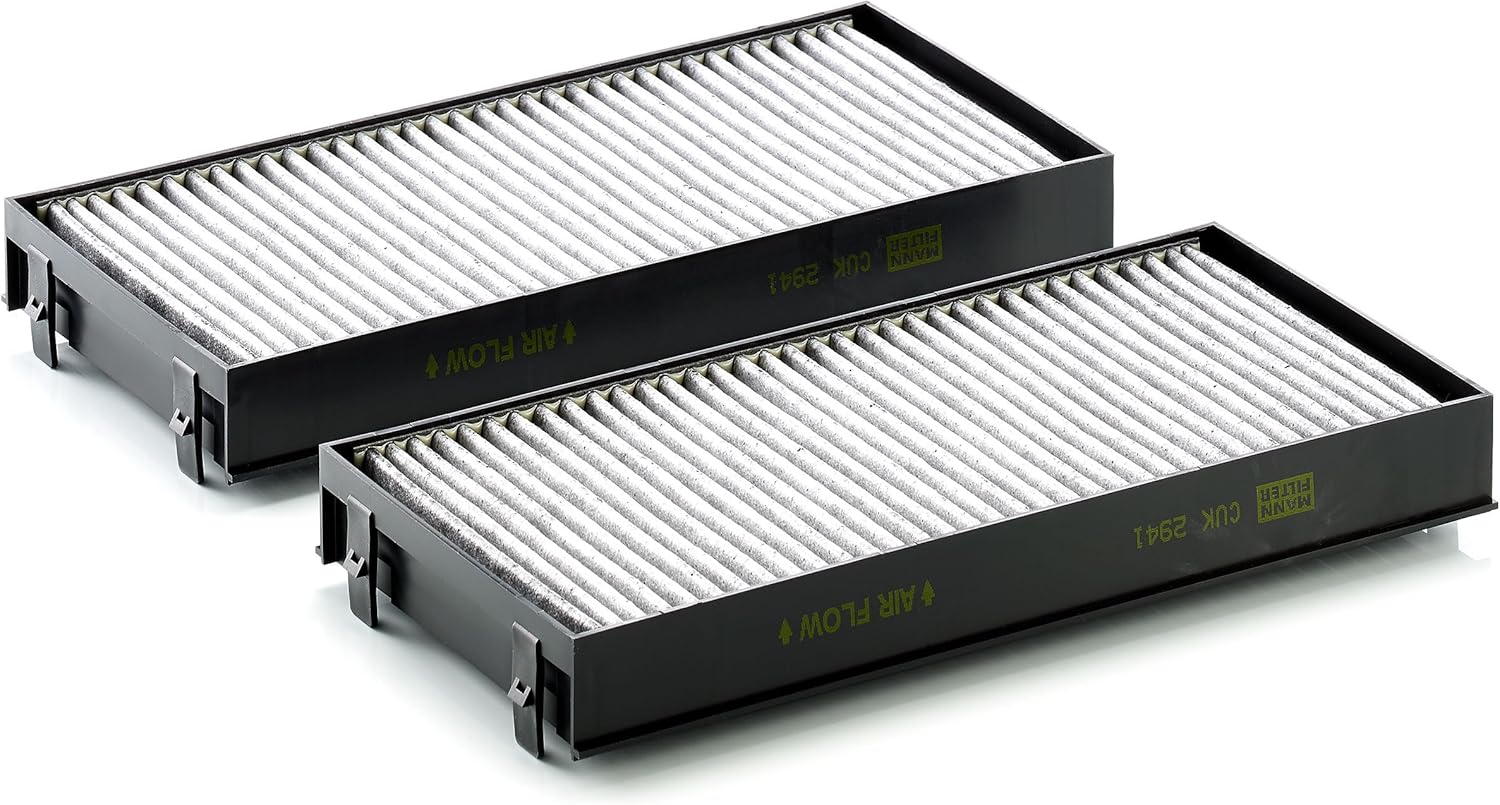
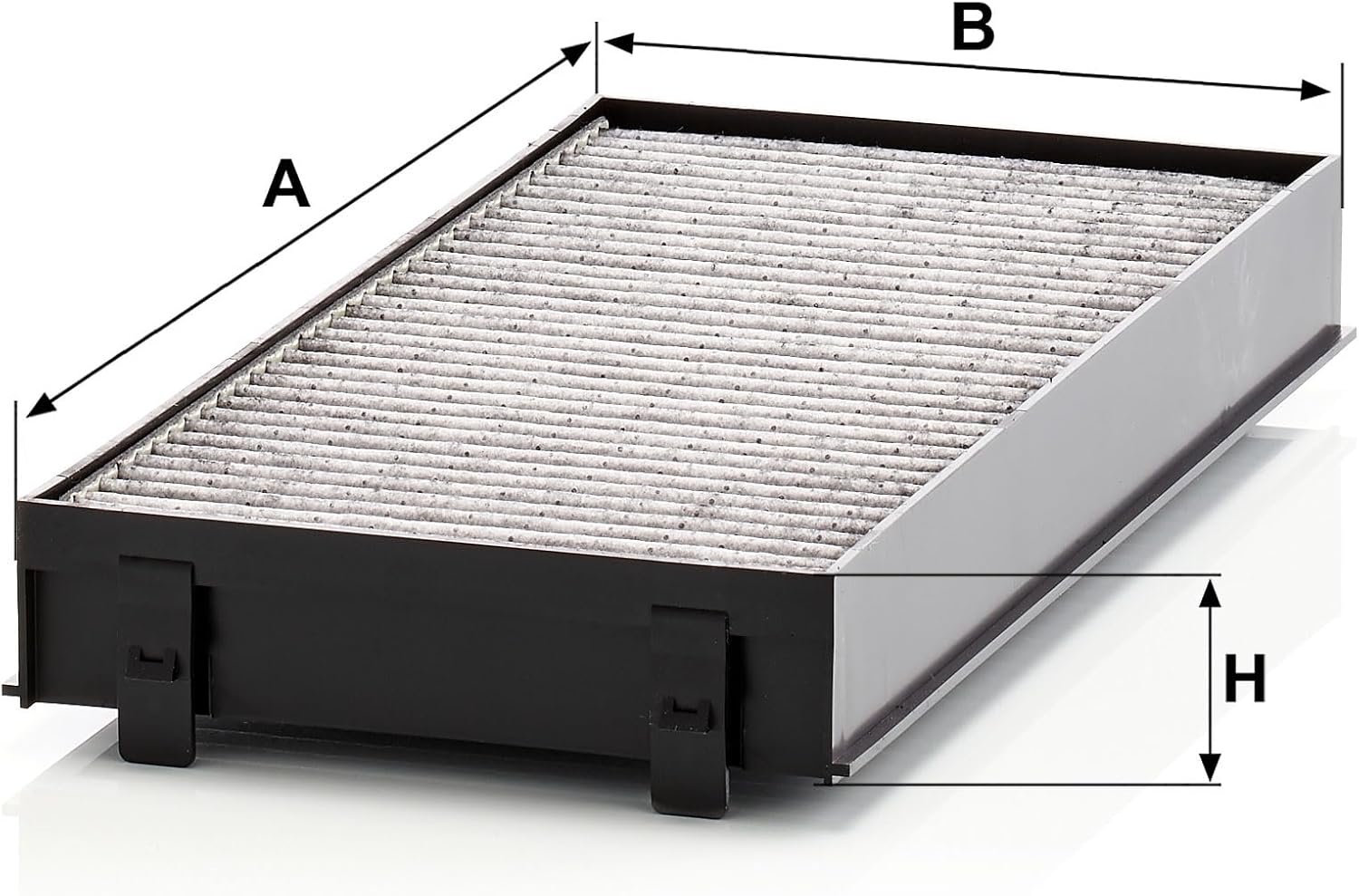
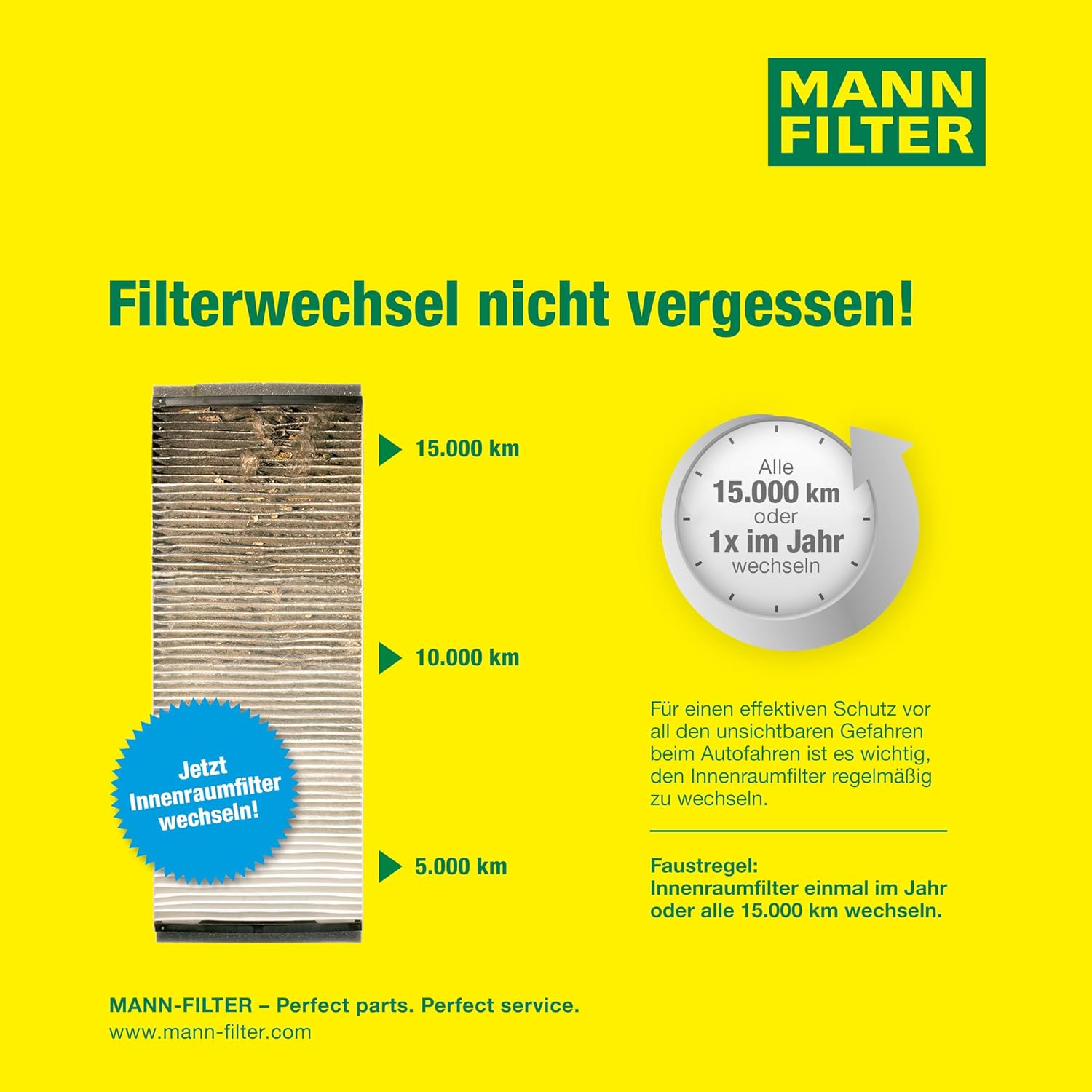
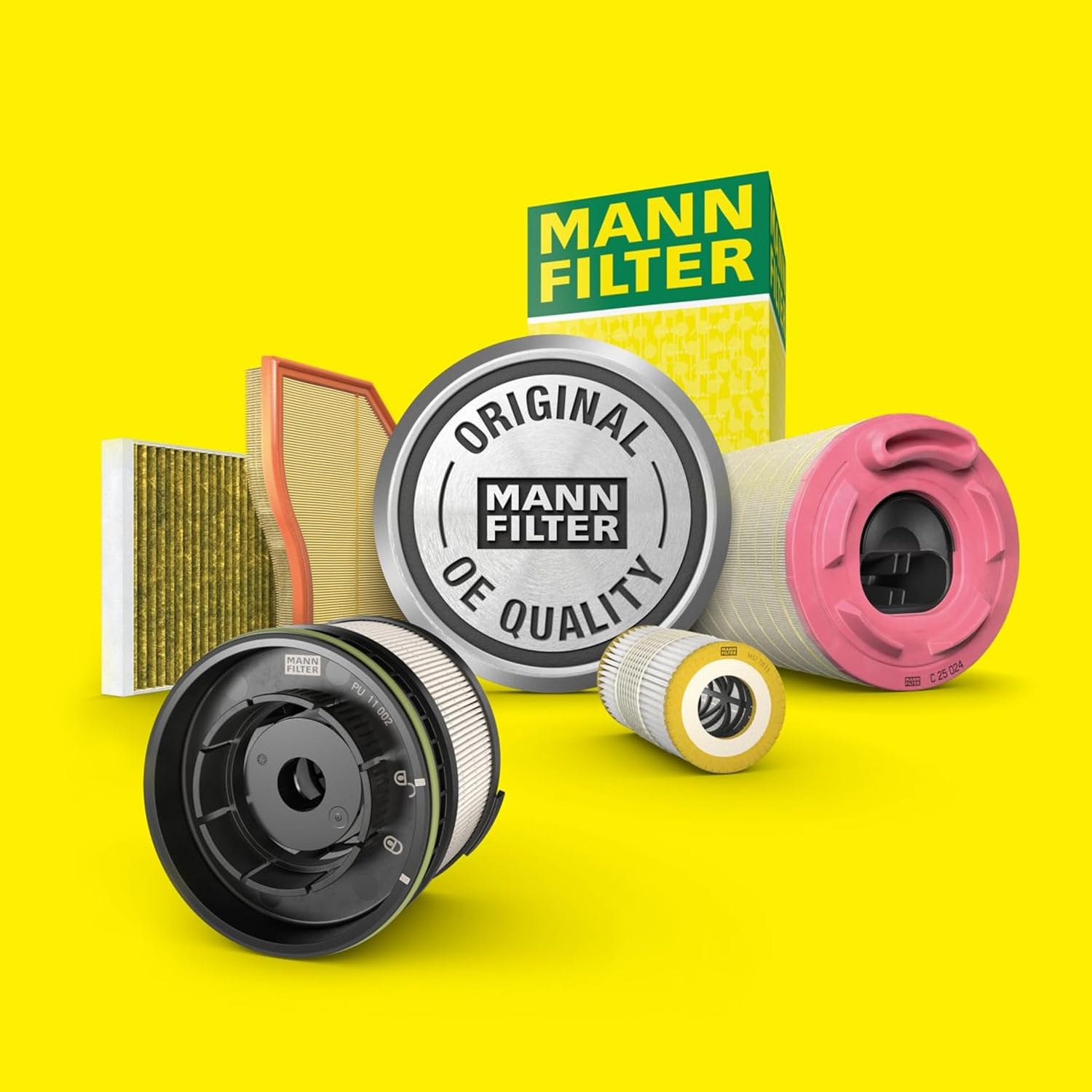
What it is and what it does\nThe MANN-FILTER CUK 2941-2 is a pair of cabin air filters with activated carbon designed to fit cars and transporters. Each filter uses a premium construction aimed at blocking pollen and other fine particles, while the activated carbon layer helps reduce odours and certain harmful gases. The set of 2 means you can replace your cabin air filters in pairs, which is convenient for annual or biennial maintenance depending on vehicle and environment.\n\n## How it helps in daily use\nOn the road, clean cabin air matters for comfort and wellbeing. These filters target common irritants like pollen, diesel soot and tyre particulates. The activated carbon component is positioned to absorb odours and gases such as ozone, nitrogen oxide and sulphur dioxide, potentially improving interior air quality during longer drives or urban commutes where pollutants are more prevalent. If you or your passengers are sensitive to smells or seasonal allergens, this setup can feel like a practical upgrade over basic non-activated carbon filters.\n\n## What stands out, on paper\nIts original equipment quality focus suggests careful manufacture to fit a broad range of vehicles. The specified dimensions (A = 293 mm, B = 138 mm, H = 34 mm) indicate a compact but substantial filter stack designed for typical cabin air intakes. The inclusion of activated carbon differentiates it from plain pollen filters by aiming to mitigate odours and certain gases rather than just particulates.\n\n## Who it’s for\nThis is likely suitable for drivers who want an enhanced cabin air filtration experience without stepping up to premium-performance filters. If you frequently drive in urban areas with heavy traffic or in environments with seasonal pollen, the carbon layer may offer added comfort. It may appeal to commuters and families who value interior air quality as part of their regular maintenance routine.\n\n## When it makes sense to buy\nConsider a set of two if you prefer to replace both filters at the same time for consistency and convenience, aligning with routine service intervals. If you prioritise reduction of odours and pollutant gases in urban settings, this option aligns with those aims.\n\n## When you might want to pause\nIf your vehicle specification or the current filter option in your car already includes high-efficiency particulate filtration or a different filtration approach, check compatibility before purchase. The description confirms fit quality but does not replace model-specific guidance.\n\n## What to check before buying\nConfirm your vehicle’s compatibility by selecting brand, model, vehicle type and engine type as advised in similar product listings. While the dimensions are listed, the exact fit can vary by make and model, so a quick compatibility check is prudent. Consider how often you drive in traffic-heavy or polluting environments, since the activated carbon layer mainly adds odour and gas absorption benefits rather than purely particulate filtration.\n\n## Practical usage example\nImagine a weekday commute through city streets with stop-and-go traffic and morning pollen. A properly installed CUK 2941-2 set could reduce irritants entering the cabin and minimise lingering odours from urban pollution, contributing to a more comfortable drive for you and your passengers.\n\n## FAQ snapshot (where data allows)\n- Does it filter pollen? Yes, designed as a pollen filter with added activated carbon.\n- Is it suitable for diesel soot? It targets particles like diesel soot as part of its filtration stack.\n- How many filters are in the pack? A set of 2.\n- Are there gas odour protections? Yes, the activated carbon is intended to help with odours and some gases.\n\n## Is it worth it?\nWorth considering if you prioritise interior air quality and odour control in everyday driving, especially in urban or pollen-heavy areas. It may be a sensible upgrade over basic pollen filters, provided it matches your vehicle’s compatibility and you’re comfortable with a carbon-enabled option. If you prioritise maximum filtration efficiency above all else or require a higher-grade filter for specialised conditions, you might explore alternatives with stronger particulate performance.