

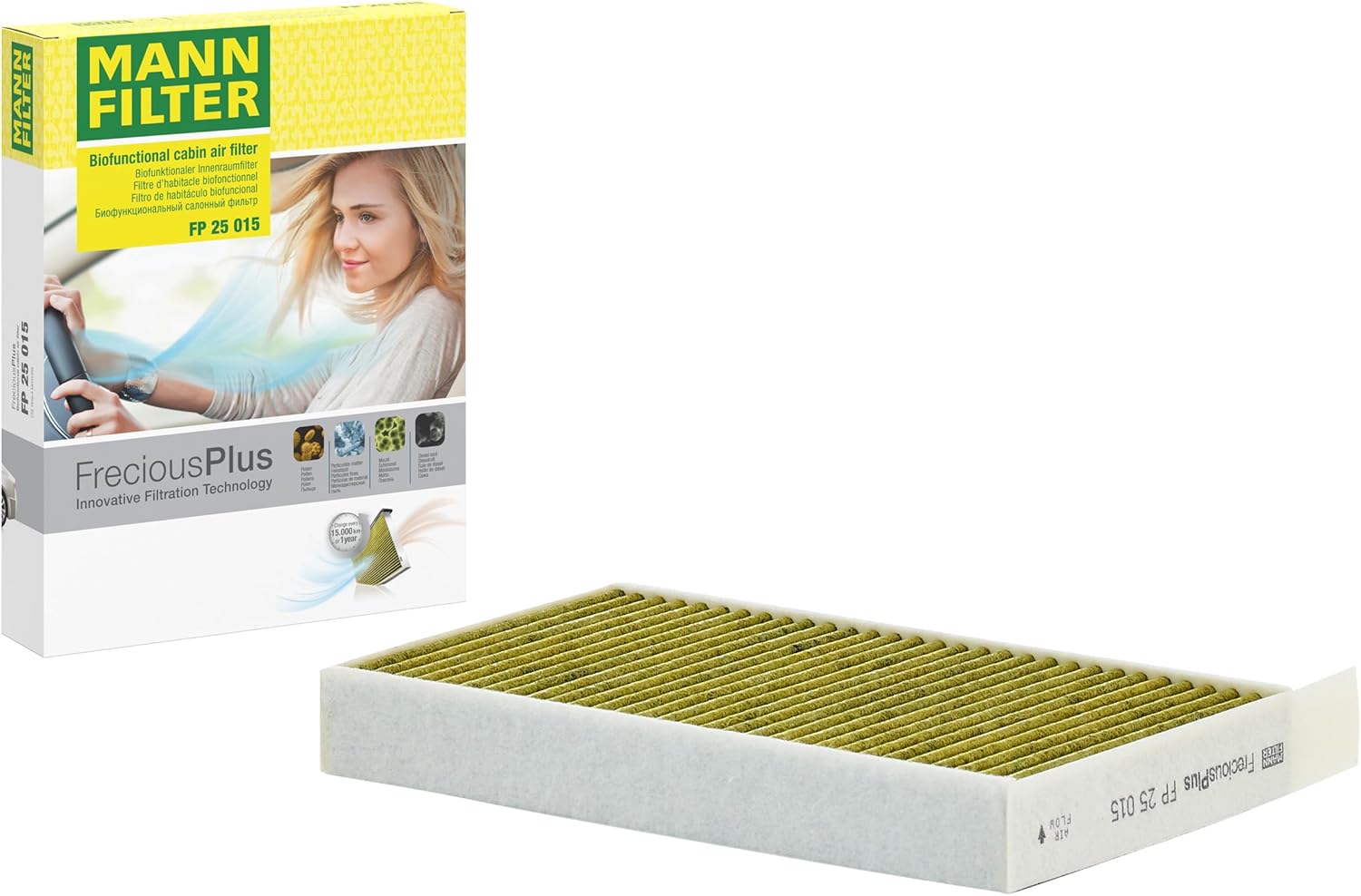
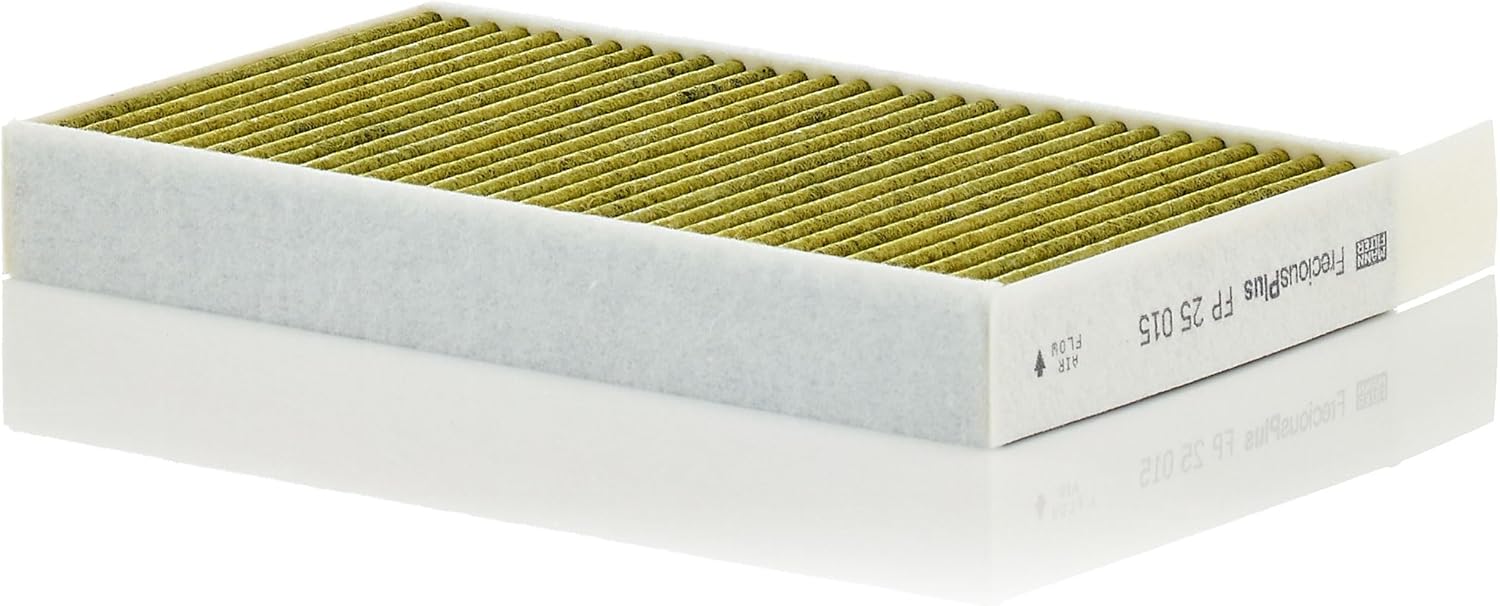
MANN-FILTER FP 25 015 Cabin Air Filter – FreciousPlus Biofunctional
Product description
What this is and what it aims to solve
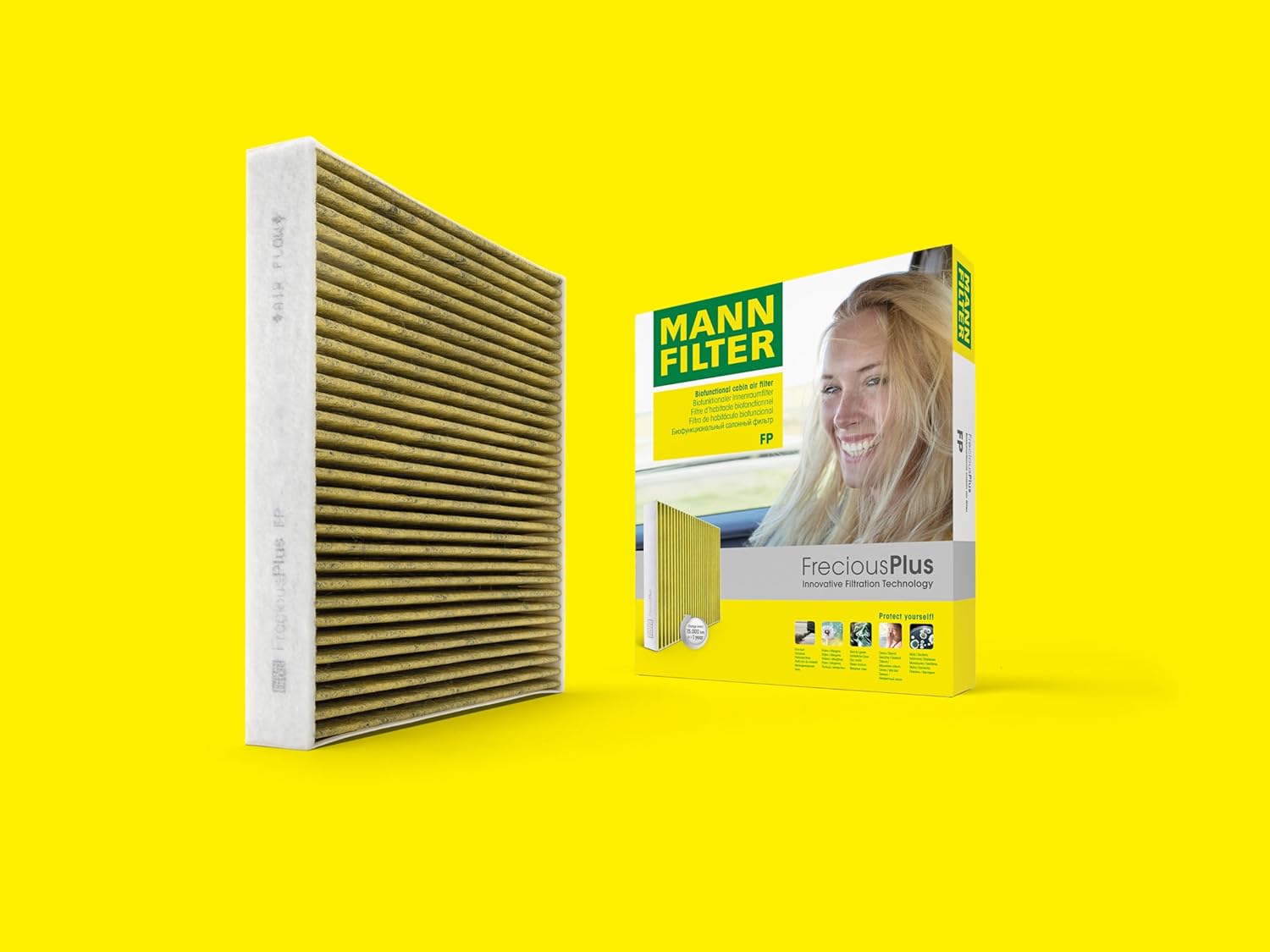
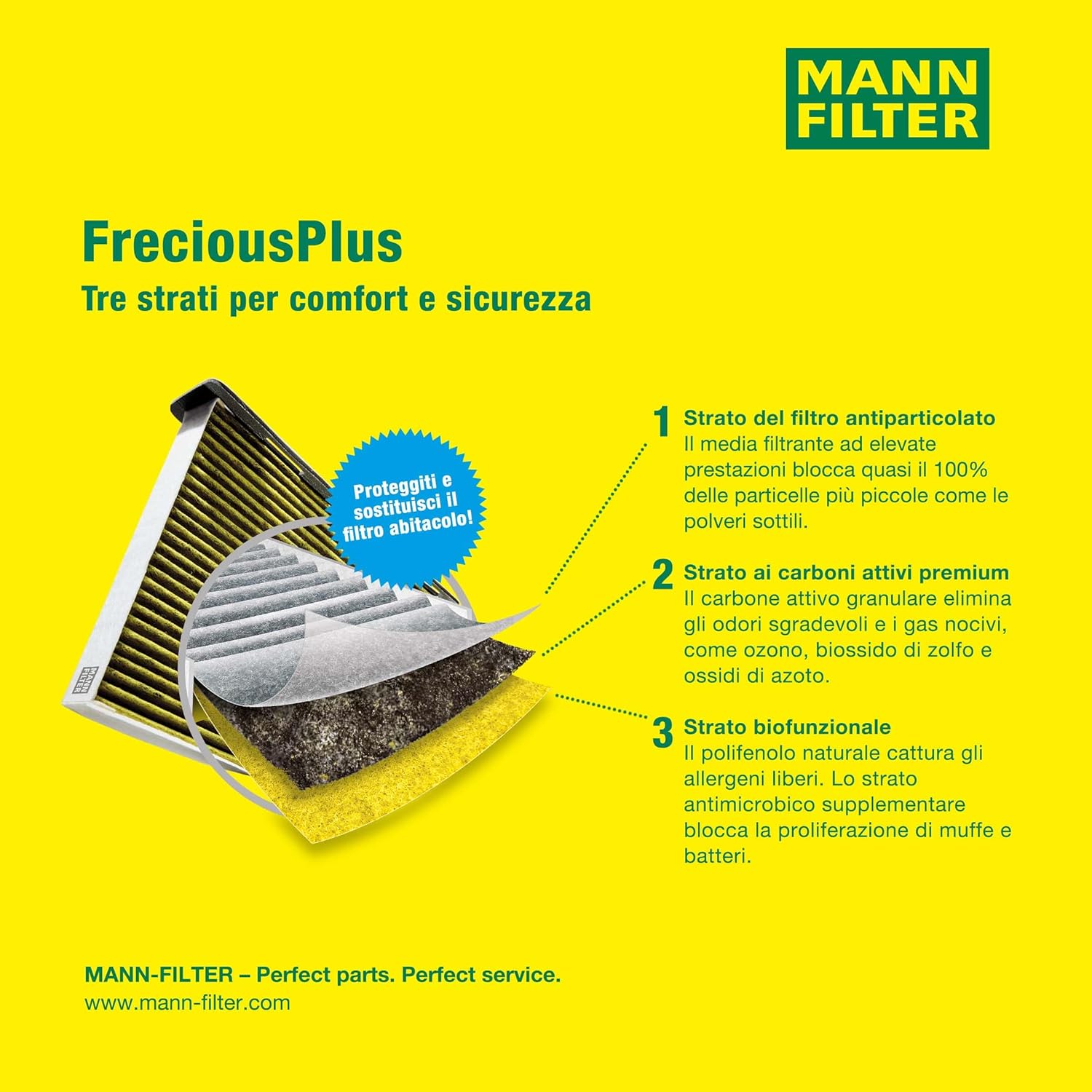
The MANN-FILTER FP 25 015 is a cabin air filter designed for cars and transporters. Marketed as a FreciousPlus biofunctional filter, it aims to reduce allergens, dust and mould while helping to filter out harmful gases, odours and virus aerosols. Its stated three‑layer technology is designed to limit particulate matter and keep the cabin air cleaner, potentially improving occupant comfort on routine journeys.
How it works on paper
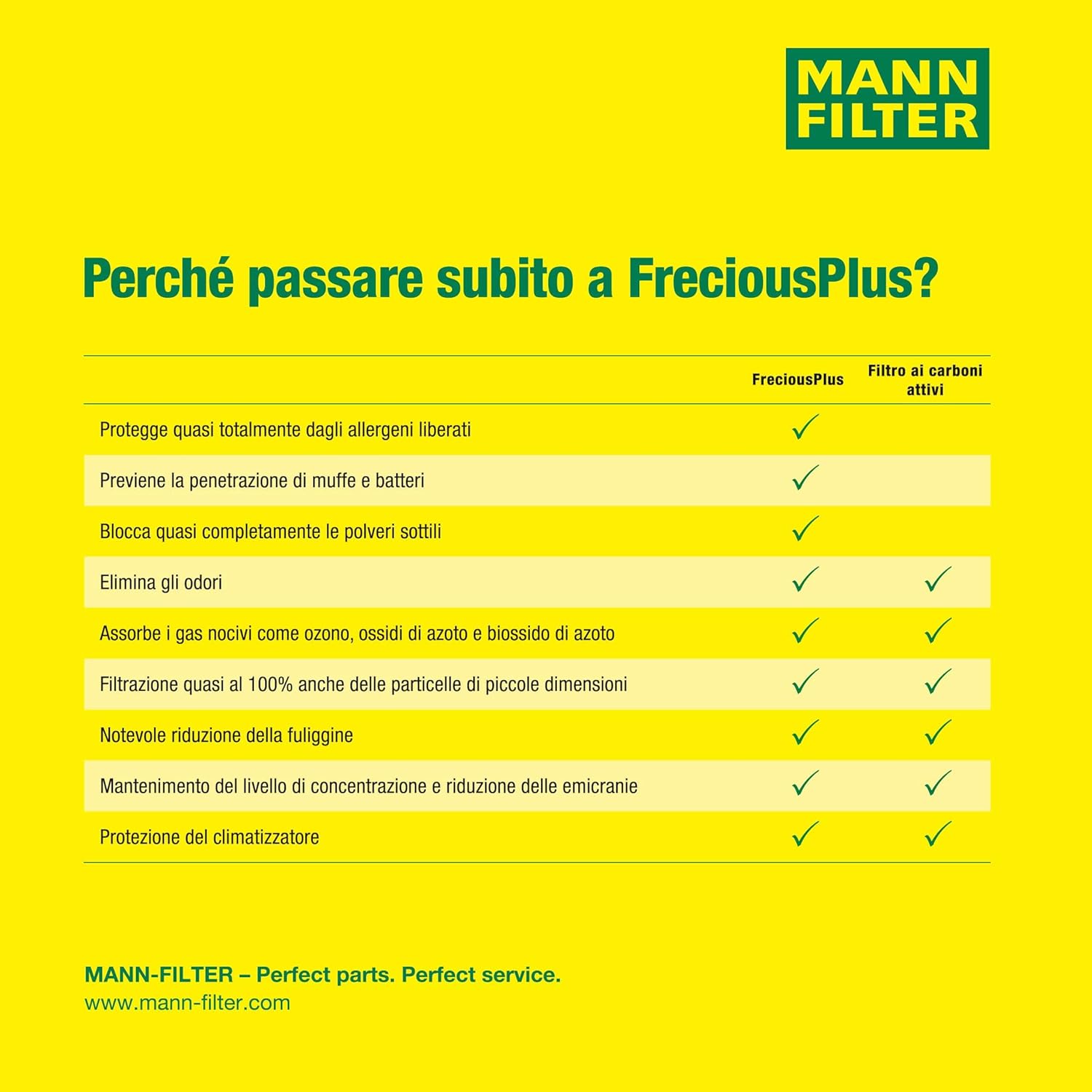
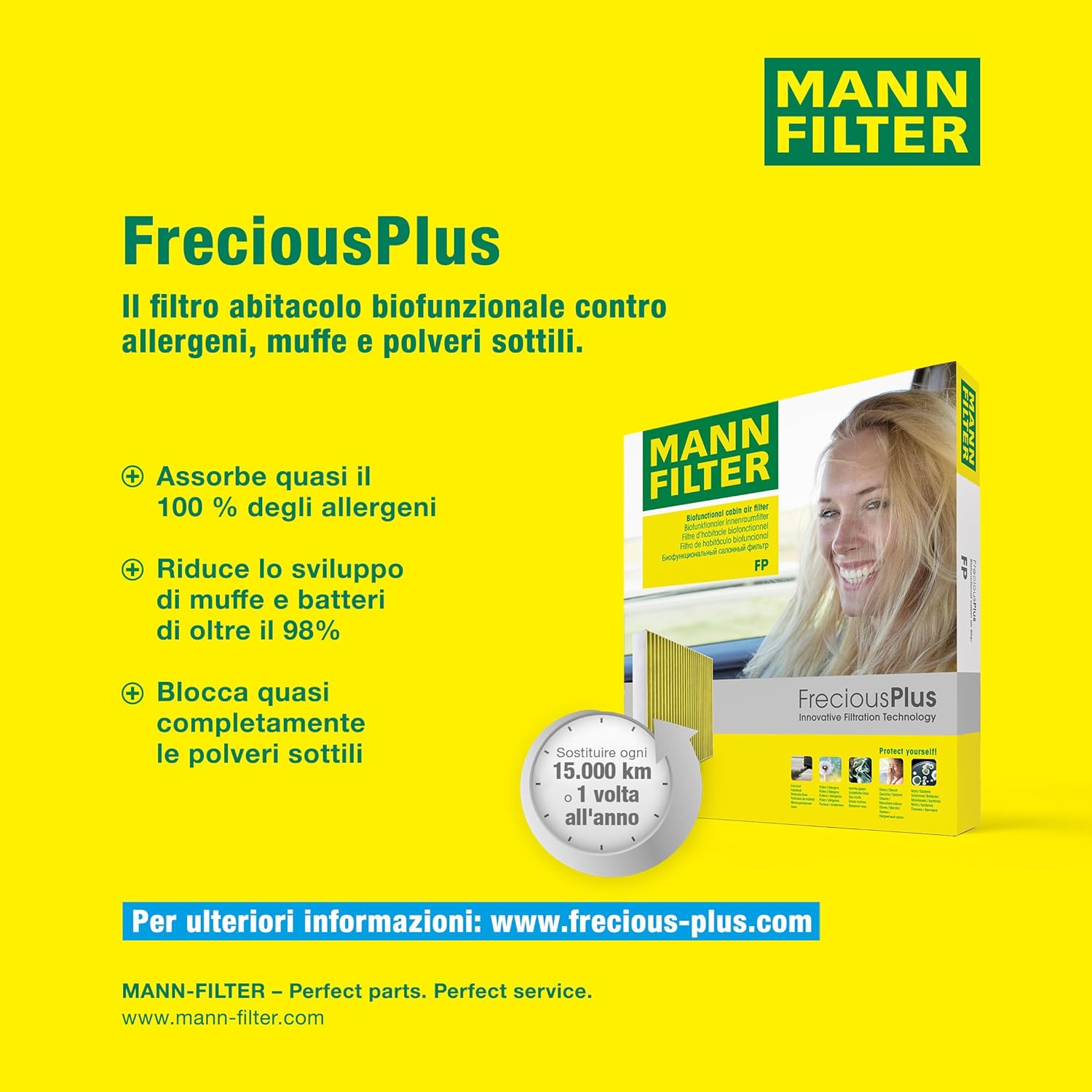
According to the information provided, the filter uses a three‑layer setup to absorb allergens and limit odour and gas transmission. It claims near complete protection against nitrogen oxides and almost complete blockage of fine dust, with mould and bacteria growth reduced by a claimed >98%. These figures are presented as general aims, in real-world use, results can vary with driving conditions and environmental factors.
What stands out
- Three‑layer filtration aimed at reducing allergens, dust and mould spores.
- Biofunctional FreciousPlus technology, pitched to help manage odours and some gas components.
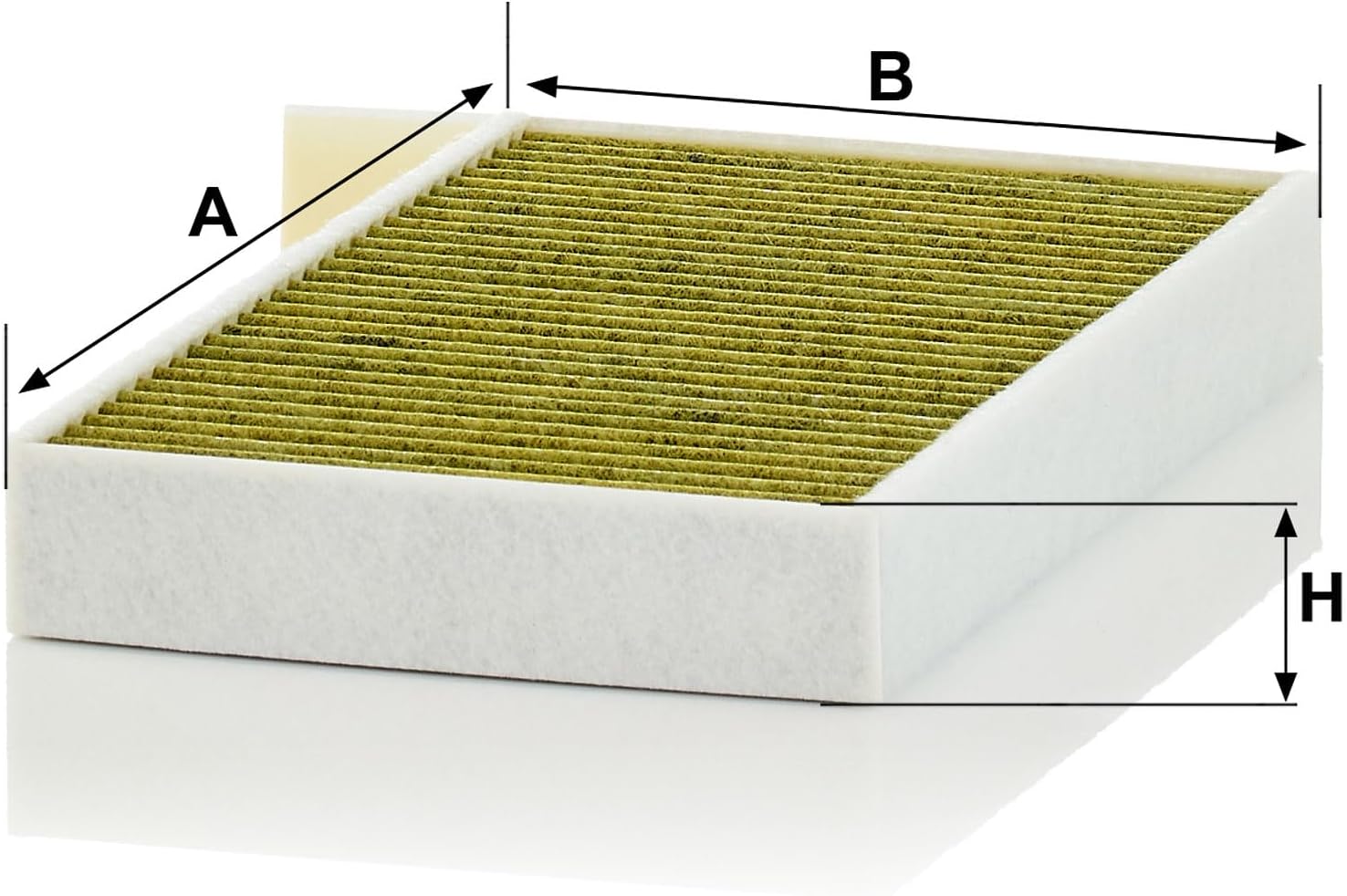
- Dimensions provided (A = 244 mm, B = 143 mm, H = 32 mm) give a practical sense of fit alongside compatibility prompts.
- Supplier notes compliance with REACH regulations and a sustainability framing around design, production and disposal.
Where it may fall short
- The description is broad about health and safety benefits without independent testing data in this listing, so expectations should be calibrated accordingly.
- Fit and effectiveness depend on vehicle model, cabin location, and how the filter is installed. Without vehicle‑specific fit confirmation, there’s a risk of a suboptimal seal if chosen incorrectly.
- While bi-functional claims are appealing, the extent to which it reduces virus aerosols or odours in everyday use may vary and could be less noticeable in low‑pollution environments.
Who this is for
If you prioritise cabin air quality for daily commuting, frequent outdoor exposure, or sensitive occupants, a filter that targets pollen, dust and odours might be appealing. It could suit drivers who want a straightforward upgrade over basic filters and value a biofunctional concept as part of their sanitisation approach.
Who it isn’t ideal for
If your priority is absolute laboratory‑tested performance with specific pollutant classes, or if you drive in environments where the filter’s three‑layer claim isn’t backed by independent data, you might want to compare other options. Also, if your vehicle type or engine tier requires a very particular filter specification, a misfit could lead to leaks or reduced efficiency.
When it makes sense to buy
Consider this filter when you want a bovine‑level improvement in cabin air quality over a standard filter, and you trust the brand’s framing of FreciousPlus biofunctional tech as a meaningful design approach. It can be a reasonable pick for routine use in family cars or light commercial vehicles where allergen reduction and odour management are valued.
When to pause or skip
If the primary need is heavy pollen filtering in extreme environments or if you require robust, independently validated performance data, you might want to look for additional evidence or alternatives. Before buying, confirm the filter model matches your vehicle make and model using the selection prompts from the product page.
What to check before purchasing
- Confirm exact vehicle fit: model, type and engine details matter for correct dimensions and seal.
- Look for the official REACH compliance note as part of ongoing safety and disposal considerations.
- Consider whether the three‑layer approach aligns with your expectations for allergen and odour control in your typical driving conditions.
- Be aware that perceived improvement depends on pre‑existing cabin filtration and HVAC use.
Practical use note
In day‑to‑day use, you might notice a subtler improvement in cabin air feel, especially after periods of heavy outdoor pollution or seasonal pollen. It’s not a dramatic transformation, but for many drivers this aligns with a smoother, less stuffy ride, particularly on longer journeys where the HVAC system runs more often.
FAQ
- How do I know if FP 25 015 fits my car? Use the brand/model/vehicle type prompts to verify fit. If in doubt, consult the dealer or product support.
- What does biofunctional FreciousPlus imply in practice? It suggests multiple mechanisms to reduce allergens, odours and some gases, but independent, model‑specific performance data isn’t provided here.
- Is installation difficult? The listing doesn’t detail installation steps, typical cabin filters are designed for straightforward replacement by following the vehicle’s service manual.
Final decision
Final verdict
It makes sense if you’re after a cabin air upgrade with a focus on reducing allergens and odours in everyday driving, provided you’ve confirmed the right fit for your vehicle. If you prioritise proven, model‑specific performance data or have highly specific pollutant needs, you may want to compare impressions from independent tests or other options before committing.