

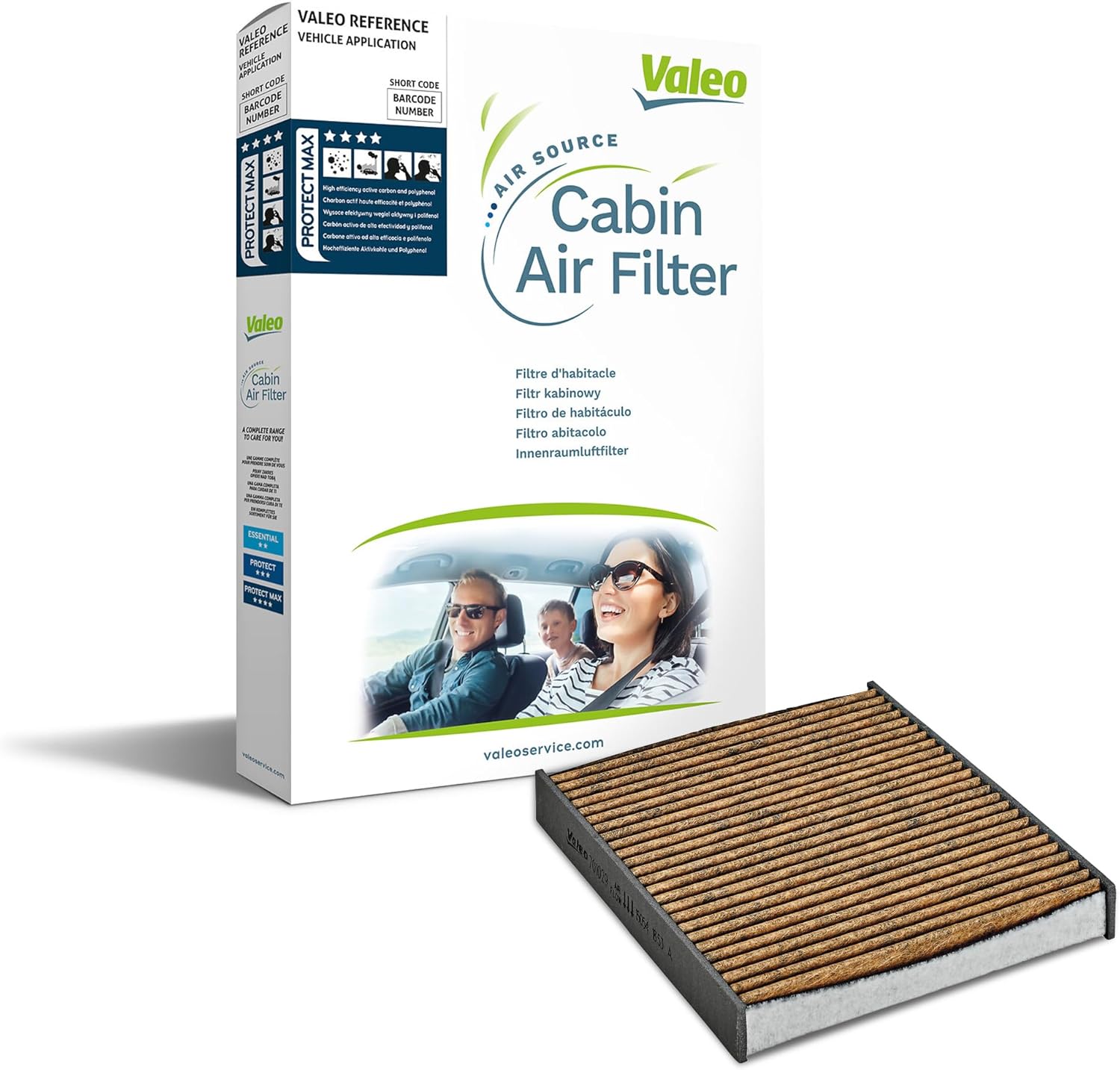
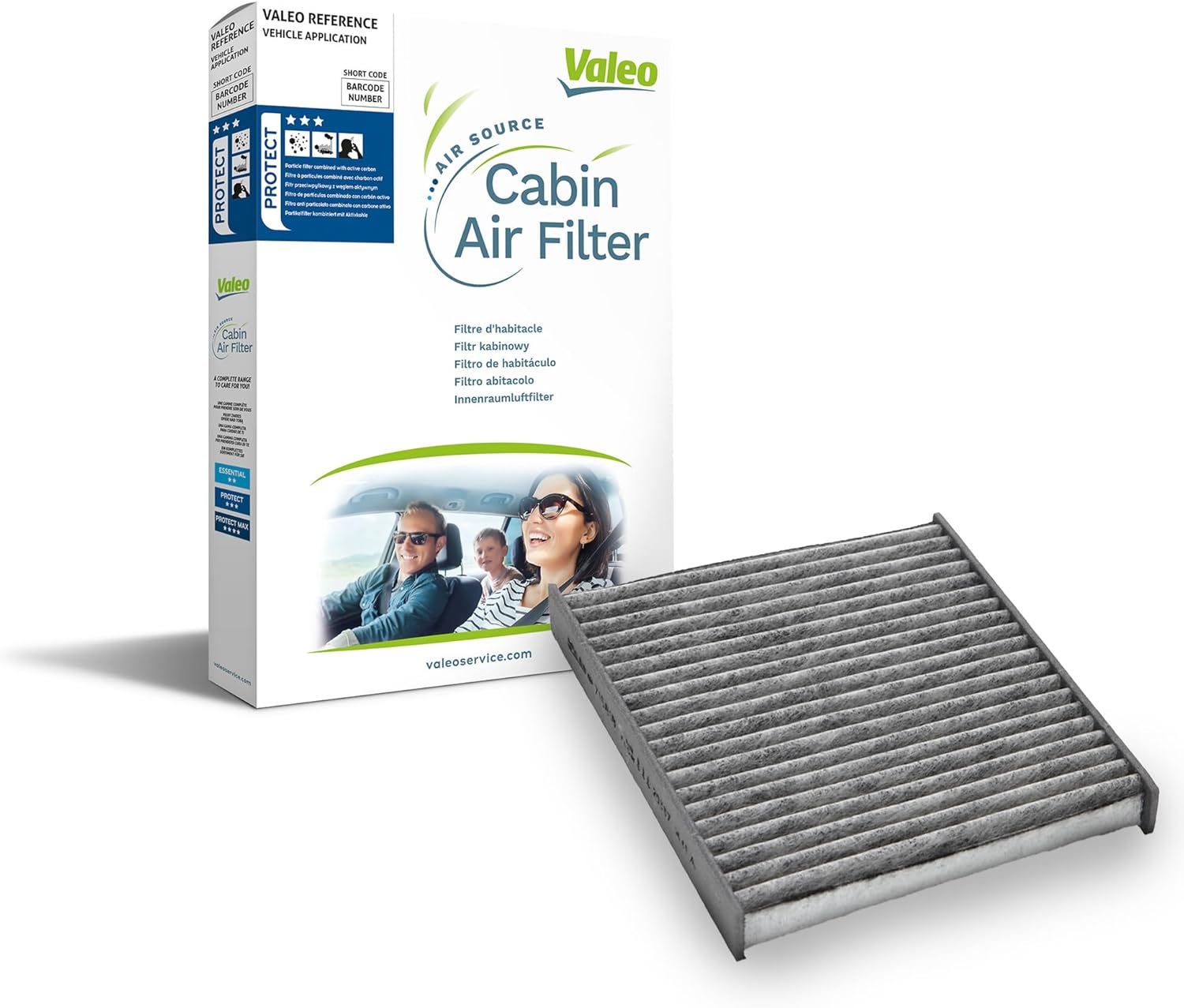
Valeo Protect Max 701020 Cabin Air Filter with Polyphenol and Activated Carbon
Product description
What matters most
If you spend a lot of time in city traffic or rural drives where agricultural smells or pollen are common, this Valeo Protect Max cabin air filter aims to filter the air you breathe inside the car. On the page you’ll find a focus on polyphenol treatment and activated carbon, which together are intended to reduce allergens, pollen, dust and unwanted odours from entering the cabin. It’s pitched as a practical, OE-style solution rather than a flashy upgrade, and it’s positioned for drivers who want ongoing protection with a straightforward replacement routine.
Tech specs
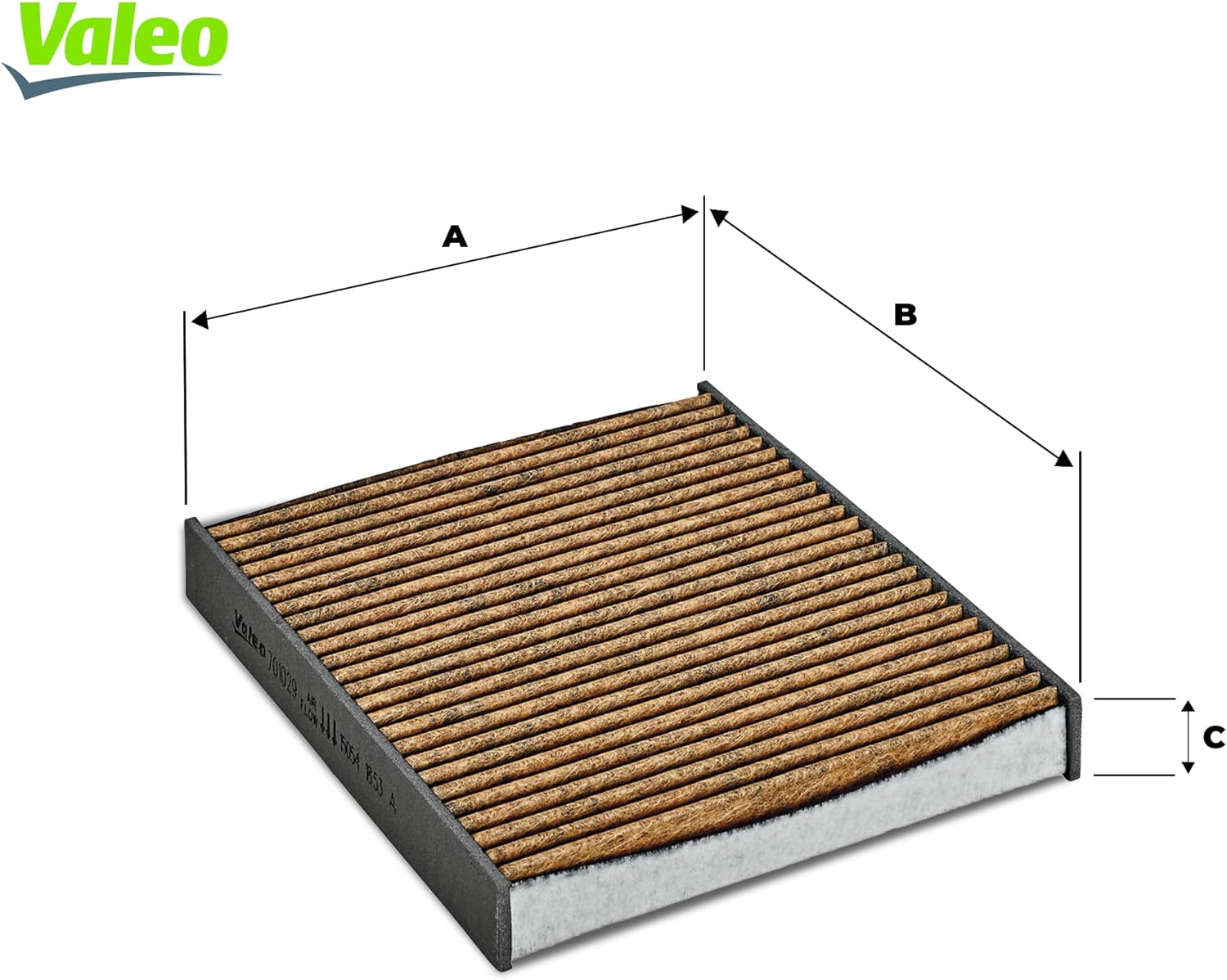
The product is built around a polyphenol-treated, activated carbon filter designed to trap very small particles and reduce odours. Key details include: - Dimensions (mm): Length 252, Width 235, Height 30 - Polyphenol with activated carbon filter for anti-allergen protection - Filters up to 99.99% of particles sized 0.5µm (pollen, dust & bacteria) - Guards against harmful gases and helps prevent bad smells from entering the cabin - Polyphenol treatment claims up to 92% pollen allergen reduction - Recommended replacement: every year or 15,000 kms to maintain performance - OE supplier experience is noted, suggesting compatibility with standard vehicle cabin filtration expectations - Guidance to ensure you select the correct filter by vehicle make, model, engine type or VIN
What stands out
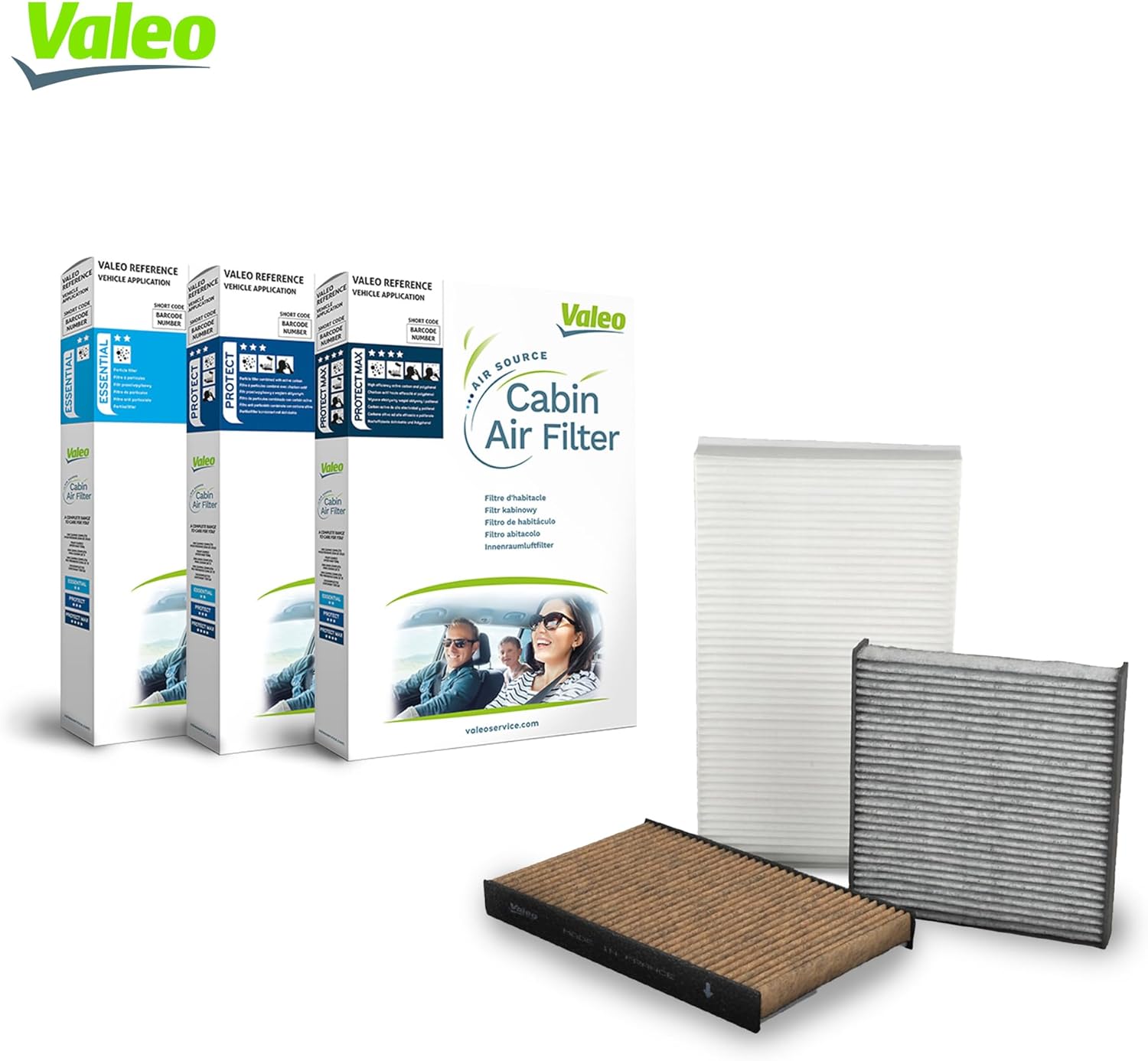
On paper, the combination of activated carbon with polyphenol treatment is the defining feature. It targets a broader range of irritants than a basic filter, including odours linked to urban pollution and agricultural environments. If you prioritise daily cabin air quality and allergen reduction, this approach can be appealing. However, the degree of benefit in real-world conditions will depend on your local air quality, driving patterns, and how often you actually replace the filter.
Practical use and replacement timing
Replacing the cabin filter every 12 months or up to 15,000 kilometres is the stated guideline. In practice, drivers in heavy traffic or rural areas may notice a more noticeable improvement in air freshness and less nasal irritation after a change. It’s worth noting that the claimed allergen reduction is a property of the polyphenol treatment, which may not deliver identical results for every allergen or environment.

Who this is for
This filter is best suited to drivers who spend substantial time in urban pollution, or in countryside areas where agricultural smells are common. It provides an additional layer of protection beyond a simple mechanical filter and may be more appealing if you or passengers have sensitivities to pollen or odours. It is not the definitive solution for every scenario—factors such as local air quality, car habitability, and regular maintenance all play a part.
What to review before buying
- Confirm you’re purchasing the correct filter for your vehicle by using the car maker, model and engine type, or your VIN as guidance.
- Consider your driving environment (heavy urban traffic vs. rural/agricultural areas) and whether the extra allergen and odour protection aligns with your needs.
- Be mindful that the advertised performance is conditioned by proper installation and regular replacement, a clogged filter can reduce flow and the perceived benefit.
- If you’ve never changed a cabin filter before, a quick look at your vehicle’s cabin air filter housing and removal method will help you avoid frustration at the point of replacement.
A practical comparison in use
If you’re weighing options, you’ll likely compare this filter with standard non-activated filters or other premium options that focus on allergen reduction. For daily commuting in mixed environments, the polyphenol plus activated carbon approach offers a more comprehensive scent and particle management strategy than a basic paper filter. If you rarely drive in dirty or pollen-heavy conditions, a simpler option might suffice and could be more cost-effective in the long run.
Is it worth it?
Should you buy it? If you prioritise reducing pollen exposure and odours in urban and semi-rural driving, and you’re looking for a robust, OE-style option with a clear replacement interval, this Valeo filter presents a credible case. It may not transform air quality in extreme pollution or in situations where odour sources are persistent and deep-seated, in those cases, the benefit is likely to be more moderate. Consider it a sensible mid-range upgrade rather than a magic cure.
Quick FAQ
- How often should I replace it? The recommendation is yearly or 15,000 kms, whichever comes first.
- Will it fit my car? Use the vehicle’s make, model and engine type, or VIN to confirm compatibility.
- What environmental benefits does the polyphenol offer? The polyphenol treatment aims to reduce pollen allergens and improve overall cabin air feel, though results vary by environment and usage.
- Can this filter remove all odours? It helps reduce odours associated with gases and smells, but it may not eliminate strong or persistent sources.