


I LITTON 1-2-Both-Off Battery Disconnect Switch (2 Pack) for 12V–48V Systems
Product description
What it is and what it solves
The I LITTON 1-2-Both-Off Battery Disconnect Switch is a heavy-duty isolation switch designed to safely disconnect battery power in 12V–48V systems. Sold as a 2 pack, it provides a straightforward way to isolate two batteries or to disconnect both at once. On paper, it offers four positions and robust electrical ratings, making it a practical choice for vehicles, boats and other equipment where simple power control matters.
How it’s built and how it works
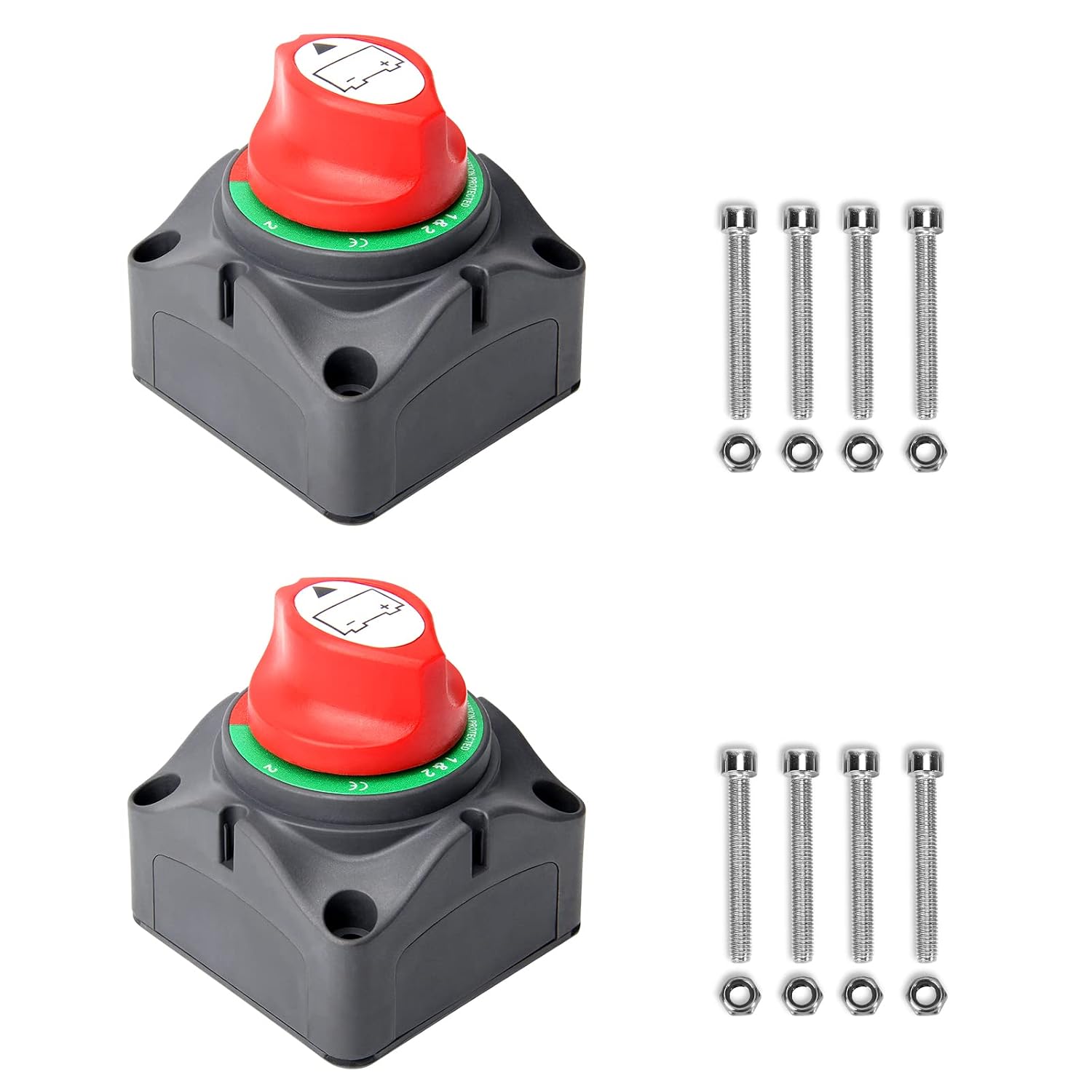
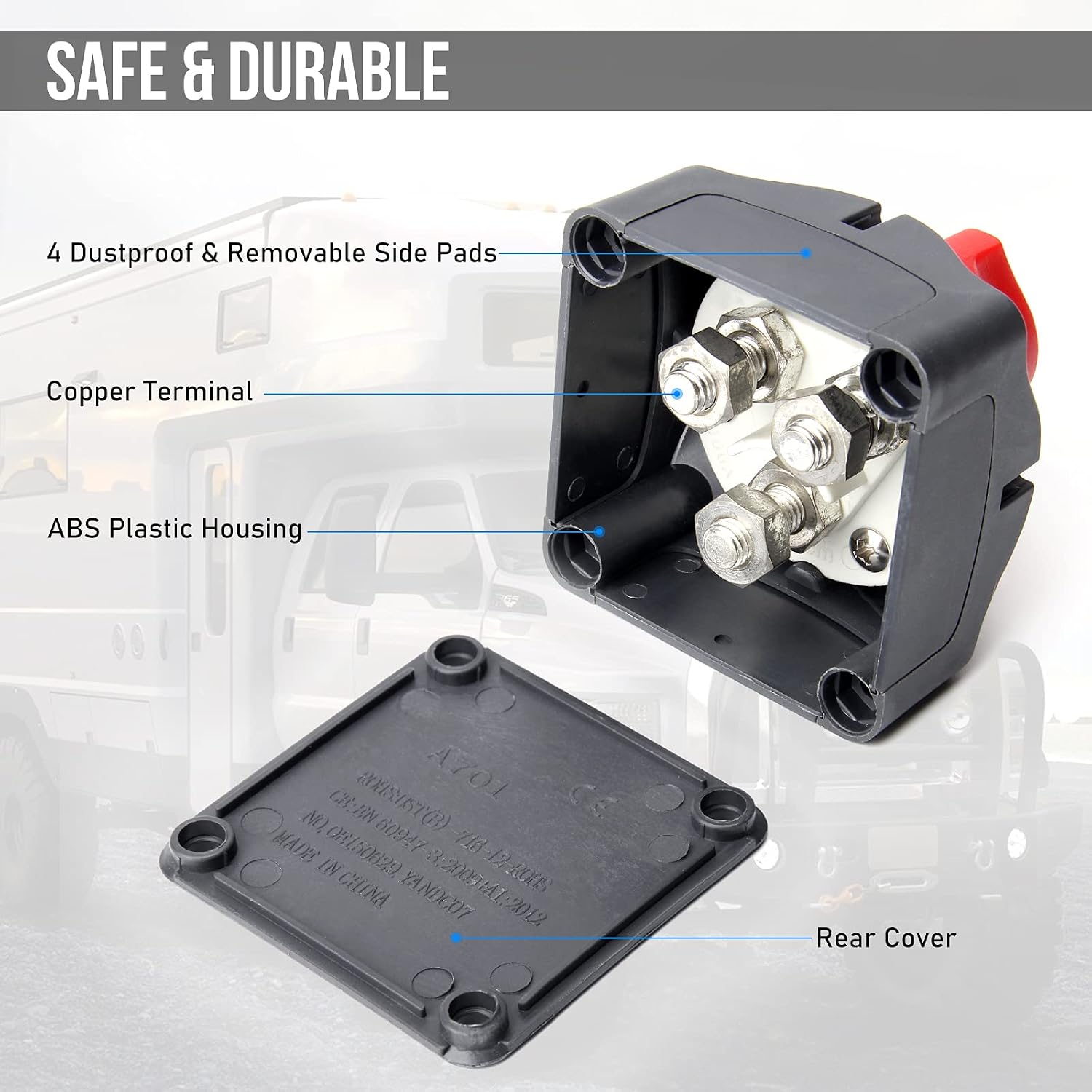
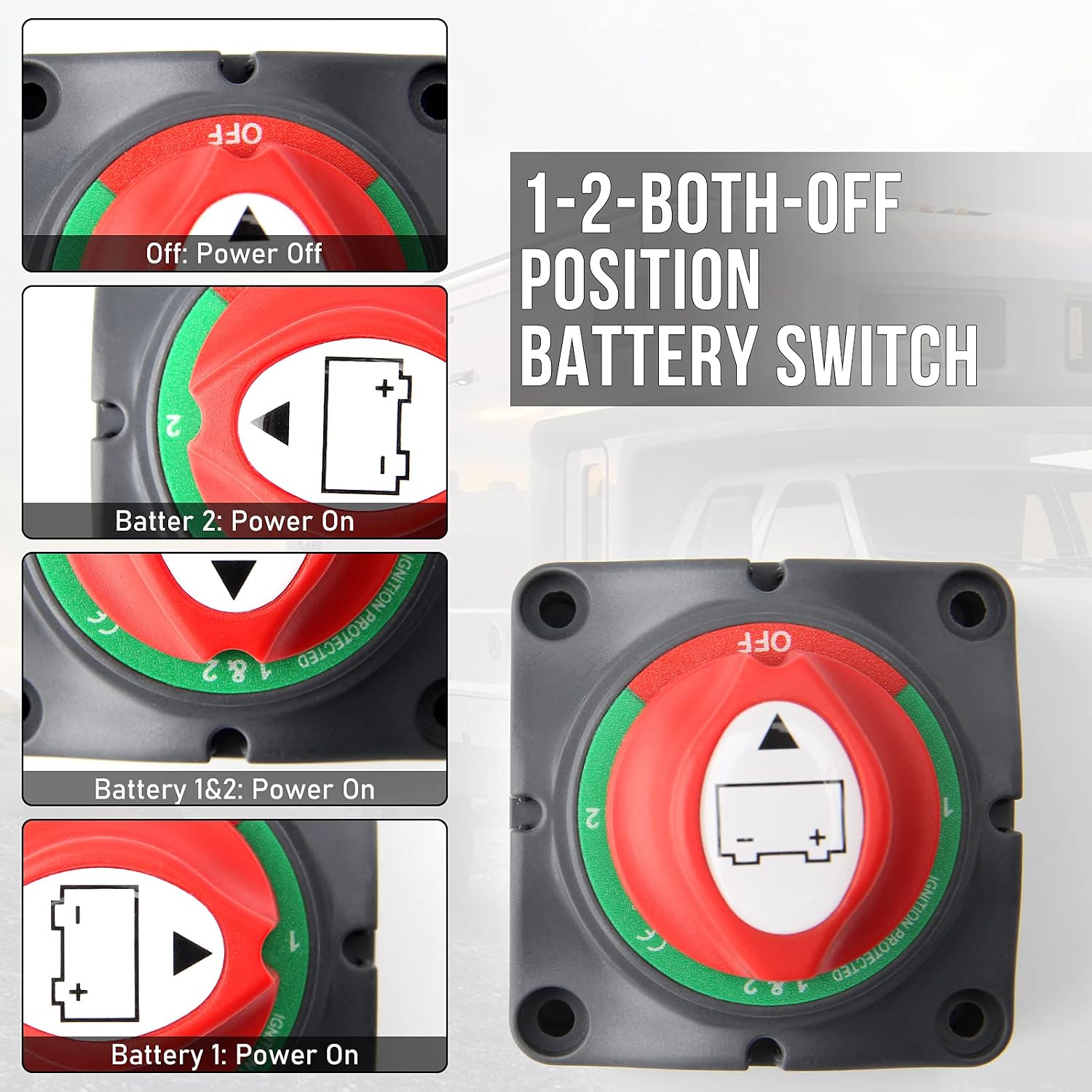
The switch uses an ABS plastic housing with tinned copper internal components. It features four removable side plates for easy access to battery cables and a rear cover that insulates the terminals to reduce the risk of short circuits. It can rotate to separate Battery 1, Battery 2, or both, with a colour-coded indicator: green for power on (Battery 1, Battery 2, or both), red for power off.
Why it matters in practice
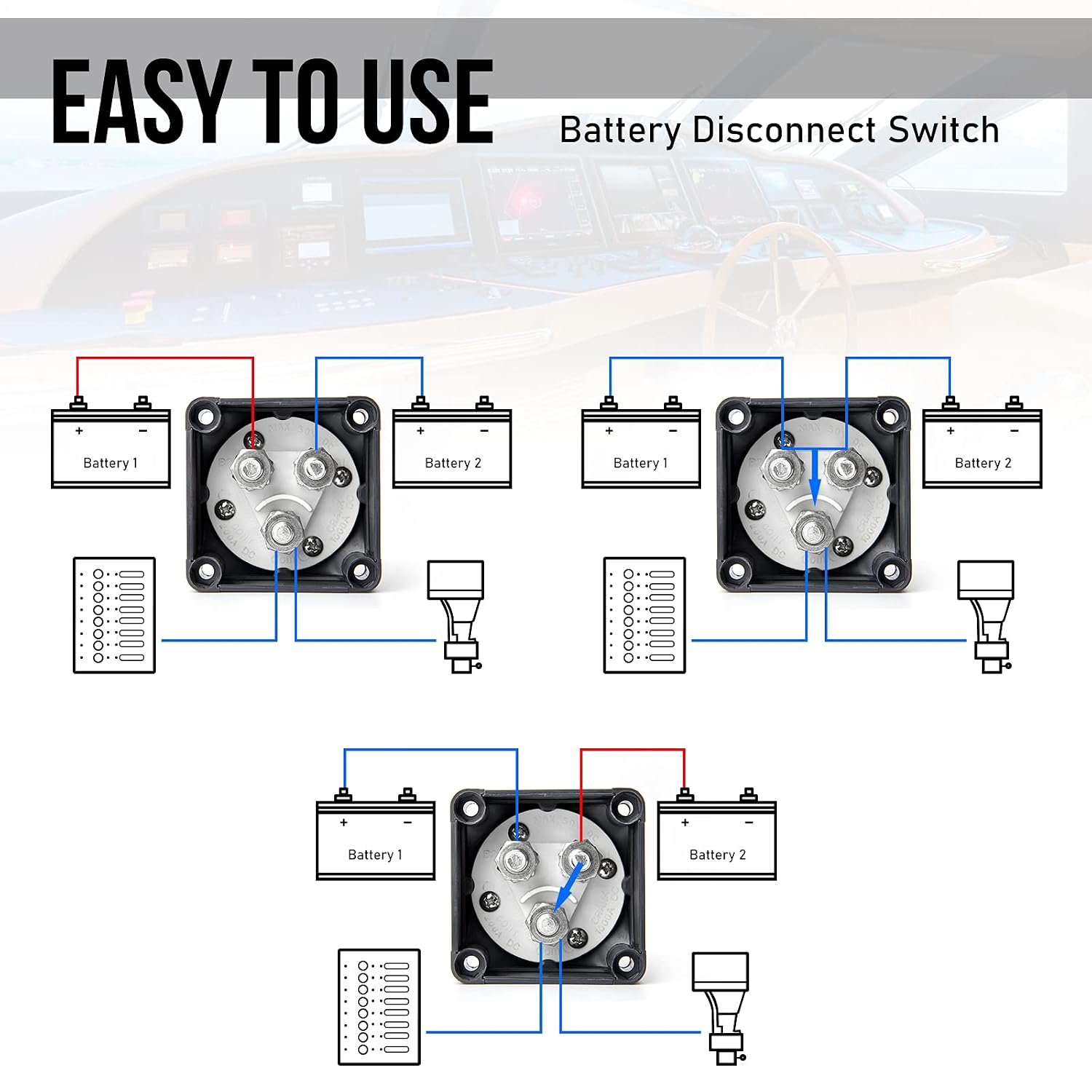
If you’re managing more than one battery or want a simple shutdown option for vehicles, caravans or boats, this kind of switch can be a pragmatic, low-cost solution. It’s designed to be quick to operate, with a straightforward 4-position control, and, crucially, it’s aimed at resisting accidental operation and short circuits when disengaged.
What stands out and what may not
On the plus side, the 200A DC continuous rating (for 1 hour) plus 455A DC intermittent (for 5 minutes) and 1250A DC cranking (for 10 seconds) give a reasonable spread for typical off-grid and automotive scenarios. The inclusion of a rear terminal insulation and removable plates makes wiring and maintenance easier. On the downside, the practical ease of use depends on proper routing of cables and correct mounting, if wiring isn’t tidy, you may lose some of the intended accessibility and cooling. Also, the four-position design focuses on simple on/off control, if you require more granular battery management, this may feel basic.
Who it’s for and who it’s not ideal for
This product suits DIY motorists, RV owners, boaters and fleet users who want a dependable, economical way to isolate power in 12V–48V systems and manage two batteries. It’s likely a better fit for setups where a simple, robust switch is valued over advanced battery management features. If your needs include frequent multi-battery multiplexing, sophisticated monitoring or automatic switching, you might prefer a more feature-rich solution.
When it makes sense to buy
Consider this switch if you prioritise a straightforward, durable disconnect with clear visual indicators and a 2-pack deal. It’s reasonable for seasonal marine use, spare-taster setups in vehicles, or as a general-purpose shutoff for boats, trucks, caravans and ATVs. It may be less compelling if you require higher continuous current ratings or advanced integration with battery management systems.
What to check before buying
- Confirm your system voltage range falls within 12V–48V as stated.
- Plan your cable routing to ensure easy access to the four removable plates and the rear-insulated terminals.
- Consider whether you need the ability to disconnect only one battery or both, this unit supports both configurations.
- Be aware of the continuous rating versus intermittent and cranking needs, ensure your application aligns with these limits.
Practical usage example
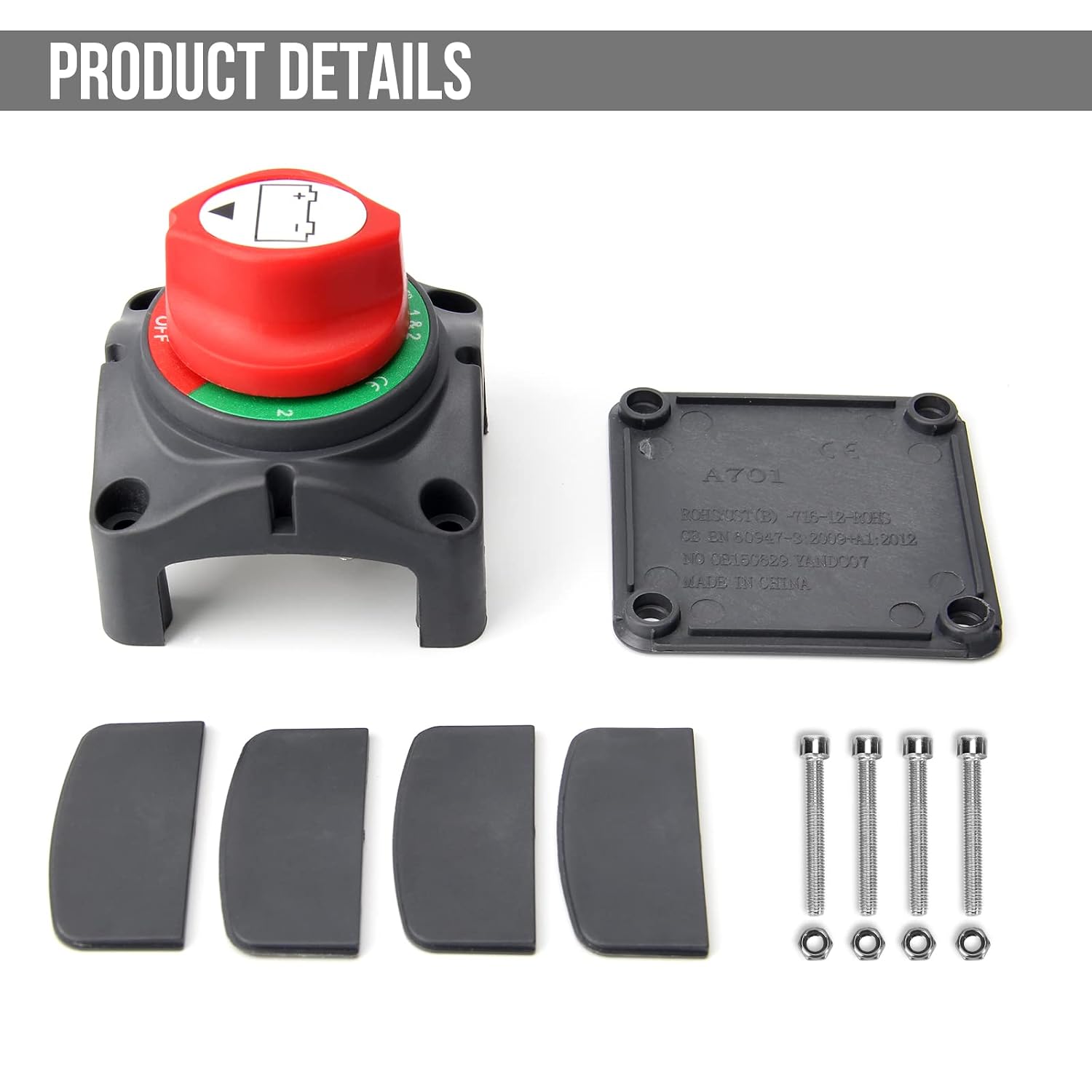
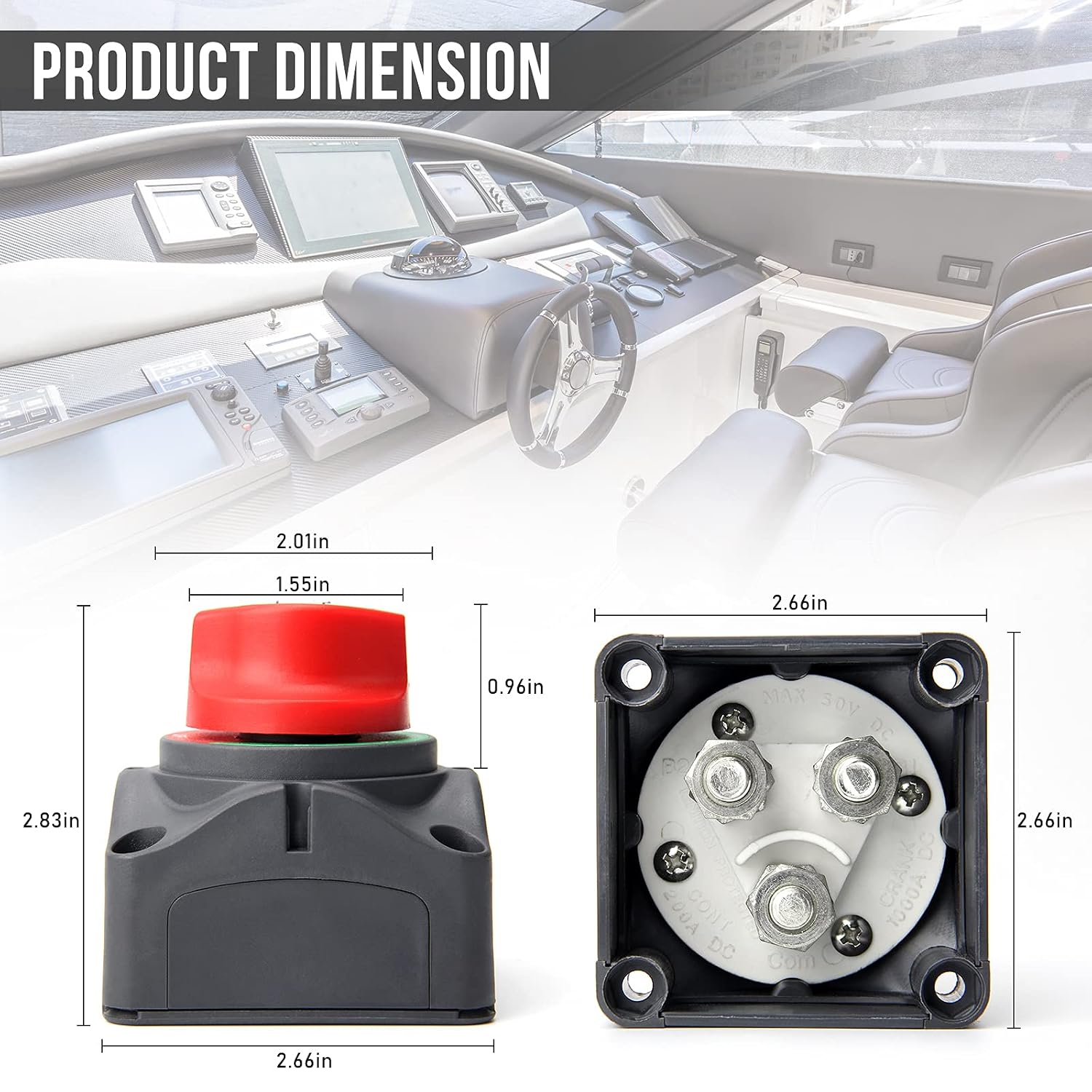
For a dual-battery setup on a vehicle or boat, mount the switch in a convenient accessible spot. With the switch in the green position, you’ll have power to either battery or both. If you need to shut everything down for storage or transport, rotate to red to cut power completely. The design aims to keep terminals protected when not in use, which is useful for outdoor or damp environments.
How this compares to alternative approaches
If you’re weighing options, you’ll likely consider a basic single-battery disconnect or a more feature-rich isolator with remote control or automatic sensing. This two-battery, four-position switch tends to sit between those extremes: simple manual operation with decent current capability and clear on/off states, without extra electronics that could complicate maintenance.
FAQ
- What voltage range does it support? 12V–48V systems.
- How many batteries can it isolate? It supports Battery 1, Battery 2 or both, via 4-position switching.
- What are the current ratings? 200A DC continuous (1 hour), 455A DC intermittent (5 minutes), 1250A DC cranking (10 seconds).
- What’s included? The product is sold as a 2-pack of the 1-2-Both-Off switches.
Final decision
Is it worth it? Worth considering if you want a simple, durable, two-battery isolation solution for 12V–48V systems, with clear indicators and straightforward operation. It suits practical, budget-conscious setups where a robust manual switch is preferred over more complex battery management gear.