

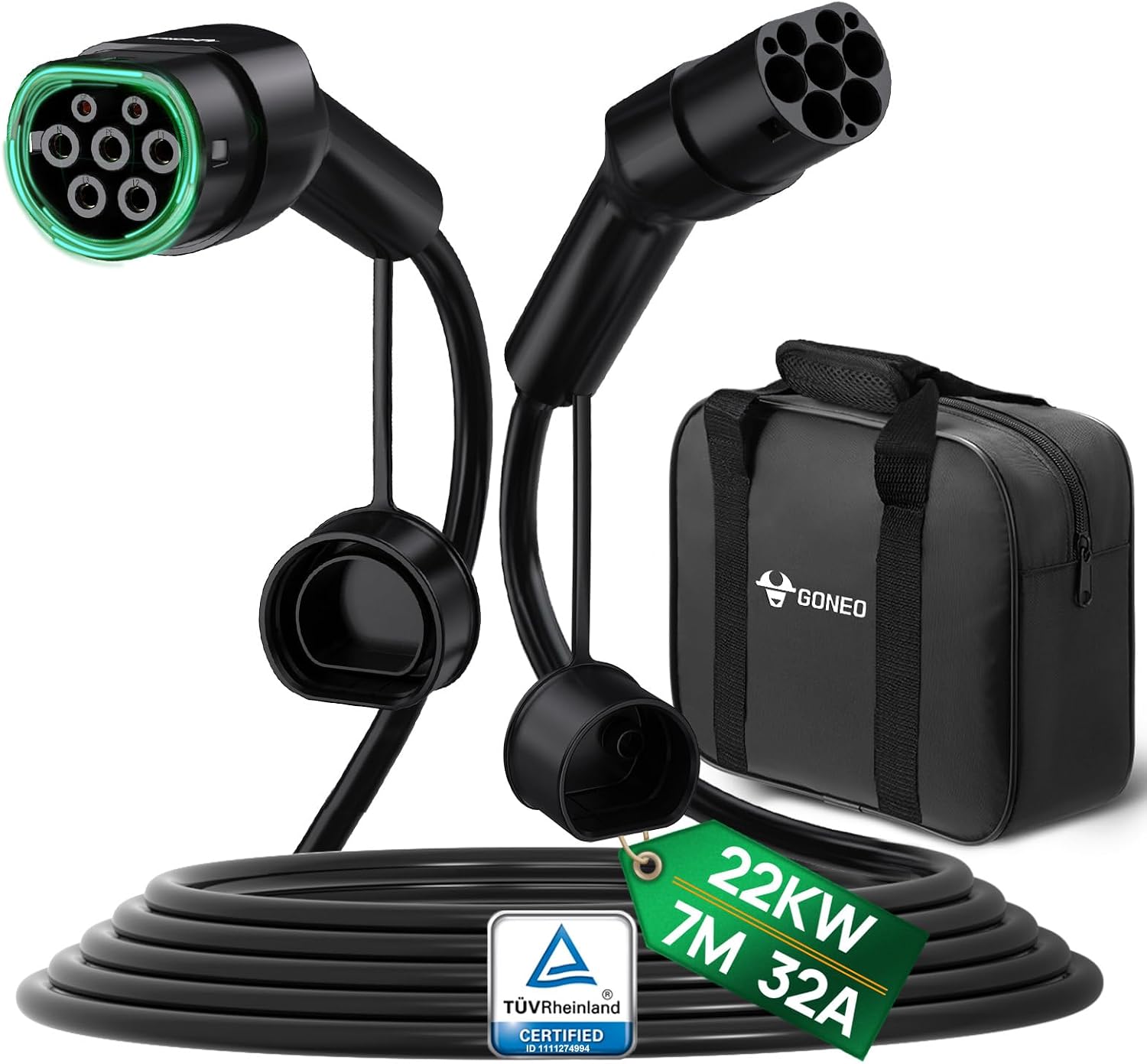
GONEO Type 2 EV Charging Cable 22kW 32A 7m (3 Phase) Mode 3 – Type 2 to Type 2
Product description
What it is and what problem it solves
The GONEO Type 2 EV Charging Cable is a Mode 3, Type 2 to Type 2 lead designed to connect your electric car (or plug-in hybrid) to a compatible Type 2 charging station. In day-to-day terms, it’s the kind of cable you want in the boot if your local charge point either requires an in-cable, or you simply prefer having your own lead rather than relying on what’s available on site.
On paper, the headline is 22kW / 32A for 3-phase charging. That means it’s positioned for faster AC charging than the more basic “around 7kW” class of cables. The listing also mentions a reference figure of reaching around 90km of range in roughly one hour, but do note that actual results depend on your car and the wallbox—so it’s best treated as an indicative scenario, not a guarantee.
What stands out (and where the reassurance comes from)
A few details here feel more practical than marketing:
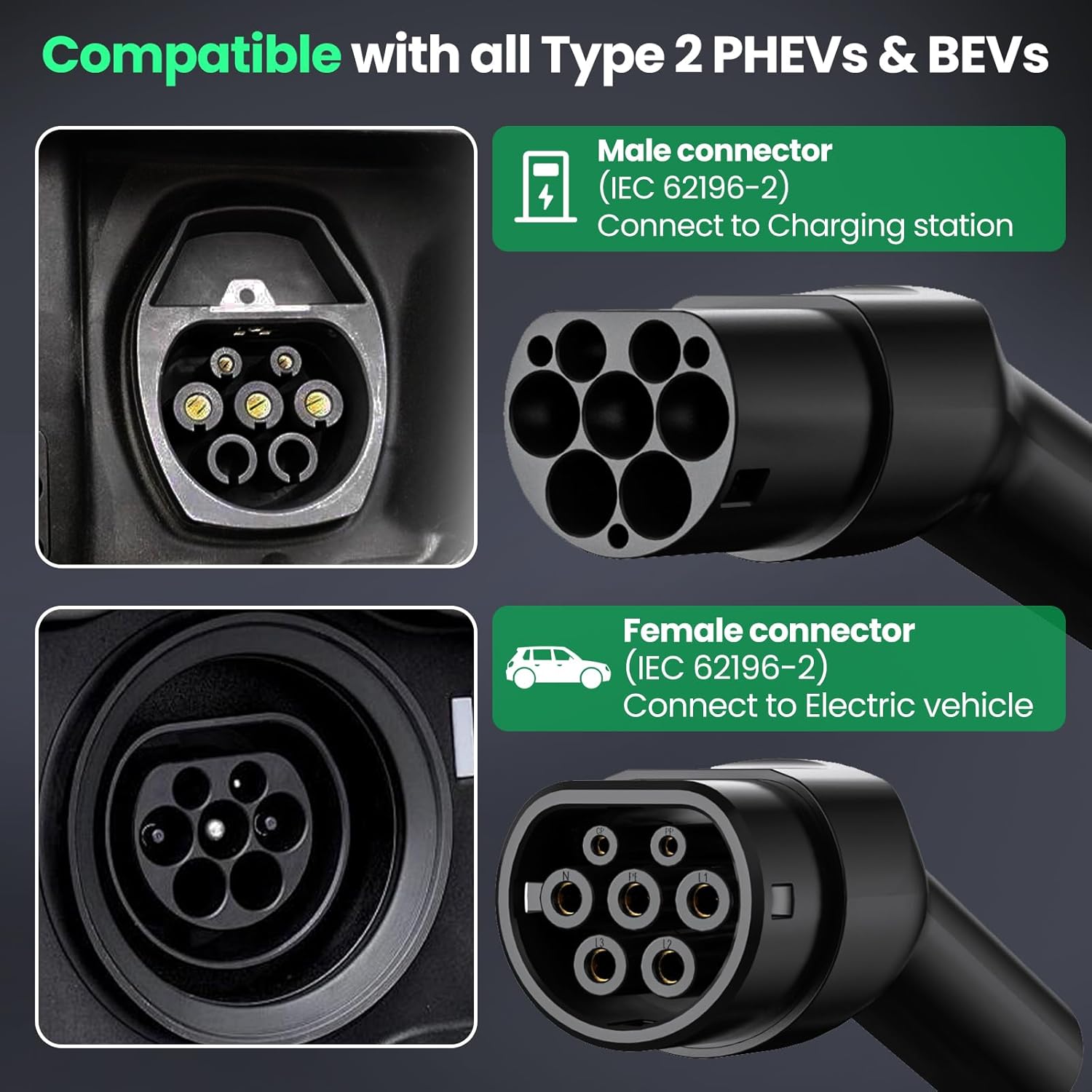
For one, the cable’s stated compatibility focus is Europe, and it’s built around Type 2 (7-pin) and, where applicable, CCS2-type ports (7-pin + 2-pin). The wording is clear that you should confirm your vehicle’s charging port before buying—especially if you’re used to seeing Type 2 on AC charging points but you’ve got a CCS2 inlet on the car.
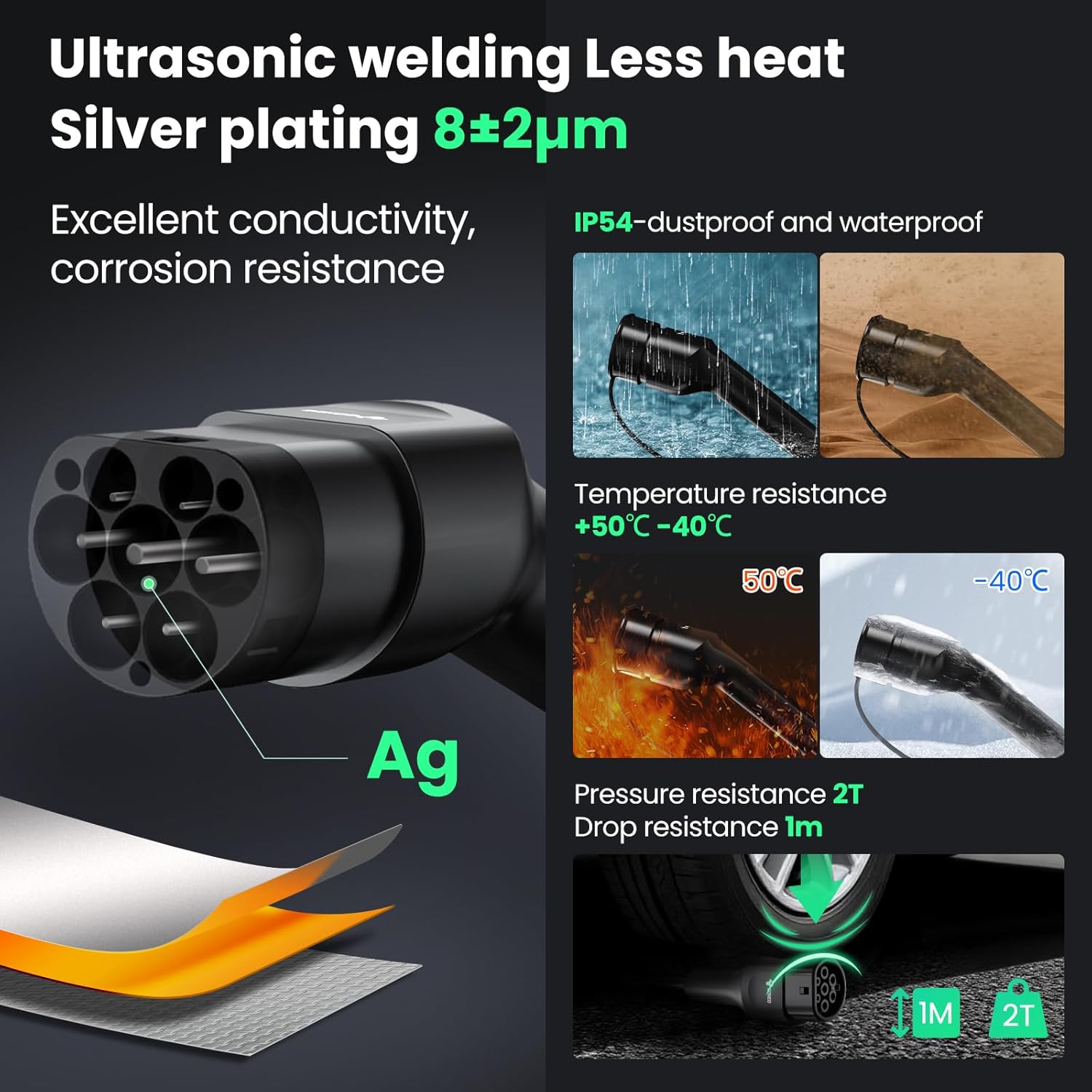
The lead also claims ultrasonic welding for the connection and mentions a lower temperature rise versus general welding methods. That’s relevant if you care about longevity and safety under repeated use, not just how it looks on day one.
There’s also a nod to durability: testing for 10,000 plug connections, a load-bearing capacity of 2 tons, and a 1 metre drop test. It’s not the same thing as owning it, of course, but it does suggest the manufacturer is aiming for a “use it often” cable rather than something purely for occasional backup.
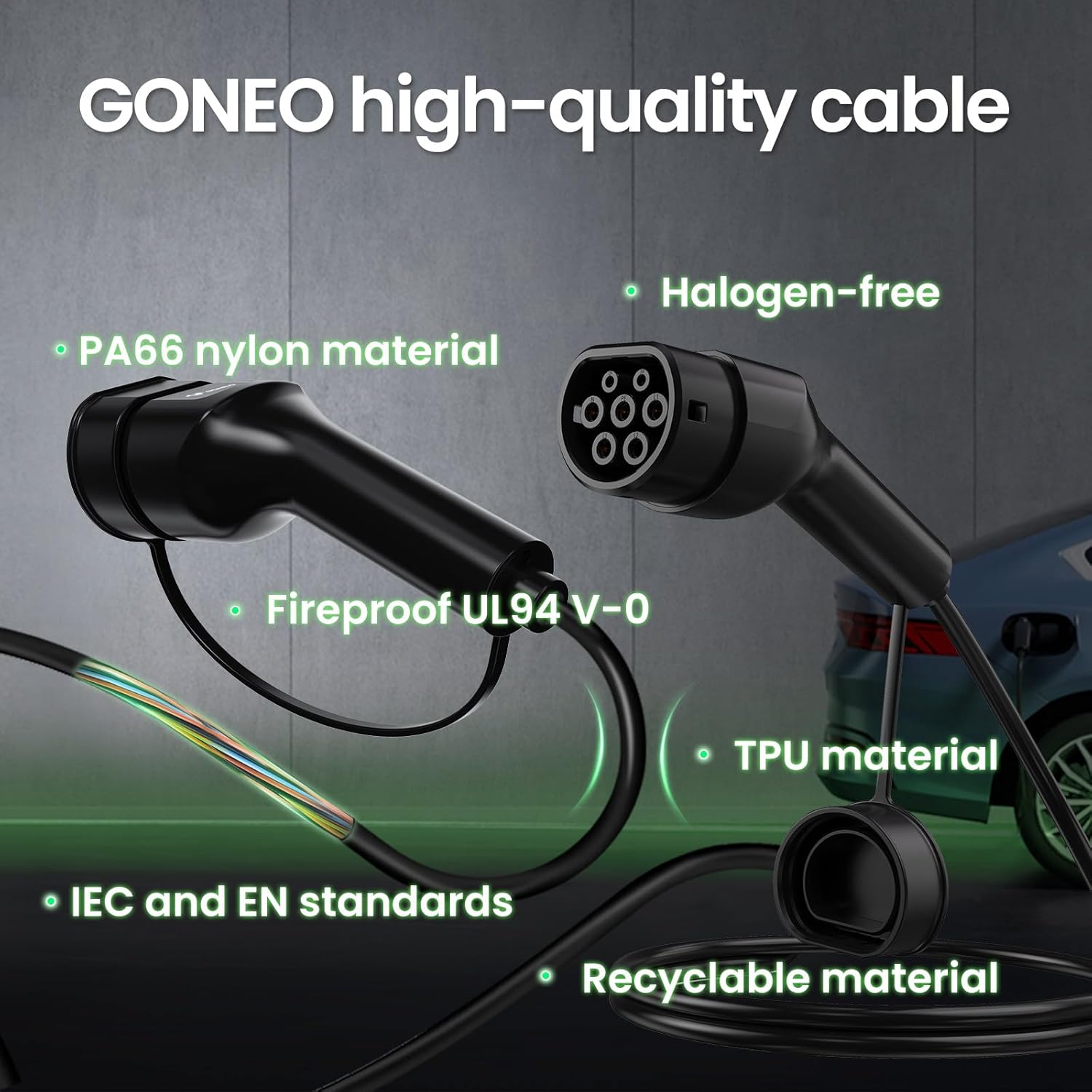
Then there’s the safety and materials angle. The listing says it complies with IEC 62196 and EN standards, uses an IP54 waterproof level, and includes a fire rating (UL94 V-0). It also lists overvoltage protection, overcurrent protection, and short-circuit protection. On a product like this, that’s the sort of paperwork you want to see before you commit.
Key takeaways for buying: the cable length and real-world setup
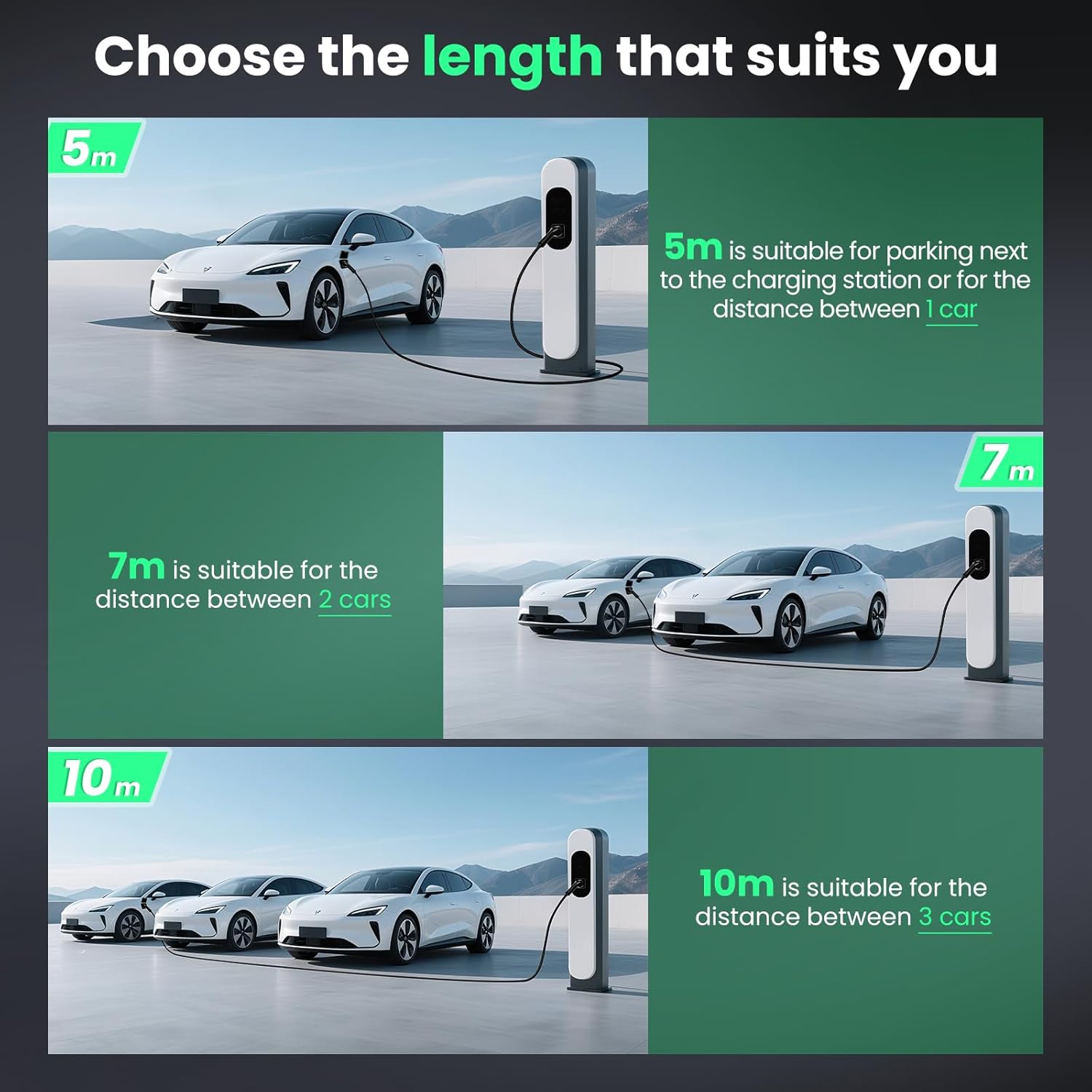
Length matters more than most people expect. This model is 7m long, and the listing gives a rule-of-thumb for where it fits best:
- It’s described as suitable for the distance between two cars.
If you regularly park a bit further from the charge point, or you want some slack to keep the connector area away from traffic lanes and puddles, 7m can be a sensible middle option. Still, don’t assume it’s automatically “perfect” for every space—parking layouts vary, and charging points don’t always line up with your preferred position.
A small practical plus is that the cable comes with a durable carrying bag and Velcro for storage. That’s the difference between a cable that stays tidy in the boot and one that ends up tangled and annoying.
The technical bit that actually affects compatibility
This is where people most often go wrong when buying charging cables online.
The listing is explicit about what it is designed for: Type 2 (7-pin) and CCS2 (7-pin + 2-pin) electric vehicles / plug-in hybrids. It also states it is not compatible with Type 1, CCS1, CHAdeMO, and GB/T.
So it suits you if your car’s charging port is Type 2 (7-pin) or CCS2 (the Type 2 part of the inlet plus the CCS pins). It may not suit you if your car uses Type 1 or other non-listed standards.
One limitation to keep in mind: charging power depends on both the car and the wallbox. Even if the cable is rated for up to 22kW, your setup could be limited by what your vehicle can draw and what the charging station can deliver.
What you’ll notice in everyday use
Imagine turning up at a public AC charger that’s short on options and you don’t want to queue for a cable or hunt around for one—having your own 7m Type 2 lead makes the situation simpler. You plug the cable into the station’s Type 2 socket, route it across the space carefully, then connect to the car.
Where this can feel worth it is when you value consistency. You know which lead you’re using, the length you’ve got, and you’re not forced into awkward positioning just because the provided cable is too short.
That said, it’s not perfect for every scenario. If your car or your local charge point isn’t compatible with Type 2/CCS2 as described, the cable won’t magically fix that. And if your wallbox is on the lower-power side, you won’t get the full 22kW headroom the listing mentions.
Mini FAQ
Is this an extension cable?
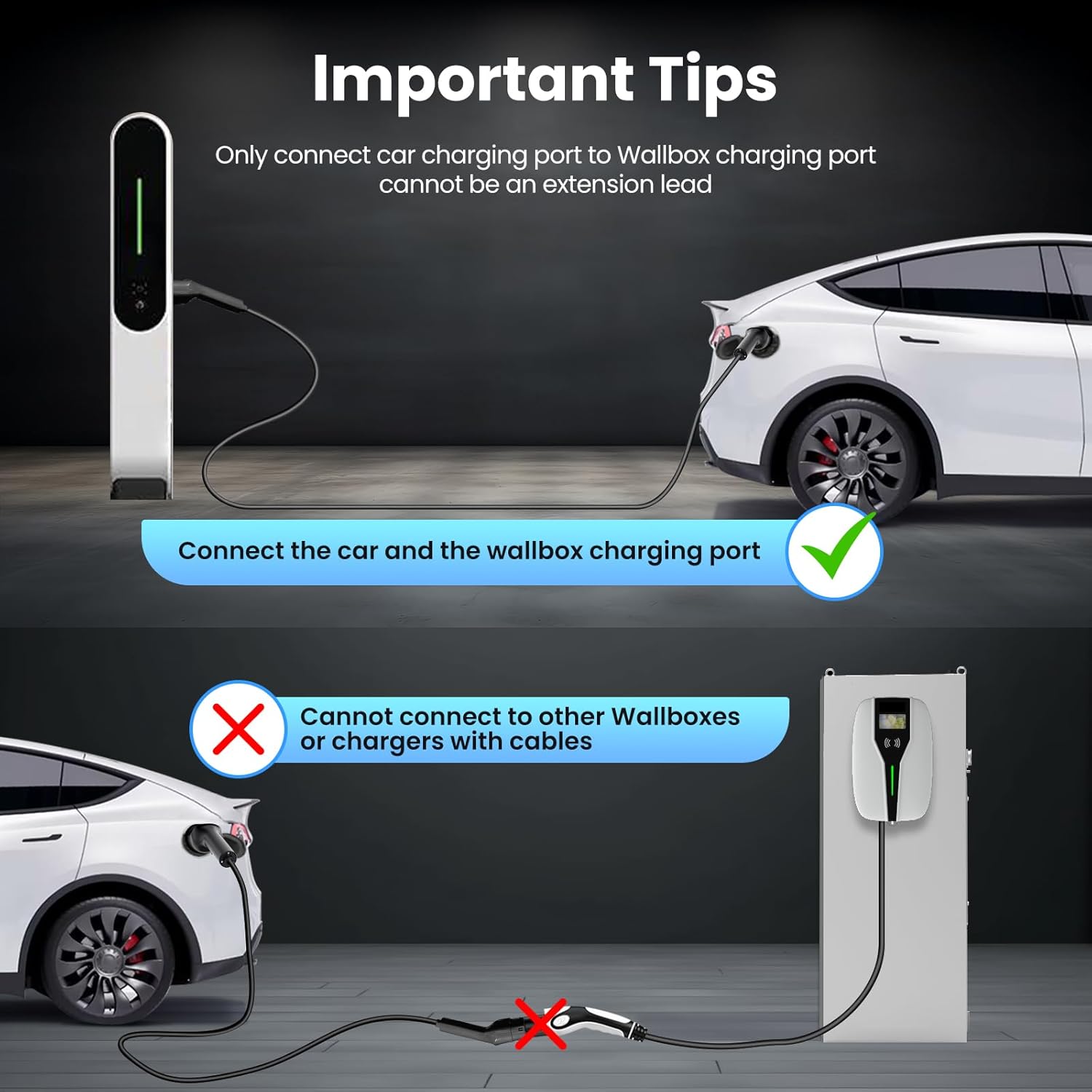
No. The listing notes it is not an extension cable. It’s meant to connect the vehicle charging port to the charging station charging port.
Will I get 22kW charging with every charger?
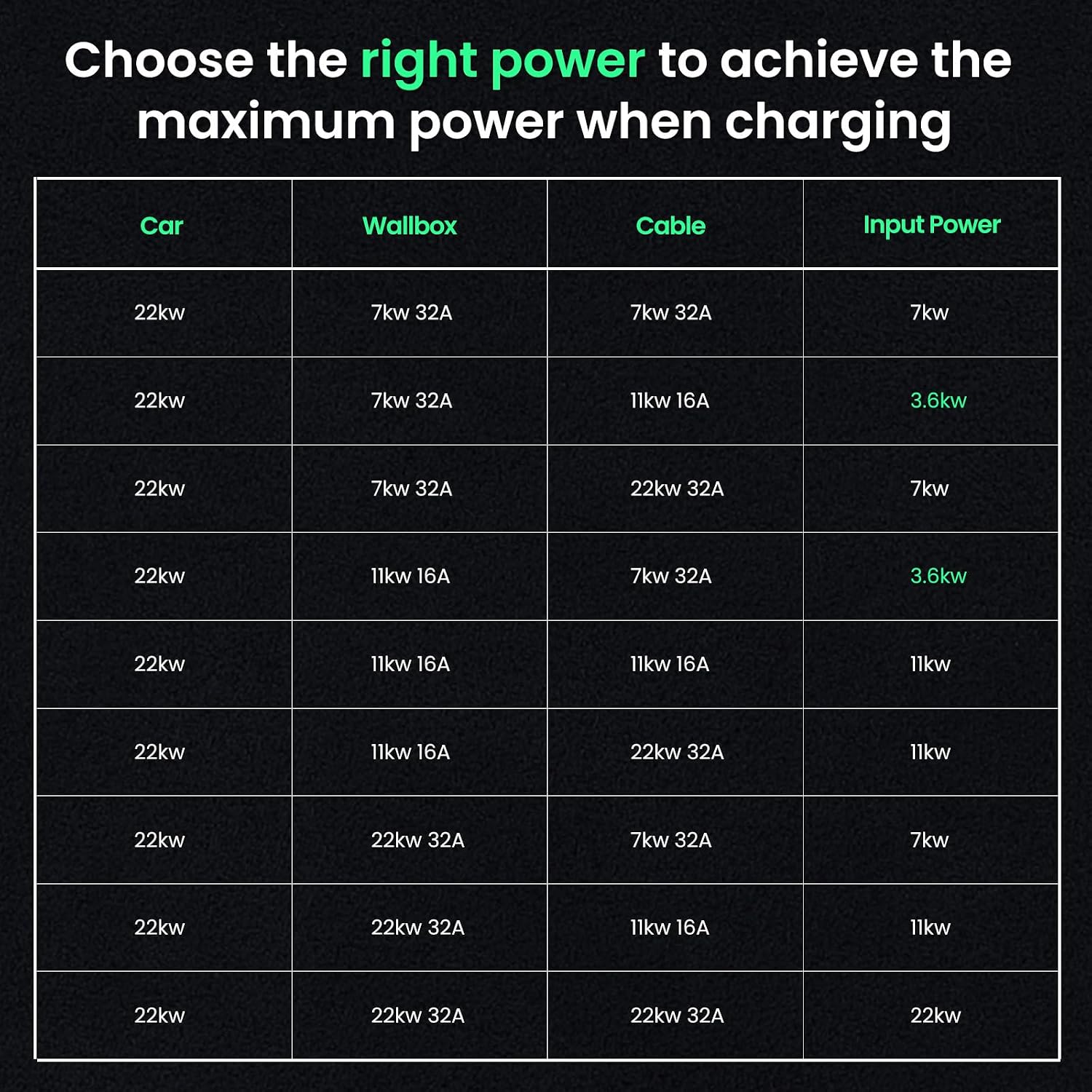
Not necessarily. The listing is clear that charging power depends on both your car and the wallbox, so you’ll need to check what your vehicle and charging station support.
Which cars does it suit?
The listing targets vehicles with a Type 2 (7-pin) charging port, and it also references CCS2 (7-pin + 2-pin) for plug-in hybrids and compatible electric vehicles. It also states it’s not compatible with Type 1, CCS1, CHAdeMO, and GB/T.
Where does the 7m length fit best?
The listing suggests 7m is suitable for the distance between two cars. In practice, your parking layout and charger location will still matter.
What to check before you buy
Before ordering, double-check your vehicle’s charging port type (Type 2 7-pin vs CCS2 7-pin + 2-pin) and confirm your wallbox/charging station is compatible with Type 2 AC charging. Also, consider whether you actually need 7m length, or whether a shorter lead would do the job without creating excess cable to manage.
Final verdict
Is it worth it?
It’s a solid pick if you want a Type 2 / CCS2-compatible Mode 3 cable with a 7m length for day-to-day charging flexibility, and you care about the kinds of safety and durability claims that matter on a cable you’ll plug in often.
You may want to skip it if your car uses a charging standard outside the listing (like Type 1, CCS1, CHAdeMO, or GB/T), or if your main charging routine is always with a specific setup where cable choice doesn’t really matter. And if you’re expecting 22kW in the real world every time, it’s better to temper that—charging speed depends on the car and the wallbox, not just the lead.