

LiNKFOR RCA to HDMI Converter 1080p (PAL/NTSC) with 150cm AV cable and 4:3/16:9 switch
Reviews
Price
Product description
What it is and the problem it solves
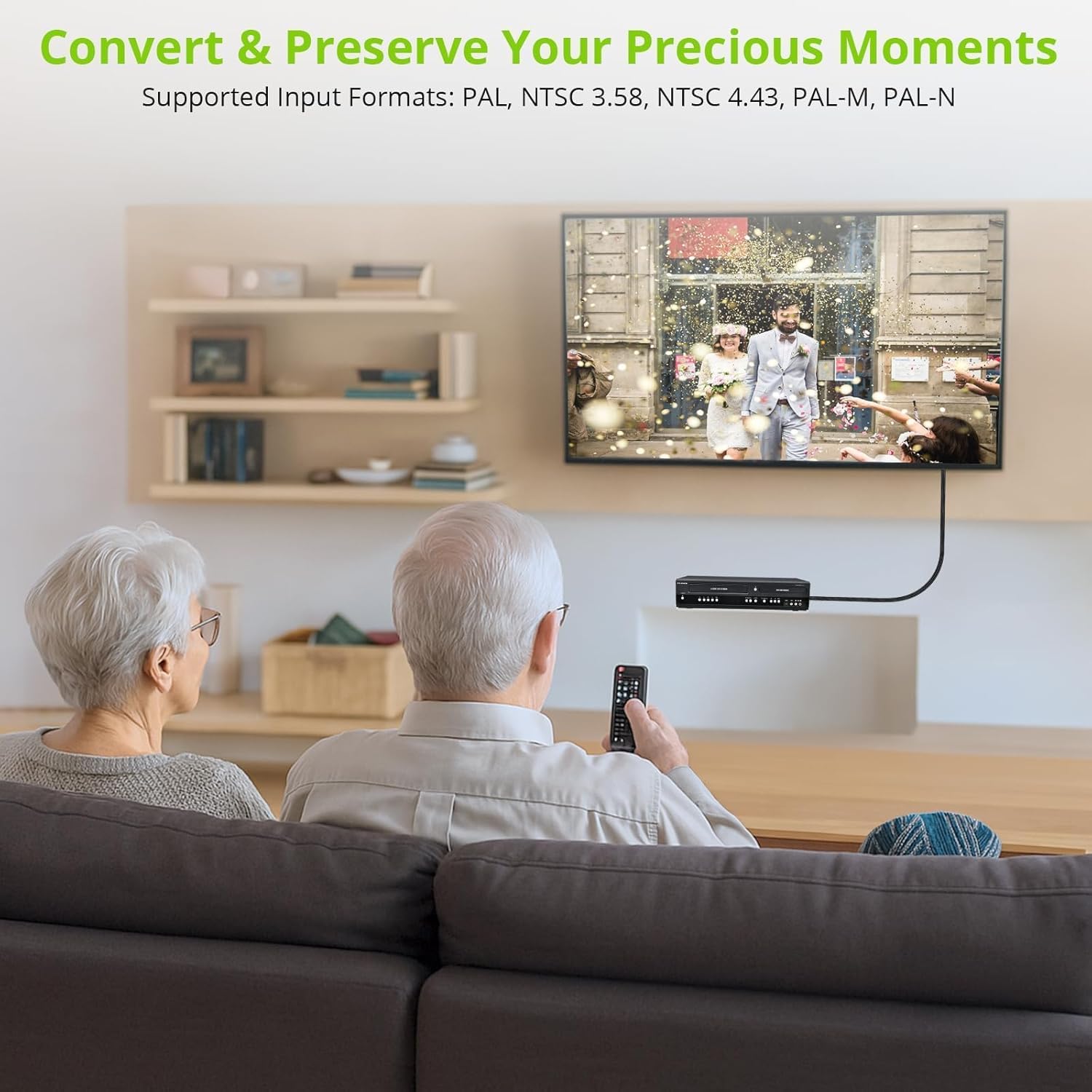
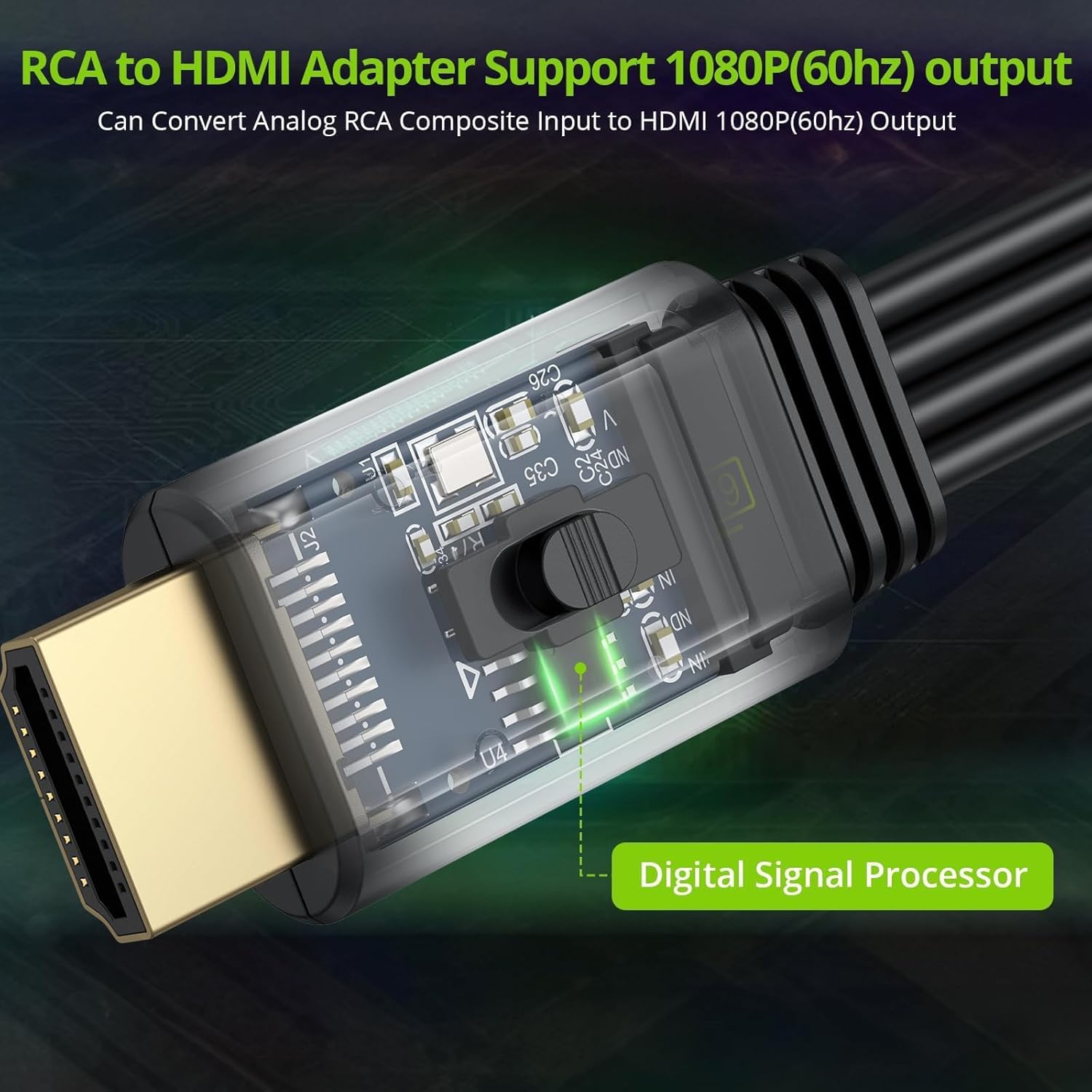
If you’ve got an older device with RCA (composite) outputs but your TV only seems to offer HDMI, a RCA to HDMI converter is the straightforward bridge. The LiNKFOR RCA to HDMI Converter takes an analogue composite RCA signal and outputs HDMI up to 1080p (60hz). In plain terms: it’s aimed at letting you plug legacy AV sources into a modern HDTV so you can keep using things like retro consoles, older DVD players, or VHS/VCR setups.
That “keep using it” angle matters, because replacing an entire collection of older hardware isn’t always sensible. This converter is designed to be simple and quick to hook up, so you can spend more time watching and less time troubleshooting connections.
The essentials: conversion, aspect switching and video standard support
Where this model is particularly practical is the combination of video conversion plus an on-device way to deal with aspect ratio.
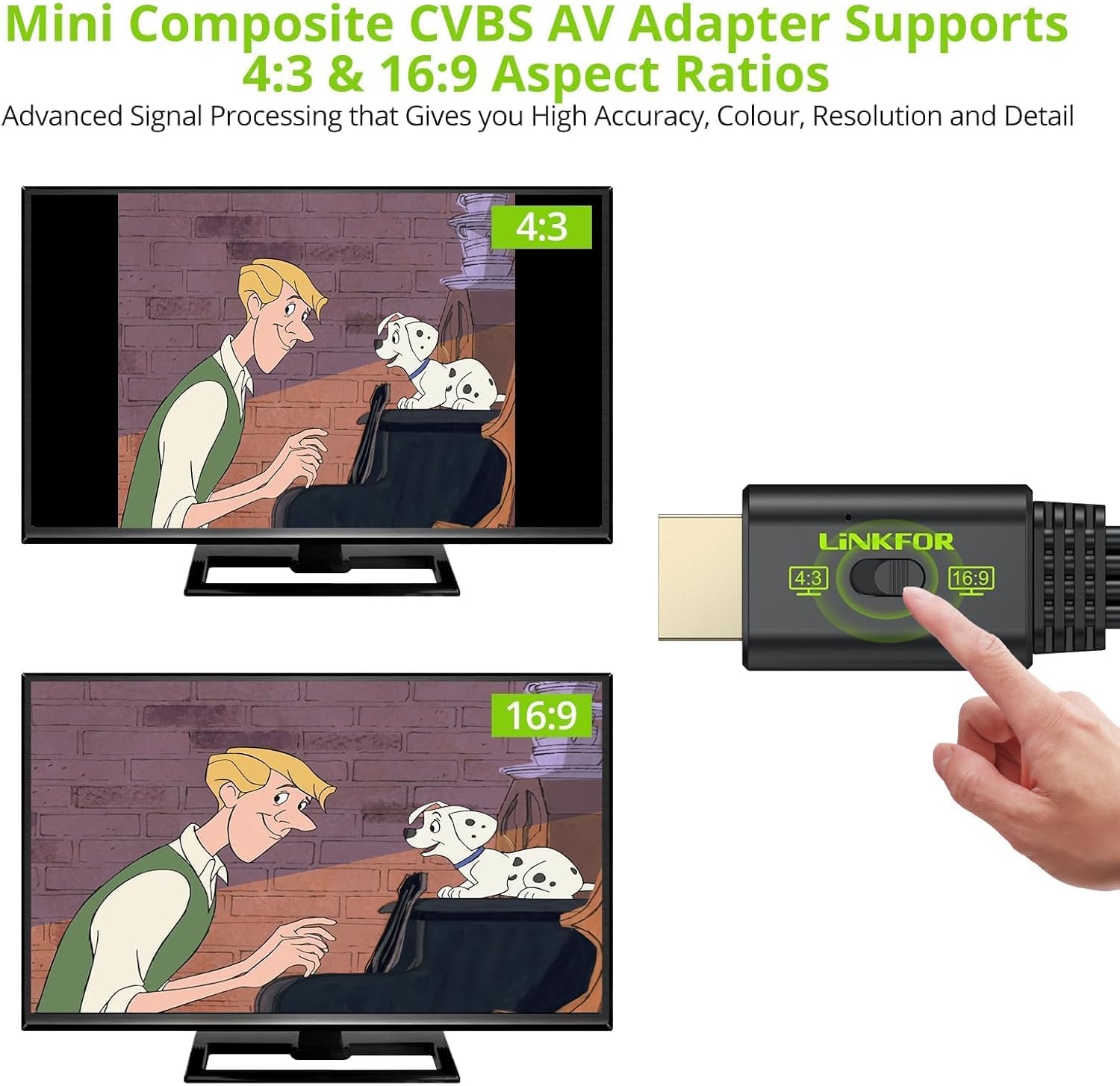
4:3 to 16:9 switching
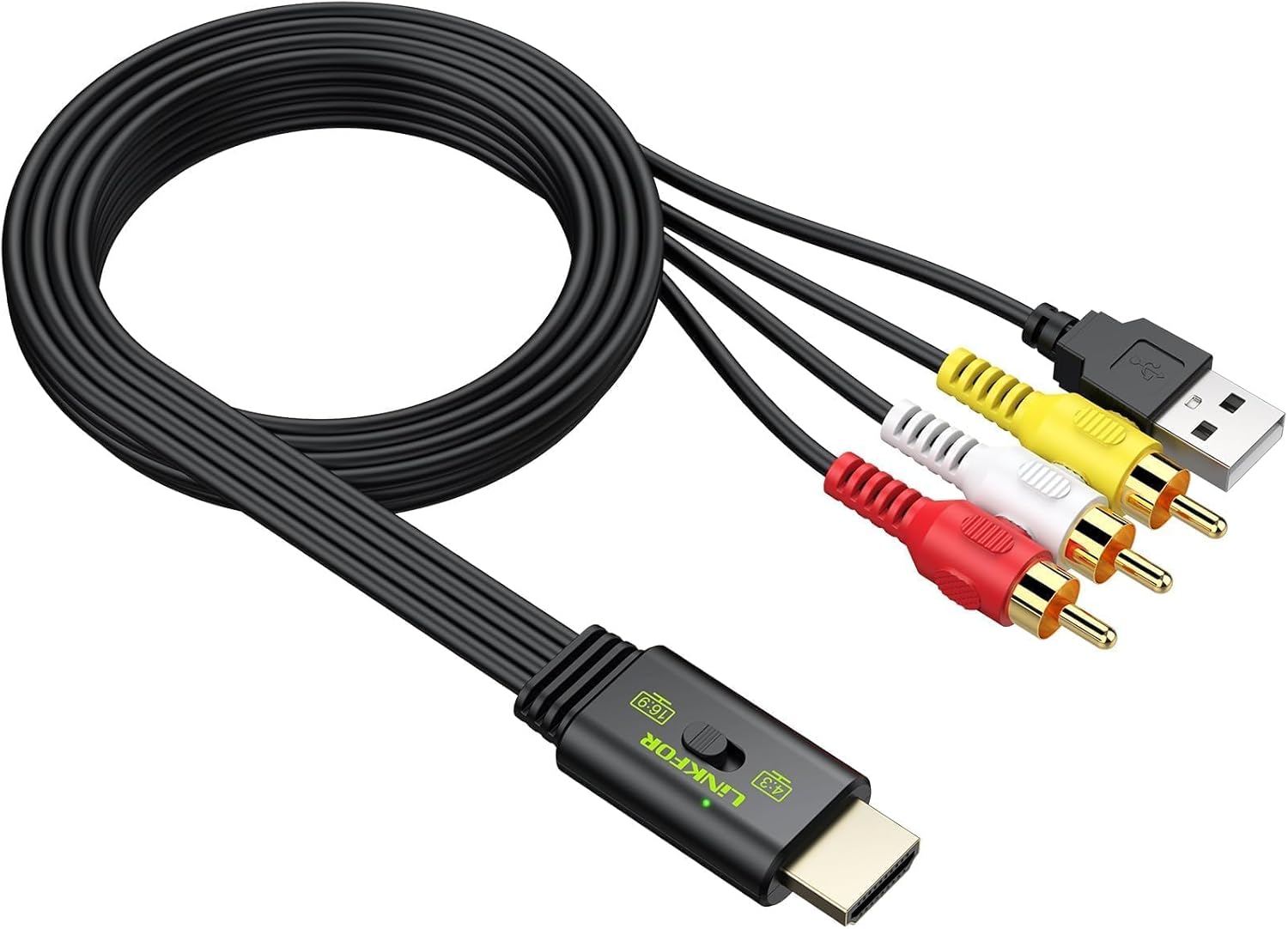
Many older sources output in a 4:3 look. The converter includes a physical switch so you can toggle between 4:3 and 16:9 output. That’s useful if your TV otherwise stretches or letterboxes the image in a way you don’t like. It’s not magic—lighting, overscan, or how a particular game or film is authored can still affect how it looks—but having a manual switch is a real quality-of-life feature.
PAL/NTSC composite compatibility
It also supports common composite formats such as PAL/NTSC variants and SECAM, as well as PAL/M and other listed standards. On paper, that coverage makes it more broadly usable for mixed regions and older equipment.
Setup and everyday use (the bit most people care about)
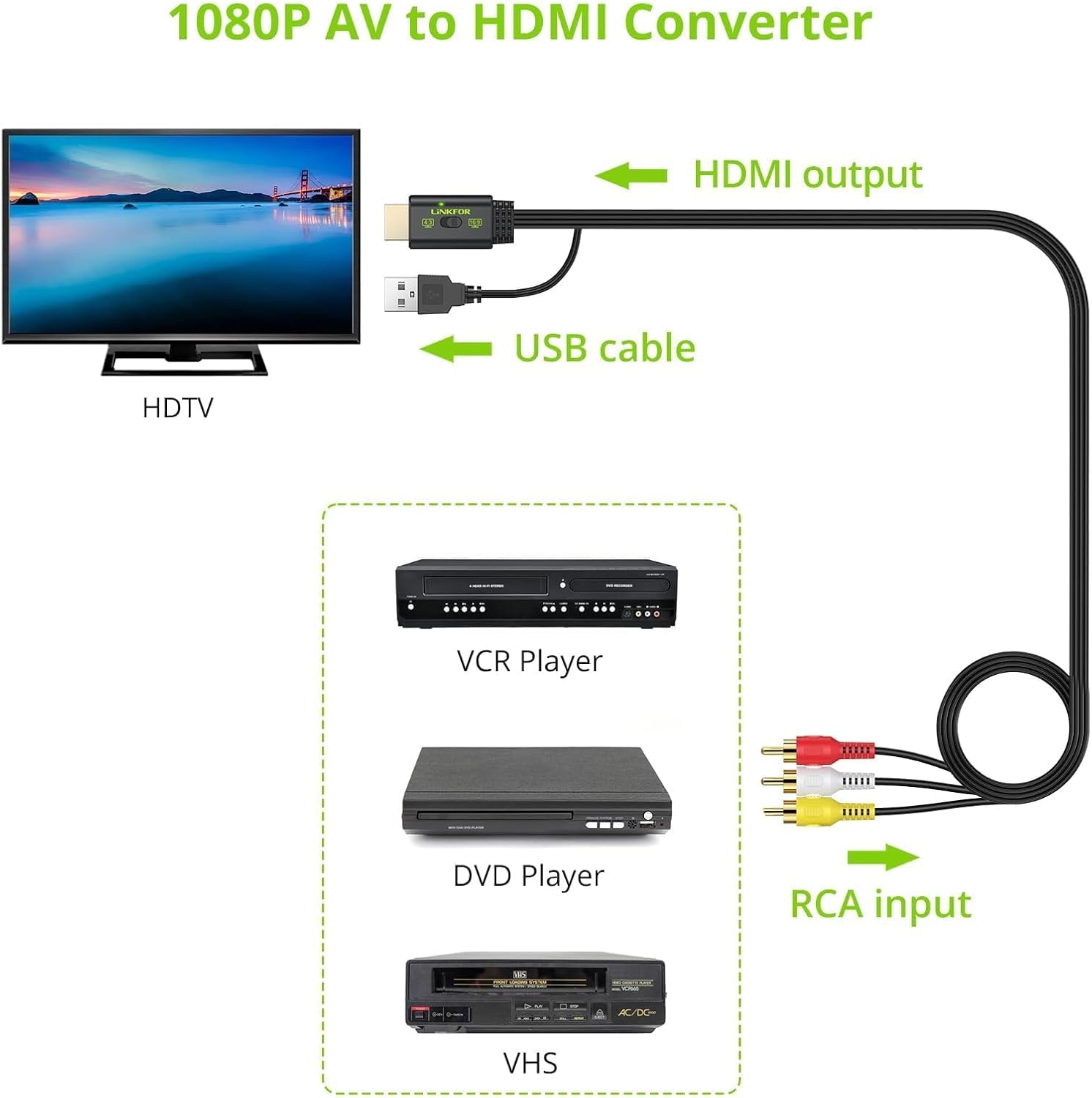
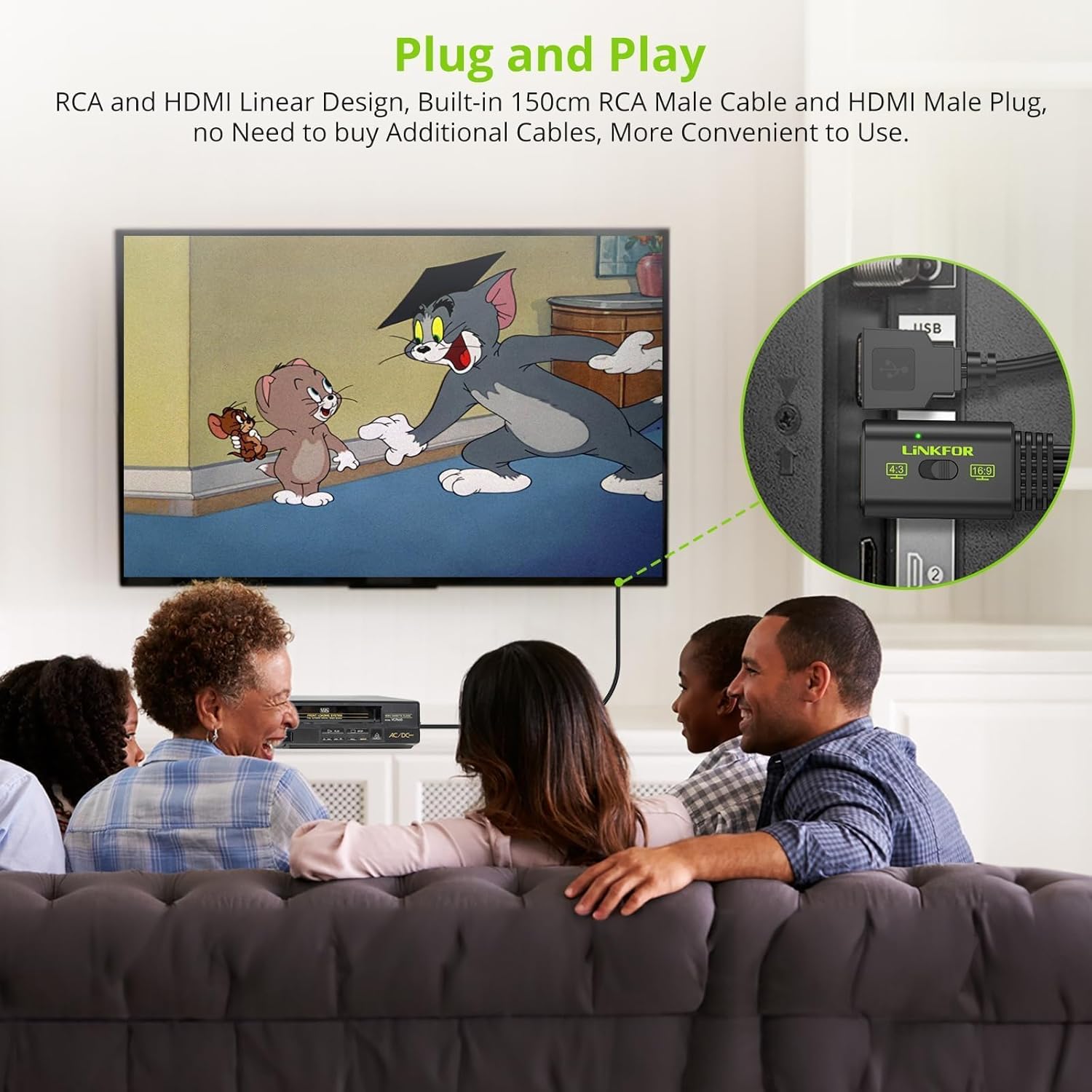
The converter is marketed as plug and play. It doesn’t require drivers, and power comes via an included USB 5V cable that you connect to a suitable 5V power source. For everyday use, that’s typically the difference between a converter you actually reach for and one that turns into a weekend project.
It also has an integrated design: a built-in RCA cable with a 150cm length (male RCA), a male HDMI connection, and the USB power lead. That means you’re not juggling separate leads, and hanging the adapter or positioning it around your TV setup is easier—especially if your AV sources are on a shelf and your TV is wall-mounted.
A small practical example: imagine setting up a retro console on a desk, plugging its RCA output into the built-in 150cm lead, then running the HDMI to the TV. Once the correct 4:3/16:9 switch position is chosen, you’re basically done—no menus on the converter itself.
What’s worth noting (and where it can feel limited)
This converter is a sensible bridge, but it’s worth being clear about the limits you might run into.
- It converts composite analogue (RCA) to HDMI. Composite video is an older standard, so while it can output 1080p, that doesn’t automatically mean the picture will look as clean as a native HDMI source. Expect the “improvement” to be more about getting a usable picture on a modern TV than making it studio-crisp.
- The aspect ratio switch is helpful, but your TV’s own picture modes and scaling options can still affect how the final image frames.
Who it suits best, and who should think twice
It makes sense if you want a quick, practical way to connect composite-output devices to an HDMI TV—particularly for casual viewing, retro gaming, or keeping older players and recorders in service.
It may not be the best match if you’re very picky about image quality and are expecting composite to look like true digital sources. In that situation, you might prefer a more advanced conversion route (or a newer device with HDMI output), depending on what you’re trying to achieve.
You’ll like it if you prioritise: - simple plug-in setup - a built-in 150cm RCA lead for flexible placement - manual 4:3/16:9 switching to stop the image being constantly stretched
Technical details, in human terms
The core promise here is conversion of analogue composite RCA into an HDMI output described as 1080p at 60hz. The converter also includes support for multiple PAL/NTSC and SECAM standards listed in the description, and it’s explicitly positioned for devices such as VCR/VHS players, DVD players, and retro consoles.
Also, it’s worth noting the RCA input is via a male RCA connector, so you’re looking for composite output on the device you connect.
Box checklist and buying considerations
Before buying, double-check three things:
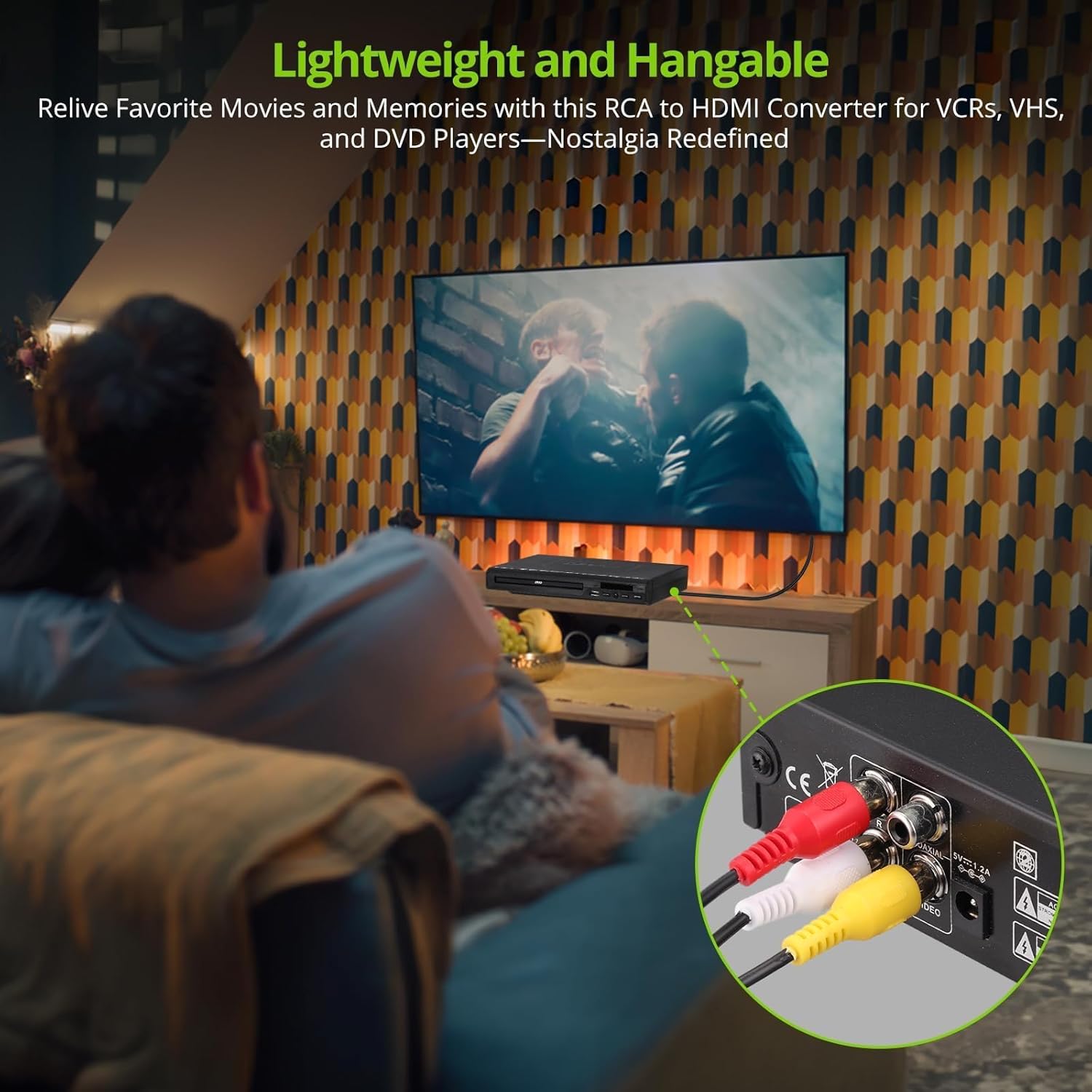
- Your source outputs composite RCA (the classic yellow/red/white style, depending on your setup) rather than component or HDMI-only.
- Your TV has an available HDMI port.
- The aspect ratio switch is a feature you’ll actually use (if your sources are mostly 4:3, it’s more likely to help than if you’re mostly dealing with already-wide content).
The integrated 150cm RCA cable is convenient, but if your devices are unusually far apart, you may still want to measure your own setup.
Is it worth it?
This LiNKFOR RCA to HDMI Converter is worth considering if you need a practical way to bring older composite devices into an HDMI TV setup, and you like the idea of plug and play power via the included USB 5V cable. The built-in 150cm RCA lead and the physical 4:3/16:9 switch are the kinds of details that make it genuinely usable day to day.
Buy it if your priority is compatibility and convenience for devices like retro consoles, VCR/VHS, or older DVD players. Skip it if you’re expecting composite to magically transform into high-end digital video quality, it’s a connector and converter, not a miracle.
Mini FAQ
Will this work for PAL and NTSC sources?
It’s described as supporting PAL/NTSC variants (and SECAM as well). If your device outputs composite RCA in one of those formats, it should fit the intended use.
Does it require a computer or drivers?
No driver is required according to the description. You power it using the included USB 5V connection and connect the RCA and HDMI leads.
Can I fix stretched images?
There’s a physical switch for 4:3 and 16:9 output. If the stretching is simply down to aspect ratio handling, this should help.
What devices is it intended for?
The description mentions use with VCR/VHS and DVD players, plus retro consoles like Wii/PS1/PS2/N64.
What should I check before ordering?
Confirm your source has composite RCA output, your TV has an HDMI input, and you have enough spacing for the built-in 150cm RCA cable to reach comfortably.