

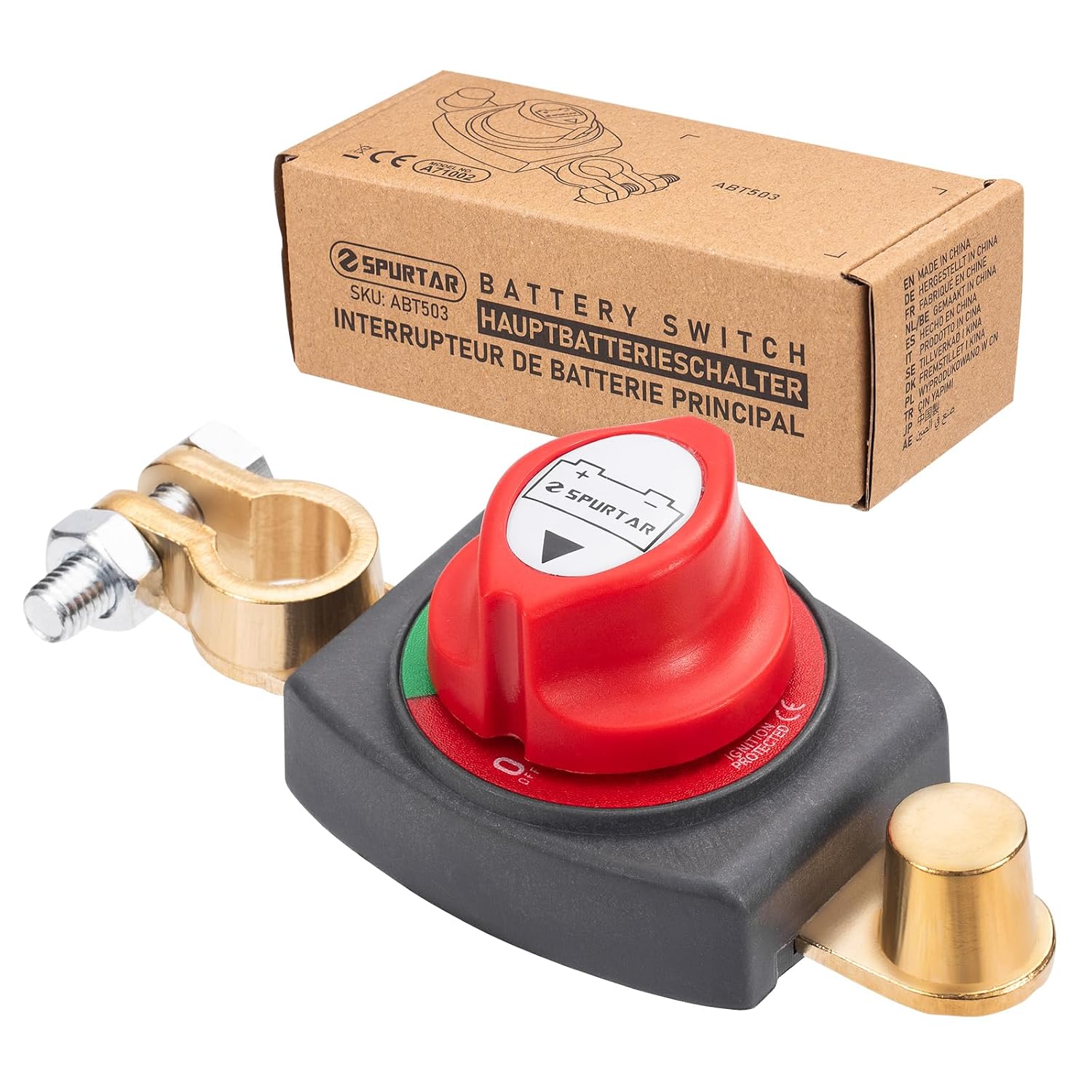
Spurtar Battery Isolator Switch 12V–48V Top Post (Negative) – 275A continuous battery disconnect
Product description
If you’re trying to stop a vehicle battery draining while the system sits idle, a battery isolator switch is one of those simple upgrades that can quietly save you a lot of hassle. The Spurtar Battery Isolator Switch is built for the top-post negative terminal and is designed to let you switch power on or off in seconds, rather than relying on less reliable “maybe I’ll remember to disconnect the lead” habits.
On paper it’s the kind of switch that makes sense for vans, boats and other electrical-heavy setups where you want a clear cut-off. That said, it’s not universal in placement: it’s specifically for the top post negative terminal setup, so if your battery terminal arrangement doesn’t match, you may end up disappointed.
The essentials
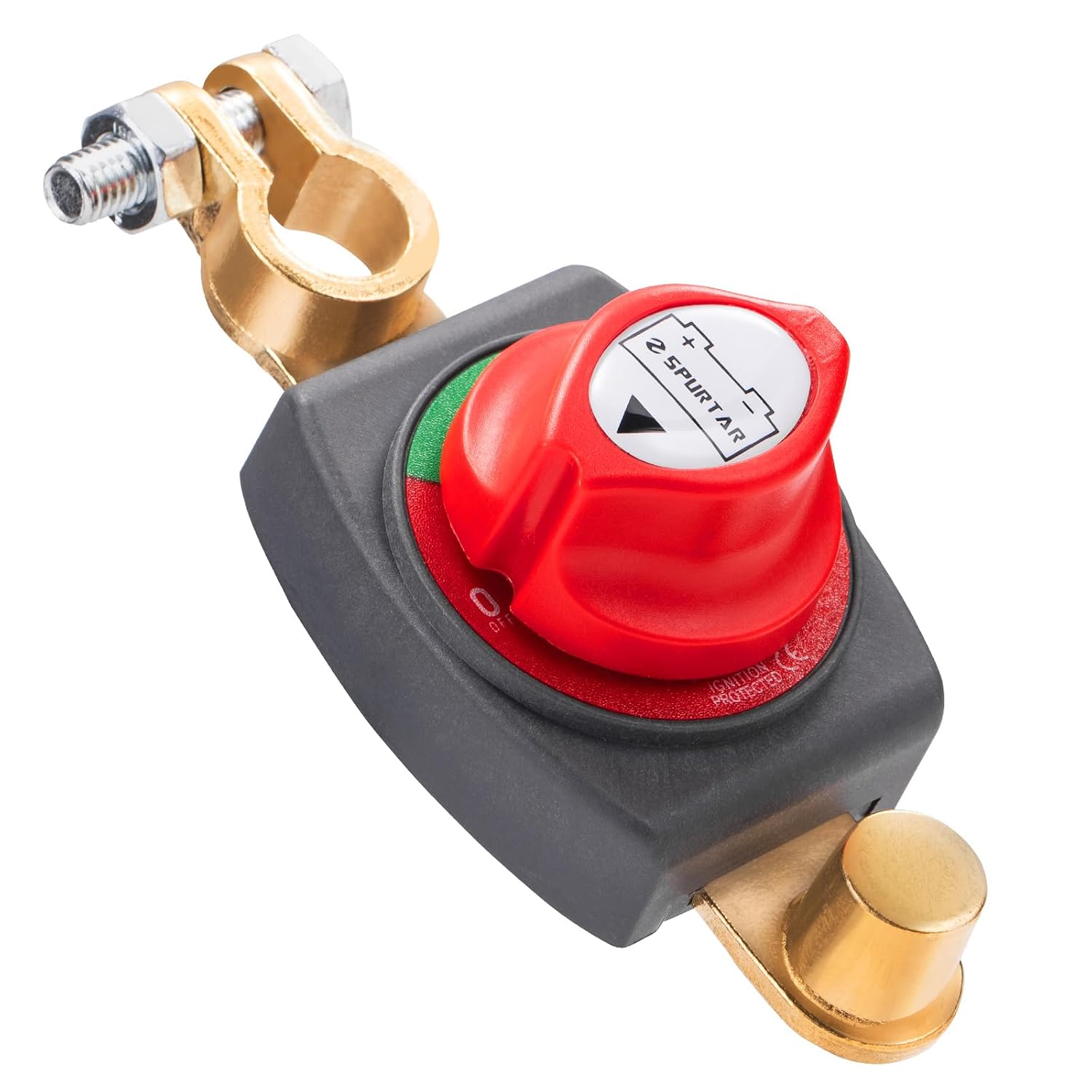
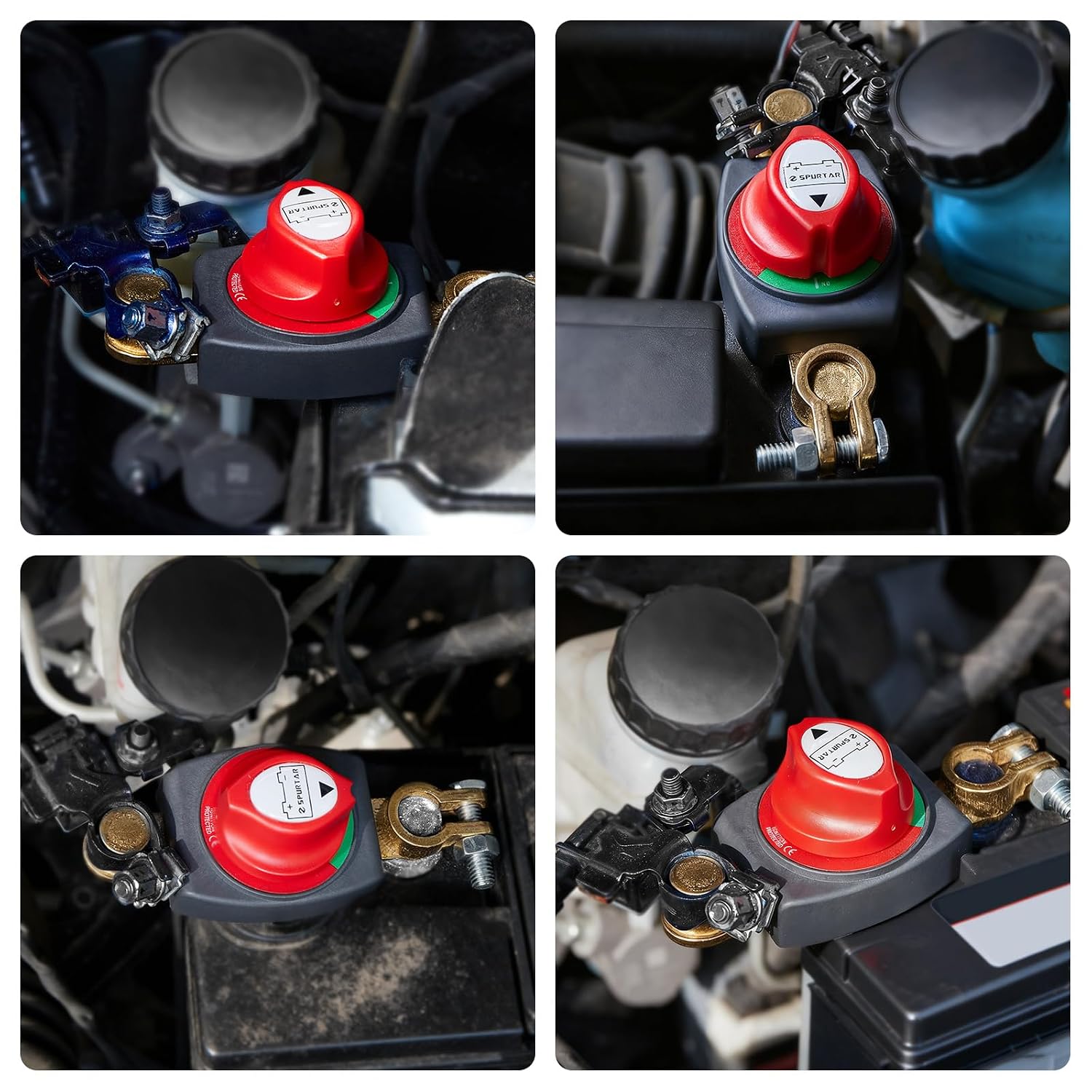
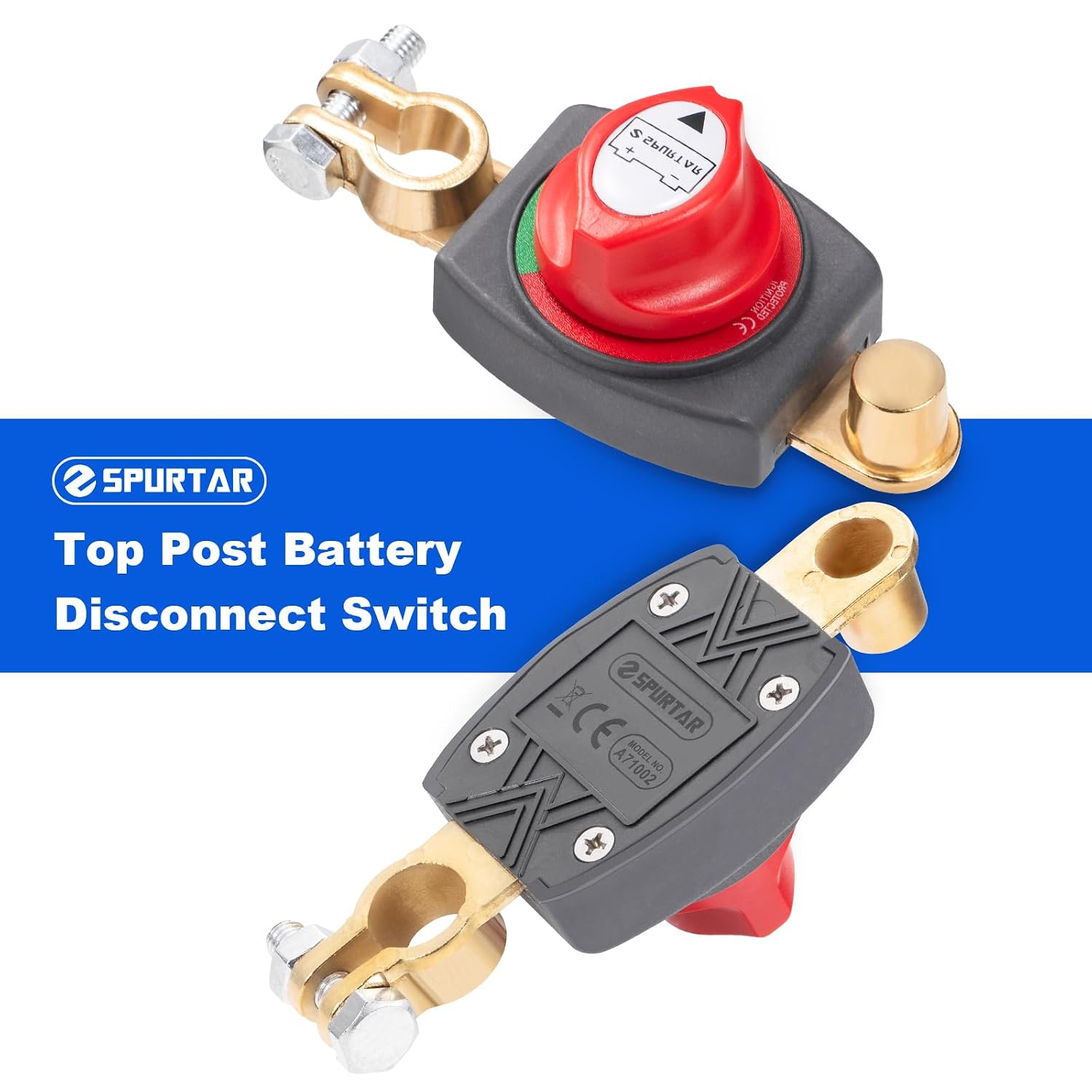
The Spurtar isolator is intended to control the current flow by switching the battery circuit on or off. It’s aimed at 12V to 48V systems, with a front plate that indicates ON/OFF. For day-to-day use, the idea is straightforward: you wire it to the battery terminal (top-post negative), secure it, and then you can isolate the battery when the vehicle, boat or equipment is not in use.
There’s also a practical protection angle. By cutting the circuit, it helps prevent damaging deep discharges, which can shorten battery life over time. It won’t “fix” every battery issue, but as a preventative measure for storage and downtime, it has a solid rationale.
Key specifications that affect real-world fit
This model is rated for high current handling and is designed for demanding conditions. The key figures listed are: - It supports systems from 12V to 48V. - Continuous current: 275A (DC 12V). - Intermittent current: 450A (intermittent, DC 12V). - Momentary current: 1000A (momentary, DC 12V).
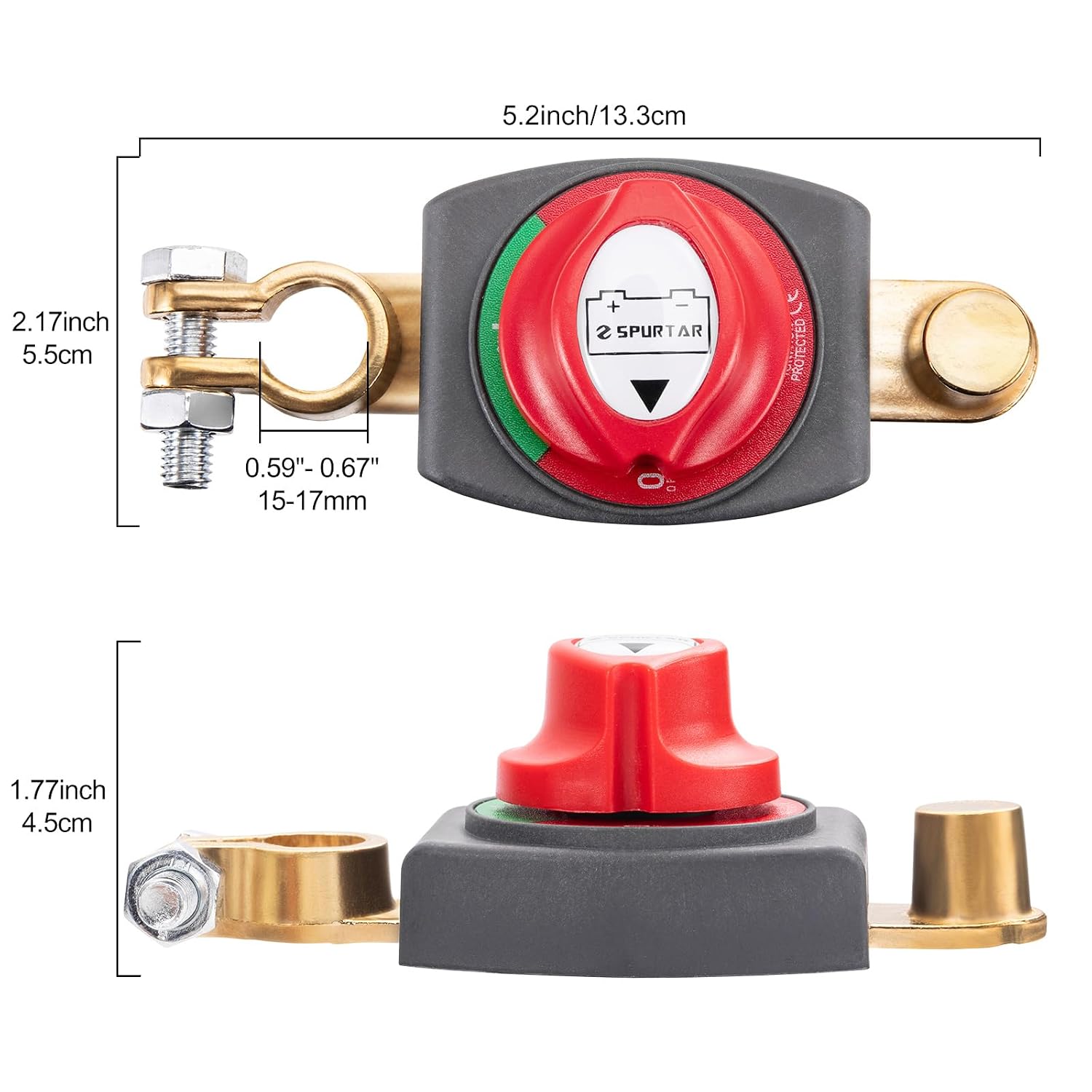
It’s also built around a top-post negative terminal fit: the terminal cone size is stated as 0.59" to 0.67". If your battery’s negative top terminal doesn’t match that range, it may not clamp or align as intended.
What you’ll notice day to day
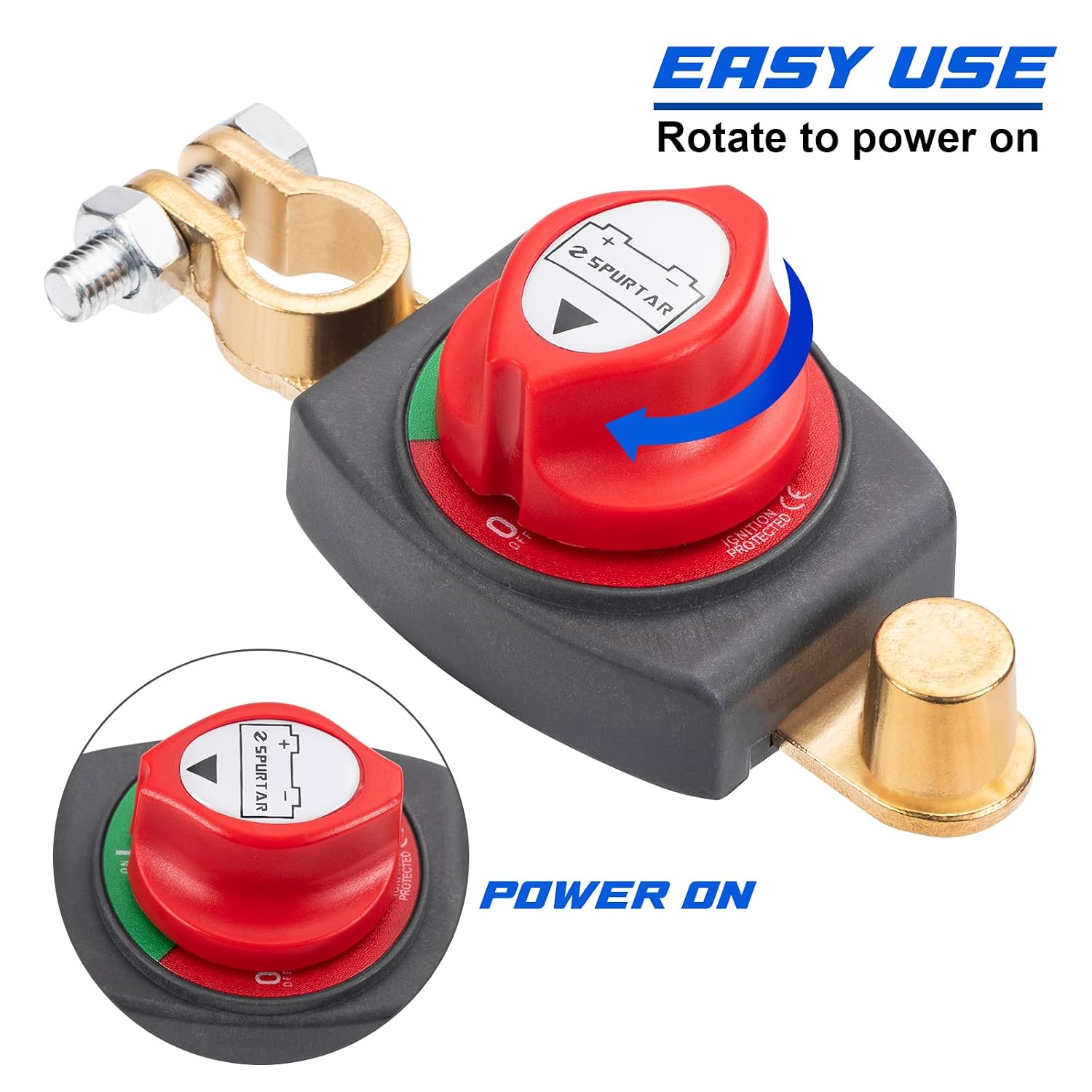
In use, the biggest difference is convenience and control. Instead of taking tools out every time you park up for days or weeks, you can isolate the battery by moving the switch to ON or OFF. For example, think of a marine setup: you return to the boat after a period ashore and flip the isolator to reduce the chance of unwanted battery drain from onboard electronics.
The switch face also makes it easy to confirm state at a glance. That sounds minor, but when you’re loading a trailer or doing checks before departure, a clear indicator matters more than you’d expect.
What stands out (and what might not)
The strongest point here is the current capacity on the spec sheet. Being rated for 275A continuous and up to 1000A momentary is the sort of headroom you generally look for when powering vehicles and equipment with higher-demand electrical loads.
The switch is also described as being made with corrosion-resistant copper for conductivity and durability. For many buyers, that’s one of the less glamorous but important considerations, especially if the switch will live in a tougher environment like a boat bay, a motor home bay, or a working vehicle.
However, keep in mind a limitation: it’s designed around the top-post negative terminal. If you’re expecting a solution for a different battery terminal type or placement, you may need a different isolator approach.
Where it makes sense to buy
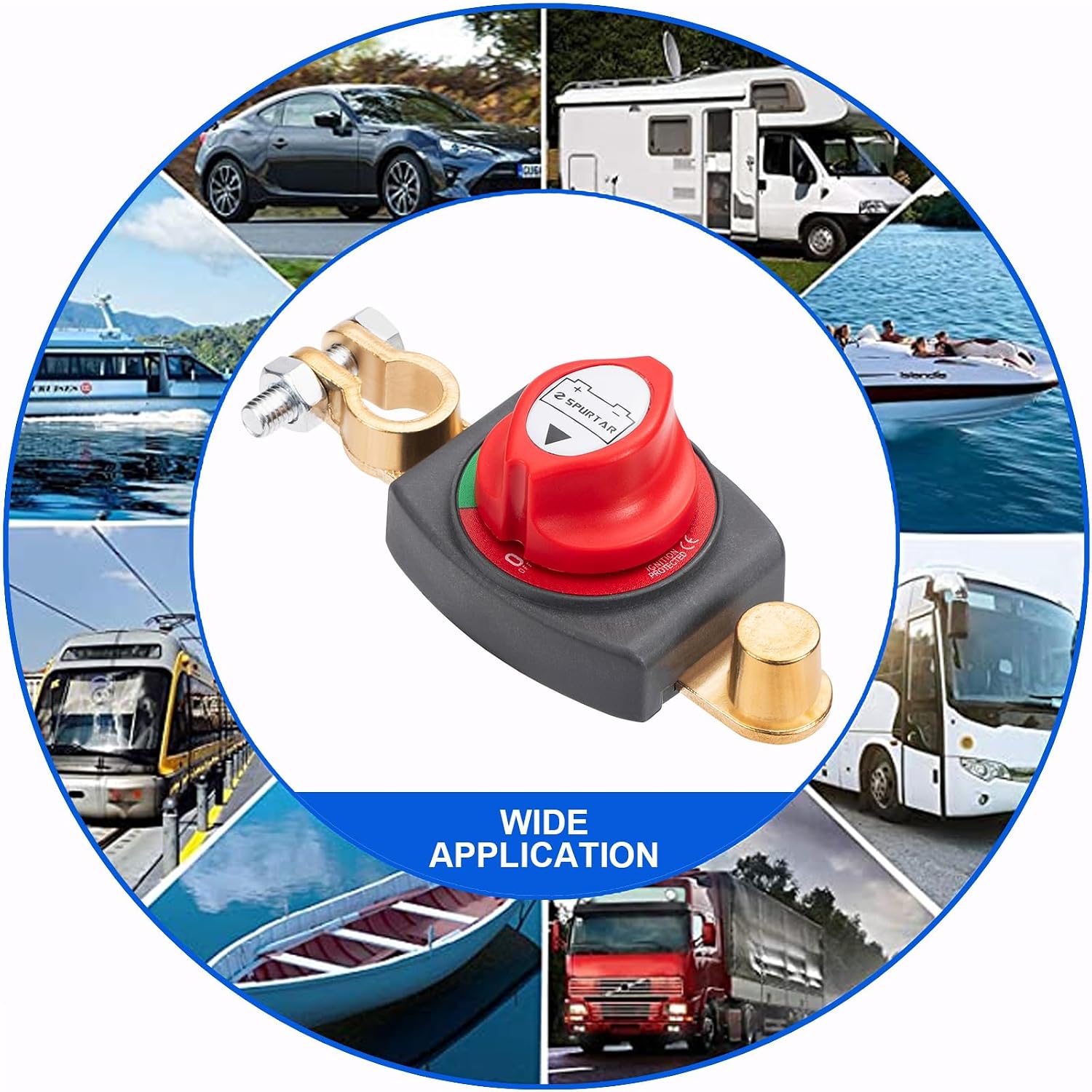
It’s a good fit if you want a straightforward battery disconnect solution for systems that may sit unused (or where you want an easy power-off routine). The listed applications include cars, boots, marine/boats, UTV/ATV, trailers, motorhomes, and other vehicle electrical systems.
It’s also worth considering if your priority is protecting batteries from deep discharge during storage. This is particularly relevant if you’ve had problems in the past where electronics or parasitic draws slowly drain the battery.
Care and installation notes to check before you commit
Because this product is built to connect to a specific terminal arrangement, it’s smart to double-check compatibility before ordering: confirm your battery uses the top-post negative terminal style and that the cone size falls within the stated range.
It’s also described as easy to install by connecting to the terminal and securing it for immediate use. Still, for best results you’ll want to follow the installation steps properly (wiring layout, securing, and ensuring a clean connection), because isolator switches are only as good as the installation.
Is it worth it?
Worth considering if you’re looking for a high-current battery isolator switch for a 12V–48V setup, especially where you want a quick ON/OFF cut-off for storage or downtime, and you know your battery has the correct top-post negative terminal configuration.
You may want to skip it if your battery terminal arrangement doesn’t match the top-post negative design, or if the cone size range doesn’t suit your terminal. In those cases, no amount of current rating will help, because the physical fit has to be right first.
Mini FAQ
What does a battery isolator switch do?
It lets you switch the battery circuit on or off, helping reduce the risk of deep discharge when the vehicle or equipment is stored or not in use.
Is this switch for 12V or 48V vehicles?
It’s specified for systems from 12V to 48V.
Which terminal does it connect to?
It’s designed for the top-post negative terminal, with a stated terminal cone range of 0.59" to 0.67".
How high is the current rating?
The listing states 275A continuous and up to 1000A momentary (figures given for DC 12V conditions).
Can it be used with other switches?
The description says it can be used on its own or in combination with other switches.