

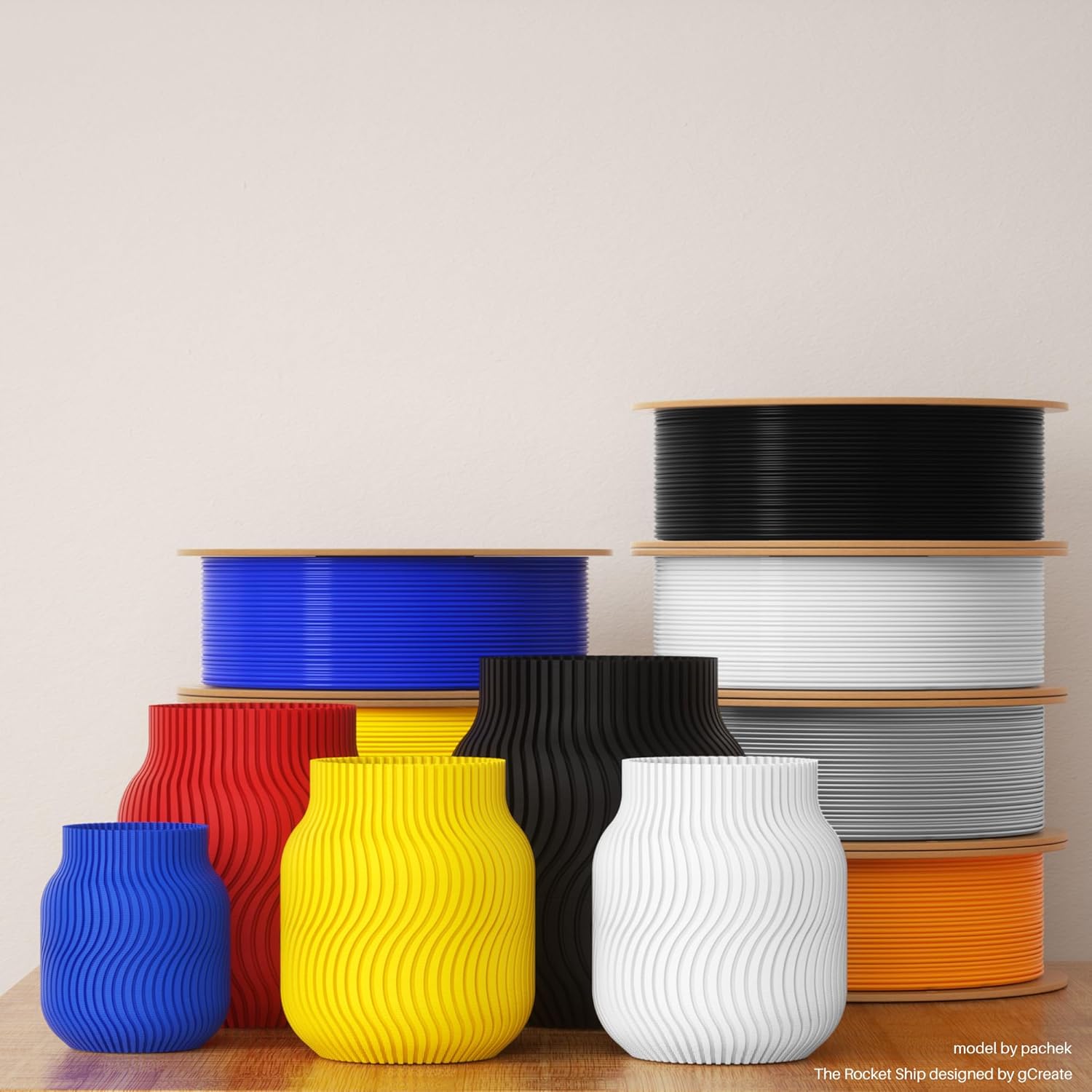
ELEGOO Rapid PETG Filament 1.75mm White (1kg) – High-speed FDM printing with improved flow
Reviews
Price
Product description
The essentials
If you’re chasing faster print times without switching away from FDM, ELEGOO’s Rapid PETG filament is built around a simple idea: improved melt flow so the material can keep up with higher speeds. On paper, it targets speeds described up to 600mm/s, aiming to help you complete projects quickly while still keeping an eye on dimensional accuracy (listed as ±0.02 mm).
It also leans into PETG’s practical advantages. Compared with PLA, the description points to less warping and lower shrinkage. There’s also a nod to “better light transmission”, which may matter if you’re printing parts where some light diffusion is useful.
One thing to be clear about: “up to” speeds don’t mean every printer will sustain 600mm/s cleanly in real-world conditions. Results depend quite a lot on your printer setup and tuning, so it’s worth treating the headline speed as a best-case target rather than a guaranteed daily number.
What to know before you buy
This is a PETG filament in 1.75mm diameter, supplied as 1kg on a cardboard spool. It’s positioned as suitable for both normal printers and high-speed machines, and the listing says it’s compatible with “most” 1.75mm FDM printers.
ELEGOO also describes its winding/handling process as a way to reduce tangles and snapping—there’s an emphasis on mechanical winding and manual inspection. That’s not the kind of feature you see in a photo, but it can be genuinely useful when you’re running long prints or switching filaments often.
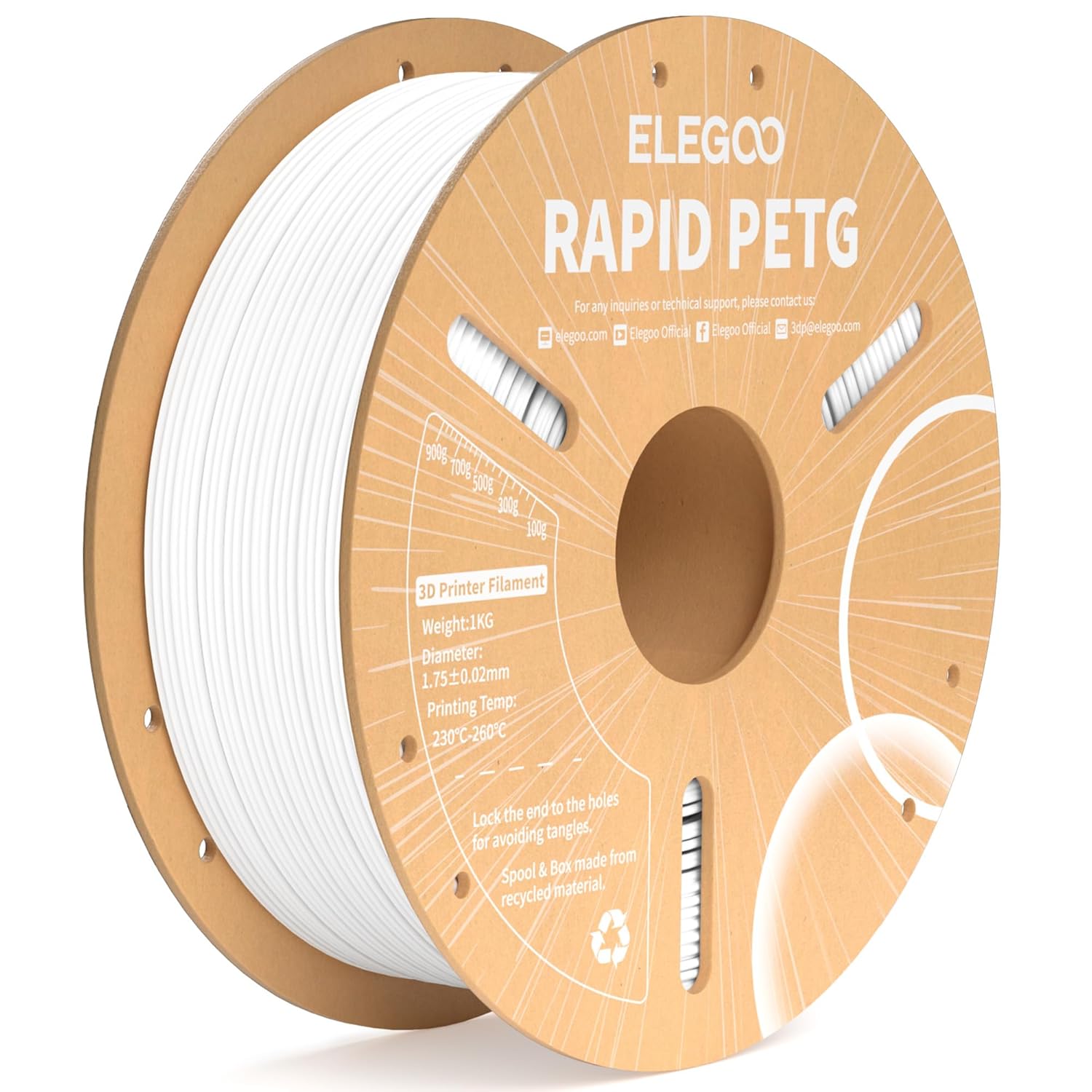
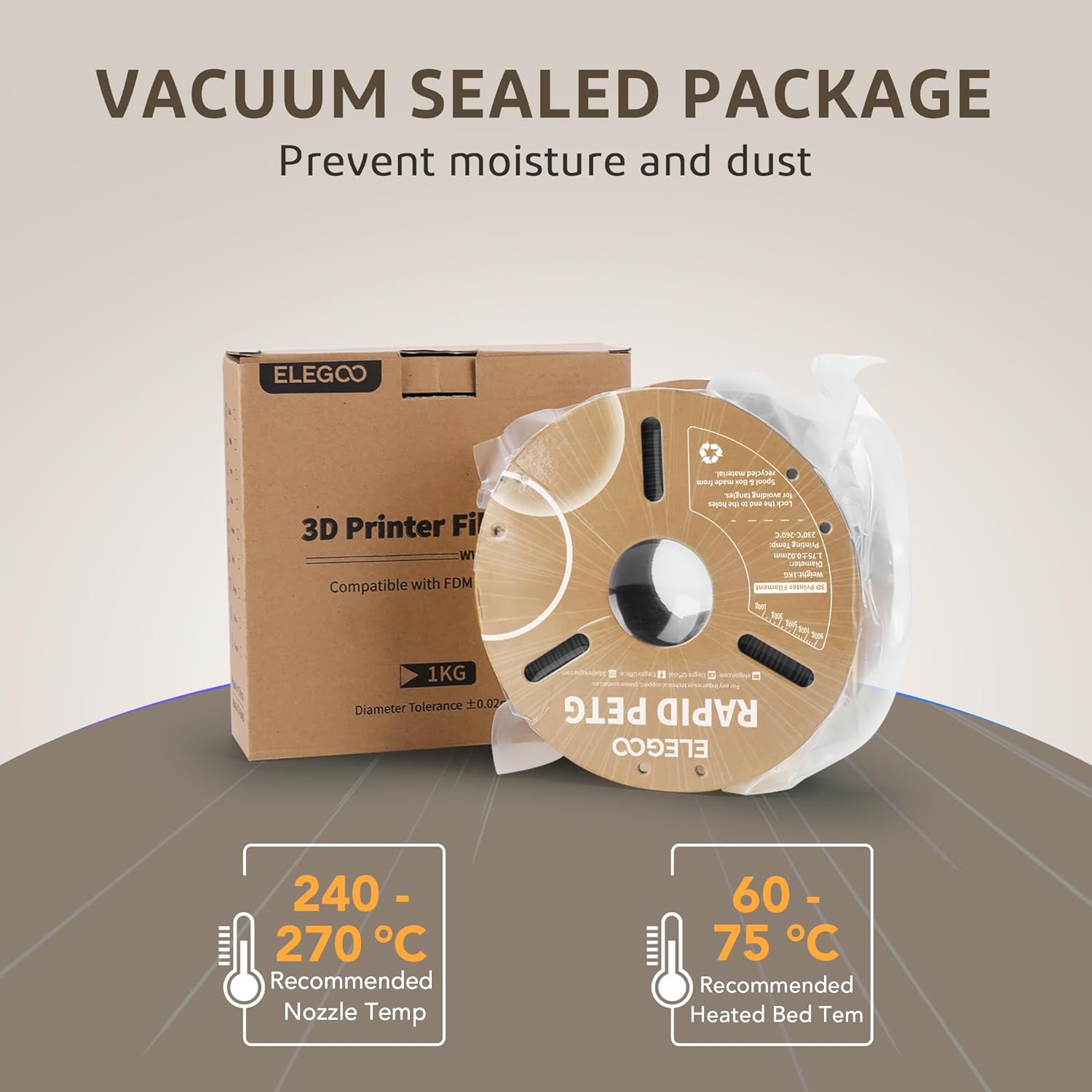
If you’re expecting a “grab-and-go” experience straight out of the box, the listing does include one important workflow reminder: use it as soon as possible after unboxing and dry it fully before reusing. PETG can be a bit sensitive to moisture like many filaments, so if you’ve ever had inconsistent extrusion, this is the bit to take seriously.
Key features and where it shines
The strongest reasons to consider this Rapid PETG are the mix of speed-focused melting behaviour and everyday usability.
Faster printing, smoother flow (the point of “Rapid”)
The description highlights rapid melting and smooth flow, with print speeds quoted from 30 to 600mm/s. If you tend to iterate designs or print practical items on a schedule, that speed range is the main draw.
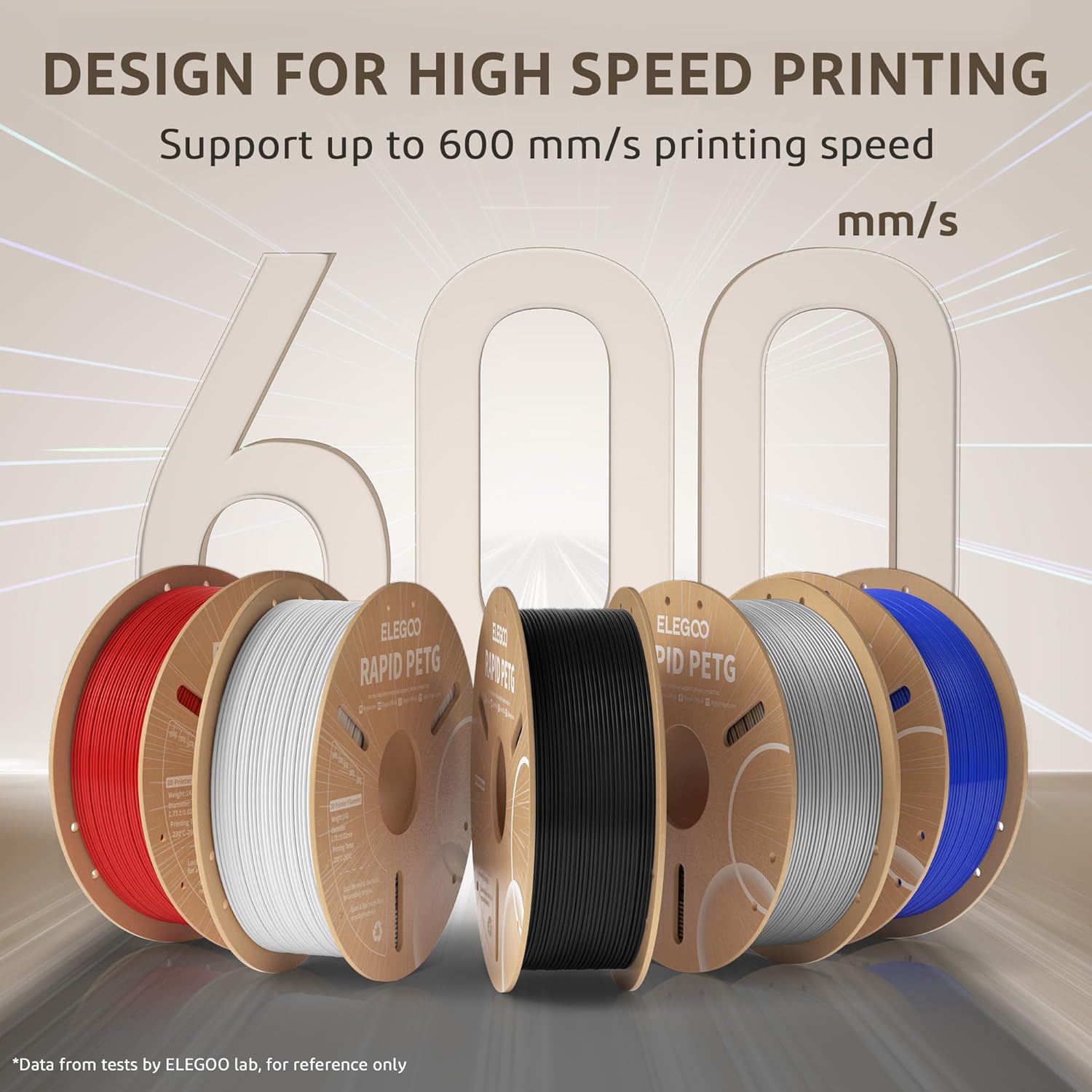
A practical example: say you’re printing a batch of small brackets or enclosures—when the filament behaves more predictably at higher travel moves, you spend less time waiting around for each run. That can be the difference between “I’ll print it later” and “I’ll print it today”.
Less deformation and lower shrinkage than PLA
For functional parts, warping and shrinkage are often what ruin a print. The listing claims less deformation and low shrinkage versus PLA, which is encouraging if you’ve had PLA struggle with flat surfaces, corners, or temperature swings.
Better light transmission (for diffusion-type parts)
The “better transmission of light” angle is fairly specific. It suggests this PETG is meant for pieces that rely on a diffusion effect rather than purely opaque displays. If your projects include lighting covers, diffuser panels, or anything where light should pass through more evenly, it’s a reason to pick PETG over more typical plastics.
Strength and impact resistance
The filament is described as combining “best features” of ABS and PLA, with resistance described as similar to ABS, plus durability, flexibility, impact resistance, and being odour-free. That profile is usually what people want for home/utility items—things that need to handle knocks rather than just look good.
The limits to keep in mind
It’s not perfect for every situation.

For instance, the listing positions this as easy to print “like PLA”, but PETG generally still behaves differently from PLA in terms of extrusion settings and cooling. If you’re moving from very basic PLA workflows, you may still need to dial in temperatures, fan settings, and retraction to avoid stringing or poor layer bonding.
Also, while the accuracy is stated as ±0.02 mm, that’s not the same as guaranteeing every model will hit that level. Small parts, complex geometry, and printer calibration can all influence final results.
Finally, speed claims are the kind of thing that can look amazing until you hit real-world constraints—part cooling, firmware limits, and mechanical stability. If you print mostly slow, delicate, or highly detailed miniatures, you might not benefit as much from a filament marketed for high-speed performance.

Compatibility and practical setup notes
The listing states it’s suitable for “most” FDM 1.75mm printers and explicitly mentions several models/series (including Neptune 4, Neptune 4 Pro/Plus/Max, the K1 series, Ender 3 V2, Kobra 2 series, and M5/M5C). That’s helpful if you’re shopping within that ecosystem.
Still, the safe way to think about compatibility is simple: as long as your printer uses 1.75mm FDM-compatible filament and your setup can run PETG reliably, this should fit. If you’re unsure whether your machine is tuned for PETG (or whether your profile is set up well), it’s worth reviewing your printer’s PETG settings first rather than assuming it will print flawlessly.
Storage is another practical point. The guidance “use it as soon as possible after unboxing and dry it completely before reusing” suggests you should plan for proper filament care if the spool sits around.
Pros and cons (quick decision lens)
This Rapid PETG has a clear focus: high-speed FDM printing with smoother flow, less deformation than PLA, and a profile aimed at functional, everyday parts.
You’ll likely find it worthwhile if you want: - High-speed capability up to the 600mm/s figure (within reason for your printer) - Better warping/shrinkage behaviour than PLA, on paper - PETG strength with flexibility and impact resistance - Light diffusion-type prints, where “light transmission” matters
You may want to skip it if: - You only ever print at low speeds and don’t care about throughput - You’re after the absolute simplest PLA-like workflow without any PETG-specific tweaking - You can’t commit to drying/handling practices once opened
What’s it like in day-to-day use?
The listing strongly implies fewer filament issues thanks to careful winding and manual inspection. In practice, that’s the sort of thing you notice when:
- you start a new spool and it feeds cleanly without constant pauses for tangles
- you run longer prints and don’t get that annoying “snap and stop” moment from a poorly wound roll
- you switch materials frequently and want less hassle between jobs
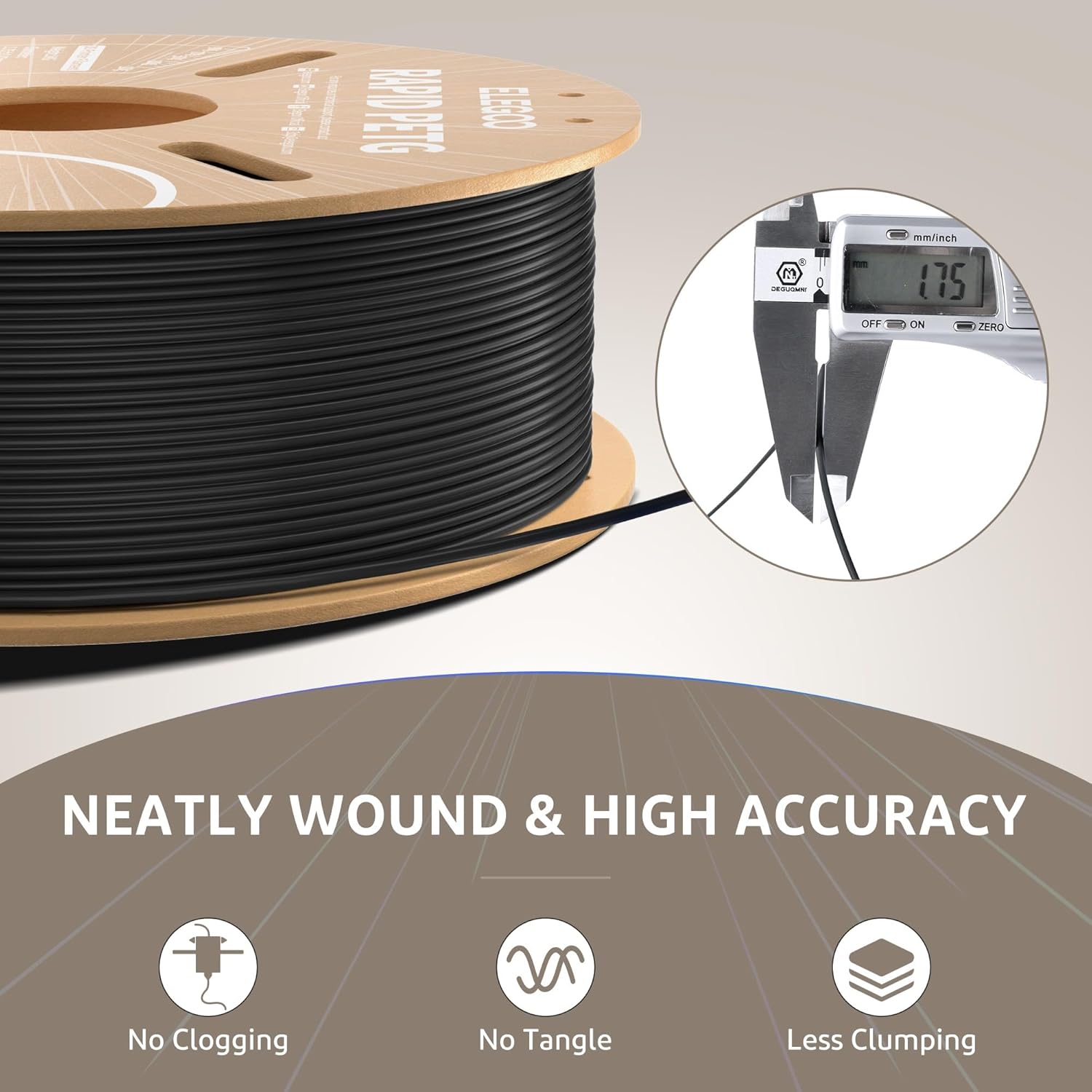
Combine that with the “rapid” melt-flow promise and you get a filament aimed at people who print regularly and want less waiting.
Buying verdict
Worth considering if you’re on a 1.75mm FDM printer and you specifically want a PETG option that’s marketed for high-speed printing, smoother flow, and better resistance to deformation than PLA. It also makes sense if your projects include parts that benefit from light diffusion.
It might not be the best choice if you’re only printing slow, very fine, or highly delicate designs where speed advantages won’t matter, or if you don’t want to think about PETG handling (drying and storage) once the spool is opened.
Mini FAQ
How fast can this filament print?
The listing quotes a print speed range from 30 to 600mm/s. In practice, your results will depend on your printer and tuning, so treat 600mm/s as a maximum target rather than a guaranteed setting.
Is it suitable for 1.75mm FDM printers?
Yes—it's described as fitting most 1.75mm FDM printers and it also mentions several specific model series. If your printer uses 1.75mm filament, it should be within the intended use.
Does PETG deform more than PLA?
The description claims PETG (rapid PETG specifically) has less deformation and low shrinkage compared with PLA, which is a positive if you’ve had warping issues with PLA.
Does it need drying?
The listing advises drying it fully before using it again, and to use it as soon as possible after unboxing. If you plan to store it, it’s wise to follow that guidance.
Is this for light-diffusion prints?
The listing says it has good light transmission. If you’re printing parts where diffusion matters (rather than purely opaque pieces), that’s where it’s meant to fit.