

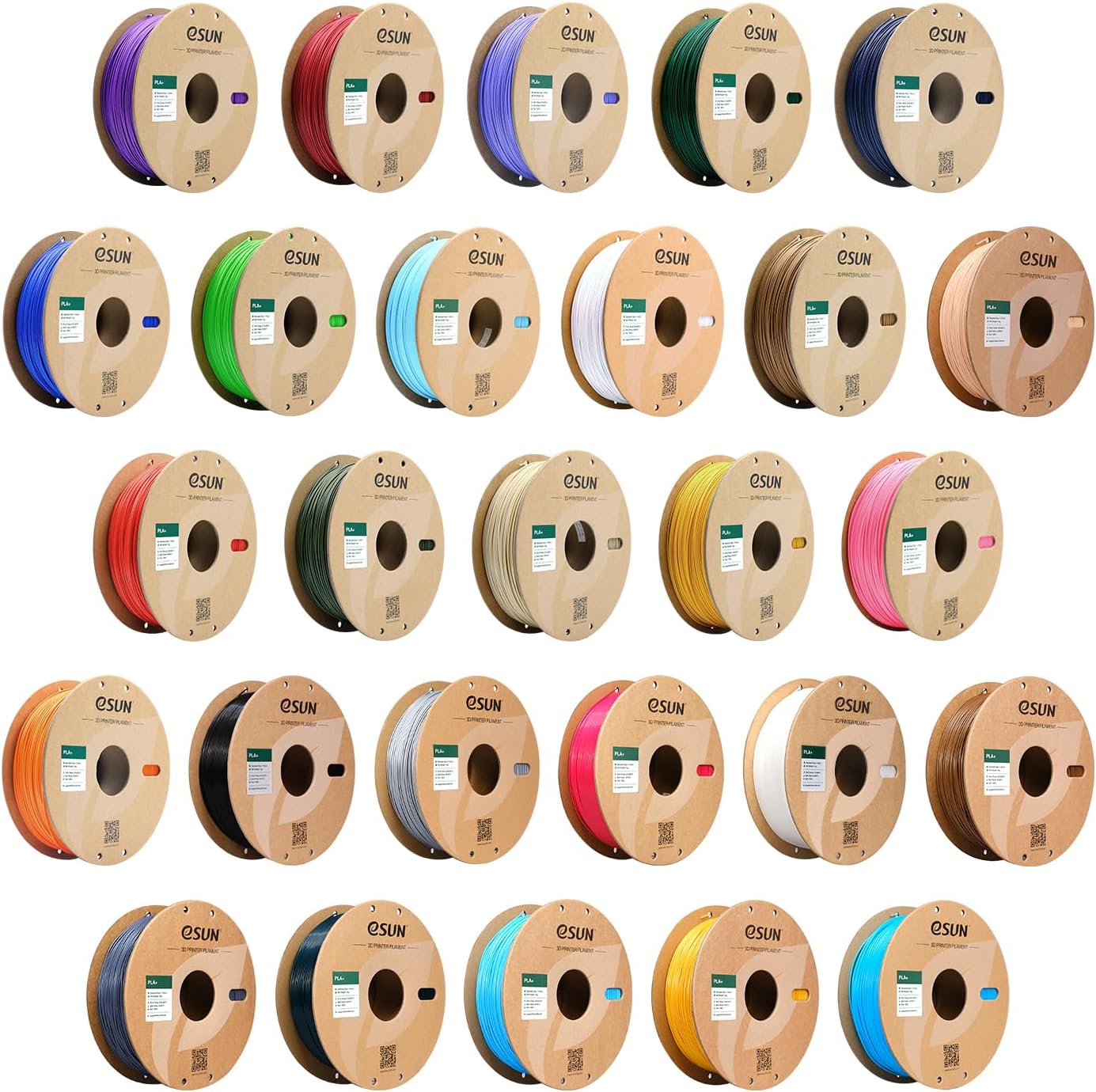
eSUN PLA+ Filament 1.75mm (Enhanced Toughness) – Silver, 1kg spool
Reviews
Price
Product description
What it is and why people buy it
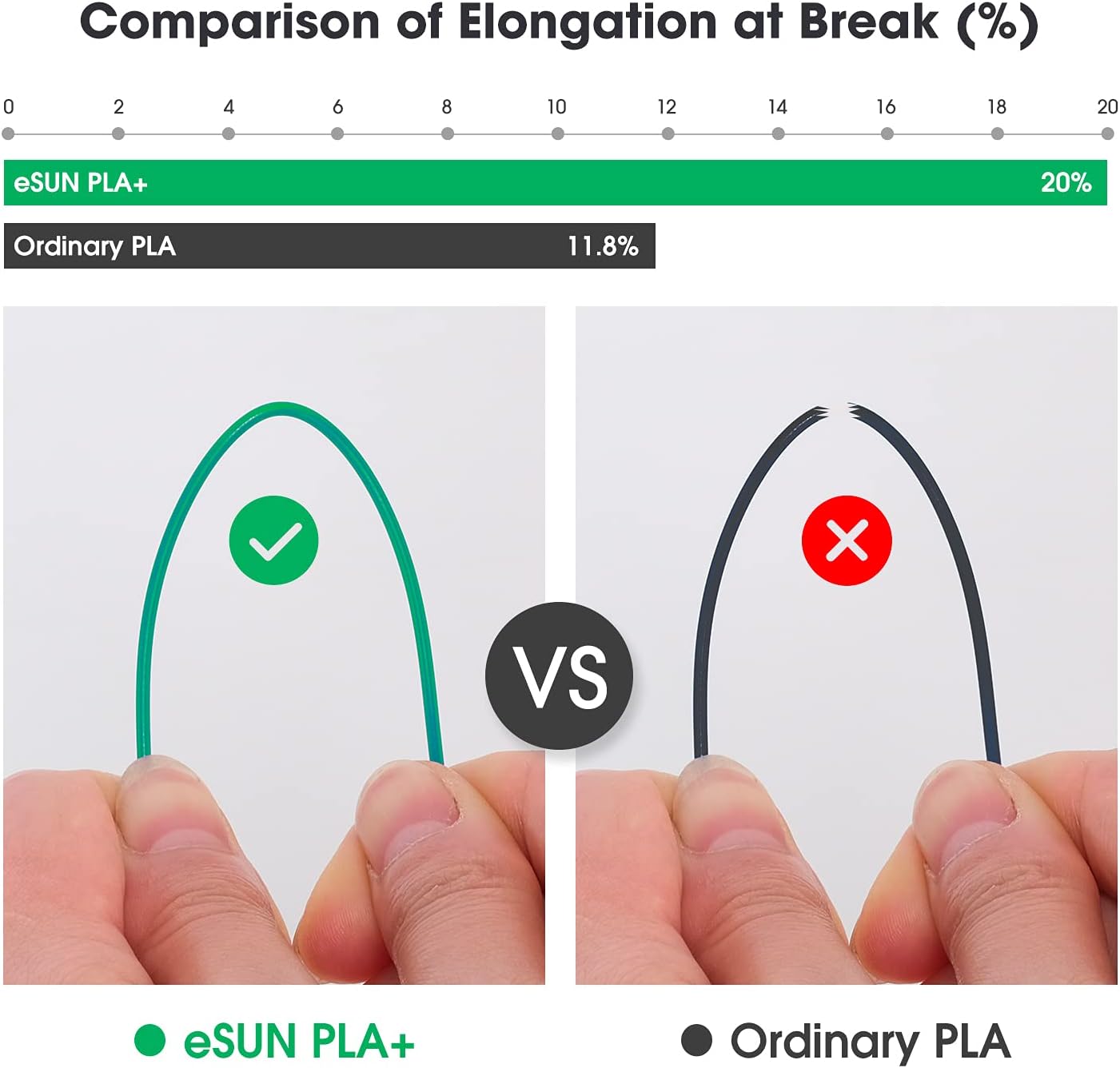
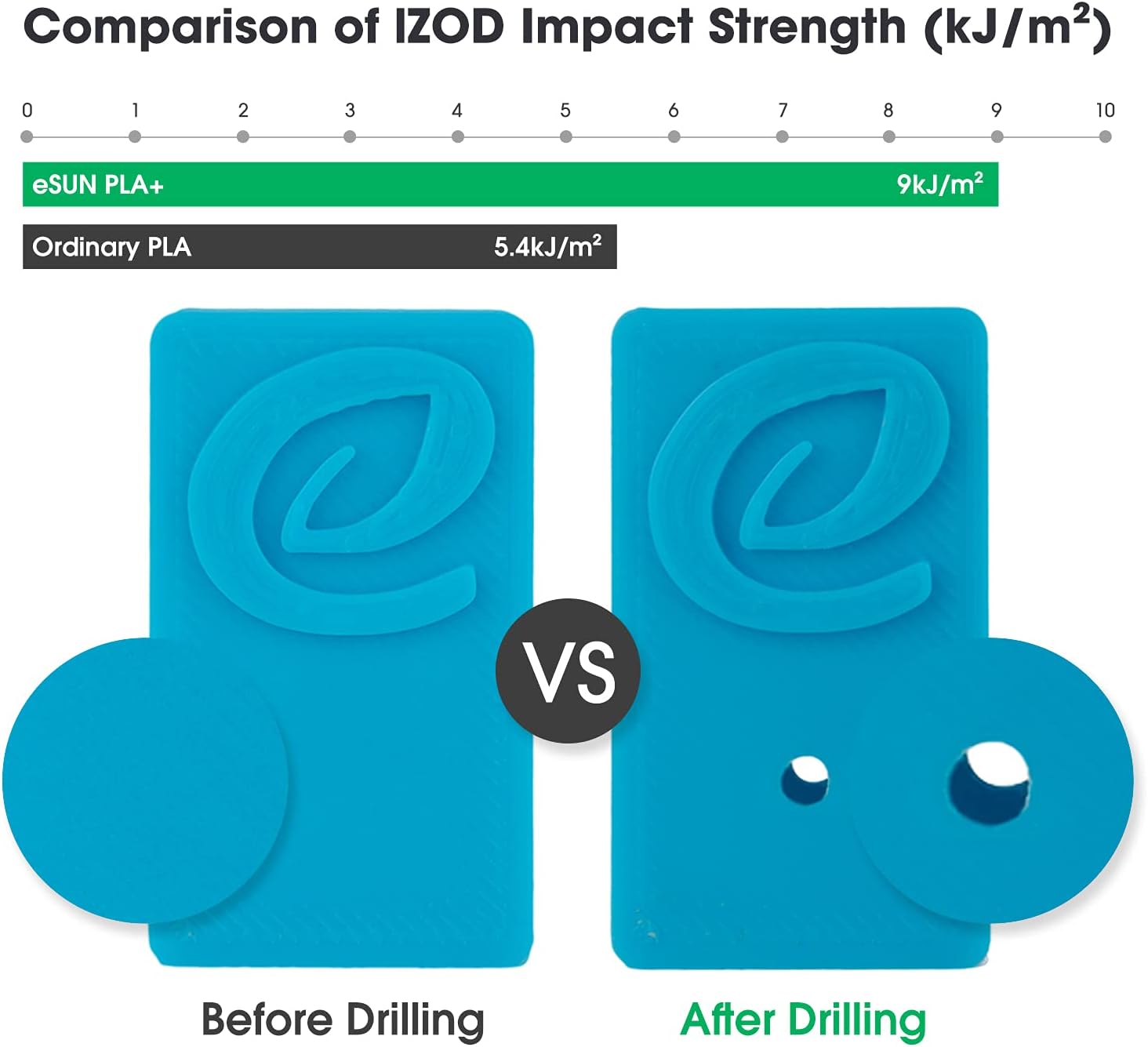
eSUN PLA+ is a 1.75mm PLA filament designed as an “enhanced” take on standard PLA. The pitch, on paper, is simple: better strength and improved toughness so your prints are less likely to snap compared with regular PLA. That matters if you’re printing practical pieces rather than just display models—think functional brackets, housings, and cosplay details that get handled.
At the same time, it keeps the familiar PLA-style workflow. It’s positioned as an option that should remain relatively straightforward to print, while aiming to reduce common frustrations like warping, cracking, and weak layer bonding. If you’ve had prints split along layer lines before, this is one of the reasons PLA+ exists—and why the “better toughness” angle is worth paying attention to.
There are also process-focused claims that can make day-to-day printing smoother: it’s described as meeting high-speed printer demands, with lower shrinkage and fewer defects like bubbles or heavy stringing (though of course real-world results depend on your printer setup and tuning).
The essentials (what to expect)
PLA+ here is meant to sit between “easy PLA” and “more demanding functional prints”. The filament is described as having higher strength and better toughness, not easy to break, and with good layer bonding performance aimed at functional parts.
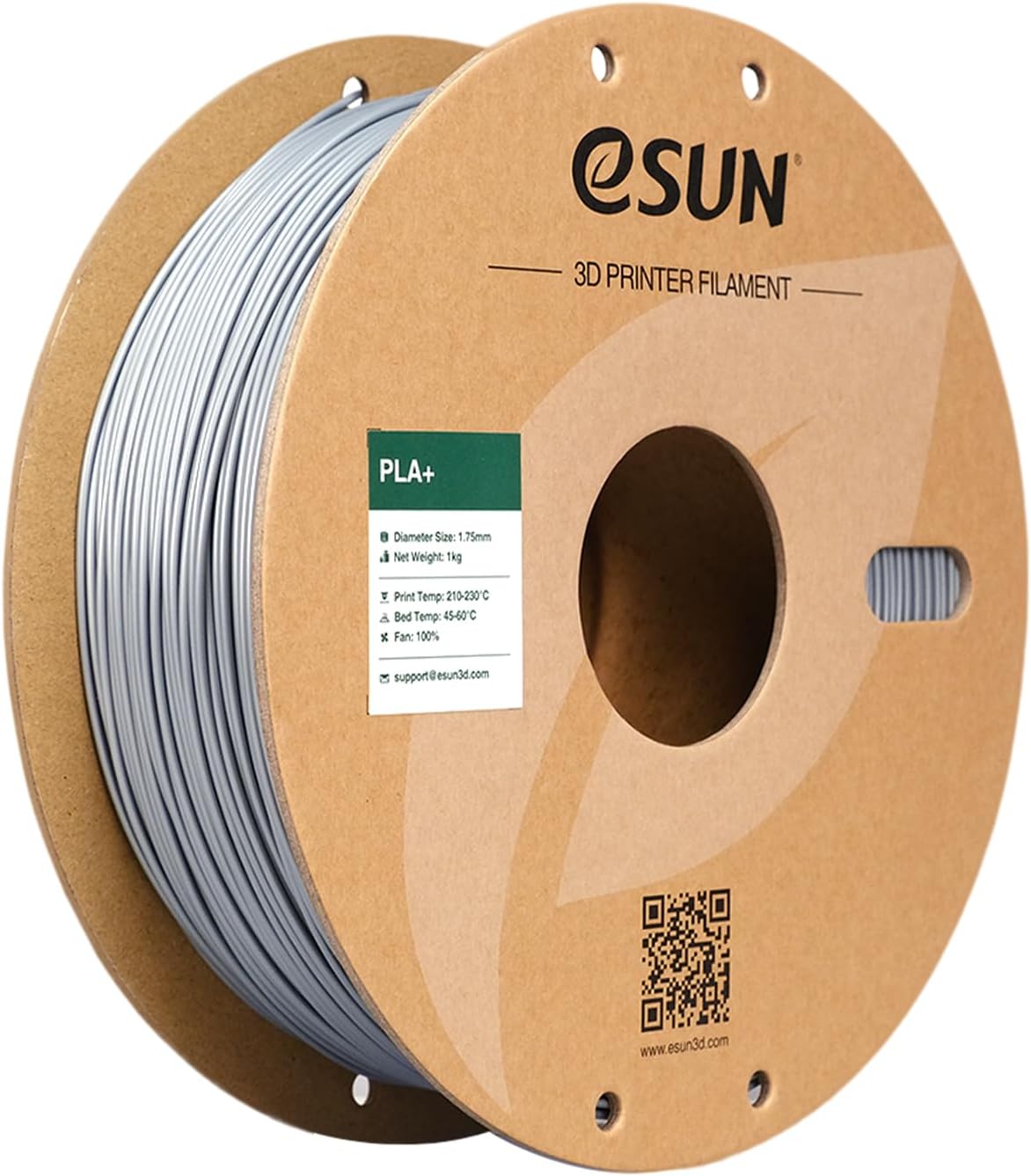
eSUN also highlights dimensional consistency. A stated dimensional tolerance of +/- 0.03mm is included in the product information, along with the idea that more precise specification helps with consistent feeding and stable prints. In practice, this is the sort of thing that can reduce intermittent feeding issues—especially if your printer is sensitive to filament diameter variation.
On top of that, the spool is said to be tangle-free and designed to avoid plugging: full 1kg reel, tightly wound, with claims of no overlap or tangling. For many people, these “boring” details are exactly what separates a filament that’s easy to live with from one that wastes your time mid-job.
What stands out in use
The most convincing part of this PLA+ is the focus on printability plus tougher results. You’re not just buying a filament that promises strength, you’re also getting a set of claims around printing precision and performance at speed.
For a micro example: if you’re printing a small functional organiser piece or a costume component that needs to survive being flexed slightly during wear, the improved toughness and layer bonding focus is the reason you’d choose PLA+ over plain PLA. If you’ve ever used standard PLA and found it too brittle once the print is under stress, this is the direction this filament is aimed at.
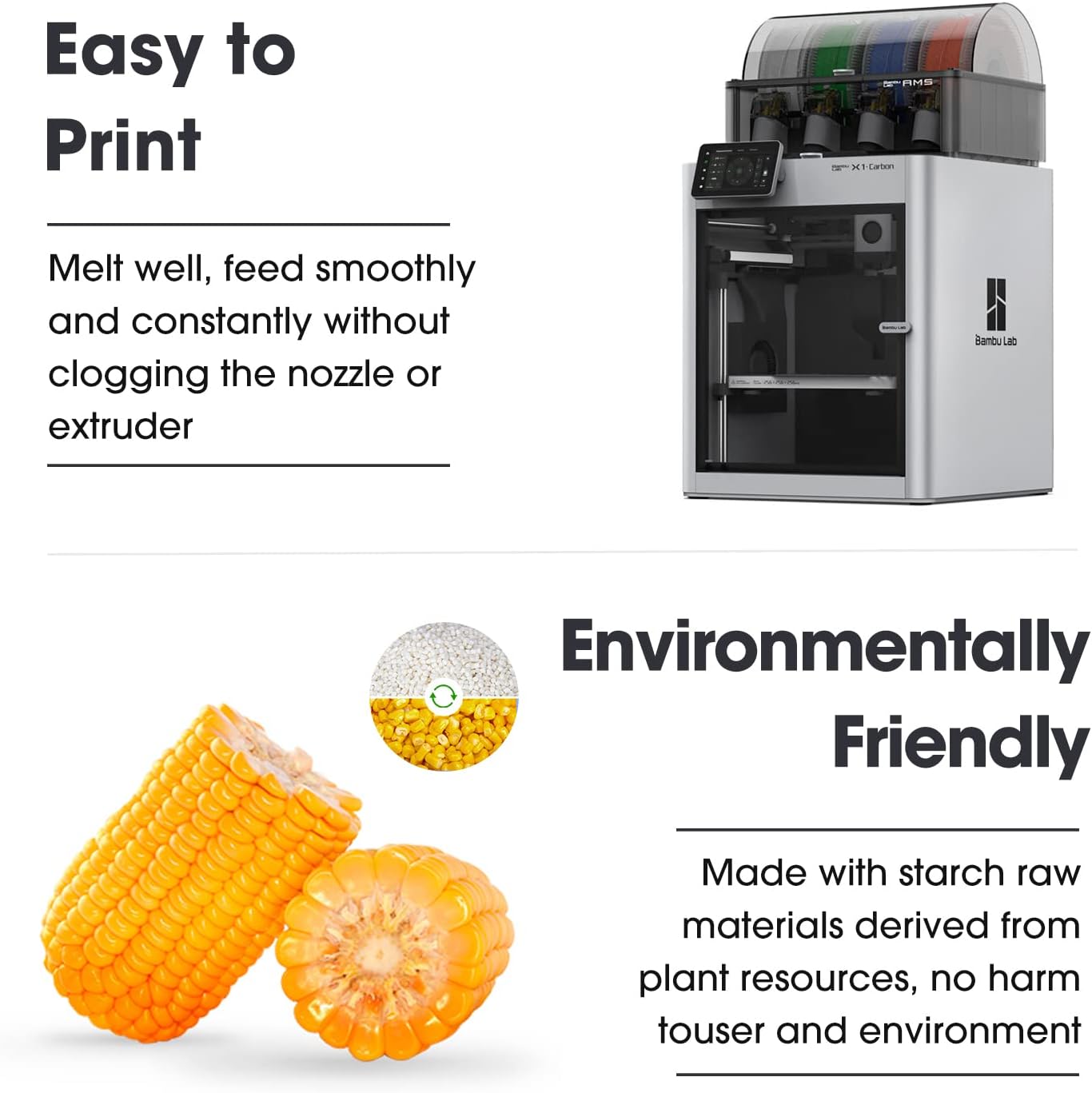
There’s also an emphasis on smoother extrusion. It’s described as melting well, feeding smoothly and constantly, and not clogging the nozzle or extruder—again, these are helpful claims for anyone who has had a filament run get ruined by partial blockages or inconsistent flow.
That said, keep expectations realistic: while “less stringing” and “very high printing successful rate” are mentioned, no filament can guarantee perfect results in every environment. Drying conditions, temperature choices, and how well you’ve calibrated your printer still play a big role.
Key features you can actually weigh up
Printing speed and layer bonding
The information says PLA+ meets demands for high-speed printers and keeps outstanding performance at high speeds, while also keeping PLA advantages such as easy printing, low shrinkage, and no deformation/no cracking (as described). It also mentions good layer bonding performance, which is relevant if you’re printing parts that need strength between layers, not just surface appearance.
Dimensional accuracy and consistency
A dimensional tolerance of +/- 0.03mm is stated. The practical value is fewer surprises: more consistent feeding and stable prints are the intended benefits of tighter tolerance. If you’ve had issues like inconsistent extrusion or skipped steps that can sometimes be linked to filament irregularities, this is the kind of spec that supports that reassurance.
Tangle-free spool and smoother feeding
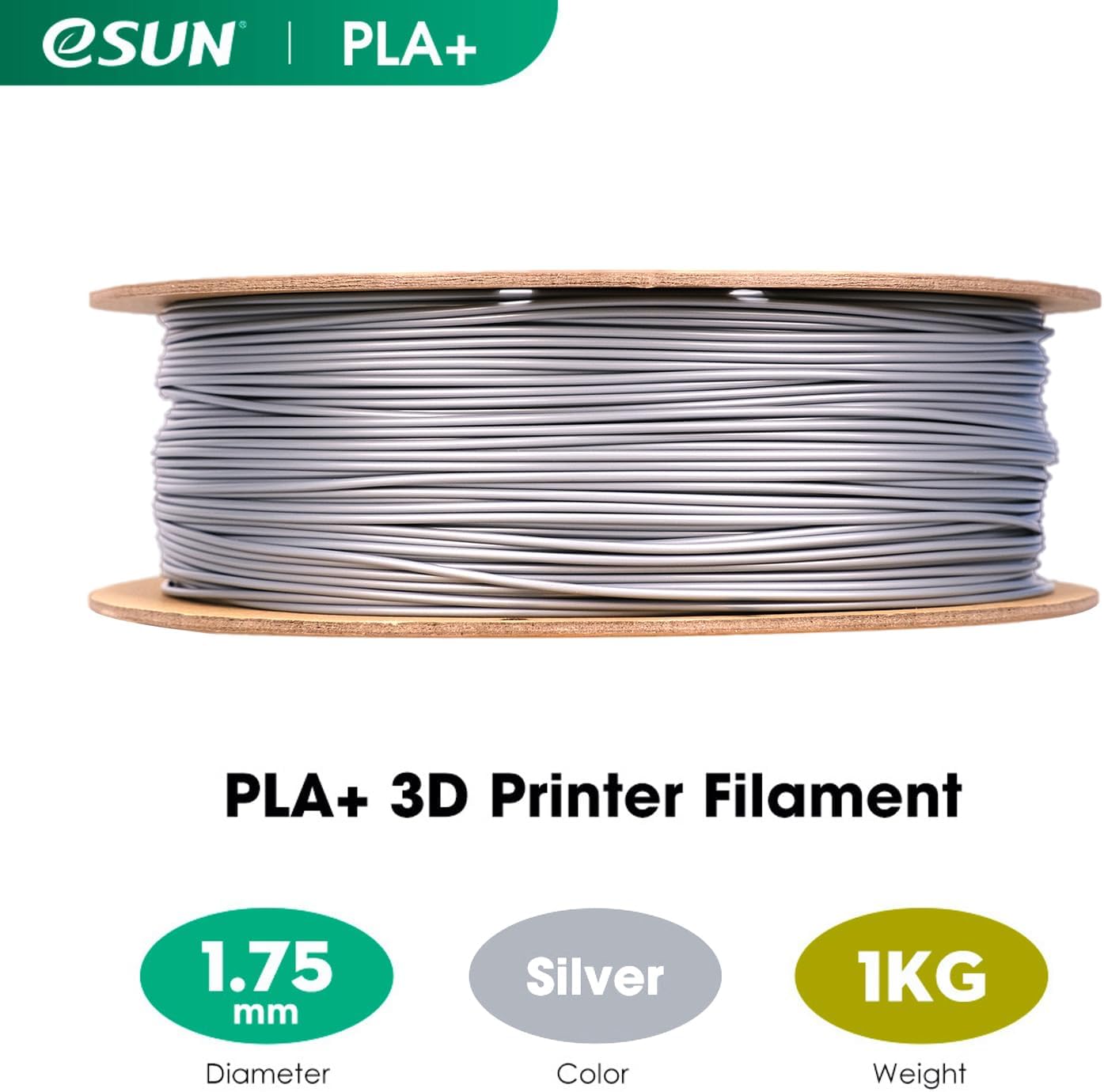
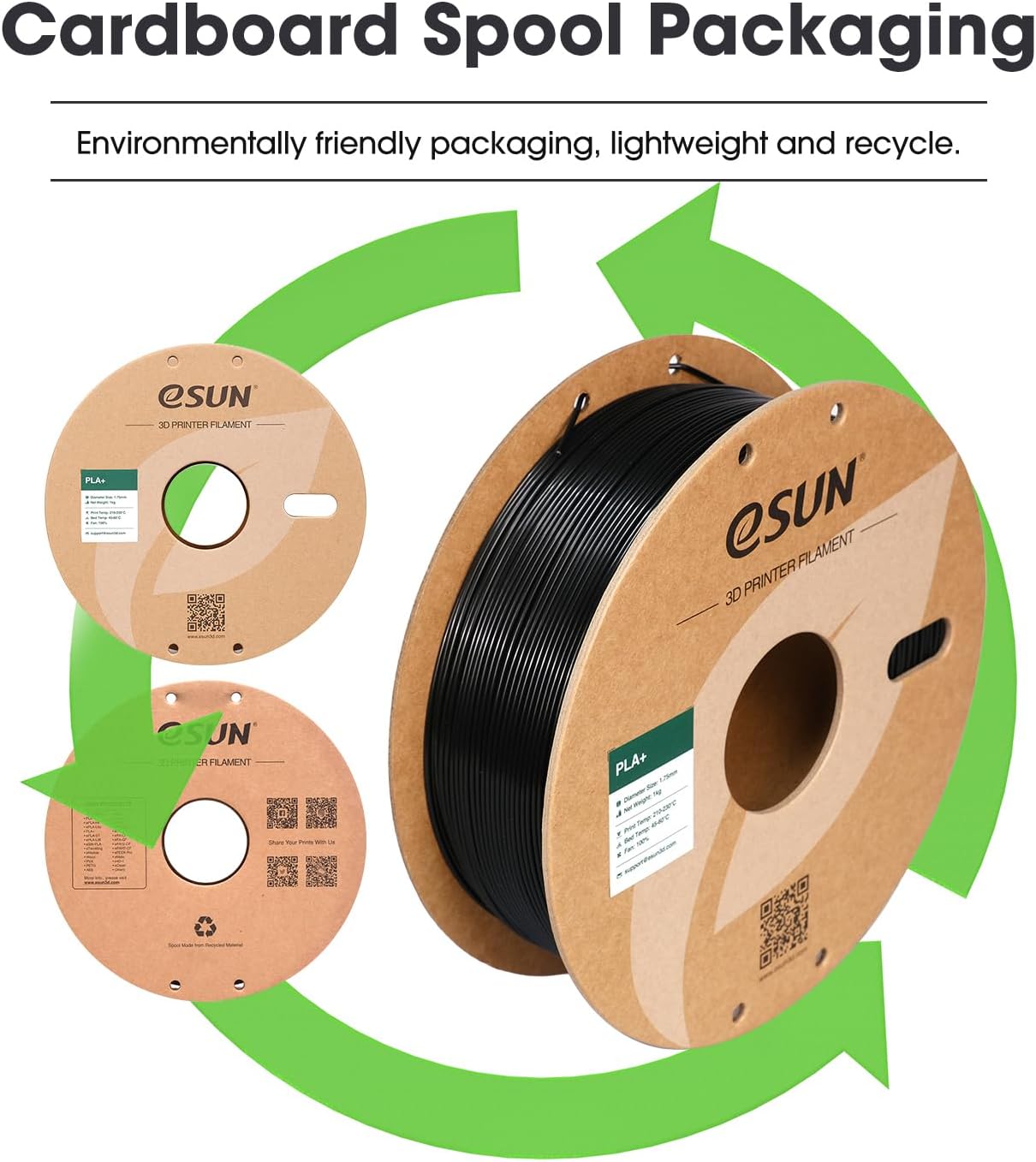
The reel is described as tangle free, with total length stated as 340–350m. It’s also described as perfect roundness and tight diameter tolerance, with good winding that doesn’t overlap or tangle. For many users, this matters more than it sounds—especially if you print often and don’t want to babysit the spool.
Compatibility across common FDM printers
The product information claims broad compatibility with most FDM 3D printers, listing multiple popular models/lines including Bambu Lab X1/X1C, Creality K1/K1 MAX, AnkerMake M5, Prusa, MakerBot, UltiMaker, MK3, Ender 3, Flashforge, Raise3D, FLSUN V400, and Voron 2.4. That suggests it’s aimed at the general FDM crowd rather than a narrow niche.
Still, it’s worth noting the listing is “compatible with” in a general sense, exact settings (temperatures/speeds) are never guaranteed by filament alone.
What it’s good for (and what to double-check)
This PLA+ is framed for printing functional parts with higher toughness, and it’s described for uses ranging from machinery and electronic appliances to automobiles, decorations, and cosplay.
It makes most sense if you: - want PLA ease-of-use, but with improved toughness and strength - care about dimensional accuracy to help achieve consistent prints - print at speed (since it’s specifically described as meeting high-speed printer demands) - prefer a filament that’s aimed at smooth feeding, reduced stringing, and fewer interruptions
You may want to be more cautious if you: - need something that’s fully optimised for a specific engineering-grade requirement (PLA+ is still PLA-family, and the promise is “better toughness”, not a guarantee of industrial performance) - often print at temperatures/conditions that require very specific filament behaviour—because even with claimed compatibility, results can still depend heavily on your setup - are expecting a “set-and-forget” experience with no tuning at all (low shrinkage and fewer defects are helpful, but they don’t remove the need for basic calibration)
Before you buy, it’s sensible to check: - your printer is set up for 1.75mm filament - your typical print type: if you’re printing something that needs to flex or resist snapping, PLA+ is the direction here - whether you can support reliable feeding (especially if your machine is picky)
Tech specs
- Name: eSUN PLA+ Filament 1.75mm, Enhanced Toughness 3D Printer Filament PLA Plus
- Type: PLA+
- Format: Filament
- Size: 1.75mm
- Material: PLA+
- Colour: Silver
- Capacity: 1kg spool (2.2 lbs)
- Dimensions: Dimensional tolerance +/- 0.03mm
In the box (what you get)
A 1kg spool of eSUN PLA+ filament in silver. The product information also states total length as 340–350m.
Should you buy it?
Final verdict
It’s a solid choice if you want a 1.75mm PLA+ filament that focuses on tougher prints, good layer bonding, and printability at speed, with the added reassurance of a stated dimensional tolerance of +/- 0.03mm and a tangle-free spool design.
You might want to skip it if you’re chasing maximum performance for harsh, demanding engineering use, or if you know you need a filament with very specific performance characteristics that this listing doesn’t clearly cover.
Mini FAQ
Is eSUN PLA+ easy to print?
It’s described as easy to print, with low shrinkage and an aim to avoid issues like cracking and deformation. That said, results still depend on your printer settings.
Does the filament reduce stringing?
The information says it has less stringing. It’s not a guarantee, but it’s a relevant signal if stringing has been a nuisance for you.
What printers is it compatible with?
The listing claims compatibility with most FDM 3D printers and includes a range of popular models/lines such as Bambu Lab X1/X1C, Creality K1/K1 MAX, AnkerMake M5, Prusa, MakerBot, UltiMaker, Ender 3, Flashforge, Raise3D, FLSUN V400, and Voron 2.4.
What’s the point of PLA+ over regular PLA?
The key difference here is enhanced toughness and higher strength, aiming to make prints less likely to break while still keeping PLA-like advantages such as low shrinkage and easier printing.
Does the spool tangle?
The product info specifically describes it as tangle free, with good winding that should prevent overlap or tangling during use.