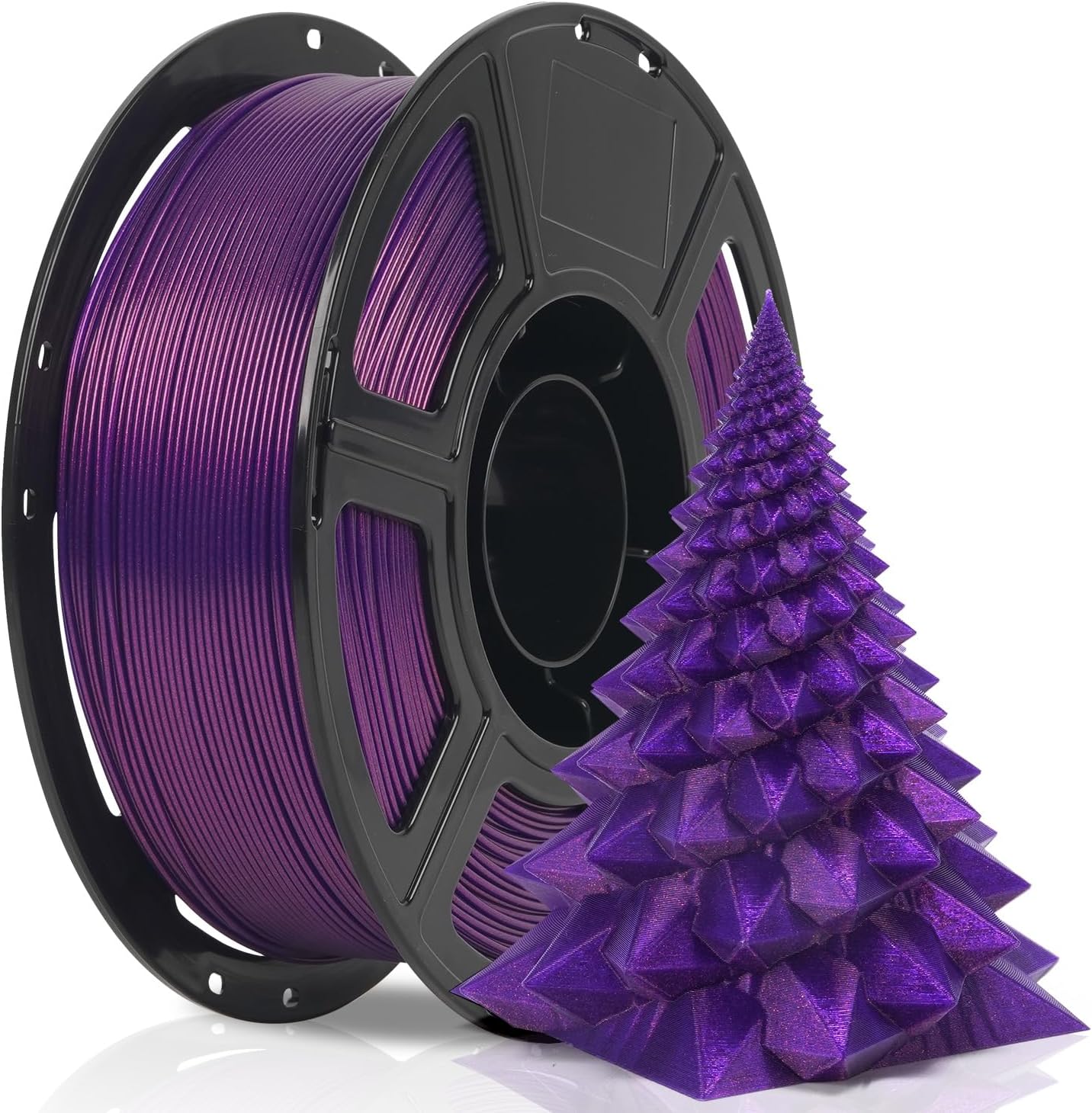
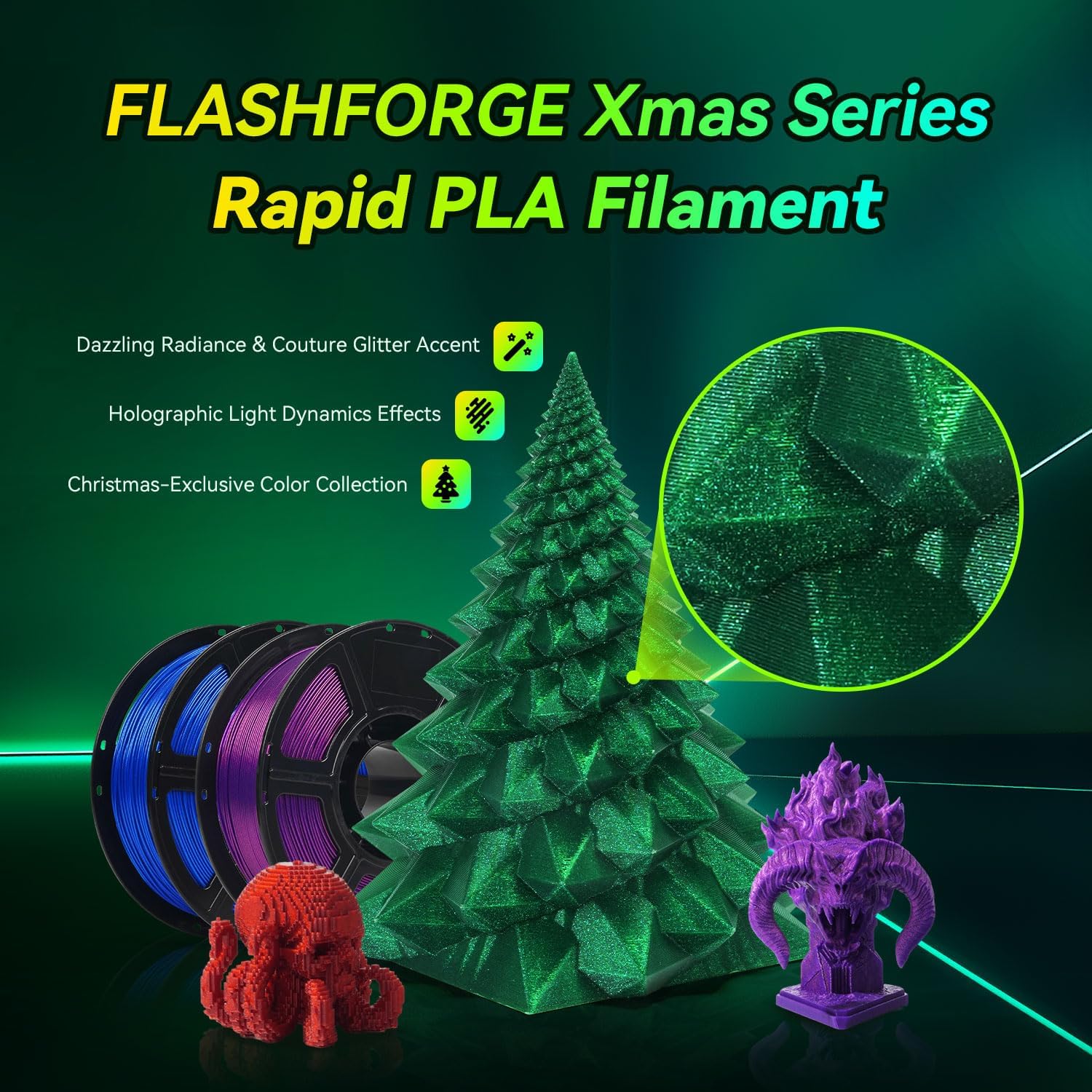
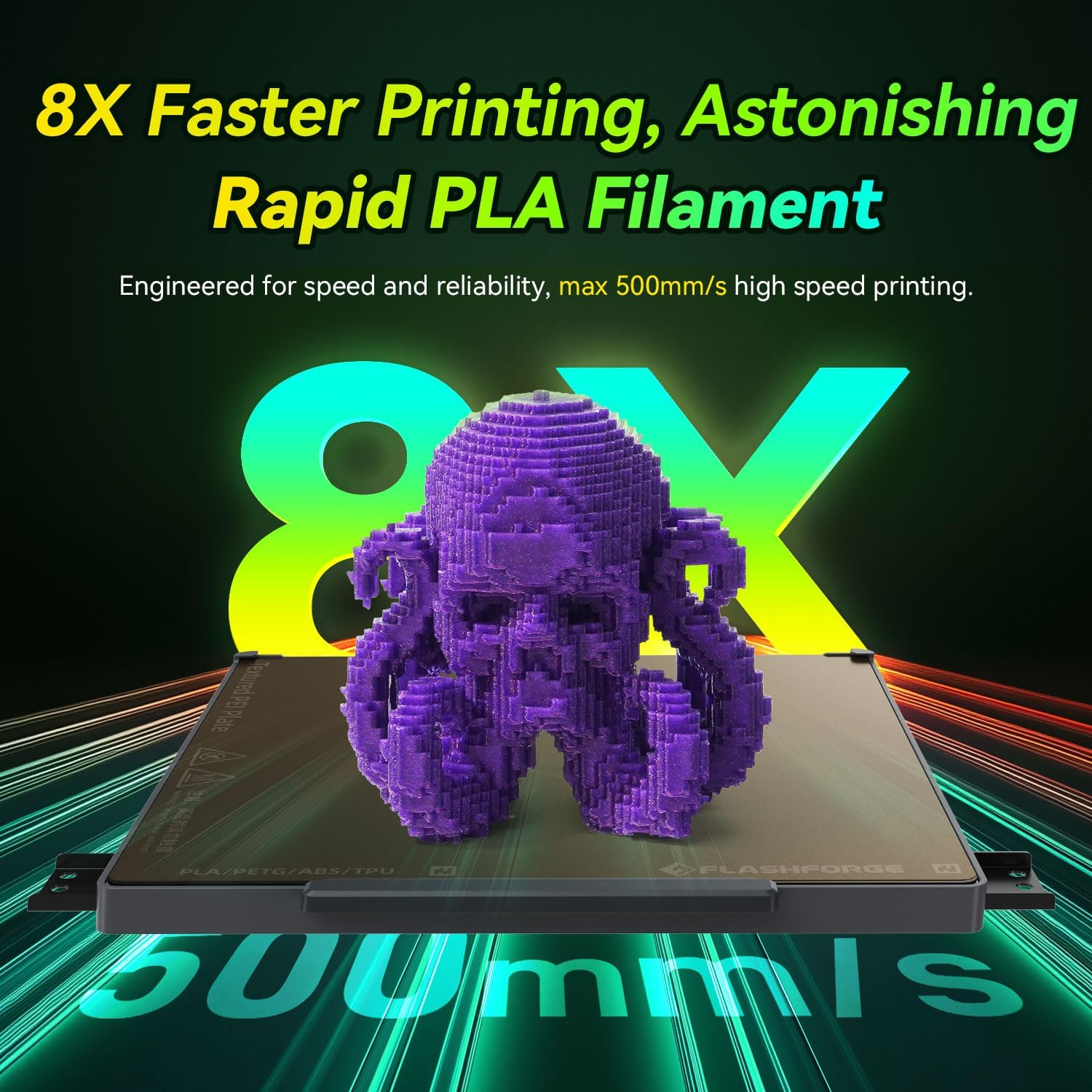
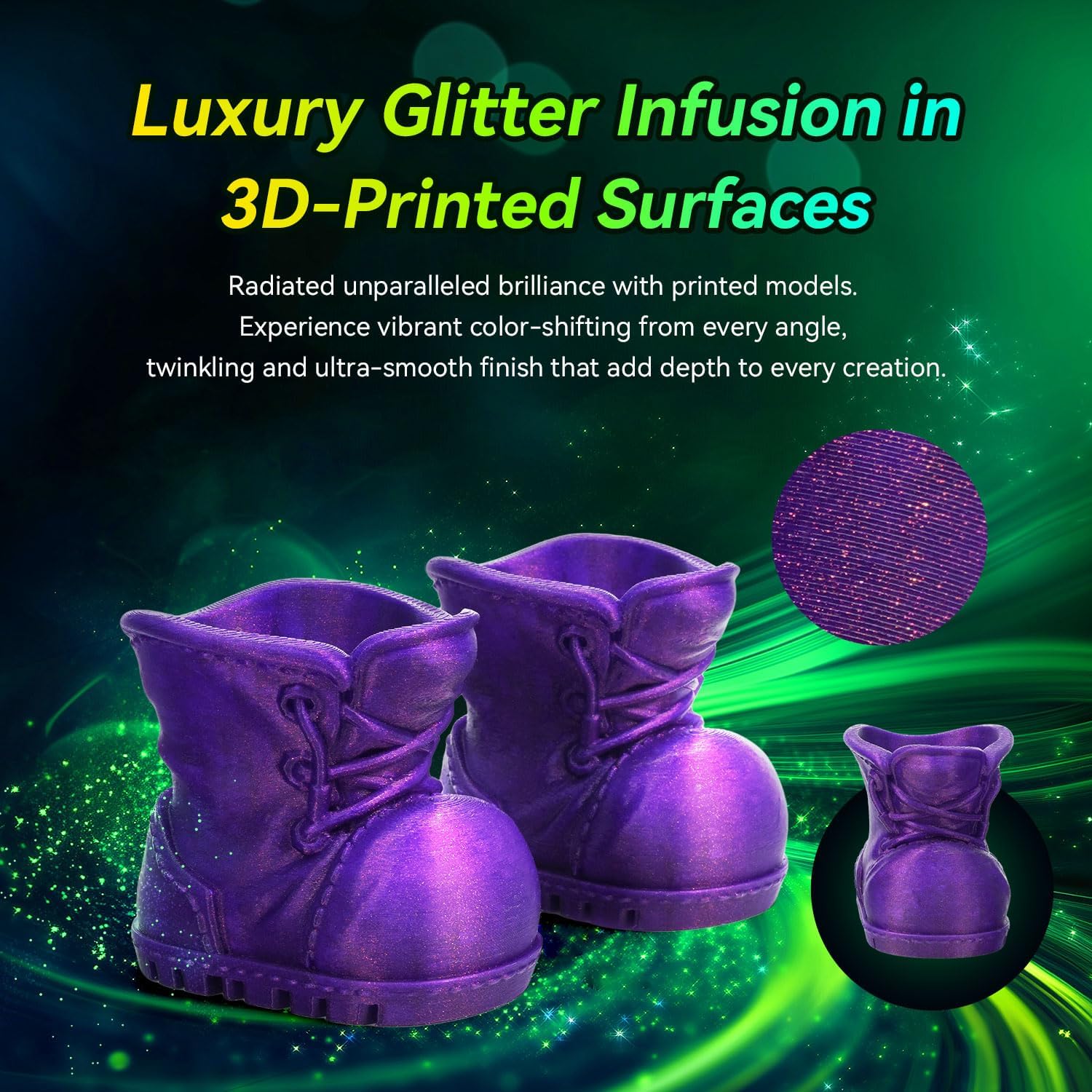
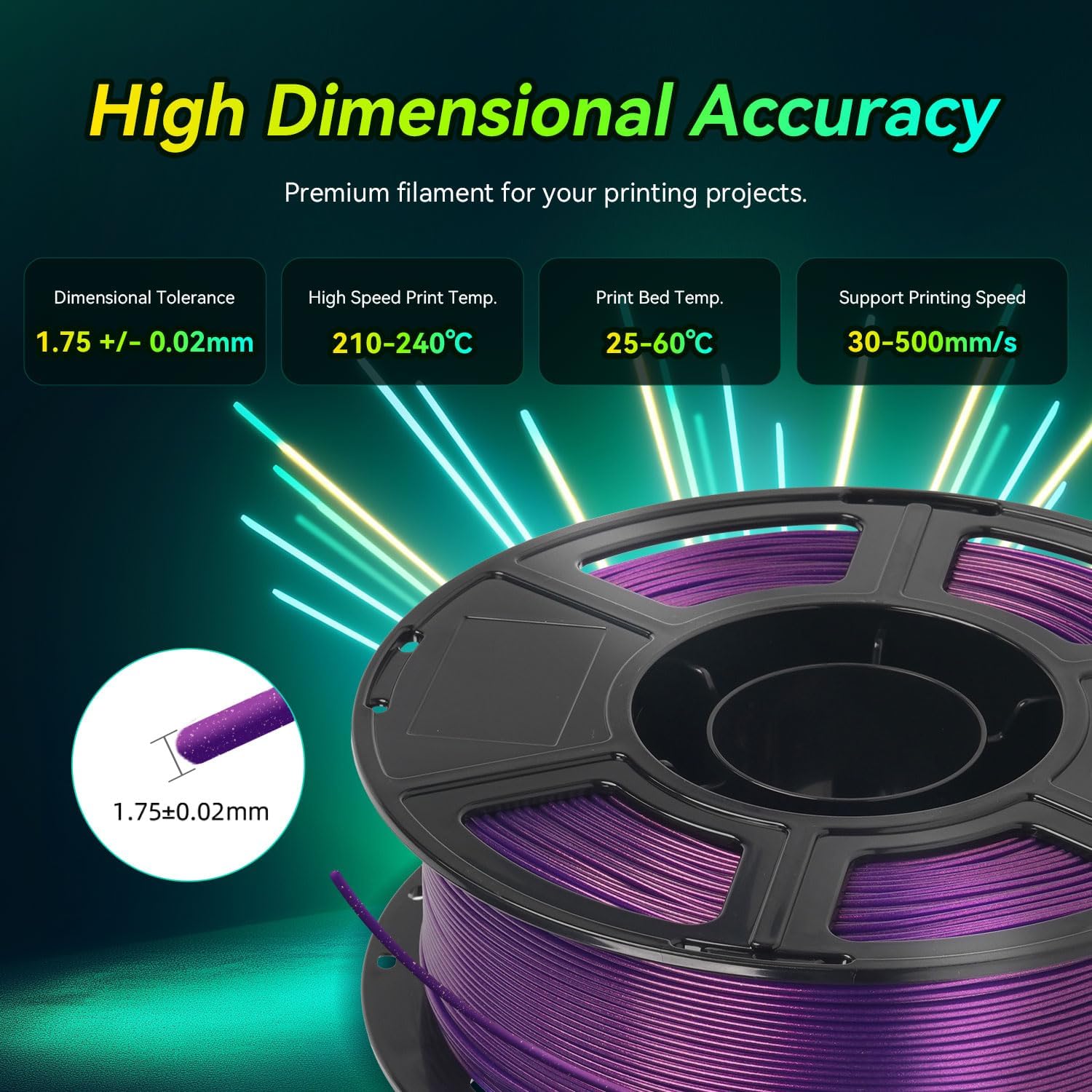
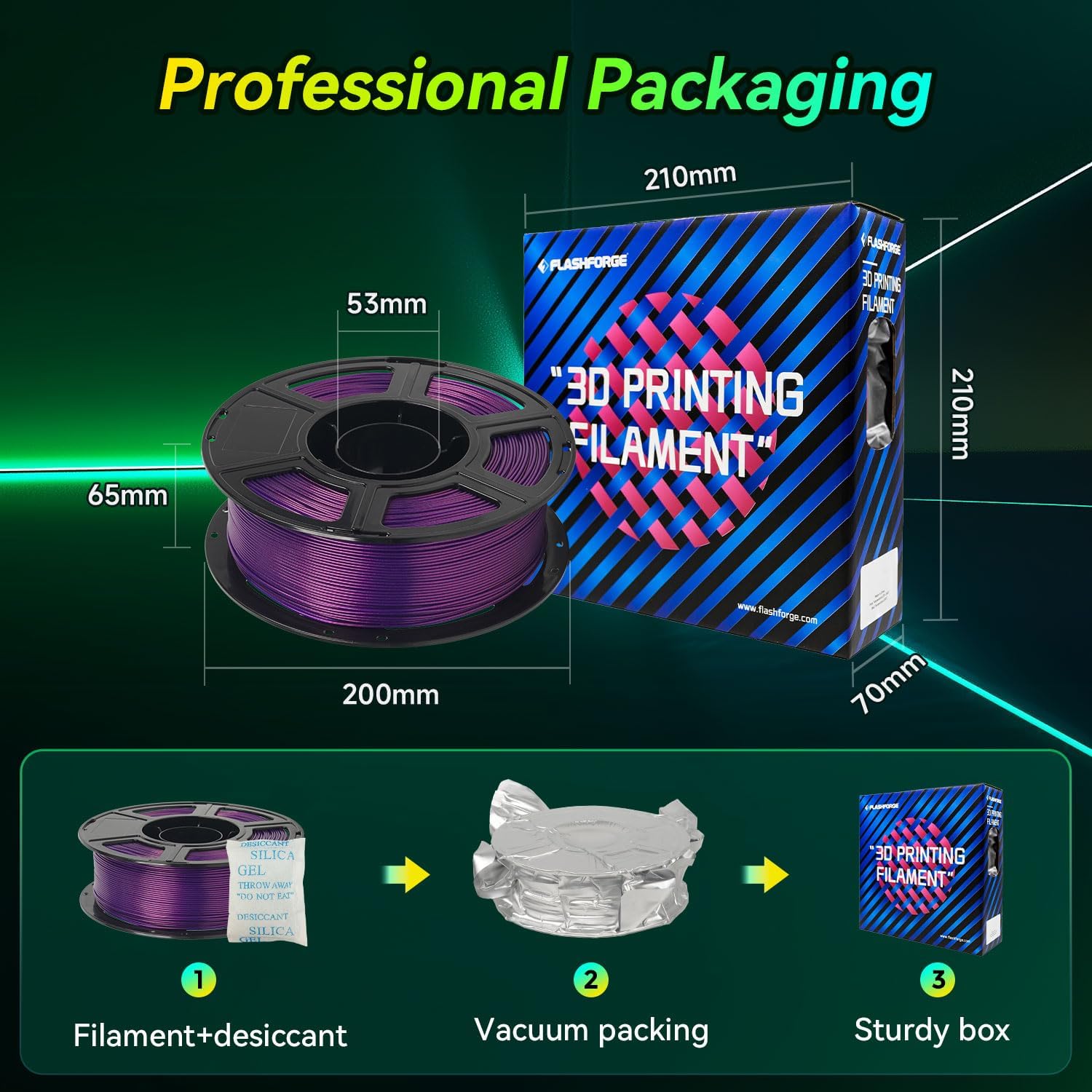
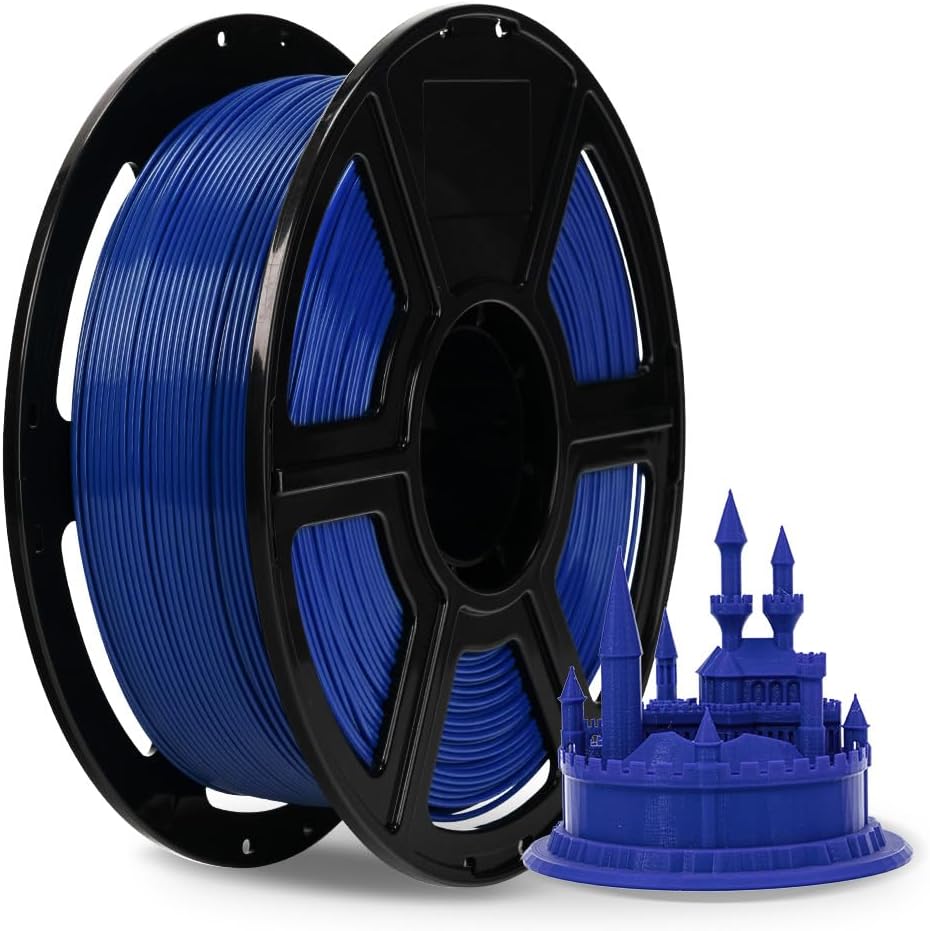
What this filament is and what it’s for\nAimed at speed-minded 3D printing, FLASHFORGE’s Xmas Series Rapid PLA in Aurora Purple is a 1.75mm PLA designed to flow more easily for higher-speed layer deposition. On paper, the formula prioritises rapid printing with solid layer adhesion and reduced warping, which can help when you’re prototyping models or producing functional parts with a tighter timeline. If you prioritise pace and consistent colour, this filament presents a straightforward option for everyday rapid prototyping.\n\n## How it performs in practice\nThe base description emphasises high fluidity with reliable layer adhesion and good dimensional stability. The manufacturer also highlights low warping and strong mechanical properties, which are helpful for parts that need to hold shape across multiple layers. In theory, that translates to fewer failed prints when pushing for speed, and more predictable results for detail-rich prototypes. It’s important to temper expectations: high-speed printing can still reveal the limits of texture, bridging and overhangs that come with any PLA.\n\n## What stands out about the material\n- Tangle-free winding and an easy setup: automatic winding plus manual detection aim to keep the line tidy, reducing the risk of snags or breaks during setup.\n- Clog-free and bubble-free manufacturing approach: the filament is dried for 24 hours prior to packaging and vacuum-sealed with desiccant. The intention is to minimise moisture-related defects and maintain print consistency.\n- Broad printer compatibility: marketed as compatible with 99% of FDM 3D printers on the market, which is useful if you’ve got a mixed fleet or are trying to standardise materials.\n- Colour and finish: Aurora Purple is described as radiating brilliance with a twinkling, ultra-smooth finish in prints—appealing for models where aesthetics matter as well as function.\n\n## Who this is for (and who it isn’t)\nThis filament suits hobbyists and professionals who want faster turnarounds without dramatically sacrificing detail or consistency. If your workflow hinges on rapid iteration—think prototypes, display models, or jigs—this PLA could help you move from concept to visible result more quickly. It may not be the best choice if your priority is ultra-fine surface finish or very high-precision tolerances where minor variances in layer bonding become noticeable. You might also want to consider environmental factors, PLA can be sensitive to heat in very warm environments, which could affect dimensional stability if a print sits exposed for long periods.\n\n## When it makes sense to buy\nIf you’re after reliable high-speed PLA with readable colours and a finish that looks good straight off the print bed, and you want to minimise potential print stoppages due to moisture or tangling, this material aligns with that aim. It’s worth considering if you’re consolidating materials across multiple machines and value a broader compatibility claim.\n\n## When to proceed with caution\nIf your priority is absolute surface perfection or you’re printing at extreme resolutions, you may find other formulations or temperatures yield marginally better outcomes for certain geometries. Also, if your printer isn’t quite tuned for higher flow, you may need to adjust settings to avoid oozing or slight stringing. The description doesn’t provide specific printing temperatures or bed conditions, so start with the manufacturer’s general PLA guidelines and probe carefully.\n\n## What to check before buying\n- Ensure your printer supports 1.75mm filament and can run reliably at higher flow rates.\n- Consider whether you need the vivid Aurora Purple finish for display pieces or whether a more neutral tone would suit functional parts better.\n- If you operate in moisture-prone environments, confirm that you store the filament in the desiccant and vacuum packaging as recommended.\n- Check that you’ve got appropriate cooling and retraction settings to balance speed with print quality.\n\n## How it compares to other approaches\nIn contrast to standard speed PLA, this variant emphasises quicker throughput without necessarily sacrificing layer adhesion. If your process requires you to print fast but with decent mechanical properties, it offers a middle ground between ultra-detailed, slower prints and more generic, speed-focused materials. If you want to push for the highest detail or the most forgiving handling, you might lean toward alternatives designed for those niches, for many day-to-day speed projects, this is a sensible compromise.\n\n## Practical example of use\nImagine you’re prototyping a small bracket with a few holes for alignment. With rapid PLA in Aurora Purple, you could print a dozen iterations in a day, assessing fit and visual appeal more quickly than with slower materials. The glossy, twinkling finish could be an asset for model displays where light plays off the surface.\n\n## FAQ (where possible from available data)\n- Is it compatible with most FDM printers? Yes, advertised as compatible with 99% of FDM printers on the market.\n- Does it resist warping well at speed? It’s designed to minimise warping, though real-world results will depend on geometry, cooling and enclosure.\n- What about moisture sensitivity? Filament is dried for 24 hours and vacuum sealed with desiccant to protect against moisture, proper storage remains important.\n\n## Final verdict\nFinal verdict: If you need quick turnarounds from concept to tangible part, and you want a PLA that supports high-speed printing with a visually distinctive finish, this Aurora Purple variant is worth considering. It isn’t a one-size-fits-all solution, but it offers a pragmatic balance between speed, adhesion and aesthetics for many hobbyists and professionals. It may not be the best choice for ultra-high-detail needs or printer setups that require very conservative flow handling.\n