

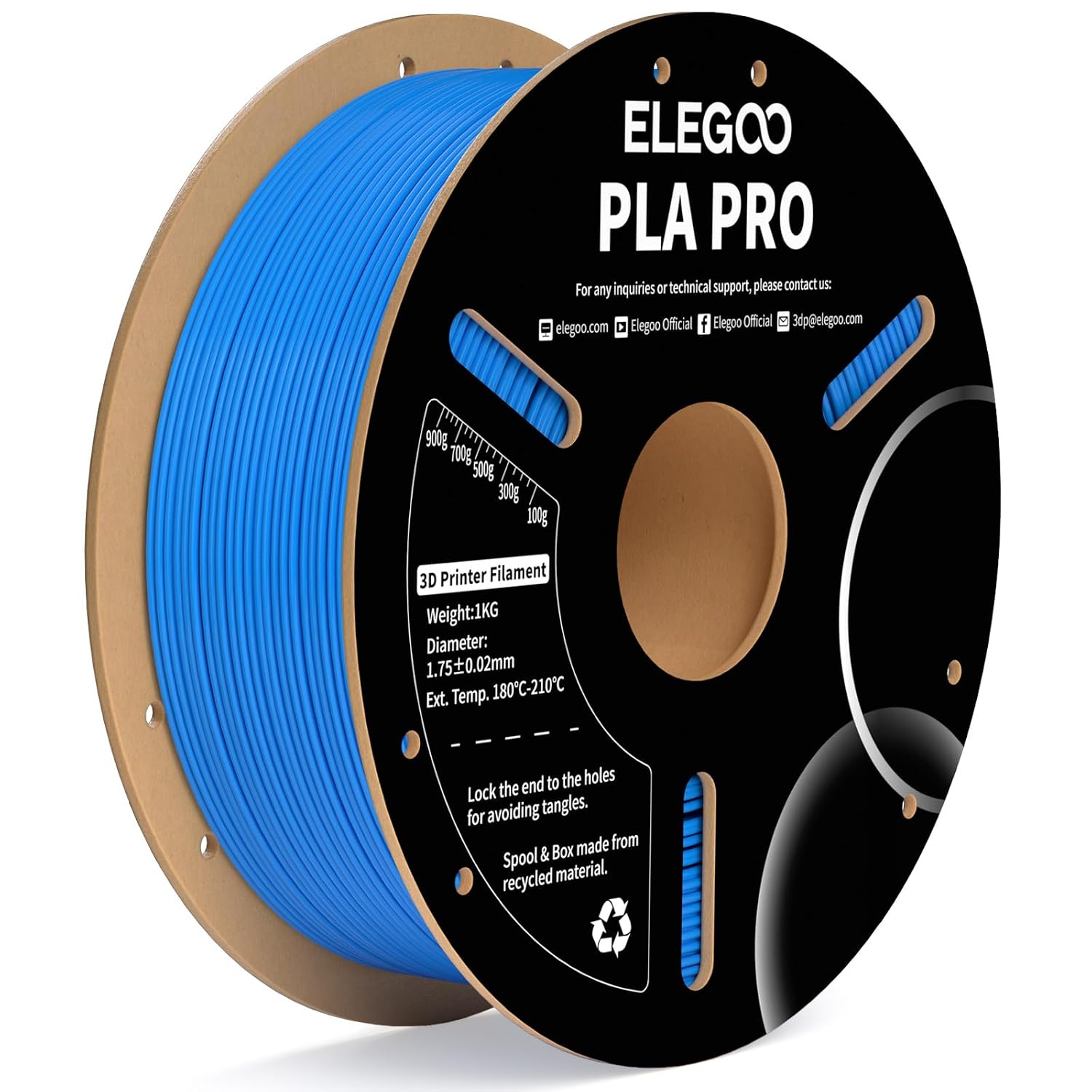
Elegoo PLA Pro Filament 1.75mm Light Blue, 1kg spool (PLA Pro FDM 3D printing)
Reviews
Price
Product description
If your prints are more “maybe” than “reliably done”, a better filament can make the whole process feel less stressful. The ELEGOO PLA PRO is a 1.75mm PLA filament on a 1kg spool, tuned for FDM users who want consistent extrusion and fewer headaches with clogs and irregular output.
That said, it’s still PLA: it’s brilliant for lots of everyday models, but it won’t be the right choice if you need heat resistance or very demanding material performance. Below is a sensible way to decide whether this one fits your setup and expectations.
What it is and what it’s for
ELEGOO PLA PRO Light Blue is a standard 1.75mm PLA filament designed for FDM 3D printers. On paper, its value is in reducing common PLA printing annoyances: nozzle clogging, extrusion instability, and the frustrating prints that fail late because the material didn’t behave.
The “beginner-friendly” angle is also clearly part of its pitch. If you’re learning slicer settings, needing prints to start quickly, and want fewer tolerance-related surprises, a filament like this is meant to help you get to successful results faster.
Key takeaways on performance (without the hype)
The standout claims in the provided details are:
- Designed for low-temperature printing with the aim of supporting a higher success rate.
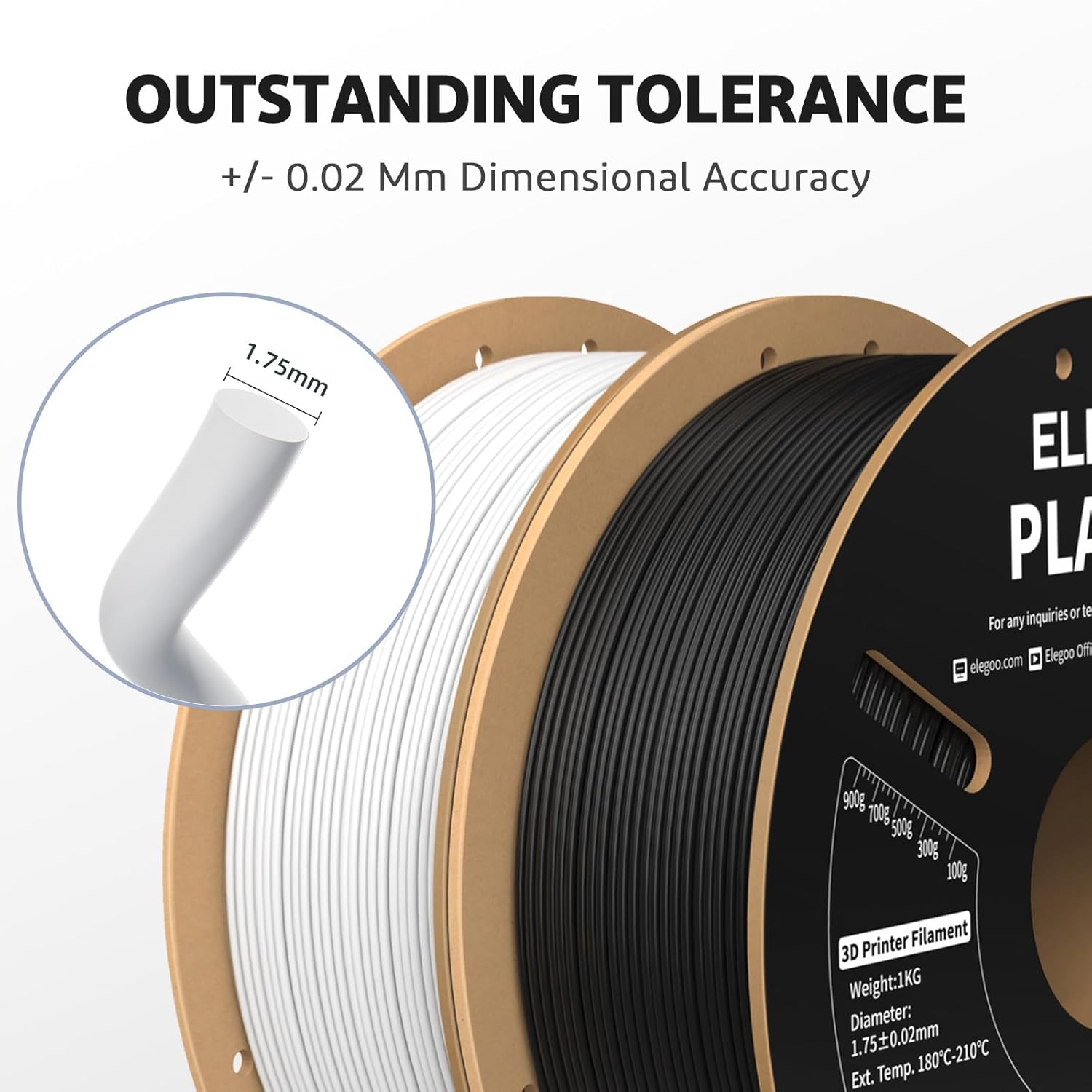
- Dimensional accuracy of +/- 0.02mm, which is intended to improve consistency and reduce variations from spool to spool.
- Better starting behaviour, using basic or custom settings rather than requiring a highly specialised workflow.
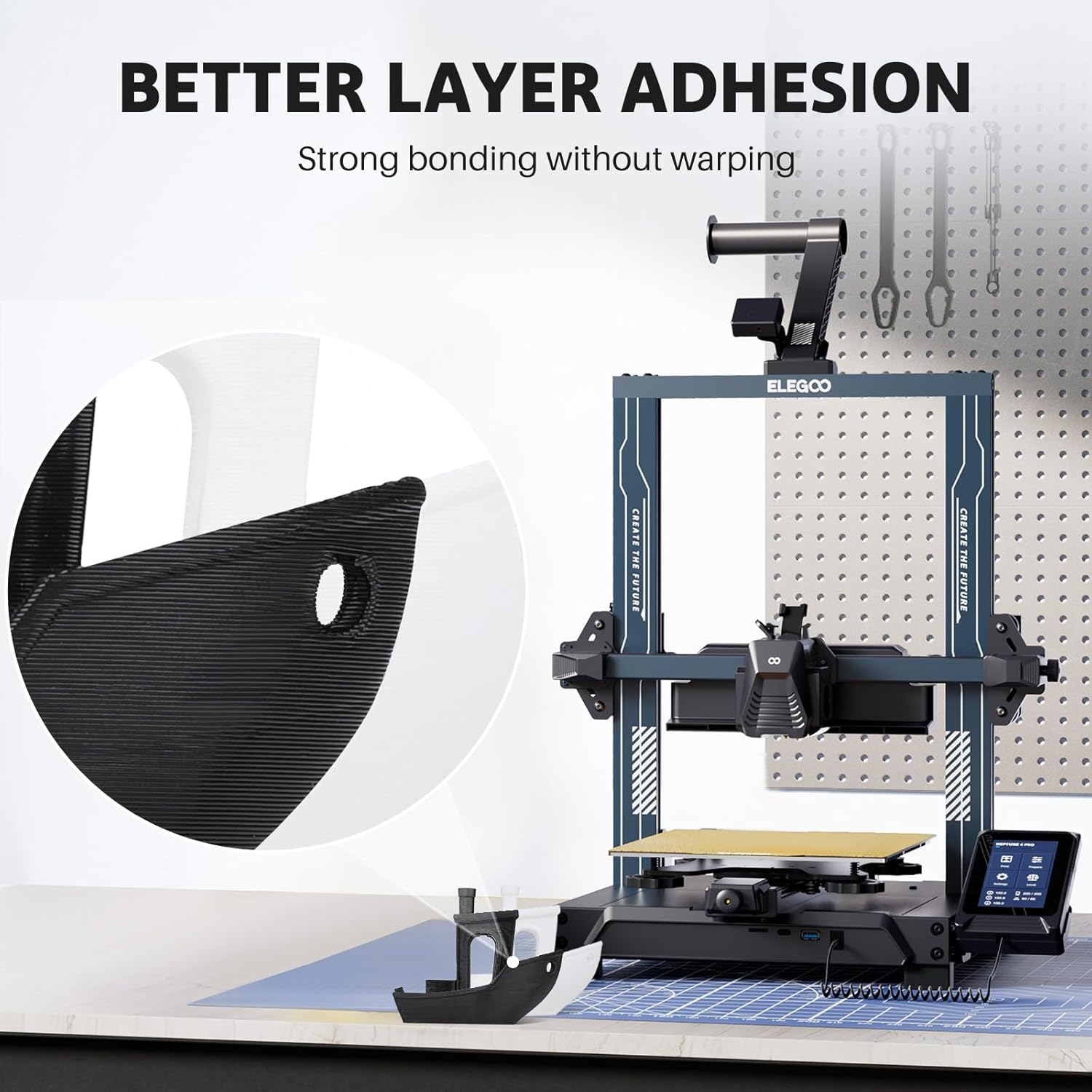
- Bed adhesion support, described as helping prints stick firmly to reduce warping and detachment issues.
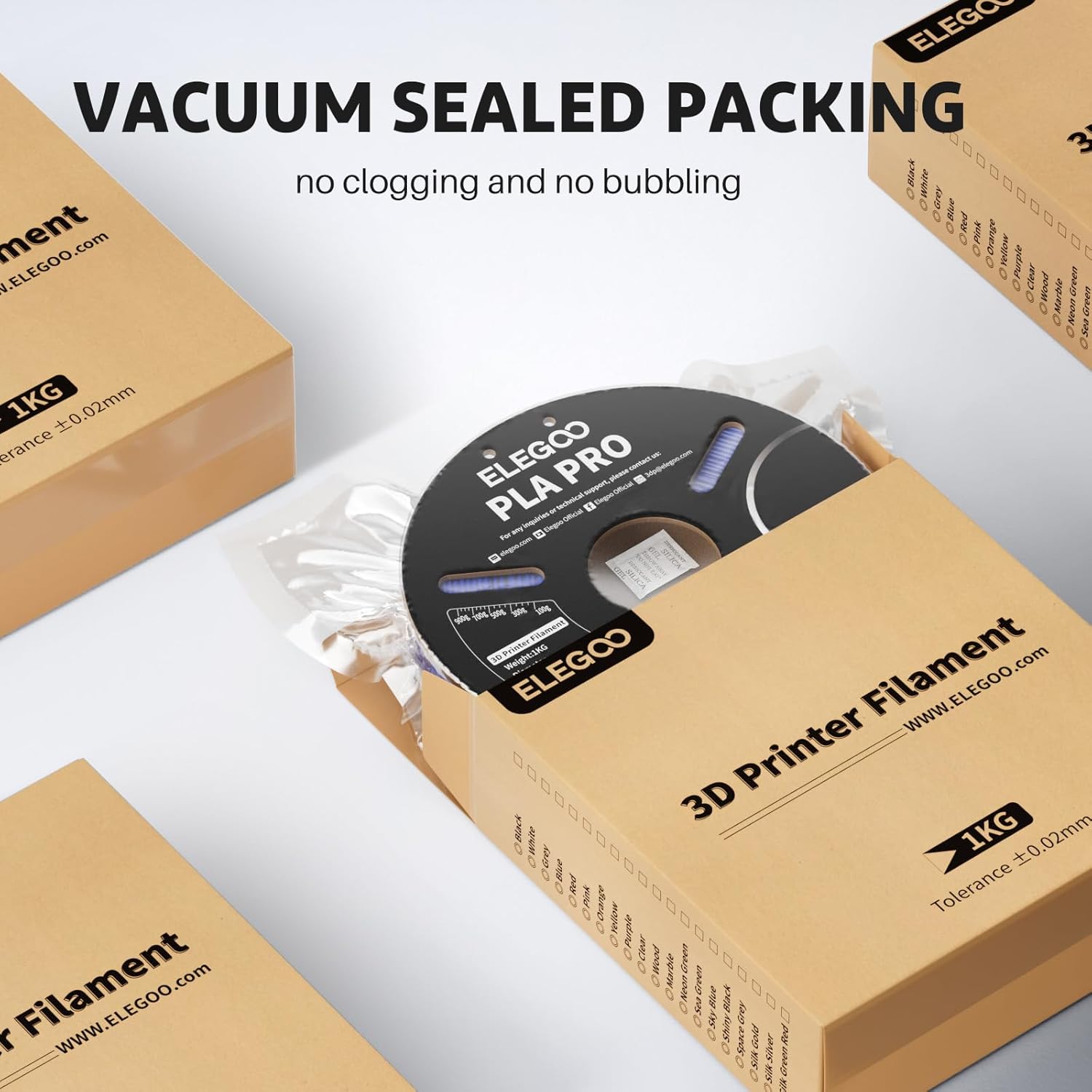
- Drying and packaging protection, with the filament said to be fully dried before packaging and vacuum sealed to protect against moisture.
In real-world terms, that combination matters because most “print failures” aren’t dramatic—they’re usually small instabilities: a weak first layer, inconsistent extrusion, or a clog that starts ruining quality over time.
What you’ll notice day to day
A lot of people don’t buy filament to think about material science—they buy it so printing feels straightforward.
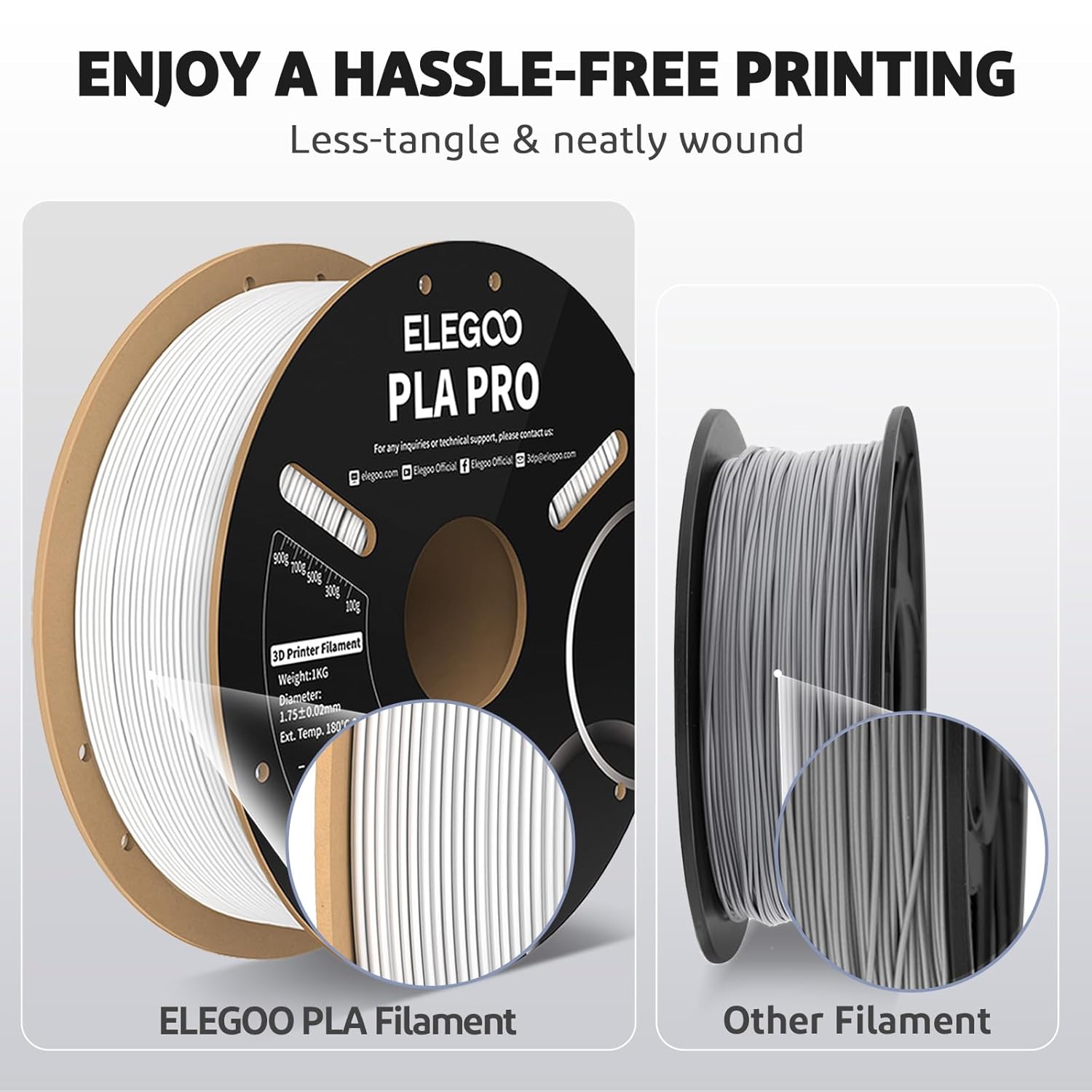
This filament is described as neatly wound with no tangles, which sounds minor until you’ve had a spool that unspools like a nightmare. It’s the sort of practical detail that can save time on setup and reduce wasted attempts.
You can also reasonably expect a more predictable feed because the tolerance is presented as tight (again, +/- 0.02mm). That doesn’t remove the need for correct printer calibration, but it can reduce one variable.
One limitation to keep in mind: the claims are very helpful, but they don’t guarantee identical results for every printer and every hotend setup. If you run very different temperature profiles or have a bed that’s hard to level, you may still need to dial things in.
Compatibility and setup expectations
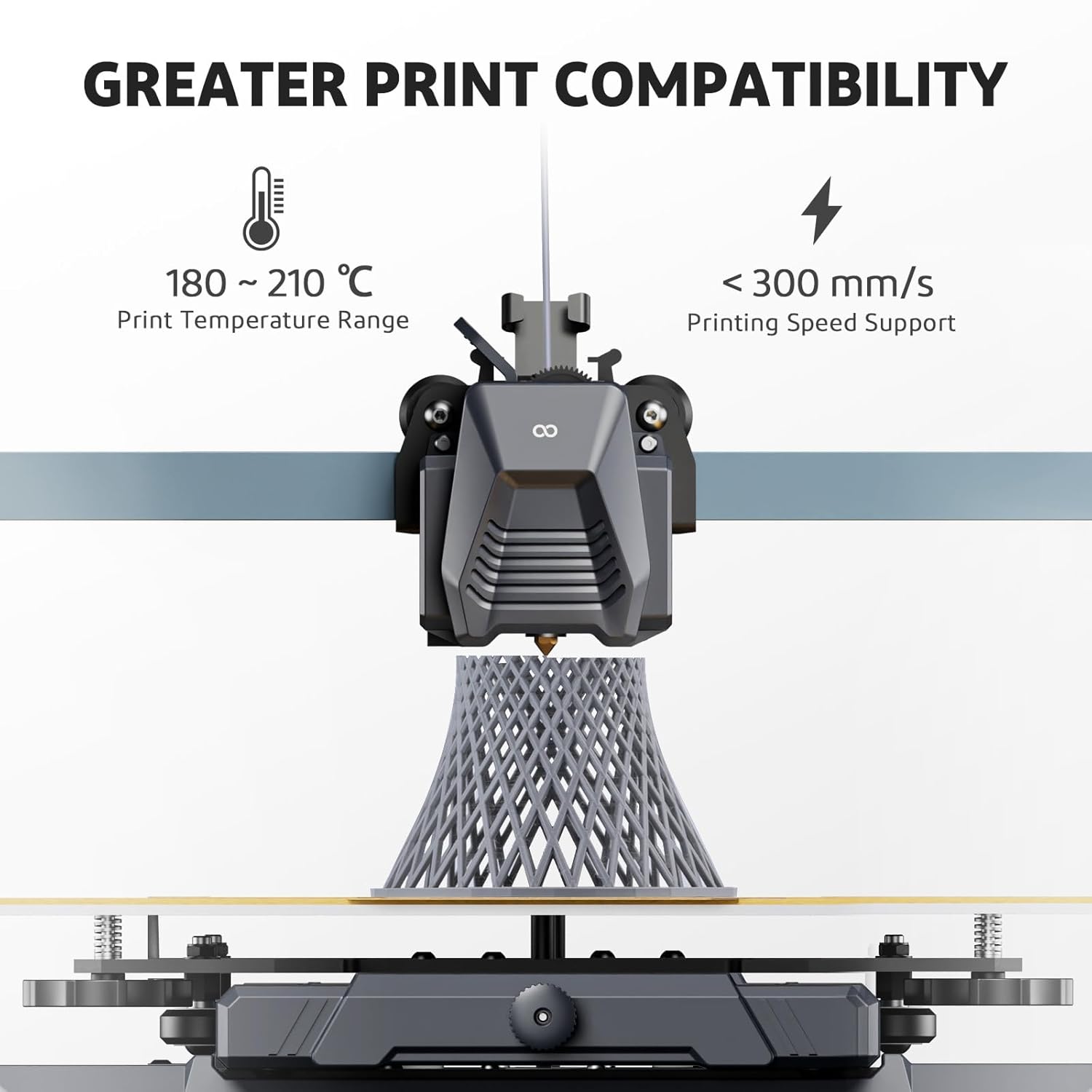
The listing says it fits most 1.75mm FDM 3D printers, and mentions compatibility with families of printers such as Neptune, Ender, Kobra, and A1 series.
That’s useful if you’re moving between printers in the same general ecosystem or you’re simply buying filament rather than a machine-specific material. Still, “fits most” is not the same as “no setup needed”. You’ll want to ensure your printer’s hotend and feeder are set up for 1.75mm filament and that your slicer settings match your approach (especially since this filament is described as optimised for lower-temperature printing).
It makes sense if you already print PLA and just want a more dependable spool. It may not suit you if you’re chasing a very specific mechanical performance goal where PLA Pro isn’t the material direction you need.
Reliability on the first layer (and why it matters)
Bed adhesion is often where the battle is won or lost. The description emphasises reliable first-layer adhesion and reduced warping/detachment.
On a typical workflow, that looks like this: you level the bed, start your print, and the first few layers actually stay put. When that happens, you’re far more likely to get a clean model instead of wasting time troubleshooting halfway through.
However, don’t ignore the reality: your surface type and prep routine still matter. Even with filament that’s intended to stick well, a dirty bed, worn build surface, or inconsistent bed temperature can undermine adhesion.
Where it shines, and when to look elsewhere
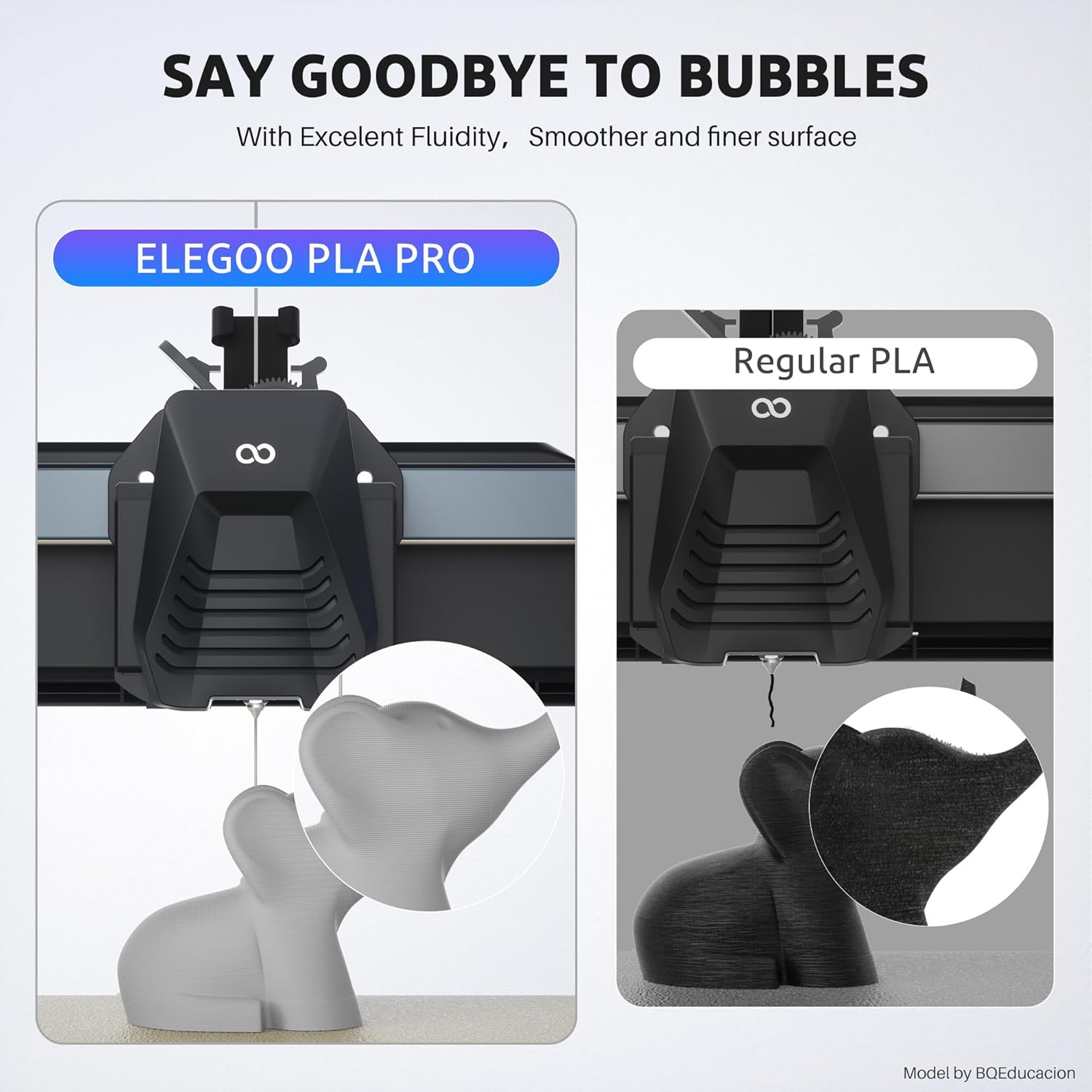
Worth considering if you want PLA filament that aims for: - more consistent extrusion and extrusion stability - fewer nozzle clogging/bubbling issues - dependable starting and bed adhesion behaviour - a spool that’s neatly wound and less annoying to load
Not the best choice if you need strong heat resistance, or you’re printing parts that demand material properties beyond typical PLA use. Also, if your printer has persistent mechanical issues (feed problems, badly aligned extruder, inconsistent temperature control), filament won’t fully fix that.
If you’re choosing between a very basic PLA and something positioned as “optimised for print success”, this one is the more “reliability-first” option based on the details provided. If you’re comparing against more specialised engineering filaments, it’s simply in a different category.
Is it worth it?
Buy the ELEGOO PLA PRO 1.75mm Light Blue 1kg spool if you value dependable printing behaviour—especially for everyday models where you want fewer clogs, steadier extrusion, and a first layer that holds without drama.
Skip it if you’re chasing high-heat performance or you already know you need a different material type for your part’s job. And if your printer setup is shaky, keep expectations realistic: the filament can help, but it can’t replace proper calibration and bed preparation.
Mini FAQ
Does the filament come vacuum sealed?
The description says it is dried before packaging and vacuum sealed to help protect from moisture.
Is it really meant for low-temperature printing?
It’s described as optimised for low-temperature printing to support a higher success rate.
What’s the claimed dimensional accuracy?
The listing states dimensional accuracy of +/- 0.02mm.
Is it only for specific printers?
It’s presented as fitting most 1.75mm FDM printers, with compatibility examples including Neptune, Ender, Kobra and A1 series.
Why does “no tangle” matter?
Neatly wound filament can make loading and printing smoother, saving time and reducing the frustration that comes from tangled spools.